Home Blog Page 200

Harakani


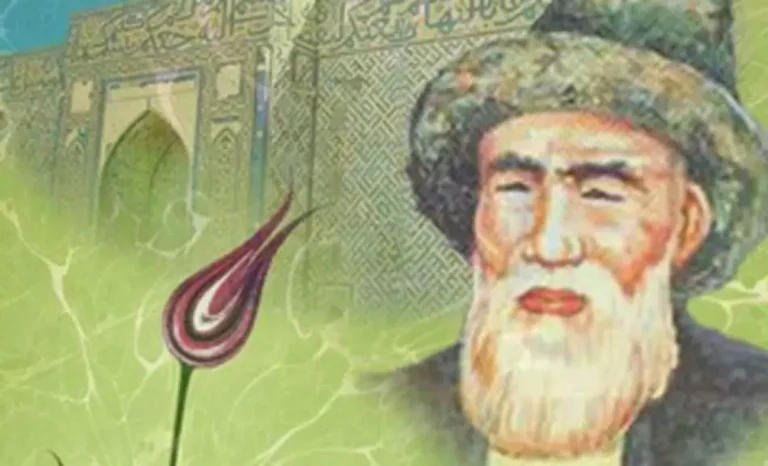
Abu ‘l-Hassan Ali ibn Ahmad (or ibn Jaʻfar) ibn Salmān al-Kharaqāni is one of the master Sufis of Islam. He was born in 963 (352 Hijri year) in Khorasan in a village called Qaleh Now-e Kharaqan (today located in Semnan Province, Iran near Bastam) and died on the day of Ashura in 1033 (10th Muharram, 425 Hijri).

He was the disciple of Abul-Abbas Qassab Amoli but claimed a deep spiritual relation with Bayazid Bastami, a well-known Sufi Master who died almost a century before him but had spoken about the personality and state of Kharaqani. He was also influenced by Abul Hasan Hankari. His school of jurisprudence was Shafi‘i.

Attar of Nishapur, a famous Persian poet and Sufi, devoted a large part of his book Tadhkirat al-Awliya (Biography of the Saints) about the personality, state and stories of Kharaqani. Attar has him as Sultān-e Salātin-e Mashāyekh “King of kings of Sufi Masters”, “Ocean of the spiritual knowledge, “Sun of the Lord”, “Mystery of the Lord” and “Qibla of his people”.

Kharaqani was the Master of the famous Persian Sufi and poet, Abdullah Ansari. Avicenna, Mahmud of Ghazni, Abū-Sa’īd Abul-Khayr and Nasir Khusraw traveled to Kharaqan to meet him and expressed their deep admiring feelings and respect for him.

Rumi, Attar of Nishapur, Khwaja Abdullah Ansari, Jami and others have narrated many poems about Abu’l-Hasan and have reported his several stories. He was illiterate but had wide inspirational knowledge about the Quran and Hadith; his sayings and speeches are significantly magnificent due to their philosophical views.

The book Nūr al-ʿUlūm “Light of the Sciences” is dedicated to Abu’l-Hassan. It is believed to have been written by his murids after his death. A single manuscript copy is currently held in the British Museum.

……………………………………

Whoever comes to this dervish lodge, give their bread and do not ask about their religion or belief. Because the one who is worthy of carrying a soul to the lodge of the Great Allah
Of course, everyone deserves to eat bread at the table of Abu l Hasan. Harakani

“The rest of a believer’s members (at least) must be preoccupied with Almighty Allah. A believer must either remember Allah with his heart, or remember him with his tongue, or see something he wants to see with his eyes, or show generosity with his hand, either visit people with his feet or head (with his mind)
He should serve the believers, either pray with certainty, or try to reach marifah by contemplating with his mind, or do a sincere job, or warn people from the severity of the doomsday. I guarantee that such a person will go to heaven as soon as he raises his head from the grave.”

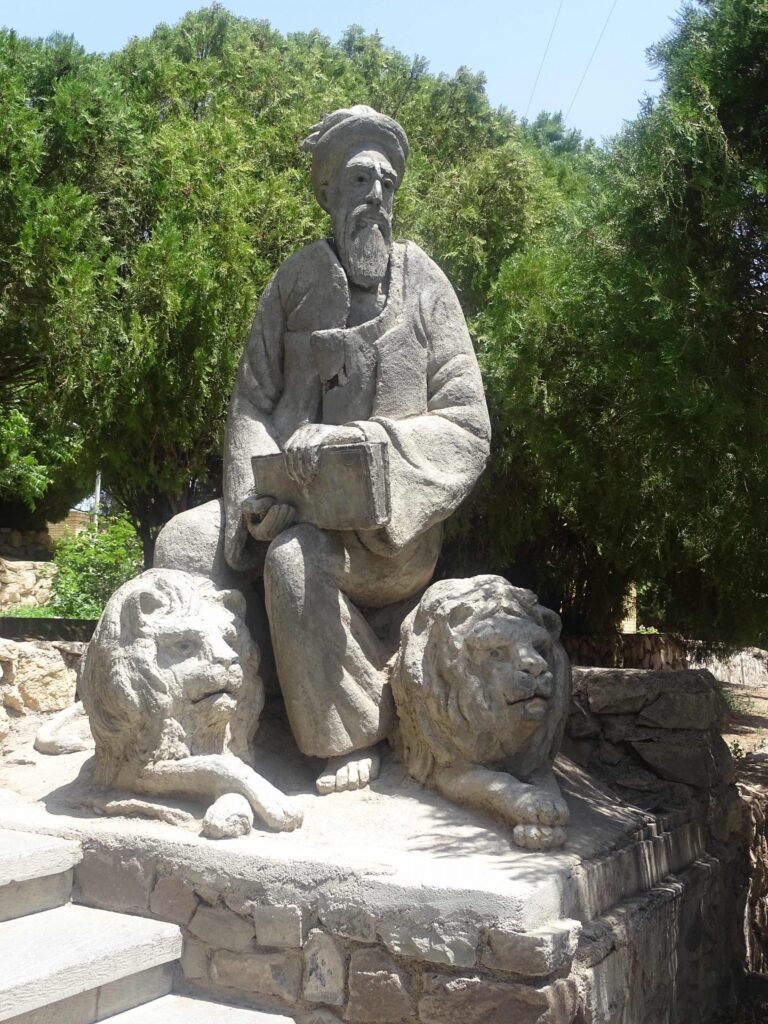
One day, Ibn Sînâ came to Harakan to visit Abu’l-Hasan-i Harakânî (k.s) at his home. His mistress scolded the visitor and said that she went to the forest. His wife, who did not believe in the greatness of Abu’l-Hasan, said inappropriate things to her about her husband. While Avicenna was going towards the forest, he saw that Ebü’l-Hasan-ı Harakânî was coming, loading wood on a lion.

“What is this?” when you ask,

He said, “Because I bear the burden of trouble by being patient with the troubles of the lion in my house, this lion also bears our burden.”

“One who is in love with the Creator cannot be satisfied by anything created.”

“People are three groups: One hurts even though it doesn’t hurt, the other hurts if you hurt it. Third, it doesn’t hurt even if you hurt it.”

“God put his fortune before the people. Everyone got their share, the fate of the gentry was sadness”

Neither you nor I know the secrets of Ezel.
Neither you nor I can solve this enigma.
Behind the curtain, there is someone who makes you talk to me.
If the curtain rises, neither you nor I will stay.

Abu’l Hasan Harakani

The feet of those who travel on earth and the hearts of those who travel in the sky collect water.

The state of the heart is that which has no bad temper. The best of deeds are those in which there is no idea of ​​creation. The best of blessings are those that come with hard work and effort.

When your heart is sad, we know it as a booty, because people come to a place with the blessings of trouble. Abu’l Hasan harakani

“Everyone is worried about bringing something from here to there, they don’t know that only poverty is brought from here to there”.

“Not even the devil can exorcise the sedition caused by these two people: a scholar with worldly ambition and a sufi who lacks knowledge.”

“Hak Ta’ala gave me such an idea that I saw all of His creatures in him; I stayed in him; his preoccupation surrounded me day and night, the idea turned into foresight; arrogance turned into conversation; majesty and dignity turned into his unity with that idea. I understood and reached such a level that the idea turned into wisdom, turned into a straight path and compassion for the people; I have never seen anyone more compassionate towards his people than myself.’

‘If a thorn pierces someone’s finger from Turkistan to Damascus gate, that thorn is stuck in my finger; in the same way, if someone’s foot hits a stone from Turkistan to Damascus, his pain is my pain; If there is a sadness in a heart, that heart is my heart.’

“O Lord, you sent me pure and clean from your presence; I want to return to your presence as you sent me to the world. Grant this.”

“It is true, a person’s tongue should be one with his heart. The clutter of words is due to the desolation of the heart. The heart is the sea, the tongue is the shore; when the sea waves, it throws its contents to the shore.” | Abu’l Hasan al-Harakani
…………………………………..

Her kim bu dergaha
gelirse,
ekmeğini verin ve dinini
inancını sormayın.
Zira Ulu Allah ın
dergahına,
ruh taşımaya layık olan
Her kes elbette
Ebu l Hasan ın
sofrasında ,
ekmek yemeye de layıktır.

Harakani


“Mü’minin âzâlarından (en az) birinin devamı Yüce Allah ile meşgul olması gerekir. Bir mü’min Allah Teâlâ’yı ya kalbiyle hatırlamalı, ya diliyle zikretmeli, ya gözüyle O’nun görmek istediği bir şeyi görmeli, ya eliyle cömertlik yapmalı, ya ayağıyla insanları ziyaret etmeli, ya başıyla (aklıyla) mü’minlere hizmette bulunmalı, ya kesin bir inançla duâ etmeli, ya aklıyla tefekkür ederek mârifete ulaşmaya çalışmalı, ya ihlâslı bir iş yapmalı, ya da kıyâmetin çetinliğinden insanları îkâz etmelidir. Böyle birinin, kabirden başını kaldırır kaldırmaz kefenini sürüye sürüye cennete gideceğine ben kefilim”

Bir gün İbni Sînâ, Harakân’a, Ebü’l-Hasan-ı Harakânî (k.s) hazretlerini evinde ziyarete geldi. Hanımı, gelen misafiri azarlayarak, ormana gittiğini söyledi. Ebü’l-Hasan hazretlerinin büyüklüğüne inanmayan hanımı, kocası hakkında ona uygunsuz şeylerde söyledi. İbni Sînâ ormana doğru giderken Ebü’l-Hasan-ı Harakânî hazretlerinin, bir aslana odun yüklemiş vaziyette gelmekte olduğunu gördü.

“Bu ne haldir?” diye sorunca,

“Evimdeki aslanın sıkıntılarına sabredip bela yükünü taşıdığım için, bu aslan da bizim yükümüzü taşıyor” buyurdu.

“Yaratanın aşkına tutulan birisi yaratılmış hiçbir şey tarafından tatmin edilemez.”

“İnsanlar üç zümredir: Biri incitmediği halde incitir, diğeri incitirsen incitir. Üçüncüsü incitsen de incitmez.”

“Allah kısmetini halkın önüne koydu. Herkes kendi nasibini aldı, civanmertlerin nasibi hüzün oldu”

Ezel sırlarını ne sen bilirsin ne de ben
Bu muammayı ne sen çözersin ne de ben
Perdenin gerisinde seni beni bir konuşturan var.
Perde kalkarsa ne sen kalırsın ne de ben

Ebu’l Hasan Harakani

Yeryüzünde yolculuk edenin ayağı, gökte yolculuk yapanın ise kalbi su toplar.

Kalplerin halisi onda hiç kötü huy olmayandır. Amellerin en iyisi onda mahluk fikri bulunmayandır. Nimetlerin iyisi çalışıp çabalama ve gayret ile hasıl olandır.

Gönlünüz hüzünlenince bunu ganimet biliriz, zira insanlar, sıkıntının bereketiyle bir yere gelirler. Ebu’l Hasan harakani

“Herkes buradan oraya bir şey götürmek derdinde, bilmezler ki buradan oraya sadece yokluk götürülür”.

“Şu iki kişinin çıkardıkları fitneyi, şeytan bile çıkaramaz: Dünya hırsına sahip âlim ve ilimden yoksun sûfî.”

‘”Hak Teâlâ bana öyle bir fikir verdi ki, O’nun bütün mahlûkâtını onda gördüm; onda kalıp durdum; gece gündüz O’nun meşguliyeti beni sardı, fikir basirete dönüştü; küstahlık muhabbete dönüştü; heybet ve vakara dönüştü; o fikirle O’nun birliğini kavradım ve öyle bir mertebeye ulaştım ki, fikir hikmete dönüştü, dosdoğru yola ve halka şefkat haline dönüştü; O’nun halkına karşı kendimden daha şefkatlisini görmedim.’

‘Türkistan’dan Şam kapısına kadar birinin parmağına bir diken batarsa, o diken benim parmağıma batmıştır; aynı şekilde Türkistan’dan Şam’a kadar birinin ayağı taşa çarpsa, onun acısı benim açımdır; eğer bir kalpte bir hüzün olsa, o kalp benim kalbimdir.’

“Ya Rabbi, beni huzurundan saf ve tertemiz gönderdin; huzuruna, dünyaya gönderdiğin gibi dönmek istiyorum. Bunu nasib et.”

“Doğrudur, insanın dili kalbiyle bir olmalıdır. Sözün dağınıklığı, kalbin perişanlığındandır. Gönül denizdir, dil kıyı; deniz dalgalanınca içindekileri sahile atar.” | Ebu’l Hasan-el Harakâni
Kaşgarlı Mahmut

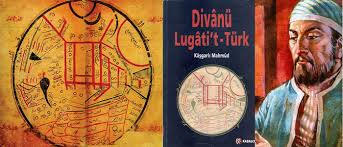
Kasgarli Mahmud, b. 1008 – d. 1105, (East Turkestan) 11th century lexicographer known for his works on Turkic languages. He was born in the town of Opal, 45 km southwest of Kashgar. He was a man of duty, or rather a man of duties. He grew up in Kashgar, the westernmost point of Xinjiang in what is now China.
Throughout the twentieth century, we thought of the Tiyan Shan or Tian Shan region as the fault line of the Chinese and Soviet Russian region. In the eleventh century; It was a region where Islam, Buddhism, and Animism, the religion of the nomads, clashed.

Kashgari was a good Muslim, so he found himself in Baghdad, where the caliphate was severely weakened. But he was also a Turk and very sensitive about it. This gave him his first assignment. He lived in the eleventh century. He is the author of Divan-ı Lügatit Türk. This work is a comprehensive guide on Turkish language and oral literature. A masterful treasure in terms of linguistic, anthropological and social content, Kasgari’s work was written to bring Turkish culture to the same status as Arab and Persian in the Islamic world.

“O son, take my advice and ask virtue

(Thus) you become the chief of the people and distribute wisdom and virtue to them. (p.372)


Boy i leave it to you

Inheriting virtue and manners

When you meet a wise man

Stay with him (and because of his wisdom) (p.434)

“the head of virtue: the head of the virtue – the person who knows how to speak well is respected.” (p. 260)

“Do not refuse your mother’s advice when you hear your father’s words

When you get rich and successful, don’t be arrogant, hold back

and know your limits. “(p. 337)


“Take the word of the wise man as counsel

(Because) if you know how to live in it, the beautiful word (as wisdom) to your heart

grows roots. ” (p. 477)


“When the vulture sees its prey, it goes down from the high air

The wise man’s prey is advice, when he hears it (memorizes and) understands. “(p.717)


“I thank my god (for they bestowed)

I increase my competence [wisdom] (by his grace)

I knots my heart (with this)

(Because) my heart is surrounded by virtue. “(609)

“If there is a sign (irem) in the steppe, the road is not confused, if the person has reason, his word is not wrong.” (p.618)

The wise man is also a man who is fond of his freedom. He both deserves this and takes care to protect it. The wise is not an ordinary person, nor is one of the herd:

“It is better to be a calf’s head than an ox’s foot. This proverb is used to indicate that self-direction is better than obeying another person.” (p.373)

Wisdom is not something that contradicts wealth. The wise man is not someone whose hair and beard are intertwined, who is miserable, who wanders lazily. The true wise is someone who supports his wisdom with wealth as much as possible. Perhaps this way, his wisdom will be able to reach a wider audience and have a positive impact on a larger number of people.

This is clearly stated in the following strings:

“I looked for [wisdom]

(And I supported him) with wealth [with victory]

I reached my wish

(Thus my wealth and) my animals are plundered. ”(P. 704)

Although wisdom and virtue do not contradict wealth and can, on the contrary, support them, they are much more valuable than mere wealth without these qualities. Therefore, spending when necessary for the sake of wisdom and virtue and all kinds of sacrifices should not be avoided.

As a result, to leave the last word to Kaşgarlı or to the wisdom in Turkish poetry that he conveyed to us, virtue and wisdom are among the most valuable treasures that a person can have, bequeath to his children, and present to his nation and humanity. Indeed, wisdom is even more valuable to the 11th century Turk than the “white mane horse”, perhaps its most precious asset – and we wish it always remains so:

“I sought knowledge and wisdom (wisdom)

I chose [to be] the wise person

(Therefore) I separated myself (from the people)

(On my way of striving) my horse with a white mane becomes free. “(P. 211)

In the Divan it is assumed that wisdom is closely related to virtue and that wise people are virtuous; It is recommended to learn virtue and wisdom from the wise men, and especially to the youth. Those who are wise without being wise are criticized and warned that the tests to be made will easily reveal their foya.

The true wiseman is an ideal person who knows how to use his mind well, who has extensive knowledge and vast experience, who does not deviate from virtue in his behavior and actions, who is fond of independence and freedom, who supports his wisdom with wealth if possible, and who does his best to pass the treasure of wisdom to future generations. is depicted.

Knowledge in Divan-ı Lugat it Turk

Kaşgarlı Mahmut seems to have undertaken the function of the Irkul Bilge in the Oğuz Kağan epic with his book Turkish Dictionary. He constantly gives advice, and the ancestors record his words. The remarkable function here is to give information a social function through a dictionary and to put information into the service of the society. This dictionary is written in such a way that it can be passed down from generation to generation through rhymes and lines.

The book has functions far beyond a dictionary. We can say that it was prepared as a handbook of the Turks, the ideal of putting Turkishness and Turkish before Arabic and Persian is constantly evident in the book. The information written by Mahmut of Kaşgar in his book on this subject also confirms this claim.

It requires a society to discuss issues that are of particular interest to itself, first in writing. Whether a person’s views find support in the community (at the time when the opinion was first introduced, or later) is not the most important issue.

Turkish writer Kaşgarlı Mahmut, who lived in the 11th century and wrote the book Türk Sözü (Divan Lugat at-Turk) to teach Turkish to native Arabic speakers, gave the following words that touch on this subject:

(Doing work that will weaken the Alp person, then wounding him).

What matters is that the debate of thought continues constructively and openly within a society. Kaşgarlı Mahmut states that this discussion should not be without roots and sources in a stanza:

 (In the old days, the righteous were like the mountains.

they said, they gave advice. His heart to remember them

makes clear).

This way, the most useful thoughts for a society will be chosen by the community:

(Do not kick Knowledge with pride; seek and learn.

if he suggests, apology is revealed when tested).

The requirements brought by Bilgi will be put into effect by the society and their applications will be started:

(Honor the wise person, heed his word;

and learn your attitude, put what you’ve learned into practice).

Every person’s words are not words of wisdom:

(If there are disruptors in society, your mind will go astray;

where there is, no more work to dry mouth).

Such people are also seen and distinguished by society:

It is not good for society to stop and rest unless it is constantly taking care of and finalizing their own affairs:

(Repeat my word, tell the sages: the mare, but his foal is the adult horses

when mixed between it can be rested).

Kashgarlı Mahmut’s advice and warnings are not only valid for one generation, but for all generations to come:

(Son, listen to my advice, get rid of ignorance; his ace is molasses

train; like this, the clever one listens to advice and enriches).

As can be seen in these examples, one of the most important sources in Turkish history, the book Türk Sözü (DLT) should be considered among the must-read books.

Like every thinker who had to repeat what he said in order to convey his words to his society, maybe Mahmut of Kaşgar had some patience. While giving an example of a saying, he made his explanation with the following quatrain:

(My anger hit me, I roared like a lion;

I chopped it, who’s holding me now?).

Source: Hasan B. Paksoy. Turkish history, Maya of Societies, Civilization. (Izmir: Mazhar Zorlu Holding, 1997)

http://vlib.iue.it/carrie/texts/carrie_books/paksoy-3/turk01.html


Ahmed Yesevi


 “Let those who know Yesevi wisdom hear it. Let those who hear do it, let them take a piece of Cevahir mine. Let those who do not hear longing. For those who say astağfirullah at dawn “ (Divan-ı Hikmet: 121)


“Those without love have no faith, O friends…” says Hoca Ahmed Yesevî (Divan-ı Hikmet: 84).


“If love is worth it, it will destroy the soul, if its skin touches love, its arrogance will ruin your self, if it is not Love, nobody will recognize you Ma’am, whatever you do, make me in love, O my Lord, love market is forbidden, commerce is forbidden there to fight for lovers other than you. Forbidden The world is forbidden for those who take the path of love Whatever you do, make me fall in love, O my Lord “ (Divan-ı Hikmet: 74-75, 137-8)


“If I explain the secret of love to the lovers, it is not enough, the friends will hit the mountain with his head on the mountain and be deluded Childish children, the house passes through the house, Kul Hodja Ahmed, do not sue without going through the essence Do not talk about “I am in love” in the public. , do not be unaware, friends who are unaware and the truth is not seen as a good” (Divan-ı Hikmet: 76, 78, 139, 141)


 “The servants of the truth are dervishes, those who know the truth, those who fall in love with God, who have entered the path of truth, those who say Allah, followed the Erenler and passed away from property” (Divan-ı Hikmet: 99) 


Ahmed Yesevi (1093-1166). (Kazakhstan) Sufi mystic and poet from the city of Isfijab, now called Sayram. His poems in the form of stanzas gave messages of prayer and contemplation to the crowded Turkish nomads who had not converted to Islam until then. Ahmed Yasawi from Isfijap (Sayram) on the southern border of Kazakhstan was the leader of the Sufis. Yesevi showed that poetry had a much greater power than prose to evoke the deep emotions that lie at the heart of the Sufi message.

Ahmed Yesevi, born in Sayram in 1093, and died in 1166 in Hazrat-e Turkestan, (both cities now in Kazakhstan), was a Turkish poet and Sufi or Dervish who exerted a powerful influence on the development of mystical orders throughout the Turkish-speaking world. Yesevi is the earliest known Turkish poet who composed poetry in an early Turkish dialect, Chagatai.

He was a pioneer of popular mysticism, founded the first Turkish order, (the Yeseviye), that quickly spread over the Turkish-speaking areas. Yesevi had numerous students/followers in the region. His poems created a new genre of mystical folk poetry in Central Asia and influenced many Sufi/Dervish poets including ‘Attar, Rumi, Hafiz (who both knew Turkish) and Yunus Emre. The book of his poems, the Divan-e Hikmet (Book of Wisdom), consists mainly of gazels and murabbas (foursomes), Kosmos (robi’as srung together) and munajat (prayers).

Theosopher and poet. Ahmed-i Yesevî was born in a place called Sayram, which is seven kilometers far from Çimkent, in Kazakhstan today. His birth date is unknown. He died in 1166-67 in the town of Yesi in Turkistan. The word Yesevî means “coming from Yesi”. The cities Buhara in Transoxiana, and Sayram and Yesi in the east of Seyhun, where Hoca Ahmed Yesevî lived, had been taken into the borders of Islam a long time before he was born. Most of the dwellers of these cities were Turks with Islamic confession. However, a great part of Turks had not converted to Islam in that age yet.

The Turks living in the regions Sir-i Derya, Ilek and Fergana, where Yesevism would spread, were believers of different faiths such as Mazdeicism, Manichaeism and Sanavism. Muslim and non-Muslim Turks continuously waged war, and there was no unity among them. Hoca Ahmed Yesevî was born under these circumstances. He had an important role in spreading Islam among Turks, and thus, made great contributions to provide the unity among the Turks.

He spent his last years in hermitage. It is rumored that he made wooden spoons and ladles of wood to make a living. Timurlenk built a religious building with a tomb and a mosque on his grave in Yesi. Timurlenk was given the precursor of his future victories by Ahmed Yesevî in his dream. Thus, he built the building to thank Yesevî. In Turkey, the year 1993 was announced the year of Ahmed Yesevî.

Ahmed Yesevî is one of the most pre-eminent moral leaders in the history of Islam. His philosophy of morality is based on the belief and conception of disciplining the self. According to Yesevî, one should discipline and control his or her self, get rid of moral weaknesses, strengthen his or her will and keep it under control.

Ahmed Yesevî wrote poems called “hikmet” (wisdom), with syllabic meter, in order to spread Islam and enlighten people in the direction of Sufism. His poems are of didactic characteristic and in pure Turkish, therefore they became very popular among masses. His poems were collected in the book Divân-ı Hikmet (Divan of Wisdom).

Ahmad Yasawi 1093–1166) was a Turkic poet and Sufi, an early mystic who exerted a powerful influence on the development of Sufi orders throughout the Turkic-speaking world.

Yasawi is the earliest known Turkic poet who composed poetry in Middle Turkic. He was a pioneer of popular mysticism, founded the first Turkic Sufi order, the Yasawiyya or Yeseviye, which very quickly spread over Turkic-speaking areas. He was a Hanafi scholar like his murshid, Yusuf Hamadani.

Ahmad Yasawi made considerable efforts to spread Islam throughout Central Asia and had numerous students in the region. Yasawi’s poems created a new genre of religious folk poetry in Central Asian Turkic literature and influenced many religious poets in the following countries.

Yasawi turned the city of Iasy into the major centre of learning for the Kazakh Steppe, then retired to a life of contemplation at the age of 63. He dug himself an underground cell where he spent the rest of his life.

Turkish scholar Hasan Basri Çantay noted: “It was a Seljuk king who brought Rumi, the great Sufi poet, to Konya; and it was in Seljuq times that Ahmed Yasawi, another great Sufi, lived and taught. The influence of those two remarkable teachers has continued to the present.”

SOURCE: ‘BOOK OF WİSDOM’ (Divan-i Hikmet) by AHMED YESEVI
First Turkish Sufi Master Poet Translation & Introduction Paul Smith


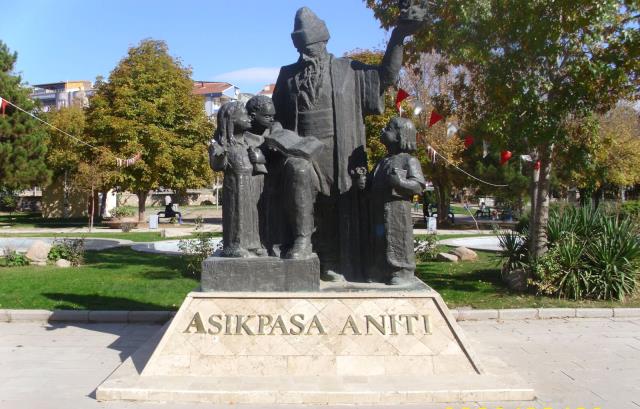
Aşık Pasha


Aşık Pasha, born in Kırşehir, one of the 13th century Sufis, evaluated all beings in the universe in relation to each other in a unity created by God. Thus, within the framework of Islamic mysticism, God, the universe and human beings have preferred the way of explaining them all by relating them to each other, and they have not dealt with them one by one.

An important issue that the Turks have achieved universality is the existence of universal state ideals. This is in question in the Oguz Kagan legend, it is revealed in the Bilge Kagan Inscriptions, in the works of Farabi in question, and it has been examined philosophically. In Karahanlı Yusuf’s 6000-odd Kutadgu Bilig work, the first Turkish work has the ideal of the universal state. Turkish states have always developed as empires. There is a universal state ideal in the Ottomans as well, it came to life with the red apple ideal.

Tengri-God

Turks embraced the universe with their understanding of Tengri, that is, god. From the earliest times, they had a great belief that man was created. Again, as it is written in the Bilge Kagan Inscription, “God lives time, man was created mortal.” The first word used in the Huns was the Turkish two words Tengri, and then it continued as the sky Tengri in the Gök Turks. One of our living thinkers, Dr. Sait Başer has published a study book on the similarity of the sky god and the attributes of Allah and has identified many similarities in this regard. Here are the inscriptions on which it is based, the Göktürk Inscriptions.

Ahmed Yasawi whispered from Turkistan:

“The carefree person is not the person; understand that.
Loveless human, animal species, listen to this.”

Âşık Pasha, who gave a voice from Anatolia:

Become Adami so that you can be love in the moment.
[They say man, the one who is light]

The Turkish state gets its power by creation. The trinity of heaven, earth and man was first and foremost being created.

The statements in the Bilge Kagan inscription that “the man whose time lives God is created and he is mortal” and the mention of the earth and the sky are the proofs of the advanced theology of the Turks. In addition, expressions such as “I won because God wanted” in the Bilge Tonyukuk inscription are indicators of the dominance attributed to the will of God.

Two warnings from our Master Âşık Pasha:

1. The scholar’s material and spiritual greed,
This is the main reason why it cannot speak to the public.

2. The most damage to a nation,
It comes from scholars who cannot limit their greed.
Insatiability makes the scholar ‘chatter’ who speaks for the people.

Three things surprise people:
The Realm that existed while it was not;
Adam, who came from the realm;
Mana that takes form from Adam…
That;
The meaning of three things is understood by ‘relative’ to three other things:
Realm[Universe] to Adam[Nothing];
Adam[Man] to the Realm;
Word/Mana goes to Adam…

//-: Âşık Paşa

“Time is human.
If man is good, time is also good;
If man is bad, time is also bad.”
//-: Âşık Paşa

Because;
‘Nizâm-ı Alem’ means human.
When man is corrupted, both the order and the realm are corrupted.
Because ‘order’ and ‘the world’ suffer corruption;
however, it is always human beings who ‘ifsâd’.

…………………………..

13. yüzyıl Mutasavvuflarından Kırşehir doğumlu Aşık Paşa evrendeki bütün varlıkları Tanrının oluşturduğu bir bütünlük içerisinde birbirleriyle ilişki içinde değerlendirmiştir. Böylelikle İslam tasavvuf anlayışı çerçevesinde Tanrı, evren ve insan, hepsini birbiriyle ilişkilendirmek yoluyla açıklama tarzını tercih etmişler tek tek ele almamışlardır.

Türklerin evrenselliği yakaladıklarına ilişkin önemli bir husus evrensel devlet ideallerinin mevcudiyetidir. Oğuz Kağan efsanesinde bu söz konusu, Bilge Kağan Yazıtları’nda da söz konusu Farabi’nin eserlerinde ortaya konmuştur felsefi olarak incelenmiştir. Karahanlı Yusuf’un 6000 küsür dizelik Kutadgu Bilig eserinde ilk Türkçe yazılan eserde yine evrensel devlet ideali mevcuttur. Türk devletleri hep imparatorluk olarak gelişmişlerdir. Osmanlılarda da evrensel devlet ideali mevcuttur, kızıl elma ideali ile hayat bulmuştur.

Tengri-Tanrı

Türkler, Tengri yani tanrı anlayışları ile evreni kucaklamışlardır. En eski zamanlardan başlayarak insanın yaratıldığına büyük bir inanç duymuşlardır. Yine Bilge Kağan Yazıtında yazıldığı üzere “Zamanı tanrı yaşar, kişioğlu ölümlü olarak yaratılmıştır.” Hunlarda ilk olarak kullanılan kelime Türkçe iki kelime Tengri daha sonra Gök Türkler’de gök Tengri olarak devam etmişti. Yaşayan düşünürlerimizden Dr. Sait Başer gök tanrı ile Allah’ın vasıfları benzerliği konusunda bir inceleme kitabı yayınlamış ve bu konuda çok sayıda benzerlikler tespit etmiştir. Burada esas aldığı yazıtlardır, Göktürk Yazıtlarıdır.

Türkistan’dan fısıldamış Ahmed Yesevî:

“Dertsiz insan, insan değil; bunu anlayın.
Aşksız insan, hayvan cinsi bunu dinleyin.”

Anadolu’dan ses vermiş Âşık Paşa:

Âdemî oldur ki anda aşk ola.
[İnsan diye, ışkı olana derler]

Türk devleti gücünü yaratılışla alır. Gök, yer ve insan üçlüsü ilk önce ve temel olarak yaratılıyordu.

Bilge Kağan yazıtında yer alan “zamanı tanrı yaşar kişioğlu yaratılmıştır ve ölümlüdür” ifadeleri, yer ile gökden bahsedilmesi, Türklerin gelişkin bir ilahiyatlarının olduğunun kanıtlarındandır. Ayrıca Bilge Tonyukuk yazıtında yer alan “Tanrı istediği için kazandım” tarzı ifadeler de, tanrı iradesine atfedilen başatlığın göstergeleridir.

Üstadımız Âşık Paşa’dan iki uyarı:

1. Âlimin maddî ve manevî aç-gözlülüğü,
halka söz geçirememesinin temel nedenidir.

2. Bir millete en çok zarar,
hırsına sınır çekemeyen bilginlerden gelir.
Doymazlık, bilgini, halk için konuşan ‘geveze’ kılar.

Üç şey ki hayret verir insana:
Yok-iken var-olan Âlem;
Âlem’den vara gelen Âdem;
Âdem’den sûret bulan mana…

Ki;

Üç şeyin manası, diğer üç şeye ‘nisbet’-ile anlaşılır:
Âlem[Evren], Adem’e[Yokluk’a];
Âdem[İnsan], Âlem’e;
Söz/Mana ise Âdem’e…

//-: Âşık Paşa

“Zaman, insan’dır.
İnsan iyi ise zaman da iyidir;
insan kötü ise zaman da kötüdür.”
//-: Âşık Paşa

Çünkü;

‘Nizâm-ı Âlem’ insan demektir.
İnsan bozuldu mu nizâm da bozulur âlem de.
Zîrâ ‘nizâm’ ve ‘âlem’ fesâd’a uğrar;
ancak ‘ifsâd’ eden her dâim insandır.

Aşık Paşa, Garipname 

İçinde 157 kez HİKMET geçiyor.
Büyük eserdir.

Nizamül Mülk

Nizam al-Mulk or “Order of the State” (1018 – 1092): (Tus, Iran) The honorary nickname of the powerful Seljuk vizier Abu Ali al-Hasan ibn Ali of Tuslu. In his work called The Book of the State, he opposed the Ismailis and sided with Ghazali against the threats to traditional Islam.

Nizamülmülk, statesman who served as the vizier of the sultans of the Great Seljuk State Tuğrul Bey, Alparslan and Melikşah.

  • The value of knowledge is similar to the energy source from which other candles receive light.
  • All people should have a job according to their abilities, and the sultan should not allow people to act on the contrary.
  • The army must always be at the disposal of the head of state.

Nizamulmulk

  • Date of birth 1018
  • Place of birth Tus, Iran
  • Date of death 14 October 1092
  • Place of death Sehne, Burucerd

……………………………………………

• All hope comes after despair.
• There is no need to worry, God’s evil will be good, the sun will rise, God’s help will reach us and if you do what I say, God willing, the fortune will pass on our will.
• Anger should prevail over the anger of the mind, not the mind.
• When the sultan is just and fair, the work of the reaya always finds peace. God knows best…
• A manager should seek the pleasure of Allah in everything he will do, submit to His orders and serve his way and his servant.
• The truth will forgive the evil, let the sun rise once, Allah’s help will reach us…
• If the ruler wishes to be more honorable and dignified than other rulers, he should decorate his own morals with good qualities.
• If someone says something, do not hear it until you verify it. For, those who hasten in this matter will regret it after that, and then it will not be beneficial.
• A person’s maturity and intellect show themselves in not getting angry.
• There are such people that there is no difference between their friendship and enmity. It is best to stay away from such people.
• If a person thinks he is very smart but does not consult with anyone, he will make a mistake that even the most foolish people would not do, and cannot save himself from doing things that he would be ashamed of.
• By eradicating those who blaspheme the blessing, they become hostile to religion-friendly disbelief. By supporting the religion of the truth, by Allah’s leave, it takes root in the desires and perversions of the flesh.
• Let’s do good while there is an opportunity today, because tomorrow the tough day they call helplessness and desperation comes and the opportunity is gone.
• I will always owe you a debt of gratitude, who will not forget your kindness until my last breath.
• The statesman should not persecute, and even if he is not persecuted, he should know whether the men he has assigned are persecuting. Otherwise, the sigh of the oppressed will eventually return and find itself.
• If I have bread to eat, let me spend the rest of my life in peace.
• Nothing in the world is better than generosity and giving bread…
• The difference that distinguishes the ruler from the others is that his rule is passed.
• As the number of something increases, its value decreases and its prestige decreases.
• If the imam’s prayer is broken, the prayers of all that tribe will be broken…
• The sharpness of the intelligence of the sultans is better than the army of a thousand people.
• It is not wise to burden one person with more than one job and leave dozens of people unemployed.
• Making hasty decisions is for the weak, not the mighty.
• There is no friend closer to me than knowledge in this world. Knowledge is worth a treasure; for you preserve the treasure, and knowledge preserves you.
• Woe to that state if someone commissioned by the state violates the rights of the oppressed, orphans and poor!
• Man’s perfection and reason are in his anger; If he gets angry, the anger should prevail over the anger of his mind, not his mind.
• Justice is the basis of property.
• The value of knowledge is similar to the energy source from which other candles receive light.
• Mazdek was saying that ‘property is common among people’. Because humans are God’s servants and Adam’s children. Each one should use the other’s property according to his needs and no one should be deprived of this right. Everyone should be equal in wealth. Upon Mazdek’s words, everyone put their property into partnership.
• All people should have a job according to their abilities, and the sultan should not allow people to act on the contrary.
• The army should always be at the disposal of the head of state.

……………………………………………………………………………………..

• Bütün ümitler ümitsizliğin arkasından gelir.
• Endişeye mahal yok, Hakk şerleri hayr eyler, güneş bir doğsun, Allah’ın yardımı bize erişecek ve dediklerimi yerine getirirseniz inşallah hayırsıyla muradımız üzre devredecektir felek.
• Kızgınlığın aklına değil, aklının kızgınlığına galip gelmesi lazımdır.
• Padişah insaflı ve adil olunca, reayanın işi hep sükun bulur. En iyisini Allah bilir…
• Yönetici, yapacağı her işte Allah’ın rızasını gözetmeli, O’nun emrine boyun eğerek, yoluna ve kuluna hizmet etmelidir.
• Hakk, şerleri hâyr eyler, güneş bir doğsun, Allâh’ın yardımı bize erişecek…
• Hükümdar diğer hükümdarlardan daha şerefli ve itibarlı olmak dilerse kendi ahlakını iyi hasletlerle donatıp süslemelidir.
• Eğer bir kimse bir şey söylerse, tahkik edinceye kadar onu işitmeyiniz. Zira, bu işte acale edenler, ondan sonra pişman olurlar, o zamand da fayda etmez.
• Kişioğlunun olgunluğu ve aklı, kendisini öfkelenmemekte gösterir.
• Öyle insanlar vardır ki, dostlukları ile düşmanlıkları arasında bir fark yoktur. En iyisi, bu tür insanlardan uzak durmaktır.
• Bir kimse kendini çok akıllı bilir de, kimse ile istişare etmezse, en akılsızların dahi yapmayacağı yanlışı yapar, utanacağı işleri işlemekten kendini kurtaramaz.
• Nimete küfran eyleyenlerin kökünü kazıyarak dine dost küfre hasım olur. Hakkın dinine destek olarak Allah’ın izniyle nefsani arzulara ve sapkınlıklara kök söktürür.
• Bugün fırsat var iken iyilik eyleyelim çünkü yarın acizlik ve çaresizlik dedikleri çetin gün çatar da fırsat kaçar.
• Son nefesime kadar bu iyiliğinizi unutmayacak size teşekkürü daima bir borç bileceğim.
• Devlet adamı zulmetmemeli, zulmetmiyorsa bile vazifelendirdiği adamların zulmedip etmediğini bilmelidir. Yoksa mazlumların ettiği ah, eninde sonunda dönüp kendisini bulacaktır.
• Yiyecek ekmeğim var ise hayatımın geri kalanını selamet içinde geçireyim.
• Dünyada hiçbir iş cömertlikten ve ekmek vermekten daha iyi değildir…
• Hükümdarı diğerlerinden ayıran fark onun hükmünün geçmesidir.
• Bir şeyin sayısı arttıkça değeri düşer ve saygınlığı azalır.
• Eğer imamın namazı bozuk olursa, bütün o kavmin namazı bozuk olur…
• Padişahların zekâlarının keskinliği bin kişilik ordudan daha evladır.
• Bir kişiye birden fazla iş yükleyip, onlarca kişiyi işsiz bırakmak akıl kârı değildir.
• Acele karar vermek, kudretli kişilerin değil, zayıfların işidir.
• Şu cihanda bana ilimden daha yakın bir dost bulunmaz. İlim hazineye bedeldir; zira hazineyi sen muhafaza edersin, ilim ise seni muhafaza eder.
• Devletin vazifelendirdiği birisi, mazlumun, yetim ve fukaranın hakkını yerse, vay o devletin haline!
• İnsanın mükemmelliği ve aklı kızmasındadır; eğer kızarsa kızgınlığın aklına değil aklının kızgınlığına galip gelmesi lazımdır.
• Adalet mülkün temelidir.
• İlmin değeri de diğer mumların kendisinden ışık aldığı enerji kaynağına benzer.
• Mazdek, ‘mal insanlar arasında ortaktır’ diyordu. Çünkü insanlar, Tanrı’nın kulları ve Adem’in çocuklarıdır. Her biri ihtiyacına göre ötekinin malını kullanmalı ve hiç kimse bu haktan yoksun kalmamalıdır. Herkes malca eşit olmalıdır. Mazdek’in bu sözleri üzerine herkes malını ortaklığa koymuştu.
• Bütün insanların kabiliyetlerine göre bir işi olmalı, bunun aksine hareket edilmesine padişah izin vermemeli.
• Ordu, devlet başkanının emrine her zaman amade olmalıdır.

Harezmi 780-850

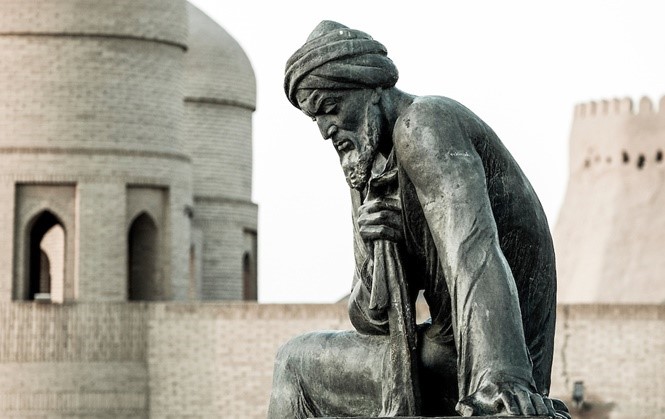
Abu Abdullah Muhammed Al-Khorezmi (780–850): He is from Khwarezm (Uzbekistan). He worked in Baghdad. He systematized and named algebra. He contributed to the global understanding of geometry in the Arab and Western world. He advocated the necessity of the decimal system. He gave his name to the algorithm. Kutrubbul (?) 780 of Baghdad, Baghdad 813-850. Astronomer and prominent Muslim mathematician. The person who recites Indian numerals. Transoxiana Khiva, Uzbekistan. Mathematics, Astronomy. He came from Khwarezm and lived in Baghdad. He systematized algebra and gave it its name, made great contributions to the understanding of geometry, advocated the step system, and collected data on the location of 2,402 points on Earth.

TIME
“In fact, it is the human need to calculate that reflects everything. I discovered that everything contains numbers, and I discovered that number is nothing more than combining units. All numbers are expressed together for these reasons. However, I discovered that all numbers are arranged by deriving numbers up to ten. “
Harezmi (780-850)
GROUND
“I begin with the name of Allah who is the forgiving and forgiving, and I declare that the book called El-Kitâb el-Muhtasar fi Hisâb al-Jabr ve al-Muqâbele was published by Muhammad ibn-Musâ al-Khwarizmi. Muhammad says; Thanks be to Allah, who gave us the power to discover important numbers. In fact, it is the human need to calculate that reflects everything. I discovered that everything contains numbers, and I discovered that the number is nothing more than combining units. Therefore, all numbers are expressed together. However, I discovered that all numbers are arranged by the derivation of numbers up to ten. The number ten is evaluated together in the same way and is therefore calculated in the same way twice or three times as in the case of unity. So twice as 10 becomes 20, and three times it becomes 30. And in this way, you can reach 100 by 10 times. Again, just like 10, two and three times of 100 can be taken in this way. The number can be enlarged up to thousand with two times, three times etc. In this way, the investigation of the infinite number is made by taking the multiples of the thousand and naming the numbers in various ways.
Harezmi (780-850)
MIND
“In addition, the simplification and crossing over that I found occurs between three types. These; called roots, squares, and numbers. However, the numbers are neither linked only by roots nor by their squares. Of these, a root consists of units of a number that can be multiplied by itself. The square is the result of multiplying the root with itself. Two of these three forms can be equal to another, for example;
Squares equalization to roots,
Squares equal numbers,
Equating roots to numbers “
Harezmi (780-850)
“A scientist either writes a work on a subject that no one has determined before him, or explains the subjects left closed by the scientists before him, makes it easier and understandable, or removes the deficiencies in the previously written works, corrects the mistakes”
“Thanks to God who empowered the discovery of important numbers.”
Harezmi (780-850)
DISCOVERY AND HAREZM OF ZERO

The inventor of zero is HAREZMİ. We are among the firsts starting with HAREZMİ and continuing with MATURİDİ. Our line of belief in the mind / mind in belief, which started with Harezmi, has gained continuity with Maturidi.

Our earliest thinker is Musa El Harezmi (780-850). Khorasan-Istanbul is an ancient line. The meanings of Hagia Sophia (Istanbul) and Kutadgu Bilig (Khorasan) are the same; SACRED KNOWLEDGE. The line that Alexander the Great headed with in 334 BC with the Asian Expedition is a multicultural line; Alexander went from that line to India. There is a meridian 0 (Hagia Sophia, Istanbul) and zero (Harezmi, Khorasan) on that line.

1000 years after Alexander the Great, this time the same line started to be active in the opposite direction, and information flow began to Baghdad, Istanbul and Europe via Khorasan. During the Khwarezmi period, Baghdad had become the center of philosophical intellectual studies uniting the West and East, India and the Mediterranean.

The statement of the late Erbakan, “If we ask the West for the patent of Zero, they cannot pay their debts if they give us 10 New York, 15 Paris, 20 London” is actually enough to explain the issue of zero and its importance.

With his work titled El-Cebr ve’l-Muqabele, which was systematically written for the first time on algebra, Harezmî revived the primitive algebra, basing all its solutions with geometric thoughts and put it into a systematic form.

‘Zero’ means ‘absence’ is an expression of something that is actually not. It is necessary to take an action for the zero to emerge. When we subtract one from one, it remains zero. In other words, an operation is absolutely necessary for zero. Let’s say we subtract one gold from one gold; the result is zero. So what happened to those gold coins? They stop, nothing happened to them. However, a zero emerged, or rather, “nothing” emerged. A “zero”, that is, “non-content” number emerged.

It was impossible to do mathematics with Latin numerals (originating from letters). Al-Khwarizmi is the father of all modern mathematics as the person who finds “zero”. He is the one who discovered the science of algebra. The logarithm exists with it today. As with other mathematical sciences. To whom do we owe the number of zeroes that I often come across in our money, exam notes or the codes of our computer (We know that computers use the binary system. That is to say, only 1 and 0 .. So if it were not zero, it would be almost impossible to use an object called a computer today)? Pay attention to these words:

“When eight leave the other eight, nothing remains.

Put a circle so it doesn’t stay empty! ”

That’s what Harezmi says; In his second work, which tells about Indian account and has been translated into Latin .. So Kitab al-Concise elephant Hisap al Hind ‘de. The use of the number system from 1 to 9 and the number zero in Europe is after the translation of Khwarezmî’s work into European languages. Until this date, the numeral system called Roman numerals was used in Europe, and it was impossible to develop mathematics with them.

It is worth noting that the Indians felt the presence of zero for the first time and they used spaces instead of zero when writing numbers. This is not at all practical. But what gives him a symbol and identity and in his work

“It is possible to do all operations with 9 numbers and this new symbol”

The concept of zero and HAREZMI

Harezmi is the true explorer of zero. So he is the man who completes the decimal system by adding zero to other numbers. Thus, the zero, which the Indians call sunya, attained its true identity with aerospace, which means hollow in the Islamic scientific world, and started its journey to Europe. The Germans called it ziffer and the French called it chiffre. There is something very interesting about the French name of zero alone. Chiffre also means password.

Do you think the French, feeling the magnificent power of zero, think what the password hidden in it is? Harezmî, for the first time, first and second degree equations with analytical method; He determined the rules and methods of solving equations with one unknown using algebraic and geometrical methods. Harezmî, who used the number zero in mathematics for the first time, introduced the science of algebra methodically and systematically. He systematized the topics of algebra before him under the name of “algebra” for the first time.

The first act of mathematics is counting… When the number system started to form, people knew only 1 and 2 for a very long time. Finding zero is much later. Humanity has lived without zero for centuries.

The Indians were the first to find it.

Harezmi is the first person who introduced this concept to the Islamic world and used it to calculate. In the first part of the Algebra Book devoted to the “Definition of Decimal Numbers”, Harezmi said:

When I thought, “What do people usually expect from calculation ?, I saw that the expected number is always.”

And “Kitâbu’l-Hisâbi’l-Hind” started to be written. The work was about operations such as addition, subtraction, multiplication and division, which we call four operations in arithmetic today. Indian numerals and the decimal number system entered the Islamic world with this work. Like the Algebra book, this work became the main source of all arithmetic books until the middle of the Western Renaissance.

Thanks to these two important mathematical works of Harezmi, the Indian numeral and calculus system, which was perfected by the Harezmi, began to replace the letter-number and calculus system, which has been in force in the West since the Romans.

Realizing that all numbers can be written with nine Indian numerals and a zero sign, while translating Harezmi’s book into Latin, Italian mathematician Fibonacci started the “Book of Abacus” with the following sentence, which would seem quite strange and incomprehensible for Europe:

“All numbers can be written with nine Indian numbers and a zero sign.”

And humanity is learning to count. Thanks to Harezmî, who systematically explained the number system and the art of calculus.

He worked on the basis of algebra in the field of mathematics. He found the basis of the binary number system and zero (0), which is the basis of today’s electronics. The word algebra comes from “El-Kitab`ül-Concise Hisab`il Algebra and Reaction” (book on algebra and equation).

His studies in mathematics form the basis of algebra. It was also determined that he used the digit number system instead of letters and syllables to express numbers for a period. The book of Calculus Algebra wal-Reaction is the first book in the field of mathematics in which systematic solutions of equations with first and second order unknowns are included. For this reason, Harezmi is known as the father of algebra.

Harezmi, who used zero for the first time in mathematics, is considered the founder of today’s algebra and trigonometry. He found ways to solve first and second order equations by analytical method and equations with one unknowns by algebraic and geometric methods.

“The number zero was banned in Europe for a long time as the invention of Muslim Turks and was excommunicated by the church. Both Kabbalists and Pythagoras explained the value of everything in the universe in numbers, but they could not calculate the value of something.

That thing they could not calculate was actually not “something”. Absence! How would something be marked? This figure was gifted to the world by an Uzbek Turk (780-850) who can be described as the greatest scientist in the history of mathematics:

“When eight leave the other eight, nothing remains. Put a circle so it doesn’t stay empty! ”


Ebu Hanife

Abu Hanifa (699-767): (grandfathers of Uzbekistan) Kufa 699, Mecca, Baghdad (prison) 767: Islamic theologian (theologian) and legal scholar (faqih). Mesopotamia Kufa Iraq. “If what I don’t know was under my feet, my head would touch the highest floor of the sky. “His grandfather is from Tirmidhi, Uzbekistan, his lineage went to Iraq.

Imam-i Azam Abu Hanifa, 699 -767

He is the founder of the Hanafi school. He is from Khorasan Turks. He has combined the mind and faith.

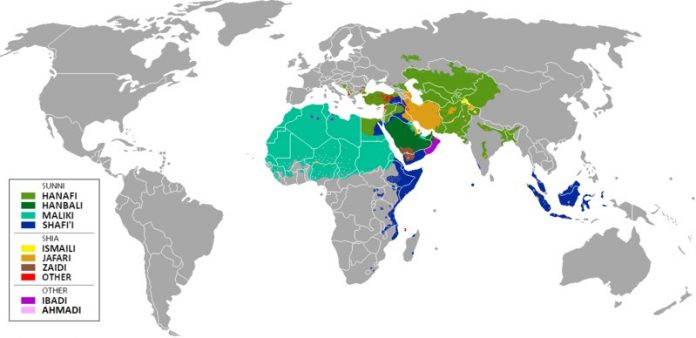
Northern Islam (Hanafi) line

Turkey,
Balkans,
Turkistan (Turkmenistan, Uzbekistan, Tajikistan, Kyrgyzstan, Kazakhstan, Afghanistan),
Egypt (some regions),
North of the Middle East (Syria, Iraq, Jordan),
Indian subcontinent (in India, Bangladesh and Pakistan),
In China’s Xinjiang Uyghur province,
It became widespread in the Caucasus, and a large map emerged.
With Maturidiism (844-944), the aspect of belief deepened.

The Hanafi school is the largest of the four Sunni schools in terms of population. Its followers make up about 56% of the entire Islamic world.

Mission: Faith and Reason
Vision: Hanafism

“If what I don’t know was under my feet, my head would be worth the highest floor of the sky.”

Bilge Khagan

https://kulturenvanteri.com/yer/bilge-kagan-yaziti/#16/47.557312/102.836708


Blue sky above

When space is created below,

Between the two of them,

Human beings are created.


Bilge Khagan Inscription 


Bilge Kagan Inscription

Üze kök Tengri

Asra yağız yir kılındukda

İkin ara kişi oğlı kılınmış.


Üstte mavi gök,

Altta yağız yer kılındıkta,

İkisi arasında insanoğlu kılınmış.

Bilge Kağan Yazıtı

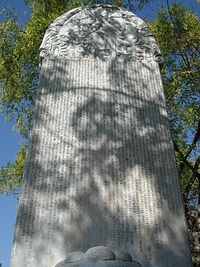
Bilge Qaghan inscriptions The Bilga Khagan monument or Bilge Khagan inscription is one of the oldest inscriptions in the Turkic language. It is one of the monuments known as Orkhon monuments. This monument was erected by his son Tengri khagan a year after the death of Bilga khagan (73). What is written in this monument, as in the monument of Kultig, is in the language of Bilga Khagan

Bilge Kagan Inscription
The Bilge Kagan Monument is also known as the Bilge Kagan Inscription.

Group: Memorial Building
Type: Inscription
Culture: Göktürk
century: 8th century
Region: Mongolia, Arhangay

The Bilge Kagan Inscription or the Bilge Kagan Inscription is one of the oldest inscriptions of the Turkish language. It is one of the inscriptions known as the Orkhon Inscriptions.

This inscription was erected by his own son, Tengri Kagan, one year (735) after Bilge Kagan’s death (734). The speaker in this inscription is Bilge Kagan, as in the Kul Tigin inscription.

It is located near the Orkhon River in Mongolia. The distance between the Bilge Kagan Inscription and the Kul Tigin Inscription is one kilometer. Written in Göktürk script. Some parts of it were quoted from the Kül Tigin Inscription. Unlike him, he also told the events after Kul Tigin’s death. There are also balbals around the tomb of Bilge Kagan around the Kul Tigin inscriptions. These were written by Yollug Tigin.

Why the center of the world is Eastern Mediterranean?

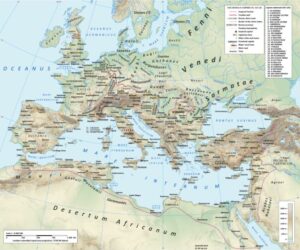
https://upload.wikimedia.org/wikipedia/commons/b/bb/Roman_Empire_125.png

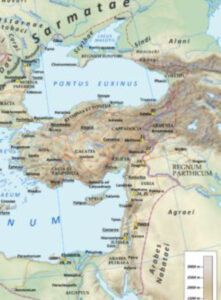
Legionary Bases in Turkey. All bases are around Euphrates (Firat) river.

The Mediterranean is already the inland sea of Rome. It has 10 bases located on the Eastern Mediterranean and North African coasts with the number 20.21.22.23. 24.25.26.27.28.29.30 on the outer periphery of the Mediterranean.


THE GENIUS OF ROME

On the Roman Empire map dated 125, there are 10 legionnaires bases on the Black Sea-Eastern Mediterranean line, starting from the ancient city of Satala around Trabzon and extending to Alexandria.

If we include the 10 bases along the Danube, 20 of the 30 bases in the Empire are on the Danube-Euphrates-Nile line.

While connecting the Danube and Euphrates lines over the Black Sea, ROME also interlocked the Euphrates and Nile lines over the Eastern Mediterranean. And named the Mediterranean as the inland sea (Mare Internum).

In the western Mediterranean, there is only two bases in Spain and Algeria.

What an important strategic initiative of ROME with Eastern Mediterranean focus.

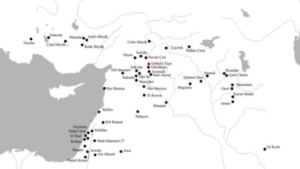
Earliest settlements were in the Eastern Mediterranean in the World.

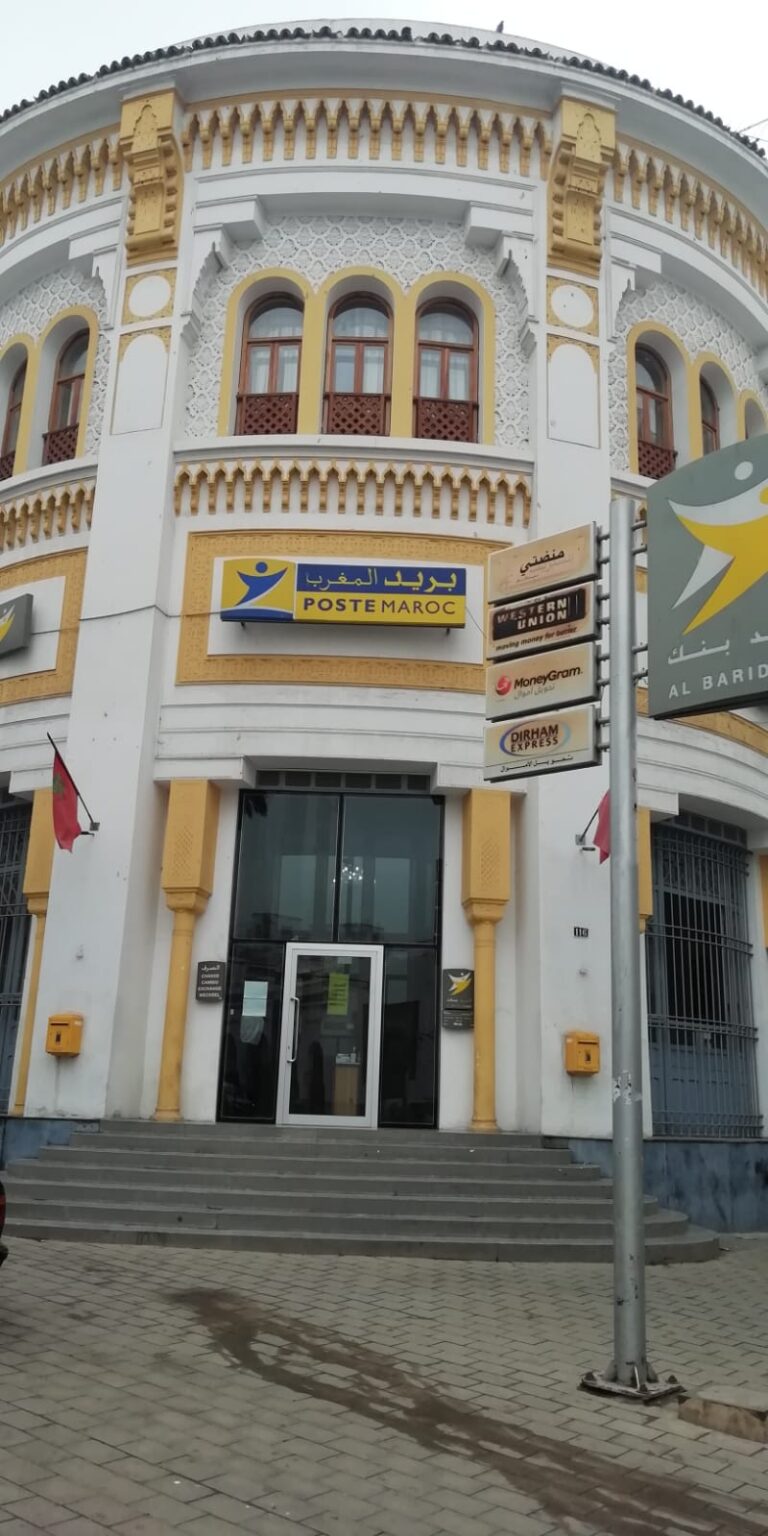
Casablanca Streets in Morocco Africa

by our Correspondent Irfan Benli