Home Blog Page 199

Archaeology of the First Turks by Prof Dr Şevket Dönmez

Abstract: Archaeology of the Early Turks: An Archaeological Perspective on the Homeland Problem of the Turks, Prof Dr Şevket Dönmez


  1. Writing systems
  2. Troubled Homeland Admissions
  3. Archaeoclimatology
  4. Turkish Protohistory/Prehistory: The First Turks
  5. Archaeopolitics
  6. Homeland
  7. Ancient DNA Studies
  8. Steppe nomads Sakalar (East)
  9. Steppe nomads Scythians (Western)
  10. Western Turkologists


Writing systems

It appeared in Mesopotamia around 3200 BC, and in Egypt around 3100 BC, that is, in the late 4th millennium BC. The Turks, on the other hand, entered writing approximately 3700-3800 years after the Sumerians and Egyptians. The main problem with the history of the Turks, who are at least as ancient as the Mesopotamian and Egyptian societies, is that they could not explain themselves with their own resources for thousands of years. In other words, Turkish communities began to express themselves thousands of years after the Sumerians, Egyptians, Assyrians, Babylonians, Phoenicians, Greeks, Persians, Romans and Chinese. In this process, we can find all kinds of information about Turkish societies in Chinese, Persian, Greek and Roman sources.

When the information provided by external naming (exony) about Turkish groups consisting of various tribes and therefore having many names came together, a great terminological complexity was experienced in Turcology . The geographical harmony of hundreds of ethnic group names mentioned in Chinese, Persian, Greek and Roman written sources with the lands where Turks lived has been achieved, on the other hand, the debates on exactly which tribe, community or state they refer to have not ended until today.

In this context, it is revealed that the Turks passed through the historical periods in the first quarter of the 8th century AD with the script known as the Göktürk or Orkhon alphabet (Ergin 1976: 340-373), the long unwritten process of approximately 3700 years before this date should be accepted as the Protohistory of Turkish history.

Prof. Dr. Şevket Dönmez, Istanbul University, Faculty of Letters, Department of Archeology, Department of Protohistory and Near Eastern Archeology, Beyazıt 34453 Istanbul, Turkey. [email protected]
Troubled Homeland Admissions

Turks are privileged others in world history . With its nomadic origins, herding, hunting, nomadic lifestyles and especially warrior characters, it is a society that is feared but respected as well. This situation manifests itself in Gog and Magog (Ezekiel 38, 2-3, 14-16, 18; 39, 1-6, 11-12) and Gog and Magog (Genesis 10, 2; John’s Revelation 20, 7-8; al-Kahf Surah 94. Verses; Anbiya Surah 96-97. Verses) inaccessible, imperceptible and incomprehensible holy book societies, such as the association with Turks1 .

It has been suggested by numerous researchers and writers that the first Turks emerged with a nomadic lifestyle in the Altai, especially in Eastern Altai or Southern Siberia and even in Western Mongolia (see Map 1), and that they were people of shepherd culture3. This view, which was constructed especially by historians and Turcologists of Western origin , but which cannot be supported by any archaeological evidence and findings , has taken an important place in our scientific memory until today, as it carries the insistence that determines the first homeland of the Turks . To this situation, a Turkist thought, centered on Russia and rooted outside, has been added.

The fact that Western Turkologists such as W. Radloff, A. Vámbéry, R. Grousset and VV Barthold4 pioneered studies on Turkish history, culture, anthropology and language, formed the basis of the debates that have carried over to the present day. It is remarkable in many respects that these important scientists pointed to the geographies of Southern Siberia, Altai and Mongolia, and especially the Eastern Altai (see Map 1), as the first lands where the Turks appeared and appeared in history. The aim hidden here is most likely to place the Turkish homeland in regions as far away as possible from Neasia , which represents the civilized world , and to give the Turks Mongoloid belonging. Zeki Velidî Togan was the first to notice and criticize this situation5.

The views of Westerners, who are the founders of Turcology , about Turks have been discussed for many years by important Turcologists such as Fuad Köprülü, Zeki Velidî Togan, Emel Esin, İbrahim Kafesoğlu, Abdülkadir Inan, Osman Turan and Bahaeddin Ögel6 , but a certain consensus could not be reached , especially on the first homeland and race. On the other hand, Zeki Velidi Togan approached with suspicion that the Altai geography and its immediate surroundings were the first homeland of the Turks, and expressed his opinion that the north of the Aral Sea and the North Caspian shores could be decisive for the earliest dates of the Turks7. Osman Turan, on the other hand , drew attention to the wide regions spread between the Altai-Ural Mountains on the subject of homeland .

The most interesting point in the debates on homeland acceptances that we have considered so far is that the Central Asian archaeological findings were used not by archaeologists but by researchers from other disciplines. These researchers, who do not know the ordinary archaeological methods, could not use them in the context of archaeological findings, and on top of that, they could not make the necessary evaluations in terms of stylecritical.

In this context, 3 Klaproth 1824-28; Hammer 1832; Schott 1836; Castren 1856; Vambery 1885; Koppers 1941. 4 Barthold 1945. 5 Togan 1981: 9. 6 For discussions on the subject, see. Avcıoğlu 1978: 297-301. 7 Togan 1981: 149-150. 8 Turan 1979: 70. We have to say that the problematic acceptance of the homeland based on the first Turks is not compatible with archaeological identities and historical facts.

Although history, anthropology, linguistics and historical geography were among the great debates observed in the long process of Turcology , which started from the second half of the 19th century and reached the present day, archeology has never been adequate. For this reason, questions such as why the Mountainous Altai Region, Siberia and Western Mongolia were offered as the first homeland of the Turks , why this issue is still insisted on and why another region is not considered, are due to the fact that the science of archeology is ignored or not used consciously. remains unanswered.

The intellectual pursuit of Turcology was directly reflected in the world of education, and since the beginning of the 1930s, Central Asian Turkish history began to be given a wider place in history teaching in Turkey. At the first congress of the Turkish Historical Society held in 1932, Yusuf Akçura and Afet Inan defended the Altays as the homeland of Anatolian Turks in the papers they presented. History textbooks in Turkey began to be written in line with this view in the same period9.

Result: Homeland

Turks are a steppe society and are the main element of the culture that was born and developed in the steppes. The steppe culture was founded on the equestrian nomadism system from the earliest times, with horse breeding and shepherding at its center. The Uvarazmi (Iron Age) – Chrosmaia (Ancient Age) geography, which will be called Khorasan and Transoxiana in Islamic periods, in the north and east of the Caspian Sea since the Early Iron Age, is the homeland of the Turks living in Near East today .

The earliest archaeological finds, whose belonging to Turkish communities can be determined with certainty, come from West Central Asia, where the Oxus and Jakartes rivers form the western part of the Caspian Sea. The archaeological images of the sakā tigrahaudā and sakā haomavargā clusters in Persian sources show great similarities with the historical Turkish type.

The historical ties of the Oghuzs, whose existence has been proven in the region since the 6th century AD, especially with the Sakas, point to a holistic geography of Turkish societies from the 10th century BC to the present, the Saka – Huns – Gokturks – Oghuz / Turkmen lineage. Looking at all these, it seems possible to draw the borders of the first Turkish homeland . Archaeological findings are gradually increasing at the point that Khorasan and Transoxiana, which the Persians called Tura – Turan due to the existence of Proto-Turk and Turkish clusters from the earliest dates, were the homeland of Turkish societies in the historical process.

Prof. Dr. Şevket Dönmez, Istanbul University, Faculty of Letters, Department of Archeology, Department of Protohistory and Near Eastern Archeology, Beyazıt 34453 Istanbul, Turkey. [email protected]

Archaeoclimatology

Archaeoclimatology is a discipline that offers very important clues for the determination of the Turkish homeland . Archaeoclimatological findings indicate that Southern Siberia, the Altai Highlands and Eastern Mongolia were adjacent to glaciers in the 1st Millennium BC and had a very harsh climate .He has proven that he has generations. Siberia is a very large region starting from the Ural Mountains and stretching east over the Yenisei River. This region, which has vast lands, is divided into two parts as East and West Siberia. West Siberia extends up to the Yenisei and Ob rivers and consists of flat areas. Siberia has short summers and very long winters. Since the region is open to the Arctic Ocean, the cold of the north quickly shifts towards the south without encountering any obstacles. After the stunted grasses and plants, thorn-leaved trees begin to the south. The climatologicalfeatures show that Siberia is a geography suitable for the life of small communities that make a living only by hunting. These evaluations reveal that the views on the Siberian origin of the Proto-Turk clusters, which spread over a huge area extending from the shores of the Caspian Sea to Fergana and inland China during the Iron Age, should be reviewed. It points out that Siberia, which has a sparse population due to climatic difficulties even today, did not have a climate and ecosystem that would have created an important civilization 3000 years ago.

There is a need for new evaluations that the societies living in the region in pre-Iron Age Siberia may be related to the Proto-Mongols. It does not coincide with scientific facts to argue that the Turkish communities, spread over a huge geography stretching from Western Mongolia in the east to the Danube Basin in the west, from Siberia in the north to Egypt in the south, originated in a region that had no economic attraction, had no high civilizational infrastructure , and was far from the civilized world. .

When the cultural and religious development stages are evaluated, it is observed that none of the things inherited by the Turks today were found in Southern Siberia and the Mountainous Altai Region and Mongolia 3000 years ago, and there are no archaeological finds that can be associated with the Turks before the Iron Age. The Saka kurgans of the Late Iron Age and the Hun finds in the following periods, Göktürk written documents and finds should not be related to the derivation, but should be the result of the expansion and expansion policies of the Turks. 9 See. History I. Prehistoric Times and Ancient Times. Istanbul. 1931. 6 Sevket Donmez

Prof. Dr. Şevket Dönmez, Istanbul University, Faculty of Letters, Department of Archeology, Department of Protohistory and Near Eastern Archeology, Beyazıt 34453 Istanbul, Turkey. [email protected]

Archaeopolitics

In the early 1990s, after the collapse of the Soviet Union, Western researchers began intensive archaeological research in the Caspian Sea Basin to determine the Indo-European homeland . Among these, a chronology constructed by the Belgian archeology delegation was sufficient to show that the archaeological activities of the Westerners were being developed under the leadership of archaeopolitical ideas . According to the researches of the Belgians, the Scythian Period between 800 BC and 200 BC, the Hun Period between 200 BC and 500 AD, and the Turkic Period between 500-900 AD10.

As it can be understood from the new chronological order in question, it is desired to emphasize that even the Huns are not of Turkish origin, which is a scientific fact that they are one of the oldest Turkish communities, let alone the Scythians.

In the light of our current knowledge, the first society in history that we can connect with the Turks is the Scythians in general. On the other hand, who the Scythians are, in which regions they live and what kind of social structure they have should be defined correctly. The Scythians are the first nomadic people of the steppe to be recorded in historical records, and the traces made through Protohistory show that they entered the historical scene at the beginning of the 1st Millennium BC. The name Scythian is likely to be a much broader term than the name of an ethnic group or political formation.

Archaeological findings attributed to the Scythians show that the human clusters that made up this society were not culturally homogeneous. While the ancient Anatolian historian Herodotos referred to the Scythians as Scythos (Historiai, I, 104-105), the Persians called this society Saka/Sakas11. The Scythians/Sakas, who lived in West-Central Asia (Western Turkestan) and its immediate surroundings from the 9th century BC to the 2nd century BC, first appear in the Neo-Assyrian records as Iškuza12 or Ašguzai13 in the written documents of Neasia.

Urartians are Scythians 10 Burgeois/Burgeois/Cammaert/Decleir/Langohr/Mikkelsen/Huele 1999: 309-311. 11 The Sculptures and Inscription of Darius the Great on the Rock of Behistûn in Persia. London, 1907. 12 Salvini/Salvini 2003: 228. 13 Luckenbill 1968: 517-533. He called it iš-gi-gu-lu14. It is not a correct approach to evaluate the Scythians, who live a nomadic life in a vast geography stretching from Eastern Europe to East Turkestan, and have an economy based on the spoils of war and livestock, by considering them on the basis of a single ethnos.

Herodotos stated that these people did not speak a single language, and it was understood by seven translators with them (Historiai, IV, 24). The information given by Herodotus about the number of languages ​​spoken in the Scythian geography is both very valuable and vital for understanding the archaeoethnicity of the Scythian clusters. Today’s Bulgaria, Romania, Moldova, Gagauzia, Hungary, Ukraine, Crimea, Belarus, Russian Federation, Bashkortostan, Chuvashia, Karachay-Balkaria, Yakutia, Tatarstan, Altai, Tuva, Kazakhstan, Turkmenistan, Uzbekistan, Kyrgyzstan, Tajikistan, Iran, Mongolia and East Turkestan The ideas that the Scythian clusters, who lived in a huge geography formed by the .

In this context, it can be thought that the Scythians, who are understood not to consist of a single race or ethnos, were included in a confederation system consisting of seven different ethnic groups speaking at least seven languages. Hungarians, Bulgarians, Russians, Ukrainians, Gagauzes, Ossetians, Dagestanis, Karachay-Balkarian Turks, Turks of Turkey and Near East, Azerbaijani Turks, Kazakhs, Kyrgyz, Turkmens, Persians, Tajiks and Uyghurs live in the wide geography where the Scythians lived. These nations, living in the same geography today, have made efforts to establish historical bonds with the Scythians. They carry out archeology, anthropology and history researches related to this subject and projects for their ancient citizens, Scythians. In this respect, it is observed that the concept of Scythian has a strong archaeopolitical counterpart today.

Among the ancient written sources, we know the Scythians in the most detailed way from the statements of Herodotus. The (Eastern) Scythian clusters, which the Persians called Saka, can be traced from the written sources and archaeological findings in Iran. The steppe nomads described by Herodotus are (Western) Scythians, and these are clusters close to the ancient Greek world, which have cultural and commercial connections with the colonial cities on the northern shores of the Black Sea. Herodotus reports that the (Western) Scythians who lived in the steppes north of the Black Sea consisted of three large clusters; Nomadic Scythians (Historiai, IV, 19), Farmer Scythians (Historiai, IV, 18), and Royal (Magnificent) Scythians (Historiai, IV, 20). Kurgans in this region are located between the lower Dnieper river region and the Kerch Strait on both sides, namely between the Black Sea and the Sea of ​​Azov, It is concentrated along the Kuban River and in the Crimea. In these tombs, valuable findings that the (Western) Scythians produced in local workshops under the influence of ancient Greek art were found.

It is observed that the Scythian warriors depicted on the aforementioned finds are quite different from the (Eastern) Scythians with their large appearance, long hair, thick beard and mustache, European face type and clothes (Fig. 1-5). In this context, we can say that the majority of Scythians living in the steppes in the west and north of the Black Sea, unlike the Sakas, are not Turanian but Indo-European in appearance15. This physical feature can be considered to be the general characteristic of the Scythian clusters west of the Volga and especially in the north of the Black Sea. The Asian features of the (Eastern) Scythians/Sakas are Turanian and compatible with the historical Turkish type (Fig. 6-13)16. These different face types are archaeological findings pointing to separate genetic origins. 14 Melikishvili 127, 133. 15 Piotrovsky 1976: 6-8; Raevsky 1976: 15-16; Het Goud der Skythen. Brussel (1991): 97, 99, 113-116, 123; Simpson/Pankova 2017: 188, 197, 204-206, 269, 292-294. 16 Simpson/Pankova 2017: 57, 106, 148. 8 Şevket Dönmez

The issue of whether (Western) Scythians (Fig. 1-5) and (Eastern) Scythians (Fig. 6-13) living in neighboring geographies that complement each other and have similar lifestyles, but reflected in the art of painting with different facial appearances, have the same ethnos. It is an issue that has been discussed and not agreed upon. The (Western) Scythians, whose life, culture and funeral rites Herodotos told, were geographically separate from the Sakas, in the light of archaeological findings. It is observed that the (Western) Scythians, who are close to the ancient Western world and described in their works, lived in the vast steppes stretching from Eastern Europe and the Volga Basin. Sakalar, which can be traced in Persian written documents and archaeological findings, is in the east of the Caspian Sea, in the Oxus (Amu Derya, Ceyhun) and Jakartes (Sir Derya, Seyhun) basins,

prof. Dr. Şevket Dönmez, Istanbul University, Faculty of Letters, Department of Archeology, Department of Protohistory and Near Eastern Archeology, Beyazıt 34453 Istanbul, Turkey. [email protected]

Turkish Protohistory/Prehistory: Who Were the First Turks?

The concept of “Turkish Protohistory/Prehistory” is an archaeological approach that is brought to the fore in this article for the first time in ancient sciences, which constitutes a new key to the solution of the homeland problem and researches Turkish societies, and should not be confused with the term “Proto-Turk/Pre-Turk”. In this context, the use of written sources and archaeological findings belonging to Greek, Roman, Persian and Chinese cultures that surrounded the ancient Turkish geography with new approaches seems to enable not only the homeland problem of the Turks, but also many issues to be started to be discussed in a healthy way in public and scientific platforms.

These discussions will also enable the identification of cultural and archaeological values ​​in the historical geography of the Turks, but whose relations with the Turks are viewed with suspicion. It is seen that the archaeological findings and written sources belonging to the Persians have not been sufficiently taken into account by those who are interested in pre-Islamic Turkish archeology, culture and history. When the Persian findings about the Turks are examined, it is observed that the archeological, religious and cultural evidences show that the Turks, who started their historical period in the early 8th century AD, had a long-term “Protohistory/Prehistory” traced from the Near East and going back to the 10th century BC.

Prof. Dr. Şevket Dönmez, Istanbul University, Faculty of Letters, Department of Archeology, Department of Protohistory and Near Eastern Archeology, Beyazıt 34453 Istanbul, Turkey. [email protected]


Ancient DNA studies

In order to reverse this situation, the ancient DNA studies were accelerated by the Westerners. While it is known that there is no pure gene left in the world, it is observed that the studies in question are carried out to complicate the historical facts through genetics. It is clear that trying to explain everything in terms of genes is being made a way of distorting the facts and making cultural racism . In this context, as the oldest geography with the historical and cultural connections of today’s Turkish communities, I think that the vast lands east of the Caspian Sea , which the Iranians call Saka Land in the Ancient Ages, Turan in the Middle Ages, then Turkistan, and Transoxiana by the Arabs, are the first known homeland of the Turks .

In this context, it is an archaeological reality that nomads belonging to the Turanian race, who did not belong to the Indo-European family, lived in the vast lands to the east of the Caspian Sea, which is adjacent to the Iranian geography during the Iron Age. We can say that West-Central Asia, known as Uvarazmi in the Persian period, Chorasmia in the Ancient Period, Tura, Turan, Khorasan in the Late Antique, Early Middle Ages, and Transoxiana in the Early Islamic Period, is the geography where the first historical identification of Turks can be made. It is seen that this process, which dates back to 1000 BC, was a period in which the most concrete findings regarding the Prehistory of the Turks and their homeland were followed.

Prof. Dr. Şevket Dönmez, Istanbul University, Faculty of Letters, Department of Archeology, Department of Protohistory and Near Eastern Archeology, Beyazıt 34453 Istanbul, Turkey. [email protected]

Archaeology of the Proto-Turks by Prof Dr Şevket Dönmez

Şevket DÖNMEZ*

Prof. Dr. Şevket Dönmez, İstanbul Üniversitesi, Edebiyat Fakültesi, Arkeoloji Bölümü, Protohistorya ve Önasya Arkeolojisi Anabilim Dalı, Beyazıt 34453 İstanbul, Türkiye. [email protected]

Turks are the privilaged others of the world history. With its nomadic origins, shepherds, hunting, nomadic lifestyles and especially warrior characters, it is a society that is feared but respected as well. Central Asia is the geography where Turks emerged and lived through their cultural and religious development phases.

Today’s archaeological findings and historical sources indicate that the larger part of the process of Turkish history in this great geography belongs to the Pre-Islamic periods. The nomadic steppe human clusters, which we will call Proto-Turan and Proto-Turkic in 1000s BC, have a pre-Abrahamic Religions period dating back to 1000 AD.

Contrary to the popular belief, the nomadic people are not without history. The fact that they did not use writing due to the socio-economic order and the nature-based culture they live in does not mean that these people do not have a history. In light of the contemporary evidence and considering the Sakae (the Eastern Scythians) as the earliest ancestors of Turks (Proto-Turan, Proto-Turks), the emergence of the Turks with their cultural and racial character in the historical scene even without using the name “Turk” dated to 3000 years before.

Sakae/(Eastern) Scythians – Huns – Gökturks – Oghuzs/Turkomans being the steppe nomads of the Central Asia, which later will be called Turkestan, are the Turkish societites which will establish a long cultural chain within the Turan cluster. This process which can be defined as Proto-Turk and started with Sakae who were distinguished by their steppe nomadic identity has continued largely unchanged with Huns and Gökturks.

Oghuzs and Turkomans which consists the final link in the chain of the Turkish peoples are a turning point. The adoption of the sedentary life of some of the Oghuz/Turkoman tribes with their conversion to Islam who genetically carried the socio-economic properties of the Sakae and inherited their steppe culture and nomadic life-style is a breaking point to this chain that continued since around the 1000s BC.

The common characteristics of the Sakae-Gökturks-Oghuz/Turkomans are that they were formed by the proto-feudal tribes. Examination of their history and culture, especially in terms of archaeology, means examining the Anatolian and Near Eastern Turks, who are their heirs.

It is seen that the archaeological findings and written sources belonging to the Persians have not been sufficiently taken into account by those who are interested in pre-Islamic Turkish archaeology, culture and history.

When the Persian findings about the Turks are examined, it is observed that the archeological, religious and cultural evidences show that the Turks, who started their historical period in the early 8th century AD, had a long-term “Protohistory” traced from the Near East and going back to the 10th century BC.

Evidence showing that Turkish history, culture and language originated in the north and east of the Caspian Sea is increasing day by day on the basis of the (Eastern) Scythians/Sakas, who are understood to be the autochthonous people of this region.

At the beginning of the 1st Millennium BC, Proto-Turkic communities and Proto-Turan clusters formed by the Saka, who were at the very beginning of their history, lived and wandered in a wide geography from the Caspian Sea to East Turkestan, from Southern Siberia to Northern India during the Iron Age.

Kurgans dated to the Early Iron Age (10th-8th centuries BC), which we can define as the Proto-Saka Period, indicate that the Saka emerged in Western Turkestan, which covers the geography of today’s Western Kazakhstan, Uzbekistan and Northern Turkmenistan.

While the archaeological findings of this geography indicate that the steppe culture began to evolve into warrior shepherds by taming the horse, it also shows that the real nomadic horse culture in Central Asia started with the Sakae.

It can be traced on the basis of burial traditions that the Saka clusters spread from the East Caspian coast to the southeast towards the Tian Shan – Fergana in the Early, Middle and Late Iron Ages, and to the northeast on the Altay – Mongolia route. The primary evidence of Sakae being the first people that have the Proto-Turkic/Turan identity is that they had the tribal social structure. Both the Sakas and the Huns – Gökturks – Oghuzs/ Turkomans, who followed this society in chronological order, were also nomadic societies with tribal organization. Tent is the smallest unit of the tribe. Tribe is the most basic part of society based on a lineage formed by blood ties and marriages.

In this context, it can be said that the Sakae were the first society of the Turkish lineage in the geography that would later be called Turkestan.

It can be understood from their physical appearance and anthropological features that the Sakae clusters living in the geography of Khorasan – Transoxiana in the east of the Caspian Sea are racially distant from Europe and Indo-European communities.

There is no archaeological problem in expressing the obvious differences in appearance between the (Western) Scythians and the (Eastern) Scythians. Just as the works depicting (Western) Scythians were made in workshops with ancient Greek influence, the reliefs in Persepolis Apadana Palace have contributions from ancient Anatolian and ancient Greek artists.

It will be the most important contribution of archaeology to the pre-Islamic Turkish archaeology and history to reveal the similarities of the Saka individuals of the Apadana Palace with the historical Turkic type, and the differences of the (Western) Scythians with the Proto-Turk clusters, and to carry out detailed style-critic studies within the framework of ordinary methods.

Keywords: Turk, Tura, Turan, Scythian, Saka


Are there any co-founder texts of the Turkish world?

There are Turkish texts that are reborn and resurrected with new readers every century. A review article on immortal works from Dede Korkut to Manas Epic, from Orkhon Monuments to Mevlidi Şerife, and from Siyahname to Safahat.
Necip Tosun   Yeni Şafak
Turkish, which is the language spoken and written by millions of people spread over a wide geography of the world, is like gardens in which there are thousands of flowers in various colors, tones and scents in every region. The flowers that grow according to the characteristics of each soil, air and climate are fused with the most beautiful scents and articulated with each other. Despite all the distances, there is a common scent and flowers, which are a common color, that take place in every garden. Every century, every season, it turns green, grows, and covers the garden. Sometimes Dede Korkut, sometimes Manas Epic, sometimes Yunus, sometimes Fuzûlî, these flowers bloom again and connect all the gardens.

Unfortunately, over time, our mother tongue has separated from each other for various reasons, and there is no difference in terms of “reach” between a work written in the Turkish republics and a work in Western literature. Invasions, mankurtization and games on language intervened. The languages ​​of the brothers have moved away from each other, and the gardens have been destroyed. The memory is wounded, the gardens are filled with wild, thorny plants that do not belong to us. The common odor has gradually decreased, and the Turkish voice has been muffled.

The great story of the Turk has always been sad and strange throughout history. His voice is muted, his image disappears. We know, our story is heard a little late, it is covered up, our stories remain in the dark. But it definitely springs from somewhere, resonates. For example, our stories that we carved on stones in Orhun in the 8th century remain in the darkness of history for 10 centuries. Our voice, our story is lost until a stranger comes and finds it in the 18th century. Dîvânu Lugâti’t-Türk, which we wrote in the 10th century, is miraculously found nine centuries later thanks to Ali Emir. In other words, the dictionary we write will resurrect after nine centuries and enter our lives. On the other hand, our Dede Korkut Book, epics and other manuscripts are in foreign hands, not in our archives: in the Vatican, in Dresten, in other archives… Therefore, the story of the Turk is sad.

PROHIBITED TURKISH EPIC

On the other hand, the voice of Turkeli, Turkestan region is muted again since 1875. Turkish geographies are under Soviet occupation. In this region, Dede Korkut in Azerbaijan, Manas Epic in Kyrgyzstan, Köroğlu in Turkmenistan are banned. In fact, in these regions, our story is not only banned, but our storytellers are murdered in an unprecedented way in world history. Thousands of Turkish intellectuals, writers, writers, poets are subjected to an unprecedented slaughter and are shot. Chingiz Aitmatov’s father is among the intellectuals who were shot. The voice of the Turk, the voice of the Turk’s story, is once again muted. The story of the Turk is always so strange and sad. The occupation does not end here. The language and identity of the people of this region are tried to be completely forgotten. Especially with the transition to the Cyrillic alphabet, the communication between Turkey and the Turkish people is severely cut.

But we said that no matter how blocked the story of the Turk is, he will find a way to make his voice heard. In 1991, five Turkish republics regained their freedom in this region. In a sense, this is like the re-discovery of the Orkhon Inscriptions years later. It is so important and so meaningful. The Turkish peoples, who had been under Russian occupation since 1875 and had to live under Soviet captivity after the October Revolution of 1917, returned to their true story with the independence gained after 1991. The meeting of the brothers, who were separated after 1991, takes place once again. However, this time, despite the unity and closeness of language, religion, history, culture and tradition between the Turkish republics, it is seen that the intervening long years, revolutions, periods have dealt heavy blows to the rapprochement between the brothers. It is revealed how seriously the Soviet state tried to disidentify the Turkish peoples and to destroy the national spirit.

While the newspaper Tercüman, published by İsmail Gaspıralı in the early 1900s, was easily understood by all Turkish regions, in 1991, it is seen that the brothers moved away from each other as a result of the policies implemented (language, alphabet, understanding, etc.). In this process, it is seen that literature has undertaken an important task in the policy of mankurtization applied by the USSR administration on the Turkic peoples and it has been successful in this sense. Unfortunately, the Turkish languages ​​were separated from each other as a result of these policies, and there was no difference between a work in the Turkic republics and a work in the Western world. As a result of the policies implemented (language, alphabet, understanding, etc.), it is seen that the siblings are far from each other. In this process, it is seen that literature has undertaken an important task in the policy of mankurtization applied by the USSR administration on the Turkic peoples and it has been successful in this sense.

Unfortunately, the Turkish languages ​​were separated from each other as a result of these policies, and there was no difference between a work in the Turkic republics and a work in the Western world. As a result of the policies implemented (language, alphabet, understanding, etc.), it is seen that the siblings are far from each other. In this process, it is seen that literature has undertaken an important task in the policy of mankurtization applied by the USSR administration on the Turkic peoples and it has been successful in this sense. Unfortunately, the Turkish languages ​​were separated from each other as a result of these policies, and there was no difference between a work in the Turkic republics and a work in the Western world.

WHAT TO DO?

If we want to rediscover and discover our centuries-old common voice and melody, our first stop should be the founding texts of art and literature and qualified examples of contemporary literature. Because we are people of a common language and spirit. Our common culture and common history will bring us closer together. There are thousands of kilometers and hundreds of years apart; but we are still people of the same language and spirit. We can refresh our memory by looking at the resources, common aspects, and accumulations that bind us together and remembering them again. We can re-read our savings, our stories, our memory (Orkhon Monuments) that we put on stones to tell us something today. As the lost sons of a large family, we can search for ways to return home, and reinterpret the paths and traces that separate us from each other.

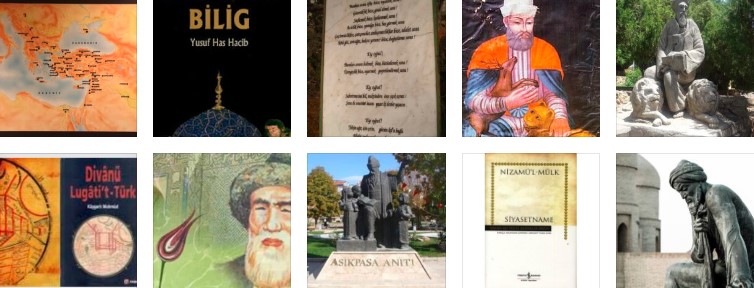
We can find a way to reach each other by giving life to our words that have already disappeared from Kasgarli Mahmud’s dictionary. We can learn our common worldview from Yusuf Has Hacib and walk in the light of the wisdom of Divan-ı Wisdom. The stories of Dede Korkut and the glories of Manas can bring us closer together. We can learn to look at the seventy-two sects with Yunus Emre and to touch the truth with Mevlana. As the lost sons of the same nation, we can flow towards unity in Fuzuli’s water ode. With Mevlana, we can learn to touch the truth again and again. As the lost sons of the same nation, we can flow towards unity in Fuzuli’s water ode. With Mevlana, we can learn to touch the truth again and again. As the lost sons of the same nation, we can flow towards unity in Fuzuli’s water ode.

It is possible to list these founding texts as follows:

Orkhon Monuments

The first written documents of the Turkish language are texts engraved on stones. These monuments have been accepted as the first Turkish text in which the Turkish name and the name of the Turkish nation are mentioned. Yenisey Tombstones are also called Göktürk Tombstones. Since these monuments are lined up along the Orkhon River, they are called Orkhon Monuments. These stones contain wars, heroism, lessons and advice. The texts are as if they were written today. The games of the Chinese state, where the world is living as a big issue nowadays, take place in the inscriptions in the 13th century as follows: “The word of the Chinese nation was sweet, and the silk fabric was soft. With sweet words, he used to deceive the distant nation with a soft silk cloth. Once he was near and landed, that’s when he thought of bad things. Deceived by your sweet word and soft silk fabric, Turkish nation, you died…”

Epic of Manas

The epic of Manas, the national epic of the Kyrgyz Turks, XI and XII. It is a great epic that was formed in the centuries, fed from the elements of old Turkish epics and has existed until today. The Epic of Manas, as in other epics, not only tells stories, but also carries a great historical and sociological accumulation feature. The Epic of Manas tells the story of all the customs and traditions, beliefs, worldviews, relations with neighboring peoples, tales and understanding of religion of the Kyrgyz. It deals with the enemies of the Kyrgyz, their struggles with them, and the wars. Along with its shamanic features, Islam is one of the focal themes of the epic. The Epic of Manas is known as the greatest epic in the world, especially in terms of its volume and length. However, the focus is always Manas’ struggle to liberate the Turks.

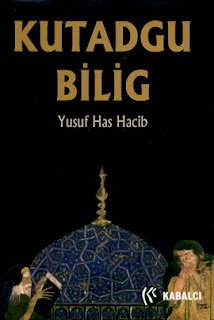
Kutadgu Bilig / Yusuf Has Hacib

Kutadgu Bilig (1070), written by Yusuf Has Hacib a year before the Battle of Manzikert in 1071, one of the turning points in the history of the Turks, is one of the most important works of Turkish literature, language and culture. In terms of content, the book reflects all the pains of the transition period in which a newly converted society is excited, enthusiastic, and old beliefs and new beliefs coexist. As such, it conveys cultural and social changes. If the writing date of the book is 1070 and the content and form are considered together (especially that period of European literature), it is seen that Kutadgu Bilig is one of the miracle works of not only Turkish literature but also world literature. Although Kutadgu Bilig has a structure for the construction of a state, society and individual intertwined with history, sociology and culture, it is above all a strong literary text. book, individual

Divân-ı Lügâti’t-Türk / Kaşgarlı Mahmud

XI. Divân-ı Lügâti’t-Türk, which was written in Arabic as a dictionary of Turkish, aims to introduce the characteristics of Turkish to Arabs and Muslims. Kaşgarlı Mahmud states that he wrote his book so that it would be known that the Turkish language and the Arabic language went together. Divân-ı Lügâti’t-Türk is the most precious treasure of Turkish vocabulary. The book looks like a unique Turkish memory with its customs and traditions, folklore, scientific explanations and sayings.

Kaşgarlı Mahmut talks about a hadith he heard at the beginning of the book and interprets it as follows: “Learn the language of the Turks, because their reign will be long.’ If this hadith is sound, learning Turkish is a religious obligation. If it is not authentic, Ma’rifat requires it.” The work that the Turkish world will refer to as the first source in order to get closer to each other in language should be Divân-ı Lügâti’t-Türk.

Atabetü’l Hakayık / Ahmet Edip Yukneki

Ahmet Edip Yukneki’s Atabetü’l Hakayık (The Threshold of Reality) is considered one of the most important works of Turkish literature after Kutadgu Bilig and Divân-ı Lügâti’t-Türk. It is a book of wisdom written in aruz prosody. The book on the good, the bad, the ignorance, the tongue, and the arrogance is written to give moral counsel. It is a book on moral principles of society, supported by verses and hadiths. Written in Hakaniye Turkish, the book describes the ways to be moral, the benefits of knowledge, and the harms of being arrogant. Ahmet Edip is a very popular personality, especially among Turks, and the effect of the book on Turks is extraordinary.

Divan-i Hikmet / Ahmet Yesevi

The book, which was composed in verse pieces in a clear and simple Turkish that the public can understand, is another important book of the Turks. It is known that Ahmet Yesevi recited this poem and its wisdoms medicinally and did not become a book while he was alive. Later, with the mixing of other wisdoms, a somewhat anonymous book emerged. The book, written in the Hakaniye Dialect of Karakhanid Turkish, is a didactic work. The book contains religious and moral advice. With this book, Ahmet Yesevi laid the foundations of mysticism that would later spread to Anatolia. Although Arabic and Persian were the languages ​​of literature in his own time, Ahmet Yesevi wrote his work in Turkish and made a great contribution to making Turkish a literary language.

Dede Korkut Stories

Dede Korkut Stories are among the most important written literary sources of the Turks, who started in Asia and got richer and developed in Anatolia. Dede Korkut Stories are not only literary, but also sociological, historically valuable and unique texts. Because the life of the people of that period, their view of events and their customs are included in these texts. In this sense, it reflects a perception of culture, literature and civilization. Although they are fictionalized as a literary text, the cultural accumulation, perception of life, spirituality, places, words and perspectives of the Oghuzs are interspersed in the stories as valuable documents. Thus, the spirit, spiritual values, traditions of the Oghuz Turks of the period are revealed through poetic stories. While a situation is being told in the stories, a “Turkish model” is constructed in a clear and understandable Turkish.

Politics / Nizamülmülk

Nizamü’l Mülk (1018-1092), as the vizier of the Seljuk sultans Alparslan and Melikşah, had a say in the state administration for thirty years and influenced the decisions of the sultans with his views. Written upon Melikşah’s request for a comprehensive report on the state administration, the Political Name is a work that preserves its importance even today.

Heft Peyker / Genceli Nizami

Genceli Nizami, considered one of the founders of the Mesnevi style, is one of the greatest poets and storytellers of the East. He influenced the great writers and thinkers Mevlânâ, Hâfız, Sadî, Fuzûlî, Molla Câmî, who produced similar works after him, and became one of the initiators of the hamse genre by carrying the great epic narrative forward on the path of Firdevsi. In his famous hamse, there are five masnavis named Mahzenü’l-Esrâr, Hüsrev and Şirin, Leyla and Mecnun, İskendernâme and Heft Peyker. Innovative, giving importance to fiction, Genceli Nizami has always put love at the center of his narratives. He talked about love from heroic narratives and glorified love in all his narratives. In addition to this thematic approach, he was innovative in form, laid the foundations of the “mesnevi” genre, which is the combination of poetry and story, and created all Eastern literature, especially in the 15th century.

Mesnevi / Mevlana

Mesnevi is one of the exceptional works produced by this land, which has deeply affected our cultural life, art and literature, inspired many writers, artists and poets since it was written. The masnavi reflected the feelings and thoughts of our people, carried a spirit of spirit that permeated all ages, and was therefore engraved in their hearts and memories. Turkish art and literature have been nourished by it for centuries, and it has become a work that is read not only in these lands but also all over the world. Besides its religious, sociological and cultural value, Mesnevi is also a great literary work. Besides being a great sage, sufi and poet, Mevlana is also a great “story teller”. He encapsulated and immortalized the secrets of the world of the heart, the great adventure of humanity, with the language of stories in Mesnevi. He gave great importance to the story, noticed its subtleties and exhibited brilliant examples of how the truth would shine there. The lights of truth in his stories continue to illuminate today.

Divan / Yunus Emre

Yunus Emre is one of the founding names of Turkish literature. Yunus Emre writes in Turkish as opposed to Mevlana’s Persian and Hacı Bektaşi Veli’s Arabic works. He has the biggest share in the survival of Anatolian Turkish until today. He is a master user of understandable, deep, simple expression. Yunus Emre, who uses Turkish perfectly, is one of the inaccessible geniuses of poetry. Even after 700 years, his poems are still new and impressive as if they were written yesterday. His Divan is a masterpiece. Yunus Emre’s encompassing love for humanity is an indication of how deeply he understands Islam. His lively, enthusiastic, ever-fresh poems still impress people of all ages and cultures from all generations. Literature protects the language, enriches it, accumulates it, and transfers it to the future more powerfully. Italians refer to Dante in terms of language, Iranians to Ferdowsi, The Greeks owe much to Homer. We Turks owe a lot to Yunus Emre for the current state of our Turkish.

Divan / Fuzuli

Fuzûlî is a great poet and scientist who has exhibited the beauty and richness of Turkish in his works. With his ingenious poems, he pointed to good and evil, vice and virtue. Turkish turns into a powerful expression, harmony, lyricism and beauty. While living, Fuzûlî worked for the cultural unity of the Turkish world, wrote timeless and timeless poems in Turkish, and left monumental works behind. With his Fuzuli Turkish, he succeeded in creating a language, a common feeling and a common spirit in Central Asia, Caucasus and Anatolia. Fuzuli can serve an important function for the unity of Turkish literature, culture and peoples today and in the future.

Garibname / Âşık Paşa

One of the most important masnavis of Turkish literature, written in Anatolian Turkish in 1330, is Âşık Paşa’s Garibnâme. Garibnâme is one of the important works of Turkish literature, which has influenced many writers who came after it with its language attitude, the way the subjects are handled and its content. Âşık Pasha dealt with the subjects he determined from one to ten in his work, mostly in the style of advice, with anecdotes, examples and parables within the circle of wisdom and example. He exhibited the personality of a trailblazing, pioneering writer who showed the Anatolian people the way out in the chaos of the Âşık Pasha period, and firstly, he based mystical love around the idea of ​​unity. Âşık Pasha, while explaining why he wrote the book in Turkish, not in Arabic and Persian, which was the common understanding of the period, in the introduction to Garibname, considering the large section of people who do not know Arabic,

Ali Şîr Nevâî

Another important torch of Turkish is Ali Şîr Nevâî. XV. Ali Şîr Nevâî, who was a close friend of Sultan Hüseyin Baykara, the Turkish ruler of the Turkestan region in the 19th century, not only studied at the literary level but also theoretically, in order to make Turkish a language of art, he compared Persian and Turkish in his work called Muhakemetü’l-Lugateyn. Ali Şîr Nevâî, an artist with a high Turkish consciousness, became an example for the writers who came after him and served a leading role. Ali Şîr Nevâî, who is also a statesman, is important in many ways to defend the supremacy of Turkish. Ali Şîr Nevâî followed the path of his contemporary Abdurrahman Câmî, but he always wrote in Turkish, not Persian like him.

Travel Book / Evliya Celebi

Evliyâ Çelebi, who lived between 1611 and 1685, traveled from Central Europe to the Balkans, from the Crimea to Iran, from the Arabian Peninsula to North Africa for fifty years. By compiling and recording all his stories, he created one of the most important works of not only our region but also world literature. Evliyâ Çelebi displayed a “storyteller” approach while conveying all of his beliefs, tales, legends, legends, human relations, traditions, arts and cultures, as well as the geographical and historical characteristics of the places he visited. In this sense, Seyahatname is not only a geography, history, sociology, travel guide book, but also a magnificent collection of stories from 400 years ago, a big story chest. History geography,

Mevlit / Suleyman Celebi

Mevlit, one of the masterpieces of Turkish literature, written by Süleyman Çelebi (1351-1422) and whose real name is Vesiletü’n-Necât, is in masnavi format. Mevlit is one of the most read and loved masnavi works for centuries. It was written in a very simple Turkish for its period. The literary value of this mawlid, which is written in masnavi verse, is also high. The work, which describes the high value of the Prophet in the sight of Allah, has been loved and protected in Anatolia until today. Mevlits are literary works written to be read on the birthdays of the Prophet.

Safahat / Mehmet Akif Ersoy

Mehmet Âkif Ersoy is one of the founding pioneers of our civilization. One of the common aspects of the founding pioneers is that they lived in the most critical periods of their nation, in the most daunted, defeated and hopeless periods, and showed the way out, the way out, and clear thinking from this critical process. On the other hand, they play an active role in the struggle for liberation and purification, and they feel responsible and responsible in the historical process. In this sense, it is a struggle that rebels, organizes, changes and corrects.

At a time when the society is experiencing its moments of entrapment, they instill hope, spiritual strength and resistance into the society, and they are the torches of the news. Another common feature is that they are not pure thinkers but artists. In addition, the inseparability of the arts and ideas of the founding pioneers is another common denominator; In these, art and thought are intertwined and fused into each other. For this reason, these names were looked upon as “savior spirit”, “rescue stance” and finally “rescue exit” and were presented as a model for the next generations. It is possible to see all these characteristics of the founding pioneers in Âkif and Safahat.

Because of all this accumulation, the foundation between the brothers is solid, it does not collapse even if years intervene. We can only re-establish our ties with this geography through culture and art. As literary writers, we should write great poems, great stories, great novels and make great films. Literature transcends borders, conquers hearts. We can find a way to reach each other from this accumulation of centuries, from poems, novels and stories.

These areas should be our new bridge, we should engage in mutual translation movements, continue cooperation, and increase bridges. It should not be forgotten that the story of the Turk will never end, despite all these darkness and light, ups and downs, it will continue to be told from age to age, from generation to generation, and will echo in Turkish cities forever. Because it is the greatest story ever written and ever written.

https://www.yenisafak.com/hayat/turk-dunyasinin-kurucu-ortak-metinleri-var-mi-3834426

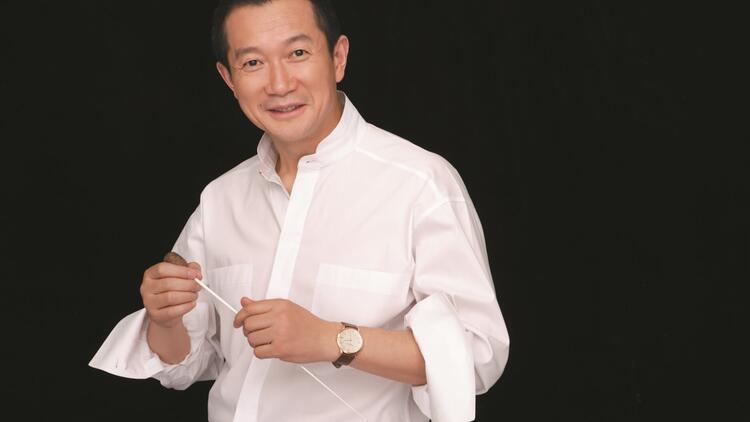
Tan Dun: I have a soul like Turkish music

#TanDun #BorusanIstanbulPhilharmonicOrchestra #50.IstanbulMusicFestival

 2min reading
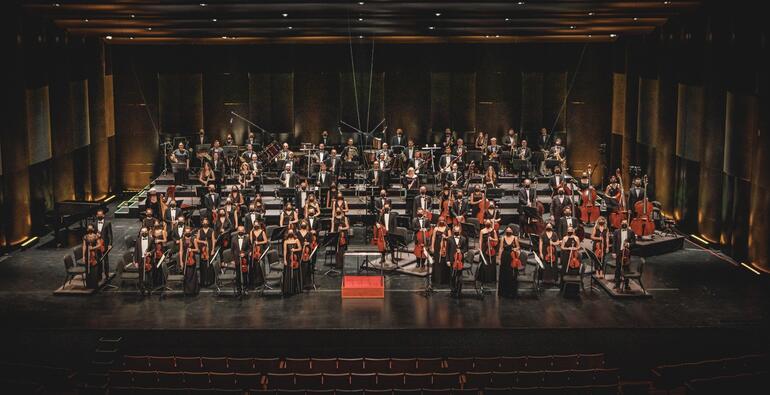
The Chinese conductor and composer Tan Dun, who won an Oscar for the music of ‘Tiger and Dragon’, is coming to Istanbul for the first time for the Turkey premiere of his work ‘Double Concerto’, of which he is among the co-orderers of the Istanbul Music Festival and Borusan Sanat. Stating that he was very excited, the famous composer said,
“I wanted to learn deeply what Turkish music is. Because I felt that there was something of myself in the deep soul of Turkish music.”

One of the leading names of contemporary classical music, conductor and composer Tan Dun is coming to Turkey for the first time as part of the 50th Istanbul Music Festival with the support of Borusan Holding . Winner of many prestigious awards, including Grammy and Oscar (Tiger and Dragon), with his creative repertoire that transcends the boundaries of Eastern and Western traditions, Tan Dun will be the guest of the festival with a Turkey premiere. The composer’s work ‘Double Concerto’, which violinist Daniel Hope, pianist Alexey Botvinov and the New Century Chamber Orchestra made its world premiere in May 2021 and is among the co-orders of the Istanbul Music Festival and Borusan Sanat, will be performed for the first time in Turkey. This Time Borusan Istanbul Philharmonic Orchestra by Daniel Hope and Alexey BotvinovThe Concert, In Which He Will Take Part, Will Be Held At Atatürk Cultural Center Türk Telekom Opera Hall on June 22 .


Tan Dun: I have a soul like Turkish music


With the support of Borusan Holding, you will come to Turkey for the first time as part of the Istanbul Music Festival. What awaits us as listeners?

First of all, I am very happy and proud that Borusan Holding supported the Istanbul Festival and brought us together to make this ‘Double Concerto’ possible. I am very excited to be in Istanbul for the first time. I wanted to come for a long time and finally my dream will come true by coming to Istanbul. Istanbul Is A Dream destination for East and West .The main theme of the festival this year is ‘Istanbul’. In this context, what are your thoughts on Istanbul and Turkish music?

I believe that Istanbul has long been the capital of the place where East meets West, and this fact has inspired generations and many artists. I am one of them. Istanbul is a place that I hope will be the new home of my music, but I also hope that it will host many geniuses and artists who will create works in the future. For me, Istanbul is very important for world culture. Turkish music is also a big part of it. It was something that was always on my research map. I wanted to learn deeply what Turkish music is. Because I felt that there was something of myself in the deep soul of Turkish music. I don’t know if it is from my previous life or from the hereafter, but I think I have a soul like Turkish music. This time I will spend a lot of time, research, record, learn everything about Turkish music.

We know you from the soundtrack of the Oscar-winning movie ‘The Tiger and the Dragon’. What inspires you when making movie soundtracks?

In fact , composing a Soundtrack is almost the same as composing opera music. To me, the soundtrack is the opera of the future, and the old opera tradition is the soundtrack of the future. I love composing operas and composing for cinema. These two are very similar and include all forms of art, literature, music, fine arts, staging, colours, lighting. This time our ‘Double Concerto’ was born and recreated from my soundtrack.

You experience both Eastern and Western cultures, how does this interaction reflect on your music?

I think artists flourish and artistic dreams fly when our souls meet in one world. Only in this way can East and West come together. Artistically, it is possible and obvious. But culturally, politically… I hope this will be possible in these respects as well. If our East and West do not come together as our home, the problems that arise will continue for generations. We are the generation of today who will create the future. We are the generation that will create the house that will be the best for us. That’s why it’s so important to bring the East and the West together. However, it also needs to be supported. We must come together to create our wisdom, our techniques, our emotions and our dreams.

The concert, which will be accompanied by violinist Daniel Hope and pianist Alexey Botvinov, by Borusan Istanbul Philharmonic Orchestra under the baton of conductor Tan Dun, will be at Atatürk Cultural Center Türk Telekom Opera Hall on June 22 at 20:00.

https://www.hurriyet.com.tr/kitap-sanat/tan-dun-turk-muzigi-gibi-bir-ruha-sahibim-42085954

Happy Fathers Day!!

Fevzi Ağaoğlu (1928 Filibe – 1997 Istanbul)

Founding Turkish Thinkers and Philosophers at BooksonTurkey


#OğuzKağan #BilgeTonyukuk #BilgeKağan #EbuHanife #Harezmi #Maturidi # Farabi #Biruni #Harakani #İbniSina #KaşgarlıMahmut #YusufHasHacip # NizamülMülk #Gazali #AhmedYesevi #Şeyh Edebali #MevlanaCelaleddin Rumi # HacıBektaşıVeli #YunusEmre #AşıkPaşa

  • 1: Oğuz Kağan (BC 209): Universal. Legend
  • 2: Bilge Tonyukuk: State Philosophy.Wisdom
  • 3: Bilge Kağan: State Philosophy.Wisdom
  • 4: Ebu Hanife: Islam sect
  • 5: Harezmi: Maths. Zero. Science
  • 6: Maturidi: Wisdom. Islam
  • 7: Farabi: Philosophy. Wisdom
  • 8: Biruni: Sciences. Indologist
  • 9: Harakani: Sufi
  • 10: İbni Sina: Sciences
  • 11: Kaşgarlı Mahmut: Dictionary.Language
  • 12: Yusuf Has Hacip: State Philosophy. Wisdom
  • 13: NizamülMülk: State Philosophy
  • 14: Gazali: Islam
  • 15: Ahmed Yesevi: Sufi. Wisdom
  • 16: Şeyh Edebali: Sufi
  • 17: Mevlana Celaleddin Rumi: Sufi
  • 18: Hacı Bektaşı Veli: Sufi
  • 19: Yunus Emre: Sufi
  • 20: Aşık Paşa: Sufi (ö.1333). Wisdom
Main Features
  • 15-20: Sufi (Love&Knowledge)
  • Wisdom&Sufi:12
  • Wisdom:7
  • Sufi: 7
  • State Philosophy: 4
  • Sciences. Theory:3
  • Religion Islam. Theology: 3
  • Philosophy: 1
  • Legend: 1
  • Dictionary: 1
  • Poems: 10


TIME – GROUND- MIND 

(ZAMAN-ZEMİN-ZİHİN)


Time

  • BC 209 – AD 1333: 1500 years


Ground


  • Turkey: 5
  • Turkestan:15
  • Asia
  • Europe
  • Africa
  • SubContinent (India)


Mind

  • Wisdom
  • Love
  • Knowledge
  • Universality and Humanity
  • Theology&Theory 

Oguz Kagan

Bilge Tonyukuk

Bilge Khagan

Ebu Hanife

Harezmi 780-850

Humans with Divine Wisdom by Maturidi

Wisdom Words by Farabi (870-950)

Wisdom of Biruni (973-1048)

Harakani

Kaşgarlı Mahmut

Yusuf Has Hacip

Glory of Knowledge by Yusuf Has Hacip

Nizamül Mülk

Farabi – Avicenna – Ghazali Line – 250 Golden Years (870 – 1111)- Horasan Lighting

Ahmed Yesevi

Sheikh Edebali

Wisdom of Mevlana

Best Sellers of Rumi: Turkish Great Sufi Poet

Best Sellers in Turkish Sufism

Hacı Bektaşı Veli

Yunus Emre: Great Turkish Sufi Poet

Aşık Pasha

Turkish Classics


Wisdom of Mevlana

World #Mevlevihane Maps

Starting from Tonyukuk, our thinkers mostly came from the settlements by the rivers. Important settlements are always on the riverbanks. The city of Balkh on a bank of the river (Mevlana), on the other side the city of Tirmidhi (Abu Hanife). And many more ancient cities.

Khorasan=Anatolia=Country of Sunrise. One side of Ceyhun river is Tirmiz and the other side is Belh. It is by the river in Ghazni. Side of Seyhun Tirmid: Ebu Hanife. Yellow Riverside: Tonyukuk. The intense influence of Buddhism in the regions where both thinkers are located is also observed. Environments with differences bring intellectual enrichment.

The wisdom/thought of Tonyukuk in our zero stone was continued by Imam Azam Ebu Hanife and Imam Maturidi of Uzbekistan origin. Instead of the sources coming from Egypt from our south, we should turn to the neglected Orkhon-Turkistan source of thought in our east. Our basic concepts and codes of thought are contained in these main sources in the East. Unfortunately, these main sources of thought at birth have been neglected. Turkish Thought must be revived.

Turkey’s intellectual source; It is Turkistan, Tonyukuk-Abu Hanife-Maturidi-Yesevi-Mevlevi line. Mevlana, the last of these founders, all of whom were born in Turkistan, also put the point in the Greek land of Anatolia; One of his successors, Haci Bektas-i Veli from Khorasan, this time created a Rumelian idea in Europe. The source thinkers of the cultural revolution are in Turkestan. Ebu Hanife and Tonyukuk are contemporaries of the 7th and 8th centuries.

The more Hanafi we are, the more Tonyukuki we are. How Hanafism is the most common practice (fiqh) style of Islam, and Maturidiism in creed; The basis of Turkish sociology and culture is Tonyukuki. His contemporary and kin, Abu Hanifa, had become the leader of the largest sect of the religion of Islam, and many books were published and interpreted about him, but our first thinker, Tonyukuk, was sad and left alone.

Mevlana’s birthplace: Belh. Abu Hanifa’s birthplace: Tirmidhi. Both cities are in the region of Ancient Bactria (Afghanistan and its vicinity). Elmar Holenstein: Atlas of Philosophy

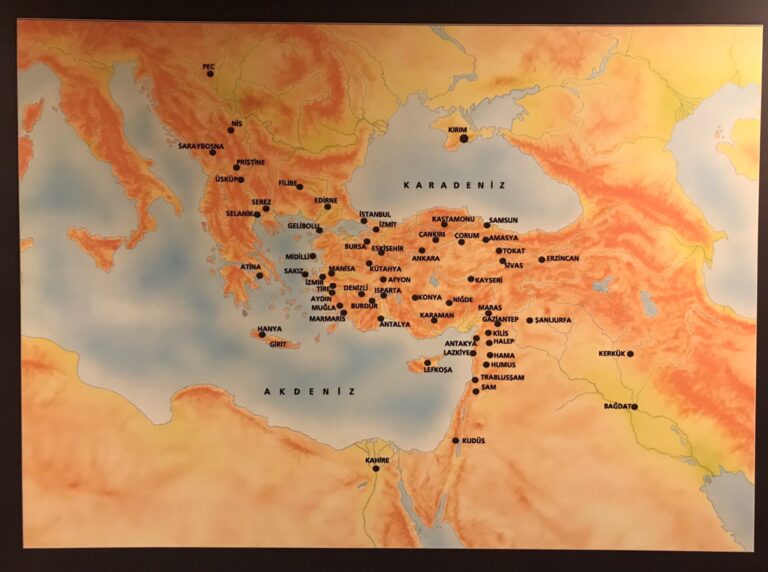
Map 1: Greater Khorasan Geography

Greater Khorasan

Mevlana; from Afghanistan

Yunus Emre; from Anatolia

Arabi; from Andalusia

Abu Hanifa; from Uzbekistan

THEY CAME

They enlightened Turkey

The distance between BELH, the birthplace of Mevlana, Afghanistan and TIRMIZ, the birthplace of Abu Hanifa, and Uzbekistan is very close.

In your program, it was announced for the first time that Imam-i Azam Ebu Hanife is a Turk from Tirmidhi, Uzbekistan. great service


Glory of Knowledge by Yusuf Has Hacip

  • God created man, selectively raised him; He gave him virtue, Knowledge, reason and understanding.
  • He both loved him and spoke his tongue; He bestowed beautiful form, beautiful demeanor and movement.
  • He gave Knowledge to him and man rose today; it gave him understanding and so the knots were broken.
  • To whom God gives understanding, reason, and Knowledge, he reaches out to many good deeds.
  • Know great knowledge and great understanding; These two things raise the elite servant.
  • As a witness to this, here comes the following promise; hear this word and interrupt it about it.
  • Wherever the understanding is, it wins greatness; Whoever has knowledge finds greatness.
  • Understanding moments, Knowledgeable knows; Whoever knows and understands always attains his wish.
  • Know the meaning of knowledge; Look, what Knowledge says: Disease goes away from a person who knows information.
  • An uninformed person will always be sick; If the disease cannot be cured, man will die quickly.
  • O Uninformed, go get your sickness cure; O mes’ûd Sage, tell me the medicine of ignorance.
  • Understanding is a halter; If man holds it, he attains his wish and attains all his desires.
  • Understanding will benefit people a lot; If man knows Knowledge, he becomes a saint.
  • Do all your work and power through understanding; Protect your time from waste with Knowledge.
  • O wise judge, my wish was to speak a word that would remain for those who will come after me.
  • Understanding defied and: —Be careful; If your word is wrong, it will do you harm – he said –
  • The language of the people is bad, it tugs you; the nature of man is jealous, he eats his flesh.
  • Looking carefully, my burden eased; I said to myself: – Tell me, pour out the contents.
  • If you ask why, I’ll tell you; O man valiant, listen to my word.
  • This yalnguk (human) name was given to man because he was wrong (yangluk); to be wrong (yangluk) was created for human (yalnguk).
  • Can you tell me someone who is not mistaken; I’ll show you thousands of people from the side.
  • Knowledgeable people are few; Uninformed is many; Know that there are many people with no understanding; those who understand are rare.
  • Uninformed Knowledge has always been an enemy; Uninformed is always in conflict with Bilgili.
  • There is a lot of difference from person to person; this difference comes from Knowledge, my word is about it.
  • I said this for Bilgili, I do not know the language of the ignorant.
  • I have no word with the Clueless; O Knowledgeable, here I am your servant.
  • I apologized to you, hesitantly, for having spoken my word to you.
  • The one who speaks the word may be mistaken and confused; If savvy asks, he corrects and corrects it.
  • The word is halter like a camel nose; she goes, like a female gooseneck, wherever it is pulled.
  • There are many who say the word deliberately; the one who understands the word for me is the saint.
  • All good is the benefit of Knowledge; With knowledge, even the way to the sky is found.
  • Say your every word with Knowledge; Know that you are great with every precise Knowledge.
  • Word came down from heaven, like black earth; man made himself valued with his word.
  • Human heart is like a sea without a bottom; Knowledge is like the pearl lying at its bottom.
  • Unless one takes the pearl out of the sea, it doesn’t matter whether it’s a pearl – or a ‘pebble stone’.
  • It is no different from gold under black soil; When you get out of there, the head of the gentlemen becomes a brick buckle.
  • If he does not reveal his Knowledge with his tongue – even if he lies for years, his Knowledge will not enlighten his neighborhood.
  • Understanding and Knowledge are very good things; If you find it, use them and fly into the sky.
  • Listen to what this country man says, who knows what Understanding and Knowledge is.
  • To hold the world, man must be understanding; it takes both reason and courage to dominate the people.
  • He who held the world held it with understanding; ruling the people, he did this work with Knowledge.
  • Since Adam came to the world, good order has always been given up by understanding people.
  • Regardless of the age, the higher place has always been the fortune of Bilgiliye.
  • The worst of the people is hanged by understanding; mischief among the people is suppressed by Knowledge.
  • If you can’t handle things with either of these, drop the knowledge, put your hand on the sword.
  • The ruler of the people, the ruler and the wise gentlemen, took care of the uninformed people with the sword.
  • Know knowledge and let your place be the head and corner; Knowledge is a solid shield for humans.
  • What good is an ignorant heart and language; With knowledge, like water, be useful to every pouch.
  • No matter how much you know, call again; Look, the one who knows reaches his wish by asking.
  • If you say I know, you are far from Knowledge yet; You are among those who know, you are regarded as the Uninformed.
  • Knowledge is a sea, it has no ends; If the sparrow sucks, how much water can he get from it.
  • With this Scholar you feel dizzy; push yourself away from yourself who don’t know him.
  • You either know Knowledge, become human and raise yourself, or take the name of an animal and get away from humans.
  • The scholar’s face does not smile, his face is always thoughtful and frowned; Uninformed always laughs in joy.
  • How the knowledgeable person laughs in this anxiety; O ignorant, you like a mountain goat, struggle, walk around.
  • The feet of the scholar are stunted, he cannot get up and run; Uninformed, look, he runs endlessly after his desires.
  • O Sage, you have a shackle on your feet; If he is uninformed, he walks; If an ignorant gets stuck, you tighten his mole.
  • Here I reached out to him, asking for Knowledge; I put the word into words, sorted it out and listed it.
  • One of them – it is tenderness that degrades people; all three of them stem from Lack of Knowledge.
  • Whoever is harsh and stubborn, his business always goes wrong.
  • If a person is famous for telling lies, know that he is always remembered with this fame among those people.
  • What else is worse than stinginess; Hasis collects, can not eat and the goods remain behind.
  • What does knowledge say about wickedness?
  • You knew how to collect gold, but you didn’t know how to eat it, so you had to pile this gold, have one, why didn’t you give it to someone else.
  • O one who can not gather this world and eat it, the eaters are prepared, you prepare the food.
  • Happiness belongs to whoever has those three things; Whoever has these three things, his name is destroyed.
  • Is man born wise, or does he learn as he gets older?
  • He gave a learned answer: – O ruler of the state, one name of this virtue is Knowledge and reason.
  • Man is born without knowledge and learns as he lives; With knowledge, he will be successful in every job.
  • The mother born without knowledge is born without knowledge, learns Knowledge and thus gains reputation.
  • Mind is what cannot be achieved by working; God adds it to the dough of man.
  • Man learns all virtues other than mind and thus his Knowledge develops.
  • Even though Saadet comes and suits Bilgisize better, it is more suitable for Bilgililer because he knows the nature of it better.
  • If happiness could live with Bilgisiz, of course, it would be compatible with Bilgili more fundamentally.
  • If Saadet raises his Knowledge, of course, he will raise the Knowledge more than him with fame and name.
  • Even if happiness and dignity come to you, know that this happiness will not be permanent in him.
  • Knowledgeable man gave the following advice with his Knowledge: If you find a righteous and honest person, draw him to your eye, like driving him.
  • Some thief, crook, side-cutting, swindler; some would be Wise, some would be fatal and destructive.
  • It is always for one’s throat and back to suffer so much; collects goods, cannot eat; He remains under the plague after his death.
  • These are always the work of Uninformed people; Uninformed people are a herd of animals.
  • Knowledgeable man, who believes in God, confesses whatever is in his fortune.
  • O sir, give the job to the person who works, to the person who works, to the right and honest act.
  • Such benefits come from Knowledge; It comes from a wise, knowledgeable and good-natured person.
  • How can a smart person not grudge, how not to be fooled by a fool.
  • The work of the mind is always determined according to measure; The work of the ignorant is always cut off randomly.
  • How beautiful happiness suits the smart; How well happiness suits the wise or well-acting Bilgil, think.
  • Listen to what he says; Let the meaning of this word be the basis for your words.
  • If the state and happiness come without knowledge, there will be mischief among the people and this will be a fatal disaster for the country.
  • If the principality falls into the hands of a wise person, he will bring peace to his country; you believe this word.
  • The ruler found peace, his day brightened; Thank God, he praised and senated.
  • He gazed up to the sky, raised his hand and said: – O my Lord — You are the Giver of Knowledge.
  • You gave information and made me sovereign of the country with might; give strength to my heart and do not take me away from the right path.
  • If man knows Knowledge, his happiness increases day by day in life; no matter how small he is, his place is big.
  • If God bestows reason and heart in creating, the child will have a full capital for Knowledge.
  • He develops day by day, his mind evolves gradually, and he learns and knows what he wants.
  • Thus, he attains Knowledge and one day becomes Wise; With this Knowledge, it is very useful to the country.
  • If God does not give his heart in creating, man cannot reach any wishes.
  • There is one more condition; If the child asks for Knowledge, he must start learning from a young age.
  • As a small child, a person learns Knowledge and when he grows up, he attains his wish.
  • The human learns knowledge, virtue, good attitude and movement, and thus his departure is improved.
  • Whether it is knowledge or virtue, man can learn; but the mind is born with man.
  • All kinds of goodness come from the mind; human grows and stands out with Knowledge.
  • The human-son has risen with these two; he will succeed with these two things in the path of righteousness.
  • Man is separated from animal by his Knowledge; What else is greater than knowledge.
  • Mind has a saying like this; If used reasonably, it is very useful.
  • Knowledge is what separates man from animal; man-son has become dominant with Knowledge.
  • Walk, don’t be an animal; be smart and learn Knowledge; Say it with knowledge, let your word be valid.

KUTADGU BİLİG ( BİLGİ )

He Tells That The Value Of The Son Of Man Comes From Knowledge And Reason

Sheikh Edebali

Sheikh Edebali

Born 1206
Karaman, Rum Sultanate (now Turkey)
Died 1326
Bilecik, Ottoman Empire (now Turkey)
Religion Islam
Parents
İbrâhim bin İnac el-Kırşehrî (father)
Denomination Sunni
School Bektashi
Creed Tariqa
Known for Sufism
Muslim leader
Period in office 13th and 14th century
Influenced by
İmâdüddin Mustafa bin İbrâhim bin İnac al-Kırşehrî (1206-1326), often known as Sheikh Edebali (Turkish: Şeyh Edebali), was an Ottoman Sunni Muslim Sheikh of the Ahi brotherhood, who helped shape and develop the policies of the growing Ottoman State.He became first Qadi of the Ottoman Empire.

Interaction with Ottoman leaders
Edebali often conversed with his close friend Ertuğrul Gazi, the father of Osman I about Islam and the state of affairs of Muslims in Anatolia. Osman had been a frequent guest of Edebali. Edebali became Osman’s mentor and eventually girt him with a Gazi sword. Osman at Edebali’s dergah, dreamed of a state. This dream thus led to the establishment of a state. After this, Edebali’s daughter was married to Osman I. As a result of this marriage, all the Ahyan sheikhs came under the Ottoman control. This had a major impact on the establishment and development of the Ottoman Beylik.

Tomb of Sheikh Edebali (2013) in Bilecik
Advice to Osman I

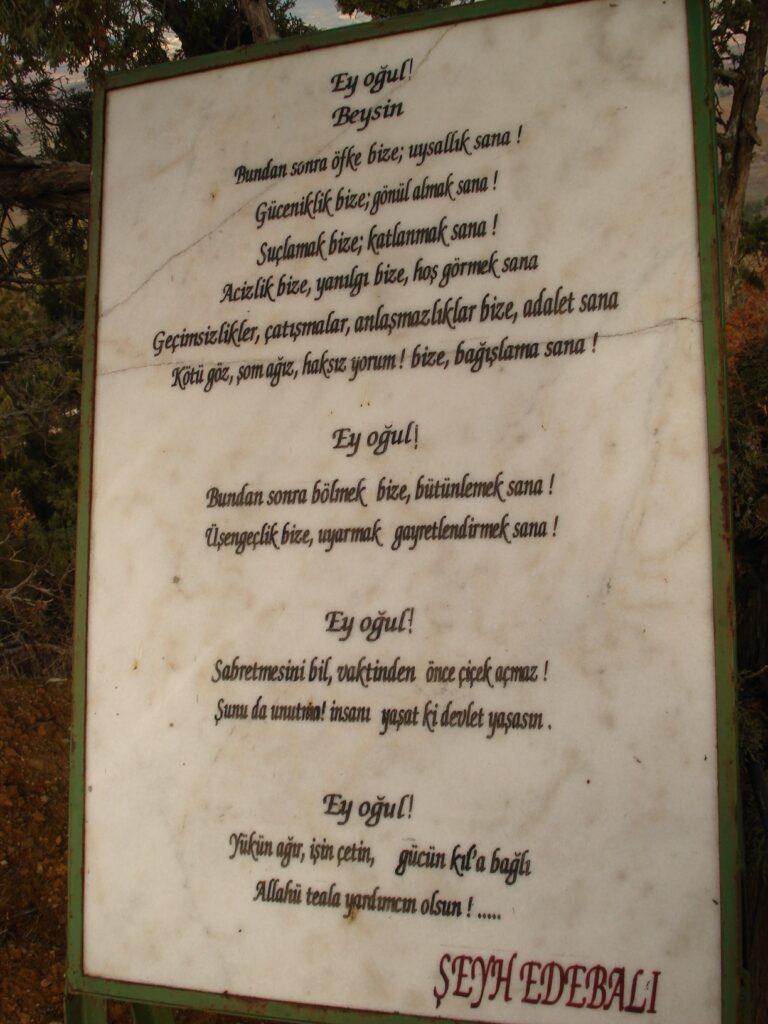
Advice of Sheikh Edebali to Osman Gazi preserved on marble at Söğüt
Edebali’s advice to his son-in-law, Osman I, shaped and developed Ottoman administration and rule for six centuries.

In one famous declaration, Edebali told Osman:

O my son!
Now you are king!

From now on, wrath is for us;
for you, calmness!

For us to be offended;
for you to please!

For us to accuse;
for you to endure!

For us, helplessness and error;
for you, tolerance!

For us, quarrel;
for you, justice!

For us, envy, rumor, slander;
for you, forgiveness!

O my son!

From now on, it is for us to divide;
for you to unite!

For us, sloth;
for you, warning and encouragement!

O my son!

Be patient, a flower does not bloom before its time.
Never forget: Let man flourish, and the state will also flourish!

O my son!

Your burden is heavy, your task hard, your power hangs on a hair!
May God be your helper!

In popular culture
Sheikh Edebali has been portrayed in the Turkish television series; Kuruluş “Osmancık” [tr] (1988),[6] Diriliş: Ertuğrul (2014 – 2019) and Kuruluş: Osman (2019 – present).[7]


Hacı Bektaşı Veli


Haci Bektasi Veli (1209-1271): Khorasan Nishapur, (Iran). Sufi “Horasan Saints” Velayet-nâme-i Hacı Bektaş-ı Velî, Makalat – (in Arabic), Kitâbu’l-Fevâid, Şerh-i Besmele, Şathiyye, Makalât-ı Gaybiyye and Kelimât-ı Ayniyye, one of the leading representatives of Horasan Yusufeliism. Kalenderî / Haydarî sheikh, Islamic mystic. Lokman received his first education from Parende and followed the teachings of Hoca Ahmed Yesevi (1103-1165).


Therefore, he is accepted as the caliph of Yesevi. After coming to Anatolia, he was recognized in a short time and trained valuable students. Hacı Bektaş-ı Veli made important contributions to the development of the social structure in Anatolia during the establishment period of the Ottoman Empire with the “Ahilik Organization” to which he was affiliated. Hacı Bektaş-ı Veli, who spent most of his life in Sulucakarahöyük (Hacıbektaş), also completed his life here. His grave is located in Hacibektas district of Nevşehir province.

…………………………………..

A
There is no curtain between God and the heart.
It is necessary to refrain from what Allah says beware. Not to be afraid is not to believe in it. Those who are human are self-aware and avoid Allah’s prohibitions.
Research is an open exam.
Arifs are both bees and purifiers.
(Arifs: understanding)
He created the essence of Adam from the soil of Medina. He created his head from the ground of Beytülmukaddes. He created his ear from the soil of Tur. He created his nose from the soil of Damascus. Flying His Beard created his forehead from the soil of Medina in favor of the Moor. He created his mouth from the Madina’s Pro-Mashrik soil. He created his language from the soil of Bukhara. He created his lips from Berber soil. He created his teeth from Harzem soil. He created his neck from Chinese property soil. He created his arms from the soil of Yemen Taif. He created his right hand from Egyptian soil and his left hand from Persian soil. He created his nails from Hitay soil. He created his fingers from Sitan, his chest from Iraq, his back from Hamadan, his zeker (genital organ) from India, his thighs from Turkestan, his balls from Constantinople (Istanbul). He created his knees from the soil of Crimea, and his shins from the soil of Antalus.
B
My Kaaba is human.
Let’s be one, be big, be alive.
No way to go without science.
We do not look at language and speech; Let’s look at the essence and the situation.
Let them be called Janissaries. May Allah Almighty always prevail over them, their faces white, their biceps strong, their swords sharp, their arrows dangerous.[1]
(Orhan Gazi’s prayer for a few Janissary soldiers brought in. Thus, the name “Janissary” was given to the hearth, and the pir of the hearth was Hacı Bektaş-i Veli.)
C
Those who make a living without working are not from us.
D
Be careful, don’t let the bite eat you, you eat the bite!
Regardless of language, religion or color, good people are good.
whatever exists in the world; halal, haram, clean and dirty are all known by religion (Islam).
Remember that even your enemy is human.
Blessed are those who shine a light on the darkness of thought.
TO
If a person is both hardworking and smart, appreciate it; be careful if hardworking but not smart; warn if smart but lazy; if he is both stupid and lazy, leave.
Own your hands, your waist, your tongue.
The highest wealth is knowledge.
H
The heat is in the pomegranate, not in the sheet metal. Keramet is on the head, not on the crown. Whatever you look, look to yourself. He is not on the Hajj in Mecca in Jerusalem.
Whatever you look, look to yourself.
Do not shame any nation or people.
Three hundred and sixty angels guard each person. You think that you are alone among all these angels and you act rudely, but you do not act rudely in front of people like yourself. You know, you believe in angels.
I
Science begins in the cradle and ends in the grave.
The end of the road without knowledge is darkness.
(Science: science)
Even if you get hurt, don’t hurt
The beauty of man is the beauty of his word.
(Jamali: the beauty of your face)
Faith is a treasure, the devil is a thief, and reason is a treasurer. If the treasurer leaves, the thief will steal the treasure.
K
Do not do to others what is hard for you!
Do not let treacherous people come to our assembly, we have a conversation with the saints.
M
With the darkness of matter, the light of mind; the darkness of ignorance, with the light of knowledge; the darkness of the soul with the light of ingenuity; the darkness of the heart is also illuminated by the light of love.
The first station of the people of knowledge is adab.
(“Ingenuity: mastery, skill.” “Your people: your house.” “Office: position, floor.” “Dec: behave properly”.)
Ingenuity is not erasing the soul, but knowing.
Reaching Murada is with patience.
(To reach Murada happens with patience.)
N
Nabis, Veli are a gift from Allah to humanity.
(Nabis: prophets)
(Parents: saints)
Do not apply what is hard for your soul to anyone.
(Self: essence, personality)
HE
The greatest book to be read is man.
HE
If you know yourself, you will get rid of apology.
S
If you know you, your face is Hüda; If you don’t know you, the truth is druid from you.
(Judâ: separate)
Troubled days can be overcome with unity and togetherness. Good days come quickly when you join hands.

…………………………………….

A
Allah ile gönül arasında perde yoktur.
Allah’ın sakının dediğinden sakınmak gerekir. Sakınmamak, ona inanmamaktır. İnsan olanlar, kendilerini bileler ve Allah’ın yasaklarından sakınalar.
Araştırma açık bir sınavdır.
Arifler hem arıdır, hem arıtıcı.
(Arifler: anlayışlılar)
Ademin özünü Medine toprağından yarattı. Başını, Beytülmukaddes toprağından yarattı. Kulağını Tur toprağından yarattı. Burnunu Dımışık (Şam) toprağından yarattı. Sakalını Uçmak, alnını Medine’nin Mağribinden yana toprağından yarattı. Ağzını Medine’nin Maşrıktan yana toprağından yarattı. Dilini, Buhara toprağından yarattı. Dudaklarını Berberiye toprağından yarattı. Dişlerini Harzem toprağından yarattı. Boynunu Çin mülkü toprağından yarattı. Kollarını Yemen Tayif toprağından yarattı. Sağ elini Mısır, sol elini Pers toprağından yarattı. Tırnaklarını Hıtay toprağından yarattı. Parmaklarını Sitan, göğsünü Irak, arkasını Hemedan, zekerini (cinsel organını) Hindistan, uyluklarını Türkistan, hayalarını Kostantiniyye (İstanbul) toprağından yarattı. Dizlerini Kırım, inciklerini Antalus toprağından yarattı.
B
Benim Kâbem insandır.
Bir olalım, iri olalım, diri olalım.
Bilimle gidilmeyen yolun sonu yoktur.
Biz dile ve söze bakmayız; öze ve hale bakarız.
Bunların adı Yeniçeri olsun. Cenab-ı Hak yüzlerini ak, pazularını kuvvetli, kılıçlarını keskin, oklarını tehlikeli, kendilerini daima galip buyursun.[1]
(Orhan Gazi’nin getirdiği birkaç Yeniçeri askerine olan duası. Böylece ocağa “Yeniçeri” ismi konulmuş, ocağın pir’i de Hacı Bektaş-i Veli olmuştur.)
Ç
Çalışmadan geçinenler bizden değildir.
D
Dikkat et, lokma seni yemesin, sen lokmayı ye!
Dili, dini, rengi ne olursa olsun, iyiler iyidir.
Dünyada ne varsa; helal, haram, temiz ve pis hepsi din (İslam) ile bilinir.
Düşmanınızın dahi insan olduğunu unutmayınız.
Düşünce karanlığına ışık tutanlara ne mutlu.
E
Eğer bir insan, hem çalışkan hem akıllı ise takdir et; çalışkan fakat akıllı değilse dikkat et; akıllı fakat tembel ise ikaz et; hem akılsız hem tembel ise terk et.
Eline, beline, diline sahip ol.
En yüce servet ilimdir.
H
Hararet nardadır, sacda değildir. Keramet baştadır, tacda değildir. Her ne ararsan kendinde ara. Kudüs’de Mekke’de Hac’da değildir.
Her ne ararsan kendinde ara.
Hiçbir milleti ve insanı ayıplamayınız.
Her kişiyi, üç yüz altmış melek korur. Bunca melek arasında kendini yalnız sanıp edepsizlik (ahlâksızlık) edersin de sen, kendin gibi kişi yanında edepsizlik etmezsin. Hani senin meleklere inandığın.
İ
İlim beşikte başlar, mezarda biter.
İlimden gidilmeyen yolun sonu karanlıktır.
(İlim: bilim)
İncinsen de incitme
İnsanın cemâli sözünün güzelliğidir.
(Cemâli: yüzünün güzelliği)
İman bir hazine, iblis bir hırsız, akıl ise hazinedardır. Hazinedar giderse hırsız hazineyi çalar.
K
Kendine ağır geleni başkasına yapma!
Kalleşler gelmesin meclisimize bizim erenlerle sohbetimiz var.
M
Madde karanlığı, akıl nûru ile; cehâlet karanlığı, ilim nûru ile; nefis karanlığı marifet nûru ile; gönül karanlığı da aşk nûru ile aydınlanır.
Mârifet ehlinin ilk makamı edeptir.
(“Marifet: ustalık, hüner.” “Ehlinin: evinin.” “Makam: mevki, kat.” “Edep: uygun davranma”.)
Mârifet, nefsi silmek değil, bilmektir.
Murada ermek sabır iledir.
(Murada ermek sabir ile olur.)
N
Nebiler, Veliler insanlığa Allah’ın bir hediyesidir.
(Nebiler: peygamberler)
(Veliler: ermişler)
Nefsine ağır geleni kimseye tatbik etme.
(Nefis: öz varlık, kişilik)
O
Okunacak en büyük kitap insandır.
Ö
Özünü bilirsen özürden kurtulursun.
S
Sen seni bilirsen yüzün Hüdâ’dır; sen seni bilmezsen, Hak senden cüdâdır.
(Cüdâ: ayrı)
Sıkıntılı günler birlik ve beraberlikle aşılabilir.El ele verince güzel günler çabuk gelir.

……………………………………..