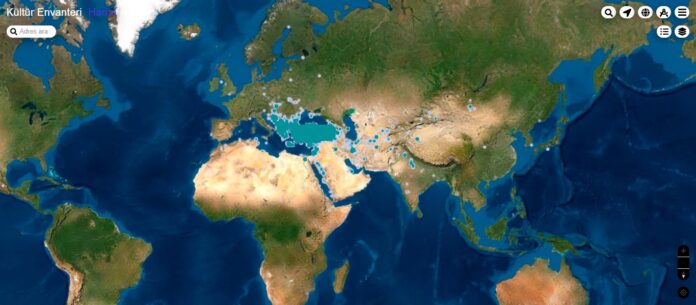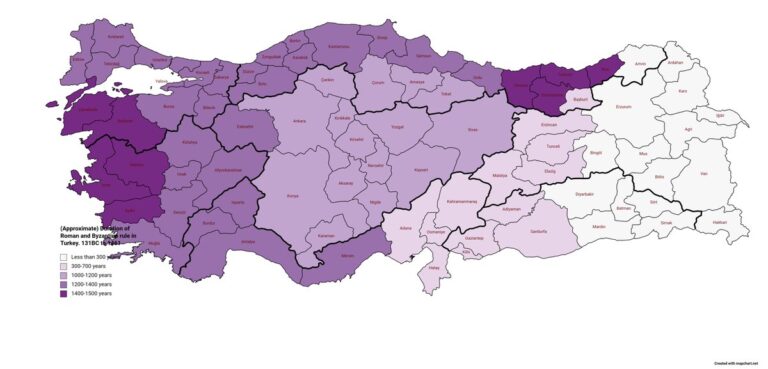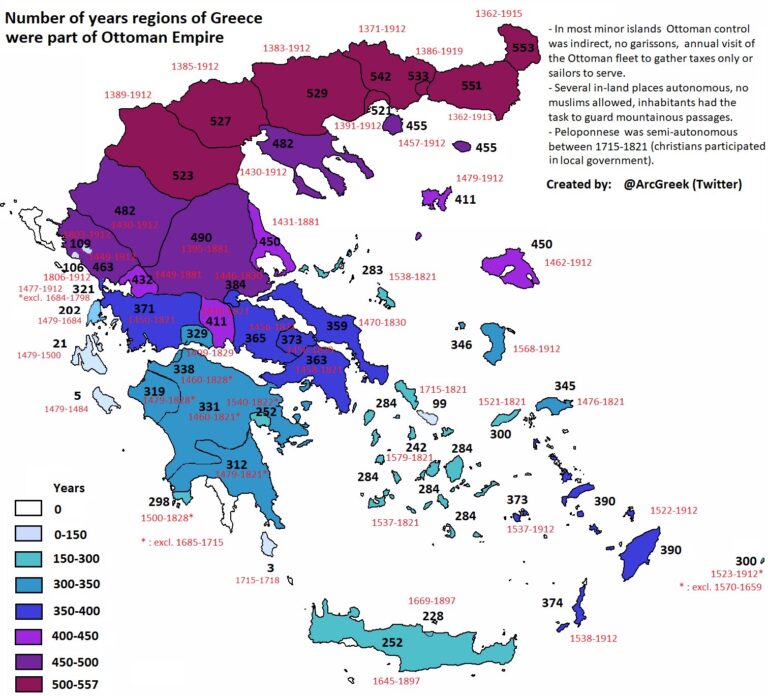
Number of years regions of Greece were under Ottoman rule.
Some regions were ruled for over 500 years, whereas others were never conquered.
The Mini Rough Guide to Istanbul and the Aegean Coast: Travel Guide with eBook
$6.47 (as of 17/08/2026 02:12 GMT +03:00 - More infoProduct prices and availability are accurate as of the date/time indicated and are subject to change. Any price and availability information displayed on [relevant Amazon Site(s), as applicable] at the time of purchase will apply to the purchase of this product.)
The Turkish Cookbook
$36.46 (as of 17/08/2026 02:12 GMT +03:00 - More infoProduct prices and availability are accurate as of the date/time indicated and are subject to change. Any price and availability information displayed on [relevant Amazon Site(s), as applicable] at the time of purchase will apply to the purchase of this product.)
Wonders of Istanbul: A Photo Collection of the City’s Most Beautiful Places to See – A Stunning Coffee Table Travel Photobook
$23.99 (as of 17/08/2026 02:12 GMT +03:00 - More infoProduct prices and availability are accurate as of the date/time indicated and are subject to change. Any price and availability information displayed on [relevant Amazon Site(s), as applicable] at the time of purchase will apply to the purchase of this product.)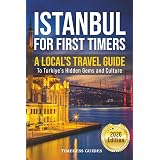
Istanbul For First Timers: A Local's Travel Guide To Turkiye's Hidden Gems and Culture
$17.80 (as of 17/08/2026 02:12 GMT +03:00 - More infoProduct prices and availability are accurate as of the date/time indicated and are subject to change. Any price and availability information displayed on [relevant Amazon Site(s), as applicable] at the time of purchase will apply to the purchase of this product.)
Notes on a Foreign Country: An American Abroad in a Post-American World
$9.87 (as of 17/08/2026 02:12 GMT +03:00 - More infoProduct prices and availability are accurate as of the date/time indicated and are subject to change. Any price and availability information displayed on [relevant Amazon Site(s), as applicable] at the time of purchase will apply to the purchase of this product.)
DK Istanbul: Must-See Sights. Culture & History. Detailed Maps & Tours. Covers Sultanahmet, Beyoglu, & more (Travel Guide)
$18.40 (as of 17/08/2026 02:12 GMT +03:00 - More infoProduct prices and availability are accurate as of the date/time indicated and are subject to change. Any price and availability information displayed on [relevant Amazon Site(s), as applicable] at the time of purchase will apply to the purchase of this product.)
Magic Bus: On the Hippie Trail from Istanbul to India
$7.71 (as of 17/08/2026 02:12 GMT +03:00 - More infoProduct prices and availability are accurate as of the date/time indicated and are subject to change. Any price and availability information displayed on [relevant Amazon Site(s), as applicable] at the time of purchase will apply to the purchase of this product.)
Lonely Planet Turkiye: Plan the Trip of a Lifetime | Detailed Itineraries & Maps | Insider Tips | Covers Istanbul, Troy, Izmir and more (Travel Guide)
$14.49 (as of 17/08/2026 02:12 GMT +03:00 - More infoProduct prices and availability are accurate as of the date/time indicated and are subject to change. Any price and availability information displayed on [relevant Amazon Site(s), as applicable] at the time of purchase will apply to the purchase of this product.)
Istanbul & Northwest Turkey Travel Reference Map WP
$10.95 (as of 17/08/2026 02:12 GMT +03:00 - More infoProduct prices and availability are accurate as of the date/time indicated and are subject to change. Any price and availability information displayed on [relevant Amazon Site(s), as applicable] at the time of purchase will apply to the purchase of this product.)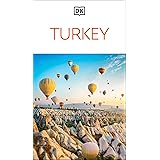
DK Turkey: Must-See Sights. Culture & History. Detailed Maps & Tours. Covers Istanbul, Cappadocia, Antalya, Bod (Travel Guide)
$20.33 (as of 17/08/2026 02:12 GMT +03:00 - More infoProduct prices and availability are accurate as of the date/time indicated and are subject to change. Any price and availability information displayed on [relevant Amazon Site(s), as applicable] at the time of purchase will apply to the purchase of this product.)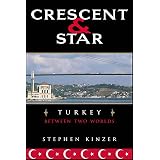
Crescent & Star: Turkey Between Two Worlds
$11.11 (as of 17/08/2026 01:54 GMT +03:00 - More infoProduct prices and availability are accurate as of the date/time indicated and are subject to change. Any price and availability information displayed on [relevant Amazon Site(s), as applicable] at the time of purchase will apply to the purchase of this product.)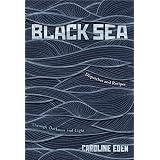
Black Sea: Dispatches and Recipes – Through Darkness and Light
$16.74 (as of 17/08/2026 01:54 GMT +03:00 - More infoProduct prices and availability are accurate as of the date/time indicated and are subject to change. Any price and availability information displayed on [relevant Amazon Site(s), as applicable] at the time of purchase will apply to the purchase of this product.)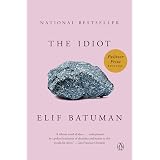
The Idiot: A Novel
$9.47 (as of 17/08/2026 01:54 GMT +03:00 - More infoProduct prices and availability are accurate as of the date/time indicated and are subject to change. Any price and availability information displayed on [relevant Amazon Site(s), as applicable] at the time of purchase will apply to the purchase of this product.)
DK Turkey: Must-See Sights. Culture & History. Detailed Maps & Tours. Covers Istanbul, Cappadocia, Antalya, Bod (Travel Guide)
$20.33 (as of 17/08/2026 01:54 GMT +03:00 - More infoProduct prices and availability are accurate as of the date/time indicated and are subject to change. Any price and availability information displayed on [relevant Amazon Site(s), as applicable] at the time of purchase will apply to the purchase of this product.)
DK Top 10 Istanbul: Top 10 lists for your perfect trip, plus an all-weather folded map (Pocket Travel Guide)
$7.31 (as of 17/08/2026 01:54 GMT +03:00 - More infoProduct prices and availability are accurate as of the date/time indicated and are subject to change. Any price and availability information displayed on [relevant Amazon Site(s), as applicable] at the time of purchase will apply to the purchase of this product.)
Lonely Planet Pocket Istanbul: Discover Twice the City in Half the Time | Top Sights | Maps & Walking Tours | Covers Sultanahmet & Sirkeci, Bazaar ... & Western Districts and more (Pocket Guide)
$12.48 (as of 17/08/2026 01:54 GMT +03:00 - More infoProduct prices and availability are accurate as of the date/time indicated and are subject to change. Any price and availability information displayed on [relevant Amazon Site(s), as applicable] at the time of purchase will apply to the purchase of this product.)
High Albania
$0.99 (as of 17/08/2026 01:54 GMT +03:00 - More infoProduct prices and availability are accurate as of the date/time indicated and are subject to change. Any price and availability information displayed on [relevant Amazon Site(s), as applicable] at the time of purchase will apply to the purchase of this product.)
The Turkish Cookbook
$36.46 (as of 17/08/2026 01:54 GMT +03:00 - More infoProduct prices and availability are accurate as of the date/time indicated and are subject to change. Any price and availability information displayed on [relevant Amazon Site(s), as applicable] at the time of purchase will apply to the purchase of this product.)
Lonely Planet The Mediterranean: Over 30 Mesmerising Cities & Islands | 15 Weekend Long Road Trip Itineraries | Tips on Where to Eat & What to See | Stunning Photography
$23.73 (as of 17/08/2026 01:54 GMT +03:00 - More infoProduct prices and availability are accurate as of the date/time indicated and are subject to change. Any price and availability information displayed on [relevant Amazon Site(s), as applicable] at the time of purchase will apply to the purchase of this product.)