Home Blog Page 164

Türklerin Tarihi

Hong Kong’un önemli İngilizce günlük gazetelerinden South China Morning Post gazetesi Chinese History başlığı altında Çin tarihinden bilgiler vermektedir. Çinlilerin tarihi konusu burada önemlidir. Böyle bir başlık altında sadece Çin Halk Cumhuriyeti’nde değil fakat Çinlilerin yaşadığı başka ülkelerden de Çin tarihi ile ilgili, Çinlilerin tarihi ile ilgili bilgiler verilmektedir.

Şimdi kendimize dönüp baktığımızda ise ülkemizde ise önemli olan belli popüler tarihi yazarlardır. Konu olarak ise Osmanlı Tarihi başlığı altındadır. Fakat Türklerin Tarihi başlığı altında değişik ülkelerden, Türklerin yaşadığı değişik ülkelerden verilen tarihi bilgilere rastlanmamaktadır
Türkler tarihleri boyunca üç kıtadaki değişik coğrafyalarda değişik ülkelerde yaşamışlardır bu ülkelerde biriken kültürel eserler sözkonusudur, fakat bu bu konular Türklerin Tarihi başlığı altında toplumun gündemine getirilmemektedir.
Ayrıca çıkan aylık dergilerin isimleri sadece Tarih Dergisi olarak adlandırılmaktadır.
South China Morning Post gazetesinin yaptığı tarzda Türk kültürel mirasının  paylaşılmasına rastlanmamaktadır. Bu ise Türk kimliğinin sadece Türkiye’ye özgü olduğu algısını derinleştirmektedir.
Burada bölünmüş bir zihin söz konusudur. Çinlilerin Tarihi kavramındaki bütünlüklü bakış tarzında bir bilinç ve kimlik söz konusu olmadığından ötürü Türklerin Tarihi şeklinde bir isimlendirme ve kültür paylaşımı söz konusu değildir.
Türklerin tarihinde sanat, kültür, edebiyat, düşünce, felsefe gibi çok değişik alanlarda yaratılan eserler söz konusudur ve bunların paylaşımı Türkler için önemli, zenginliğin kazanımı şeklinde ortaya çıkacaktır.

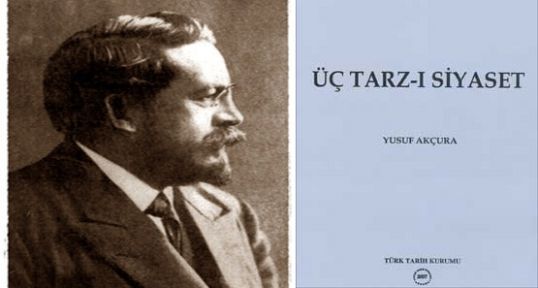
Üç Tarzı Siyaset ve BM5

Türk düşünürü Yusuf Akçura 1904 yılında Kahire’de yayınladığı Üç Tarzı Siyaset makalesi ile imparatorluğun kurtarılmasındaki çareleri üç başlık altında özetlemişti; Osmanlıcılık, İslamcılık, Türkçülük. İlerleyen süreçlerde ise bugünün BM5 güçleri olan zamanının güçleri bu çözümleri teker teker ortadan kaldırmışlar ve bunu da birbirleri ile işbirliği içerisinde yapmışlardı.
Osmanlıcılık çözümü için ilk önce Balkanlar’da İngiltere Rusya işbirliği Türklerin karşısına geçerek aynı anda hem Osmanlıcılığı hem de İslamcılığı berhava ettirmiş, Türkler Balkanlardan atılmıştı.
Türkçülük akımının ortada kaldırılması için ise İngiltere Rusya ve Çin birlikte, Doğu Türkistan’ı Çin’e hediye ederek Türkleri esaret altına aldırmışlar ve bu şekilde Türklerin arasındaki geniş çaplı birleşme ve işbirliği imkanını ortadan kaldırmışlardı
Ardından bu kez İngiltere Orta Doğu coğrafyasında Arapları, Türklerin karşısına  geçirmiş ve Osmanlıcılık ile İslamcılık çözümlerini birlikte ortadan kaldırmıştı.
1904 sonrası olan süreçte ise her ne kadar BM5 gücü olmasa da Almanya, İslamcılık akımını kendi çıkarları için kullanmış ve İmparatorluğumuzu Birinci Dünya Savaşı’na sokarak ölümüne neden olmuştur.
İkinci Dünya Savaşından sonraki süreçte ise tek kutuplu dünyanın mimari ABD hem İslamcılık hem de Türkçülük akımının içine sızmış ve her iki akımı da Büyük Orta Doğu Projesi çerçevesinde kendi menfaatleri doğrultusunda birleştirmiş ve biçimlendirmiş, adını da Türk İslam sentezi olarak koymuştur.
Görüldüğü üzere Yusuf Akçura’nın 1904 yılında çözüm olarak önerdiği İslamcılık ve Türkçülük akımlarının içerisine BM 5 güçleri sızarak Türklerin bir dünya gücü haline gelmelerine bu şekilde engel olmuşlardır.
Derenin taşı ile derenin kuşu vurulmuştur.


Türk Ekonomisi 2023

1929 Dünya ekonomik bunalımının ardından ekonomide devletçilik politikalarına yönelen Türkiye bu politikasını 24 Ocak 1980 tarihine kadar 50 yıl boyunca sürdürmüştür. Özal’lı yılların başlangıcı ile birlikte bu politika terk edilmiş ve ekonomi mevzuatı komple yeni baştan yazılmıştır.
2018 yılında ise Türkiye parlamenter demokratik rejimden, başkanlık rejimine doğru yönelmiş ve bu yöneliş neticesinde ekonomi kötüye gitmeye başlamıştır. Cumhuriyetimizin 100. yılı itibari ile geldiğimiz noktada Türkiye enflasyon ve devalüasyon sarmalında çırpınan bir ekonomi manzarası ortaya koymaktadır.
Burada önemli olan konu ve soru şudur; acaba bu kriz ne kadar süre ile devam edecektir.
Gözüken şu ki kurumların ortadan kaldırılması nedeniyle, Başbakanlık ve Müsteşarlık makamlarının ortadan kaldırılması nedeniyle istişare ve ortak akıl mekanizmalarını kaybeden Türk ekonomisinin tekrar normalleşmesi birkaç on yılı bulabilecektir.
Sarf edilen o denli siyasi sloganlara rağmen 2023 yılına krizle girilmiş ve 10 yıl önceden,  2023 yılında 500 milyar $ olacağı söylenen ihracatımız, 2022 yılı sonunda 254,2 milyar dolar seviyesine ancak ulaşarak hedefin yarısında kalınmıştır.


Indian Cultural Heritage Collection in Greater Turkey

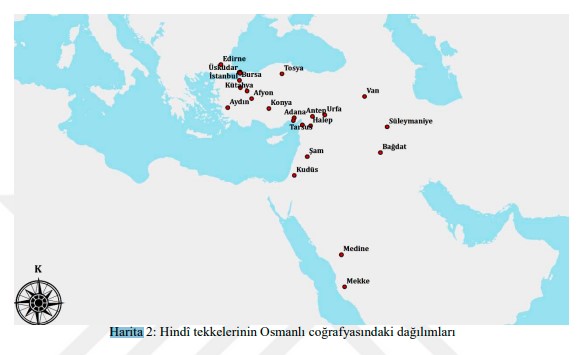
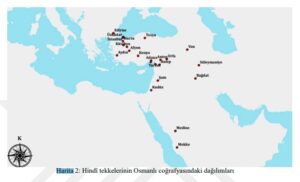
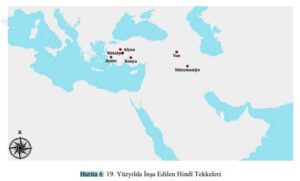
Map: Distribution of Hindi lodges in Greater Turkey Empire (Ottoman) geography


Indian Cultural Heritage in Turkey: Indian Sufis and Lodges in Ottoman Geography

Indian Sufis and Lodges in Ottoman Geography Until the 1920s, there were Indian Lodges/Dergahs in Istanbul, Bursa, Kütahya, Konya, Mosul, Jerusalem and Damascus. There were…

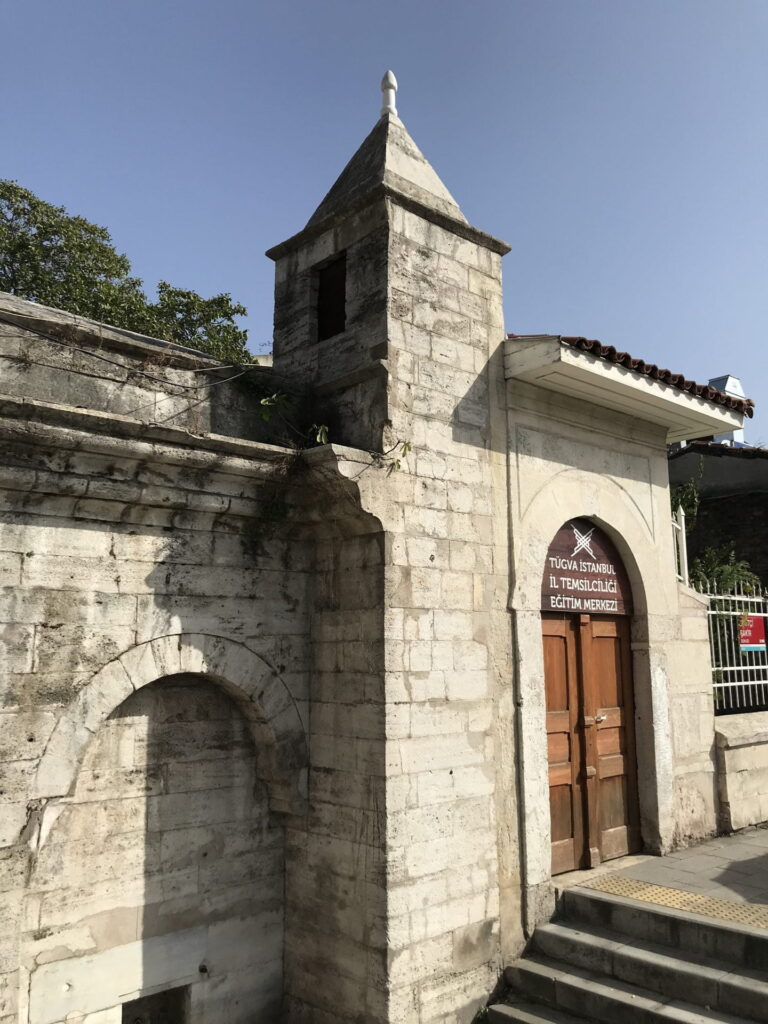
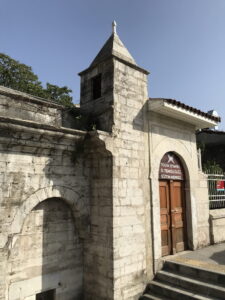
Indian Cultural Heritage in Turkey: Indians Lodge in Fatih, Istanbul

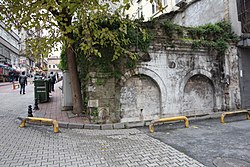
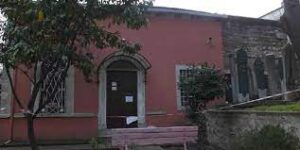
Aksaray-Horhor Hindiler Lodge. It was located in the district of Fatih, in the part of Aksaray district called Horhor, next to the Horhor fountains that…

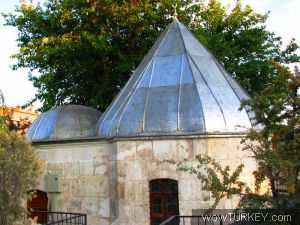
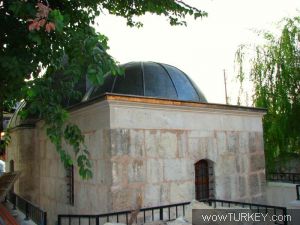
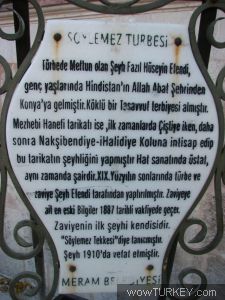
Indian Cultural Heritage in Turkey: Söylemez Tomb and Zaviye and Sheikh Fazıl Hüseyin Efendi, Konya

Konya Söylemez Tomb and Zaviye and Sheikh Fazıl Hüseyin Efendi According to Müfid Bey, it was originally an Indian Lodge, known as the Söylemez Tomb…

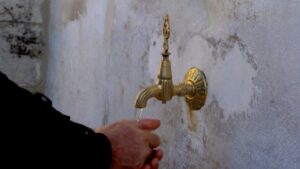
Indian Cultural Heritage in Turkey: Horhor Fountain, Fatih, Istanbul

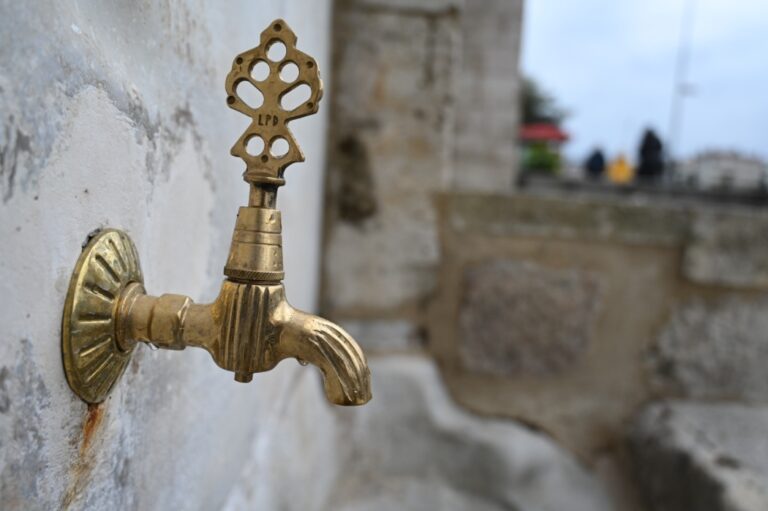
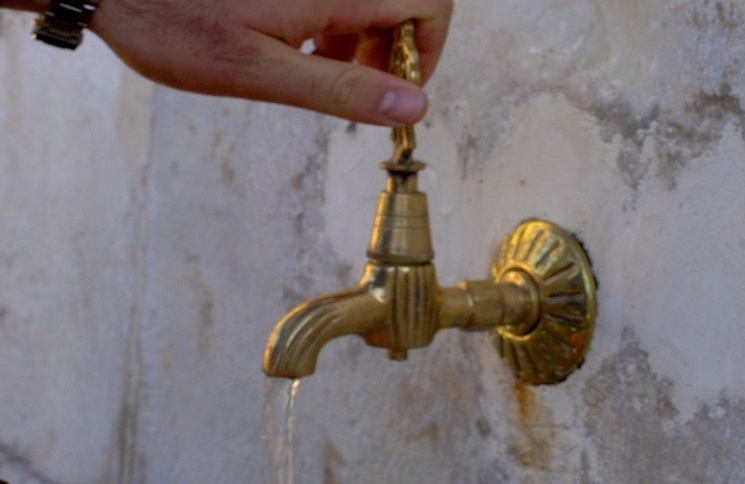
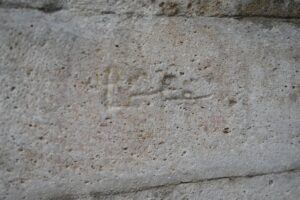
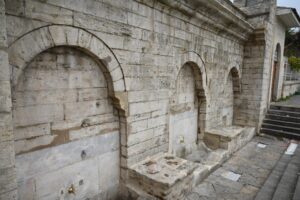
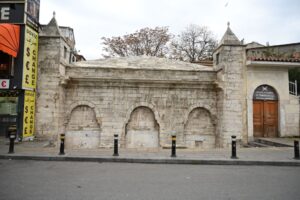
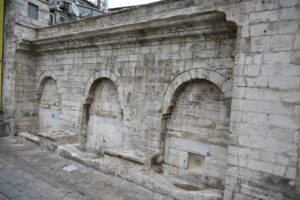
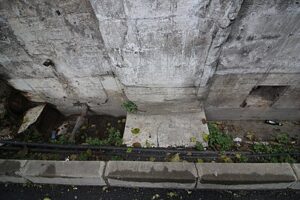
Horhor Fountain Hindiler Lodge Fountain is also known as Suleiman the Magnificent Fountain. Horhor Fountain is a fountain located in Fatih district of Istanbul province in Turkey . It is located next to the Hindiler Lodge . Horhor…

Indian Cultural Heritage in Turkey: Murad-i Munzavi Tomb, Eyup, Istanbul 

In this study, the tombstones in the graveyard of The Dervish Lodge of Sheikh Muhammed Murad from Buhara were analysed. The Dervish Lodge which is…

Indian Cultural Heritage in Turkey: Indians Lodge, Uskudar, Istanbul

Uskudar Hindus Lodge. It is located in the Solaksinan neighborhood in the Selâmsız district of Üsküdar, approximately 100 meters from the mosque that gave…

Indian Cultural Heritage in Turkey: The Graveyard of the Hindus Lodge, Fatih, Istanbul, Turkey

Aksaray-Horhor Hindiler Lodge. It was located in the district of Fatih, in the part of Aksaray district called Horhor, next to the Horhor fountains…

Indian Cultural Heritage in Turkey: Aziziye Hamamı, Kadikoy, Istanbul

Aziziye Hamamı, Kadıköy  Located on Recaizade Street in Kadıköy, Aziziye Bath was built in the last years of the Ottoman sultan Sultan Abdülaziz in the…

Indian Cultural Heritage in Turkey: Indian Sufis and Lodges in Ottoman Geography

Conclusion

To reveal the histories of the Hindu lodges, which had an important place in the Sufi life of the Ottoman period in the context of the breadth of the area they operated and the length of their activity, to determine the names of the sheikhs working in the lodges, to determine the income sources of these lodges, and most importantly, to determine the income sources of these lodges. This study was created in order to evaluate the relations between them from a holistic perspective.

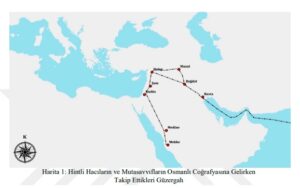
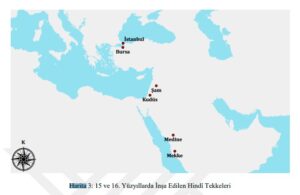
As a result of the study, firstly, as in the case of the lodges in Damascus and Jerusalem, the construction dates of the Hindu lodges date back to the years 1516-1517, when the Ottomans dominated Syria, Palestine, Egypt and the Hejaz. It has been understood that they have an important role in establishing contacts in cultural areas. In this study, the information about the history of the Hindu lodges in Damascus and Jerusalem was concluded with the de facto withdrawal of Syria and Palestine from Ottoman rule in 1917.

However, the fact that the tekke in Jerusalem is still in use as an official building belonging to the Indian state is undoubtedly a mirror reflecting the role of this building in history and today.

In this study, although the narrative about the history of Hindi lodges was terminated with an approach centered on the law on the abolition of lodges-zaviyes in 1925, some of the lodges, including the ones within the borders of the Republic of Turkey, at least survived, and the Hindu lodges in Horhor and Konya. For example, people of Indian origin continued to live here.

Even though the lodges in Damascus and Aleppo, which are outside the borders of the Republic of Turkey, have survived at least as a structure after the end of Ottoman domination in the region, it is likely that they are in ruins due to the ongoing civil war in Syria.

Apart from these two lodges, it is possible that the Hindi lodges in Baghdad and Sulaymaniyah in Iraq were devastated during the long-term wars and turmoil in the region. The Indian ribat and lodges in Mecca and Medina, which are in a sense the heart and center of the Islamic world and civilization, continue to serve as shelters for Indian and Pakistani pilgrims, Sufis and scholars who come and go to these centers to fulfill their pilgrimage.

The two dervish lodges in Bursa and Horhor, which are noteworthy in terms of the length of their activity, were built in the middle of the 15th century under the shadow of a strong Kalenderi tradition.

In terms of the continuity of its activities, the Hindiler Lodge in Bursa had a more stable structure, while the activities of the Horhor Hindiler Lodge were interrupted.

However, only about one percent of the şer’iyye registers, which belong to Istanbul, in which the Hindiler Lodge in Horhor is located, and more than eleven thousand volumes, have been published. With the new and comprehensive studies to be carried out on the Istanbul sharia registers, new data will be obtained on the activities of the Indian sheikhs in Istanbul, even if not on the Horhor Hindiler Lodge.

The Hindiler Lodge in Horhor was built as a central lodge (Âsitâne). Although he had the authority and power before the Indian lodges in the regions, the most important factor in the fact that the lodge came to this state was the active personality of Hacı Ahmed Efendi, who served for a long time from the lodge.

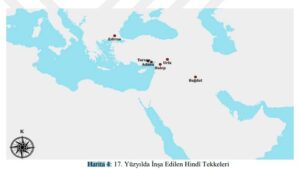
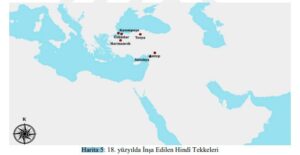
During the sheikhdom of him and his successor, İbrahim Hakkı Efendi, the lodge reached a significant power over other Hindu lodges. When the histories of the Hindi lodges are evaluated in general, it is understood that the 17th and 18th centuries correspond to an important period. During this two-century period, twelve new Hindu Lodges were put into operation, six in the 17th century and six in the 18th century.

Among the Hindu lodges that started operating in the 17th century, the Hindi lodge in Adana stood out in terms of the diversity of its income sources and the size of its outbuildings. The lodge in Tarsus, on the other hand, started to operate in a second building adjacent to the Tomb of Danyal Aleyhisselam, under the direction of a wealthy Indian sheikh named Abdulkayyum, due to the large number of Indian population here, and had an important economic power as in the lodge in Adana.

The fact that Hindi lodges started to be built in Baghdad, Aleppo and Urfa in this century is undoubtedly important in terms of showing the increase in commercial and cultural activities on this route. In the 17th century, many settlements in Anatolia were left in ruins; Considering the circumstances such as the cessation of the activities of the Samsun and Tokat Mevlevi Lodges, the fact that Hindi lodges began to operate in Baghdad, Aleppo and Urfa has been a remarkable development.

With the comparative studies to be made in the following years on the social and economic structures of the Ottoman period Anatolia and the regions that can be geographically named as Syria and Iraq, it is possible to examine the Hindi lodges that started to operate in Baghdad, Aleppo and Urfa. will allow information to be made on a healthier basis.

Among the Hindu lodges that started operating in the 17th century, the most striking one was the lodge in Edirne due to the fluctuations in their activities. It does not seem possible to evaluate the lodge here as the Lodge of the Hindus until the period when it was rebuilt and put into operation by a sheikh named Cafer Hindi, since the sheikhs of the first period of its operation did not carry the rank of Hindu.

Indian sheikhs started to work in the lodge after Cafer Hindi. The main point that draws attention in the history of the lodge is that it was in a dilapidated state again in the last quarter of the 19th century and the activities in the lodge ended so that not even a trace of its building was left.

The 18th century was the most remarkable period in terms of the activities and activities of the Hindu lodges; The most important development in this century was that Horhor Hindiler Lodge came into operation again after a long period of at least seventy years, according to our findings.

The construction of a second lodge, which started to serve the Indians in Üsküdar, in a period of five to ten years following the re-activation of the Hindus Lodge in Horhor, and a sheikh named Turabi-i Hindî in Kasımpaşa had a lodge in Istanbul‘s name during this period. This indicates the existence of a large and active Indian community.

One of the remarkable developments in terms of Hindu lodges in this century was the establishment of two different Indian lodges in close proximity to each other in Antakya. its re-starting. These examples mentioned are important in that they indicate that the Indian sheikhs had a significant power and influence both in Istanbul and in the Ottoman geography in this century.

The activities of the Indian sheikhs continued in the following period and while new lodges were built under the responsibility of the Indians in Aydın, Konya, Karahisar-ı Sahib, Süleymaniye and Van in the 19th century, an old lodge that had been operating in Kütahya since very early dates came under the rule of the Indian sheikhs. Among these newly built lodges, especially the lodge located in the Surtaş district in the Süleymaniye Sanjak, Haji Ahmed Lahori has an important place in terms of being an effective personality.

The fact that Behlül Efendi, one of the last sheikhs of the lodge, which came under the rule of Indian sheiks in Kütahya, also served as the sheikh of La’lizade Abdulbaki Lodge in Istanbul is important in terms of revealing how strong the ties between the Hindu, Uzbek and Afghan communities and lodges are. As a result of the examination of the ties and hierarchical elements between the Hindu lodges, it is understood that it is possible to evaluate the lodges as parts of a network, and it has been revealed that certain procedures and rules have become an established practice in the appointments of the lodges to the sheikh posts.

In the part where the hierarchical elements between the dervish lodges are discussed, some important issues in the histories of the dervish lodges are discussed again as a whole. As a result of this situation, it has been determined how the management of the dervish lodges is provided and what difficulties are encountered in this regard. In the evaluations of the place of the Hindu lodges in the life of Sufism in the Ottoman period, firstly, the issue of which sects were active in the lodges was emphasized.

As a result of these evaluations, although exceptional situations have occurred, it has been revealed that the dominant order in Hindi lodges is Qadirism. After the evaluations about the order dominant in the lodges, the names of the Indian sheikhs who had a role in the Ottoman religious and cultural life with their works were determined and information about their works was given.

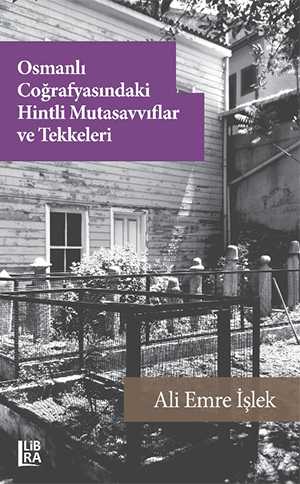
Osmanlı Coğrafyasındaki Hintli Mutasavvıflar ve Tekkeleri – Libra Kitap
Osmanlı Devleti’nde Hindî Tekkeleri (Indian Dervish Lodges in Ottoman State) 

Indian Dervish Lodges in Ottoman State

Ali Emre Islek
2020, Ph.D. Thesis

Indian Cultural Heritage in Turkey: Indians Lodge in Fatih, Istanbul

Indian Cultural Heritage in Turkey: Söylemez Tomb and Zaviye and Sheikh Fazıl Hüseyin Efendi, Konya

Konya Söylemez Tomb and Zaviye and Sheikh Fazıl Hüseyin Efendi

According to Müfid Bey, it was originally an Indian Lodge, known as the Söylemez Tomb in Konya. It is written in his inscription that he is an Indian. The guys are Indian, not Hindu. These were lodges reserved for Indian Muslims. Their sheikhs were always Indian. Source: The Serencâmi of Islamism in the Process of Modernization.

The following information on the subject is taken from the December 2001 issue of Meram Municipality Culture and Art magazine, which is no longer in publication. Thanks to my dear friend Hüseyin Alagöz, who brought the information to this issue…

After the 1071 Malazgirt Victory, the Anatolian lands became the places where dervishes and sufis from different parts of the Islamic world talked about Islam in dervish lodges and lodges. In 1096, when Konya became the capital of the Anatolian Seljuk state, it became a center of science and culture in this sense. In this scientific and cultural movement, it is impossible not to count the “Siyonmez Tomb” and the sheikh Fazıl Hüseyin Efendi, which were an important building block in the last period of the Ottoman Empire. The number of studies on this subject is very few, during our studies, Mr. Assoc. Dr. We came across Yusuf KÜÇÜKDAĞ’s extensive research on the Söylemez Tomb. I would like to thank my teacher Assoc. Dr. Yusuf KÜÇÜKDAĞ for his work.

WHO IS SHEIKH FAZIL HUSEYIN EFENDI?

It is known that he leads a shrewd life, has no interest in the world, and stays away from people and busy city life. The mausoleum, which is called Kanlıgöl in Konya, adjacent to Muhacir Pazari or Balıkçılar district, was built by Sheikh Efendi after his death, to be buried. He spent his life in a space with a width of 35, ( Zira is one of the length measures used before the metric system was adopted. It is the measure of length from the elbow to the tip of the middle finger), which he had dug into this tomb.

Near the tomb, there are two buildings built by the sheikh himself as zawiyah. In addition, he donated two houses built by the Minister of Justice es-seyyit al-Hajj Abdurrahman Nurettin Pasha, who also served as the Grand Vizier during the reign of Abdulhamid, to the zaviye. These houses are known as Söylemez Konağı. Sheikh Efendi never used this mansion and lived in the place where he had it built as a zawiya, which was almost a grave pit.

As it is said that co-Sheikh Fazıl Hüseyin Efendi did not speak because of his preferred lifestyle, it is also mentioned that as someone who came to Konya from India, there was a problem due to the difference in spoken language. Another narration is that Sheikh Efendi Hz. It is said that the people gave him the nickname “Doesn’t Speak” and his real name was forgotten because the Prophet (pbuh) kept the hadith of “Whoever believes in Allah and the Hereafter, either say good or be silent” and kept silent and never spoke worldly words. .

It is understood from the charters that Sheikh Fazıl Hüseyin Efendi came to Konya before 1887. According to different narrations, he is said to have lived for 63.83 or 90 years. It is understood from the records that he came to Konya at a young age. It is stated that he was martyred on September 4, 1910, and that he died in some foundation charters.

Sheikh Effendi; He was born in Ahmet-pur serame village of Allahabad city of India, his father’s name is Cevher Ali. He is of Arab race and his lineage is “Hz. Osman Zinnureyn” and “Imam Hazrat Zeynelabidin” is registered in the charter I.1-5;11.,10-15;111.,15-20. It is understood that Sheikh Efendi‘s ancestors, like many of the Muslims in India, came to India with the idea of working on guidance.

After a good madrasa education in India, he trained himself in the field of Sufism. He is a member of the Ciştiye sect in India. The reason for coming to Anatolia is to spread this sect in Anatolia. The number of people who joined this order in Konya was very small. Among the reasons for this; The cistiye sect has rules that are hard to live by. Because those who belong to this sect should almost completely cut off their connection with the world. They do not attach importance to anything worldly, especially clothing. The word kalender-i in Sheikh Efendi‘s expression çişti-kalender-i on the existing gravestone today has an equivalent meaning to the word kalender, which does not care about the world and worldliness.

While Sheikh Efendi‘s Sect was Hanefi and his sect was a çiştiye when he first came to Konya (Vakfiye I., 1-5), he later became a Sheikh, the foundation that he joined to Nakşibendi and Kadiriye, which can be considered as the closest to the çiştiye, where he was the Sheikh of this order. evident from the records. According to a charter, it will testify that; He says that those who will benefit from the zaviye and its annexes can benefit from it, provided that they are affiliated with the Naqshi or Qadiri sect.

In short, when we see that Söylemez had a zawiya built in Konya and published the Nakşibendiye Sect, we can say that he belonged to the Halidiye branch of the Nakşibendiye. Because XIX. XX century at the end of the century. The existence of many Nakşibendiye-i Halidiye Lodges in Konya at the beginning of the century was a fact. In the Ottoman state; XIX. The Sufi education was given in India by Mevlana Halid-i Bagdadiye, the founder of Nakşibendiye-i Halidiye, which spread rapidly in the 19th century. This information reinforces that Söylemez belonged to the Halidiye branch of Nakşibendiye and became the sheikh.

Seyf Fazıl Hüseyin Efendi is also known for his interest in fine arts. He was especially skilled in calligraphy. V. Sabri Uyar showed him among the calligraphers because of this aspect and gave information about his life. Sheikh Efendi could write fine thuluth, naskh, and ta’lik. Uyar says that he saw a 28-page Tarikatname and an 11-page Persian silsilename in the hands of an old man named Hasan Dede, who lived in Pirebi Neighborhood in the 1940s. Soylemez also has poetry. V. Sabri Uyar writes that he saw a three-page eulogy.

Söylemez Zaviyesi, by Sheikh Fazıl Hüseyin Efendi, was built in the 19th century. It was built at the end of the century. Considering the location where it was founded and the structures in the poem, this is a typical Ottoman period zaviye. However, during the cadastral studies carried out in 1926, it was registered as “Siyonmez Lodge” and as “Sheikh Fazıl Efendi Lodge” in the land registry. (Konya land registry and cadastre regional directorate, 23 neighborhoods, 29 plots, 133 Island; Meram Land Registry Office, Section 29, Island 133, Plot 2.) However, it is mentioned as a zawiyah in its charter and other foundation records. Since Tekke and Zaviye are used in the same sense among the people, they are written as Tekke in cadastral measurements.
However, Tekke and Zaviye are two separate sect structures with nuances in terms of their functions.

DERVISH LODGE; It is established under a Sect center, where dervishes belonging to that order live collectively and perform their traditions and worship. The different aspect of the lodge from the zawiyah is that it is the place where the traditions of any sect are maintained and its teachings are conveyed. Such cult structures were located in city centers and their needs were met with foundation income. The dervishes here do not engage in agriculture.

ZAVIYE; The dictionary meaning is corner, parish. In the language of Sufism, it was a zawiyah, “a secluded or hut where a devotee retreats to engage in worship”.

Like dervish lodges, it is the place where dervishes and their sheikhs perform the dhikr and rites of the sect they belong to. Despite the fact that the lodge is located within the settlements, the zaviye is established on an empty land outside the city centers.

The needs of those who stayed here were met by planting the land belonging to the zawiyah. In the zawiya, “ayende and revendeye”, that is, passengers passing by, were served and the agricultural products obtained were also offered to them. One of the most important features that distinguishes the zawiyah from the lodge is that the responsibility is entirely on the zawiya sheikh, regardless of being connected to the sect center.

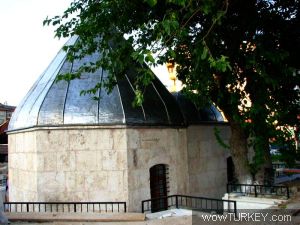
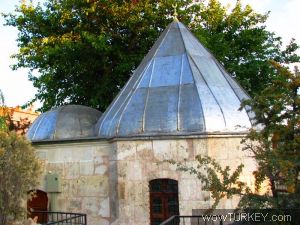
The architect of the Söylemez Tomb is unknown. It must have been built by an architect from Konya. Because XIX. Although it was built at the end of the century, especially the coffin section does not resemble the Ottoman period tomb architecture. Here, the ehrami mausoleum tradition of the Seljuk and Karamanogullari era, of which many examples can be found in Konya, seems to have been imitated.

As a matter of fact, apart from the tomb of the tomb in front of it, Söylemez Tomb; It is like a small copy of the Ulaş Baba vault, which is known to have been built during the Karamanoğulları period.

Soylemez Tomb has a special place among the Ottoman era tomb architecture in Konya. However, it was included in the list of antiquities to be protected in 1982, and it was registered as a 2nd group monumental building on 09.06.1989. Despite this, it is understood from the bricks that are about to melt, especially in the cupola section, that it needs to be restored as it is today. Hoping to draw the attention of the authorities.. By saying that our historical artifacts are our identity as a society, our essence; As all Konya residents and people living in Konya, I wanted to remind our spiritual sultan, to draw the attention of our people here, and to remind that we must protect these historical heritages.

Konya Söylemez Türbe ve Zaviyesi ve Şeyh Fazıl Hüseyin Efendi

Indian Cultural Heritage in Turkey: Horhor Fountain, Fatih, Istanbul

Indian Cultural Heritage in Turkey: Murad-i Munzavi Tomb, Eyup, Istanbul 

In this study, the tombstones in the graveyard of The Dervish Lodge of Sheikh Muhammed Murad from Buhara were analysed. The Dervish Lodge which is in Eyüp, one of the most beautiful towns in Istanbul, was the first center of Mucaddidiyya branch of
Naqshbandiyya in Anatolia.

The tombstones were examined in chronological order according to the date of death and
the broken ones were stated seperately. Based on the knowledge taken from the tombstones, most of the members of the dervish lodge were belonged to the ulama and bureaucracy classes.

The Dervish Lodge which was connected with Damad-zâde Ebülhayr Ahmed Efendi and
Mustafa Pasha Foundations, influenced society so much. The tomb of the Sheikh Murad is in the classroom part of the dervish lodge and is still visited by his followers.

Keywords: Istanbul, Eyup, Sheikh Muhammed Murad Dervish Lodge, foundation,
graveyard, Ottoman Empire 17th and 18th centuries.

Source  Şeyh Muhammed Murad-ı Buhârî Tekkesi Haziresi Üzerine Bir Değerlendirme Ahmet Semih Torun

Murad-ı Münzavi Türbesi 

Indian Cultural Heritage in Turkey: Indians Lodge, Uskudar, Istanbul

Uskudar Hindus Lodge. It is located in the Solaksinan neighborhood in the Selâmsız district of Üsküdar, approximately 100 meters from the mosque that gave its name to the neighborhood. located at a distance. According to what Zâkir Şükrü Efendi reported, the lodge, which was affiliated to the Qadiriyye forder, was put into operation by Sheikh Sayyid Feyzullah Efendi al-Hindi in 1150 (1737-38). In the same source, the identities of the sheikhs who later wore the skin of the lodge are stated as follows:

Sheikh Bereket Efendi al-Hindi, Feyzullah Efendi’s caliph Sheikh Emanullah al-Hindi, Sergürûh-ı Şeyh Rahimullah Shah al-Hindi (d. 1193/1779), Sheikh Mehmed Multan al-Hindi (d. 1202/1787-88), Dervish Pir Seyyid Mehmed Efendi (d. 1207/1792-93), son of Mehmed Multan, Sheikh Abdullah Yar al-Hindi (d. 1238/1822-23), Sheikh Ali Efendi (d. 1246/1830-31), Sheikh Süleyman Khalifa Efendi (d. 1252/1836-37), Sheikh Mehmed Raşid Efendi (d. 1285/1868-69), Sheikh Hasan Veliyyüddin Efendi and Sheikh Mehmed Tahir Efendi, who assumed the mashihad in 1294 (1877). T. Zarcone argues that neither Feyzullah al-Hindi nor the five sheiks who came after him could be proven to be of Indian origin, and that these people could be Turkish sheiks of Central Asian origin who came to Istanbul via India or went on pilgrimage.

However, the fact that the Qādiriyya sect, to which the lodge is affiliated, is widespread and active in India rather than Central Asia, and the names of the sheikhs in question (Emânullah, Rahîmullah, Abdullah Yar) do not support this claim. He argues that these people may have been Turkish sheiks of Central Asian origin who came to Istanbul via India or went on pilgrimage. However, the fact that the Qādiriyya sect, to which the lodge is affiliated, is widespread and active in India rather than Central Asia, and the names of the sheikhs in question (Emânullah, Rahîmullah, Abdullah Yar) do not support this claim. He argues that these people may have been Turkish sheiks of Central Asian origin who came to Istanbul via India or went on pilgrimage. However, the fact that the Qādiriyya sect, to which the lodge is affiliated, is widespread and active in India rather than Central Asia, and the names of the sheikhs in question (Emânullah, Rahîmullah, Abdullah Yar) do not support this claim.
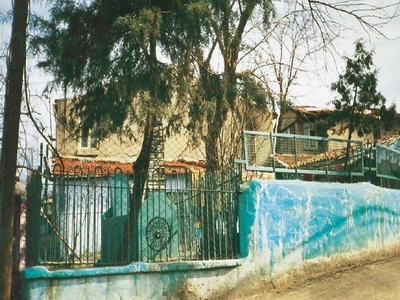
The Hindus Lodge, which is also mentioned by the name of its founder Feyzullah Efendi in the sources containing the inventory of the Istanbul lodges, and the day of the liturgy is stated to be Saturday, has completely disappeared and its layout and architectural features cannot be determined. The fact that the foundation works in Üsküdar dated 1924, which was transferred to İbrahim Hakkı Konyalı by Şinasi Akbatu and which is in the Archives of the General Directorate of Foundations, states that the lodge was in the form of a plot of land, which indicates that the activities of the sect here ended before the lodges were closed and the buildings vanished into history. The fact that the list of sheikhs given by Zâkir Şükrü Efendi was cut in the late 1870s also strengthens this view.

The surviving traces of the lodge consist of the tomb of Sheikh Feyzullah al-Hindi and the tomb of Abdullah Efendi, dated 1240 (1824-25), the remains of the iron-barred burial ground and some tombstone fragments around it. The witness at the head end of the sarcophagus belonging to Feyzullah al-Hindi is crowned with an inscription with thuluth calligraphy and crowned with a serpush, which is unique in Istanbul, consisting of a long arakiyye and a straight dolama destar. The toe stone, on which there is no inscription or decoration, ends with a sliced ​​arch. It is possible that the person buried in the other grave is Sheikh Abdullah Yar al-Hindi, who is mentioned in the sheikh list of Zâkir Şükrü Efendi, who died in 1238 (1822-23). The land of the lodge and its surroundings are still occupied by the colorful dwellings of the Gypsies.

Source

Hindiler Tekkesi, Üsküdar

Indians Lodge, Uskudar