Home Blog Page 329

Leather Turkey: Heritage of Civilisations, 8000 BC-

This exhibition explores the art of leather of Turkey starting with 8000 BC.
The story begins with nomadic Asian roots found in Pazırık, continues with Catalhöyük in Anatolia and ends with the Republic of Turkey.
Journey of the Turks from Inner Asia to Anatolia (Asia Minor) incorporated many different centres of power and artistic traditions.
Influences can be traced from Asian roots mingled with the ancient civilizations of Anatolia like Hittites, Urartians, Phrygians, Ionians to the Byzantines, Seljuks, Oğuz tribes and Ottomans, and in which urban sophistications of the Türkmen and Yörük nomads all participated to create a colourful symphony.
These works of art passed down by earlier generations astound us with their diversity, glowing colour harmonies, skilful workmanship and striking designs.
Leather is an ancient profession in the country now known as Turkey, a land heir to two different traditions of tanning and leathergoods production.
The first tradition was that of the Mediterranean tanners who derived their experience from those of the Sumerians, Egyptians, and Hittites. The second leather tradition arrived with Turks who have created a fascinating leather art as they absorbed the diverse cultures and religions they encountered on their wanderings.
There is a long and arduous journey ahead of us: the lines in the poetry of Homer, the old Dede Korkut stories, the armor of Alexander the Great, the tradition by Ahi Evran, the Anatolian aphorisms: “The leather conceals the cheese, the man conceals the woman”.
We have decided to opt for the easier path and try to take a brief look at the adventure of leather in Turkey.
* scroll through the timeline using the arrows above, or go straight to the main menu
Asian Roots
  •  Turks, Pazırık, Inner Asia 500 BC
Anatolian Civilisations
  •  Domestication of Animals 8000 BC
  •  Çatalhöyük 6500-5500 BC
  •  Alacahöyük 2100-1900 BC
  •  Hittites 2000-700 BC
  •  Urartians 900-600 BC
  •  Phrygians 750-300 BC
Phrygric Cap
Aesop’s Fables
  •  Ionians 1050-30 BC
Parchment
Artemis Statute
Tragedy
Ilyada/Odysseus
  •  Romans 30 BC-AD 395
  •  Byzantium AD 395-1453
Book of the Eparch
Military Use of the Leather
Byzantine Shoe
  •  Seljuk Turks AD 1040 – 1300
  •  Ottoman Turks AD 1299 – 1922
Topkapı Palace Museum
Military Use of Leather
Maps (Portolans)
Bindings
Footwear: Boots, Shoes, Sandals
Kırkpınar
Karagöz/Hacivat (Shadow Theatre)
  •  Turkish Language
1 Leather_Binding_1 The chinese clouds and the motifs decorated with hatais of “Dela-il el- Hayrat” dated 1759 was made through engraving.
2 Leather_Binding_2 The view from the summer houses of the Tulip Period decorates the binding signed by Abdullah Buhari and dated 1795.
3 Leather_Binding_3 Ali al-Üsküdar, who is also a gilding artist, has his signature on the lacquered binding he has made himself.
4 Leather_Binding_4 Ornamented with valuable stones, the binding belonging to the 16th century
4 Leather_Binding_5 is a unique example of the art of binding that was practiced for special people.
5 Leather_Binding_6 Goat leather (sahtiyan) was used for the central rosette (şemse) album of İslam Çeçen decorated with gold powder imprinted on the borders.
6 Leather_Binding_7 İslam Hoca used the imprint left from Necmeddin Okyay in his blue album with various hatai motifs.
7 Leather_Binding_8 Velvet bindinged binding
8 History_of_Leather_in_Antique_Turkey_1 Marble statute of Artemis at the Museum Selcuk alongside the reconstruction of the Artemis statute
8 History_of_Leather_in_Antique_Turkey_2 proving Gerard Scitele’s investigation
9 History_of_Leather_in_Antique_Turkey_3 The Phrygian Helmet
10 History_of_Leather_in_Antique_Turkey_4 Actor’s Mask
11 Leather_Sandals_3 Ottoman Sandals
12 Lady_with_Umbrella Lady with Umbrella
13 Leather_Binding_9 Leather_Binding with gold ornaments (17th century) (TIAM)
14 Leather_Binding_10 Gilded Koran binding (16th-17th century-TIAM)
15 Leather_Binding_11 Gilded Koran bindings (16-17th century-TIAM)
16 Leather_Sack A leather sack carrying the signature of Sultan Mahmut II (19th century-TAM)
17 Leather_Boot_1 Embroidered and engraved Leather_Boot (17th century-TIAM)
18 Leather_Figures_Karagöz_Hacivat_2 Shadow Play Figures (Karagöz) made out of camel-hide
19 Leather_Figures_Karagöz_Hacivat_3 Karagöz Hacivat
20 Leather_Figures_Karagöz_Hacivat_4 Karagöz wears women costumes and joins among the dancers in the play “Fake Bride”.
21 Leather_Figures_Karagöz_Hacivat_5 Karagöz
22 Leather_Figures_Karagöz_Hacivat_6 Zeybek
23 Leather_Figures_Karagöz_Hacivat_7 Tuzsuz Deli Bekir
24 Leather_Sandals_4 Sandals made from goat leather (sahtiyan) in 1800s for the Ottoman Army
25 iptal olacak
26 Leather_for_Kırkpınar_Wrestlers_1 The muska has a holy meaning in Kırkpınar. It gives courage to the brave man and doesn’t let him to be under the evil eye.
27 Leather_for_Kırkpınar_Wrestlers_2 The wrestler takes power from the muska that he wears on his neck or his arm.
28 Leather_for_Kırkpınar_Wrestlers_3 A wrestler is preparing for wrestling
29 Leather_for_Kırkpınar_Wrestlers_4 Two wrestlers on the wrestling place.
30 Leather_Boot_8 Hand made glace boot used by the hunter battalions in the First World War (1914)
31 Leather_for_Kırkpınar_Wrestlers_5 Wrestlers
32 Leather_Sandals_5 A rawhide sandals that had been used by Janissary soldiers in 1812
33 Leather_Boot_2 Hand made soldiers boot (1910)
34 Leather_Slipper Golden embroidered Janissarys’ slipper thought used to be in 1810.
35 Leather_Boot_3 Hand made boot prepared for east soldiers (1916)
36 Leather_Boot_9 Ottoman Boots – Containing leather from seven different animals from buffalo hide to goat hide
37 Leather_Shoes_2 Osmanlı dönemine ait “Edik”
37 Leather_Shoes_3 “Edik” belonging to the Ottoman period
38 Leather_Shoes_1 Albanian peasants’ light shoe (yemeni)
39 Leather_Sandals_1 Sandal named “Kelik”
40 Leather_Sandals_6 Hand-made raw-hide sandals (çarık) which were found to be used in 1812
41 Leather_Sandals_7 Janissary sandals out of red goat leather (sahtiyan)
42 Leather_Boot_10 Hand made ice boots in 1916 with iron tips
43 Leather_Sandals_8 Hand-made Janissary sandals (çarık) with silver embroideries in 1848
44 Leather_Sandals_9 Hand-made raw-hide sandals (çarık ) at the beginning of the 20th century (from Sümerbank Beykoz Leather Collection)
45 Leather_Furniture Leather Furniture
46 Leather_History_in_Turkey The fountain that gave its name to the neighborhood of Kazlıçeşme in İstanbul
47 Leather_Wallet Ottoman wallet for royals made out of Leather_Bindinged with velvet and embroidered with silver threads and flakes
48 Pistol_Holder_made_of_Leather Hand-made pistol-holder
49 Leather_Flask_1 Hand-made Ottoman leather flasks
50 Leather_Harness_sets Harness sets from the beginning of 20th century embroidered with colored strings on leather
51 Leather_Saddlery_Ottomans Ottoman saddlery with printed leather and with silver-embroidered edges
52 Ottoman_work_of_sole_leather_chest Ottoman work of sole leather chest
53 Women’s_Leather_Belt Women’s thick belt from the beginning of the 20th century with hand-embroidery on it
54 Yemeni_Shoes Peasant’s light shoe (yemeni) with silver embroidery on the inside and outside from the first half of the 20th century
55 Gun_Powder_Flask_with_Leather Two bandoliers and a gun-powder flask with Ottoman embroidery and animal motifs on it
56 Leather_Binding_12 Bindings belonging to the Ottoman Period
57 Leather_Wips A couple of wips one of which has a silver handle while the other is braided as a single piece (from Gön Collection)
58 Leather_Binding_13 A copy of “Enam-ı Şerif Şemse” belonging to 1173 with Turkish explanations (Suleymaniye Library)
59 Leather_Figures_Karagöz_Hacivat_1 Hacivat Karagöz
60 Leather_Binding_14 Red satin cloth was used on the cardboard binding of “Nusretname” belonging to the 16th century
61 Leather_Binding_15 A 16th century calligrapher’s magazine binding with the central rosette
61 Leather_Binding_16 (Shemse) and corner inlays (‘kosebend’s) decorated in gold.
62 Leather_Binding_17 The binding of the poetry book of Sultan Murat the Third ornamented with ruby,
62 Leather_Binding_18 diamond and emerald was made by the head jeweler of the palace, Mehmed.
63 Leather_Binding_19 Bird and deer figures inside the central rosette (şemse) decoration on the inside of a binding belonging to the period of Mehmet the Conquerer
64 Leather_Binding_20 The binding of “Şerh-i Divan al-Hamase”, a book written for Mehmet the Conquerer
64 Leather_Binding_21 and dated 1464, is one of the earliest examples of original Turkish binding with water lily and aromatic flowers.
65 Leather_Binding_22 The central rosettes (şemse) on the leather casing of Qur’an dated 1493 together with the
65 Leather_Binding_23 embossed motifs such as rumi, hatai, paws, rosebuds and hills on the borders of it
66 Leather_Binding_24 Bird and deer figures inside the central rosette (şemse) decoration on the inside of a binding belonging to the period of Mehmet the Conquerer
67 Leather_Binding_25 The inside of the binding of “Delail-i Hayrat” has as rich a decoration as that of the outside of the binding.
68 Leather_Binding_26 The motifs of the 18th century for the script of the Arabic Alphabet illustrate the prominent move away from the classical motifs.
69 Leather_Binding_27 The rococo motifs on the binding of the book dated 1816 and not bearing a signature is an indicator of moving away from the classic measures.
70 Leather_Binding_28 The poslihed binding dated 1727 bears the signature of Ahmet Hazine.
71 Leather_Binding_29 The color of the realistic embroidery of the bouquet of flowers on the binding of Qur’an dated 1715 is the same with that of the leather.
72 Leather_Binding_30 Decorations with embossed hatai and five-petalled flower motifs on the Leather_Binding of a copy of the section of En’am from Qur’an dated 1682
73 Leather_Binding_31 Unlike the other examples of the art of Turkish binding, there is no empty space left on the outside of the Leather_Binding of “Hünername” dated 1584.
74 Leather_Binding_32 The inside of the binding of the Qur’an dated 1493 is decorated with self-embossed motifs just like the outside of it.
75 Leather_Binding_33 Realistic flower motifs have been used on the lacquered binding signed by Çakeri and dating back to the 18th century.
76 Leather_Binding_34 Copies of Qur’an with zerbahar bindings and two pen cases, one with a central rosette (şemse) and the other zerbahar, the works of İslam Çeçen
77 Leather_Binding_35 A book of old scripts with the inner parts of the binding decorated with various colors
78 Leather_Binding_36 A binding with the motifs of bunches of little flowers in fives and an embossed central rosette (şemse) and a pen case with a carpet motif on it
79 Leather_Binding_37 A binding decorated with a cold central rosette (şemse) by İsmail Çeçen
80 Leather_Binding_38
81 Leather_Binding_39 Binding with “Roumi” style ornaments and a central rosette (Shemse)
81 Leather_Binding_40 inlaid from a mould carved by early 20th century master Necmettin Okyay.
81 Leather_Binding_41 Marbled penbox.
82 Leather_Binding_42 A copy of Qur’an from the 18th century restored by Kunduracıoğlu. It is a good example to demonstrate that instead of spoiling the periodic features of the work
82 Leather_Binding_43 with unnecessary interventions, to stay loyal to the original, it is better to leave some parts of the works untouched.
83 Leather_Binding_44 From bindings restorated by Kunduracioglu: Late 15th century brown goat
83 Leather_Binding_45 Leather_Binding with overlapping (sertab), tuck (mikleb), central rosette
83 Leather_Binding_46 (Shemse) and salbeks (side rosettes) decorated in gold.
84 Leather_Binding_47 No more engravers left to make the imprints from the period of master Necmeddin Okyay…
85 Leather_Binding_48 Materials and equipment used in the restoration of bindings: smashed gold foils; two burnisher with wooden handles; Arabic addhesive for smashing the gold;
85 Leather_Binding_49 alum for preparing glossy paper, brown shaved goat leather 8sahtiyan); red unshaved leather; bone folder from
85 Leather_Binding_50 horse ribs; falcate; a model of engraved central rosette (şemse) binding; a copy of Qur’an with a braided head-band.
86 Leather_Binding_51 15th century binding of Mehmed II era, with a carved-out central rosette
86 Leather_Binding_52 (musebbek shemse) at the center of the inner binding. not: resim yatık olsun
87 Leather_Binding_53 Leather_Binding with a central rosette (şemse) motif belonging to the 18th century
88 Leather_in_Manuscripts Leather in Manuscripts
89 Leather_Binding_54 Bookbinding (open and with tuck of binding of the book)
90 Leather_pad_pancase_quiver Pad, pencase, quiver
91 Leather_Map_1 Portolan of Piri Reis
92 Leather_Boot_4 Hand made glace boot used by the hunter battalions in the First World War (1914)
93 Leather_Boot_5 Ice Boot with Bubble Sole produced for military in eastern parts of Ottoman Empire (1914)
94 Leather_Boot_6 Handmade Vaketa boot for military usage.
95 Leather_Sandals_2 1812’de kullanıldığı saptanan kırmızı goat leather (sahtiyan)dan el yapımı, Yeniçeri asker çarığı.
96 Leather_Binding_55 A binding dating back to the 16th century and restored by Ali Kunduracıoğlu for
96 Leather_Binding_56 Turing İstanbul Library. There is a couple of zencereks on the border of the binding, which was directly made by hand and hatching.
97 Leather_Binding_57 An example of a zerbahar binding from the 15th century made by Ali Kunduracıoğlu
98 Calligraphy_on_Leather A page of kufi calligraphy on gazelle skin (Istanbul, TIAM)
99 Leather_Boot_7 Boot, Ottoman, Münster Stad Museum, 17th century
100 Turkish_Leather_Saddle_1 Turkish saddle, Ottoman Krakow Military Museum, 17th century
101 Turkish_Leather_Saddle_2 Turkish saddle, Ottoman Karlsruhe Museum
102 Turkish_Leather_Saddle_3 Turkish saddle, Ottoman Karlsruhe Museum
103 Turkish_Leather_Saddle_4 Turkish saddle, 17th century, Ingolstad Museum
104 Turkish_Leather_Saddle_5 Turkish saddle dated back to 2nd Vienna Siege ( Krakow Wawel Museum)
105 Leather_Flask_2 Leather Flask, 17th-18th century, Poland Military Museum, Warsaw
106 Turkish_Leather_Saddle_6 Turkish saddle dated back 17th century, Karlsruhe Museum
107 Turkish_Leather_Saddle_7 Saddlery-Harness
108 Leather_Furs Furs, to possess which the sultans spent phenomenal amounts, used to be sold in these stores once upon a time.
109 Çatalhöyük _History_of_Leather_in_Antique_Turkey_1 Çatalhöyük; Detail of a Hunting Scene
110 Çatalhöyük _History_of_Leather_in_Antique_Turkey_2 Çatalhöyük; Wall Paintings of a bear hunt
111 Çatalhöyük _History_of_Leather_in_Antique_Turkey_3 Wall paintings at Çatalhöyük: Deer, wild boar and bear hunting scenes
112 Leather_Map_2 Leather_Map
113 Leather_saddle_1 Leather pieces and saddle found in Pazirik Tumulus (Hermitage Museum)
114 Leather_Quivers_1 Silver threaded and embroidered quiver (19th century)
115 Leather_Drum Big Drum (16th century)
116 Hittite_Ivriz_Stone_Carvings Hittite Ivriz Stone Carvings
117 Çatalhöyük _History_of_Leather_in_Antique_Turkey_4 Scene of a male hunting a large and mature red beer
118 Leather_Cloth Water Seller Clothes
119 Archaeology www.balkanpazar.net
120 Archaeology www.balkanpazar.net
121 Paired_Bull_Cult_(BC 1500-1400) Paired Bull Cult (BC 1500-1400)
122 Ottoman_Rawhide_Sandals_1 Ottoman Rawhide Sandals
123 Ottoman_Rawhide_Sandals_2 Ottoman Rawhide Sandals
124 Turkish_Leather_Saddle_8 19th century Türkmen saddle
125 Leather_Shoes_and_Boots_1 Sümerbank Beykoz Leather and Shoe Factory has been producing shoes and boots since the 1820s.
125 Leather_Shoes_and_Boots_2 The Factory has a fascinating collection of footwear made here over the past century and a half.
126 Leather_Shoes_and_Boots_3 Sümerbank Beykoz Leather and Shoe Factory has been producing shoes and boots since the 1820s.
126 Leather_Shoes_and_Boots_4 The Factory has a fascinating collection of footwear made here over the past century and a half.
127 Leather_Shoes_and_Boots_5 Sümerbank Beykoz Leather and Shoe Factory has been producing shoes and boots since the 1820s.
127 Leather_Shoes_and_Boots_6 The Factory has a fascinating collection of footwear made here over the past century and a half.
128 Hittites_History_of_Leather_in_Antique_Turkey_1 Deer statute found at tombs of Kings (Alacahöyük)
129 Leather_Horse_Mask (Romans)
130 Roman Leather_Sandals Roman Sandals
131 Roman_Soldier’s_Leather_Sandals Roman Soldier’s Sandals
132
133 Çatalhöyük _History_of_Leather_in_Antique_Turkey_5 Wall pictures of Çatalhöyük display people clothed with animal skin
134 Çatalhöyük _History_of_Leather_in_Antique_Turkey_6 Bull described pottery, Neolithic Age
135 Archaeology www.balkanpazar.net
136 Archaeology www.balkanpazar.net
137 Archaeology www.balkanpazar.net
138 Archaeology www.balkanpazar.net
139 Archaeology www.balkanpazar.net
140 Archaeology www.balkanpazar.net
141 Archaeology www.balkanpazar.net
142 Archaeology www.balkanpazar.net
143 cavalry_saddle A 19th century cavalry saddle with ivory banding
144 saddle A 20th century English side saddle
145 Leather_Saddle_2 A 20th century Otoman saddle decorated with silver embroidery and pailette trimming over red velvet
146 Leather_Map_3 The Nautical Charts of Piri Reis
147 Leather_Map_4 The Nautical Charts of Piri Reis
147 Leather_Map_5 The Nautical Charts of Piri Reis
148 Leather_Map_6 The Nautical Charts of Piri Reis
148 Leather_Map_7 The Nautical Charts of Piri Reis
149 Leather_Map_8 The Nautical Charts of Piri Reis
149 Leather_Map_9 The Nautical Charts of Piri Reis
150 Leather_Map_10 The Nautical Charts of Piri Reis
150 Leather_Map_11 The Nautical Charts of Piri Reis
151 Leather_Map_12 The Nautical Charts of Piri Reis
151 Leather_Map_13 The Nautical Charts of Piri Reis
152 Leather_Costumes Ottoman Women’s Costumes: Yellow slippers embroidered inside with silver flowers.
153 Leather_Flask_3 Leather Flask (the Künsthistorisches Museum, Vienna)
154 Çatalhöyük _History_of_Leather_in_Antique_Turkey_7 Frescos in Çatalhöyük illustrating a hunter wearing leopard leather
155 Çatalhöyük _History_of_Leather_in_Antique_Turkey_8 A fresco illustrating a deer hunt. The hunters are bindinged with leopard leather.
156 Çatalhöyük _History_of_Leather_in_Antique_Turkey_9 A relief of leopards standing with their heads together in Çatalhöyük
157 Çatalhöyük _History_of_Leather_in_Antique_Turkey_10 A shephard with his herd
158 Leather_Shoes_5 Shoes with the front tips curved upwards from the Hittites Period
159 Hittites_History_of_Leather_in_Antique_Turkey_2 Hittite drinkware shaped as footwear
160 Hittites_History_of_Leather_in_Antique_Turkey_3 Hittite furniture shaped as footwear
161 Hittites_History_of_Leather_in_Antique_Turkey_4 Priests with leather outfits standing in front of the sacred tree
162 Hittites_History_of_Leather_in_Antique_Turkey_5 Hittite Gods, Yazılıkaya, Hattusas, Look at Hittite type footwear with the front tips curved upwards
163 Hittites_History_of_Leather_in_Antique_Turkey_6 Hittite Gods, Yazılıkaya, Hattusas, Look at Hittite type footwear with the front tips curved upwards
164 Hittites_History_of_Leather_in_Antique_Turkey_7 Ivriz Monument
165 Hittites_History_of_Leather_in_Antique_Turkey_8 King Kilamura with his leather outfit
166 Ceramice_bull_statue Ceramice bull statue
167 Hide_Clothes_of_Antique_Turkey In Odyssey and the Iliad of Homer, the outfits of the characters have been
167 described in detail from which we understand hides of various animals were used as clothes in the antique period.
168 Leather_Shoes_6 Shoe production depicted on a Greek vase
169 Leather_Shoes_7 Shoe production depicted on a Greek vase
170 Leather_Pieces_1 Leather pieces found in Pazirik Tumulus
171 Leather_Pieces_2 Leather pieces found in Pazirik Tumulus
172 Embroidery_on_Leather Embroidery on leather
173 Red_Goat-Leather (Sahtiyan) Red Goat Leather (Sahtiyan)
174 Leather_Bags Leather bags
175 Leather_Shoes_4 Men and women footwear in Topkapı Palace
176 Leather_Flask_4 Leather flask, headgear and gloves
177 Leather_Quivers_2 Quivers of soldiers were made out of leather for them to be durable.
178 Leather_with_cloth_design Leather with cloth design
179 Leather_jug_binding/leather_tambourine/ leather_bagpipe/leather_saddlery
180 Leather_Shield Leather shield
181 Leather_belt/Leather_Binding Leather belt/Leather_Binding
182 Leather_comb_sheath/embroidery_on_leather Leather comb sheath/embroidery on leather
183 Archaeology www.balkanpazar.net
184 Leather_for_Kırkpınar_Wrestlers_6 The Kırkpınar Wrestlers
185 Leather_for_Kırkpınar_Wrestlers_7 The Kırkpınar Wrestlers
185 Leather_for_Kırkpınar_Wrestlers_8 The Kırkpınar Wrestlers
186 Leather_Harness Ornaments on a horse harness with the reconstruction of Grynaznov
187 The_Fertile_Crescent The Fertile Crescent
LEATHERTURKEY 2.CD
1 Rawhide_Sandal Rawhide Sandal
2 Slipper_embroidered_with_leather Slipper embroidered with leather, 18th century, Topkapı Palace Museum
3 Leather_Shoes_7 Bottom of the shoe cypress embroidered, Topkapı Palace Museum
4 Leather_Binding_58 Double bordered cloth binding and marbled binding.
5 Leather_Binding_59 Marbled binding
6 Leather_Boot_11 Urartian boots with the front tips curved upwards
7 Leather_Boot_12 Urartian boot
8 Leather_Boot_13 Urartian boot
9 Leather_Shirt Hittite soldier with sleeveless leather shirt
10 Parchement Parchement
LEATHERTURKEY 3.CD
3rd CD
Lacquered_Binding A lacquered binding without a signature and dating back to the 18th century

Turkish Tea Glasses in Unique Forms


Turkish Textiles

In the pits 1300 to 1600 and I told you was a land of extensive textile manufacturers, exporting its products not only to the Balkan’s and northern blacks region but also to Western countries. Turkish heavy briquettes, and motels were larger textiles in great demand by the European elite including Rush and Charles and Byars, princes and princesses in Italy and France or Swedish the shops. Today one of the largest collection of books and broke it is to be found inMoscow.
In the parade of 1400 to 1600 not only luxury silks but also find Cottonwood known as Beau Casino moccasin Turkish Fugazi in France and Italy building the list of the imports from target. No common place all day but that was a crazy new Europe about Turkish carpets which outlines Lotus and Tapatio or Dutch Masters painting, he’s playing big merchants of the corporations assemble the round tables decorated by execution Turkish carpets. But more modest fabrics such as Sugarbush, a cheap kind of cotton cloth inserts into thousands of places in the list of imported goods from turkey in car far, I came on and Buddha. While uncle was famous rich it’s more hairs, what’s that specialized in equity to save TickTock silk textiles and that’s right, you always, Gülşah and Ocak with their beautiful cock but, and the ball, Spotify, Kahraman, Tunay, Minneman, Short term, talk up and custom export their cottonwoods of great writing to all parts of the ottoman empire. In brief before 19 century when Europe’s machine made textiles swept away from home or distant markets fabric softener told you I was indeed a great land of textile manufacturers it is only very recently that Tuncay is in the way to revive this great tradition.
Bursa, known as the city of silk, was the first capital city of the Ottoman Empire until I replace it is in this capacity in 1402 bucks. Under the Ottoman supports the florist is an international emporium of straight as well as the center of silk industries all ready in the 14th century is contemporary services a test. Chinese Rosa supplies she used to arrive since 1300. No Karen’s getting lots of wind Rose Hill Cove I’ll talk about location where is underground and Shavon a bum tanning theNo reached Bursa where is Taylan merchants from İstanbul and the general is better feverishly competed to get this precious commodity for their growing silk industries in Lucca, bologna, Florence and genuine. Since the month for silk fabric swatches rapidly growing in Europe during the 1300 to 1500.
Gulsah Rose is one of the most important since markets in the world in this period. Overtime this situation let’s too important developments for the Ottoman economy and finances. First, the city of Buck’s Arabic to grow and become great center of trade, industries and culture versus replace debris which was the Middle Eastern Center of the East first international commerce under Ila needs.
See you in the streets in Boosa Boosa they’re highly sophisticated branch of Turkish manufacturing sector. In the city all kinds of silky clothes including velvet, Burkett’s Volvo and Suttons Garvin is three principal types of silk fabrics the most precious ones being expensive TV cameras it’s all varieties containing gold and silver trays
Main turkeys and I told him textile manufacturers include sex, Cottonwood, carpets, woodland Mojitos, and Falls, and toilets or degree fabrics of him and flex. Apparently, cotton go to Canby classified as course cotton fabrics of every day use such as your boss and Muslims find curtains called dual band. Check your boss is a variety of cheap cotton fabric, Nicole sentYour boss is a variety of cheap what’s up fabric commonly used consumed by the town and village people for underwear and many other domestic uses. The worksheet bus is a long work loanwords from South Street garage passing the correspondence work best or both which we find over the Inca Scotty’s talk to stationary of the 11th century and in Turkish day today’s times for the same ride to earth right off course fabrics made usual of cotton, also out of hand and flex in some areas in the Northeast coastal areas of Asia minor.
The principal sent us of Chavas Manufacturing with an extensive export capacity for customer know how much your Tokat show them earlier in the Northeastern Anatolia, Sparta high Sierra area in Santa Rosa Anatolia and where are you stones in Western Anatolia. While almost in Avery Village July through her we were supposed to close fabrics existence, Salem well looks system was used for large scale production of cotton yarn or fabrics. Manufactures manufactured at Thomas Theatre yeah, Nazlı, cheer bus was by far the largest export item to Northern Inn Biloxi county is a strong in the customs register of copper of the end of the end of the 15 century as well as in the French cancelAccounts in 1750s.
İzmir was the Emporium for Western and I told him products for the Blue Cross cotton fabrics expected to Europe since the 16th century, principally to the French part of Marcela’s Latin onto known as blue jeans in the west. At the beginning of the 18 century is Miss experts to Marcellus reach the huge mound of 3 million friends little brother closing alarm to do emergency list government of France.
Briefly speaking, course cotton fabrics from sake which became widespread in Europe until machine made cheap cotton cotton boots became available investing markets. However, even after the advent of industrial revolution, England was not able for a long time to conquer the vast market of cheap porch curtains in the countryside in the autumn and autumn an empire who is consumption of such progress was estimated to be king 5 million £ a year. According to David Hart writing in 1833 this variety embraces only the course and TV stars, used used by the peasants peasants, and which do not figure it all in our first egg for experts. The Americans were the first to talk to her attention to the course in bleach to.
Recent studies reveal the truth that in silk and cotton textiles Europe, or more exact Lee Eataly in the first place bottles viewing techniques, dying methods and even designs and motives as well roll materials silk, cotton, I don’t come on walnuts, mother all from the Middle East, principally from Syria and Turkey.
Mediterranean Journal of Humanities mjh.akdeniz.edu.tr III/2, 2013, 339-340
  1. İNALCIK, Studies in the History of Textiles in Turkey, İstanbul, 2011, Türkiye İş Bankası Kültür Yayınları, 360 pp, (with 94 colour plates). Trans.: Angela Roome. ISBN: 978-605-360-107-4 Aykan AKÇAY* T.M.P. DUGGAN**
This impressive book, a collection of studies with a fine selection of accompanying photographs, interviews and historical documents, including those compiled and transcribed from Ottoman registers, is the product of more than half a century of archival and scholarly research, thought and writing by the doyen of Turkish economic historians Halil İnalcık. It was first published in Turkish by Türkiye İş Bankası in 2008. It is divided into 6 chapters which contains a total of 30 sections-articles and in the addendum an important overview of Ottoman economic and currency history is given. The chapters are entitled: The trade of carpets and similar textiles (18-57); Cotton cloth textiles and their trade (60-135); The modernization of the Turkish cotton textile industry (138-173); Silk and silk cloth trade in history the roads and the cities (176-197); The silk cloth industry in Europe (200-233); Silk fabric (236-255). The breadth and depth of these chapters is remarkable, for example Chapter 5 concerning the silk cloth industry in Europe has 6 sections: 1, Italian silk cloth import and industry; 2, The silk road from Tabriz to Bursa and the Genovese; 3.Tabriz-Bursa: Northern Anatolia Silk Road; 4. The Tabriz-Aleppo transit road; 5, Silk and Ottoman/Persian political and economic rivalry; 6. World silk trade 1450-1630. From the trade in textiles passing through the IIIrd and IInd millennium B.C. Assyrian trading stations established in Anatolia, including trade in Anatolian red dyed local woollen cloth, as well as imported cloth from Babylon, through to the state of the Turkish textile manufacturing industry in first decade of the 21st century A.D., this collection of scholarly articles provides us with documented evidence of the importance of both the trade in, passage through, and the manufacturing of textiles in Anatolia and in the wider region and of the importance of this business of looms, yarn and of cloth production within both the wider region ,and for the revenue and economies of the states and nations of Eurasia over the past 5,000 years and it records the variety of land and sea routes the transport of textiles has passed along, through Central Asia and Anatolia along the various silk roads, with the exchange of Chinese silk for Turkish bred horses in Central Asia in late antiquity, down to the air freight just in time deliveries of today. Carpets and flat-weaves, kilims, felts and velvets, silks and silk and cotton mixes, cottons and linens, wools, mohair, camel hair, denims and damask, embroidered, patterned or plain, textiles remain, as textiles have done throughout their history, with their enormous range from * Arş. Gör., Akdeniz Üniversitesi, Akdeniz Uygarlıkları Araştırma Enstitüsü, Antalya, [email protected] ** Öğr. Gör., Akdeniz Üniversitesi, Akdeniz Uygarlıkları Araştırma Enstitüsü, Antalya, [email protected] DOI: 10.13114/MJH/201322489 340 Halil İNALCIK, Studies in the History of Textiles in Turkey the plain and functional to the richly luxurious, including today the weaving of modern synthetic fabrics, a global and valued and important marker of social status and of wealth; as well as employing considerable numbers of people weaving, cutting, dyeing and stitching, even today with modern manufacturing methods including computer aided looms, and in related dye production, transport, marketing and sales. Textiles are today a major international multi-billion dollar business, generating monetary flows from consumer to producer, from nation to nation, and as these studies ably document, the trade in yarns and finished textiles has impacted to some considerable degree upon the world economy over the past two millennium, with complaints raised by Roman senators concerned about the flow of bullion from Rome to China for silks in the first century A.D.; the embargo imposed by the Ottoman Sultan Selim I on the transport of silk from Safavid Iran through Ottoman territory to reach Ottoman and European markets and an embargo on the trade in silk in Ottoman territory in 1514 as part of the warfare between Ottoman and Safavid, which also impacted upon textile production in Ottoman territory (p. 225); the subsequent Safavid attempt under Shah Abbas I to circumvent passage through Ottoman territory, thereby reducing Ottoman tax revenue (p. 227); or the sumptuary laws passed by numerous states throughout history in the attempt to prevent the flow of vast sums of money beyond state and national borders to pay for imported luxury textiles, including that passed In the XVIIIth c. by the Ottomans on the wearing of imported Indian textiles and requiring instead the wearing of sashes of local manufacture (p. 95). Containing an extensive 21 page Bibliography (325-359), hardbound on fine quality paper, with 94 selected colour plates and photographs by Hadiye Cangökçe and 4 maps, this volume in the Türkiye İş Bankası, Kültür Yayınları is both an important volume and very well produced. It is unfortunately the case for the reader of this translation into English however that there are numbers of typos in the text, eg. ‘1541’ (p. 227) should read 1514, and other unresolved copy editing matters, eg. on page 314 one reads: “Either Fixer pricing or Fixing prices are tixed pricing and witerventinism the something 16 so the verb needs to be ‘was’ interventionism were only used in fields that directly affected the army and people, without the merchants being involved” (İnalcık, 1969).
Source: Halil İnalcık. Turkish Textile Industry

Healthy Orange Juicer. Istanbul

Turkish Bookstore. Istanbul

Turkish Restaurant, Istanbul

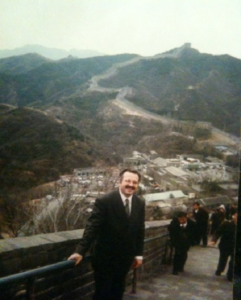
Turkish Scholar, Prof Ismail Hakki Aydin.

This Is Me As I See Myself
 
“This Is Me As I See Myself”. EC Neurology 8.3 (2017): 66-69.
Ismail Hakki Aydin
Ismail Hakki Aydin
Yes,
I am impatient. I am hotheaded. I’m always in a hurry.
Because I do not trust these unknown creatures called humans.
I do not know if I can do all, but I have lots to do, lots to say and lots of knowledge to write about.
One of my biggest worries is that I won’t be able to pass on my knowledge and experience to future generations. This is a weight on
my shoulders.
Because, this cruel life is too short!
For all these reasons, I am hurried and hotheaded.
Yes, I am egotistical, selfish, grumpy, crabby and an unbearable man.
Otherwise, why would I be a brain surgeon, who sees every operation as a battle and has to win that battle.
Throughout my life, I have been exposed to many difficulties, obstacles, injustices and defamation.
I have been under investigation and even prosecuted of some of these charges..
I’m used to these! I do not care anymore.
However, I was not anything more than a “human being” first.
I have always hated politics.
I am so alone in this universe that even my loneliness in which I find peace is all alone.
I considered the mind, science, education and scholars as guides which enlighten my road.
Respect for knowledge, the source of knowledge and my teachers has always been my fundamental principle and maxim.
The criterion of my value judgments is directly proportional to “knowledge”.
Whatever the source and the field, any kind of information attracts me.
I am just “me” who does not take sides with any sect.
I am just my own sympathizer.
Yes, I am “egotistical”!
And I think I deserve that.
I am touchy, precise, perfectionist, fussy and fastidious…
I am a difficult man to deal with. Very difficult! Difficult…
However, I have a planned and systematical life in accordance with my principles and imagination.
Until this time, I could not be resigned and reclusive. I can’t know what the future will bring…
My habits created by my social, genetic and scientific acquisitions have influenced my character, and my character has influenced my
life. In my opinion, it has also influenced my destiny…
The artistic romance has a great effect on the spirit world.
I have always considered writing as holy and beneficial. Using a fountain-pen has always been a custom, worship and a manner for me.
I’ve never been a wagon in my life.
Because, I could not find a locomotive in the standard that I could be a wagon, and my personality was not suitable for that. Indeed, I
was trained to be a locomotive.
I’ve always been the locomotive and the wagon of my own locomotive.
I have been the leader.
I have been myself.
I have been impartial.
I have tried to be fair all my life.
As I do not hide my feelings and I do not abstain from saying and defending what I believe to be true, I have a lot of enemies.
I have never asked anyone a favor in my life.
I left my family when I was ten. At the age of twelve, I was responsible for other people as well. I have always been left alone and told “You
are a grown up!”.
Good thing they left me alone!
I do not remember being a “Child” at all.
Although, the opinions of my grandfather, who shaped my life and whose name I am proud to carry, affected me a lot, I have decided on
my own. I am responsible for the good and the bad.
I have reached my position with my mind, my ambition, my determination and my brain. Not with the help of anyone…
I have struggled solely.
I did not fall for the nauseating and ugly traps. I have ruined the sneaky plans and nasty games of evil-minded frauds.
At the age of twenty-nine, I became a professor, the manager and the person in charge of my university’s Faculty of Medicine, Department
of Neurosurgery. This was a divine mercy and a gift from which only a few can benefit.
If I have success, other than Allah’s help and grace, it is because of me.
All my life, I have not been supported, but stonewalled.
Often, I was forced to carry burdens and responsibilities that I did not have to carry.
I have witnessed so many unfair treatments, morally and materially. But I was never unfair to anyone.
Citation: Ismail Hakki Aydin. “This Is Me As I See Myself”. EC Neurology 8.3 (2017): 66-69.
This Is Me As I See Myself
68
I did not even waste a toothpick unnecessarily. Maybe, I am overly sparing.
I did not ask for anything, any duty or position that I did not deserve.
Moreover, I did not accept any duty or position contrary to my principles and personality.
I have rejected even the most attractive offers I have received from various sources and countries, since they were contrary to my
character, my ideology and my habits.
I have not pleaded for mercy from anyone.
I have been betrayed by those from whom I never expected to be.
The ones I have helped most have been the most disloyal to me.
I have been cheated by the one I have given the most to.
I have also witnessed the intolerance and the betrayal of the ones who once needed the help of my name.
I have experienced the secret grudges of self-seeking and ungrateful people and seen how low, hypocritical, and characterless they were…
I have also been ruined by the ones who did not deserve the sorrow of love.
I have been silent, yes I have… However, this silence was not a result of my incompetence but my nobility. Otherwise, they very well
know that I have sarcastic, impairing, burning, and deadly answers whose true meaning they could only understand much later and how
I can humiliate using my words as weapons. This eternal skill of mine is known to everyone.
But even though I do not hold a grudge, I do not forget and I cannot forget anything and this hurts me even more.
My memory and intelligence are believed to be very powerful and effective. Whereas I believe those are curiosity, persistence, stability,
determination and my pain…
I have never said “if only”. I do not regret and I am not angry… But I am deeply hurt.
Thus, I have sacrificed the divine courtesy, purity, elegance, felicity, peace, nobility and virtue of my silence in return for the lowly ignorance,
misery, debauchery, vileness and disgrace of my regret.
I have not talked or written about any information without a source.
Because, my friends and the others know that I do not rely on “smart ideas of poor brains”, I keep a good record of my documents and
I protect them well..
I believe and rely on what I see, not what I hear.
I am proud to be credited and credit other people and I enjoy this in an infinitely indefinable way.
I have always loved and chased scientific meetings, speeches and conferences no matter its subject or whereabouts and I will continue
to do so…
I have always stood upright, not bent and I will stand upright again. As my deceased father used to say, I will patiently wait for my death
not lying on my bed, but while standing upright.
The number of people who hate me is excessive and the number of the people who really love me is very few. There are also people
who seem to like me.
Those crafty (!), cunning (!) people think that after all, I am a doctor, a surgeon, a professor…
And then there are these strangers who forget about me after they are done….
The ones who act like old friends when they need me…
The turncoats who have a personality disorder, the cowards, the poor…
What about those evil men, tricksters and, cheap and fake heroes…
Here I am, who is aware of all this and is still silent…
Now I think I hear different diagnoses (!) of my readers about me.
But I do not care at all … Everyone is free to think the way he/she likes.
Because, I believe that human beings are the mirror of truth.
This is who I am…
I am İsmail Hakkı, who imagined a different Surname, “nickname” for me years ago, because some pathological and malign connectomes
have entered my family tree by chance.
I cut my own umbilical cord. I can wash my corpse, enshroud it, perform the prayer and bury it to the grave I dig.
That’s it…
Acknowledgement
I express my deep acknowledgements to Professor Ergun Yener, for translations of the manuscript to the English.
 
Source: https://www.ecronicon.com/ecne/pdf/ECNE-08-00235.pdf


Shop in Greece

Coffee in Greece

Hippodrome, SultanAhmet, Istanbul