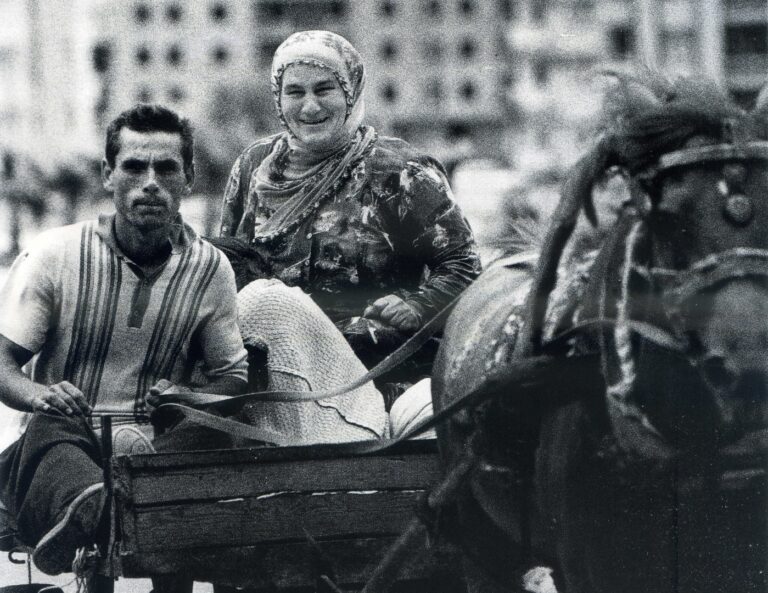
The relationship that the Turks established with the steppe on the ground, has been with the sky in a more conspicuous way during their nomadic life. The sky represents the universe, divine orders are coming from the sky, they are descending.
The vastness of the sky, the vastness that we see with our eyes in the outer world, is also reflected in the inner world as the wealth of Sufism. Heavens and migrations are related. Turks, who go on a journey on earth through migrations, who are constantly on a journey, go on journeys that reflect their inner richness in the realms through the heavens.
Turks, who traveled 8000 km on earth in migrations, reached from one end of Asia to the other end of Europe, during this journey, they watched the skies and the movements in the skies and painted them in their minds, they worked in their world of ideas, and they were in constant contact with the skies. This mobility, which is the important reason for the rich formation of mysticism in the Turks, caused mobility in the outside world and mobility in the inner world.
Starting from the inscriptions, the Turks have constantly recorded and recorded the secrets of the universe into their minds, languages, words, and finally inscriptions and manuscripts. God and immigration are the most used words. The Turks also used the sky as a descriptive adjective; as in the examples of Köktürkler, Kök Börü, Kökçin Beard, Root Paint.
- Kökçin Sakal: Gray Beard
- Kök Ayuk: The name given to the Turkmen Elders
- Root Curry: Sky Wolf
- Root Turk: Gok Turk
- Root Tengri: Sky God
- Root Dye: Natural dye
In the Oguz Kagan Epic, which we can characterize as the beginning legend, the concepts related to the universe are used; Like Gökhan, Ayhan, Yıldızhan. At the end of the legend, there is the expression ” sun flag, sky kurikan” and “sun flag, sky tent”.
Turks embraced the universe as they embraced the world, the most important concept in legends, inscriptions and manuscripts is human. Advice has always been given to man. The world is not divided by borders. If the sun is the flag, the sky is the tent. Those under that tent are directly expressed as people. There is no such expression as these nations, these nations, these peoples. Because Turks saw themselves as human beings and did not discriminate between people. All Turks are human, all people are Turks, the main thing is the mentality. Turkishness was seen as a human quality.
In the Bilge Kagan inscription, all the concepts of sky, god, earth and human are included. Abu Hanifa, who was born in Uzbekistan at the same time, was born in the city of Kufa in Iraq (from Tirmidhi, Uzbekistan) and developed the mentality of Adamism within Islam, emphasizing the human aspect of the universal aspect of Islam. Later, Farabi, who was born in Kazakhstan in 870, published his understanding of universal state as a book. He is known as the second Aristotle and the first Islamic philosopher. Farabi saw man in the world and the world in man.
Harezmi, who lived in the same period with Farabi, started to use the number zero in mathematics functionally and became the patron of zero. In the same period, and again, Biruni from Harezm made numerous expeditions to India starting from 1017 and wrote a book about India. He tried to acquire the knowledge of the universe of the Indians in India and learned Sanskrit on the way.
Yusuf Has Hacip, who came right after Farabi, further developed the same universal principles with his book Kutadgu Bilig. He attributed holiness to wisdom and made it a book as Kutadgu Bilig.
The science that the Turks were most interested in in terms of grasping and embracing the sky was the science of astronomy. Observatories and scholars such as Ali Kuşçu, Uluğbey, Harezmi, Biruni, Ömer Hayyam had always sought astronomy, the secrets of the sky, and knowledge in the world.
These scientific and scientific activities of Turkish thinkers in Central Asia were published by the western American Frederick Starr as the “Lost Enlightenment” . The point of view here falsifies the understanding that confined enlightenment to the European Renaissance. In this case, we can call ourselves Enlightened if we rediscover the enlightenment we have in ourselves.
The peak of the Turks’ sky travel, which started with the Huns leaning on the Pacific coast, will be experienced in Anatolia, in Asia Minor, 1400 years later. The name of this summit is Yunus Emre. Yunus Emre illuminated the sky inside us with the Turkish mystic concepts he used, and made people in the public realm one to one another. He reaped the grain of the sky with Yunus. What the sky illuminates is in the sky, it is the heart. The fabric of the heart is woven in the sky.
Mesnevi, which is visualized with Whirling (Sky) rites and Whirling Dervishes in Mevlana, a contemporary of Yunus Emre, is also related to the secrets in the sky.
The Turks, observing the lives of the otters and the people living in the waters in the south of Siberia, described themselves, in other words, human as a person. What is at issue here is the togetherness in nature; persons and persons. Likewise, nomadic Turks, who constantly watch the sky, reflected on the earth what they watched in the sky during their steppe life with verses and lines.
Thus, while the Turks became the Göktürks, the legendary wolf in their legends became the Gökbörü. They named the wise person as Kökçin bearded. They painted their carpets with madder with plants they collected from nature. Turkmens describe their elders as root ayuk. This is how the holiness in the heavens was brought down to earth. The understanding of the sanctity of the sky has been valid since the state founded by the Chou, one of the Inner Asian Turkish tribes, in 1000 BC, and this understanding later passed to the Chinese from the Turks.
Ancient Turks gave great importance to the sky. Because their skies were not cloudy as in China and India. Day and night, a bright sky was attracting the hearts and eyes of the Turks. Stars had a great importance in ancient Turkish culture. Because the ancient Turks used to learn about their times, ways and even whether the climatic conditions would change or not, by looking at the stars in the sky. For this, they had to have a broad and well-developed knowledge of stars.
For this reason, the Turks gave importance to the sky and believed that the sky itself, which covers all horizons with a single color, is also a god. They did not face the ground as in China, and their bond with the ground was only formed by the feet of their horses. The blue of the sky, the most beautiful and holiest of colors, was an endless source of inspiration that filled their hearts. Source: Bahaeddin Ögel. Development Ages of Turkish Culture I. Istanbul 1992 Ministry of National Education Publications. p.15.
Because of their disciplined life and social order, Turks had reached the idea of Monotheism at a very early age. In agricultural countries such as China and India, the Gods are many in number. The agriculturist’s eyes were only on his crops and all kinds of magical things that could bring abundance. The sky above the agriculturalists was often covered with clouds. He wished it was cloudy anyway. Nor did he have time to look up at the sky in his field. Source: Bahaeddin Ögel. Development Ages of Turkish Culture II. Istanbul 1992 Ministry of National Education Publications. p.87
The daily lives of the mounted Turks, on the other hand, were different from those of the agriculturalists. The mounted Turks were tied to the ground only by the feet of their horses. They thought of themselves as if they were suspended between the rainy earth and the deep blue sky and walking in space. The head of the Turk was in the sky. The only thing that tired his mind and filled his heart was the endless blue that covered him. The single color and single dome of the endless sky was an important reason that united his thoughts and directed them towards a single purpose. Just like his domed tent and house that gathered his family under his own presidency. There was a family head under the tent and a Turkish Khan under the sky dome. Of course, this endless and blue dome would have an owner and Hakan of the sun, moon and stars circulating on it. He created everything and gave the earth and the waters to the creatures so that they might live. Here are the Turks in very early times,This was the main reason why they believed in “one God”. The unity in beliefs and thoughts gave birth to peace and order in the society. In addition, the unity and discipline in the society had also eroded the thoughts and directed the ideas towards a single purpose. Source: Bahaeddin Ögel. Development Ages of Turkish Culture II. Istanbul 1992 Ministry of National Education Publications. ss. 88
“When the sky god above and the rainy earth below were created, human beings were created between the two! My father, uncle, Bumin Khan and Istemi Khan sat on Kishi’s son! This piece, taken from the Göktürk Inscriptions, is the most important document in the history of Turkish thought. Source: Bahaeddin Ögel. Development Ages of Turkish Culture II. Istanbul 1992 Ministry of National Education Publications. ss. 89
Tengri, the word of God, has met the sky and the blue of the sky in a broad sense among the Turks from the very beginning. Sky (root) is the color and symbol of the sky as a color. In Turks, this sacred color appears in Kök Tengri and Göktürk idioms with all its clarity and majesty. In the Altai epics, the color of the sky was getting wider and clearer. Where the land of the world ended, there was an endless Blue Sea (Kök Tengiz). The names of the Hakans mentioned in this epic were also people who were introduced with the color of the sky, such as Kök Han and Kök Katay. Horses that could talk and fly were also found in these epics. The colors of most of these mares were also sky. prof. Dr. Bahaeddin Ogel. Turkish Mythology (Epics with Sources and Explanations) II. Skin. Turkish Historical Society Press – Ankara 1995. Turkish Historical Society Publications. pp.151-152
In the Göktürks, the word Kök was used only for the color sky, blue. Root yürng, the sky is white or the sky is clear, stone or water presentations were also made. In time, the God-promotion in front of the sky was removed and the sky was called just the sky. We see this development in Uyghur manuscripts. There have been extensive developments in the meaning of the word of God in the Uighur age. prof. Dr. Bahaeddin Ogel. Turkish Mythology (Epics with Sources and Explanations) II. Skin. Turkish Historical Society Press – Ankara 1995. Turkish Historical Society Publications. pp.152
| “Sky Tent
More Sea
More Rivers”
Let the day be brick
Sky fearful!
World State
Adamism
realms
Mercy
in hearts
Dominance
September 3, 2019 |
The most prominent concept in the way of Turkish people’s understanding of the world emerged as universality, the sky. The most elaborated concept is associated with universality. During their life, which started in Far Asia, the statehood first started with the Chu state, which was developed jointly with the Chinese, then the roads were separated, and the Hun state first became a state in Manchuria and North China, then in India, and also in Europe as the European Hun state. The Gokturk state, on the other hand, put forward a state structure that expanded to the Caspian coast and seized the dominance of the Silk Road, and ended the domination of Iran on the Silk Road by contacting Eastern Rome. These five states, together with the Uyghur state that emerged after the Chinese destroyed the Göktürk state, and the Karahanlılar state that emerged in the following years; Chu state,The Hun state, the Gokturks, the Uyghur state and the Karakhanid state revealed universal principles in a period of 2000 years. The documents crowning this period are Göktürk Inscriptions and Yusuf Has Hacip’s Kutadgu Bilig.
The most important developer of the universality of the Turks is the continuity and determination in their connection with the roots, that is, with the divine. This determination that emerged with the god of heaven was renewed with the universality of the religion of Islam, which they encountered on the migration routes to the west.
The experience of universality that the Turks lived until they came to Islam, caused them to reach higher levels of universality when they encountered Islam. Since the Arabs did not have such an experience before Islam, they could not experience and evaluate the universality brought by Islam and could not go beyond the tribal dimension. Arabs eventually had to use religion and language as a shield of Arab nationalism. The Turks took very advanced steps in sciences, mathematics and philosophy during their life in the Middle Ages, especially in Turkestan, and these experiences were later transferred to Baghdad by the Turks.
The Turks never sought city-states, and they did not become Chinese because they were not in favor of surrounding the cities with walls. They had a worldview that captured universality. They were in nature as much as possible. They were not like the Greeks, who were organized as city-states, or the Chinese who surrounded and isolated their lands with the Great Wall of China exceeding 20,000 km, and they could not describe the other as barbarians. They had a worldview that internalized rather than marginalized. While the language of their neighbors Chinese could not go beyond the borders of the country, the language of the Turks was spoken on all continents.
The Terrain Map of Greece helps explain why the region has been ruled by City-States for so long.

Map: The Hilly Geography of Greece
Source: Simon Kuestenmacher. This Terrain Map of Greece Helps Explain Why the area was dominated by City States for so long. Terrain Map of Greece https://twitter.com/simongerman600/status/1064881210030206976
They were not obsessed with ancestry, it was enough for them to be of human ancestry and to be a human being. Their very powerful language was already their most powerful weapon for their spread. The Turkish language had already established its dominance in the bazaars and markets, first in Turkestan, then in Iran, and finally in Anatolia and Rumelia, as a requirement of Yesevi morality, and it was already sufficient to dominate with language in interpersonal relations. The basis of this success was the strength of the language and the discipline of holding the trade routes and trade flow, starting from the Silk Road trade.
The Turks had achieved the balance. While they were solving the balance in the world with the understanding of the universal state, they had perfected the universal balance with their Sufi understanding that enriched their personality and perceptions, which they developed starting from their lives in Inner Asia. The peak they reached was evident in Mevlana’s verses: “Come, come whatever you are!”
Religious Journeys of Turks / Religions
1. Gokdini
2. Manichaeism
3. Buddhism
4. Zoroastrianism
5. Islam
6. Christianity
7. Judaism
The faith journey of the Turks, which started with the TENGR beliefs written on stone in the Yenisei and Orhun tribes of Asia, Buddhist paintings and temples in Dunhuang caves, Samarkand with wooden poles, Bukhara Mosques, Ahlat tombstones, Cappadocia underground churches in Anatolian geography, Göbeklitepe Temple, Karaim Synagogues, Karaman Orthodox Churches The ancient mythologies of Asia Minor, Sumerian Gods, Rumelia dervish lodges and lodges diversified and enriched.
The religious beliefs of the Turks, which started with Tengrism (Göktanrı), met with the monotheistic religions after Manichaeism and Buddhism, and continued their beliefs in 7 religions.
In the 21st century, more than 35 Turkish tribes and communities dispersed in Asia and Europe maintain their beliefs in 5 religions:
Islam………………..17 tribes of
Christianity………………….11 tribes of
Shamanists……………….4 tribes of
Buddhist …………………..3 tribes of
Jews……………………….. 2 sizes
Turkish Tribes and Communities with Different Beliefs
- Altai Turks: Buddhist and Christian (Russia)
- Avshars: Muslim
- Azerbaijanis: Muslim Jafari (Azerbaijan, Iran)
- Chuvash: Christian (Russia)
- Dolgan: Shamanist (Russia)
- Gagauz: Christian-Orthodox (Gagauzia/Moldova)
- Khakas: Christian (Russia)
- Khazar Turks: Jewish
- Hazaras: Muslim (Afghanistan)
- Karaim- Karaite: Judeo-Karaim Sect (Ukraine, Poland)
- Karamanids: Christian Orthodox (Greece)
- Kashkai: Muslim (Iran)
- Kazakhs: Muslim
- Krymchak: Christian (Ukraine)
- Kyrgyz: Muslim
- Crimean Tatars: Muslim (Crimean)
- Tatars of Nursery: Christian (Ukraine)
- Kumyks: Muslim (Russia)
- Uzbeks: Muslim
- Pomaks: Muslim (Bulgaria, Greece)
- Romanians: Christian (Ukraine)
- Sites: Christian and Shamanist (Russia)
- Salars: Muslim (China)
- Yellow Uyghurs: Buddhist (China)
- Sequelae: Christian Catholic (Hungary)
- Tatars: Muslim (Russia)
- Terekeme (Karapapak): Muslim (Azerbaijan)
- Torbesh: Muslim (Macedonia)
- Tuva-Tuva: Buddhist (Russia)
- Tofa: Shamanist (Russia)
- Turkmen: Muslim
- Urums: Christian (Ukraine)
- Uyghurs: Muslim (China)
- Yakuts: Christian and Shamanist (Russia)
- Nomads: Muslim
Half of the 35 tribes preferred Islam, three quarters preferred Islam-Christianity, while the Asian beliefs in the form of Shamanism-Buddhism were preferred by 20% of the tribes.
Tengri: The first word identified in Turkish is Tengri (God). It is seen that Turks have strong beliefs and the conceptual framework is ancient and strong. The Turks have also transformed the belief world of the Chinese with their belief in the Gods of Heaven.
Major Axes
- a significant Muslim Turkish population in China, Iran, Russia and Europe;
- Buddhist Turkish population in China and Russia
- There are Christian and Jewish Turkish populations in Russia and Eastern Europe.
The Land of the Holy Land/Turkey: The Cult of the Mother Goddess Cybele, the House of the Virgin Mary, Iznik Council, the revival of Orthodoxy in Turkey, 7 holy churches, Hagia Sophia, Mimar Sinan Mosques, Madrasahs, Kulliyes, Prophet Abraham Urfa, Prophet Noah, The Legend of Noah The first Christians in the Underground Churches of , Harran, St. Paul, Antakya, Tarsus, Cappadocia, Göbeklitepe (8000 BC), Syriac, Aramean, Nestorian, Eastern Christianity are all faith journeys in our country.
Nile – Amudarya (Ceyhun) Nile river and Ceyhun (Amudarya); When two parallel lines are drawn to the east, starting from the points of Alexandria on the Nile and El Luxor Vasit in the south; Alexandria, Memphis, Cairo, Damascus, Jerusalem, Harran (on the periphery) Jerusalem, Nineveh, Baghdad, Babylon, Basra (on the periphery), Uruk (on the periphery), Isfahan (on the periphery), Nishapur, Bukhara, Samarkand. Source: Elmar Holenstein. Philosophy Atlas. Istanbul. Globe Publications. 2015
The Turks existed in the intercontinental cultural contacts that took place on the Nile-Amu Derya/Ceyhun axis, starting from the east from the tip of Samarkand and traveling to the west.
Main Station: Transoxiana Yellow River (Huang Ho) – Ceyhun or Orhun river – The distance between Ceyhun and Ceyhun – Nile are equal. The Turks made their journey to the West, which lasted for centuries, with the intermediate station Transoxiana (Ceyhun-Seyhun).
Celestial Religions in the Ottoman Empire: The Ottomans undertook the representation of all the monotheistic religions; He represented Islam with the Caliphate, Orthodoxy with the Istanbul Patriarchate, Judaism with the Chief Rabbinate, and Armenia with the Patriarchate.
Christianity has its roots in Palestine and Anatolia. The Armenian, Syriac and Greek Orthodox churches and beliefs of Eastern Christianity originate in Turkey. It is Ottoman diplomacy that revealed Protestantism. Catholic Croats, Armenians, Albanians, Poles, Hungarians, Greeks had positive relations with the Ottoman Empire. The Ottoman lands became the center of the independence struggles of Poland and Hungary.
Transoxiana/Turkestan Renaissance 700-1200: Between 700-1200, Transoxiana centered Turkestan geography renaissance started to live 600 years before Europe. Ulugh Turkestanians were familiar with languages and religions. Turkistanis, who were acquainted with the religions and languages of Zoroastrianism, Manicheism, Buddhism, Nestorianism, Syriacism, Hinduism, Islam and Judaism, developed the line of Sufism from all this religious diversity and richness.
Karakhanids and Seljuks (Nizamülmülk, Nizamiye Madrasahs) brought the institution of Madrasa to Islamic Civilization. In the climate of cultural vastness and interaction that spread from Transoxiana to Iran, to Khorasan, while Turks were publishing the codes of practice of Islam with Nizamülmülk and Gazzali, the Horasan Erens, like Hacı Bektaş-ı Veli, who emerged in the same geography, developed Sufi thought in a way that would be unique to the Turks.
Turkistan / Khorasan – Andalusia Synthesis: After Turkistan / Khorasan Sufism, leaping to Anatolia and Rumelia, in addition to the line of Demir Baba / Sarı Saltuk / Yunus / Mevlana / Hacı Bektaş, the struggle against Ibn Arabi, who migrated from Andalusia, will also take on an identity, the colonizer Dervishes on both sides. Enlivening the continent with dervish lodges, lodges and dervish lodges, they will live the unity of being both an entrepreneur and a thinker.
The Complete Civilization Line: MMM and the Genetics of Turks: Transoxiana, Mesopotamia and Menderes rivers; From the Nile to the Danube… From the Nile to Ceyhun, from Ceyhun to the Yamuna river; The rich cultural accumulation created by the alluvial soils of the geographies has been ingrained in the genetics of the Turks.
Anatolia , the shelter of the believers; It has always been a land of mercy and emigration. Anatolia, which embraced the believers with the underground churches of Cappadocia, welcomed the Andalusian Jews in 1492 and the Muslim immigrants who were exiled from the Balkans and the Caucasus in the 1800s.
Mimar Sinan, who prospered the Ottoman realms with 375 architectural works, including 81 mosques; He is an Anatolian believer and genius who adorned the geographies and lands of the Islamic Civilization with lights.
Taj Mahal Tomb built by the Mughal Turkish Empire to represent the Islamic Civilization on the banks of the Yamuna river in India, and the Selimiye Mosque built by Mimar Sinan during the Ottoman Empire around the Meriç River in Edirne; They compete with each other in the UNESCO World Heritage List. Mosques of Samarkand, Bukhara, Kashgar; Istanbul’s Selatin Mosques, Hagia Sophia Church/Mosque, Caspian Synagogues, Rumeli Lodges are the clear manifestations of the Perfection in the Civilization Journeys of the Turks who expressed their identities in various faiths.
Geographies:
The first ancient concepts of our civilization began to form in the Yenisei Basin (Siberia, Russia) in the Altays in 3000 BC, from there to the Orkhon Basin (Mongolia) and then 2000 years of culture and civilization accumulated in the 1000s BC in the Yellow River Basin (China). The Hun State, which was the first Turkish State, was founded by Oguz Kagan in the early 200s BC, after he moved to the Ordos region and formed the idea of the Chu State, which was the first Chinese State.
On the way to the Turkestan oases (Turfan, Kaşgar, Yarkent, Kuça, Hotan), the civilization formation that will come to light began with the works of Kaşgarlı Mahmud and Yusuf Has Hacip in the 1000s AD. The journey to the West continued with Transoxiana – Great Horasan – Caspian Basins this time ; There was a golden age between the years 700 -1100, when the great thinkers of Turkish culture grew up; Ancient concepts have been enriched with Islam. Before the last Rumeli stop on our Ancient Journey, we reached the region surrounded by the Five Seas and reached Anatolia, Mesopotamia and Nile lengths, and the Cihan State drawn by Oğuz Kağan at the beginning.
” Let the sun be a flag, the sky is a tent” mission; It was carried out centered in Rumelia, and dominance was established in the continents of Europe, Asia and Africa.
Old world/Middle of the world
The Mediterranean region; The region surrounding the Mediterranean.
- 10th century BC / 3rd century BC – 5th century BC: Nile-Amudarya region
- 5th century BC – 5th century AD: Fertile Crescent
- AD 700 – 1200 : Darül Islam
Western hegemony was based on the middle of the East, the Middle East. Our civilization is based on the middle of the world. This middle is the Mediterranean. It is the middle of the old world; Mediterranean, Mediterranea.
Our civilization is of the Old World; It was formed in the Yellow River – Orkhon – Amudarya – Nile – Mediterranean regions.
- East Asia (Karakorum, Karabalsagun, Orhun, Ötüken),
- Central Asia (Turfan, Kucha, Kashgar)
- South Asia (New Delhi, Punjab, Lahore, Agra),
- Transoxiana (Samarkand, Bukhara, Khiva),
- Khorasan (Tus, Nishapur),
- Nile (Cairo, Alexandria) and
- Mediterranean (Thessaloniki, Algeria);
Our Islamic Civilization grew in the Mediterranean basin and expanded from Spain to beyond the borders of China. In the middle of the region between Transoxiana and Andalusia, the Nile river is located. The distance between Transoxiana and China is the same as the distance between Transoxiana and Andalusia. It seems that; The borders of our sovereignty areas, which are lined by seas on all four sides, are the Pacific Ocean in the East, and the Indian Ocean in the South; It is surrounded by the Black Sea in the north and the Mediterranean in the west. Oğuz Kağan’s legacy of “more seas, more rivers” has come true.
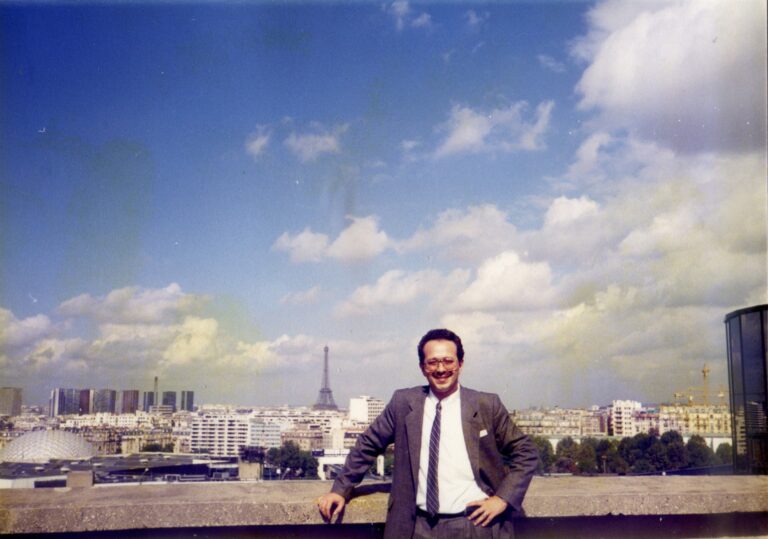
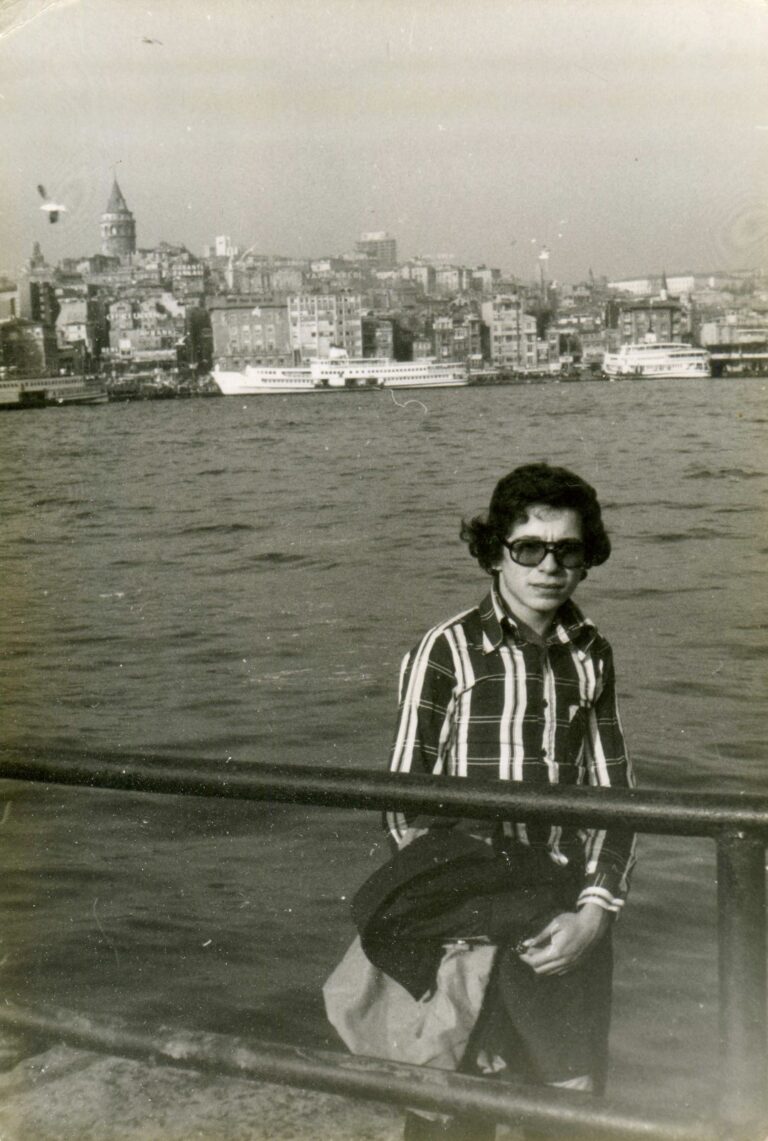
Copyright of Photograph by Levent Ağaoğlu, Paris, 1987
Copyright by Levent Ağaoğlu
@agaoglulevent