HAREZMI
Abu Abdullah Muhammed Al-Khorezmi (780–850): He is from Khwarezm (Uzbekistan). He worked in Baghdad. He systematized and named algebra. He contributed to the global understanding of geometry in the Arab and Western world. He advocated the necessity of the decimal system. He gave his name to the algorithm. Kutrubbul (?) 780 of Baghdad, Baghdad 813-850. Astronomer and prominent Muslim mathematician. The person who recites Indian numerals. Transoxiana Khiva, Uzbekistan. Mathematics, Astronomy. He came from Khwarezm and lived in Baghdad. He systematized algebra and gave it its name, made great contributions to the understanding of geometry, advocated the step system, and collected data on the location of 2,402 points on Earth.
TIME
“In fact, it is the human need to calculate that reflects everything. I discovered that everything contains numbers, and I discovered that number is nothing more than combining units. All numbers are expressed together for these reasons. However, I discovered that all numbers are arranged by deriving numbers up to ten. “
Harezmi (780-850)
GROUND
“I begin with the name of Allah who is the forgiving and forgiving, and I declare that the book called El-Kitâb el-Muhtasar fi Hisâb al-Jabr ve al-Muqâbele was published by Muhammad ibn-Musâ al-Khwarizmi. Muhammad says; Thanks be to Allah, who gave us the power to discover important numbers. In fact, it is the human need to calculate that reflects everything. I discovered that everything contains numbers, and I discovered that the number is nothing more than combining units. Therefore, all numbers are expressed together. However, I discovered that all numbers are arranged by the derivation of numbers up to ten. The number ten is evaluated together in the same way and is therefore calculated in the same way twice or three times as in the case of unity. So twice as 10 becomes 20, and three times it becomes 30. And in this way, you can reach 100 by 10 times. Again, just like 10, two and three times of 100 can be taken in this way. The number can be enlarged up to thousand with two times, three times etc. In this way, the investigation of the infinite number is made by taking the multiples of the thousand and naming the numbers in various ways.
Harezmi (780-850)
MIND
“In addition, the simplification and crossing over that I found occurs between three types. These; called roots, squares, and numbers. However, the numbers are neither linked only by roots nor by their squares. Of these, a root consists of units of a number that can be multiplied by itself. The square is the result of multiplying the root with itself. Two of these three forms can be equal to another, for example;
Squares equalization to roots,
Squares equal numbers,
Equating roots to numbers “Harezmi (780-850)
“A scientist either writes a work on a subject that no one has determined before him, or explains the subjects left closed by the scientists before him, makes it easier and understandable, or removes the deficiencies in the previously written works, corrects the mistakes”
“Thanks to God who empowered the discovery of important numbers.”
Harezmi (780-850)
FARABI
Wisdom Words by Farabi (870-950)
“Thinking is the soul talking to itself…”
He who talks a lot should be listened less
Society becomes happy with justice and love
The fate of man is directly related to what he knows. Knowing enables people to make better choices.
Some people don’t need a guide. Some people need too much.
Seek knowledge, follow it. The thing that will carry you the highest is knowledge.
Are you in, so you are afraid of disappearing?
People have a duty to love each other. Lovelessness is the root of all evil.
Human is made up of friends.
A society with people helping each other is the most perfect society.
Man is an obstacle to his own truth.
As long as a person does not force himself to do something, he always moves in the direction of what is easy.
Stay away from people whose conversation is useless.
Some even see nothing when awake.
Perfect goals are beautiful goals.
Give importance to science to know.
What is beautiful is virtuous purposes.
An evil person is a person who has lost contact with his soul.
Who is the ignorant person? An ignorant person is a person who does not use his mind to educate and learn.
You will be happy if you know how to share what you have.
To discover who you are, you must first discover perfection.
If you let go of the excess and everything that keeps you busy, you will find peace.
Love is transformative. It is absolute goodness. He who does not know how to love and be loved does not know this.
The government exists for the people.
Evil is the product of choice and will.
Respect is the most indispensable pillar of a society.
To love is to value.
Reason is the highest value that a person can have.
A person who cannot use his mind will remain in the darkness and will not see anything.
The reason you feel bad or good is what you think. Because feeling starts with thinking.
************************************************
“Thinking is the soul talking to itself…”
Farabi, who was born to a Turkish family one thousand and fifty years ago and wrote countless works in the fields of music, philosophy, botany, mathematics and logic throughout his life, was accepted as the “second teacher” after Aristotle, who was accepted as a “teacher” in the world of science and thought.
It has deeply influenced not only philosophers but also countless scientists, and has been a source of inspiration for movements and inventions.
Although he was close to the palace as a member of a wealthy family, he completely rejected the political will and devoted himself to science. Continuing his life with only one meal a day, Farabi endeavored to spend every second of his time with science.
Because, according to Farabi, man is obliged to seek knowledge. He has to find knowledge, learn it and explain it.
Even if science is in China, it is necessary to get up and pursue it. If a person does not live for science, he lives a meaningless and unhappy life in agony. Farabi’s inspiring life and works are exemplary in terms of confronting the meaningful and meaningless efforts of our age and reconstructing a life fiction.
Who is Farabi?
Why Farabi?
What is human?
Aristotle and Farabi
What did Farabi do?
Truth
See and understand
Farabi and Islam
What did Farabi do?
For real happiness, it is necessary to know how to let go of the excess.
Farabi and friendship
What did Farabi do?
Understand and seek
Accept and do
What did Farabi do?
Beautify the world
Unless a person has the ability to distinguish between good and bad, beautiful and ugly, he cannot complete the process of being human.
Farabi and knowledge
People and anxiety
Man and evil
Farabi and music
Farabi and the mind
Farabi and happiness
Incomplete and flawed political regimes lead to morally flawed and flawed lives
Farabi and ignorant person
Human and society in Farabi
State
State and society (justice and love)
Artificial intelligence, fuzzy logic and Farabi
Philosophy and love
The greatest of virtues is science.
Farabi and see
To feelhttps://www.goodreads.com/book/show/53239723-farabi
Al-Farabi (870-950). (Kazakhstan) Vesic 870 in Farab, Merv, Baghdad, Harran 910 and Aleppo 942, Egypt and Istanbul (?), Damascus or Aleppo 950: The prominent figure of the understanding of philosophy in Islam with Hellenistic influences (metaphysics, epistemology, the same also a political scientist), (after Aristotle) Second Master, Muallim-i Sani. Known in the west from the Otrar region of modern Kazakhstan, Alfarabius is referred to as the “second teacher” after Aristotle. Farabi, the great explorer of logic, has constructed every field of knowledge.
BIRUNI
Abū Rayḥān Muḥammad ibn Aḥmad al-Bīrūnī (September 15, 973 – December 13, 1048) was a Turkish polymath, scientist, physicist, anthropologist, psychologist, astronomer, chemist, critic of alchemy and astrology, encyclopedist, historian, geographer, traveller, geodesist, geologist, pharmacist, philosopher, theologian, scholar and teacher, and he contributed greatly to all of these fields.
Biruni (973-1043) born in Khwarezm / Uzbekistan.
Anthropology, Astronomy, Chemistry, Comparative Sociology,
Geodesy, History, Geography, Natural Sciences, Mathematics,
in Medicine, Philosophy, Pharmacology, Physics, Psychology
known for his work.
Abu Reyhan El Biruni (973–1048). (Uzbekistan) Suburb of Kas /Birun 973, Rey 955 (?), Gilan 995, Kas 997, Bukhara, Jürcan 999, Harizm (Kas and Gürgenc) 1003, Ghazni 1017-1050, Kabul, Kashmir and probably Thanesar via Punjab Travel to India (accompanying Mahmud of Ghazni’s conquests) to : Universal genius, astronomer and geographer (hermeneutical) Indologist and philosopher. Hezarfen (very knowledgeable) from Khwarezm, who first came to the fore in the palace of the Khwarazm shahs in Ürgenç (today in the borders of Turkmenistan) and then in the Palace of Mahmud of Ghazni in Afghanistan. His work in astronomy, geodesy, history and the social sciences has made him the greatest scientific thinker of the period between Antiquity and the European Renaissance. Astronomy, Mathematics, Natural Sciences, Geography and History. Biruni traveled from Ghazni to Hind between 1017 and 1030. In 1030 he published the book of Hind.
| “I have begun with Geometry and proceeded to Arithmetic and the Science of Numbers, then to the structure of the Universe and finally to Judicial Astrology, for no one who is worthy of the style and title of Astrologer who is not thoroughly conversant with these for sciences.” |
| 25 WAYS TO FREEDOM According to the Hindu philosophers, liberation is common to all castes and to the whole human race, if their intention of obtaining it is perfect. This view is based on the saying of Vyâsa: “Learn to know the twenty-five things (I. e. The twenty-five elements of existence) thoroughly. Then you may follow whatever religion you like; you will no doubt be liberated.”
Alberuni’s India |
| THE NATURE OF TIME Some people maintain that time consists of cycles, at the end of which all created beings perish, whilst they grow at their beginning; that each such cycle has a special Adam and Eve of its own, and that the chronology of this cycle depends upon them. Other people, again, maintain that in each cycle a special Adam and Eve exist for each country in particular, and that hence the difference of human structure, nature, and language is to be derived.
Other people, besides, hold this foolish persuasion, viz that time has no terminus a quo at all. Now, personal observation alone, and conclusions inferred therefrom, do not prove a long duration of the human life, and the huge size of human bodies, and what else has been related to be beyond the limits of possibility. For similar matters appear in the course of time in manifold shapes. There are certain things which are bound to certain times, within which they turn round In a certain order, and which undergo transformations as long as there is a possibility of their existing. If they, now, are not observed as long as they are in existence, people think them to be improbable, and hasten to reject them as altogether impossible. |
| “The great differences between ideas and beliefs are evidence of the vitality of the world.” |
| “Diversity in people’s thoughts and beliefs is the source of development and well-being in the world.” |
| “Maester Abu’s-Sahl (may Allah have mercy), when I saw those works revisited and the issue was exactly as I stated, he encouraged me to write what I know about Indians. This information can be useful to those who want to reject the Indians or become a capital for those who want to live with them.I started this job, obeying the master’s order. While writing what I know, I avoided slander the enemy.
Also, as a Muslim, I did not hesitate to quote long quotations from Indian texts at points that I thought would contribute to enlighten a subject. Even if the content of some of the quotations is clearly seen as blasphemy and may be rejected by the passengers of the right path (Muslims), we can only say, “This is the belief of the Indians and they are most worthy of defending this belief. |
| “We have here given an account of these things in order that the reader may learn by the comparative treatment of the subject how much superior the institutions of Islam are, and how more plainly this contrast brings out all customs and usages, differing from those of Islam, in their essential foulness.” |
| “Verifying All That the Indians Recount, the Reasonable and the Unreasonable”or “The book confirming what pertains to India, whether rational or despicable”) |
Further Quotes
Once a sage asked why scholars always flock to the doors of the rich, whilst the rich are not inclined to call at the doors of scholars. “The scholars” he answered, “are well aware of the use of money, but the rich are ignorant of the nobility of science”.
Quoted in: A.L. Mackay Dictionary of Scientific Quotations (London 1994).
You well know … for which reason I began searching for a number of demonstrations proving a statement due to the ancient Greeks … and which passion I felt for the subject … so that you reproached me my preoccupation with these chapters of geometry, not knowing the true essence of these subjects, which consists precisely in going in each matter beyond what is necessary. … Whatever way he [the geometer] may go, through exercise will he be lifted from the physical to the divine teachings, which are little accessible because of the difficulty to understand their meaning … and because the circumstance that not everybody is able to have a conception of them, especially not the one who turns away from the art of demonstration. Book on the Finding of Chords.
I have seen the astrolabe called Zuraqi invented by Abu Sa’id Sijzi. I liked it very much and praised him a great deal, as it is based on the idea entertained by some to the effect that the motion we see is due to the Earth’s movement and not to that of the sky. By my life, it is a problem difficult of solution and refutation. […] For it is the same whether you take it that the Earth is in motion or the sky. For, in both cases, it does not affect the Astronomical Science. It is just for the physicist to see if it is possible to refute it. Quoted in Hossein Nasr, An Introduction to Islamic Cosmological Doctrines (1993), p. 135.
“Conscience is the voice of God within us”
Twenty-two years after the death of Harezmi
Biruni (973-1048), our greatest examining thinker
and our first traveler, spanning India
He expressed freedom of conscience 1000 years ago as follows;
“The great difference between thoughts and beliefs
separations are proof of the life of the world.”
• “People’s ideas and approaches are diverse.
and the development of the world happen with the “diversity” of these approaches.”
• “I use my works, first of all, for my own self.
which is the closest to oneself – in the second degree;
for ours who love virtue and follow the path of virtue
I wrote it for people like you.”
• “Knowledge was like the piece of meat left for the birds on the mat”
• “I did what each person has to do in his own work.
Grateful for the achievements of previous,
to meet their mistakes without fearing,
to straighten what appears to him to be real,
entrust it to the next generation.”
• “The reason why I deal with science is Surah Ali Imran
verse 191 in The Quran”
• “People are unhappy because of three things;
1. Be jealous of what others have
to stitch.
2. Seeing oneself superior to other people in all aspects.
3. To fall into superstitions such as fortune telling and bad luck.”
• “I did what every person should do:
greet their achievements with gratitude,
to right their wrongs without fear,
entrusting what appears to be true to me to the next.”
İBNİ SİNA
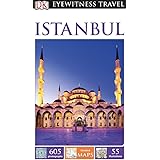
DK Eyewitness Travel Guide: Istanbul
(as of 26/10/2026 03:13 GMT +03:00 - More infoProduct prices and availability are accurate as of the date/time indicated and are subject to change. Any price and availability information displayed on [relevant Amazon Site(s), as applicable] at the time of purchase will apply to the purchase of this product.)
Rick Stein: From Venice to Istanbul: Discovering the Flavours of the Eastern Mediterranean
$35.99 (as of 26/10/2026 03:13 GMT +03:00 - More infoProduct prices and availability are accurate as of the date/time indicated and are subject to change. Any price and availability information displayed on [relevant Amazon Site(s), as applicable] at the time of purchase will apply to the purchase of this product.)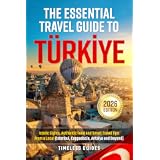
The Essential Travel Guide To Turkiye: Iconic Sights, Authentic Food and Smart Travel Tips From A Local (Istanbul, Cappadocia, Antalya and Beyond)
$2.99 (as of 26/10/2026 03:13 GMT +03:00 - More infoProduct prices and availability are accurate as of the date/time indicated and are subject to change. Any price and availability information displayed on [relevant Amazon Site(s), as applicable] at the time of purchase will apply to the purchase of this product.)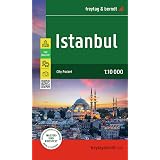
Istanbul, City map 1:10.000, City Pocket map + The Big Five
(as of 26/10/2026 03:13 GMT +03:00 - More infoProduct prices and availability are accurate as of the date/time indicated and are subject to change. Any price and availability information displayed on [relevant Amazon Site(s), as applicable] at the time of purchase will apply to the purchase of this product.)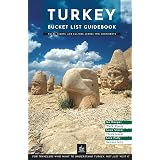
Turkey Bucket List Guidebook: Walks, Sights, and Culture Across Two Continents
$21.95 (as of 26/10/2026 03:13 GMT +03:00 - More infoProduct prices and availability are accurate as of the date/time indicated and are subject to change. Any price and availability information displayed on [relevant Amazon Site(s), as applicable] at the time of purchase will apply to the purchase of this product.)
The Mini Rough Guide to Istanbul and the Aegean Coast: Travel Guide with eBook
(as of 26/10/2026 03:13 GMT +03:00 - More infoProduct prices and availability are accurate as of the date/time indicated and are subject to change. Any price and availability information displayed on [relevant Amazon Site(s), as applicable] at the time of purchase will apply to the purchase of this product.)
After Happy Ever After: He thinks it's a normal holiday to Istanbul, she has other plans. (Adam's Adventures Book 4)
$5.99 (as of 26/10/2026 03:13 GMT +03:00 - More infoProduct prices and availability are accurate as of the date/time indicated and are subject to change. Any price and availability information displayed on [relevant Amazon Site(s), as applicable] at the time of purchase will apply to the purchase of this product.)
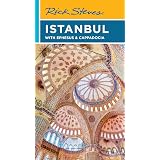
Rick Steves Istanbul: With Ephesus & Cappadocia
(as of 26/10/2026 03:13 GMT +03:00 - More infoProduct prices and availability are accurate as of the date/time indicated and are subject to change. Any price and availability information displayed on [relevant Amazon Site(s), as applicable] at the time of purchase will apply to the purchase of this product.)
Laminated Istanbul Map by Borch (English) (English, Spanish, French, Italian and German Edition)
(as of 26/10/2026 03:13 GMT +03:00 - More infoProduct prices and availability are accurate as of the date/time indicated and are subject to change. Any price and availability information displayed on [relevant Amazon Site(s), as applicable] at the time of purchase will apply to the purchase of this product.)
Rick Stein’s Secret France
$14.99 (as of 26/10/2026 03:13 GMT +03:00 - More infoProduct prices and availability are accurate as of the date/time indicated and are subject to change. Any price and availability information displayed on [relevant Amazon Site(s), as applicable] at the time of purchase will apply to the purchase of this product.)
DK Top 10 Istanbul: Top 10 lists for your perfect trip, plus an all-weather folded map (Pocket Travel Guide)
(as of 26/10/2026 03:13 GMT +03:00 - More infoProduct prices and availability are accurate as of the date/time indicated and are subject to change. Any price and availability information displayed on [relevant Amazon Site(s), as applicable] at the time of purchase will apply to the purchase of this product.)
Turkey Map 758 (Maps/Country (Michelin))
(as of 26/10/2026 03:13 GMT +03:00 - More infoProduct prices and availability are accurate as of the date/time indicated and are subject to change. Any price and availability information displayed on [relevant Amazon Site(s), as applicable] at the time of purchase will apply to the purchase of this product.)
Rick Steves Istanbul: With Ephesus & Cappadocia
(as of 26/10/2026 03:13 GMT +03:00 - More infoProduct prices and availability are accurate as of the date/time indicated and are subject to change. Any price and availability information displayed on [relevant Amazon Site(s), as applicable] at the time of purchase will apply to the purchase of this product.)
Fodor's Essential Turkey (Full-color Travel Guide)
(as of 26/10/2026 03:13 GMT +03:00 - More infoProduct prices and availability are accurate as of the date/time indicated and are subject to change. Any price and availability information displayed on [relevant Amazon Site(s), as applicable] at the time of purchase will apply to the purchase of this product.)
Lonely Planet The Mediterranean: Over 30 Mesmerising Cities & Islands | 15 Weekend Long Road Trip Itineraries | Tips on Where to Eat & What to See | Stunning Photography
(as of 26/10/2026 03:13 GMT +03:00 - More infoProduct prices and availability are accurate as of the date/time indicated and are subject to change. Any price and availability information displayed on [relevant Amazon Site(s), as applicable] at the time of purchase will apply to the purchase of this product.)
Istanbul: City of Majesty at the Crossroads of the World
(as of 26/10/2026 03:13 GMT +03:00 - More infoProduct prices and availability are accurate as of the date/time indicated and are subject to change. Any price and availability information displayed on [relevant Amazon Site(s), as applicable] at the time of purchase will apply to the purchase of this product.)
DK Istanbul: Must-See Sights. Culture & History. Detailed Maps & Tours. Covers Sultanahmet, Beyoglu, & more (Travel Guide)
(as of 26/10/2026 03:13 GMT +03:00 - More infoProduct prices and availability are accurate as of the date/time indicated and are subject to change. Any price and availability information displayed on [relevant Amazon Site(s), as applicable] at the time of purchase will apply to the purchase of this product.)
DK Eyewitness Travel Guide Turkey (Eyewitness Travel Guides)
(as of 26/10/2026 03:13 GMT +03:00 - More infoProduct prices and availability are accurate as of the date/time indicated and are subject to change. Any price and availability information displayed on [relevant Amazon Site(s), as applicable] at the time of purchase will apply to the purchase of this product.)
God's Battalions: A Study of the Crusades, Christian Warfare, and the Fight for the Holy Land
(as of 26/10/2026 03:13 GMT +03:00 - More infoProduct prices and availability are accurate as of the date/time indicated and are subject to change. Any price and availability information displayed on [relevant Amazon Site(s), as applicable] at the time of purchase will apply to the purchase of this product.)