Home Blog Page 287

Turkey Top 10 Concepts: Personality

If a person chokes, his only son stays depressed (I. 44)

Time passes, people do not hear, human beings do not stay forever.

Divan-i Lugat it Turk

The common name of men and women in Turkish life is PERSON. The perspective on life formed by knowledge, experience and experience is also called PERSONALITY.

 Source: https://twitter.com/ebruozkan78


As a result of the literature review on Turkish people, it has been seen that the concept of person, which is different and more inclusive than the concept of human, includes the concepts of life, death, creation and the afterlife. The main concepts have been identified.

The root of the word “person”, which means human in Turks, is water. However, the word human, which is used as the equivalent of the term human in the West, is of Latin, Indo-European origin and is associated with the land. The soil is stable and serene, while the water is fluid and changeable.

The Turks developed their human philosophies within the framework of their conception of the universe during their life in the swamps of Siberia in Asia. They expressed the human being with the concept of Person, which includes life and death together. The concept of person was universal and inclusive. We first see the concept in the inscriptions of Yenisey, Altay, Tonyukuk, Bilge Kagan and Kultigin, and then in the first Turkish book, Kutadgu Bilig.

The center of Yusuf Has Hacib’s thought system is human. Yusuf has established a system that will lead both individuals and societies that have risen to state consciousness to truth, goodness, beauty, happiness, in other words, to rise materially and to rise morally. The driving element of this system is the “responsible” person. Responsibility climbs incrementally, from the ordinary member to the top, according to one’s place and function in society, and reaches its zenith in the head of state. Source: Kezer, Aydın, The Concept of Politics in Turkish and Western Culture, Ministry of Culture Pub., Ankara 1987, 50 https://dergipark.org.tr/en/download/article-file/52285

The concept of the person was so universally inclusive that it constituted the cornerstone of the Turkish society and state structures, world-state ideals and their visions of the next world.

The values ​​of Turkish people are kneaded in the geographies of Greater Asia and Asia Minor. Starting from epics and tombstones, and then inscriptions, people and their values ​​were elaborated until the first written Turkish book, Kutadgu Bilig. The purpose of constantly emphasizing wise and wisdom in the names and contents of people and works is the concern for perfectionism in the processing of personality. The Turks, who entered Asia Minor in the 11th century, encountered a ten-thousand-year-old cultural tradition here. Two centuries after their arrival, they revealed an ageless value like Yunus Emre.

When thousands of years of experience in Greater Asia were transferred to Anatolia via Transoxiana and Khorasan, the same conceptual framework continued. The place where the aforementioned accumulation is expressed the highest is the lands of Eskişehir where Yunus Emre lived. It is the same understanding of humanity that was carried from the swamps of Siberia to the Sakarya River. It is expressed in Yunus with an uninterrupted continuity. The unique cultural accumulation and human diversity brought by the ten thousand years of settlement in the geography of Asia Minor gained a universal synthesis with the arrival of the Turks on the peninsula.

The Turks, with their original cosmology they developed in Inner Asia, defined the human being in the unity of “life, death, creation” only existing in their own language within the framework of the concept of person they developed, and they took their way to universality with the lines of “Sun Flag, Sky Tent” in the Oguz Kagan legend. It is the world of the unrestricted, unclassified simple human being expressed in the verses. In the Turkish works of Kutadgu Bilig and Divan-ı Lugat it, the word “person” is used the most.

In the age of nation states following the disintegration of the Roman Empire, countries such as England, France, Italy, the Netherlands, and Germany revealed the phenomenon of imperialism and destroyed the concept of humanity by subjecting people to massacres and enslaving them. Turks were wanted to be taken into captivity and destroyed by the Chinese and then the Europeans. The reason why the Turks could not be taken into captivity is related to the difference in the understanding of value given to human beings. The emphasis on the concepts of person and personality related to being human is much stronger in Turks. Despite the ambiguity and surrealism of the concept of humanity, which is only a propaganda tool, the concept of personality coincides with the individual person and contains reality. The two world wars that led humanity to disaster were also experienced in Europe.

“Turkish Sir budun, bod yime budun yime person yime” is mentioned in Bilge Tonyukuk (646-724) Inscription , “Turkish people, tribe, nation, human being” is mentioned, in Bilge Kagan (683-734) Inscription “Üze root When the Tengri age was made rainy yir, the second intermediate person was made son” “When the blue sky above and the rain ground below were made, mankind was made between the two” and  Od tengri lives  in the Kul Tigin (684-731) Inscription . A person’s son has a kop-region” “God lives the time. The phrase “Mankind has always been born to die” was written in stone.

Kiş, which is the root of the person used in the sense of human in Old Turkish, was used in the sense of sable and quiver. The Siberian swamp otter may have been instrumental in coining the term Kishioglu. It seems possible to establish a connection between the person denoting the swamp otter and the person denoting human. Kis must have been derived from the similarity between the reed area near the waters where the sables live and the people living in a forest with plenty of water, and from quiche the person must have been derived. Thus, the living space became the origin of the term human. The fact that forests and rivers are among the defining characteristics of the settlement or homeland among the Göktürks strengthens this connection. In addition, the fact that the origin myths are directly or indirectly related to water strengthens the idea that man is of water origin.Ayhan Knife. Turkish Thought 1: Origins. Dervish Lodge. Istanbul. 2013. p.42

The concept of personality is much more genuine than Humanity, which does not yet exist, and Transhumanism, which is still in the design phase. While a person is in the process of being chipped away, the personality is permanent, the essence. Human=”He Man” super power. Humanism is abstracting the human from his essence; is elitism.

The concept of humanity is plural and contains ambiguity. The concept of personality is singular and its content is strong. The most used concepts in the written texts of the Turks are the concepts of personality and wisdom. The themes based on Stone Inscriptions and Manuscripts are ourselves and our personality. The main concerns of the defeated Turks in the First World War and the Japanese defeated in the Second World War are the ruptures they experienced within the scope of both concepts. In our country, this rupture has also been experienced in intense discussions about the content of the concepts of culture and civilization. Discussions over dualities and divisions constantly deepen the break.

Person and Heart

When we examine the soul of the Turkish people conceptually, we encounter two interesting results. The first is the concept of the person, and the second is the concept of the heart. In all other languages , the concept of human is seen as homo, humus, human as a soil/ground-based word, while the concept of water-based dynamic person is used as a different concept in the Turkish language, so there is a uniqueness and difference. The person is related to the quiche (otter), which lives by the waters in the wetlands of southern Siberia.

On the other hand, the concept of heart is also the concept expressed with heart and heart in other languages, here again there is a concrete analogy. The heart is the skin of the person, everything that is hurt in it is met with the term heart and it is a very intense concept full of emotion. The person and the heart are both concise concepts. From here, the freedom and difference in the lives of the Turks, the difference of their souls, and a different personality structure show themselves. The phenomenon, which is expressed as heart and heart, that is, with an organ, in all other languages, is expressed as everything inside the body in Turks.

As a result of the Turks expressing the human being with the term person since the beginning, each person has a different structure in terms of genetic characteristics. From here came the concept of personality. Westerners use the concepts of human and individual as two different concepts. Both of these are expressed with a single concept in Turks, the concept of person, and the concept of person to include human and individual.

It has been seen in person how appropriate this is in the development of time. The concept of individual isolates people from other people and sees them as one, but the concept of person has a function in terms of defining and strengthening one’s own self and emphasizes the concept of self. It does not isolate people from other people, but brings together the characteristics of their own self.

There are two factors in the formation of personality, genes/genetics and family. The geographies of Turkestan and Turkey, where the Turks are located, contain the largest genetic pools in the world. In these transitional geographies, there is an extremely rich genetics with all kinds of genes. Secondly, the personality is reshaped in a family pool, and the concept of public that we encounter with the family is that it started with the word kamağ, which means the whole. In the family, which is the smallest and initial unit of the public, the personality determined by genetics is molded again.

Personality: Wisdom

While special individuals who develop in the West are called persons, as individuals become specialized or individuals develop, personalities also reflect their differences. ( Doğan Ergun Turkish Individual Theory. p. 112)

The picture before us is very clear. In the West, when the individual develops, it is called personality, while in Turkish etymology and sociology, human is a person in person; It has a personality, it is developed, it does not need to be developed from the outside. Another result that emerges from this is how the West depersonalizes other human communities through programs such as “personality development”, “personal development” etc.

The main sources we will feed on are not the individualistic human type shaped by the Humanism movement that developed as a result of the Renaissance in the West, but our original and free human type, who valued the society and was shaped by the enlightenment movement and thinkers in Turkestan in the Middle Ages. Mentioning a striking list of our Turkestan sages here will help us develop a striking perspective in terms of evaluating the richness of the resources we feed on.

Since the resources in our west and south cause our alienation, the resources in our east (Turkestan) and north (Russian Turks) will bring us together and confront us again with our personalities and identities that are on the verge of losing. (See: Appendices. Russian Turks)

While the Renaissance in the West developed an individualistic view within the movement of humanism (Doğan Ergun Turkish Individual Theory, p. 104), Turkistan thinkers in the Middle Ages were developing ideas in the direction of wisdom.

Turkish people’s individuality by competing with other people and by exploiting, oppressing and harming other people and preventing those people from developing their individuality, ultimately not as individualism ( Doğan Ergun Turkish Individual Theory. p. 96), but; can develop as wisdom.

While the goal in developing individuality is the competence of only one person, the goal in wisdom is a person who has internalized public values ​​to his environment, people, humanity; It is the information and contributions that it will bring by transcending itself. Individualism and wisdom are opposite currents.

In the Turks, a person is specially trained by the meaning of the word. The goal is to develop as a wise personality in and in front of the society, not as a private individual, as in the West, and buried in loneliness.

Disappearing Foundations: The Person and the Self

As of the 2020s, at the beginning of the 21st century, human beings are going through the process of being cut off from their roots and roots, and these roots will no longer be mentioned. The term Z generation, which is ascribed to it, is an indication that the end of the road has already been reached, and that there is no longer any contact with the roots. The founding roots are the person and himself. Both roots are interpreted as directed only within the person, the world outside the person does not exist and thus the personality is considered rootless.

When the roots are destroyed, other concepts that feed on those roots; heart, public, generation, sky and power will naturally no longer exist. Cut off from the world outside himself, the person has become the prey of consumption traps, he has become an automaton. This is what is called the digital person. Networks other than those that make the person strong no longer exist. On the other hand, people are no longer a person’s friend or comrade, everyone is in a deep loneliness, and people are not friends with each other, they are frankly enemies, the looks clearly show this. It also destroyed feelings of apathy, pity and compassion. Obviously, this coercion is made to deny existence and to drag humanity towards extinction.

There is no single entity in the universe that acts alone. All living things need each other, they are in connection with each other. The forcible isolation of people from their emotions and the destruction of their ties with other people is a process that should be seriously questioned. Thus, when the seven main concepts that define human beings disappear, we will now be talking about another entity, a universal entity human, which is now a thing of the past, atomized and fragmented. As a result of the purification and depersonalization of man, he is now another entity.

When the Turks looked at people, that is, otters, and called people a person by analogy, the subject they developed awareness was the outward social life of the people who were together as a group at the water’s edge. In the first 20 years of the 21st century, as a result of the complete purification and isolation of people from their social character, the person has transformed into another being and has lost its essence. We can no longer talk about the person. A similar fate does not seem to be in question for humans, namely the Otters. However, as a result of the deterioration in people’s social life, the balances in nature are also deteriorating, and as a result, living things in nature will have to lose their sociality and connectivity qualities. Nature will also have to renew itself.The main thing is the enriched life that exists with relationships, and life becomes meaningless.

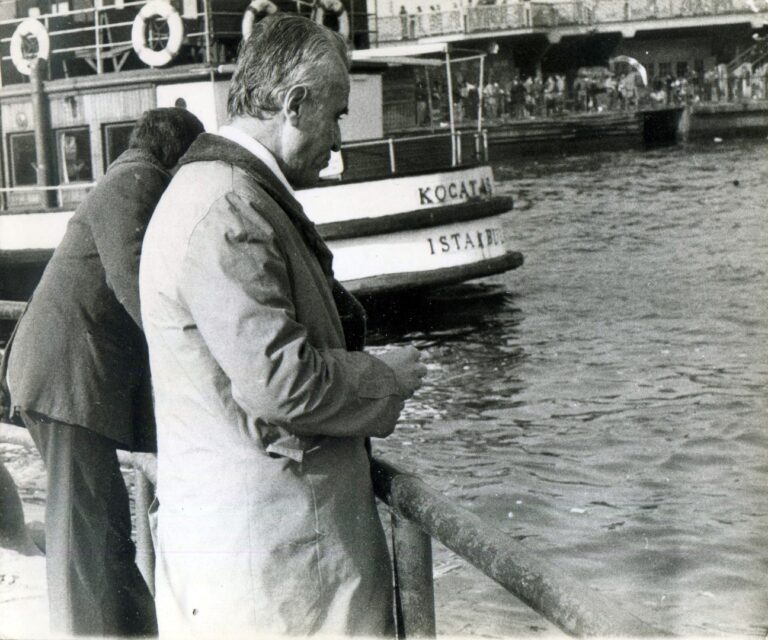
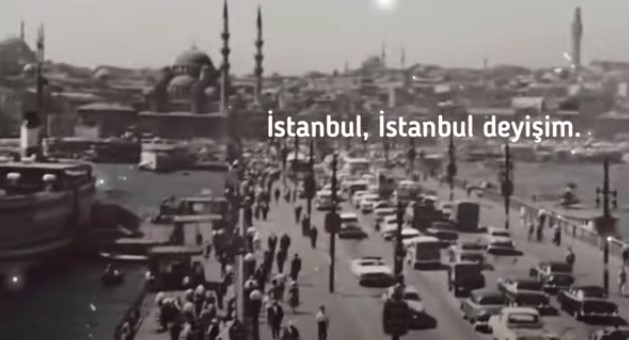
Copyright of Photograph by Levent Ağaoğlu, Istanbul, 1975

Copyright by Levent Ağaoğlu

@agaoglulevent

Turkey Top 10 Concepts: Selfness

Selfness- “The point is to be ourselves.” 

“I am Bilge Tonyukuk” 

The Wise Tonyukuk Inscription , 720 AD, Tola River, Mongolia

Line 37.38/Second Stone West Face B2.B3


970

The network itself does not promise berklig tili

Be the ignorant tili, your word won’t get angry


The language of the mute does not speak

Nor can the tongue of the ignorant hide its word.


Kutadgu Bilig 

Science is knowledge

Science is knowing yourself.

you don’t know yourself

Yâ why is reading

Yunus Emre

Split with my own sorrow

i am literate

Source: My Master Kul Himmet

Location: Erzincan


Spaces (air, ground, sea) will be belted when the Person and the Public can be themselves. The key concept is the self. Bilge Tonyukuk, Yunus Emre and Ottomans were the ones who used the concept the most.

The expressions reflected in Tonyukuk’s lines are the most poetic and assertive expressions of the self literature. It reveals itself in the first line and continues in this way until the last line. “I am Bilge Tonyukuk” is the most concise expression of the self.

This time, Yunus Emre, one of our Sufi pioneers, who uses the concept most frequently and with emphasis after Tonyukuk, tries to reveal those inner values ​​by turning to himself and saying there is a me inside of me” .

After 500 years, the mission of the self, which was expressed by the Göktürks with Tonyukuk, is again expressed as extroversion with strong expressions in the Ottomans.

The existence of more than fifty words derived from its own term in the Scan Dictionary (Cem Dilçin, 2009), which gives the Turkish words scanned from the works written in Turkey Turkish from the 13th century to the 19th century, together with their witnesses, is the proof of how important the concept is.

Like the Göktürks, the Ottomans also showed themselves and developed their own structures and systems. This is the reason for the emphasis on self-concept. The Ottoman Empire, which resisted to be itself between the years 1700-1850, had to adopt the capitalism that did not belong to it and entered the process of collapse. He who cannot overcome himself has also lost himself. A new state was established in order to reach it again and the right of sovereignty was transferred to the people who formed the nation in 1920, and alienation was tried to be overcome. This initiative will be examined in our book “Atatürk and Human”.

Four states established under the name of Turk in history; Turkish Khaganate (Göktürks), Ed Devlet it Turkey (Mamluks), Western Thrace Turkish Republic and Turkish Republic are the structures where the sensitivity of being ourselves is the highest. The Turks, who were able to remain themselves by establishing different states in the continents of Asia, Africa and Europe, also allowed others to remain themselves and did not interfere with their language and religion. Whereas, the Europeans did not allow the people of the Asian, African and American continents to remain themselves, they assimilated the continents and people, thus losing themselves forever.

The keyword of our productive cycle is the concept of the self. The essence of the person, defined by the concept of his city (his own) used in the Bilge Kagan Inscription and Kul Tigin Inscription, is his character. In Turkish Inscriptions, the issue was resolved thousands of years ago.

Disappearing Foundations: The Person and the Self

As of the 2020s, at the beginning of the 21st century, human beings are going through the process of being cut off from their roots and roots, and these roots will no longer be mentioned. The term Z generation, which is ascribed to it, is an indication that the end of the road has already been reached, and that there is no longer any contact with the roots. The founding roots are the person and himself. Both roots are interpreted as directed only within the person, the world outside the person does not exist and thus the personality is considered rootless.

When the roots are destroyed, other concepts that feed on those roots; heart, public, generation, sky and power will naturally no longer exist. Cut off from the world outside himself, the person has become the prey of consumption traps, he has become an automaton. This is what is called the digital person. Networks other than those that make the person strong no longer exist. On the other hand, people are no longer a person’s friend or comrade, everyone is in a deep loneliness, and people are not friends with each other, they are frankly enemies, the looks clearly show this. It also destroyed feelings of apathy, pity and compassion. Obviously, this coercion is made to deny existence and to drag humanity towards extinction.

There is no single entity in the universe that acts alone. All living things need each other, they are in connection with each other. The forcible isolation of people from their emotions and the destruction of their ties with other people is a process that should be seriously questioned. Thus, when the seven main concepts that define human beings disappear, we will now be talking about another entity, a universal entity human, which is now a thing of the past, atomized and fragmented. As a result of the purification and depersonalization of man, he is now another entity.

The Turks when looking at other people, that is, otters, and named human as a person by analogy, the subject they developed awareness was the outward social life of people together as a group at the water’s edge. In the first 20 years of the 21st century, as a result of the complete purification and isolation of people from their social character, the person has transformed into another being and has lost its essence. We can no longer talk about the person. A similar fate does not seem to be in question for humans, namely the Otters. However, as a result of the deterioration in people’s social life, the balances in nature are also deteriorating, and as a result, living things in nature will have to lose their sociality and connectivity qualities. Nature will also have to renew itself.The main thing is the enriched life that exists with relationships, and life becomes meaningless.


Copyright of Photograph by Levent Ağaoğlu, 1998, China 

Copyright by Levent Ağaoğlu

@agaoglulevent

Turkey Top 10 Concepts: The People

Cover Photo: Street From Fatih Park From Fire Brigade to Taş Mektep (Stone School) December 21, 1974

The meanings of the word bodun (folk), which is the most used concept in Turkish Inscriptions, are surprisingly important. The concept is mostly used in Bilge Kagan, Kul Tigin, Tonyukuk Inscriptions. Turks have two sources of inspiration: the sky (god) and bodun (the people). Bodun is the one who is made public by the right. According to Ziya Gökalp, the founding sociologist of our republic, the people are geniuses.

The struggle for independence of the Turks, who fell under the yoke of the Chinese since 646, was realized with the rebellion movement that started as a result of the feelings and thoughts aroused in Ilteriş Kagan and Tonyukuk by the endless complaints of the people. This is how the people, who could not honor and accept the cruel captivity by the Chinese, expressed their feelings in this way. In the state administration, the practices, successes and failures of the kagan were followed and expressed by the public.

The opinion formed as a result of these, the idea about the practices of the kagan, can go up to the appreciation or dismissal of the kagan. The most important creation of the people has been the vocabulary, namely our language. It is the people who are the creators of Turkish. Because the people are talkative, they are in communication, and within the framework of oral culture, legends, epics, poems and folk songs have been expressed.

The people stay alone in the steppe, they talk to the tree they come across. There are two important sources in the source of public opinion. The sky he looks at when he raises his head and the place where he steps. At midnight, he looks at the sky and dreams, develops thoughts, and during the day he is constantly in motion and dynamic in the steppe.

As a result of the intense and dynamic contact of the people with the earth and the heavens, people have created a huge dictionary and oral culture. The words of ancestors in Turkish express very deep meanings. Therefore, when we read the inscription of Bilge Tonyukuk, which is our first written work, we are in for a great surprise, because the words and expressions expressed reveal a very rich language.

When the dictionary and oral culture that the people built by speaking became written for the first time, this accumulation that has been created for millennia will of course surprise us. The most distinctive feature of Turkish culture is the Turkish language. This is thanks to the people. The people keep themselves alive in the language forever. Nomadism is our most valuable resource. Nomads also left place names to the places they went to.

Today, the language that gives the most place names to countries other than their homeland in the world is Turkish. There are Turkish place names in 100 countries. When you map the Turkish language and the geographies where Turkish is spoken, we get a map of millions of square kilometers.

• People; is our source of inspiration.
• The folk song dimension of our thought life is the genius of the people.
• The concepts of People and Rights are intertwined. It is the voice of right; People. It is conscience. It is indestructible.
• The West has nothing to do with demos (people).
• The field of interest of anthropology; nation, people.
• The area of ​​interest of ideology; elites, intellectuals.


Copyright of Photograph by Levent Ağaoğlu, 1975
Copyright by Levent Ağaoğlu

@agaoglulevent

Turkey Top 10 Concepts: Heart

Heart (Gönül): The one in the heart (skin)
Shirt (Gönlek): A shirt that is worn outside the body.

The heart is the person himself, it is himself that he is dealing with. It is a concept that has existed since the Inscriptions of Inner Asia. The person shares his/her loneliness in the steppe with himself, the person who is himself/herself is the heart. When the heart is expressed as my heart, it is a person other than the person himself, he is also a confidant, a complicit, but another person. By multiplying himself as a heart, the person prevents othering others and seeing them as the other.

In Kutadgu Bilig, the first written work of the Turks, the heart is the decision maker, the decision should be made with the heart. The expression in Kutadgu Bilig is “first consult your heart, then consult, if you don’t like it, don’t get into that job” (KB. 3688-89.b.). Again in the same work, there is the determination that “a person’s heart is like a sea without a bottom, knowledge is like a pearl at its bottom, it is useless unless you remove it” (Kutadgu Bilig.211-212.b.).

The two dimensions of the Heart in question here are eternity and the knowledge it contains. So the heart is an endless source of knowledge. Finally, the expression “the reluctant man is only a shape and form: the reluctant man loses the name of the wise” (KB 2798.b) reveals that the way to wisdom passes from the heart, to having a heart.

The heart is the armor of the person that protects the person. The heart is a treasure that it hides inside. A person sees with the eyes of the heart what the eyes cannot see. The Turks, who managed to keep the world order in balance with the state and the universal state, have also placed their inner world in a solid balance with their hearts and eyes. The measure is the consent of the heart, the consent of the heart.

Turks are involved in at least seven religions, and they have always seen with their heart’s eyes and acted voluntarily in their religions. Inscriptions written with the belief in the sky god, the texts written with the belief of Buddhism that followed, for example, the philosophical texts of Vapşı Bakşı, which are completely heart-based, Taoism, Confucianism, Zoroastrianism, Manichaeism, Judaism and Christianity, the texts of Turks from Karaman, Cappadocia, from Khorasan. The texts of the Sufi knowledge starting from the beginning are all heart-centered texts. Along with the concept of heart, which is not found in any other language, Turks have also influenced and enriched the understanding and religion of the tribes in their geographies.

In the western understanding, the person himself becomes competent as an individual. In the Turkish understanding, the person himself is enriched with his heart. Thus, while the Western individual becomes more and more lonely, the heart seeks and finds compatibilists and is in contact with other hearts. Turks are nomadic-centered communities. While migrating, watching the sky with their eyes all night long, they wander the sky with the eyes of the heart and enrich their hearts and people with the power and inspiration they get from the heavens, the eye here is the eye of the heart.

The concept of heart has no equivalent in other languages. The concept of heart cannot be translated to the West, and the concept of philosophy to our language. Wisdom is what matters to us. A philosopher is a person who loves the sages. What the West understands from Wisdom is Lawrence.

“The expression of the concepts of love and affection in separate words is a richness granted to a limited number of languages. Turkish is one of them.” Teoman Durali


Copyright of Photograph by Levent Ağaoğlu, 1975
Copyright by Levent Ağaoğlu

Turkey Top 10 Concepts: The Original Spirit of the Turk- Sky and Heart

Our soul;

Nine Eight

It was our first target

Blue skies

Navy blue sea;

Mediterrenean!


April 16, 2018

Among the concepts that shape our soul, the most important ones are the concepts of sky and heart, which are the most processed and spoken. The sky is above us when we raise our heads, it has seven layers and is full of secrets. Due to the vastness and obscurity of the sky, the inefficiency of the geography and the place where the Turks set their feet, the Turks became the focus of attention. Whatever comes from the sky. They called themselves the Göktürks, they named the wise people as Gökçin bearded, and the wolf that guided them became legendary as Gökbörü. The sky is what the eye sees and is the symbol of eternity.

Another concept, the heart, is a bottomless sea and contains treasures of knowledge. It is the heart that rises to the sky. The heart is an eye that looks inward, seeking treasures of knowledge in the bottomless seas. It is the essence of man in the heart, it is man himself. Wealth is in the heart, it is the wealth of the heart. Rich people are those who carry the vastness of the sky to the depths of their hearts, and those who share the richness of the sky and heart with others in their eyes.

The spirit of the Turk wanders in the skies and in the hearts. He is the one who walks on the seas, He is the one who unites the hearts. The spirit of the Turk has continuously developed and moved to the next level, progressed and refined on the way to becoming competent. First of all, we come across five of the seven concepts in the Oguz Kagan epic.

In the period of the inscriptions belonging to the eighth century, we see that the majority of the concepts in the inscriptions of Bilge Tonyukuk, Bilge Kagan and Kul Tigin are included in the texts. When we come to the period of writings, we see that all seven of the concepts are mentioned in both Farabi and Yunus Emre.

The majority of the concepts are also mentioned in the works of Irk Bitig, Kutadgu Bilig, Divanı Lugat it Türk, Divanı Hikmet and Vapşı Bakşı. This inclusiveness shows that the spirit constantly refines and empowers itself in Turks.

The globalization process, which started with the opening of China to the world after the death of the Chinese leader Mao (September 9, 1976) in the last quarter of the 20th century, accelerated with the fall of the Berlin Wall in 1989. China, which was the biggest reason for the start of the process, this time, towards the end of the first quarter of the 21st century, has caused the end of the globalization process as of 2020. The globalization process, which was called the “End of History” by the American scientist Francis Fukuyama and designed with the thought of ending time, could not even complete a fifty-year period, let alone a century. Especially as a result of the indifference of the European Union and the USA to the coronavirus process, the idea of ​​unity has lost its meaning in both continents.

The starting point of the book is about the plans to destroy human beings by artificializing during the corona virus epidemic in the early 2020s. Disappearing humanity has begun to threaten individual humans as well. It will be seen that the importance given to “human” among Turks, as of 2020, at the very beginning of the 21st century, has features that will put our country forward in the human hurricanes we live in and on our borders.

While the state founded by Atatürk, who invited the Western countries that attacked Turkey in the early 1920s to comply with human values ​​and recognize our sovereignty, sent aid convoys to the West in 2020, 100 years later, the human being is faced with the dilemma of extinction by being artificialized. has left. Disappearing humanity has begun to threaten individual humans as well.

The phrase “Budun da Budun boldi” (People also became people), which was first used by the Turks in the Tonyukuk Inscription (720 AD), was the   first example of how the people were elevated to where they should be. Turks have always demonstrated what they have lived and created (culture, language, states, etc.) The main thing in the Turks’ Epic of Creation and Oguz Kagan Epic was Human with all its universal reality.
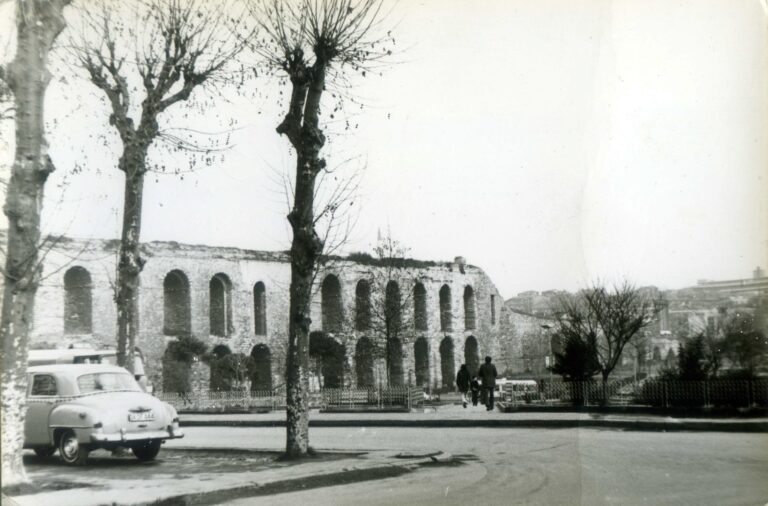
A total of seven concepts, starting with the Person and ending with the Power, offer an inclusive field to explain the soul of the Turkish people. This area, on the other hand, is a large area, because it is the field where the soul of man is shaped. It is a unique Spirit; When we examine epics, inscriptions and writings, we always come across them in detail.

Our soul, which started to take shape as 9/8 in Rumelia starting from the 14th century, is a lively and enthusiastic musical rhythm. The roots of our soul, which once again caught universality in Rumeli, were shaped in the depths of inner Asia with the seven concepts here. This soul has three main elements: sky, earth and person. All three are created. A person’s life on earth, which is the world in question, is connected with the heavens, that is, the celestial universe shapes the person during his life.

From this point of view, the steppes of Inner Asia and Asia Minor have been the vast spaces where the connection with the skies has been established, the source of thoughts of the people. The thoughts of the people also fed the thinkers. The Silk Road steppes in Inner Asia and the Cappadocia region and surrounding areas in Asia Minor were the areas where the richest works were produced on the Eskişehir, Ankara, Konya, Kırşehir, Niğde, Nevşehir line. The first examples that come to our minds were Yunus Emre, Mevlana, Hacıbektaş Veli, thinkers who grew up in the steppe.

Cappadocia, the middle point of Asia Minor, and the steppe and agricultural basin areas in the middle of Central Asia were the main centers of thought. The source thinkers, whom we consider as a reference in our work, always came from these fields in Central Asia. The nourishment of the sky, the sun and the moon, the rain and the breeze, made the person dynamic.

The Turks, who gained their sovereignty during the War of Independence in 1920, also witnessed the end of the globalization process, which disregarded the sovereignty of the states and tried to destroy them, during the biological warfare process in 2020, 100 years after this date. The name of the new process that has begun is the period of personalization, and individuals and states will begin to progress towards being themselves.

The process in which people were depersonalized, states lost their sovereignty, became obscure, and was constructed towards the One World State, came to an end. In 2020, when we celebrate the 100th anniversary of our sovereignty, the projects of the West, which came to the fore with the Corona virus epidemic, of digital people, directing people to chip in with their consent are clear indications that the direction of reform has changed.

The task of reining the West’s longing and pressure for a world without humanity falls to the Turks this time. The residues of paganism and feudalism have now thoroughly dehumanized the West. The sects that were expelled from the religion of Christianity, cult sects and secret organizations that were reaped from the sects, all seek to impose a satanic order on the divine realm.

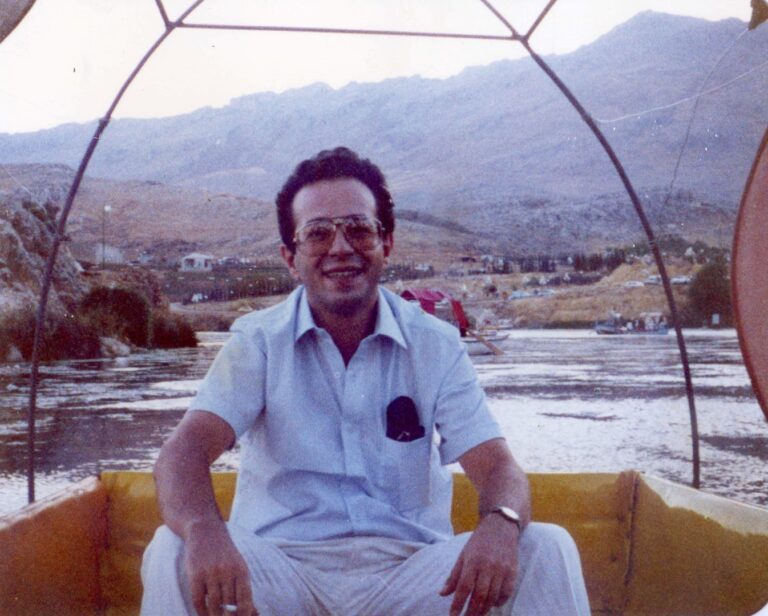
Copyright of Photograph by Levent Ağaoğlu, 1987, Damascus

Copyright by Levent Ağaoğlu

Turkey Top 10 Concepts: It is the sky on earth; Steppe..

The steppe mind is a collective way of thinking; is not singular but universal. The old Turks call it Ög. Ög multiplies, accumulates and diversifies by being added in each generation. This variety is then poured into phrases in the form of idioms and proverbs. In this respect, the Turkish language is the mirror of the Turkish mind. Ali Akar @ali_akar 24 Nov 2020

Steppe; is the sky on earth.

I could not reach the etymological data of the word Bozkır. When and where was it first used? Gök Börü is used as a Bozkurt, is there a similar situation here?

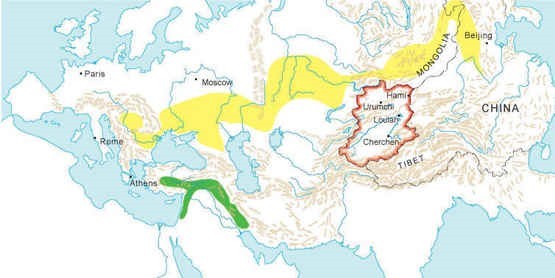
We have fought the Chinese for thousands of years inside the area where the Yellow River takes the shape of a bell. In the vicinity of Baotou on the top of Chiang, Tonyukuk was born.

“Yes, that region has served as a front-post for thousands of years for Turkish and other steppe peoples to advance into China. Tonyukuk’s exact birthplace is unknown, but he must have been around.” by Hayrettin İhsan Erkoç.@h_ihsan_erkoc Oct 30, 2020

The difference between steppe and desert..

“Farabi’s urban theory, unlike Ibn Khaldun’s urban theory, constructs a space “open to animals” and invites people to build themselves in nature. The Turkish intellectual, who accepted Ibn Khaldun’s city model, broke the animal-human-nature relationship.” lütfi bergen@BergenLutfi Mar 31

It is sad to forget the inscriptions (Yenisey, Orkhon, Altay) written on stone in the areas from Manchuria to Mongolia and Hungary, starting from 1500 years ago along the steppe belt, as if they were written on ice…

“The great steppe has been the biggest school of the nations it has hosted. The burning sun, freezing cold, deadly hurricanes, impassable mountains, impenetrable deserts have developed a will of steel in steppe people. Motun, Tonyukuk, Cengiz, Temür… these are the children of the steppe school.” Ali Akar@ali_akar · Jun 2, 2020

Silent testimonies of meteorites extending to eternity..

Of course, it makes sense with your testimony.

“I intend to contribute to the task of understanding and narrating this great corpus, which I started in 1995, with a new book called Witnesses of the Steppes. In the book, you will find the oldest but familiar memories of the Turks. I hope you enjoy reading it as much as I did while writing it.”  by Erhan AYDIN ​​@proferhanaydin · 26 Mar

If Bozkurt is Gök Börü, then Bozkır should actually be Gök Kır.

We see the sky in the countryside at the gates of the Divriği Great Mosque.

Finally…


Turkey Top 10 Concepts: Tengri-God

The first word identified in Turkish is Tengri (God). It is seen that Turks have strong beliefs and the conceptual framework is ancient and strong. Atheism would later jump to the Americas over the Yakut Turks. The Turks have also transformed the belief world of the Chinese with their belief in the Gods of Heaven.

Tengri is the old way of saying God in today’s Turkish. It is the first deciphered word in the Orkhon Inscriptions. Source: Issues of Göktürk history-Osman Fikri Sertkaya-page 130, Turkish Culture Research Institute, 1995 Ankara, 360 pages. Adnan Binyazar- 25 famous works in Turkish language (page 8), Varlık Publications, 263 pages, 1982

According to this belief, the supreme spirit of Heaven was Tengri. People used to feel safe among the spirits of Tengri, the sky father, Ötüken, the earth mother, and their ancestors who were protecting people, and prayed to them and other nature spirits.

Turks embraced the universe with their understanding of Tengri, or god. From the earliest times, they had a great belief that man was created. Again, as it is written in the Bilge Kagan Inscription, “God lives time, man was created mortal.” The first word Tengri, which was used for the first time in the Huns, later continued as “sky Tengri” in the Gök Turks. One of our living thinkers, Dr. Sait Başer published a study book on the similarity of Gök Tanrı and Allah’s attributes and identified many similarities in this regard. Here are the inscriptions on which it is based, the Göktürk Inscriptions.

The creation of Turks in Asia Minor and their expression of God as love is an important indicator of how comprehensive and inclusive Turkish theology is.

Ahmed Yasawi whispered from Turkistan:

“The carefree person is not the person; understand that.
Lightless human, animal species, listen to this.”

Âşık Pasha, who gave a voice from Anatolia:

Become Adami so that there is light in the moment.
[They say man, the one who is light]

The Turkish state gets its power by creation. The trinity of heaven, earth and man was first and foremost being created. The statements in the Bilge Kagan inscription “the man whose time lives are God is created and he is mortal” and the mention of the earth and the sky are the proofs of the advanced theology of the Turks. In addition, expressions such as “I won because God wanted” in the Bilge Tonyukuk inscription are indicators of the dominance attributed to the will of God.

Turks have had a deep belief that they were created since their existence. The first identified word of the Turks is the concept of tengri, it was determined from the Huns and they were extremely insistent on the subject of god, belief and theology. The Creator also showed himself as a soul in the person. The Turks described the soul as kut, it is bestowed on the person by the creator. Man is mortal and created. The level of divine awareness in Turks has always been high. The soul of the Turk has a wandering and nomadic character as a result of the constraints of the steppe geography. It is not dependent on the earth, but it is always connected with the sky.

In the 7K1N system, which we have identified as seven criteria, the concept of sky is in the first place and the concept of person is in the second place as the most frequently used criterion.

Thus, the message given by the Turks through epics, inscriptions and manuscripts is the inseparability of the creator and the created. The frequency of use of the words sky and god is at the forefront by far. The inscription, which includes the phrase “God lives time”, also includes the phrase “man is mortal”. The difference between man and god is the acts of being subject to time and living time. The importance that the Turks give to the person is like a divine concept. After Root (God), the concept of Person is used the most. It is understood that the theology of the Turks is very deep and powerful.

Copyright of Photo by Levent Ağaoğlu, 2003, Pecs, Hungary

Copyright by Levent Ağaoğlu,

@agaoglulevent

Turkey Top 10 Concepts: Public

Our name is sluggish
Who is our enemy?
We don’t hold grudges against anyone
Public world helps us

Yunus Emre

“The Ottoman rulers are followers of what the Göktürks said in the Orkun inscriptions. In the inscriptions, he says, I dressed him when I was naked, I fed him when I was hungry. That is the essence of the Ottoman system.” Prof Dr Mehmet Young Turkish Historiography. Ottoman Empire, 2nd Abdulhamid and Dardanelles War Ottoman Empire 13 May 2017, Ali Emiri Cultural Center.

The concept of state in the Arabs did not exist before Islam. In Turks, on the other hand, the State (boy-budun-töre-il sociology) has been alive for thousands of years; lives.
The concept of Public, which first appeared in Bilge Kagan and Kul Tigin inscriptions, also appears in Kutadgu Bilig and Divan-ı Lugat it Türk. The most intense usage is expressed with Yunus Emre, as in his own concept.

Turkish people give the same value to the public as they give to the individual. It is the same understanding from the Göktürks to the Ottomans. There should be no hungry people, beggars should not be found in the streets. The important thing in the town is to produce enough bread for the population. In the inscriptions, Bilge Kagan mentions that he clothed the naked people and fed the hungry. The Chinese Emperor was very surprised and could not understand this attitude of the Turkish Khan, who shared the spoils with his people.

According to the Turkish understanding of Khanate, the most important duty of the Khan is the peace, order and happiness of his people. Inscriptions, Kutadgu Bilig, Atabet ül Hakayık, and Political Works are always full of these examples. When it came to the Republic, the peasant was considered the master of the nation and heavy taxes on the people were abolished.

As a result of the relations of people, language and state structures, which are public assets, are enriched. Just as the root meaning of the concepts of water, wetness, life, death and creation in kiş (otter), which is at the root of the word person, the word il, which means the state, which is the highest public structure, also indicates relations.

The concept of state, which is expressed by the concept of state in the West, is a status quo and a static structure. The word dawlat, which comes from the Arabic root dwl, is taken from the word “1st fortune, luck, 2nd fortune, destiny, 3rd power, sovereignty”. In Arabic, on the other hand, the word Arabic dāla is the noun merre of the verb “turned, wandered (especially fate, kismet)”. (This word is synonymous with the Akkadian dālu verb “to turn around, to wander”.) Source: Sevan Nişanyan. Nisanyan Dictionary. https://www.nisanyansozluk.com/?k=state

In Turks, on the other hand, province, ambassador, district, communication are concepts related to the state and are based on the root relations in the term province. Relationships are not static, but rather dynamic. People create relationships. In the Turks, the public lives in the strongest form in the language. Since the oral culture is dominant, the accumulations in the language are kept fresh by being constantly updated. Relationships and communication are alive.

The mastery of the Turks in establishing a state is also expressed by the Greek professor Dimitri Kitsikis.

“Karamanlis was telling me that we Greeks are a very inept people to run a state. We have never had a state, what was established after 1821 is not a state, the Westerners managed to take advantage of us by establishing this state, we are colonies as you said. Yes, we are an empire people, but right now only our soul is the empire.

So, who is establishing a real state? Turks are setting up. He also told me that all great states were founded by Turks. They founded the Ottoman Empire. They established the Turkish-Mongolian Empire. Who even built Beijing? Did the Chinese do it? No, the Turkish-Mongols did. In China’s last dynastic war, who was victorious in China? The Manchuro-Turkish descendants were victorious. Turks know how to organize, they establish a state while we only have a state spirit.”  Source: Greek Turcologist Dimitris Kitsikis Explains Why Greece Should Unite With Turkey.. https://www.youtube.com/watch?v=NUcaaJKYsAg

The point that Prof. Dimitri Kitsikis sincerely admits is that the spiritual existence of the empire is not enough, and this must be done in practice, which the Turks actually did. What is at issue here is the power of organization, activating the spirit is possible with organization, this is also a public power, public power comes into play here. So it is this public power that the Greeks lack.

@agaoglulevent

Is UAE-Israel agreement a call for surrender for Palestine?

by Prof. Dr. Süleyman Kızıltoprak / Mimar Sinan Fine Arts University

Last 50 years’ events United Arab Emirates (UAE) witnessed both on its own history and the region’s history can be repeated in forthcoming 50 years.

With the exploration of petroleum about 60 years ago in United Arab Emirates (UAE), this poor region composed of small desert chiefdoms experienced a rapid transformation and turned into a modern state with respective high life qualities.

UAE’s warm relations with Israel behind closed doors were known. With recent expressions this sort of relations has been officialised and turned into an open form. However, the acceptance of an agreement between UAE and Israel on Palestinian territories is more important.

Short history of petroleum-oriented Emirates

With a territory of 77,700 kilometre squares, UAE is a convention of emirates born of petroleum. In early sixteenth century, the Ottoman Empire under the leadership of powerful Sultan Selim I took action in order to attain the goal of eliminating the threats of the Portuguese on the Arabian Peninsula and especially on the holy lands via Red Sea and Gulf of Basra and containing Iranian expansion on Ottoman Empire’s eastern frontiers. Sultan Selim I hindered the Portuguese by annexing holy and antique settlements such as Jerusalem, Damascus, Cairo, Mecca and Medina and assured the security of the Arabs of the region by gathering them under the same framework. Suleiman the Magnificent annexed Basra and Lahsa with the aim of chasing the Portuguese who were still threatening the Gulf of Basra and Arabian Peninsula. Thus, southern shores of the Gulf of Basra were secured. The situation was stabile in the Gulf of Basra until the arrival of Britain’s East India Company in the nineteenth century.

In 1820, several treaties were signed between littoral chieftains and the British on the security issues against the pirate attacks of the ships belonging to the British trade company and the utilisation of the ports in a safe way. In 1853, the parties reached a more detailed peace agreement in order to totally eliminate piracy. With this agreement the tribes known as “Littoral Emirates” or the “Emirates of Oman Coast” began to be called as “Trucial States” in English, “al Imarat al mutasaliha” in Arabic and “Antlaşmalı Emirlikler” in Turkish. By accepting this naming, Littoral Emirates turned into allied representatives of Britain in the region.

Against this British attempt, regional powers Ottoman Empire and Iran took action separately in order to protect their own interests. While Iran agitated the Shiites of the Gulf against Britain, Ottoman Empire increased its control on the region of Najd in 1871 and dominated the territories reaching till Qatar and declared that it did not recognise the British agreements with littoral chieftains of the Gulf of Basra.

In 1892, Britain attained a more comprehensive and more interest-oriented agreement with littoral chiefdoms. With this, the emirates remained free in their domestic affairs and became bound to British in security and foreign relations. The Ottoman Empire rejected all these agreements until 1914 and recognised the agreements between Britain and Gulf emirates that were signed just before the eruption of the First World War. Thanks to these agreements, the British secured their control on Oman coast and Gulf of Basra’s entry-exit points besides their continuing advantages in India. Despite recognising the independence of India in 1947 and retreating back from its ex-colony, Britain did not want to give up its supremacy on the emirates of Gulf of Basra and Oman coast.

On 30 March 1968, nine emirates including Bahrain and Qatar agreed on forming a union. However, Bahrain and Qatar decided on independence and left the union soon. With British approval and presence of a UN observer, Bahrain declared independence on 14 August 1971 followed by Qatar on 1 September 1971. Upon that, six of the littoral emirates or Trucial States as the British called, namely Abu Dhabi, Dubai, Sharjah, Ajman, Umm al Quwain, and Fujairah, assembled on 2 December 1971 and declared “al Imarah al Arabiyya al Muttahidah” (United Arab Emirates). Ras al Khaimah joined this federation in February 1972 as the seventh member. Abu Dhabi sheikh was appointed as president and Dubai sheikh as vice-president. Abu Dhabi was declared as temporary capital; however, it has remained so far. The decisions are taken on the basis of unanimity by the highest decision-making mechanism of the country, the seven-member Supreme Federal Council (al Majlis al aala li al ittihad). However, Abu Dhabi and Dubai have veto rights on all decisions. The president and vice-president of the union are elected by this council as well.

Petroleum gifted the coastal chiefdoms with state and population

With the exploration of petroleum about 60 years ago in United Arab Emirates (UAE), this poor region composed of small desert chiefdoms experienced a rapid transformation and turned into a modern state with respective high life qualities. Until joining the petroleum exporting countries in 1962, local chiefdoms had been busy only with pearl hunting, fishing and minor trade.

The emirates’ population was below 100,000 in 1960. This number rose to 180,000 in 1968, 558,000 in 1975, 1 million in 1980, 1.379 million in 1985, 2.938 million in 1999 and 8.264 million in 2010. UN estimates that the country’s total population was 9.771 million in mid-2019. According to UN data (2019), immigrants make up 87.9% of total population. Ethnic make-up of the population with 2015 estimates is: Emiratis 11.6%, Southern Asia 59.4% (India 38.2%, Bangladesh 9.5%, Pakistan 9.4%, others 2.3%), Egyptians 10.2 %, Philippines 6.1%, others 12.8%. Foreign population of the Emirates is affected by state policies in source countries and international developments. For instance, Indian population rose to 38% in 2015 up from 25% in 1985; whereas, Pakistani population went down from 13% to 9.4 % during the same period.

USA Relations

USA succeeded Britain in terms of UAE’s allegiance and dependency relations within time. Especially after the 11 September 2001 attack, UAE became the key partner of USA’s new policy in the region. With 308.5 billion dollars of export and 229.2 billion dollars of import according to 2017 data, UAE is one of the worst affected countries of the fluctuations in international markets as its main export items are petroleum and natural gas. This fact moves the government closer to USA. Indeed, as recent history suggests, this role contains great risks for UAE. While Iran was the greatest partner of the western world and the USA before 1980, this role shifted to Saddam-led Iraq after the revolution. After Saddam’s self-demolishment through his attack on Kuwait (at least through USA’s silence) and subsequent 11 September attack that led to his country’s invasion by USA, this role shifted to UAE and Saudi Arabia.

UAE engaged in continuous zigzags during the so-called Arab Spring; however, it did not leave the USA’s side. Recently, it has sided with Trump administration who claimed to end the centennial Arab-Israeli conflict via a “peace plan”.

Centennial Peace Plan or unconditional surrender to Israel?

Israel’s intentions toward strengthening its relations with Arab countries of the Gulf of Basra were known before. In recent years, hostility against Iran approached the parties. UAE and some Gulf countries did not hide their intentions toward a peace agreement with Israel. Compromise behind closed doors was uncovered with UAE’s peace memorandum. USA’s recognition of Jerusalem as the capital of Israel seemed to be approved by UAE. Annexation decision of West Bank seemed to postpone the date of the signing of the peace agreement with Israel. However, when the looks turned toward the explosion in Beirut Port, the time seemed appropriate for signing. Thus, UAE-Israel relations went further beyond from just anti-Iran alignment.

In return for Israel’s suspension of annexation of some parts of West Bank under invasion, UAE took action on 13 August 2020 Thursday in order to establish official relations with Israel. With a common memorandum of Israel, USA and UAE this step was highlighted as a “historical diplomatic breakthrough” that will bring peace to the Middle East. USA praised the “courage” of UAE and Israel for opening a new path that would “reveal the great potential in the region”.

Why did UAE sign a peace agreement with Israel?

For years, there had been an unmentioned military alliance between Israel and UAE and this was not secret. However, why is such an agreement attained now in an open way? The views that this agreement was the sole action that would stop Israel from annexing invaded territories in the West Bank were denied by the Palestinian side because the Emirates have never been present in the fore of the peace-making processes so far and have not had warm relations with Palestinian President Mahmud Abbas.

As known, Israel reached similar peace agreements with Egypt in 1989 and Jordan in 1994. Despite the fact that these agreements contained disadvantageous clauses for Arabs, there were certain gains for the mentioned countries to convince their own people as well. For example, Egypt re-took the Sinai Peninsula that had been lost in the war of 1967. Jordan also acquitted the stereotype of being the “scapegoat” who had supported Saddam against Israel.

UAE became the first Arabic Gulf country to declare official relations with Israel. Then what has UAE acquired with this agreement? An agreement on Palestinian territories means singling the Palestinian Arabs out. With this, Israel’s presence on invaded lands is recognised and even the decision of annexation is not rejected. Only Israel’s postponement of annexation decision in this phase is demonstrated as a gain.

The diplomatic appeal came after Israeli Prime Minister Binyamin Netanyahu’s decision of suspension of annexation of some parts of the invaded West Bank. This intention of agreement had been previously criticised by Arab countries and Europe. By claiming that this would permanently collapse the hopes for a Palestinian state alongside with Israel, EU and some Arab countries expressed that the status of Palestinians’ territories turned from invasion to annexation and added that the mentioned agreement ground meant the recognition of unrighteousness.

Trump proclaimed the agreement with his senior advisor Jared Kushner, USA’s Ambassador in Israel David Friedman and USA Foreign Ministry’s special representative for Iran affairs Brian Hook who is the pioneer of Trump Government’s maximum pressure campaign against Iran.

Although the agreement’s content is not exactly known, the “trusted ally” appraisals by USA seem to have sufficed for the UAE side. Netanyahu emphasised that although it was not an official peace agreement with Palestinians, the agreement between Israel and UAE was important to demonstrate the start of his country’s increasing acceptance in the region.

In Jerusalem, Netanyahu said “this shows the profound transformation we have achieved in Israel’s position in the Middle East”: “For decades, Israel had always been symbolised as an enemy. However, today many countries regard Israel as a strategic ally”.

This diplomatic agreement reflects the increasing anxiety that is common between Israel and Arabic Gulf countries on a potential conflict with Iran. Israel periodically hit the Iranian targets near the Syrian border. USA and its allies blamed Tehran for passing the narrow Hormuz Strait on Iran’s southern shores and attacking petroleum tankers en route the Gulf of Basra.

Trump told that Israeli and UAE leaders would visit the White House for a signing ceremony in proceeding weeks. The agreement contains direct flights, embassies and other bilateral deals. The Israeli and Emirati officials will meet soon for some bilateral arrangements as well. Including those who regard Iran as the source of instability in the Middle East, USA officials applauded the establishment of diplomatic relations between Israel and UAE.

USA’s special representative for Iran affairs Brian Hook’s usage of the word “Arabs” as one part of the agreement in his speech “the peace agreement between Arabs and Israelis is the worst nightmare of Iran” points out Bahrain and Oman and covertly Saudi Arabia along with UAE.

According to the claims from UAE side, Crown Prince Muhammad bin Zayed and other Emirati leaders decided to offer the normalisation agreement by believing that Israel’s annexation would annihilate the two-state solution and Israeli-Palestinian peace. In this line, bin Zayid said “during a conversation with President Trump and Prime Minister Netanyahu, an agreement was reached on stopping further Israeli annexation of Palestinian territories. Moreover, UAE and Israel came on terms on a roadmap to establish bilateral relations in cooperation”.

Israel’s gains, Arabs’ losses

To categorise the winning and losing sides on the basis of the content of the agreement:

  1. Trump Administration in USA acquires a positive image on the eyes of the electorate by providing positive contributions to peace process and Israel. This can be assessed as a well-timed political move by Trump to steal some wind from Biden’s sails before the elections.
  2. In Israel, Netanyahu can advertise himself as the “great statesman who successfully broke the Arab enmity circle”. This is a development that would enhance Netanyahu’s image which had been deteriorated after corruption allegations against him on air.
  3. UAE started to propagate itself as “the Arab country who signed peace to stop Israeli annexation”. However, Israel insists that it only temporarily suspended the annexation policy and did not permanently quit it.
  4. Were Palestinians present in any phase of the negotiations in any way? No, they were not. Did Palestinians support the “temporary” suspension of annexation? Palestinians provided no positive reactions for this agreement ever.
  5. How did the 22-member Arab League which had been founded in order to cooperate against Israel’s expansion on Arab lands and 57-member Islamic Cooperation Organisation (ICO) respond to this agreement? Despite an avowed reaction from Turkey, the silence of Egypt and Saudi Arabia is quite illustrative. From now on, Turkey’s leadership role will increase in regional politics and on Islamic countries while others’ role will decrease. Besides providing the most serious reaction to this agreement, as seen either inside the domestic borders or in the Eastern Mediterranean, Turkey’s moves on protecting its rights on sea by respecting the rights of the peoples of the region are appreciated by the international community, especially by the peoples of the region and ICO members. In addition to this, Turkey’s positive attitude toward the problems faced by the Middle Eastern countries, benevolence in humanitarian aid campaigns and utilisation of its military capacity as a deterring power in all events provide the most significant contribution to the ICO countries and the peoples of the region who expect a permanent and just peace instead of submissive policies concerning the Palestinian Question.
  6. Did UAE reserve its right to abolish the agreement in case of Israel’s suspension of the decision of stopping annexation? No, there is not such a statement. Conversely, Netanyahu asserted that they had temporarily suspended the decision of annexation. That is, the Israeli side can decide on a new annexation plan soon.

To sum up, this agreement means a rapid victory for Israel. Within time, Israel will normalise its relations with other Sunni Arab states as well and thus will attain more gains to increase its legitimacy on the territories it has invaded. With this agreement, Arabs will quit their goals to boycott and isolate Israel in international realm. From now on, the Palestinians will feel lonelier in their resistance against Israel and search new strategies to protect their lands. In this regard, the Middle Easter Question will not end; conversely, the multi-dimensional conflict system of the Middle East will become more sophisticated. This conflict will continue in a predictable future and permanent peace will not be attained.

Contrary to this, UAE’s ambassador in USA Yusuf Otaiba expects the arrival of peace to the region. According to him, this agreement is a significant breakthrough that “will diminish the tensions in Arab-Israeli relations, create a new energy for a positive change and immediately halt the annexation and violent confrontation potential”.

Let us see will it be so? Will Israel’s expansion strategy toward Palestinian, Lebanese, Syrian, Iraqi and Jordanian territories end? Will Israel give up its annexation policy after its completion of Jewish settlement building in the territories it has invaded? Will peace arrive in the region that has wiped blood and tears for centuries? Will the misfortune of the Iranian shah who lost his throne after establishing warm relations with USA and the Iraqi dictator Saddam spread to UAE?

Time will respond all these questions. However, UAE’s this decision points out the beginning of a new period in the Middle East and the Gulf of Basra. Last 50 years’ events UAE witnessed both on its own history and the region’s history can be repeated in forthcoming 50 years.

@suleymankzltprk

Source: https://www.aa.com.tr/tr/analiz/bae-israil-anlasmasi-filistin-e-teslim-ol-cagrisi-mi/1948738


Great Actor of Humor and Emotion: Şener Şen

In an interview with him on a TV channel, Şener Şen explains how he became an actor:

‘People may think: My father is Ali Şen and they may believe because he encouraged me to act. But this is not real. I had very good relations with my father. We used to talk about many topics. But we never talked about acting. My father never said my son be a theater actor, never a movie actor. He left me alone. May God have mercy on him, he was neither a support nor a hindrance. I became an actor by my own effort, struggling and learning.’

Giovanni Scognamillo describes his indefatigable energetic work in these words:

“He is active in his works, almost plays tricks when he is excited, goes into fits, goes mad, throws himself to the ground, jumps, jumps, runs; When he gets into a fight, it’s hard to suppress him and some of his actions and reactions are full of surprises. He is a cute and friendly turkey at the same time, he seizes opportunities, creates opportunities and knows how to take advantage of them. But when he smiles, he knows how to save himself.”

The great actor Şener Şen carefully reads the scenarios that come to him and makes his choice accordingly. His basic idea is to make a concise film. On this subject, his teacher Yavuz Turgul says the following about him:

“One of the best things about Şener is that he wants to shoot a small number of films. Because if he made a large number of films, he would have had the misfortune of repeating himself in an environment that was not vehement about it. When I look at Şener as an actor, I see this – I think they may be wrong, of course… Şener Şen draws an image closer to the east if you separate the east and the west with a line,” says Yavuz Turgul. 

Şener Şen says;
It takes a long time for a name to be learned by the public. The public is interesting, that is, the most ruthless critic. Your name is learned gradually. And then he doesn’t forget.
A good director can create a good actor from even a bad actor, and polish it with editing and short-plan skills. The rest is finance.
Every fan of cinema will taste criticism one day.