Home Blog Page 276

Crimea: Karaite (Karaim) Canaan in Yevpatoriya

The place where the Karatays live most intensely in the Republic of Crimea of today’s Russia in particular is the city of Yevpatoriya.

The coastal and summer resort city with a population of one hundred and twenty thousand people, whose Tatar name is Kezlev (Gözleve in Turkish), is located exactly on the western side of the peninsula. Yevpatoriya, where only a few hundred of the Karaim Turks of approximately 50,000 people around the world remain, is known for its Kenasa (Karaim: synagogue), which is still in operation and is a first-degree cultural site and museum complex today.

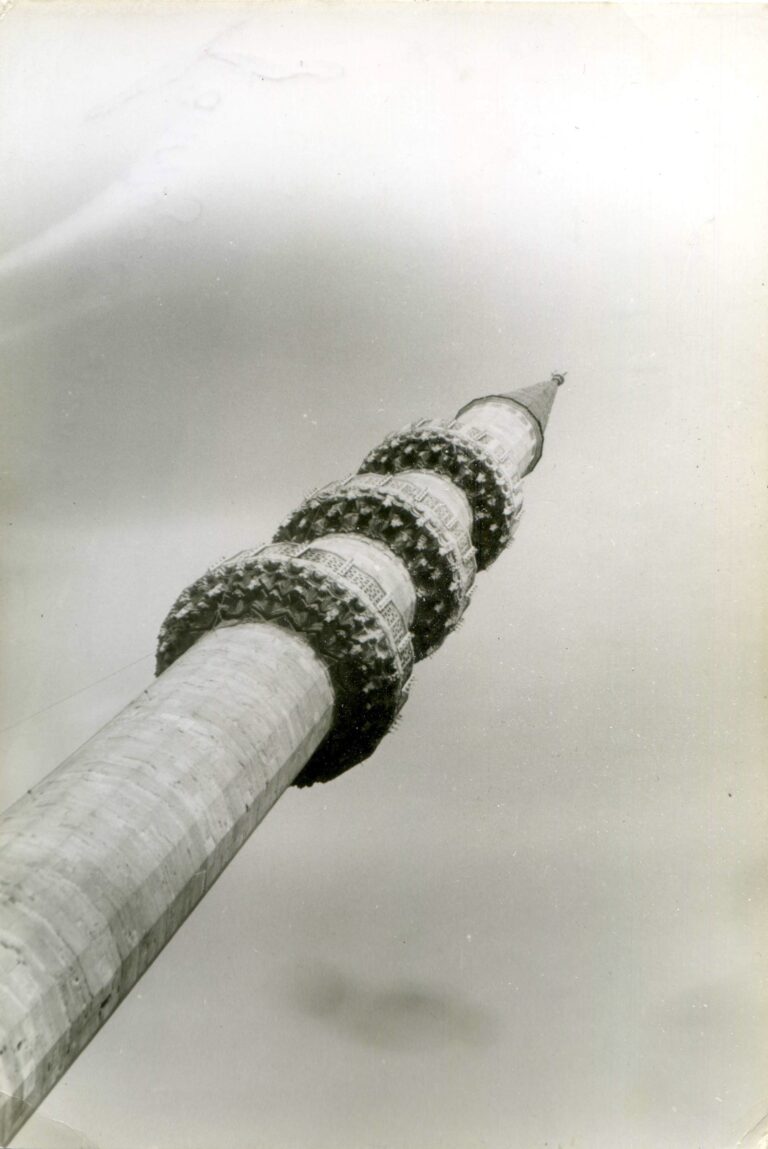
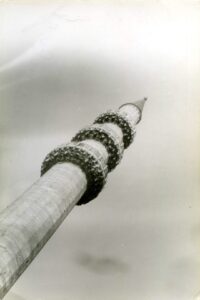
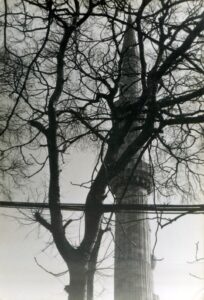
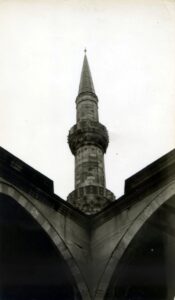
After seeing the Han Mosque, the northernmost work of Mimar Sinan, I first come across the “Yegiya Kapay” synagogue as I wander the narrow streets in the old center of the city, which looks like a trinket. After passing the building, which is closed to tourists, the monumental entrance gate of kenasa can be seen soon.


What is interesting; The name of the restaurant, where Karaim Cuisine is served, is “Karaman”, right next to the entrance door that resembles a big yellow-white jewellery. A little later, I enter when a young man in the traditional black cap of the Karaites comes and opens the door.


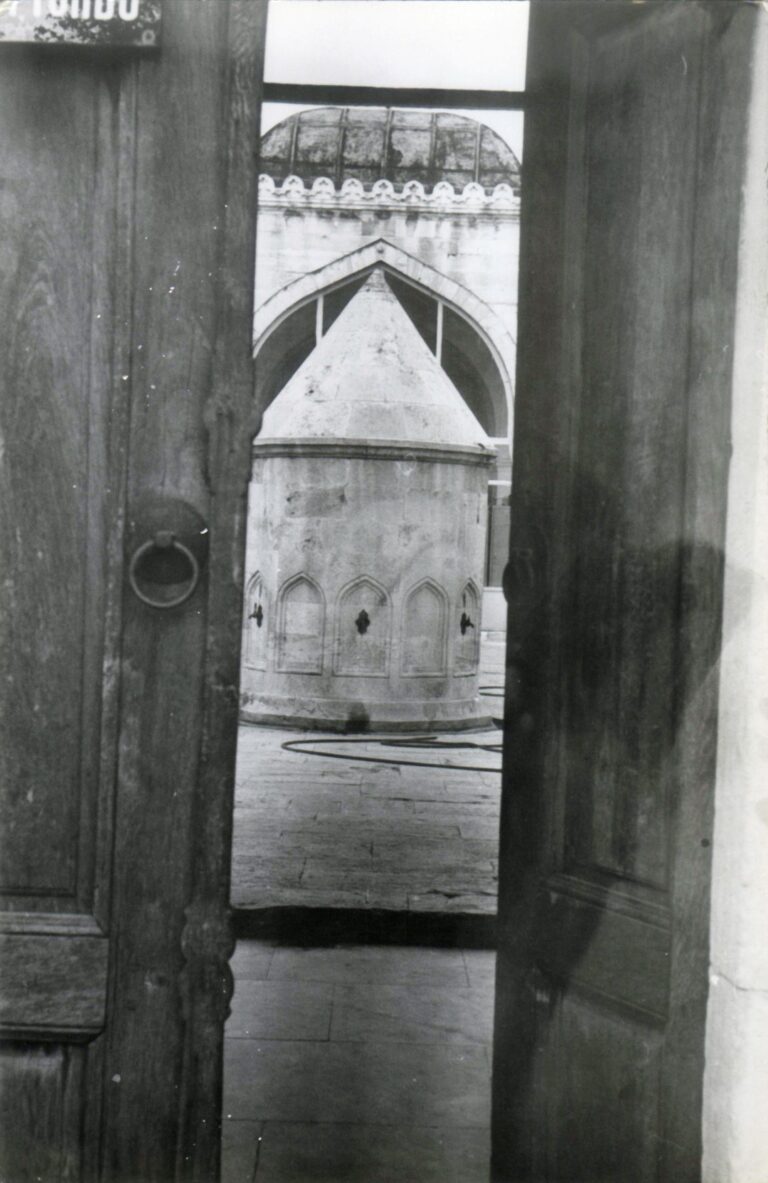
In Kenasa, built on a land of 2.5 decares where two prayer halls, one large and the other small, are located in the centre; There are basic sections such as religious school, dining hall, courtyards, meeting places, and a cemetery. The synagogue, which has been in existence since 1837 with interruptions in the city, is located at the end of the authentic street, which is also known as “Mini Jerusalem”.


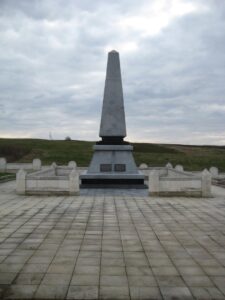
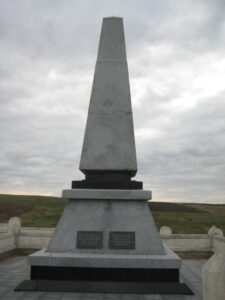
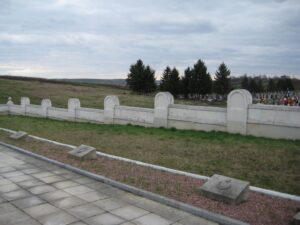
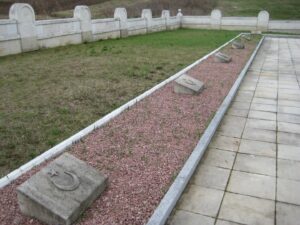
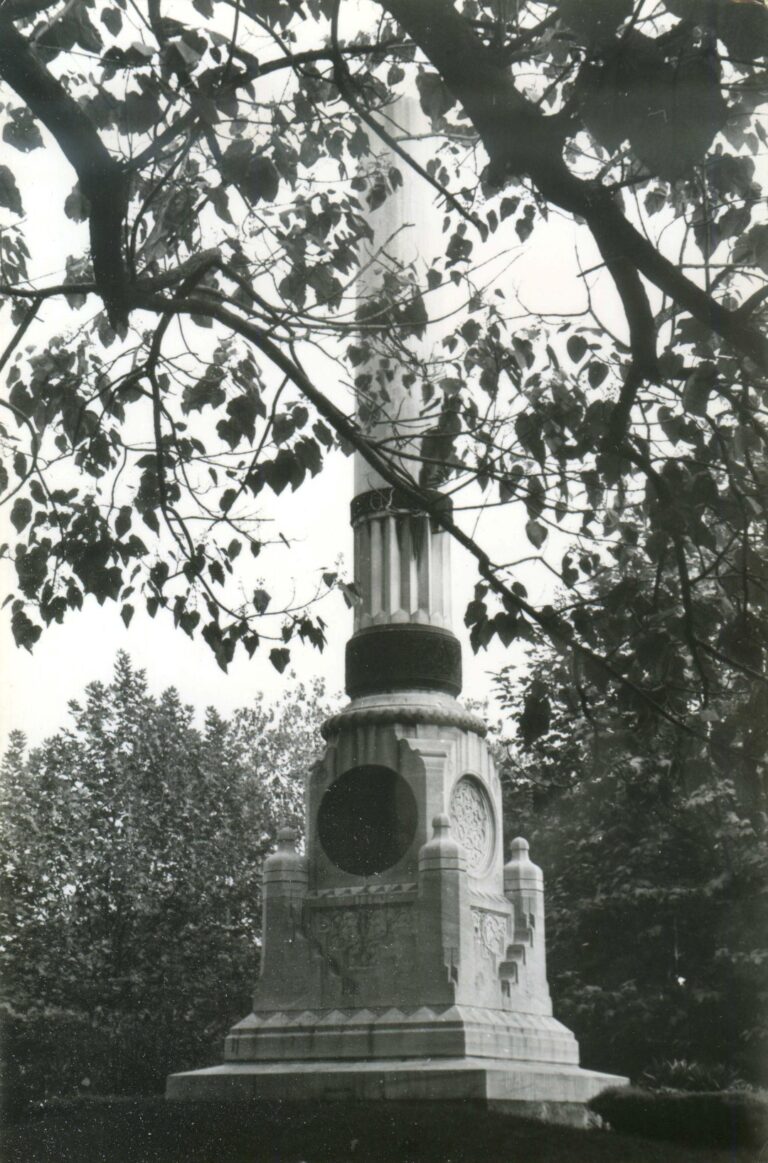
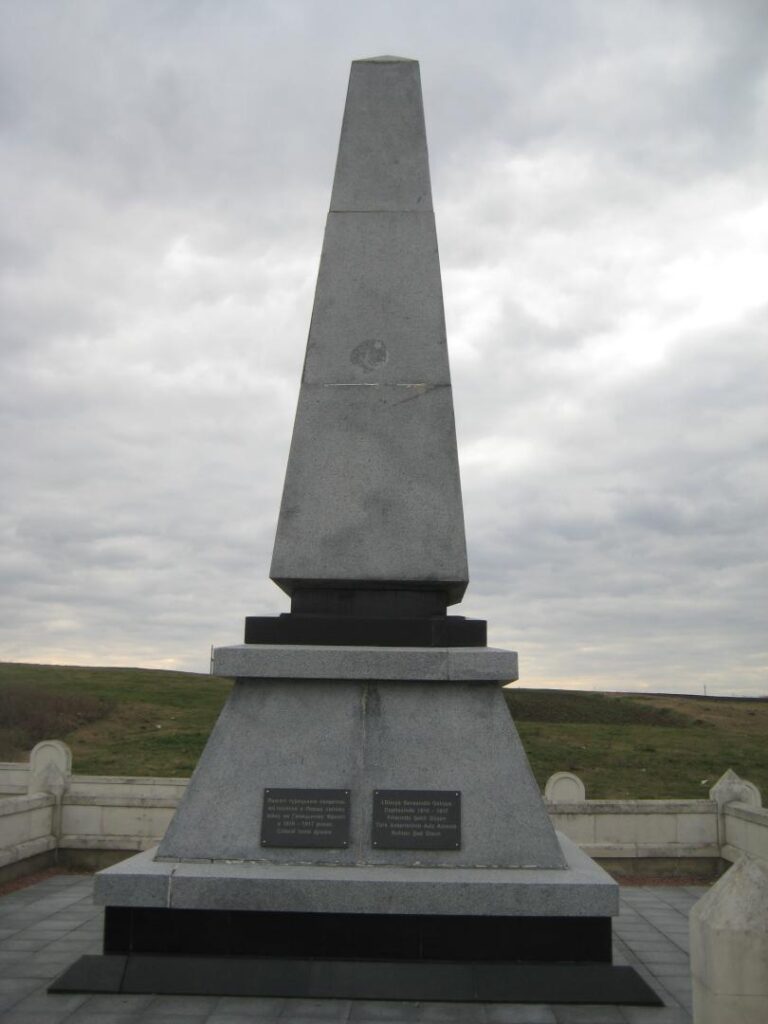
In the long inner courtyard at the entrance, the monument-i marble obelisk decorated with a gold-plated double-headed eagle erected by the Russian Tsar Alexander I attracts attention. In the mini-cemetery on the left, most of the granite and marble steles and sarcophagi are inscribed in Hebrew and some in Russian. In the middle garden, which continues, you can read the plates giving detailed information on the religion of the Karaites, Karamca and Kenasa.


There is a photography exhibition where the traditional clothes of the Karaims and sections from the past of Kenasa are presented; Finally, after strolling through the dazzling interior hall with its geometrically ornamented wooden ceiling and multicolored stained glass; The opening of the oriental-style arched wooden door leads to the main place of worship. I learn that the columns and certain coverings of the prayer ceremony space on the opposite side of this small hall, where there are benches on the left and right, are entirely gold. The three façades of the house, which is kept extremely modern and clean, have a window arrangement that illuminates the interior space under thin arches.

After finishing my short tour in Kenesa, I’m leaving Yevpatoriya to follow the Khazars’ trail to Russia another time.

“This article was published in the monthly journal ‘Hayat Dergi’.”

Crimea: Capital of Modern Crimea: Simferopol 

© Photos and Text by Okay Deprem http://www.northtravel.org/

Today, roughly one-third of Turkey’s population consists of descendants of very different Turkic tribes and Caucasian and Balkan peoples who flocked to these lands as a result of the rapid shrinkage and subsequent collapse of the Ottoman Empire in the late 19th and early 20th centuries. Crimea was one of the lands that formed the source of the Turkish-Muslim predominantly millions of people coming from the north-east and north-west axis of the Anatolian lands. A considerable part of the doctrinal and ardent supporters of the ideology and policy of Turkish-Islamic nationalism, which would later be established gradually and constitute an important pillar of the social and political problems experienced today, consisted of immigrants who migrated from the Crimean Peninsula together with the Tatarstan region of Russia.


Aside from the extremely limited number and proportion of the masses who can show the location on the map when the Crimean Peninsula is mentioned in Turkey today, the fact that there are exactly 6 million people whose ancestry is based on the Crimean Tatars in today’s Turkey is enough to surprise people even more.

The Crimean Tatar Khanate, the biggest ally of the Ottoman Empire and the only state that the Ottomans declared their official successors. Following the Treaty of Küçük Kaynarca, signed with the Russian Tsardom in 1774, Crimea was annexed by II.Yekaterina in 1783 and mainly after the Crimean War of 1854-1856, and after the 1917 October Revolution and the First World Wars, approximately 2 million people migrated directly or indirectly to today’s mainland of Turkey. In recent years, when everyone is looking for each other’s ancestors, we go to the Autonomous Region of Crimea, the homeland of the Crimean Tatars, an autonomous province today and trace the history and the past…


The Capital Of Crimea Simferopol (Old Turkish Name Akmesçit)
Crimea, whose population of over 2 million is scattered and homogeneously distributed on the peninsula almost the size of Thrace, also has a capital city as it is an autonomous region: Simferopol.

Although I had the impression of a rather faint and unqualified city when I passed by the city, which means “Useful city” in Ancient Greek, years ago on my way to Sevastopol and when I stopped by for a day, I had the opportunity to visit Simferopol in detail during the cemre days that passed from winter to spring. After all, the city has no characteristic that gives it a clear architectural, aesthetic or natural distinctive feature. Therefore, it is inevitable for Simferopol to define an eclectic city in all aspects.


Due to the fact that it was founded much later than many Russian and Ukrainian historical cities, and that it is located in the pit inner region of Crimea and is far from trade routes and as being the capital city, today the city looks like a heterogeneous collection of settlement and cultural-architectural traces of recent periods.

It has the identity of the only university city of Crimea with its population close to 400,000 and its cosmopolitan structure.

Simferopol also houses the Tatar Milli Majlis. In 1944, while the war was still going on, the Tatars, who were exiled to Central Asia and returned to the Peninsula en masse when the Soviet Union was in the process of disintegration.


After organizing the Crimean Tatar Congress, they established their own national parliament, a theater in their own language, and a pedagogical institute. It is possible to see the Crimean Tatars, whose population is approaching three hundred thousand in total, in every nook and cranny of the peninsula and in all areas of social life. It is very easy to communicate with Tatars, who can speak their second language, Russian, like their mother tongue, with Turkey Turkish.

Despite all its obscurity and concealment, Simferopol (Akmesçit) still has a heritage and urban skyline that proves it has a Russian Imperial and Soviet Union past. In the capital city of Crimea, which is full of museums, museum-houses, monuments and sculptures and has a very organized and green urban settlement, you are greeted by the house where the world-famous novelist, philosopher and activist Lev Tolstoy once lived. The author, who participated in the Crimean War as an officer, traveled and lived in the region for a few years. Again, the high school where immortal personalities such as the world-renowned scientist Dmitri Mendeleev, who developed the periodic table of elements in chemistry, and the romantic painter of the 19th century, Ivan Konstantinovic Aivazovskiy, whom we know for his paintings of the Black Sea and Istanbul, attended, is really worth seeing.

Kebir Mosque, which is considered to be the oldest building in the city, appears before you as you wander the narrow streets of the old Tatar quarter in the city center with its very plain and quiet appearance. Apart from these, Simferopol, which is connected to the city of Yalta with the longest trolleybus line in the world with a total length of 87 kilometers; It is possible to see statues of political and cultural cults such as Lenin and Pushkin, as well as monuments to the homeland war at all central points.

“This article was published in the monthly journal ‘Hayat Dergi’.”

Crimea: Tatar Capital Bahçesaray and Mini Topkapi Palace: Hansaray

© Photos and Text by Okay Deprem http://www.northtravel.org/

After getting on one of the shabby minibuses departing from both Simferopol’s 2 bus terminals and going in the direction of Sevastopol, I get off at a distance that does not take even an hour. The scenery along the way is quite ordinary and plain. Likewise, if the southern sides are not counted, it is not possible to say that nature treats Crimea very generously.

The whole country is covered with Black Sea-type steppes, savannas, grasslands, fields and small woodlands. I barely get on the Bahçesaray minibus, which takes off shortly after the mini-station I got off, by melting into the crowd of people again. It is almost impossible to find decent public transport once you get into the interior of the Crimea… Even though I thought that only an authentic palace residence would meet me until I got here, I realize that this is a pretty big town as the vehicle rises towards the inner parts of the valley. This is a place that consists of makeshift, neglected and unpretentious 1-2 storey houses, although not as much as the Turkey type cartoonish town house type.

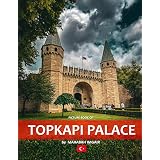
As soon as I see Pushkin’s statue on the left towards coming to a square-like open space, I think that the palace must be somewhere around here. After all, it is known that the romantic Russian poet visited the palace and wandered for a long time. When I see the minarets and thin pointed towers on the left and finally the big entrance door, I get out of the vehicle. And in front of me stands the 2nd Topkapı Palace in the world. In other words, it is a tiny replica of Topkapi Palace.

Hansaray, which is the chief residence of the khans of the Crimean Tatar State, is not much inside, but the second one is surrounded by high walls. A deep ditch runs through the middle of these, which is completely empty and dry today, but which was probably full of water in its time. The main gate of the Hansaray is very modest, simple and resembles a large courtyard entrance.

The exterior facades of the adjoining palace buildings rising above and surrounding the entire palace at the end of the inner wall; It has rectangular wooden windows with light niches, mostly high, single storey and some with bay windows. The lower and upper sides of the window series are usually decorated with geometric, oriental and symmetrical non-figurative drawings and coloring. The flat and tiled roof, which is full of miniature pointed towers, most of which is thought to have functioned as chimneys and very reminiscent of those in the Topkapı Palace, is fringed. As soon as you enter through the main gate, an inner garden similar to the size and type of the 2nd courtyard of Topkapı Palace welcomes you.

Hansaray Museum and Harem

The Hansaray, which was started to be built by the famous Giray Dynasty in 1532, was enlarged and expanded step by step with the addition of new buildings over time and gained its present appearance. The detailed design and minarets of this New Age oriental palace, the center of the political and cultural life of the Crimean Tatars, are the work of Ottoman, Persian and Italian architects.

The inn, the residences of his family and palace staff, as well as the museum section, are located on the left side of the courtyard and can be entered both in groups and individually. Closed living spaces consisting of rooms, saloons, bathrooms, corridors and inner courtyards that resemble the harem of Topkapı Palace; It draws attention with its colorful painting of the walls, modest sofa sets in the corners, magnificent crystal chandeliers, quality marble floors, pointed fireplaces in the corners, wooden columns and sills, high ceilings that are blended with lively tones, consisting of intertwined floors and highly ornate workmanship.

In the Divan Room, where the most important political and economic issues of the khanate are discussed and decisions are taken, the gold-plated throne of the khan still remains in the corner, while the sofas where the members of the council of ministers of that day sit are still in place today. Stained glass windows, upper wall facades covered with colored marble blocks, cushioned ottomans and a small fountain standing in the middle; It gives the color of the basic characteristic of living rooms.

The Fountain of Tears and Pushkin’s Poetry

On the way to the Hansaray’s harem chamber, there are two fountains that appear in the inner courtyards, their fame extending far beyond not only the palace but also Bahçesaray and even the country. The first of these is the Golden Fountain, dedicated to Kaplan Giray Han. A little further on, we come to the second one, the Fountain of Tears, which is identified with Pushkin.

Crimean Khan Giray is infatuated with the Polish princess Maria, who is imprisoned in his harem. Because of this love, the concubine named Zarema, who was the favorite of the harem until then, was pushed into the background. Then Zarema kills Maria. Giray, who put an end to Zarema’s life, had an enormous fountain built for Maria. The famous Russian poet Pushkin, who visited the Palace while in exile, was fascinated by seeing the fountain and penned the famous poem “Bahçesaray Fountain” in 1824:

“… Oh Fountain of Love, oh fountain of sadness
I heard long stories from your stone lips
Oh far away pieces of pain and happiness
But no words came out of Maria…”

According to what is written, the Russian armies that occupied and invaded the Crimea at the end of the 18th century did not touch this fountain, as well as Bakhchisaray, out of respect and love for Pushkin. While the name of the fountain remains in its original form, a bust of Pushkin is erected next to it.

Other main structures of the palace complex: Büyük Han Mosque, Ufak Khan Mosque, Pool Courtyard, Falcon Tower, Persian Garden, Han Cemetery and Yellow Beauty Bath, east of the northern entrance of the courtyard. The Harem rooms, marked by Turkish Baroque, are; It is characterized by a marble stove in the middle, chest of drawers and chests on the sides, cedar inlaid coffee tables, vivid wall paintings, Persian carpets, copper jug, cauldron and tray sets, and instruments.

“This article was published in the monthly journal ‘Hayat Dergi’.”

Crimea: In the Footsteps of the Thirteenth Tribe

© Photos and Text by Okay Deprem http://www.northtravel.org/

A book by the famous historian Arthur Koestler was published in 1976, which created great controversy. The title of the work is “The Thirteenth Tribe”. Koestler, who is also a Jew, in his theory, claims that Eastern, Northern, and Central European Jews (Ashkenazi) originated in a separate, distinct tribe which gave its name to the book in question.

In addition to the twelve tribes, which are also described in the holy book of the Jews and descended from the sons of Jacob, the son of the Prophet Isaac, and each of which will form the Jews of the world;  Koestler points to the historical fact that in the Middle Ages, Eastern Europe was dominated by peoples and tribes of Turkic origin. Civilization and state, which the historian author actually implied concretely; seen throughout history; It is none other than the Caspian Empire, which embodies the only society that is ethnically based on Turkic tribes and has adopted the Jewish religion as a belief.

As a result of the barbarian Mongol attacks that shook Eastern Europe as well as the entire Eurasian continental area, immigrating to today’s Hungary and dispersing to more western countries, especially Poland, over time, they started to use the languages ​​of the societies and regions they settled and formed the Jewish communities known as “Ashkenazi”. The historian Koestler claimed that the main tribe from which the Kabars (Kavars) emerged was the Khazars.

Khazar state and Karaites (Karaims)

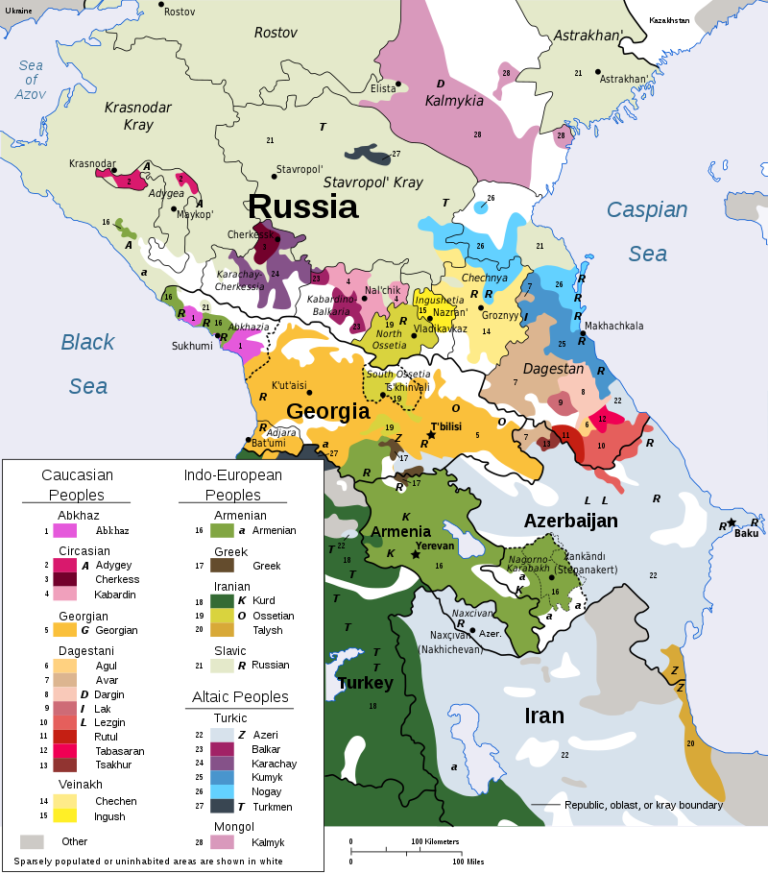
The Khazar state, shortly after the migration of the first tribes, from the 7th century AD up to 10-11 th century AD was ruled in an area that spread over a very wide geography in the entire north, northwest and north-east of the Caspian Sea and today covers a substantial part of the lands of Ukraine, Kazakhstan and Caucasus countries, especially the Russian Federation.

The Turkic-Jewish Karaites, who remained from the Khazars, as a result of the invasions of the Mongol-Tatar herds, who were the leading of the barbarian tribes that played the role of force in the development dynamics of civilization in the negative sense in history  which would disappear into history, and which have survived until our time, were the Turkic-Jewish tribes.

According to a strong and realistic theory, the tribe of the Karai sect of Judaism, who was exiled from the Byzantine Empire to the Khazar State in the 10th century, was settled in the Crimean Peninsula, which was once within the borders of the Caspian country. The Karaite sect, which started to spread rapidly among the Turkic peoples living in the Crimea with the Khazar Khan’s acceptance of the Jewish religion, led to the Turkish people who accepted it in time, also called Karaim.

Today, Karaites (Karaims) and their living traces in Crimea     

In our time, the Jewish Turkish community, which has spread from Belarus to Lithuania and Ukraine, from Poland to Romania and Russia, from Dagestan to Turkey, Israel and even the USA, is one of the nearby geographies where live and concrete traces of the Karaites can still be traced is the autonomous republic of Crimea in Russia.

To see two basic settlements, one of which is still alive today, with the traces left behind by the descendants of the Karaims, whose numbers have decreased to several thousand when calculated together with the community in Lithuania, that is, the descendants of the first and probably the last Jewish Turkish state that went down in history a thousand-odd years ago, my way goes to Crimea again.

Bektashi Lodge on the way to Çufutkale

After a long break on a warm and sunny spring day, when the last days of April are experienced and the trees are surrounded by an extraordinary riot of colors with colorful flowers, I am again on my way to the town of Bahçesaray, which is only 45 minutes by road from Simferopol, the capital city of Republic of Crimea in Russia.

This time, I am here to visit the other important civilizational heritage of Bahçesaray, which is mainly known for the Hansaray, the famous palaces of the Crimean Tatars. After driving a few kilometers further in the narrow and green valley that starts after the Palace of the Khans, I get off the taxi at the beginning of the upward climbing point, at the same time at the end of the road. Above, I am already beginning to see some structures and settlements carved into the steep cliffs that adorn the ridges of one side of the valley.

While I am walking through dense vegetation and forested area, a sign that I never expected appears on my way: “Dervish Lodge: Hacı Mansur – 15th Century” Before the Sunni interpretation of Islam dominated the Ottoman Empire, when the general population was Alevi-Bektashi, the Ottomans conquered the new Bektashis, who were considered the most moderate interpreters of religion, were settled in strategic regions in groups in order to assimilate the local population in the places more easily. Considering the year 1475, when Crimea was captured, there is no doubt that this place is the burial ground of the descendants of Bektashis who came to the region for the same purpose and settled there.


Çufutkale as a medieval cave-castle city

Çufutkale, a medieval castle, or rather a castle-city, which was built by the Caspian Turks in the 8th century and later settled mainly by the Jewish Karay Turks (Karatays) and lived until the 19th century, is derived from the addition of the word “kale” to “Çufut”, which is derived from the Turkish word “couple” occurs etymologically.

Just like in the city of Troy, Çufutkale, which houses layers of settlements from different ages on top of each other, is also called a “cave city” because it reflects the predominant settlement type in its early periods. The city, also known as the “Jewish Castle”, will be conquered by the Tatar-Mongol state in the Altun Horde (Golden Army) from the end of the 13th century and the Tatars will reside here until they settle in the Bahçesaray Plain a little below.

After you reach the top and come to the entrance of Çufutkale, a large fortification wall and a magnificent metal gate greet you. The first stop in the castle-city, which covers an area of ​​tens of hectares with the rock houses where the settlement was built in the earliest periods of the Khazars and almost exactly like the ones in Cappadocia.

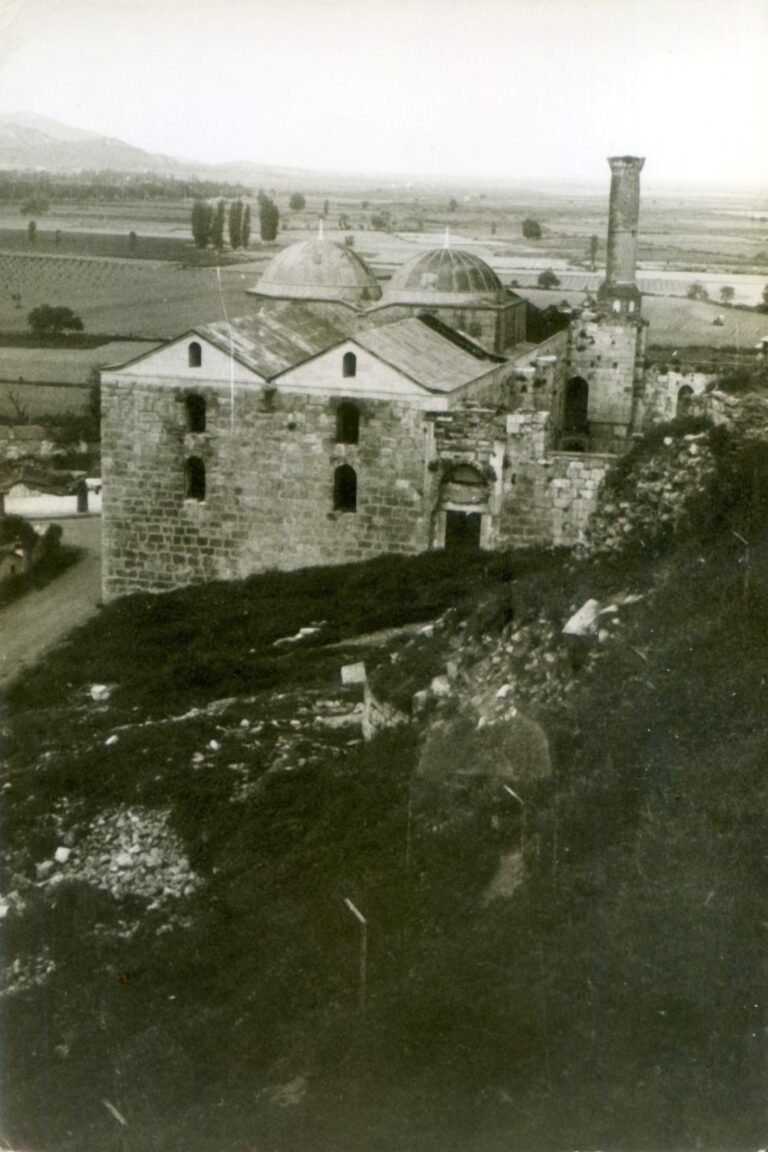
Then it’s time to see the Karaims’ synagogues, which they call “Kenasa”. These stone structures, one of which is large and the other small, were built successively in the 14th and 18th centuries and survived until today as partially restored; They have a very original architecture with 2 floors, tiled roof, surrounded by mini porticos, one of which is wooden and the other is made of stone and marble columns and columns.

After leaving behind the temples where Hebrew inscriptions and pedestals can be easily read at different points of the courtyard and building facades, this time the stature and infrastructure of the stone-paved main streets and streets of the city is enough to amaze yourself. While high stone pavements decorate the sides of the streets surrounded by building and courtyard walls on the left and right, one or two rows of parallel deep water channels flow in the middle of the roads.

After leaving behind the cells where the monks lived, catacombs, temples, some agricultural structures and the chambers where the ordeal rooms are located, the remains of a mosque appear. These are the ruins remaining from the Canıbek Han Mosque, which was built in 1340 by the Altun Orda Han Canıbek Han, who came to power after the Özbek Han. The tomb built in 1437 for Hanike Hanım, the daughter of Toktamış, another well-known inn of the Golden Horde.

After seeing the tomb built of cut stone, resembling a Seljuk style architecture, I last visit the magnificent defensive walls, fortified places and monumental gates of the castle.

Çufutkale started to be abandoned since the end of the 19th century and turned into a desolation after 1920. I am leaving the region to see another Caspian projection building, leaving Çufutkale alone with its aura of millennial legends and myths.

“This article was published in the monthly journal ‘Hayat Dergi’.”

North Travel Agency Tours

“North Travel” is an international travel agency. The essential objective of establishment of our company is organizing touristic tours to the north destination of northern hemisphere.

The fundamental touristic destinations of our company are;

  • Crimea Peninsula (Russian Federation),
  • North Caucasus,
  • Georgia,
  • Bulgaria,
  • Romania,
  • Moldova,
  • Central / European part of Russia (especially Moscow and St. Petersburg), and also
  • Siberia by train.

That means, we are primarily oriented to the Black Sea hinterland.

The main characteristic and mission of our touristic travels is; wandering the regions and places above all in cultural and historical aspect, and besides getting to know the foremost natural beauties of those locations.

In difference with almost most of the relatively similar agencies, the excursions of “North Travel” are quite full of with compact and intensive cultural-historic programs going on from the morning till the evening under the orientation of international highly skilled guides.

Regarding the accommodation, we are taking care of choosing the most comfortable, central and attractive hotels of cities and towns during our voyages for our guests.

North Travel Agency


Turkey Culture in Neighbouring Countries on the North


NORTH TRAVEL TOURS

Interview with Okay Deprem on Caucasus tourism

https://booksonturkey.com/interview-with-okay-deprem-on-caucasus-tourism/


GEORGIA

Georgia Tours

8 days in the hidden and magical corridors of unknown Georgia – Okay Deprem

https://booksonturkey.com/8-days-in-the-hidden-and-magical-corridors-of-unknown-georgia-okay-deprem/

Georgia Nature, Culture and History Tour by North Travel

https://booksonturkey.com/georgia-nature-culture-and-history-tour-by-north-travel/

Short-term cultural and nature tours to Tbilisi, the capital of Georgia

https://booksonturkey.com/short-term-cultural-and-nature-tours-to-tbilisi-the-capital-of-georgia/

NORTH CAUCASUS

North Caucasus: Nature. Culture and History Tour by North Travel
https://booksonturkey.com/north-caucasus-nature-culture-and-history-tour/

RUSSIA

Turkish Scholars: Russia (Northern Line)

https://booksonturkey.com/turkish-scholars-russia-northern-line/

3G Turks in Russia

https://booksonturkey.com/3g-rusya-turkleri/

Turkey in Russia. Russia in Turkey

https://booksonturkey.com/turkey-in-russia-russia-in-turkey/

Turkish artifacts in the Hermitage Museum, St.Petersburg, Russia https://booksonturkey.com/turkish-artifacts-in-the-hermitage-museum-st-petersburg-russia/

Crimea/Ukraine: Karaite (Karaim) Canaan in Yevpatoriya
https://booksonturkey.com/crimea-ukraine-karaite-karaim-canaan-in-yevpatoriya/

Crimea: Capital of Modern Crimea: Simferopol
https://booksonturkey.com/crimea-capital-of-modern-crimea-simferopol/

Crimea: Tatar Capital Bahçesaray and Mini Topkapi Palace: Hansaray
https://booksonturkey.com/crimea-tatar-capital-bahcesaray-and-mini-topkapi-palace-hansaray/

Crimea: In the Footsteps of the Thirteenth Tribe
https://booksonturkey.com/in-the-footsteps-of-the-thirteenth-tribe-article-okay-deprem/

Republic of Crimea: Nature.Culture and History Tour by North Travel
https://booksonturkey.com/republic-of-crimea-nature-culture-and-history-tour-by-north-travel/

UKRAINE

Judaism: Jewish Turks

https://booksonturkey.com/judaism-jewish-turks/

Galician Martyrdom Cemetery, Ukraine

https://booksonturkey.com/galician-martyrdom-cemetery-ukraine/

In Hürrem Sultan’s Homeland…

https://booksonturkey.com/in-hurrem-sultans-homeland/

BELARUS

Minsk and Belarus

Belarusian Tour in Capital Minsk

https://booksonturkey.com/belarusian-tour-in-capital-minsk/

What awaits you in Belarus and its capital Minsk

https://booksonturkey.com/what-awaits-you-in-belarus-and-its-capital-minsk/

North Travel: Belarusian Capital City Minsk Culture and History Tour
https://booksonturkey.com/north-travel-belarusian-tours/

What awaits you in Belarus and its capital Minsk

© Photos and Text by Okay Deprem http://www.northtravel.org/

Belarus, also known as “Belarus”, is one of the countries that should be taken very seriously among the touristic destinations not far from Turkey. Although they are relatively expensive, the mutual flights between Istanbul and Minsk for many years were not enough to provide enough attention to this very special country of the north and its capital city.

However, from the moment you step into Minsk, the capital of Belarus, a new and white travel page will be opened for you, where you will have to forget all your memories up to that time. While it is very easy to get an idea about Minsk, at least in general, by accessing many photos of the city with the main keywords in Google images, there are still countless and relative prejudices about the city, as many people are too lazy to even do this or they don’t really think about it. Though negative opinions continue to predominate, Minsk does not deserve any of them…

Minsk is already a candidate to surprise you from the airport and precisely in this context; obviously, there are not many settlements where the gap between your previous imaginations and the positive view that will welcome you in the city is so clear. As soon as you leave the airport with its unique architecture, the highway between the very lush and old pine forests will accompany you straight to the city center. From the places you start to approach the city, the first situation that is impossible not to attract your attention; The kind of traffic you are used to is definitely not in Minsk. Even though its residents have a different opinion on this subject. After leaving the huge national library, which is said to have 13 million books, on your left, you enter the Independence Street, where beautiful architectural buildings appear, and the periphery of the city center begins for you.

“Nezalejnosti Avenue” is a very long artery and it covers the city center and its surroundings almost from one end to the other. Moreover, the most beautiful architectural examples of the city’s masterpiece buildings are located on the aforementioned avenue, on the street running parallel to it, or on the roads that intersect it. Don’t be fooled by the neo-classical and even neo-baroque styles of the relevant buildings, and sometimes by the cosmopolitan and eclectic synthesis of other major architectural movements of the 19th century, because almost all of them were built during the Second World War. These are buildings that were built after World War II, especially in the second half of the 1940s and the first half of the 50s.

This architectural style, which you will often encounter in centers such as Moscow, Kiev and Kharkov, is of course the famous historical style that some call socialist-constructivist architecture and others call “Stalinist-victory architecture”. However, there is one thing that is certain; It is hard to believe that these buildings, which usually go up to 4 – 5 or 6 – 7 floors, are extremely bulky, which often brings the same building to spread on a single parcel, and you can naturally observe the different facades of the relevant building on a single street and two separate streets.

You finally reached the place where the train station building is located, on the street with a width of four by four lanes. Although the new train station building is built with a modernist architecture, it also has aesthetic features that are more or less appealing, aside from bothering the eyes. As soon as you step outside with the station behind you, that’s when you feel that you have stepped into the city, because this time there is a magnificent array of neo-gothic style buildings, which is called the ‘gate of the city’ and is considered the pinnacle of the architecture of the Stalin era.

From here, the city, which spreads over a very wide area, extends towards several axes. One of them is Karl Marks Street, which stretches between Kirov Street and the Independence “Prospect”. Here, a series of colorful, low-rise buildings that are quite harmonious with each other greet you, which is evident in every state that almost all of them have undergone very intense and successful restoration and renovation work. On the other hand, when you try to proceed from another parallel axis, Myasnikova and Namiga Streets will converge this time and together you reach the district called “Namiga”, which is undoubtedly the most popular district of Minsk. Especially from the intersection of the aforementioned trendy avenue and Victorious Street, all the main districts of the city, indisputably the most vibrant and heart-throbbed, can be reached very quickly, even within walking distance…

Among the natural elements that characterize the landscape of Namiga and its surroundings, Svisloc is the only river in Minsk. Svisloc is such a river that it traverses an entire city, combined with its highly curved and winding structure, and a huge green urban fabric emerges, consisting of countless, measureless and endless parks and gardens surrounding it from both sides.

As a matter of fact, it would not be an exaggeration to say that this area corresponds to a significant proportion of the region where the city is spread. On top of that, the city administration has brought many ponds to the city by consciously and systematically expanding and regulating the bed where Svisloc flows over the decades. Komsomolskoye is the most famous of these, and it is quite possible to come across one of these large and small artificial lakes in each of the 9 districts and almost all of the tens of districts. In addition, around these mini lakes are huge, extremely modern facilities that accommodate almost all kinds of sports, which are very large and will respond more than the population of the surrounding settlements.

If we go back to Namiga; by ascending the long and wide stairs in the direction of the old city from here, you enter a completely “different facet of Minsk”, and from here on, you are in a zone that is no different from the centuries-old texture of any historical European city. It will truly give you an indescribable pleasure to wander among the pure white examples of civil and religious architecture, all of which have been reconstructed in accordance with their originals, while walking around this oldest district of the capital, which is not very large, but not very modest in size. From here, you can go down to Zubitskaya Street, the places where the heart of the youth of the city beats, and hang out in the most popular bars and cafes of Minsk, or even come across the open-air dance parties organized here in fine weather.

From the historical core of Minsk, the options do not end and two very different hiking routes await you. The first of these; Going over Prospekt Pobediteley (Victorious Street) and seeing the swaying left buildings, parks and museums, and countless monuments and sculptures around them. Especially after passing the sports palace on the right, the park, which flows on opposite shores of the pond, is true if it is said that the most frequented place of the capital is a promenade and recreation area.

Especially after the “Park Pavilion” (Victory Park) started, the museum of the Great Patriotic War (1941 – 1945) in its new huge ultra-modern building, which gives the park its name, contains so rich and important inventory that enthusiasts can spend a whole day. The green cover of the park, which continues from the shores of the lake to the north as if it will never end, is almost no different from a forest, and it is not even sincere that you come across dozens of birds and animals such as squirrels living in their natural fauna on every corner.

If you choose to continue on “Maksim Bagdanovic” Street from Namiga, the Minsk State Opera and Ballet Theater building (1938) welcomes you on the right arm with its very different, almost unique architecture. Of course, showing up in the middle of the park, which is full of large scale and many sculptures and monuments surrounding it.

From this point on, this park begins to flow as an uninterrupted, lush promenade for kilometers up to “Smolensk Street”, merging with successive city parks such as “Yanki Kupala” and “Gorkiy Park”. The famous recreational children’s park “Gorki” is the place where you can reach the park, which is decorated by the magnificent monument of the famous Belarusian poet and dramaturg Yanki Kupala, either through the street or, preferably, by passing along the promenade under it. The park, which includes many different types of sports and entertainment activities from the ice skating complex to the planetarium and the small amusement park, is a favorite of Minsk especially on weekends.

As soon as we turn back to “Independence Street” from here, we notice the rather imposing building of the city museum, which is still under construction. Just before that, of course, you are faced with the circus building, which is one of the addresses of another Russian / Soviet and Post-Soviet classical tradition. Completed in the early 1960s, the Minsk State Circus is a masterpiece in the truest sense of the word, with its architecture, size, landscaping and colorful sculptural compositions surrounding it.

A little ahead of the street, where the vase decorations on the left and right give its color, you arrive at one of the most important squares and also the crossroads: “Victory Square”. Underneath, a uniquely designed permanent exhibition pavilion awaits you. Just above the current exhibition on the years of occupation in the Second World War, in the middle of the navel, there is a high obelisk surrounded by reliefs, and monumental pedestals extending on both fronts in front of it, with “endless fire” in front of it.

Minsk is truly a city of museums. In this city, it is possible to come across a museum and an exhibition hall on every subject you can think of.

Ahead along the street, the ornate building of the philharmonic orchestra, the “Yakup Kolas” Square, named after another national and Soviet literary scholar; The State Universal Store (GUM), Sports Palace, Academy of Sciences and countless more elegant and uniquely designed structures are waiting for you, molded from the Soviet era, with the exterior of which has been beautifully modernized and renovated.

And towards the very end, there is the “Celyuskintsev Park”, the largest and most popular in the city, which also houses the botanical garden. Countless sculptures and recreation objects are waiting for you in this park, which is entered from three different places, under a long, high column and arc series. On the other side of the street is the statue of the Soviet statesman Kalinin. It should be noted that Soviet-era names are mostly preserved in Minsk.

From here, you take the Elektrobus (electric bus without a fixed line), one of the fixtures of the city’s very systematic and regular transportation infrastructure, and turn back and get off at October Square. This is another central corner of the city in itself.

Opposite is the Palace of the Republic, where important local and international political and cultural events are held, on the other side is “Aleksandr Skveri” (meaning a small park), and next to it, “Kupala Drama Theater” dated to 1890, “Belarusian Army Theater” and again at a point not far away. There is a puppet theatre.

Yes, Minsk is also a true open-air museum and cultural capital where very specific theaters appear in every theme, without exception.

If you want to break all the memories in your mind, we are waiting for you to Minsk as soon as possible…

Turkestan World


ARCHAEOLOGY

Turkestan Mummies

https://booksonturkey.com/turkestan-mummies/


BUDDHISM

Buddhism: Buddhist Turks

https://booksonturkey.com/buddhist-turks/


ETHYMOLOGY

Etymology in English for Turkestan

https://booksonturkey.com/turkestan/


INDIA&TURKESTAN

Hindustan (India) and Turkestan

Hinterland: Turks and Indians


SCHOLARS

500 Years of Enlightenment: Turkestan and Turkey

https://booksonturkey.com/500-years-of-enlightenment-turkestan-and-turkey/

Southern Turkestan: Turkish Sages, Wise Scholars

https://booksonturkey.com/southern-turkestan-turkish-sages-wise-scholars/

Turkish Karakhanid Scholars in Turkestan

https://booksonturkey.com/turkish-karakhanid-scholars-in-turkestan/

10 Great Scholars Visiting Samarkand in Turkestan

https://booksonturkey.com/10-great-scholars-visiting-samarkand-in-turkestan/


Turkish Scholars in Turkestan

https://booksonturkey.com/turkish-scholars-in-turkestan/


TURKEY&TURKESTAN

Turkey in Turkestan. Turkestan in Turkey

https://booksonturkey.com/turkey-in-turkestan-turkestan-in-turkey/


TURKISH BELT

Turkish Belt: Turkey and Turkestan

https://booksonturkey.com/turkish-belt-turkey-and-turkestan/

Turkestan Belt and Fertile Road

https://booksonturkey.com/turkestan-belt-and-fertile-road/

Silk Road Route

https://booksonturkey.com/https-www-agaoglulevent-com-ipek-yolu-guzergahi/


Northern World and Turkey

NORTHERN WORLD

  • BLACK (KARA)
  • BLACK SEA
  • JOURNAL OF THE BLACK SEA STUDIES
  • NORTH
  • NORTH TRAVEL AGENCY TOURS
  • GEORGIA
  • RUSSIA
  • UKRAINE
  • BELARUS
  • LITHUANIA
  • SCYTHIAN and TURK
  • CHRISTIAN TURKS
  • JEWISH TURKS

          **********************************


BLACK (KARA)

Black (Kara) Place Names in Balkans (Greece, Macedonia, Bulgaria)

https://booksonturkey.com/black-kara-place-names-in-balkans-greece-macedonia-bulgaria/


BLACK SEA

Black Sea Coastal Attractions

https://booksonturkey.com/black-sea-coastal-attractions/

Mediterranean and Black Sea Cities

https://booksonturkey.com/mediterranean-and-black-sea-cities/


JOURNAL OF THE BLACK SEA STUDIES

Latest Issue http://www.karamdergisi.com/English/SonSayi.aspx

Previous Issues  http://www.karamdergisi.com/English/OncekiSayilar.aspx


NORTH

The Concept of Turkeys

https://booksonturkey.com/the-concept-of-turkeys/

Northern World (Videos)


NORTH TRAVEL AGENCY  TOURS

Interview with Okay Deprem on Caucasus tourism

https://booksonturkey.com/interview-with-okay-deprem-on-caucasus-tourism/


GEORGIA

8 days in the hidden and magical corridors of unknown Georgia – Okay Deprem

https://booksonturkey.com/8-days-in-the-hidden-and-magical-corridors-of-unknown-georgia-okay-deprem/

Short-term cultural and nature tours to Tbilisi, the capital of Georgia

https://booksonturkey.com/short-term-cultural-and-nature-tours-to-tbilisi-the-capital-of-georgia/


RUSSIA

Turkish Scholars: Russia (Northern Line)

https://booksonturkey.com/turkish-scholars-russia-northern-line/

3G Turks in Russia

https://booksonturkey.com/3g-rusya-turkleri/

Turkey in Russia. Russia in Turkey

https://booksonturkey.com/turkey-in-russia-russia-in-turkey/

Turkish artifacts in the Hermitage Museum, St.Petersburg, Russia https://booksonturkey.com/turkish-artifacts-in-the-hermitage-museum-st-petersburg-russia/

Crimea/Ukraine: Karaite (Karaim) Canaan in Yevpatoriya
https://booksonturkey.com/crimea-ukraine-karaite-karaim-canaan-in-yevpatoriya/

Crimea: Capital of Modern Crimea: Simferopol
https://booksonturkey.com/crimea-capital-of-modern-crimea-simferopol/

Crimea: Tatar Capital Bahçesaray and Mini Topkapi Palace: Hansaray
https://booksonturkey.com/crimea-tatar-capital-bahcesaray-and-mini-topkapi-palace-hansaray/

Crimea: In the Footsteps of the Thirteenth Tribe
https://booksonturkey.com/in-the-footsteps-of-the-thirteenth-tribe-article-okay-deprem/


UKRAINE

Judaism: Jewish Turks

https://booksonturkey.com/judaism-jewish-turks/

Galician Martyrdom Cemetery, Ukraine

https://booksonturkey.com/galician-martyrdom-cemetery-ukraine/

In Hürrem Sultan’s Homeland…

https://booksonturkey.com/in-hurrem-sultans-homeland/


BELARUS

Belarusian Tour in Capital Minsk

https://booksonturkey.com/belarusian-tour-in-capital-minsk/

What awaits you in Belarus and its capital Minsk

https://booksonturkey.com/what-awaits-you-in-belarus-and-its-capital-minsk/

LITHUANIA


Jewish Turks: Karays

https://booksonturkey.com/lithuania-jewish-turks-karays/

SCYTHIAN and TURK

The Identity of Scythian and Turk: In the Base of Cultural History

https://booksonturkey.com/the-identity-of-scythian-and-turk-in-the-base-of-cultural-history/

CHRISTIAN TURKS

https://booksonturkey.com/christianity-christian-turks/

JEWISH TURKS

https://booksonturkey.com/judaism-jewish-turks/

Turkish Belt: Turkey and Turkestan

While we are using the Silk Road, we have to use the Turkish Belt at the same time.

In other words, Chinese Belt and Road Project is the same as Marshall Aid project. Great powers like America, Russia and China have similar aims.

Americans have a plan for Central Asia. There are 35,000 Uzbeks in New York alone. Of course, East Turkestan is also great. Why is it now with a large population? He wants to see natural sociology there in his own country. The hybrid identity is developing there. And that hybrid identity makes you an actor in future events. Bulk carrier vs. is happening.

There are 65 countries in Belt and Road project, we need to wake up. We will see how there were American volunteers, and now volunteers of China will come out. They will speak on behalf of China, we need to know this very well. When you say we need to know, I totally agree with your views on this strategic Turkish Belt.

I have been in Hong Kong for 5 years. In 1976, Mao died, in 1978 China began the 50-year plan. The name of the 50-year plan is world domination. So in 2028, China will be the leader of the world. America is a beautiful country, it is the emulated country by China. So they will be like America.

America, on the other hand, has embraced the sense of dominance, that is, it suppressed trade with Japan through negotiations, and now it will intimidate China. Can we operate the barter model on the Turkish Belt here? Open the newspapers everywhere, it is written out of dollars. We know how we will get out of this and America is applying the barter model perfectly in its own country. But if he’s out of the world, he doesn’t want a barter. Because barter means I’m out of dollars, no money, no interest, it doesn’t work for you.

Now, can we, as Turkey, be the leader in this barter business? Can we apply a barter model starting from the Turkish Belt, that is, China, India, Russia, the Turkish Belt (Turkey, Turkestan)? I want to ask this specifically.

Prof Dr Mehmet Akif Okur:

First of all, Mr. Levent talked about the Silkroad, this is very important. I would like to say a few words about this. This issue is important to us, why?

The historical heart of the world economy is Turkestan. This phrase was coined by economic historians in the 1970s-80s. Their justification was formed as a question:

“When is the history of a world economy?”

Is this 500 years old? Is the history of the world economy 5000 years old? Is it 50,000 years old? In the middle of that discussion, some economists said archaeological data and findings show us that there is a world economy with at least 5000 years of integrated form. Where is this? The line connecting China and Europe. Via which line? Where is the heart of this line?

The heart of this line is Turkestan. Whenever there are strong states in Turkestan, there is a world economy. Whenever there is instability in Turkestan, there is a conflict, the world economy stops. That’s why cities like Samarkand, for example, are the New York of the time, so there are people from all nationalities.

They came there to trade, they are very wealthy and very rich in exchange with each other. Now this is interrupted by two simultaneous issues, towards the 1500s.

  1. Chinese are closing Tabriz to long-distance trade. It has a large navy and travels around the world by sea. It is said that they went to America or something before Columbus. Then they destroy the navy due to the fights inside the palace, and it closes itself to the outside.
  2. Turkestan is divided between Khanates. The union is falling apart, the Khanates are starting to deal with each other.
  3. A branch of the Europeans travels and monopolizes the trade in the Far East themselves, by sea.

Land routes start to be closed after that. Therefore, this kind of transformation is actually a historical transformation. The revival of the land is important. Now there’s a lot of Chinese propaganda here. China only discusses the dimensions of this issue that it wants to be discussed and discussed from the window it wants. I know from Academia. Here they invite, there is a conference etc. For example, they want the papers beforehand which is not a usual procedure for us. You know, you don’t go with the freedom of thought, they invited me to the group. I told them I told you here. Then they gave up. Now, of course, the fact that a state apparatus that is accustomed to a one-sided propaganda wants to establish it outside its own borders, this is not the only thing with us. For example, they do it in America as well.

They give money to many universities, for example, through Confucius Institutes and so on, they demand at least this, when I do something in East Turkestan, your academics should not say it, talk about it, do it like that etc. like or something, they are closing them now, such a wave has started.

So how can we benefit East Turkestan? This is one of the fundamental questions. Who is the great power? China or something, but a power that wants to open up to the outside. If you want to open up, you have to promise something to the world. This promise is not just about money, nobody has that much money. This promise is also a promise of the future. What do you say to this world, true or false whatever it is.

Westerners talked about liberalism, we have a model like this, freedom, freedom, etc. blah blah. The route that is now open for China is the route of Turkestan and the Islamic world. Why the Japanese are the rivals of China, the Indians are the rivals of China, the Russians are the rivals of China. Therefore, apart from the great power competition, the only potential that it can agree with is the geography where it can intersect with the Islamic world from the Turkish Belt. Now, if he says this to this geography, your showcase for me is East Turkestan. In other words, I should see what it promises to us, like a showcase.

If I see something beautiful there, I will have an idea about your identity through it. If I see a new Palestine there, you cannot succeed here. If you show this as a public thing, that is, states will receive, give, negotiate, but if you go against it in a strong civil society, that factor will have to recover itself. Why, because it is possible for this route to be interrupted. In fact, it is such a geography that you can see Afghanistan from here and there, etc. geography has to put a lot of men after it. In other words, the wrong policies that China will follow are actually damaging its own future. Is there anyone who wants to ignite a conflict in the heart of Asia? It also makes their job easier. But what China is asked to do here is to ensure basic human rights and freedoms in East Turkestan. And this needs to be persistently addressed.

Now here, of course, picking the sharp sides is easy today. Why is it easy, because the balances did not fall into place. How did he not sit down? For example, where will Europe stand in the big fight of the future? Now think of it this way, the quadruple summit was made here. Turkey, Russia, Germany, France. Now who is not here, there is no America, there is no England. Therefore, Continental Europe is trying to establish many different relations, or the Europeans and China are trying to balance. But all of these are variable. There is a serious rapprochement between the Russians and the Chinese compared to history, but this is not one hundred percent certain, so these are the periods of turmoil, that is, when the actors there can sit here and there. In fact, none of the great powers are saying my vision of the future, my plan, come and walk with me. For example, we are talking about Shanghai Organization to ourselves only. Why?

Because whoever looks from Shanghai says, for example, that Turkey is a member of this organization breaks the logic of this organization, he says, why because the logic of this organization is that these great powers  (Russia, China) agree with each other in the Turkestan region in order not to collide between themselves on Turkestan. When Turkey enters the system, Turkestan is no longer the geography on which calculations are made, it turns into a third power. So it turns into a table with three legs. Nobody wants equal then.

What is the problem Turkey has in the European Union? If Turkey enters the European Union with this population, it will become a country with the weight of Germany, decision mechanisms, voting, etc. They say we didn’t build this place for you. Therefore, Turkey was the center of a certain world. So we were the center of a world in history. Turkish identity was also a world identity. I mean with culture, management etc. with everything.

Three historical worlds, when palaces and temples are demolished in such an old place and you take their stones and build a new building, we built a world on the heritage of three worlds in history.

What are they;

  1. The Turkish World that was founded in the era of the Göktürks,
  2. This world first disintegrated, then Islamized, gained a new identity with the concept of Muslim and migrated to the Middle East. The Islamic world under the auspices of the Arabs was in decline and took the leadership of that world.
  3. Thirdly, eastern Christianity was in a state of collapse based on Byzantium, Istanbul. We established the new world in Istanbul, Turkish world’s new phase was shaped on the legacy of the old world in Istanbul. Because we were the center of the world. That’s why we can’t fit anywhere. So we are psychologically incapable. We can’t fit in due to our other dynamics. There is a different Turkish psychology in the World. It is a historical psychology that says if Turks find money, find a weapon, they cannot be controlled.

I don’t know if there is another country, how many thousand kilometers away you go to Kashgar. Why are there stamps printed in your name in the 18th century in Kashgar? From here, we send artillery, rifles, etc. to the Kashgar emirate via the Persian Gulf. We sent something. Even the 1800s or something. Therefore, the geography we are concerned with is related to the geography of our historical world. We faced wars with our identity, but the heirs of that identity gathered in Anatolia. So we are a place of a world where states gather and jam.


Short-term cultural and nature tours to Tbilisi, the capital of Georgia

© Photos and Text by Okay Deprem http://www.northtravel.org/

If you are asked which country you can visit most comfortably among Turkey’s neighbors, the answer to this question has been Georgia for a long time. Not only because there is no visa requirement for a long time, but because it can be entered with new generation biometric IDs, Georgia continues to be the most attractive, close and economical country option for cultural tourists in Turkey.

In addition to being the route where flights have continued for a significant part of the known process of the last one and a half years, the fact that, unlike some European and Russian countries, Georgia has accepted the vaccines being made in Turkey since long time, makes the Georgian country almost without alternative in terms of real and serious tourist mass. Indeed, after you have had at least two new fashion vaccinations, you can enter Georgia smoothly and quickly with your current vaccination certificates. Afterwards, a unique and dream-like journey awaits you.

NORTH TRAVEL‘s autumn concept mostly includes short-term tours. Chief among these are 3-night – 4-day trips to the capital Tbilisi and its surroundings. Tbilisi and the large region around it, where the temperatures are moderate at least in October, are the perfect destination for these weekend visits.

So what exactly do these tours cover? First of all, and of course, almost all the main ruins, museums and historical-touristic places of Tbilisi. Then, take a day trip to the nearby Mtskheta Town, famous for its monasteries and churches, which are on the UNESCO World Heritage List. Afterwards, for a full day, from early morning to late evening, from Tbilisi to the border of the Russian Federation, the town at the foot of the famous Kazbeki Mountain is located on the historical Georgian-Military Road with the well-known winter-ski sports center on the road. An unforgettable journey that includes countless cultural and natural sites….

One of the 4-star hotels located right in the city center is preferred for 3 net nights to be spent in Tbilisi. Depending on the number of people in the group, the private luxury transfer vehicle to be selected will be under the group 7/24. Again, depending on the preference of the group in question, in addition to the bed and breakfast minimum service in the hotels, either only dinners or lunches at the same time are/can be included in the general package. However, in any case, all museums and ruins to be seen during the 4-day tour and subject to an entrance ticket are included in the general package.

In addition to all other guidance services,  local/museum guides are also available at some sites and museums, depending on the situation. As in the general tour of Georgia, the tour of Tbilisi and its environs is at the forefront of the most comprehensive, rich and long cultural, historical and nature touristic trips that have been made or are being made from Turkey. Tibilisi continues to invite you and is now closer to you than ever before!!.. You will be very, very pleased with the Georgian hospitality and the richness of the Georgian country and you will say, ‘I’m glad we went, glad we came’!!..

OKAY DEPREM

GENERAL CULTURAL GUIDE FOR THE BLACK SEA – AZAK AND NORTH CASEAN COUNTRIES AND ELITE INTERNATIONAL TOURISTIC CULTURAL TOURS ORGANIZER