Home Blog Page 275

Roman Hippodrome Square. Sultanahmet. Istanbul. 1975

Hippodrome January 24, 1975

© Copyright photo by Levent Ağaoğlu

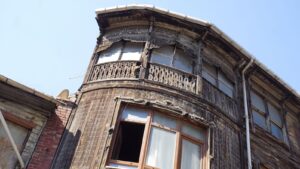
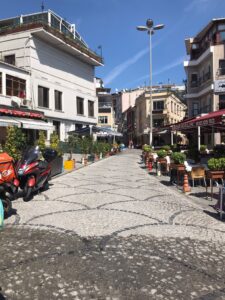
Historical areas of Istanbul, such as Sultanahmet, are known for their charming and narrow cobblestone streets lined with historic buildings and landmarks. These streets often lead to iconic sites like the Hagia Sophia, Blue Mosque, and Topkapi Palace. Walking through these areas provides a sense of the city’s rich history and cultural heritage. Keep in mind that conditions can change, so it’s a good idea to check recent travel updates or guides for the latest information.


Fatih Mosque Premises. Istanbul. 1975

Fatih Mosque, Saturday, October 11, 1975. On October 12, 1975, Senate Renewal Elections would be held. Perhaps elderly were communicating their views to each other on this matter.

© Copyright photo by Levent Ağaoğlu


Dolmabahçe Hills, Istanbul. October 1975

© Copyright photo by Levent Ağaoğlu

Istanbul Archeology Museum. 1975

In front of Istanbul Archeology Museum

© Copyright photo by Levent Ağaoğlu

Zindan Han (Inn) Eminönü. 1975
Zindan Han (Inn) Eminönü January 4, 1975

© Copyright photo by Levent Ağaoğlu

Eminönü Tahtakale where the heart of commerce beats in Istanbul. Dolmuş, Truck, Minibus, Bus traffic. A young mobile body weight (kg) weigher. People walking on the pavement. In front, the imposing 500-year-old Dungeon Inn (Zindan Han) and old buildings. Advertising signs. Zindan Han (Inn) Eminönü January 4, 1975
Eminönü Tahtakale İstanbul’da ticaretin kalbinin attığı yerler. Dolmuşlar, Kamyon, Minibüs, Otobüs trafiği. Genç bir seyyar vücut ağırlığı (kg) tartıcı. Kaldırımda yürüyenler. Önde heybetli 500 yıllık Zindan Hanı ve eski yapılar. Reklam tabelaları. Zindan Han Eminönü. 4 Ocak 1975

Zindan Han (Inn) Eminönü, Istanbul. 1975

Zindan Han (Inn) Main Gate Eminönü Saturday, January 4, 1975

© Copyright photo by Levent Ağaoğlu

At the door of the Zindan Inn, rosary in hand, sitting in his saddlebag and resting, dreaming of the future, a porter with his eyes on the horizon, his son next to him with a timid look. Zindan Han (Inn) Main Gate Eminönü Saturday, January 4, 1975
Zindan Hanın kapısında elde tespih, heybesinde oturarak dinlenen geleceği hayal eden, gözleri ufuklarda hamal, yanında ürkek bakışlar içinde oğlu. Zindan Han Ana Kapısı. Eminönü. 4 Ocak 1975 Cumartesi.

Fatih, Istanbul and Aegean Turkey Black&White Photographs in 1974-1975

https://booksonturkey.com/?s=1975

Cover: New Mosque (Yeni Cami) Front August 1975

© Copyright photos by Levent Ağaoğlu

FATIH, ISTANBUL

  • New Mosque (Yeni Cami) Front August 1975
  • Blue Mosque 11 October 1975
  • Blue Mosque 11 October 1975
  • Bozdogan Arch 21 December 1974
  • Street From Fatih Park From Fire Brigade to Taş Mektep (Stone School9 December 21, 1974
  • Eminonu Seaside Friday, January 24, 1975
  • Zindan Han (Inn) Eminönü January 4, 1975
  • Zindan Han (Inn) Main Gate Eminönü Saturday, January 4, 1975
  • From Istanbul Dolmabahce Clock Tower with Love, October 1975
  • Saraçhane Istanbul City Hall
  • Around Fatih Mosque, Saturday, October 11, 1975
  • In front of Istanbul Archeology Museum
  • Topkapi Palace Entrance
  • Blue Mosque Garden January 16, 1975
  • Sultan Ahmet Mosque
  • Sarayburnu January 24, 1975
  • Eminonu Seaside January 4, 1975
  • Sarayburnu January 24, 1975
  • Cemberlitas Photographer
  • Dolmabahçe Hills October 1975
  • Fatih Mosque, Saturday, October 11, 1975. On October 12, 1975, Senate Renewal Elections would be held. Perhaps they were communicating their views to each other on this matter.
  • Hippodrome January 24, 1975
  • The Lower Part of the Galata Bridge Facing the Golden Horn 4 January 1975
  • From the Galata Bridge, January 4, 1975
  • Malta Bazaar Fatih 21 December 1974
  • Topkapi Walls January 17, 1975
  • Around the Blue Mosque January 17, 1975
  • Walls January 17, 1975
  • Fatih Mosque 21 December 1974
  • A Little Boy Fatih
  • Little Kids Fatih
  • First Excitement. The Park Next to the Gate 21 December 1974 Fatih
  • Fatih Mosque October 11, 1975
  • Sarachane 21 December 1974
  • A Child
  • Child
  • Fatih Mosque October 11, 1975
  • On The Street From Fatih Park to the Taş Mektep (Stone School) October 11, 1975
  • Around Fatih Park 21 December 1974
  • The Dog Wandering Next to the Taş Mektep (Stone School) December 21, 1974
  • Mobile Lahmacun Seller 18 January 1975 Saturday Near Police Houses Fatih
  • First Excitement 21 December 1974 Fatih Mosque
  • Around Sultanahmet 16 January 1975
  • Our Second Class Memory Monday, June 5, 1966 Atikali Primary School
  • Istanbul University Square October 1975 Saturday
  • Akşemsettin District Mimar Sinan Masjid Renovation January 4, 1975
  • Saraçhane Underground Passage Istanbul Justice Party Senator Candidate Faik Türün Slogan October 11, 1975 Saturday
  • Fire Brigade Park Aviators Monument
  • A Minaret of the Blue Mosque January 24, 1975
  • Şehzadebaşı Mosque Minaret October 11, 1975
  • New Mosque Minaret August 1975
  • A Minaret from Istanbul Fatih January 24, 1975
  • A Minaret from Istanbul Fatih January 24, 1975
  • Fatih Mosque October 11, 1975
  • Topkapi Palace Second Gate August 1975
  • Isa Bey Mosque Selcuk Izmir Friday, April 24, 1975
  • From the Garden of the Süleymaniye Mosque Complex, 11 October 1975
  • Fatih Park October 11, 1975
  • Isa Bey Mosque Selcuk Izmir Friday, April 24, 1975
  • A Street in Fatih December 21, 1974
  • Back Streets of Kıztaşı Fatih 21 December 1974 Beggars
  • Around Fatih Mosque 21 December 1974
  • Saraçhane Pass 21 December 1974 Fatih
  • Texas or should I say Tommiks? Around Fatih Mosque 21 December 1974
  • Fatih Mosque October 1975
  • Around Fatih Mosque 21 December 1974
  • Fatih Mosque October 11, 1975
  • Fatih Mosque Saturday, December 21, 1974
  • Sogukcesme Street Wooden House Around Topkapi Palace
  • Wooden House Walled City Fatih
  • Wooden House Next to Topkapi Palace October 11, 1975
  • Wooden House Wednesday, December 24, 1975
  • Wooden House Wednesday, December 24, 1975
  • On the Lower Streets of Sultan Ahmet, Thursday, January 16, 1975
  • An Old Tiny House Near the Walls Wednesday, December 24, 1975
  • Lower Streets of Sultanahmet 16 January 1975 A Wooden House
  • Sarayburnu January 24, 1975 By the Sea
  • Sarayburnu, 24 January 1975 Friday, By the Sea
  • Sarayburnu January 24, 1975 By the Sea
  • Sarayburnu, 24 January 1975 Friday, By the Sea

AEGEAN REGION

  • Ephesus Museum Artemis April 1975
  • Ephesus Road April 1975
  • Selcuk Basilica April 1975
  • Selcuk Basilica April 1975 Izmir Trip
  • Didim Temple Apollon Cult Izmir Trip April 1975
  • Didim Temple Apollon Cult Izmir Trip April 1975
  • Isa Bey Mosque Selcuk April 1975 Izmir
  • Selcuk Basilica Izmir April 1975
  • Didim Temple Izmir April 1975
  • Didim Temple Friday 25 April 1975 Izmir
  • Didim Temple Apollon Cult Izmir Trip April 1975
  • Didim Temple Izmir Trip April 1975
  • Izmir Trip Canakkale 23 April 1975 Wednesday Wooden Trojan Horse
  • Akcay Tea Break April 1975
  • Bergama Asklepion Izmir April 1975
  • Troy Wednesday, April 23, 1975
  • Bergama Asklepion Saturday, April 26, 1975
  • Didim Temple Izmir Trip April 1975
  • Akçay Saturday, April 26, 1975

Interview with Okay Deprem on Caucasus tourism

September 20, 2021 

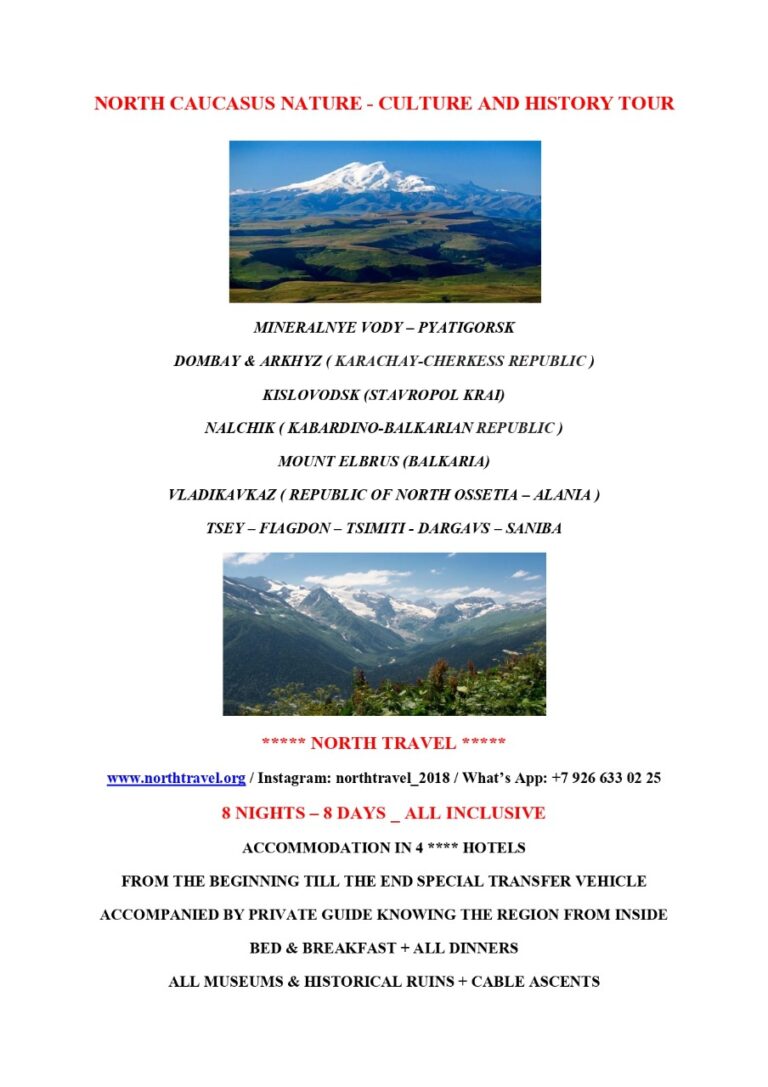
The Caucasus is a remarkable region with its unique nature. Turkey and the world public have known it mostly with the news of conflict and war, but the tourism potential of the region has come to the fore in recent years. It can be said that it is time to recover for the region where the private sector has not developed much due to the administration of the Soviet Union for approximately 70 years. Quite a few people are aware of this whole situation, so there was a need for an interview with Okay Deprem, an expert on the subject. When I contacted him, I tasted invaluable time.

Okay Deprem has been organizing nature, culture and history trips to the Caucasus for a long time. The concept programs developed in accordance with the regional conditions are remarkable. In my interview with him; The tourism potential in the Caucasus, the tourism relationship between Turkey and the Caucasus, why the Caucasus should be visited, the prominent aspects of the Caucasus in terms of tourism, the dangerous aspects of organizing a trip to the Caucasus, the profiles of the people participating in the travel programs in the Caucasus, the Caucasus. We talked about many subjects such as how many days should be devoted to this work by those who want to travel completely. It is presented to the interested parties.

Can we get to know you briefly?

I completed my undergraduate and graduate education in Turkey and Germany. I have been in journalism and writing for over 20 years. In parallel with this, I have been in the tourism business professionally for the last 10 years. For the last few years, I have been continuing my doctoral studies in the field of political philosophy in Russia.

Okay Deprem in North Ossetia in the region called “Mountainous Saniba”.

Your itineraries are remarkable. How did your interest in this field begin?

My interest started when I was living in Turkey during my university years. At that time, I started to organize daily thematic trips especially because of my interest in the history of the Eastern-Roman Empire. These were, of course, activities carried out with an amateur spirit, for free. Then I continued my education in Germany. I started working in Ukraine. Again, I continued in Ukraine. Likewise, when I was living in Odessa, I was hosting certain groups. I had a short experience in Antalya in Turkey. For the last 10 years, I have been carrying out cultural trip programs from Turkey to abroad.

In recent years, you have been organizing excursion programs to the Caucasus. Could you tell us about the tourism potential in the Caucasus from history to the present?

There was a very serious interest in the Caucasus region within the scope of domestic tourism during the Soviet Union period. It can be said that there are few people from past generations in the Soviet Union who have not seen the Caucasus. In regions such as Abkhazia, Karachay-Cherkessia, Kabardino-Balkaria, Ingushetia and Dagestan, there were hundreds of treatment, therapy, recreation and rest facilities, which we call sanatoriums. It can be said that the capitals of the Caucasian republics were built for these purposes in this period. However, when we come to the present day, we see that some capitals have lost this feature. However, the Caucasus remains interesting with its different features for the new and middle generations.

Mukhtarov Mosque in Vladikavkaz, the capital of North Ossetia

So why weren’t professional travel programs organized from Turkey to the Caucasus until today?

As we know, there was a long period of the Soviet Union, when the borders were not completely closed, but commuting was very difficult. In this period, of course, it is not possible to talk about mass and organized international tourism. Due to the conflicts and instability in the region after the Soviet period, the Caucasus region did not have the conditions for tourism. In the 2000s, the economic and social recovery process took quite a long time. We can say that the opening of the tourism bridge was in the 2010s. Factors such as hotel and accommodation infrastructure, construction of roads, transportation, security, loosening of service industry round-trip procedures took quite some time to mature. However, in recent years, conditions have become favorable. Therefore, we can talk about the objective conditions of mass tourism in the real sense over the last 10 years.

In addition, until recently, there was a European and North American centered perspective in terms of tourism in Turkey. Therefore, regions far from Turkey’s culture and history, such as tropicalism and exoticism, were interesting. As you know, there is always the idea of ​​seeing a Europe in terms of Turkish society. There were few people who went to the Caucasus, few people knew, there were few alternatives, there was no promotion, and the agencies did not care much about this situation. Europeanism and Exoticism worked for him. They were not interested in Caucasian dynamics. Most people think it’s a security issue. They think that the Caucasus froze with what it was 25 years ago. No, there is no such thing anymore. It’s about what they don’t read and what they don’t research.

A view from Dombay within the borders of Karachay-Cherkess

Why should you visit the Caucasus?

Because the Caucasus is one of the most special, rarest and cosmopolitan places in the world. It is a layered and diverse region with its nature, people, culture and history. There is nowhere as much as the Caucasus, with so much linguistic composition, such diversity of dialects, and differences from tradition to tradition. There are very few places where nature is so generous, where there is majesty and splendor.

Especially when we consider the Turkish human mosaic from an ethnic point of view, the region that concerns Turkish people is very few as much as the Caucasus region. As a result, there is always one person of Caucasian origin around everyone. It is a region that directly or indirectly touches Turkish society with its wars, migrations and settlements. The Caucasus is a fascinating, very different, very transcendent region. Those who have gone definitely want to go again.

If Russia had lost the Caucasus, perhaps there would not be a place called the Russian Federation today. It would be solved starting from the Caucasus. In this respect, it is a very strategic region.

Satellite view of the Caucasus mountain range stretching from the Black Sea to the Caspian Sea

What are the touristic aspects of the Caucasus?

The Caucasus is an interesting and intriguing region in all aspects, with its widest borders. Therefore, it attracts visitors for different purposes. In addition to visits such as water and mud treatment, there are also those who want to visit for the spa. On the other hand, Caucasus means mountain. It has many activities such as climbing, trekking, parachuting, camping and horse riding. When we look at it from a cultural point of view, it is possible to see the architectural features, monuments, holy places, ruins and ancient ruins of cities everywhere. In addition, in any Caucasian republic, you can come across very rich museums with their infrastructure and inventory variety. Ethnographic museums in other regions, from the Adygea National Museum to the Chechen National Museum, are the first ones that come to mind. The Caucasus is also one of the richest regions in the world in terms of endemic plant and animal species. Therefore, if you go to many parts of the world in terms of a few basic features, you go to the Caucasus from every angle. Because with this wealth, it has the potential to attract any tourist.

Okay Deprem in Kabardino-Balkarian Republic.

To which regions do you organize your Caucasus trips?

Until now, I mostly organized trips to Central-North Caucasus and South Caucasus. I organized trips to Karachay-Cherkess, Kabardino-Balkaria, North Ossetia, Stavropol Krai and Georgia. Within my plans, I would like to organize a program on the route starting from the Republic of Adygea, Abkhazia, Vaynak region, Ingush-Chechen region, Dagestan and the Russian Black Sea coastline, namely Anapa and continuing until Sochi.

Are there any areas that you cannot go or that are dangerous?

As of today, there is no area that we can call a real danger zone. If we exclude the Armenian-Azerbaijani War, today the North Caucasus is as safe as the southern regions. However, there are regions that I have not entered. For example, the vast mountainous areas of the Chechen-Ingush region, which we call the Vainakh region. There is something not accidental about this. Because although entry to these regions does not contain any risk factor, it is dependent on permission for second country citizens. Permission from the Russian Federal Security Service is required. Similarly, this applies to the mountainous regions in the southernmost part of the Kabardino-Balkarian Republic. This process of obtaining permission is no longer a difficult thing nowadays. It is possible to go if the application is made before a certain period of time and it is put on the mind. In fact, these are the most untouched mountainous regions.

What is the profile of the people who participated in your travel programs to the Caucasus?

The profile is quite diverse. Of course, trips are not only an organization for Caucasian origins. Almost the majority of the tours were non-Caucasian. Maybe it was a coincidence, I don’t know. After all, the more different people meet in the Caucasus, the better it is for the Caucasus as well as for the Caucasians. What is in my heart, of course, is that people of Caucasian origin firmly strengthen their relations with their ancestral homeland.

While visiting the ethnographic museum of the famous city of Pyatigorsk (Five Mountains) of the Stavropol Province with the Okay Deprem tourist group.

How many days should a person who wants to travel the Caucasus completely devote to this job?

The Caucasus can be divided into two in this respect. In terms of the North Caucasus, when we foresee the borders of the region from Anapa to Derbent, if the right is given in every aspect, that is, if it is passed to the full with its cultural, ethnographic, cities and nature, a period of one month may be required. When we consider all these, of course, there are hundreds of places. Almost the same time should be allocated for the southern region. From Georgia to Armenia and Azerbaijan, even the tomb of Hadji Murat on Azerbaijani territory, there is so much to see.

Finally, can we have a few more sentences that you want to emphasize?

Organized tours can be continued in the Caucasus region for the future. However, I am developing tours with less participation and more flexible dates with the concept I have developed recently. The distance between the Caucasus and Turkey is not far in terms of round trips. Until recently, there were direct flights to regions such as Krasnodar, Sochi, Rostov, Stavropol, Grozny and Makhachkala. Of course, there is a visa situation right now. Russia had previously abolished visas, which lasted for about five years. Currently, visa is of course not an obstacle. Getting a tourist visa to Russia is now easier than before. The main issue in organized tours is to balance the travel dates. In this respect, I think that regional tours such as private vehicle tours, which we can call more mini concept tours, can be much more efficient. In this respect, the Caucasus has started to recover a lot in terms of infrastructure, both in the north and in the south. Factors such as hotel quality and diversity, service sector, eateries, highways, recreational facilities, trained manpower and language proficiency have reached a very good point. In this respect, the Caucasus is in a position ready to be visited.

https://ajanskafkas.com/soylesi/okay-deprem-ile-kafkasya-turizmi-uzerine-soylesi/

In Hürrem Sultan’s Homeland…

© Photos and Text by Okay Deprem http://www.northtravel.org/

While the Turkish society, who goes to bed with one TV series in the evening and wakes up with another TV series in the morning, has been making television series a significant part of its drug diet in recent years; There is one among them that has left its mark on the last 1-2 years with its place on the agenda and the social and historical connotations it has caused. The “Muhteşem Yüzyıl” series, albeit on paper, was able to create different areas of curiosity by whipping up a social structure that abandoned its “historical” instincts of learning and curiosity to school desks in some respects. The historical character, Haseki Hürrem Sultan, who is the female lead actor of the series and is in the center with Sultan Süleyman in terms of plot, managed to be at the top of the list of curiosity and interest in this respect.

Valide Hürrem Sultan, who came to the fore both in the field of popular and academic discussion on the occasion of the “Muhteşem Yüzyıl” series, after a long break, is due to the indispensable weight of being “not a knowledge but an interest society”; she remained in the shadow of the person who portrayed her, instead of being discussed on the axis of his being a historical and real personality, .

When the word Haseki Hürrem Sultan is mentioned for a long time, one of the few pieces of information that has been spoken in unison is that she is of Russian origin, and the other is the well-known clichés that she was brought from his hometown at a young age and sold as a slave. At this point, the most important fact that is overlooked and not really known is that she is not actually Russian, but originated from a small town that is included in the borders of the Ukrainian state today, but located in the territory of the Polish (Poland) Kingdom at the time.

I decided to go to the land where this woman, whose real name is “Roksolan”, “Roksolana” or “Roksana”, both in its original form and as the whole world knows her, was born on a cool weekday when the last days of winter are experienced. The real hometown of Roksolana, who is “name-mother”, is obviously not within the knowledge or curiosity of most Ukrainians. This is probably why I followed for a long time the truth of whether the place where Roksolana was born and abducted by the Tatars really exists today, and if so, where exactly it corresponds geographically today. Luckily, I learned that it is not far from Lvov, which is one of the main cities of the country and nicknamed “the capital of the West”, where I occasionally fall.

During this short visit, I decided to stay in the city center of Lvov for at least one night, since my destination was also the famous Olesko Castle, which was also used by the famous hero prince Sobiyeski of the Polish side during the 2nd Siege of Vienna. The day before, I settled in the Gorge Hotel, which has been tempting me for a long time and is the oldest hotel in the city, with its current name.

While settling in the 220-year-old historical hotel on the “Liberty Boulevard”, right across the gigantic monument of the Polish national poet Adam Mickiewicz, who is known to have lived in Istanbul for a while, to learn about world-class names such as Honore de Balzak, Jane Pole Sartre, Jozef Ravel, Richard Strauss, Franz List and Yuriy Gagarin who have stayed here, and moreover, to hear that the people who built the Neo-Renaissance building were the famous Austrian architects Herman Helmer and Ferdinand Felner around the planet. There couldn’t be a better choice than here, it made my blood stronger.

After having my breakfast early the next day, I took my breath at the reception. While the attendant could not pronounce the words starting with R…  “You mean Rohatin?” she guessed what I wanted to ask. “Yes!” I said. On top of that, just to be sure in any case, “It was Roksolana’s hometown, wasn’t it?” Adding the question; I briefly waited for the response. With the sign of approval from the lady, I immediately set out to find out how to go as soon as possible, by which means and in general, towards the town called “Rohatin”.

It is exactly 70-odd km from Lviv (in Ukrainian). In order to go to Rohatin, which is a small settlement in the neighboring state of Ivano Frankivsk, located a little to the southeast, it was necessary to go to the bus station first. I reach the neglected bus station in a short time by taking the cramped bus that passes right across the road from the hotel. Here, too, after a short wait, a mini trip awaits me with a “torture flavor” but not too long. Having to often mention the idea that the road really means civilization, on the other hand, the hope that a power will end this journey as soon as possible so that this cruelty will end, the terribly disturbed road barely ends and finally the charming town of Ruthenia with its old geographical name and I arrived in Rohatin, Hürrem’s hometown…

Probably because I expected Rohatin to be more majestic and bigger, as soon as I land, I find the surrounding area to look like an idyllic-rural settlement. I’m on my way to the center, partly by intuition and partly by asking the people on the road. As you walk past the Hnyla River, one or two or three-story houses on the left and right, more typical of late medieval settlements of Western Europe, become apparent.

Rohatin, whose history goes all the way back to the 12th century in written sources, was first established under the rule of the Kingdom of Poland and came to the fore with the establishment of an Iconic school over time, was included in the domination of the Austro-Hungarian Empire after the partition of Poland in 1772. The region, which was re-connected to Poland between the 2nd World War, now belongs to the Soviet Union after 1939.

When I finally come to the small center of Rohatin, I see the statue of the person who has been the most famous visual symbol of the city for the last years and also formed my purpose of visit. The statue of Roksolana in the middle of the square, which also bears her name, was erected in 1999; Roxolana.

She is depicted wearing a very plain, long and wide dress, with quite long ponytail hair and holding something incomprehensible like a flower or a shawl in her hand. According to the description here, it can be guessed that she had smooth but unpretentious features and straight hair. The rather large statue, which is obviously made of a brass-iron alloy, rises on a long cylindrical pedestal. On the upper side of the column, some reliefs draw attention. One one of them can be understood that the soldier symbolizing the Tatars or Ottoman Janissaries who captured Roksona (abbreviation) as slaves during their raids to this region, and the other is the “Holy Spirit Church”, where the girl’s father was also a priest and is buried in its garden today. On the underside of the sculpture complex, the following is written in Ukrainian:

“Below; The names and surnames of the people who helped in the construction of Roksolana’s monument are written:…”

The base of the statue is decorated with flying birds.

After all, Roksolana’s monument in question shows the value that even a town with very limited opportunities attaches to art at the end of the 90s, when Ukraine was going through the most troubled times. It can be understood that another is the “Holy Spirit Church”, where the girl’s father was also a priest and is buried in its garden today. On the underside of the sculpture complex, the following is written in Ukrainian:

“Below; The names and surnames of the people who helped in the construction of Roksolana’s monument are written:…”

The base of the statue is decorated with flying birds.


It is said that during the discussion of the idea of ​​building the monument, the townspeople with a population of 8,000 were divided into two and a considerable mass opposed the construction of the statue. The inhabitants of the region, which can be considered quite conservative in terms of religion; roughly, “Roksolana came under the patronage of an enemy-Muslim state, served them, and forgot and denied her identity and past. So what’s he doing in our city now, after so many centuries of this statue?! … “ They get to say. It is not difficult to guess that a part of them is left out of these discussions.

I decided to go to the Church of the Holy Spirit, where hers father, known to be a priest, was said to have served at that time, and where his grave is stated to be buried in its garden, in the town where there is nothing left that can be thought of or identical to Roxolona, ​​apart from the statue.

Unfortunately, it is not possible to see the church from the inside, which is also used as a museum today and has the richest and most historical wooden icon collection both in Ukraine and throughout the region. However, I still visit its authentic exterior and garden, which is completely wooden, and take lots of photos. As I climb up again, I notice the signs of the Holocaust on the walls of some houses.

While I was thinking about what else could be seen in the town, I would like to at least enter the churches that are close to each other in the center. As soon as I enter the Roman-Catholic cathedral, I see that the church is under extensive restoration. It is clear that some religious frescoes were even painted from scratch. At that time, the image of people in extremely modern clothes, bending down to the ground and kissing the soles, amazes me. Likewise, many people cross themselves when passing religious shrines, even in public transport; These are not common sights for a country where religion is not much involved in daily life.

“This article was published in the monthly journal ‘Hayat Dergi’.”

Turkey is the Key Compass All over the World

******************************************

Turkey; means the worldTurks journied all through Asia, Europe and Africa over several millenniums and marked their legacies in geography and history of the countries stretching throughout the continents of the old world.Saying Turkey, what I mean is the World.
“Books on Turkey” is not confined to works on Turkey; it also includes historical, cultural, social, and political research carried out on countries and societies “beyond Turkey”; extending from Europe to the Balkans, Middle East, North Africa and Far East, Near East, Central, South and South East of Asia.
     *******************************************


  1. ALL OVER THE WORLD

Traveller’s Talks: All Over The World

https://booksonturkey.com/travellers-talks-2/

World of Turks

https://booksonturkey.com/world-of-turks/


  1. CENTER OF THE WORLD

Cyprus is the center of the world

https://booksonturkey.com/cyprus-is-the-center-of-the-world/

3. NORTHERN WORLD AND TURKEY

https://booksonturkey.com/northern-world-and-turkey/

 Northern World

https://booksonturkey.com/northern-world/

4. SOUTHERN WORLD


INDIA

Traveller’s Talk: Indian World

https://booksonturkey.com/travellers-talk-indian-world/


PAKISTAN

Pakistan Travels in 1990s and early 2000s

https://www.youtube.com/watch?v=M_Hzr77Fp0s&t=19s


SOUTH EAST ASIA

Traveller’s Talks: South East Asia

https://booksonturkey.com/travellers-talks-south-east-asia/

MESOPOTAMIAN WORLD

https://booksonturkey.com/mesopotamian-world/


SOUTH AMERICA

Traveller’s Talk: South America. Brasil

https://www.youtube.com/watch?v=aLHhxeCww7U&t=5s


  1. MEDITERRANEAN WORLD

Traveller’s Talks: Mediterranean World

https://booksonturkey.com/travellers-talks-mediterranean-world/


  1. EASTERN WORLD

TURKESTAN

https://booksonturkey.com/turkestan-world/

The Outside World-Kazakhstan, Yerkebulan Sapiyev

https://booksonturkey.com/kazakistan/

GREATER CHINA

Traveller’s Talks: China. Hong Kong. Taiwan. Macau Collection

https://booksonturkey.com/travellers-talks-china-hong-kong-taiwan-collection/

Traveller’s Talks: North Asia (Korea. Japan)

https://booksonturkey.com/travellers-talks-north-asia/


  1. WESTERN WORLD

EUROPE

Traveller’s Talks: Europe

https://www.youtube.com/watch?v=B8Nvr0HeI0A&t=43s

Traveller’s Talks: France

https://www.youtube.com/watch?v=9xM75-cyty8

Traveller’s Photos: Leather Exhibition Paris September 1987   https://www.youtube.com/watch?v=L2M7sAKU4sI&t=66s

Traveller’s Photos: Paris, France in September 1987 https://www.youtube.com/watch?v=5ZIibqFhO5A

Traveller’s Talks: UK

https://www.youtube.com/watch?v=1BmasRrmQrI

Traveller’s Talks: Italy

https://www.youtube.com/watch?v=DvZljekTpU8&t=2s

Traveller’s Talks: Belgium

https://www.youtube.com/watch?v=kkIUprEH-Fs

Traveller’s Talks: Europe. Germany

https://www.youtube.com/watch?v=kkIUprEH-Fs

Traveller’s Talks: Eastern Europe

https://www.youtube.com/watch?v=wVexNytcAsw

Traveller’s Talks: South Eastern Europe/Balkans

https://www.youtube.com/watch?v=pl_pjlvKDM0