Home Blog Page 260

“Longing for Istanbul” by Lisa Morrow

  • Deep Love with Istanbul
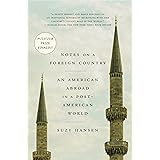
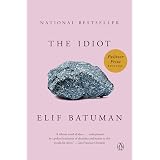
I started to read the book of Lisa Morrow that has recently been published “Longing for Istanbul”. She was born in Sydney Australia and her major is sociology. Later she has visited Istanbul, Turkey and then has being deeply affected by the city and the people. Lisa is lover of Turkey and Istanbul. She has settled down in Istanbul. Later she has moved to Lisbon but because of her deep love with Istanbul she has returned back to city again.

Click here to buy the book.

  • Homeland: Australia
Her homeland Australia is continental island far away from Turkey and Istanbul. On the other hand, Istanbul is historical peninsula and located in two continents, Europe and Asia. Especially the European part of the city is unique and you got a characteristic way of life of Turks in Europe.
  • Happy Sociologist
As a sociologist she is very happy in Istanbul, because Istanbul and Turkey in general is a landmark with diversities, complexities and dynamism. Yes I have the same feeling with Lisa. 10 years before I have left Istanbul for a year long. My decision was to leave Istanbul but really I had to turn back to Istanbul. And then I understood how valuable is Istanbul and the city life for myself.
  • Invaluable Observations
I was born in Fatih very historical part of the city. Lisa’s lines and observations and writings are invaluable as being a foreigner far from Turkey. Her writings on how is Turkey, how is Istanbul as an outsider her observations are invaluable. Lisa likes to be with the people, to be on the streets, to be inside the life totally. I appreciate that a lot. As Turkish culture is mainly verbal and spoken one, so this is a clear message that Turks have a very social life.
Different nations have different characteristics. Main feature of Turks are their communicative skills. Speaking is more valuable than writings for Turks and then Lisa catches several in his book in this respect. As a Turkish citizen born in Istanbul, I am really very happy to see the books written by Lisa Morrow. In 2014 she has published “Exploring Turkish Landscapes: Crossing Inner Boundaries” and in 2015 “Inside Out in Istanbul: Making Sense of the City” “Waiting for the Tulips to Bloom: Adrift in Istanbul (2015).
  • More books by Lisa Moore
Longing for Istanbul is her fourth book and I will be happier to see more books by Lizza Morrow. Her unique observations on Turkey and Istanbul has captured the lively spirit of Istanbul “The City”.
  • Final Remarks
Let us finalize with a paragraph from Lisa’s latest book which signifies the heading of the book:  “Living here isn’t always easy but nonetheless the rewards are endless and deeply inspiring, especially as I no longer  remain simply in order to flee from myself, as was once the case. I made a conscious decision to stay because I can be the best version of myself here, no matter what life throws at me.”


TURKEY is 12000 years old Civilisation

TURKEY is 12,000 years old Civilisation. TURKEY is 12,000 years old Civilisation. TURKEY is 12,000 years old Civilisation. TURKEY is 12,000 years old Civilisation. TURKEY is 12,000 years old Civilisation.

https://booksonturkey.com/?s=%2212%2C000+years%22

Turkey/Türkiye Civilisation is 12,000 Years Old

Göbeklitepe Turkey, over 12,000 years old Levent Ağaoğlu – 20/02/2022 Turkey Civilisations of 12,000 Years Levent Ağaoğlu – 26/01/2022 BC Neolithic Age (Late Stone Age) 10,000 – 5,000 BC Chalcolithic Age (Copper…

Göbeklitepe Turkey, over 12,000 years old

https://www.youtube.com/watch?v=je6n4N8Xg20   https://www.youtube.com/watch?v=DD8rmxcxJao https://www.youtube.com/watch?v=krRFafM9WKs https://www.youtube.com/watch?v=ZNrMucrAGjk https://www.youtube.com/watch?v=sYcc-dJC9hY https://www.youtube.com/watch?v=nOcbsDIrhzM https://www.youtube.com/watch?v=OsRt2vYQ3Is https://www.youtube.com/watch?v=5V3LU7jK1vs   https://www.youtube.com/watch?v=SnSnMoI4NhM   https://www.youtube.com/watch?v=7oxvFyBGHUs   https://www.youtube.com/watch?v=c6f4gsILSHw   https://www.youtube.com/watch?v=XywPhTMC2ps   https://www.youtube.com/watch?v=0gyVcjSGpWE   https://www.youtube.com/watch?v=GZqBkOwfXjc   https://www.youtube.com/watch?v=CMBTs4ILPRU

Turkey Civilisations of 12,000 Years

BC Neolithic Age (Late Stone Age) 10,000 – 5,000 BC Chalcolithic Age (Copper Age) 5,000 – 3,000 BC Bronze Age 3,000 – 2,000 BC …

TURKEY is 12,000 years old Civilisation

https://booksonturkey.com/?s=%2212%2C000+years%22

12,000 years old Ancient History of Turkey (Anatolia)

https://www.youtube.com/watch?v=59ioiIcaw2g When we talk about Anatolian Neolithic, we should imagine a period in which the foundations of the current world were laid. The Holocene begins after the…

12,000 years of Unique Civilisation in Turkey

© Copyright photo (1975 Didyma) and text by Levent Ağaoğlu The only rectangular peninsula on the earth’s surface is the Turkish Peninsula. As a result,…

Longevity of Civilisations: 12,000 years old Turkey and China

Cover Photo, Karahantepe Turkey New Karahantepe settlement may be older than Göbeklitepe in Turkey Speaking at the 10th International Resort Tourism Congress on Thursday, Culture and…

Anatolia, Turkey: “Multiplicity in Unity” within 12,000 years

© Copyright text by ex MP Faik Tunay @FaikTUNAY © Copyright photo by Levent Ağaoğlu With its simplest geographical definition, Anatolia, or Asia Minor, is a mountainous…

5G: The Largest Networks of 12,000 Years…

  5G: Steppe (Step) and Agriculture Belt synthesis Göbeklitepe (9600-8200 BC) Gokturk (552-744) İsmail Gaspıralı, 1851-1914, Sultan Galiyev 1880-1940 Lev Nikolayevich Gumilev (1912-1992) Please click…

Sefer Tepe: A Gobekli Tepe-Inspired, 11,000-Year-Old Site in Turkey | Ancient Architects

My last two videos have focused on two of the 12 sites that make up the Tas Tepeler archaeological project in Turkey, 12 sites around the Haran Plain that date to the Pre-Pottery Neolithic era of Ancient Anatolia, between 12,000 and 9,000 years ago.

I next decided to travel east from Karahantepe to see what I could find out about Sefertepe, one of the lesser-known sites of the twelve. I must say that pictures from this site are few and far between, so apologies if this video is not visually appealing, but I will give you the information that’s available.

Sefer Tepe was discovered in 2003, another Pre-Pottery Neolithic site located 72 km east of Sanliurfa. It’s a small, broad and shallow limestone mound at 700 m altitude above sea level, and the settlement is build directly onto the bedrock and covers an area of 1,000 square metres.

When experts first surveyed the land, 16 T-shaped pillars were found in-situ, and of course the link was made to Gobeli Tepe. Watch this video to learn more about this truly ancient site and how it links to other Tas Tepeler sites in Turkey.

All images are taken from Google Images and sources below for educational purposes only. Please subscribe to Ancient Architects, Like the video and please leave a comment below.

Subscribe to ZiggyDan on YouTube: https://youtube.com/c/ziggydan
Follow him on Twitter: https://twitter.com/ziggydan1

Sources:
http://dergiler.ankara.edu.tr/dergile…
https://vici.org/vici/69122/
https://www.jstor.org/stable/pdf/10.1…
https://www.researchgate.net/profile/…
https://www.researchgate.net/figure/P…

#AncientArchitects #Gobeklitepe #TasTepeler


hello everybody
and welcome to ancient architects
please subscribe now to get the latest
ancient history news and independent
research from around the world
my last two videos are focused on two of
the twelve sites that make up the
tasterpella archaeological projects in
turkey twelve sites around the haran
plain that date to the pre-pottery
neolithic era of ancient anatolia
between twelve thousand and nine
thousand years ago
going back to this map that was
published by the daily sabha and after a
brief look at carahan tepe and
habetsavanta pessi i next decided to
travel east to see what i could find out
about cefetepe one of the lesser known
sites of the twelve
at this stage i must say that pictures
from this site are few and far between
so apologies if this video is not
visually appealing but i will give you
the information that’s available
cephetepe was discovered in 2003 another
pre-pottery neolithic site located 72
kilometers east of san leaver
it’s a small broad and shallow limestone
mound at 700 meters altitude above sea
level and the settlement is built
directly onto the bedrock and covers an
area of 1000 square meters
the closest water source is 500 meters
to the east there is also a possible
ancient basalt quarry just two
kilometers to the north but there are no
local sources of flint
when experts first surveyed the land 16
t-shaped pillars were found in situ and
of course the link was instantly made to
gobekli tepe
like with the other tepee sites the
t-shaped pillars are arranged side by
side at 1.5 to 2 meter intervals
the pillars themselves are around 50
centimeters wide and 20 to 40
centimeters in thickness just like we
see at habetsavan to pessi
they are likely around one to two meters
in height
also like habetsavanta pessi they have
been compared to the stone structures in
layer two of quebec tepe indicating
they’re from the pre-pottery neolithic
bee around 11 000 to 9000 years ago
this intact pillar 198 centimeters in
length was found during the construction
of a country house at the southeastern
corner of the settlement
there are no reliefs or engravings but
experts noted that it was extremely flat
being just 25 centimeters in thickness
this pillar was also found at the same
time in two pieces and has been compared
to one of the central pillars from the
valley corey
it stands 2 meters tall 75 centimeters
wide and 40 centimeters in thickness and
some of the archaeologists believe there
is a faint ukrainian sketch depicted aka
the skull of an ox
this would not be uncommon
youtuber and researcher ziggy dan whose
channel and twitter i’ve linked below
spotted this ox school in one of the
recent pictures from carahan tepe and
it’s situated in the corner of an
enclosure
so such a depiction at cephertepe would
not be out of the question
there were no ceramic finds again
evidence that it was from the
pre-pottery neolithic and flint and
obsidian tools and hunting weapons were
found including arrowheads perforators
scrapers borers and blades
flint finds outweigh obsidian by seven
to one
the flint finds are also very typical of
the pre-pottery neolithic with identical
finds of gobekli tepe nevali cory and
carahan tepe
because of the lithic tools the
similarities to layer two structures of
gabeculi tepe the similarities to
habetsavanta pessi as well as a lack of
ceramics experts can safely assume that
this site does belong to the early to
mid pre-pottery neolithic bee around 11
000 to 9000 years ago
i can’t find out a great deal more about
this site at present but i assume that
excavations are either taking place or
are planned
it’s the easternmost site of the
tastapella archaeological project but
still quite close to the major centre of
carahan tepe
sepha tepe is possibly a settlement or
cortex center and if i can find out
anything more i’ll report it here on the
ancient architects channel
thank you very much for watching this
episode of ancient architects
if you enjoyed the video please
subscribe to the channel please like the
video and please leave a comment below
thank you very much


Karahan Tepe | Stunning New Discoveries Dating to 11,500 years in South East Turkey | Megalithomania


hello megalithomaniacs today we’re going

to be looking at the new discoveries

that have been found at the remarkable

site of carahan tepe in southeast

anatolia

carahan tepe is the sister site to go

beckley tepe both based in the vicinity

of san learther

it is one of the most impressive sites

i’ve visited it’s on par with quebec

tepe in many ways and only recently has

it been properly uncovered or at least

some of it i’ve been visiting carahan

tepe since

2014 where i visited there twice with

andrew collins

we also visited in 2015 and more

recently in 2018 now the reason we

wanted to share this video with you is

because brand new discoveries are being

unearthed at this present moment

and these include a remarkable enclosure

much like enclosure deep actually larger

75 feet wide

and this is larger than anything we

found at quebec tepe now overall quebec

temp is a much larger site and it was

appears to have been in use for a longer

period because there’s multiple

enclosures that have been built over one

another but what we’re generally looking

at when we look at these sites in this

part of southeast anatolia

is t-shaped pillars where which have a

kind of abstract humanoid form with

hands almost touching the navel along

the kind of edges of the pillars

the t part on the head appears to be a

human anthropomorphic head although this

is still debated

and many of these pillars have been

found at carahan tepe in fact 250 have

been recorded there and this has been

known about for some years because when

we were visiting there over the last few

years

these t-shaped pillar heads appear to be

sticking out of the ground we can

actually see many of them

form these circles and parallel avenues

going up to the top

now it must be noted that when we

visited uh more recently in 2018 and the

previous visits

you can only see a certain amount of the

site because this clearly covered up

whether it’s naturally covered up or

deliberately done like quebec tepe is

unclear at this moment but it looks like

much of the site is slightly more

damaged than gobekli tepe so it may have

not had the repair job done in

pre-history before it was deliberately

covered over and decommissioned however

we’re going to find out when we go there

in the next few months

but to start the video before we look

into all the discoveries that have been

made and even ones that are now on

display in san luis of museum

let’s take a look at a short look at

what was there before

it was excavated back when we were there

in 2018

essentially there are a series of pairs

of standing stones that most of them are

unexplored like this one some of them

have got test pits around them or you

won’t really see any carvings you might

see a little bit

and these are the same type of stones at

quebec tepe

but they’re completely unexcavated at

this time the big difference between

quebec tape and here is that this is a

this is not

a hill that’s been created as an

occupational mound this is a natural

hill and all they’ve done is to cover

the top and the sides

with a stone

rubble

and also earth

and they buried the stones within them

and if you ask actually what’s going on

we’ve tried to

plot as many of the stones as we could

and it does seem as if they all

seem to be focusing

on the top of the hill on the northern

side not here but that that place a

little bit further farther up there

and they’ve all they’re all come

together you’ll see them all of them

seem to be

coming up in lines towards this spot now

whether that’s avenues whether that’s a

series of of enclosures but if you go to

the south there’s nothing at all

all of the the the

the flints and flakes and the rest of it

are on the north side

on the east side some on the west side

nothing on the south side that tends to

suggest to me that this area was the

main area of activity

why

because i think that they were

interested in that

that hill there

um

that hill

basically is full of caves

and they are the only caves in the area

and uh myself and hugh

uh and one of the of their team members

in the past

i’ve investigated them as much as we can

and there is prehistoric activity on the

top there i’ve got an article ready to

go essentially on it

but there is absolute evidence of

activity going back at least to 8000 bc

[Music]

so one other thing that still fascinates

me is this giant t-shaped pillar which

is

on the western side it’s unfinished it’s

like the sacred kind of quarry spot

where the stones of carahan tepe came

from we have similar principle actually

at quebec tepe we have a 24 foot pillar

still in the quarry whereas this one at

carahan is 18 feet tall

and other things you’ll notice in the

video that we just looked at you can see

the tops of the pillars sticking out the

ground you can see some of the cut marks

in the bedrock we find again that at

quebec lee tepe we also saw some small

t-shaped pillars or the tops of them we

saw kind of portal stones and other

aspects that have been covered up for

possibly 11 000 years and so

when we’re looking at the new

discoveries it is really quite stunning

i mean

we’re looking at a 75 feet wide

megalithic enclosure but the thing is

they’re not just freestanding t-pillars

these actually

what appear to be

kind of carved into the bedrock

some of the sight some of the actual

enclosure whereas the rest of it is

freestanding so they kind of they were

digging 18 feet into solid bedrock at

carahan tepes being discovered you can

actually see that in the small enclosure

with all them kind of monoliths that are

actually still a part of the bedrock

which some appear to be anthropomorphic

some look like mushrooms and some look

like they’re kind of

uh creatures carrying other creatures or

humans on their back and so there’s

quite a lot going on here and even you

can see this protruding head coming out

which looks like something from tiwanaku

the subterranean

temple there

so whether this is actually connected

with tiwanaku in bolivia is unclear

because the speculation is that the

dating matches even though that’s not

been proven yet in bolivia and there’s

other similarities as well which we

always find connecting quebec lee tepe

with places like easter island uh south

america central america even indonesia

this has been covered by many different

authors including myself and andrew

collins who i’ve been visiting the site

with since 2014. must be noted here that

andrew has actually been

going to carry on tempe since 2004

and so that’s when it was first kind of

known about although it was officially

discovered in around 1997.

it’s currently owned by some a beautiful

farm family we often go there for tea

and we have a lunch there when we make

our visits

and it’s not open yet you can’t

officially visit it it’s not going to be

open until officially in may 2022 but it

could be open early it could be open

later

there was a huge kind of

public and governmental opening

in late september 2021 just a week or so

ago

where they revealed all these photos and

discoveries to the world and it’s part

of like a larger project they’re calling

which means stone hills and these are

numerous sites up to 12 sites

that cover an area 124 miles wide

centered around quebec lee tepe

and seven of these just started being

excavated including carahan tepe which

is about a year into its excavations so

take a look at these images take a look

at these aerial photos and footage

and tell me what you think in the

comments because to me this is really

really interesting i’m going to be

talking to andrew collins next week

we’re going to be doing a special

interview

analyzing the site

he’s managed to unlock some of the

astronomical alignments which appear to

be at the site from the aerial videos

and we’re going to see if that connects

with quebec lee tepe and the predictions

andrew made about the rqr astronomy

several years ago

and we’re gonna so look out for that on

the megalithomania youtube channel and

also look out for a tour we’re going to

be running in 2022 because we’ve been

waiting you know because of covert for a

very long time to get back there and now

things are starting to open up we’re

certainly going to be visiting carahan

tepe gebekli tepe

mountain emirate we’re going to be

looking at some of the polygonal wall

sites along the south coast hatusa

cappadocia derinkuyu and all these

remarkable very ancient sites that

turkey has to offer and hopefully we’re

going to be looking at seven or some of

the seven sites that are currently under

excavation now these could be revelatory

many of the artifacts that have been

found at carahan tepe are also now in

the museum in san leartha now this

museum is remarkable regardless of

carahan tepe it has a complete

reconstruction of one of the most

important sites in the valley touri

which dates back to a similar era with

similar iconography stonework t-shaped

pillars and other such things it also

has a complete reconstruction of

enclosure d from quebec lee tepe and

many artifacts from many of the sites in

the area but now there’s some new ones

on display from carahan tepa and no

doubt this will increase

so when we go there in a couple of

months we’re actually going to have a

look at these and we’ll report back

we’ll analyze them but what i’ve seen so

far does suggest that there’s a certain

uniqueness to carahan tepe that

has now been revealed it’s quite a

different style it’s quite a different

cultural kind of element here that we

find at quebec tepe and it’s really

going to become i believe possibly the

most important site in this area and the

dating i mean some speculation was put

out last year that carahan tepa is

actually older than gobekli tepe so that

in itself is very very interesting

so we hope you enjoyed this brief video

just outlining what’s been taking place

at carahan tepe and and the other sites

that are going to be excavated there

we’re going to report back next week

with a special interview podcast with

andrew collins and look out for

information about the tour we’re going

to be certainly running next year

because this is a revelation this site

and i think it’s really important that

we go and take a look and look back the

true origins of humanity and where we

really came from and this part of the

world really has it all

so thanks for watching again thanks for

tuning in we appreciate your support

and we’ll keep you updated as things

progress with this story

and

please subscribe if you can if not

please become a patron grab one of our

amazing t-shirts designed by some

wonderful graphic designers and artists

and

join us next year when we go and explore

these sites because you know we’ve been

going there since 2013 and we can tell

you now that this is an absolutely

gripping story that’s going to get much

more interesting as the months go by so

thanks for watching and we’ll see you

next time


Turkish-speaking Countries and Countries with Turkish Place Names (100)

1: Turkish speaking country
2: Country with Turkish placenames
https://en.wikipedia.org/wiki/Turkish_exonyms
Abkhazia 2
Afghanistan 1 2
Albania 2
Algeria 2
Andorra 2
Armenia 2
Australia 1
Austria 1 2
Azerbaijan 1 2
Bangladesh 1
Belarus 2
Belgium 1 2
Bosnia and Herzegovina 1 2
Bulgaria 1 2
Canada 1
Chad 2
China 1 2
Comoros 2
Croatia 2
Cuba 2
Czech Republic 2
Denmark 1 2
Egypt 2
Eritrea 2
Ethiopia 2
Finland 2
France 1 2
Georgia 2
Germany 1 2
Greece 1 2
Greek Cypriot Administration of Southern Cyprus 1
Holland 1 2
Hungary 1 2
India 1 2
Indonesia 2
Iran 1 2
Iraq 1 2
Israel 1 2
Italy 2
Japan 2
Jordan 2
Kazakhistan 1 2
Kenya 2
Kosovo 1 2
Kyrgyzstan 1 2
Latvia 2
Lebanon 1 2
Libya 2
Liechtenstein 1
Lithuania 1 2
Luxembourg 2
Macedonia 1 2
Madagascar 2
Malaysia 2
Malta 2
Mexican 2
Middle Asia 2
Moldova 1 2
Mongolia 1 2
Montenegro 2
Morocco 2
Mozambique 2
Myanmar 1 2
North Korea 2
Norway 1
Oman 2
Pakistan 1 2
Palestine 2
Papua New Guinea 2
Poland 1 2
Portugal 2
Romania 1 2
Russian Federation 1 2
Saudi Arabia 1 2
Serbia 1 2
Slovakia 2
Slovenia 2
Somalia 2
South Africa 2
South Korea 2
South Ossetia 2
Spain 2
Sudan 2
Sweden 1 2
Switzerland 1 2
Syria 1 2
Tajikistan 1 2
Tanzania 2
Tunisia 2
Turkey 1 2
Turkish Republic of Northern Cyprus 1
Turkmenistan 1 2
Ukraine 1 2
United Arab Emirates 2
United Kingdom 1 2
United States of America 1 2
Uzbekistan 1 2
Vatican City 2
Yemen 2

Turkish-Speaking Countries (58)

  1. Afghanistan
  2. Albania
  3. Algeria
  4. Australia
  5. Austria
  6. Azerbaijan
  7. Bangladesh
  8. Belgium
  9. Bosnia
  10. Bulgaria
  11. Canada
  12. China
  13. Cyprus
  14. Denmark
  15. Egypt
  16. England
  17. Finland
  18. France
  19. Georgia
  20. Germany
  21. Greece
  22. Holland
  23. Hungary
  24. India
  25. Iran
  26. Iraq
  27. Israel
  28. Italy
  29. Kazakhstan
  30. Kosovo
  31. Kuwait
  32. Kyrgyzstan
  33. Lebanon
  34. Libya
  35. Liechtenstein
  36. Lithuania
  37. Macedonia
  38. Moldova
  39. Mongolia
  40. Montenegro
  41. Norway
  42. Pakistan
  43. Poland
  44. Romania
  45. Russia
  46. Saudi Arabia
  47. Serbia
  48. Sweden
  49. Switzerland
  50. Syria
  51. Tajikistan
  52. TRNC Cyprus
  53. Tunisia
  54. Turkey
  55. Turkmenistan
  56. Ukraine
  57. United States of America
  58. Uzbekistan

Note: There is a large Turkish population in northern African countries who do not speak Turkish but are known to be Turkish and define themselves as Turkish. They are among the elite of society

Hello dear friends, today is August 30, 2021. Happy Turkish day and victory holidays. We will have a very brief conversation on the identity of the Turk. The identity of the Turk is in his language, in Turkish. How well did you say it? Turkish.

This identity has expanded through language and will reach much wider dimensions. Our mission is to make the Turkish language, Turkish, an international language in the world. As long as we achieve this, Turkish identity will become widespread in the world.

What is at issue here is not an identity or kinship over blood, but an international identity that can reach much wider masses of people through language and make its voice heard on all continents through language.

Note: There is a large Turkish population in northern African countries who do not speak Turkish but are known to be Turkish and define themselves as Turkish. They are among the elite of society

Ataturk and Humanity

Atatürk, who liberated the Turkish people in Turkey by discovering the human being and its characteristics, this time went in search of the origin of the Turks, and when he determined the genetic diversity in Turkistan (Central Asia) from the books, he reached the concept of HUMANITY from the Turkish people.

Atatürk frequently used the concept of humanity during the 1919-1922 War of Independence and in his 1927 Speech. The concept of humanity was used 81 times in the Encyclopedia of Subjects in Atatürk compiled by Seyfettin Turhan. What is meant is the inhumanity of the West.

The second period in the use of the concept of humanity covers the years between 1930-1938 and the usage here is with the positive meaning of the concept.

It is noteworthy that the concept of humanity is used in different meanings in War and Peace.

Atatürk, who researched Turkish history himself, reached out to Central Asia, where the roots of the Turks are located, as a result of these researches, and developed the Central Asia thesis, the Common Ancestor of Humanity.

These roots were not only the roots of the Turks, but also the roots of all humanity.

Interestingly, Atatürk, who researched the Turks, came to the point of developing the brotherhood of people and humanity thesis from these results.

The point where Turkish History researches came was the Human History researches.

12,000 years old Ancient History of Turkey (Anatolia)

When we talk about Anatolian Neolithic,
we should imagine a period in which the foundations of the current world were laid.
The Holocene begins after the melting of the last glaciers.
In the Taurus Mountains, hunter-gatherer communities are beginning to appear for the first time.
Communities that are able to use the resources most effectively.
Every single community builds new life forms.
They create their own customs and traditions.
A new concept like “sedentary hunter-gatherers” appeared for the first time.
We’re on the road…
Passing through the cities,
Seasons, towns, waters… Passing through the forest, clouds, villages…
And rainbows, steppe…
Passing through time towards the ancient history of human.
We’re on the road to the land where the light and history begin,
with our minds full of questions.
We’re going to see the trails of Neolithic people.
It’s like someone’s calling us.
It’s like we’re looking for our future in the middle of a lonely world.
Here is Dargeçit. Ilısu Dam Zone. A Pre-Pottery settlement…
The excavation hasn’t started yet. They embedded the trenches last year as they always do.
Now, it’s time to expose and clean them again.
The ones who harvested wheat and lentils in here, always found beads. They call here as “Zavyemahek”
which means “Beaded Field” in Kurdish. We don’t know how the settlement process started.


They used to live here temporarily.
However, 12350 years ago some features emerged
as a proof of the beginning of a settled life.
This trench here is also interesting.
Because there are 13-14 fireplaces in the structure which we yet do not know why.
As we know; the process of sheep and goat domestication began by 8800 BC,
and in the eighth thousands, there was a society which had began animal husbandry, in Boncuklu Tarla.
We’ve unearthed the storage areas. We thought it was used as a common storage area.
It seems like an egalitarian lifestyle…
I’m trying to put myself in their shoes… It’s an awkward feeling.
Years later, when I found a structure almost identical with the terrazzo building
that was always told us, I was very excited.
It just took thousands of years to even become sedentary.
Just to imagine their relationship with nature awakens a lot of feelings.
They belong to a common ecosystem, and know it well.
Look at the beauty of that. It seems that we’re imitating them.
Symbolism is crucial to explain cultural diversity.
Antigorite, phosphate, flint, malachite, Obsidian, tempered copper…
I found isolated skulls in three or four burials which seem to address skull cult in Boncuklu Tarla.
There are burials which we unearthed a number of
4000-5000 geometric and animal shaped beads.
Around 6000 beads were recovered next to a child burial.
Also in some rooms, a lot of human remains were unearthed,
along with many different ornaments.
We know that adornment was also present in Neanderthals.
Our species have improved in aesthetics of expressing itself,
with the ability to be isolated and inspired by nature.
Boncuklu Tarla was abandoned approximately in 7300-7200 BC
not to be settled again.
It is obvious that Boncuklu Tarla’s such long Pre-Pottery period
ends with a new period when they started to use Pottery.
The reasons are unknown.
I wonder where they went.
There are so many questions to be answered.
It’s even hard to imagine how this place looked like in that period.
Right.
There is Harbetsuvan Hill ahead, and the excavations are going on there right now.
We are 40 kilometers away from Göbekli Tepe.
The question whether these people used these places to meet or to live is important.
Here is the area of limestone cliffs where they manufactured these T-shaped pillars.
This is the pillar that I was talking about.
This is the bottom part, the foot part, the base is roughly engraved.
Here’s the top of T-shape. The scene you see here is, indeed,
the process of the creation of a pillar.
The cliffs end here, and over them we see the apex of the pillars,
which indicate that there are more features.
We can say that there are many overlapping structures which are not synchronous.
Look here, for example, the top of this one is completely broken,
but the other one is preserved in-situ,
and there are reliefs on this narrow side.
We already knew that it should be a settlement contemporary with Göbekli Tepe culture.
The best indicators were numerous T-shaped pillars on the surface.
There’s a wall there, it’s broken, it’s destroyed. We’re looking for its continuation.
Here is a round-shaped structure carved into the bedrock.
It is not the only one. Adjacent to this stands several more features-like
the ones carved into bedrock and built-in adjacent order.
It is only a 10-day excavation yet…
Yes. It looks like they buried all these structures when they left here.
Here’s a longitudinal snake figure which extends along 6-7 meters.
The head is right here, with a fox figure above it.
It is probably not so unrealistic to say that it has a duty
like controlling the entrance of the structure.
We cannot identify its gender, but we know that all animal figures
we found about this period were male.
And also reminds us of a shamanic belief system.
We knew this place as a cemetery. – They said that its origin dates back to 12000 years ago.
I have 3 children who work here. – History has been unearthed.
We volunteer for protecting here during summer and winter.
It’s like meeting someone valuable.
Someone who will whisper the secrets of thousand years.
The ancient history of this region…
Apparently, the knowledge of Göbekli Tepe is also around.
But Karahantepe seems to tell a great story as the excavations progress.
It was really a person.
I wonder where will this charm take us to.
We throw our emotions and curiosity to wind and move on.
Closed, no longer excavated.
However, Körtiktepe is a large settlement related to the early Neolithic period,
the area where the Batman and the Tigris rivers conjoin.
They were good at determining settlement.
My uncle Süleyman applied to the Tigris Dicle University
as there are historical monuments uncovered here.
We were greeted with such hospitality, I first thought there is human scent here.
Most villagers had artefacts and also stone beads in front of their houses.
They were all collected.
Around 300 trenches were excavated to a depth of 6 m in some areas.
Körtik Tepe shows us;
river, soil, game animals, and also rich flora
led people to choose to be settled in here.
First of all, the round structures
which represent the common architectural
tradition of the period, were built directly
on the top soil with stones up to a certain height,
with wattle and daub.
There are thousands of stone tools in Körtik Tepe.
I can say, the raw materials do not exist there, they are chlorite.
What is strange in Körtik Tepe is that, all figures are different from each other.
We are witnessing the existence of a thriving, competent culture
that integrates production traditions with aesthetics.
Obsidian is considered the Black Gold of that period.
The acquisition of Obsidian from Bingöl and Muş, shows us the existence of a society
which is familiar with external cultures.
It’s hard to believe how they deconstructed skeletons without any damage;
especially, painted arm and leg bones with different colours by using natural resources
and ochre and decorating with continuous parallel and wavy lines.
Don’t worry about which method was used, even the experts were unable to settle a matter.
Anthropologists are working extensively on skeletons.
Women who milked sheep are called “Berivan” in the region.
One of the Berivans came.
First, she opened her hands and prayed to the skeletons,
then she turned back and imprecated us
as we didn’t leave the dead in peace.
The type of gifts placed on the graves, the differences in the practices,
applied to the skeletons show the existence of social hierarchy and stratification.
A social structure with advanced interpersonal skills by sharing common values.
To talk about the existence of a conflict,
we don’t have sufficient scientific data
and also we cannot even imagine it.
Körtik Tepe consistently excited us with its social and local-cultural values.
Here we crack codes of a culture.
After all, we can easily say that
Körtik Tepe individuals were Mesopotamians.
First we thought, “What can be found in such a desert?”
Villagers were gazing at us in astonishment. I preferred to study Archaeology in undergraduate.
Then I studied the grinding stones of Körtik Tepe in masters.
I had 457 workers and students in the last season of the excavation.
Körtik Tepe is left alone with its own silence under the ground.
However, I feel that it still has many things to say.
Have you ever buried your loved one?
It is an indescribable feeling.
It’s over…
Göbekli Tepe… A Neolithic settlement…
But today; this is the cultural center of the twenty-seven
Neolithic settlements known in the region.
A common cult center established by different hunter-gatherer communities.
A gathering area.
We see a severe social stratification between public and ruling class.
Leopards, gazelles, eagles…
In all these depictions, it seems they want to tell us something
about their relationship with animals.
There are animals which we don’t know.
Yes. There was one, for instance, an extinct species.
The main interesting story is that they don’t recognize here when they see it first in the early sixties.
The definition of Neolithic was controversial in those days.
But when striking Neolithic findings began to emerge in Harran,
Klaus Schmidt investigates other places; and redefines Göbekli Tepe
as a Neolithic settlement.
In the Pottery, oxalic acid salt which is known as oxalate was found
and this was obtained by fermentation of cereals.
When the late Klaus Schmidt excavated there, as a German, beer making came to his mind first.
What happens then? We come across a story about
how a ritual was performed in Göbekli Tepe.
Inside, there are both cult buildings and also houses.
There are residential areas, areas for daily activities.
A structure form that is embedded and enclaved.
And within a thousand years, they domesticated animals like
wild sheep, goats, pigs, cattle.
When they become farmers in real terms, the shepherds who took the flock have gone,
as far as we understand.
They seem to want to transfer the memory of twelve thousand years ago,
their iconographic world to the next millennia.
The story of an advanced social structure.
Prof. Dr. Mehmet Özdoğan argues that the reaction of the community towards
the strengthened clergy class also prepared the collapse.
Dicle is quiet and calm.
As if guiding us with the testimony of millennia.
We follow the river. It runs to meet with the Botan River
and we trace the Gusir Höyük on that fork.
The Neolithic archaeologist buries the site at the end of the excavation period.
After a year, s/he will unearth, clean it up, to continue working.
Gusir Höyük was buried after the last excavation
in 2012 and left alone.
Even so… A few photos… Some findings…
First of all, it is understood that these last hunters of Tigris experienced
a settlement process reflecting a transition to rectangular architecture.
Endocentric, round, angular, four-leaf-clover-like structures.
Steles have been found facing each other to form a square space.
And, of course, intramural burials and skull cult and rituals
bear a resemblance to other Neolithic societies.
It is clear that they have established a life that dominates nature and environment
and finds expression in rich symbolism; in the middle of springs, rivers and valley.
There is actually earlier use of cereals and pulses
and large quantities of large ground stones, various pots, various pestles.
Let’s say a week before becoming ripe, the spikes are handpicked and cleaned one by one
then, after grinding, they were mixed with different plants and eaten.
The data we have from Gusir Höyük points out that mostly almond and terebinth
like wild fruits and nuts were used.
It is possible to see this world in the decorations on the stone features.
Obviously, when it is resolved, it will be understood what they say for today.
It all started as rescue excavations.
We seem to be going to say goodbye now to Hasankeyf.
Hasankeyf, which is contemporaneous with Göbekli Tepe,
will be flooded soon.
That’s why we want to save as much as we can.
I found the first skeleton here.
We took it out so carefully, with sticks, toothpicks.
It dates back to the transition to permanent settlements.
Well, around 9500 BC,
in 8800 BC, settlement ends.
Hunter-gatherer society has a social organization.
Yutaka tells us about the oak forests in which deer were roaming.
While excavating the top of the site,
a lot of adjacent houses were identified.
Also, a ritual structure that people built together was found.
Silos or storage facilities were always found in the open areas outside the houses.
This demonstrates that there was no personal property or such a concept yet.
Also, lots of stone beads were found.
For example, we found 200 of them together, all of them are perforated.
Yutaka is like one of the members of this peaceful community.
He explains excitedly that there is no trace of any inequality between men and women.
But we are sorry. Because history will be submerged.
Dam construction is over. The mound is not completely excavated.
We’re looking at Hasankeyf for the last time.
The findings and analysis may give us new information, but
the mound will be submerged with untold stories.
We track down a group of mounds in the middle of the city.
GürcüTepe
Intervening twenty-five years have erased all traces.
Pottery were recovered from one of the mounds.
In another mound there were three large rectangular structures
with stone foundations and a sub-basement.
We have the knowledge that it is one of the very first known Neolithic settlements of the Harran Plain.
The common characteristic of the settlements like Gürcü Tepe and Yenimahalle is that
all these settlements were occupied by hunter-gatherers.
I think Yenimahalle is one of the most important discoveries of the Neolithic period.
Right near Balıklı Lake the oldest statue in the world, known as
the Urfa Statue, was giving us some hints about
its crucial role to understand the city’s distant past.
On the other hand, the presence of these settlements shows us that
a similar lifestyle is visible at more than one point in the same area.
One of them is Mezraa-Teleilat.
It smells human, as Prof. Dr. Vecihi Özkaya says…
Unexcavated areas make me feel alone. – I think so.
One day I woke up, and it was sahur and there were a lot of people around.
I didn’t know what was going on.
We met Prof. Dr. Necmi Karul and Prof. Dr. Mehmet Özdoğan.
Then, we started to work.
It reflected the transition between end of the Pre-Pottery Neolithic period
and beginning of farming in the Pottery Neolithic period.
Also a settlement on the edge of the Euphrates River.
Now to imagine has fallen to our share.
A village of the grid and cell-planned structures.
A road passes through the middle of it.
We are walking. Courtyards, ovens all along.
They created a common life culture, where they domesticated plants and animals.
We come across workshops where they make figurines. Obsidian’s recovered, too.
As a sign of cultural continuity, the settlement was occupied uninterruptedly until the transition period.
Mezraa Teleilat showed the gradual change of social life
and the establishment of a new social model again.
We don’t understand anything, but when we ask them,
they say a piece of stone is valuable enough to buy all of this mound.
They are the guardians of time.
In a sense, the guardians of the loneliness of Mezraa.
They’re waiting for excavations, chats, friendships still in hope.
We missed those days. We really look forward to living those days again.
Karakaya Dam Lake…
Between 1976-1986, rescue excavations were carried out.
The mound gave findings of the Pre-Pottery Neolithic period.
They also lived as hunter-gatherers.
But after a while, they switched to agriculture.
The only domestic animals were dogs. Isn’t that interesting?
Our journey began fifteen thousand years ago,
but in fact, this whole story has another adventure.
The history of finding the traces of Neolithic people,
focusing on the end of 1800’s.
The journey of reaching the information about the nature of human
and where this journey began.
They finally found the Neolithic people.
Perspectives turned upside down in Nevali Çori.
I want to be a fish.
The water must already have wiped out almost everything.
Save your breath. – Just imagine.
I think that we have a slightly different scene for this time,
especially in terms of cultures and forms of life.
The Pre-Pottery Period.
Where they came from is unknown.
They set up their village on the riverfront and designed
the front facade of their houses towards the water.
They produced figurines, sculptures, in which women and men reflect the spirit of human
and animals by listening to the sound of water.
Works that highlight human, human body.
They did hunting. They domesticated the animals.
They planted wheat, barley, beans, peas, pistachios, almonds, and grapes.
They built rectangular, grid, and cell-planned structures
and also floors with channels underneath.
The cult center with mosaic floors, supported by T-shaped pillars,
is a mystery of their story.
There were a thousand people.
And they went. Where they went is unknown.
Braidwood and Halet Çambel were discussing how to define Neolithic,
where and how it began, and they started to travel through Anatolia.
It was summer days in 1963.
They discovered approximately thirty sites. And…
And the first excavation in Çayönü began in 1964.
They prefer to start from there, formerly named as Kotaberçem.
With large monumental statues, Çayönü is a revolutionary point of our Neolithic understanding.
And gives the story of 3,000 years that we call the Pre-Pottery Neolithic.
A building with flagstone pavement was unearthed.
And it has a thick wall, 2 buttresses, and a large flagstone floor
as the eponym of the structure type, and after a while they completely buried it.
The floods come from the north.
Then, they build a grid system and move floors on top of it.
They were revealing a new form of structure,
with wooden logs.
These structures’ roofs are designed like covered with a huge basket.
I just want to show you the most famous and magnificent structure of Çayönü.
The wall you see is the original wall of terrazzo.
They find terrazzo in 1970.
However, terrazzo is a very advanced construction technique.
We don’t know exactly where these people came from.
The chipped stone industry points out that they came mostly from the Zagros.
The exact same architectural development was observed in Nevali Çori.
The exact same stone bracelets were seen at Cafer Höyük in Malatya.
First of all, these people form a very systematic hunter-gatherer society.
Each group brings what they hunt, and shares.
If a building is needed, they gathered and cooperated for it.
From the Ergani copper mine, they also found metal fragments and processed them to make beads.
And it has also led to beginning the history of mining in the world.
They start domesticating animals, planting small fields.
They have a very colorful, very good, very pleasant life.
A communal, peaceful society…
If we talk about Çayönü’s famous skull building…
It is thought that it may have been used for about 500 years in total.
When 450 human skeletons were found, Braidwood said;
I think you’re right, there’s something weird here.
We counted over a hundred thousand fragments; all traces of old community.
How did they benefit from the environment? How did they consume? How did they produce?
All the clues we can trace are hidden in these bones.
We observed a different Neolithic that had a momentum of development
and lived in abundance and prosperity.
Here we see an example from Çayönü.
As it’s so valuable, we keep it in the box.
This example shows us a hole in the skull of an individual in Çayönü
about 6 millimeters in diameter.
This hole seemed to be opened consciously and voluntarily,
and that the individual survived for a short time.
We call him as Basri, and we another one in the trench upstairs.
His name is Sadri. We take care of him, wake him up in the mornings, put him back to sleep at nights.
We have developed an emotional connection.
We have another excavation area on the other side.
Those are mostly residential areas and areas with various workshops.
Çayönü’s greatest contribution to science is to show the development of architecture.
In other words, it is the transformation of a shelter with a round plan into a structure
with quadrangular corners, a foundation, a roof with a bearing wall system.
Çayönü is the only place in the world where we can follow this development step by step.
It was the story of a society that developed in hierarchical order with its streets,
transitional cell-planned structures, almost three-story dwellings and ritual spaces.
I came here for working. Halet Çambel brought me an American shovel.
I didn’t have any shoes. One of my friends came, he was taller than the shovel.
They hired him for work. I cried till I get home on the way.
Next day I returned with a pair of heels to make me taller.
I climbed somewhere higher and made the shovel out shorter than me.
When they saw I was taller than the shovel, they hired me, too.
History of Çayönü
How about making a documentary of archaeological history of workers?
They almost were living here until the 6200s.
And with the Pottery Neolithic, they spread out to different geographies.
Some various findings and similarities indicate that
they travelled from Central Anatolia to the Aegean to Greece and continental Greece.
While the veils of our minds are lifting up we are attempting to imagine the stories of this land.
Crossing the roads…
The passwords of the delible imprints are waiting for us in museums.
And photographs as a testimony of memory…
Domuztepe is one of the late Neolithic settlements.
They were shepherds in the spring, they went out to the Highlands with flocks.
They hunted, also ate stew.
The Neolithic settlement is about 22 hectares.
The ones that we call hipped roofs, expands like this, looks like the horn.
It is very common in the Far East nowadays.
There are usually birds on the roofs.
Especially crane. They have a beautiful special dance.
Today there is still “Semah of the Crane” in Anatolian folklore.
Icons as sun, eagle, deer, bull…
You can also see them in Bektashi traditions.
We see people wearing masks on their faces.
They were warging into animals and dance with their spirits,
performing a ritual of reconstitution and healing.
These animals were all masculine. I think they had shamanic characteristics.
For example, on a vase that depicts a headless body.
Birds of prey are stooping it.
Above the depiction is a male individual holding a special wand in his hand.
We thought that he drives a post-mortem ritual.
On the other side, a special tree was depicted.
The Shaman was holding different things a wand, a mirror, sometimes a bow and arrow
and we think the Homo sapiens conceived death first.
We see the pioneers of Sumerian costumes and outfits
on painted Pottery.
Significant amounts of fabric were produced, as we understand from their clothes.
The scenes we read from the written Sumerian mythology can
also be seen on painted Pottery.
There are seals. We see the pioneers of what we see in the Sumerian seals.
And when we look at the architecture of the inhabitants
in the horizon, we see enormous structures.
Large houses with rectangular plans, 120-140 square meters with multiple rooms.
Then we see the same architecture of the great Sumerian civilization.
It is obvious that they were satisfying all kinds of biological needs in the glare of publicity,
not only eating and drinking but also making love.
No sign of any organized fighting. I mean, no guns. They were very peaceful.
This place was abandoned in 5400 BC.
Excavations continue. Also surveys…
The interesting thing is that the intersections of the Neolithic
spread in different forms and directions are beginning to appear as well.
There is a definition like “core region” in Neolithic, as you know.
Upperside of the Fertile Crescent is Çayönü.
Burhan Ulaş, while investigating the spread of wild wheat, finds Neolithic traces in Dersim.
We found a lot of Obsidian, chipped stone artefacts and flint tools in an area.
Prehistoric Obsidian means direct evidence of human mobility.
Tunceli is a key region in the CaucasusAnatolian contact point.
Then, when experts say that these may be the transition
from the Pre-Pottery to Pottery period, we think that we can talk about now
a Neolithic phenomenon in Pertek.
In this geography, the history of humanity is
in warehouses, museums, laboratories…
In findings, artefacts, imagination, reports, conferences, interpretations…
And once again imagination…
It’s the people of science and art are trying to pull shattered objects
out of the ground and put them together to form the sentences of a great story.
This is another history that has been performed over the decades.
It is clear that history is still waiting for us under the ground with its secrets.
Some of them have been told already.
In other parts of the world, people have experimented with different seeds.
But none of them is like wheat that will be the foundation of life in the future.
The information about the plants that started the Neolithic Revolution,
the Agricultural Revolution, came from women.
Thus, we see that they didn’t have very sharp distinctions in the labour division.
For the Neolithic period, SouthEastern Anatolia
can be defined as the “West” of the world.
There’s stuff coming and going everywhere. This only happens in a peaceful environment.
There was turbulence at the end of the Pre-Pottery Neolithic.
This process, in fact, is not very short, lasted around 300 years,
and can be described as a very mysterious period.
What’s interesting is that the settlements all collapsed approximately at the same time.
A region that is a cornerstone of history.
With all animal species, and hawthorns, plums, cherries, grapes, olives,
and all kinds of cereals and pulses.
And Neolithic people who are living as part of nature.
By the end of the Pre-Pottery Neolithic,
all the rules and features of the current architecture have emerged.
The T-shaped pillars that we see in the Göbekli Tepe settlements
is actually one of the steps of architectural development.
So shelters become houses.
The transition from round structures to rectangular structures begins.
However, with the end of the Pre-Pottery Neolithic period,
a new process will begin in the settlement culture.
They started to build wattle and daub houses.
It was a settlement system.
From 45-46 thousand years, we see the existence of a group called the clergy,
which had influence and led the society.
In the beginning stages of settled life, we can say that
the elements related to faith have shamanic characteristics in a very general way.
However, with the Pottery Neolithic period and the deep-rooted upheavals that occur in all areas,
the belief system is carried into the houses.
Maybe it’s a reaction to the clergy.
Male figures were largely replaced by female figures
from the 7200 BC.
There are small farms with no social class difference, an egalitarian and distinct pattern.
Neolithic people, even when hierarchical,
led a non-disciminatory and warless life.
It is not very easy to understand it in today’s terms.
Although they live in different regions, they have rituals that become common.
They take death into life.
They also bury the spaces when they are finished and build new structures on them.
They made sense of their perceptions, feelings, and identities
with ornaments, seals, figurines, statues.
However, most of the time, like the forgotten and lonely Kilisik statue,
the questions to be answered are nagging our minds.
We go through ancient times.
With what we have gathered from the mysterious Mesopotamia,
we are now following the traces deep in Anatolia.
Pre-Neolithic finds were found on the Konya plain
dating back to fourteen thousand BC.
Pınarbaşı is described as BC but you know very well that
most villagers don’t know what the BC is.
There was water to the edge of the mountain.
It’s called Hotamış Lake. We’d come and look because we were curious.
There were some who wondered if they were looking for gold here.
They lead a hunter-gatherer life among the trees
on the shore of the lake during the Neolithic period.
And one move ahead, they give a hand to another life a step away.
Boncuklu has a small population in fact, and they practice hunting and gathering.
A small community which experiences farming, planting and managing animals.
There were a woman and a newborn child buried together at Boncuklu.
We assumed they were relatives, but they weren’t.
Experimental archaeology is now being carried out in several excavations.
This is a typical Boncuklu house. We have a foundation about 50 cm deep.
It is oval, semi-oval in shape.
After digging the ground they constructed
mud-brick walls, a roof, and a door.
We think people had built these houses based on their own height.
The dirty area is, often characterized by fireplaces and cooking.
We can say in clean areas, people spend time,
socialize, and bury the dead.
Bull skulls are usually found hanging on a wall.
This is a phenomenon that often appears in Boncuklu as related to
the belief system of the period.
This wall was built entirely
by wattle and daub technique.
And the surface was covered with mud.
I divided the identifiable ones here.
These animal remains are very important for us to understand
which animals the Boncuklu people consume and whether there are any pathological
signs of any disease on the bones as a result of zooarchaeological analyses.
We’re trying not to hit a stone even accidentally while we are walking.
We gently pick it up, examine it, and put it aside.
We didn’t know there was such a history.
Life must be so tough at that times. We are used to comfort in our present life.
We can buy everything we like.
There is a core region at the East of Central Anatolia basin, Aşıklı is also in it.
A different Neolithic was developing there that was more like Aşıklı-model, more egalitarian.
At first the settlement in Aşıklı was seasonal.
We think they chose here as it is located very near to the Melendiz River.
The earliest settlement dates back to the 8400 and 8350 BC.
We can now clearly say that it is a unique culture of Central Anatolia.
There are hunter-gatherer and nomadic groups, what we call Epipaleolithic,
and there are also settled farmers who were producers.
Aşıklı is between these two.
We can monitor the process of controlling and domesticating sheep, goats,
and eventually, they succeed.
They had taken seeds with them which are for planting.
We know that they experienced farming, but they never give up on hunting and gathering.
They were collecting wild fruits.
They had collected oily plants and known the environment very well.
They collected the stuff in baskets.
This is the flotation area.
It’s an area where we focus on plants in terms of understanding the behaviours
and lives of Neolithic people.
After washing the soil from the trenches, the drying process began,
we sort out the heavy residue like this.
They carved the stone, then they can cook.
For example hackberry roasting…
We have reached a lot of fundamental data about microfauna.
I have counted thousands of different plants and identified them.
We compare them with the zooarchaeological data,
and observe that there is a focus on cereals and a certain type of legume, the bitter vetch.
We can say they were never farmers.
From the most advanced building style to the simplest,
all building types are available in Aşıklı.
At the bottom, we found even the oldest type of hut, with wooden posts
among which are covered with reeds and adobe.
I can’t tell you how glad I was…
…when we found the exact replicas and copies of the structures we unearthed during the excavations.
It was 10300 ago, here, there was a pole, supporting the roof.
There are burial pits, dug into floor.
There is a ventilation hole above the fireplace.
At outside, as I said cooking and workshop areas.
We know that at the beginning of the 7900’s, the structures were moved to the top of the ground
with a rectangular plan.
The entrances are all from the roof. But of course, we built door for visitors.
The entrances to these houses were provided by wooden stairs through the roof.
99% of the tools were made of Obsidian.
That’s a sickle, we harvested with that.
Meat is cooked on hot stones.
We are seeing a continuous settlement.
A new house was built on another. And inside each one there are human burials.
We set this screen to show a flexed burial, in the fetus position.
Then it is filled and plastered.
But the number of people found is very few compared to the number of excavated.
Perhaps there is such a house in Aşıklı, waiting to be found.
We found a woman with a baby, whose skull was deliberately pierced.
The woman survived for a while, she died possibly
because of infection and other causes.
They do not leave any kinds of finds that reveal their identity.
But in the last phase, we can talk about beads.
The place which we call as specially planned buildings for a special purpose.
We think certain people of society come here and participate in certain ceremonies and rituals.
We interpret it as the place where they feast together.
The floor is completely painted yellow, the walls are painted red.
All the data we have show that this society is exceptionally egalitarian
and solidarity-oriented.
We don’t have any data that can prove a vertical organization or a hierarchical system.
If there is; we can say that tensions, conflicts, or disagreements are
somehow resolved by rituals.
There’s no gender discrimination. We know that from bone isotope analysis.
There is no distinction vertically. But of course, horizontally; there are different areas of expertise.
But the process of what we call Neolithization
has evolved here in a peculiar way.
I think it is very important that hundreds and thousands of people
live in peace throughout thousands of years.
To examine it gives us hope.
They were collective societies from the very beginning,
but the disintegration process forced them to make groups.
An extremely quiet and calm ending as the transition to settled life proceeds.
I can say there were no physical catastrophes or disaster.
Now that the storages of the last two centuries have been found
maybe it means they began farming and went to suitable geographies.
And each result leads to a new question.
You mean, another world is possible? – Yes. Another world is possible.
Sure… Each result leads to a new question.
We imagine which world they follow and the inspiration
they give for another possible life.
Now we trace the Obsidian, which integrates the world.
Obsidian exists only in volcanic lands.
Central Anatolia is also very important in this respect
as a large number of Obsidian reserves of the world are located there.
We’re talking about a large area when we talk about Volcanic Cappadocia.
In the Eastern Anatolia region, Obsidian exists in Nemrut, Bingöl,
Zagros Mountains to Haji Firuz, Iran.
The ones which we call as Galat Obsidian.
The most suitable ones for use and also for knapping are
Göllü Dağ, Nenezi and Acıgöl Obsidians.
Central Anatolian Obsidian is likely to be widespread during the Pre-Pottery Neolithic period.
Prof. Dr. Mehmet Özdoğan also says that in the Obsidian circulation,
interconnections are made by nomads.
We know that Kaletepe Obsidian is also seen in Cyprus and the Near East.
Especially during the Epipaleolithic period and the Pre-Pottery Neolithic period.
We know in fact some places which both are overlapping.
Two production chains were identified at the Kaletepe workshop.
In one of these two production chains, we observed Naviform technology
which enables mutual knapping of
arrowheads from both sides.
Obsidian findings were very abundant in Kayırlı-Değirmenyolu, and there were a lot of cores.
Just like Kaletepe… But when we were wandering at the site, we saw bones
and also grinding stones.
We realized that we could find answers to our questions.
We realised that it is a very important settlement dating to the Pre-Pottery Neolithic period.
With its ovens, mudbrick architecture, well preserved floors,
we came across a red painted floor in the area
where we reached the structure remains.
Looking at the Obsidian findings, we observed similarities and technologies,
especially from the upper layers of Musular, Aşıklı, and the lower layer of Tepecik-Çiftlik.
We also saw a lot of typological similarities in tool variations.
Kayırlı-Değirmenyolu is the first place where we found workshop and settlement relations together.
In the midst of volcanic mountains, we see stone and soil from a different perspective.
We are beginning to understand the ecological background of Neolithic history.
This must be one of the sources of the unique skills of those working in this field.
They see over the eyereach.
The knowledge of Neolithic life must be there.
The light in their eyes that envelops us as when we are listening to them,
the mental ability that welcomed us at the excavations.
Tepecik is mostly a settlement dating to the beginning of the Pottery Neolithic period.
The bedrock has not been reached yet.
They were probably settled here in the Pre-Pottery Neolithic period.
A completely different Neolithic period begins,
develops, and continues in Central Anatolia.
We have identified fourteen archaeological layers.
A different architectural tradition and, a different settlement pattern
emerge in each layer.
We can say that Tepecik-Çiftlik is actually a migration-receiving population.
We find workshops where Obsidian tools were produced in the settlement.
We understand that the communities brought goods here to exchange.
More than 100 burials are excavated.
We found child skeletons in pots.
We found a few individuals over the age of 50.
Their average height were between 5 feet and 5 feet 6 inches.
We didn’t find any evidence of violence among communities.
We’re excavating with the tip of the trowel and hoe. We brush…
They were piercing leather like this.
They also made needles from bones.
We have always found those stones around here, but we didn’t know what it meant.
We didn’t even know they were named as Obsidian.
Now, when we’re walking around, we’re looking for history under every stone.
Now we know Obsidian is valuable.
They produced everything themselves.
Ancient people lived with great difficulties.
Everything they used to do manually, we do with machines now.
Their ovens look like which we use.
They had cooked food in ovens.
We found a whole pot.
There were some things in it. Their foods… Wheat, barley. Not barley.
Wheat, and lentils, which were burnt.
We have an deep knowledge of farmers’ lives, and in fact we get a sequence
where we can follow how agricultural technology improves.
We barely see einkorn and emmer wheat at the later phases of Tepecik.
Einkorn and durum wheat types were used.
Barley and rye were cultivated.
There are lots of pulses; lentils, chickpeas and bitter vetch in particular.
I can tell that pulse species, such as pea, were also found in the excavation.
Apart from that, there are also flax, and fruits collected from various trees.
Tepecik-Çiftlik is a completely farmer community, that has settled,
domesticated animals and cultivated plants.
They have a full knowledge of nature and natural resources.
In addition to this, they are also engaged in hunting and gathering.
The Pottery with very distinctive relief decoration is a defining element of this culture.
Then turns into a more naturalistic depictions of human and animals.
Who did the cooking? They were probably all doing it together.
Here, the storage units have become much more permanent,
rectangular structures have begun to appear.
A sudden cooling in 6200 BC leads to differentiation in subsistence economies.
They stop husbandry and herding.
Those big ovens are disappearing.
Those carefully constructed silos disappear.
Tepecik is a settlement with smart people who can do everything at the same time.
And prehistoric humans are much different than what we think,
they were not primitive at all.
People were living in that “Possible World”.
The settlement was uninterruptedly occupied from 7100 BC to 5800 BC.
The abandonment process of the mound is not very clear.
It is possible to say that the Neolithic, in a sense, has matured here
and gone towards the West.
There is a collective life. Everyone helps each other.
I usually work in Istanbul until July or June, and I resign every year to come to excavation.
In the Neolithic period, people ate bulgur, lentil, wheat, barley.
I am trying to apply this inspired by that period.
It has been going on for 19-20 years.
They are still asking me. Are the things on the rails, did you find any gold?
I answer as “Just surviving…”.
What did you find, they ask again. Skeletons, bones, Pottery
We will miss the dishes of Güllü.
The first settlers of Köşk Höyük,
the group who came to this area
in the middle of the 7000 BC,
had built a structure with many rooms
but without a specific plan.
It consists of irregular, single-entry,
and multi-room structures built along the roads.
Some are rectangular, some are crooked.
They’re like modern-day slums.
They had flat roofs but covered with reeds.
There are pots usually
where food supplies or seeds are stored.
We only came across a wall painting in one house.
There was a huge deer and 17 human figures dancing around it.
We know that the dead were plastered with clay, especially on their faces.
Their eyes were covered by a different type of mud clay
including eyeballs, by giving them visual appearance.
A neck is also made to one sample.
I was so astounded, ”how does something like that happen?”
One of the pots was broken.
They rejoined the broken pieces with applying something black on it
both inside and out. Pitch i.e. asphalt.
We have found petroleum in the second millenium,
they had already used it in 5000 BC.
The Melendiz Mountains are both the source of Obsidian
and where people have animals as sources of food.
There are workshops.
We have found around 13,000 beads on the bedrock.
Köşk Höyük is a settlement with a cultural structure where thoughts are described with
relief decorated Pottery.
All women are naked. Their hair fly in the wind.
Like ours, when we had gone to excavate there in the mornings.
The hunters are dressed like the ones in Çatalhöyük.
They have a belt tied at the back like a loincloth with a short skirt.
Another relief decorated pot was also
evidence of how they did animal domestication.
They used boomerang-style weapons.
The boomerang, as you know, returns to the thrower.
We observed wild donkeys
had been hunted by bows and arrows.
From the middle of the sixth millennium, there appears to have been
a drastic change in settlement.
It was completely abandoned after the Chalcolithic period.
Here, one gets a feeling of time-independent abandonment.
Right… Did they leave here or us?
James Mellaart from 1961-65 and then Ian Hodder from 1993
excavated the Southern and Northern elevations of Çatalhöyük.
The area where we started excavating since 2018 is the Eastern area.
It is known that there was a new flow of people from the Levant
probably in the last stages of the Neolithic period.
We think it corresponds to a period between the 6300-6200 BC.
The first farmer community that arrived to Çatalhöyük was
actually engaged in hunting and gathering.
Maybe, they harvest and clean together, and everyone stores what they need.
We know that wild mustard seeds were also used.
James Mellaart said they were processing the milk.
If you crush the acorns a little, it has tannin in it, you get curdled milk,
you get something like yoghurt in a night, it solidifies a little more.
We’re talking about a society that can use copper ore without a melting technique.
We know that Pottery was produced from around 7100 BC.
Rectangular mudbrick houses with flat roofs.
The entrances are through the roof with a wooden staircase.
Çatalhöyük had no streets or foot paths.
One of the cultural practices was to build a new house again on top of a disused house.
Various rituals were also performed while leaving.
In this way, we can understand how the memory of the continuation of society is kept alive.
There are installations of bull horns, wall paintings in places, and associated with
this burials found under the floor.
We know that the age of 35-40 represents an old individual for that period.
Women are particularly at risk of birth and birth-related deaths.
Social relationships could have forms far beyond biological kinship.
For instance, DNA showed that the relatives weren’t buried in the same house.
The family structure we try to perceive in the modern world
may not be seen in Neolithic.
In fact, we can think that the part that adds meaning to life,
appears in these paintings also related to death, and this mechanism lies
behind the 1000 years of continuity here.
It is possible to say that Çatalhöyük society was influenced by the presence of wild animals
and even added this to their beliefs, perhaps mythologies, stories and depicted it in wall paintings.
There is no apparent inequality
between male and female individuals.
It is possible to say that especially aged female individuals,
who are generally depicted as fat, had a high social status
in the society at the time.
This statue, known as the Cybele statue or described by some as the Mother Goddess,
is a female figurine made of clay.
There was no goddess called Cybele in the Neolithic period.
Çiler Çilingiroğlu mentions that there is no institutionalized religion in today’s sense
and that there is a belief system that protects social ties and sets rules.
In particular, we know that the community got together and organized
communal activities and various feasts.
We can imagine it as a mechanism for continuity.
There was no system that we call state.
This is a community that lives within its own tradition.
Concepts such as surplus, political authority, class, state were far away.
There is a general view that they were an egalitarian society.
We can imagine an environment where they can survive for centuries
in peace without an organized war.
Moreover, the accumulation of waste material creates a major hygiene problem.
The life form of the Çatalhöyük shows us that there may be another possible way of life,
another possible way of social relations, another possible way of gender stereotypes.
It’s possible to be inspired by these.
After 6300 BC, the period we call the classic Çatalhöyük ends,
and the Eastern Mound is abandoned in 5900 BC.
But why and how?
Visitors are asking “Where have these people gone?”
I say, “Well, they must have put an arrow somewhere. And we are looking for it”
They say “Really?”
As we meet archaeologists and students from different countries in these excavations,
it is impossible not to feel that humanity is searching for its common past.
DNA analysis obtained from these four settlements, Boncuklu, Pınarbaşı,
and Tepecik-Çiftlik, especially Çatalhöyük, showed that
the Neolithic development in Central Anatolia has internal dynamics and continuation.
Although the Neolithic period is thought to have occurred in different time periods and regions,
social behavioural patterns had similarities.
Smells are changing as we peregrinate.
The colors are changing.
Neolithic people and nature…
It’s like there are clues to self-transcendence.
In a World Without Borders…
This is the story of Neolithic people who came out of cave and built terrazzo-based structures.
With Girmeler, for the first time in Western Anatolia
we are talking about a Neolithic settlement founded on Epipaleolithic or Mesolithic settlement.
They came out of the cave, hunting wild boars, red deer, wild goats,
rabbits, and fed from nature.
On the other hand, the same people collected and started to cultivate plants
such as barley, wheat, millet, peas, or cabbage.
In 9000 BC, we found that Girmeler had a connection with
both Central Anatolia and the opposite shore the Aegean.
We found painted Pottery.
Some of the stone tools are made of local material, such as radiolarite or firestone.
But apart from that, we have reached the Obsidian brought from Melos Island in the West
or Göllüdağ Nenezi in Central Anatolia in the east.
Such a crossroad.
If we trace the cave sites, we can see that people living at the same time
were aware of each other.
We can talk about “settlement archaeology”
from the Epipaleolithic and onwards.
The 5000-4000 range is considered Dark Age.
The Neolithic people had disappeared by the end of the Early Chalcolithic.
It must not be utopic to say that the cultural mobility that I’m talking about
started long before than we think.
To interpret today, I think it is necessary to know Neolithic very well.
We are Neolithic.
There’s a question that sticks in my mind.
Settlements from east to West generally follow a chronological flow.
Yes, mostly sedentary and local communities.
I wonder if the climatic conditions determine Neolithization.
Early and Late Neolithic varies from region to region.
There must be different explanations.
We have started excavations at Bademağacı.
We worked for 18 years in the region up to the Northern slopes
of the Taurus Mountains.
They crossed the Beydağları and came to this plain.
And they started farming.
The first settlement dates around 7100 BC.
For several generations, they have always lived in simple hut-style structures.
For instance there were platforms for sleeping in Bademağacı;
as we do know they had weaved mats.
There were fabric remains in Kuruçay, right?
A weave like linen.
For example, when we look at the figurines,
there are traces of paint representing the clothes in Höyücek.
Small 3-4 cm or slightly larger
foot models were found.
It is not possible to say much about the meanings of these
and for what purpose they are kept in the buildings.
We found burial of a dog in Bademağacı Neolithic.
We started excavations at the site called Höyücek.
We found Neolithic as soon as we started excavating.
Very interesting results were obtained about the architecture of temples.
Along with very distinctive and original artefacts,
table-shaped Pottery was found in the temple of Höyücek.
We found foot-shaped or boot-shaped Pottery in-situ.
Then should we assume that there is such a foot cult in the region?
A large number of silos were in the region where the foot shaped Pottery
were located and each were capable of holding 350-400 kilos of grain.
It can be said that the cultivated plants were stored
in the mentioned silos and were scattered on the floors
of the houses dating to 6400 BC.
A table with a relief of a horse head was found.
It seems that since the Neolithic period, horse has existed.
And a second table was found in the temple workshop.
There are also panther bones.
In the process which started with Hacılar that we continued
we realized that the emergence and development of the Neolithic culture of
Burdur region is a phenomenon that occurs within its borders.
There is a portrait in Çatalhöyük depicting a face with slant eyes, a mustache,
a beard, and hair gathered at the back.
Realistic face depictions have also been found in our region.
You see two different types of people who don’t look alike.
Two groups of people live as neighbors.
They feed on cereals and meat, but we’re pretty sure the people in our area
didn’t eat stew.
We found kilos of wild apples and pears in Bademağacı.
Around 6460-6450 BC,
there was a Neolithic leap in the region.
We see the emergence of the rectangular mudbrick structures,
and an enrichment in the Pottery production.
The Burdur region is one of the places of origin of Anatolian Neolithic.
Here is a bay of the Aegean.
Where the foothills of the Latmos were mixed into the water.
Of course, in Neolithic period…
Now it’s an inland sea.
The mountain has retreated like it wants to protect its treasure.
There were no olive trees in that period.
The whole place was covered with oak forests.
The Neolithic society was maintaining its life
through agriculture, animal husbandry farming, fishing, and hunting.
They did weaving and besides patterned weaving.
A late Neolithic community in rock shelters, caves.
Although very few excavations have been carried out, the findings provide these clues.
Living in the middle of this nature.
It makes you want to leave everything and live here.
Apparently, they have a shamanic, mysterious world of faith.
They believe that the one who governs nature, rain, and wind dwells at the peak.
Anneliese Peschlow Bindokat has identified 170 rock paintings.
The first known rock paintings in Western Anatolia.
An unexpected perspective for that period.
Abstract and geometric patterns and natural depictions are intertwined.
It’s as if it was made at one time and continued at another time
with a different interpretation.
Red produced from iron-oxide and hematite was used in almost all of them.
The joy of spring and prosperity is perceived in a collective ritual.
Even more interesting, the subject is always human.
Women and men relationships, groups of people, mostly females
and they tell something.
They began to fade. They are waiting.
Yumuktepe is one of the places that existed from the Neolithic period
to the fourteenth century.
A group from the Near East, probably from the Amuq Plain, settled here.
And the first settlement was mudbrick houses.
Then these mudbrick houses were demolished, new ones were built on them,
and finally, this high mound was formed.
Gravel masonry and burnt hay were used
in the construction of the walls.
Until this point.
Made between 7,000-6,000 BC, it is in the Neolithic which have this height.
The houses are so different, they have sub-basements, they are solid houses.
The material for Pottery comes from the Amuq Plain.
There was no hunting, some fish, but very few.
They only used their own production.
The plants are cultivated, the animal are domesticated, nothing wild.
So weird.
They domesticated dogs.
There were houses on one side and storage on the other.
We usually find carbonized olive seeds.
However, in the late Neolithic around 5800 BC,
we find ornaments like
bracelets, beads, necklaces, and pendants
and inside the burials, there are Pottery;
dark-colored, burnished, high-quality, decorated with impresso.
Then, in the late Neolithic, the Pottery completely changes.
It’s light-colored and has painted motives on it.
These motives seem to have a symbolic meaning.
This artifact is very complicated and the other part is 978 10:38:00,000 –> 00:00:00,000 01:30:54,699 –> 01:30:58,049 covered because it is painted. 979 10:39:00,000 –> 00:00:00,000 01:30:58,049 –> 01:31:04,091 Here everything painted is regular and straight. 980 10:40:00,000 –> 00:00:00,000 01:31:04,291 –> 01:31:06,614 This one’s the same. 981 10:41:00,000 –> 00:00:00,000 01:31:09,893 –> 01:31:12,149 It’s not regular. 982 10:42:00,000 –> 00:00:00,000 01:31:12,492 –> 01:31:14,540 Also this one… 983 10:43:00,000 –> 00:00:00,000 01:31:16,575 –> 01:31:20,827 Cappadocian Obsidian is used.
Neolithic stairs…
Now, we are at 5000 BC.
It’s a room. There’s a door between it and the other room.
Then there’s another room, another door.
Doors lead to the other rooms.
Yumuktepe has always been a key site in the entire Near East.
It has a very strategic position between east and West.
They took the Obsidians from Central Anatolia to Cyprus.
Surely, they knew navigation.
Then they went to Europe, to Southern Italy.
It took 500 years for farming to get there.
There was an egalitarian society in the Neolithic,
but it changed later.
A large cave a hundred meters above the plain; Karain.
It’s made up of seven interconnected spaces.
Layers of various periods from the ice age to Byzantine have been reached there.
A settlement on Katran Mountain, near Antalya.
It is believed that it was occupied by groups engaged in animal husbandry in the Neolithic.
On another slope of Katran Mountain is the single spaced Suluin cave.
Karain and Suluin… and in the caves around them findings related to both
a hunter-gatherer lifestyle and also agricultural activities are obtained.
Also, rectangular structures…
The fact that the Neolithic period also lived in caves
gives rise to new curiosities.
We’re in the Aegean,
Neolithic settlements that are gradually emerging in this region
seem to give hints of the relations with other regions.
It seems to tell something about the opposite shore of the sea.
Work on all the excavations begins before sunrise
and there is a mid-morning break at around 10 o’clock.
Pleasant moments of conversation…
I’m in an alley between two houses from 7700-7800 years ago.
In the earliest layers, we see that adobe walls
were used together with the wattle and daub technique.
There was a climate change all over the world in the seventh millennium.
In fact, the process in which the effects of this climate change in the East
begin to coincide with the population growth in the West.
I think Ulucak has also received immigration.
After 6000 BC, it underwent a change and buildings transformed into structures
with stone foundations that we know from current villages.
These are separate walls made adjacent.
Two houses are side by side and a street right next to it.
One side of the house is for the dead, the other side for the living.
After they are done with it, covered with lime and a new village was built on it.
Every layer we excavate, another village emerges.
For eleven hundred years without interruption, this corresponds to 40-45 generations.
We can understand, it was a proceeding, continuing process.
They had known slaking lime
before Pottery was used.
We can say that there was a common consensus, a common ideology
a social negotiation like ‘what is the house, where to put the oven’.
Now here we see the latest Neolithic layer.
There are ornaments from the early horizons and
the perception of ornament making is actually the question of “who are we?”.
After the 6200-6300’s, we see a plenty of animal figurines in Ulucak.
Female figurines are much more than male ones.
We don’t associate it much with the Mother Goddesses.
Now there are new theoretical considerations regarding the fact that
these figurines were intentionally broken.
They also symbolize body.
We can say the seals have appeared, and ornaments have increased.
There were flintstones in a pot.
We found two clay figurines among the flintstones in front of this wall,
one is female and the other is male.
You see the door entrance over there.
When we were digging the door, we found two little clay figurines underneath.
There are spoons made of clay.
When you look from the side, the handle of the spoon symbolizes foot
and the hollow part symbolizes hip.
The body is a carrier, a metaphor…
The transmission was probably made by these kinds of images and continuously
recurring bodily behaviours.
Indeed, symbols, rituals, images were a way of communicating.
We can say that there is a specialization in textile and Pottery production over time.
We excavated a Pottery production workshop and found a lot of clay pellets
with fingerprints on them.
We see that both two genders were specialized in production.
There is no such a sharp distinction in gender roles.
If we think that life was around 25-35 years,
probably childhood was already finishing at the age of 7-8.
During the 1150 years, the village borders expanded without interruption,
both horizontally and vertically.
We think the lifestyle was a little more communal.
If things had been achieved collectively
in a non-hierarchical environment, didn’t they?
I think it’s important for humanity.
For instance, Ulucak was
a lake bed in geological times.
How did this plain come about?
Geography is also critical in understanding the process of Neolithization.
Every artifact you find, every moment you experience makes you feel it.
If we have a problem with our existence,
we can look at Neolithic and
I think it helps us to question
how to create another line of existence again.
One of the 18 Neolithic settlements in the Upper Menderes Basin is Ekşi Höyük.
The excavations have just begun.
They were a small-sized community of 200 to 250 people.
The earliest layers date back to 6780 BC.
We found monumental buildings with one-meter thick walls and stone foundations
in the layers dating to 6200-6000 BC.
This phase is represented with the red painted lime floors
in which we find loom weights and also bone tools.
We see exchanges a lot, from both sea and land.
We estimate that certain rituals take place in the house.
We discovered a couple of face-masked figurines,
like depicting a shaman.
They used bull symbolism a lot.
They were obviously an organized society.
There is no evidence yet that can point out any clues of the hierarchical system.
In our current sense, the existence of the family concept
in the early period is a matter of debate.
It goes on until 5845 BC, and then there was a very long hiatus.
And this will be the beginning of a new settlement adventure,
from the mountains to waterfronts.
Finally, they reached to the waterside.
But as everywhere else today, urban construction in this region has buried,
who knows what secrets of the past forever.
Thanks to the coincidences…
A notice from an art teacher changed everything.
Soil was taken from the site to distribute to the parks around.
The teacher saw a few Neolithic artifacts and informed the museum.
That’s how the adventure started.
Bornova Plain is the place where the history of the city was born and developed.
We see that the Neolithic period began in the entire Aegean region
around 6500-6700 BC, together with Pottery.
The sea is further away than today.
The Bosphorus doesn’t exist and the process is somewhat contemporaneous with Yenikapı.
You can walk from Çeşme to Chios.
In particular, we see a culture that had relations with both the Greek islands,
SouthEastern Europe and Central Anatolia.
There were no attached buildings. They designed houses with courtyards.
Houses were oriented towards the sun. We see that they constructed hipped roofs.
Until 5500 BC, during these 1000 years, they lived in
more tent-like round houses; then, we started to find structures with stone walls.
They were using animal fats in oil lamps, which were essential elements
for lighting the night.
We found a small house figurine made of terracotta,
which is one of the rare artifacts hidden in the corner of the house like an offering.
Most of the Obsidian comes from the island of Melos, a few from Cappadocia.
We know that they try to use wood and stone together,
and they make a lot of tools, such as scrapers and blades.
They also do agriculture, they love seafood.
They heated the stones and put the stones in the food
using such an indirect heating system.
Spoons are remarkable.
There are also small ones that can be worn as a necklace, mostly.
As a continuation of the shamanist tradition, we see that bear-like,
panther-like motives exist in this period.
One of the most crucial elements of Neolithic society appears to be seals.
The pot sherd you see here
dates back 8500 years.
Almost most of them are red and pink, it seems that colors reflect their inner world.
The early Aegean was a peaceful society, indeed.
That’s the general structure of all Neolithic societies.
In other words, it seems to be the most humanistic period experienced in Anatolia.
Especially Late Neolithic, between 6000 and 5500 BC,
was a Renaissance of the Neolithic period.
They had gone to the highest level and collapsed.
So we’re trying to figure out this collapse, the condition that caused them
to leave by demolishing, burning, burying all their structures.
Where did they go? Why did they leave?
We can define an inner-city adventure that we started with about ten students.
Afterwards we reached this large building.
The village is called Çakmaklı as it has sources of flint.
The Neolithic settlement was 4 meters below the surface.
We have 20 structures in total, 8 of them are rounded, 12 of them are rectangular.
We found a stela in the middle of the courtyard.
The tradition of the stela that we know from Çayönü had shrunk and become corrupt.
For about 500 years, between 6230 and 5700,
everything has been done in that courtyard.
It was a workplace, atelier, storage area.
They had fireplaces.
In other words, if we evaluate the architecture and findings,
it seems to be a society that does not have a sharp class distinction, hierarchy.
They have relations in both interior regions of the Anatolia and Aegean.
The settlement was destroyed by an environmental disaster, and
the Hayıtlı Stream partially flooded the settlement, caused it to be abandoned.
The sun rising behind the mountains,
seems to point further.
We turn to follow the light as sunflowers.
We know that the knowledge of the object is in itself.
Passionate scientists and hints about the past…
Our journey turned into a Neolithic empathy.
From Karaburun, from a surveyed settlement,
from 6200 BC, we are looking to the horizon now.
It was raining when we arrived at Aktopraklık.
Here is an archaeopark, also.
Archaeology students and professors from all over Turkey were in workshops;
discussing about experimental archaeology to research theories.
The subject is Neolithic.
Aktopraklık is one of the oldest Neolithic settlements in the Southern Marmara region.
It’s a place where farmers and hunter-gatherers live together.
Now, we are getting curious about the voices of the factories surrounding it.
There are layers dating back to 8500 BC.
The remains of prehistoric architecture are
mainly made of organic materials such as wood, twig.
We unearthed round houses 3-3,5 meters in diameter.
By 6100 BC, we discovered evidence of probably a new community which arrived in this area.
These communities have an architectural tradition.
It is possible to talk about a Centralized area 20 meters in diameter,
a group of structures surrounding it, and in the front courtyards with large ovens,
attached structures forming an outer ring,
and a ditch surrounds them.
We have seen that the Pottery and items they used,
are completely different from the earlier period.
We observed they were cooking outdoors too, crops came from East, Southeast,
Central Anatolia, towards the West, but the culinary culture did not continue
at the same time and way.
But now we also witness a subsistence economy involving fully adopted farmer life
and lavishment of sheep and goat.
We can say that three villages with many common features
dated between 5750 and 5550 BC were built on each other in time.
And if you notice, there’s no space or substance between the plaster and the bone.
People were in different cultures, sharing the same territory simultaneously.
This period ends in 5500 BC.
In NorthWestern Anatolia, we see that all settlements are interrupted.
The concept of settlement, which requires common consent
with strict rules and a large workforce and organization, is disappearing entirely.
A new settlement style replaces it with round houses made of wattle and daub technique,
and when we look at the material culture, this time, we didn’t realize any influence from
the interior regions of Anatolia, but rather from communities we know from
the Balkans and Southeast Europe.
The data we have does not indicate that there was
a climate problem which forced people to leave this region.
We didn’t find traces of war, so we think that there might be
different social reasons that are more difficult to prove archaeologically.
The Neolithic makes us think that another world is possible;
and another world is not only possible but also a necessity.
No one believed there could be such an early settlement here.
As the excavations progressed, we unearthed layers of 8500 years,
which proved that is one of the earliest settlements in the Aegean islands.
Neolithic also exists in Crete, dates to same periods.
Sea level and coasts were not the same as today.
That’s why every possible settlement in the coastal areas is now submerged.
“How did they come?” “Where do they come from?” “Who were they?”
We are trying to find answers to these questions.
The findings, dating back to Paleolithic times, were always in the east of the island,
and we were surprised that such an early settlement existed in the West of the island.
Thus residents of this settlement may have mixed with the newcomers
and formed a different culture, which makes a lot of sense.
In early periods, figurines were most likely Anatolian,
then they had developed an original and distinctive style.
We are excavating 6800 BC and find unprecedented findings.
There were domesticated sheep and goats.
Extinct sheep breeds have been discovered in early layers.
There were giant cattle and wild pigs.
It looks like an agrarian society. They were also acquainted with seafood.
Someone came from upper trench, said “We found gold.” We were glad.
They were in a pit with stones in it.
I was shocked when I looked inside. There were skulls, bones.
I asked “Where’s the gold? And I added “Why did you say gold?”
They said “It gives us information about history.”
I was pretty freaked out after that.
We unearthed an architectural element dating back to 6000 BC.
There is a seven-meter long wall.
They had built it like a door and settled a pillar.
Some monumental sized structures began to appear.
As much as we’re trying to understand the Neolithic here, the identity and the character of
being an islander is very different.
We are now at the most critical point about the transition from East to West.
But how did this transition happen? We’ve seen just the tip of the iceberg.
Our whole journey was to imagine the geography of the Neolithic period.
And the unknown things about abandonment.
History is slowly changing with these excavations and investigations but…
Imagining İstanbul on the shore of a lake.
The archaeological world was turned upside down by the Yenikapı excavations.
Everything that emerged was incredible.
Yenikapı is the gate of firsts, indeed.
We knew the Neolithic period of İstanbul from Fikirtepe and Pendik,
but Prof.Dr. Mehmet Özdoğan hypothesized that the old settlements
at the European side may have stayed under the alluvium.
The Neolithic of the region began to settle down.
Then cremations emerged in the process of discussions on full machines start working.
I couldn’t believe there were cremations in the Neolithic period, so I wondered
if I was making a mistake.
The tradition of burying the dead after cremation on a funeral pyre.
But we never observed such a thing in Neolithic.
After people are cremated, their bones are collected and put in a container.
We call it “urn”. Then, it is capped.
They dig a pit and bury the urn there.
Besides cremation, there was also a practice of burying people
in the hocker position to pits that we often know from the Neolithic.
And we know very few examples of these two being applied together in Anatolia.
Footprints, if you remember, there were many footprints.
Their preservation is very difficult.
A very rare thing. The only known footprint in Turkey is in Kula.
Footprints on a tuff, but there are over two thousand footprints in Yenikapı.
I think it’s one of the most interesting remains to be seen in archaeology.
These footprints emerged slowly and I couldn’t believe the first time I saw.
Cremation, wooden graves, footprints…
These are the remains of a society of such aesthetic value.
Pendik and Yenikapı are simultaneous but very unique communities, I think.
They’re both Neolithic that we call as Pottery Neolithic.
None of the burials look like the other.
They are not similar, they are different but there is no data to indicate inequality.
The layers in the excavations also provided outstanding data about
Marmara’s evolution from lake to sea.
For this reason, Yenikapı is one of the most critical places.
A time tunnel… Yarımburgaz.
It has kept the secrets of the historical journey of people
and their spreading around the world before Neolithic.
Yarımburgaz has a history of six hundred thousand years.
And also knows things about the foundation of Istanbul.
In 1986, Mehmet Özdoğan started the rescue excavations, but
there was an intense destruction he encountered.
Neolithic people took breath in here for several centuries in the sixth millennium BC.
The remains show this.
If it is reconsidered with new techniques, knowledge of lost links,
and lost times will be available.
This is the end of our months-long journey.
We joke with each other about how to get used to urban life,
after this last period of Neolithic we live in.
From East to West, the magical world of Neolithic history must have changed us, too.
We are experiencing a cultural breakdown approximately in 5500 BC.
We see that the settlements have been abandoned and the interaction of
cultural relations with the Istanbul region has begun.
The similarity of the early layers with Anatolian mounds showed that
it was very dense above what we had predicted.
The culture we know in Anatolia is taking a new form.
It’s turning into a different economic model, a social model.
A new architecture, a new understanding of life, is developing.
From the very beginning, there was wattle-and-daub.
Buildings with rectangular plans are plastered with mud and covered with hipped roofs.
This building can survive as long as you want, for centuries,
you can change every tree, take, open, extend it.
We can imagine that a household-based life model
has become widespread in the region in the later periods.
They have fireplaces, ovens, storages, two-storey buildings.
A house can show the lifestyle tradition of all Anatolia.
There were symbolic elements that can be associated with certain rituals.
The leading ones are figurines.
There are some decorated bone objects, and stone objects similar to these.
At least there’s no social class difference.
But, all figurines are female, and they were all broken out,
and none of them had a mouth.
It is open to interpretation.
There are multi-legged, angular pots, for example.
Traces of milk were found in the Pottery.
One of the most important differences is that we don’t have arrowheads.
Information and related technologies were very advanced from the very beginning,
which is why we think that people already had knowledge of managing things when they arrived here.
The mounds are settlements with very dynamic structures.
But the most important thing is probably their overlapping layers.
We can see from the finds that the structures were
burned along with things inside.
There are a number of well-established concepts.
This needs a strong social system.
When we talk about the Balkans or Aşağı Pınar,
we do not see any difference between buildings,
goods used, in terms of storage units.
This shows that there was equality within society.
It’s not possible talk about a solid evidence of war or violence for this region.
They not only benefit from the natural environment but also
produce food as sedentary farmers.
The similarities become more and more clear and shows that
there were direct connections with Anatolia, and also with many settlements in Bulgaria
showing a persuasive communication and a very productive life.
In another perspective, this is the countryside of the Neolithic
that developed in Anatolia.
We can say that it was one of the first contact points with the Balkans.
This region becomes the core of the Neolithic that goes to Sweden and Finland
and is abandoned in the 4800-4900 BC.
That doesn’t mean the process has been too radically interrupted.
What has changed in the human body with the transition
from a hunter-gatherer lifestyle to agriculture?
We can say that the Neolithic people suffered from infectious diseases.
Especially from joint diseases, calcification…
Length is shortened to 5 feet 6 inches.
The average age is around 30.
Indeed, with the Neolithic period, one of the main components of the labor is
that each person, regardless of age, performs their duties.
But it’s hard to tell how the Neolithic individuals put meaning in the concept of children.
In the most fertile, most abundant place sedentary life began for the first time,
it pulled the trigger, and extend to a global model.
We know that Anatolia played a crucial role in the European Neolithization process
that had emerged in the Fertile Crescent, the Near East,
and gained new momentum with diffusion to Central Anatolia and West.
Transfer of information, goods, and technology has continued, migration is few.
The parent DNA was not transmitted, but mitochondrial DNA traveled through women.
European Neolithic has been matured mostly in Anatolia, and Neolithic culture has
completed its conceptual definition in Anatolia.
People could probably walk to Chios and Mytilene or other islands at that period,
there was no visa system anyway.
Who travels? The villagers, the farmers… Not the system.
The migration movement, which started around 7000 BC, went up to England around 5500 BC.
We start to see wheat and barley which do not exist in that region.
A lot of scientifically proven information, one of them was
agricultural knowledge had spread to Europe.
They took material, information, technology but getting the way of life is the hardest thing.
You have to be born into it.
The most visible indicators are architectural spaces.
They were built and developed the inclined houses in 5200 BC.
That model had spread to England and Scandinavia.
We also know that agriculture had spread towards South Asia.
That includes the Caucasus, Central Europe, the Western Mediterranean.
The Neolithic characteristics were changing on the way to Europe.
But in the process of time, new cores are starting to be formed in the West.
They formed the next propagation of the modalities, rules and lifestyle.
While the genetic structure in Europe is different in hunter-gatherer communities
it undergoes a radical change with the introduction of agriculture.
The comparison of ancient DNA from Barçın Höyük and ancient DNA from another
early Neolithic settlement in Greece revealed that Western Anatolian and
Aegean Neolithic societies belonged to a common gene pool.
We studied human remains from Tepecik-Çiftlik and Boncuklu.
We obtained their genomes and conducted computational analyses
in which we compared these with other European farmers, hunter-gatherers.
We see clearly that the closest relatives of the farmers in Europe
are not the local hunter-gatherers of Europe, but the farmers in Anatolia.
The Neolithic communities of Germany have turned out to be
genetically related to the Aegean and Anatolian communities.
All the researches in recent years show that this relationship is in a very large network.
Diffusion in Neolithic was not only cultural but also demographic.
First of all, we need to understand how the cultures of the Neolithic period developed
in different geographical regions of Anatolia.
Approximately 3000 years after the onset of sedentary life,
it matured in multiple core regions and then propagated worldwide.
We cannot say that the communities in the Neolithic period,
are included in any of the ethnic affiliations we define today.
The Near East, Anatolia, and Southeast Europe, the Aegean
and the Balkans, seem to be integrated in this partite world.
I do not think that there was such an institutionalized inequality
and a hierarchical structure in the Neolithic period.
We can imagine a system in which relationships are arranged through rituals.
Communities were living in solidarity.
It is natural for them to have the spirit of sharing
since they do not know the concept of not sharing.
They were peaceful, for sure… Because they don’t know war yet.
Neolithic is groundbreaking and we are resisting not to see this with our prejudices.
And in such an advanced society, everyone is looking for stress and war.
For me, no. I don’t see any trace of such a thing.
There was a common world in a very wide area.
Maybe we need to question this a little.
There were no borders.
Right… This is the story of borderless times.
In 4000 BC, Great Flood in Mesopotamia.
Then cities were founded.
Then the borders were drawn. And then…
The emergence of surplus and even worse, the transformation of it into value,
is the beginning of the fact that many shareable things become unshared.
After all; the emergence of agriculture in the Neolithic
had changed the course of events for people.
Surplus leads to the property, property generates city-states.
Indeed, there’s a chain story here.
In Çayönü, we can observe the Pottery Neolithic period,
the Halaf period, the Mesopotamian civilizations, and the Hassuna period.
Arabs arrived in 3000, and after Sumerians, Semitic People, which we call Akkadian lived here.
Archaeological evidence tells us that the exchange began in 2600-2700 BC.
It begins after the states arise.
In periods following the Neolithic period, such as the Chalcolithic, Copper Age or Iron Age,
it is possible to observe subsistence economy, lifestyles, cultural development,
some territorial disputes, and the need for communities to dominate their regions.
Towards the Middle Chalcolithic period, we can say that certain classes and groups emerged,
the surplus gathered and organized in one place, and proceeded
step by step to urbanization.
We are observing the organized warfare at the end of 5,000 BC
that we call the Chalcolithic period.
As we know from the Bronze Age that the agricultural activity was controlled by
a single authority, and the product was collected and redistributed from a single common.
A different society arrives here at Chalcolithic period.
The bronze age people are getting armed,
and the picture changes completely.
Both class inequality and violence within and between societies are
becoming clearer in that period.
Let me look at it.
These are flint, the others are all Obsidian.

International Business Career

CAREER&EXPERIENCES INTERNATIONAL BUSINESS 35 + YEARS

Mission: “New Mediterranean” !

[email protected]

OUTSIDE WORLD & INNOVATIVE MARKETS

MARKETS VISITED ASIA


ASIA

• China
• Hong Kong • India
• Indonesia • Japan
• Macau
• Pakistan
• Singapore
• South Korea
• Taiwan
• Thailand

MIDDLE EAST

• Egypt • Iran
• Lebanon • Qatar
• Saudi Arabia • Syria

AFRICA

  • Ethiopia
  • Tunisia

EUROPE 


• Bulgaria

• France

• Germany

• Greece
• Hungary

• Italy
• Kosovo
• Macedonia

• Poland
• Romania

• Slovakia

SOUTH AMERICA

• Brazil

Mission “New Mediterranean” !

• Development is shifting from the Atlantic (Europe) to the Pacific (Asia). This development offers a great opportunity for Turkey. The economic dynamism between the countries on the Pacific coast resembles the dynamism in the Mediterranean ports.

• The fact that Asia-Pacific will be in the first place in the global GNP distribution in a few decades increases the MARKETS in this “New Mediterranean” geography.

HONG KONG

15 years ago, Istanbul did not look like Hong Kong at all, it is very similar now, shopping malls, consumer society.

Hong Kong serves three continents: Asia, America, Australia Istanbul serves three continents: Europe, Asia, Africa


Chinese flights from Istanbul They started at 8.8.1998.

China: Central Country (Zhong Gou) 1978-2028: 50-year plan

An important similarity between Hong Kong and Istanbul is related to HUMAN VALUE:

• An important part of the population of Hong Kong was the Shanghai refugees who fled Shanghai and kidnapped their capital with the entry of Mao’s Red Army.

• Istanbul is also enriched by immigrants who emigrated from Rumelia (Bulgaria, Yugoslavia) and refugees from Greece.

• Refugee psychology and the traumas they have experienced have led people to become more connected to life, to be more hardworking and productive in their work.

Difference of Culture

When I went to the showroom opening of my Chinese customer, I was very surprised that the host Mr.Ng had taken the first piece of the whole chicken brought out and ate it in the atmosphere full of guests.

When I asked my Chinese secretary about the reason, he said that the chicken was a symbol of fertility and that his office ate the first meal because it was faithful to bring fertility.

SMALL SHRIMPS IN THE OCEANS

“We, Chinese companies, are small shrimps in the ocean, but our solidarity has a big impact. You, like Nokia and Ericcson, are like sharks in the oceans ”

Mr. Ma-CEO, Alibaba.com 1999, Hong Kong

The world’s first GSM call was made in 1991 by Finnish Prime Minister Harri Holkeri with a Nokia phone and infrastructure.

Prime Minister of Finland: He finished Nokia, my country’s killer Steve Jobs

The former IT giant Nokia’s homeland, Finland’s Prime Minister Alexender Stubb, who has been dragged into bankruptcy, accused Apple’s legendary CEO Steve Jobs of being the murderer of his country. Stubb, “Our industry was based on paper and cognition. Jobs finished them,” he said.

Finnish Prime Minister, technology giant Apple’s CEO Steve Jobs who died in 2011, accused of dragging his country to the crisis. Prime Minister Alexender Stubb announced that the Finnish companies are sinking because of the technologies Apple has launched.

CHICKEN LEGS

SMS, Food, Turkey collects 80% of the chicken legs in the market to sell to China.

In 1997, when chicken flu emerged in Asia, SMS Gıda entered the olive oil sector and created the Olivos brand today and reached the point of addressing global markets.

SMS Atik Gürtaş, Deniz Atalay

HALL OF ELEGANCE

I asked at an Iranian carpet we met at a fair. Which nations produce the most beautiful carpets. The answer was Indians. Because they constantly visit fairs and renew their models.

As a result of the Hong Kong Houseware Fair, which we attended for the first time in 1998, exports to India exceeded 2 million dollars the following year.

C H I N A

• Contrary to popular belief, the highest price in exports to 50 countries was in the Chinese market.

• I learned Mandarin Chinese to localize in a global Marketplace.

• I worked directly with customers to be “face to face with the market“

• I used the Chinese name (Ai Li Min-ring service people)

Export Mission … 1989,
Guangdong, China

Passing the Great Wall 1997,
Beijing, China

HOW PAŞABAHÇE HAS BECOME THE 3RD LARGEST PRODUCER IN THE WORLD?

• Tea cup form is of Iranian origin, since there is no glass in Iran,form is seen in ceramics.

• There was no glasses in the days of the establishment of the Republic of Turkey.

• Bottoms of bottles were cut with wire and made tea cups. • Glass tea cup then began to be produced in Paşabahçe.
• Önder Küçükerman, Professor Dr.

HOW PAŞABAHÇE HAS BECOME THE 3RD LARGEST PRODUCER IN THE WORLD?

• Tea points to a deep culture among the Turks and the Chinese. • But the Turks consumed tea in glass cups only.
• Questions:

• How is the tea cup produced?

• Turkey makes 3rd largest glassware manufacturer in the world • What is the factor?
• How glass cups exports to 164 countries has been achieved?

HOW PAŞABAHÇE HAS BECOME THE 3RD LARGEST PRODUCER IN THE WORLD?

Tea Culture is very unique in Turkey.

Still, no one knows how to hold the tea cup of foreigners coming to Turkey – Turkey has come more in advance.

HOW PAŞABAHÇE HAS BECOME THE 3RD LARGEST PRODUCER IN THE WORLD?

At one point, there were attempts to import tea cups from Indonesia, but there was no successful result.

The closest form to our form is used in Iraq, it is also smaller and more disproportionate!

In countries such as Egypt and Sudan, they use small cups, which we call “cups” for tea.

In Arabia, our Turkish coffee cups with handles and thick structures are used in large cups.

West consumes tea in porcelain or ceramic.

TEA CONSUMPTION PER PERSON. (KG PER YEAR)

Turkey: 3.1 Ireland: 2.9 UK: 1.9 Iran: 1.5 Russia: 1.3
Morocco: 1.2 New Zealand: 1.2 Egypt: 1
Poland: 1 Japan: 0.96
Saudi Arabia: 0.89 South Africa: 0.81 Netherlands: 0.78 Australia: 0.74 (UN FAO)

Throughout my career, I’ve always been in the outside world, I prefer to be outside markets, meetings, seminars, customers, rather than internal issues, and concentrate there.

Because the information produced within the company serves routinely and the sources of innovation are outside.

I T A L Y


Which one is right:

1. Italy is the world’s largest importer of olive oil.

2. Italy is the world’s largest exporter of olive oil.

Italy is the world’s largest importer of leather, buys, creates value and sells to the world.

Tuerqin Innovations

The Turks, who have come from the Far East to the Middle East in thousands of years and are now more indexed to the Middle East, have come closer to China, which is becoming more and more global and will take over the leadership in the next 15 years. they should use.

The development / interaction axis shifted to the Pacific region. We need to catch up with the development trend by quickly getting closer to the distant US and China, including interactions in the New Mediterranean.

USA: Mei Gou – Beautiful Country China: Zhong Gou – Central Country

Innovative Markets/Exports

Leather, textile, clothing, food (ezine cheese), Derimod light leather, Blue Jeans, Cotton etc.

We are strong in innovation in these sectors, livestock is a profession for thousands of years. / product innovations

Innovative Markets/Exports

Aquaculture became export sector / product innovation Çanakkale: ÇanakKale, Çanakkale ceramic / product innovation
• Sahtiyan Deri, Ottoman period, could not mimic competitors / product innovation
• Trade / strategy innovation with neighbors • Ice Exports from Cyprus
• Our export range is low, How can we increase it, what kind of innovations should we apply? (Prof.Dr.Güven Sak)

Innovative Markets/Exports Export Innovation Group

• How can we benefit from Innovation in Nature for Innovation in Exports? Can you share samples?
• Three Essential Mistakes in Export Innovation & Right
Export Innovation / Marketing Innovations- Success Stories
• Innovation in Export / Patent Bibliography
• Can you share concrete examples from our country on “Innovation in Exports”?

Epilogue EVERYTHING STARTS WITH A QUESTION.

THE MOST IMPORTANT QUESTIONS START WITH

HOW?

THANK YOU.

Mission

“New Mediterranean” !

[email protected]


Ataturk According to Ataturk

November 9, 2021


Seeing me is not necessarily seeing my face. If you understand and feel my ideas and my feelings , that is enough.
1929 (Date of the Month, Issue : 65, 1929)

The great dead don’t need mourning, they need devotion to their ideas.
(BH from Atatürk, p. 120)

As a spiritual legacy, I do not leave any strict texts, no dogma, no frozen and stereotyped rules. My spiritual heritage is science and reason.
Those who come after me will confirm that in front of the difficult and deep-rooted difficulties that we have to overcome, we may not fully achieve our goals, but we never compromise, and that we take reason and knowledge as our guide. Time is turning rapidly,
and even the perceptions of nations, societies and individuals about happiness and misery are changing. In such a world, it would be to deny the development of reason and science to claim that it brings about unchangeable decrees .
It is obvious what I want to do for the Turkish nation and what I am trying to achieve. After me, those who want to adopt me
If they accept the guidance of reason and knowledge on the main axis, they will be my spiritual heirs.
(Ismet Giritli, Kemalist Revolution and Its Ideology, p. 13)

Once upon a time, efforts may appear that want to forget or make me forget.
There may be those who deny their ideas and criticize me. These
may even be among those I know and believe in. However, the seeds we sow are so
succinct and powerful that these ideas come back from India and Egypt, and their
fruitful results fill the hearts.
1937 (BH from Atatürk, p. 6, 128)

As in all periods of my life, not a single moment has passed between the crises and disasters of recent times that I would not take pleasure in sacrificing all my peace and rest, all my personal feelings for the salvation and happiness of the nation . In my
struggles, which occupied all periods and parts of my military and political life , it has always been to march towards the goals that the nation and homeland need, relying on the national will .
1920 (Atatürk’s SDI, p. 61)

You may well know that the goal I have pursued in my entire life up to this point
has never been personal. Whatever I have thought and done has always
been in the name and interest of my country, nation and army. I have never considered
my own superiority and distinction.
1914 (Atatürk’s Private Letters, Sadi Borak, p. 40)

I have no other purpose than to work for the salvation and happiness of the country and nation . This provides enough joy and pleasure for a human being. My friends and all my citizens who are with me follow the same purpose . They have understood in a real and serious way that personal and family peace and happiness stand with the peace and happiness of the nation , and that it is possible with the security and immunity of the country
. I and those who are with me are sure of the greatness of our goal and the righteousness of our path. We have no doubt or hesitation in this .
We have enough knowledge of the recent and distant history of our nation, the Turkish nation . Eyeing the lessons of the past, for the life of today and the future
We are not deprived of the attention to keep in front of you. We do not brag about our services.
We are consoled with the hope that our services will be a reason for pride.
1925 (Atatürk’s SDV p. 209)

A word he said to those around him:
Drop the words of praising me; Tell them what we will do for the future!
(Afetinan, Atatürk’s BNM p. 37)

I have passions, very big ones; but these ambitions are not related to the satisfaction of
material ambitions such as occupying high positions or making large sums of money
. I am looking for the realization of these ambitions in the success of a great idea that will bring great benefits to my country and give me the living peace of mind of a duty that has been done properly .
This has been the principle of my whole life . I had it at a very young age and I
will protect it until my last breath .
1914 (Melda Özverim, MK and CL, p. 42)

God knows, I have never had a conscientious aim in my life other than to be a useful member of the army . Because I believed that for the protection of the homeland and the happiness of the nation, first of all, it was necessary to prove to the world that our army is the old Turkish army
. The violence of my ambitions of this belief probably made me look rather overbearing. But time enforces the intellectual truths arising from pure and clean minds, even if they are reluctant to accept them.
1912 (Atatürk’s Private Letters, Sadi Borak, p. 11)

Above all other duties, we also had a duty of conscience; it was to put our life and existence into the bosom of this nation while everyone was doing some trivial duties , and to deal with them against the enemy!
1920 (Atatürk’s SDI, p. 106)

I understand that my duty is not over and the responsibility I have undertaken is high and difficult . Friends, this task will not end; It will continue after I become soil ! I will gladly and happily give my whole being to this sacred duty, and I will be happy to take on its high responsibility. I will be able to continue my task successfully. Because I see that in the heart and conscience of our great nation, there is an unwavering trust and confidence in me . This is great power, great authority for me.
1925 (Atatürk’s SDII, p. 236)

If we commit any mistake in front of the nation and history, we are not people who
will never hesitate to feel and pay the responsibility for it in our conscience and common sense .
1925 (Mazhar Müfit Kansu, with E.Ö.K. Atatürk, Vol: I, p. 160)

The rank and prosperity gained thanks to the nation and country have an importance and a
sanctity. We left them only to do one last duty of honor that we owe to this beloved nation and country . It is the duty of every self-conscious citizen to participate in the voice of the nation to save its own life and to defend its own legitimate right
. If this nation, this country is to be disintegrated, under the ruins of public dishonor, the personal honor of this or that will be torn to pieces. We participated with our souls in the nation that took action to save that public honor .
We sacrificed personal ranks and positions that might hinder our participation, for the sake of a goal to save public honor.
1919 (Atatürk’s SDIII, p. 6)

When necessary, I will give my life to the Turkish nation as my greatest gift .
1937 (Atatürk’s TTB IV. p. 590)

He said because he donated his goods to the nation:
Property and property give weight to me. I feel great relief in returning these to my noble nation . What comes of wealth? man’s wealth must be in his own spiritual personality!
1937 (Rükneddin Fethi Olcaytuğ, Thoughts and Analysis About Atatürk, 1943, p. 44)

Freedom and independence are my character. I am a man created with the love of independence, which is the most precious legacy of my nation and great ancestors! This love of mine is known by those who know every aspect of my family, private and official life from my childhood until today
. In my opinion, the establishment and survival of honor, dignity, honor and humanity in a nation depends on the freedom and independence of that nation . Personally, I attach great
importance to these features, and I consider it essential and essential for my nation to have the same characteristics in order to claim the existence of these features in myself . I
must remain a son of an independent nation in order to live ! For this reason, national independence
I think it’s a matter of life. If the interests of the nation and country require it , I appreciate with great sensitivity the friendship and political relations with each of the nations that make up humanity, which are necessary for civilization . However, I am the fierce enemy of
any nation that wants to enslave my nation , until they give up this desire !
1921 (Atatürk’s SDIII., p.24)

Savarona or adopted in Romanian King Karol, during talks with Germany to contact the Sudeten issue between Czechoslovakia and the Ataturk from Czechoslovakia, President Benes some suggestions on over to ask no, talks of the time to listen to Minister of Foreign Affairs Tevfik Rüştü they say Aras:
Your Highness I listened carefully to what the King had to say. Do they want me to advise a head of state to leave a piece of his country to the Germans ? How can a man like me, who has fought all his life for the independence of his homeland and not to give an inch of his land to anyone else, become an intermediary in something contrary to his beliefs ? I see, Your Majesty, they do not know me and my character well.
1938 (Nejat Saner, Atatürk and After, Cumhuriyet newspaper, 13. 11. 1970)

I am one of the most thrown towards death.
I participated in many battles under the rain of bullets and cannonballs . Even death once
slipped past my heart . There was a clock on my heart, and this clock broke the force of the bullet fragment.
1928 (Atatürk’s SDIII, p. 82)

I always have to repeat and I find it useful to repeat that if I have done any service to my nation, if I have taken the lead in any undertaking, the main source of this service and enterprise is that I am connected with respect and love, and will continue to contribute to happiness and well-being with respect and love.
It is based on you, my beloved nation, to whom I will give my existence, my life. In a nation, there can be people who think good things and heroes who are capable of doing extraordinary things
. But such people alone cannot be anything; unless they are the expression and representative of a general feeling! I would like to know the thoughts and feelings of my nation closely, and to express the talents and needs I see in my beloved nation.
I didn’t do anything else. I pride myself on sensing and recognizing his abilities and emotions
. To have seen the feature in my nation that can give birth to today’s victories … This is what my happiness consists of.
1923 (Atatürk’s SDII, p. 161)

Like our friends and all members of the nation, if I have contributed to our national cause , if there is strength and success in this work, do not attribute it to me . You can only attribute it to the spiritual personality of the whole nation. I am happy to be a humble individual in this high and spiritual personality of the nation.
Gentlemen, the nation appeared as a completely spiritual person and as a united mass, and by preserving this supreme unity, it eliminated those who were hostile to it.
1923 (Atatürk’s SDII, p. 115)

I cannot describe the pleasure and happiness of meeting with my nation closely and far from being ostentatious . Whenever I see myself in front of my nation, whenever
I look at the faces of a few members of my nation, the light that comes from there to my soul and conscience becomes the most precious flame of inspiration and efficiency for me!
1923 (Gazi and Revolution, Mahmut Soydan, Milliyet newspaper, 7. 2. 1930)

The battle that I led and led on 30 August is the first and last battle I led, even though the Turkish nation was with me .
Do you know how strong a person finds himself when he feels with the nation ? It is
difficult to describe it.
1928 (Atatürk’s SDIII, p. 83)

My biggest pillar and strength in my life is the trust and support I receive from my citizens . My greatest moral and conscientious concern in all my duties is to constantly pay attention to the honor and sanctity of your trust.
1927 (Atatürk’s TTB IV, p. 532)

Whether it is a job to be done for the benefit of this country and this nation,
I will not take it into consideration; it is not possible. However, the work should really benefit the nation and I should believe that the offer was made sincerely.
(Ibrahim Necmi Dilmen, Çığır Magazine, number: 74 – 75, 1939, p 11)

For me, the greatest position and reward in the world is to live as a member of the nation . If God Almighty has helped me in this, I would be grateful. I will be proud to be at the service of the nation until the end of my life as I am today.
1923 (Atatürk’s SDII, p. 129)

I have never promised the nation anything that I could not deliver. When I
said I would do it, there were people who didn’t believe it. Nevertheless, I moved.
You see, we succeeded. I and those who work with me have the confidence that we
will successfully reach our new goals. What I have said so far has come true
, all my imaginations have not denied me, and the nation has seriously and sincerely
helped and supported me. That’s why I need this help and support to reach new goals ; Don’t keep him away from me!
1923 (Gazi and Revolution, Mahmut Soydan, Milliyet newspaper, 7. 12. 1929)

Ataturk is one of us.
1935 (Şükrü Kaya, Journal of Turkish Women, Issue: 6, 1966, p. 7)

It is also a mistake to talk about my glory and honor. Listen carefully to my advice, this is my advice that if any man comes out of you, he makes a case for glory and
wants to be unique, he is in trouble; This is the man whose head will be broken first! If the
Turkish nation to which I belong has glory and honor, I also have the honor of being a member of it, I am never different.
1923 (Damar Arıkoğlu, My Memories, p. 304)

I think that I do not have more height than any of the members of the nation. If I have seen too many initiatives, it is not from me, but from the composition of the nation . If
it weren’t for you, if your conscientious inclinations hadn’t been a fulcrum for me ; none of my attempts would have happened.
The understanding that left the virtues of the nation to individuals was born out of the system and procedure of the old administrations . Once upon a time, the existing state and the way it was established were only aimed at satisfying the interests and desires of a person.
The nation that serves these desires and aspirations of individuals could never
take their share of the honor of the greatness shown , but if there were mistakes and incompetence, they would be blamed on the nation. Today If this situation does not exist, if the nation has shown its greatness to the world as it is, the surplus is not in me, but in the nature of today’s administration. As long as this form exists, what anyone who will ever rise to this position will do cannot be otherwise.
1923 (Atatürk’s SDII, p. 159)

Of course, it is not worthy, of course, not necessary to give more importance to a person from you than you, to focus everything on the personality of a member of the nation ,
and to expect a single person of a high community to clarify and express the issues of a society belonging to the past, present, future and all these times.
1925 (Atatürk’s MAD, pp. 19-20)

A word he said to his friends who went to foreign countries or international conferences :
– Your voice is my voice, don’t forget!
(Falih Rıfkı Atay, Çankaya, 1969, p. 549)

I tell my thoughts to my loved ones as they are. I am also a man incapable of carrying an unnecessary secret in my heart. Because I am a man of the people. I must always speak my mind in public.
People will lie to me if I’m wrong. But so far I have not seen the public deny me in this frank speech .
1937 (Ulus newspaper, 20. 3. 1937)

I can only destroy what I can do better; I can not destroy what I cannot do.
(BH from Atatürk, p. 86)

I am that man that I give orders at points where the army can definitely lead the country and the nation to a conclusion . But I do not give orders in the fields of science and especially social science . In this field, I would like scholars to show me the right way . Therefore, if you trust your own knowledge and culture, tell me. Show the beautiful aspects of social science, I will follow.
1923 (Ahmet Cevat Emre, History of Two Generations, p. 316)

I don’t want to get married just to get married. To create a new family life in our homeland , I must first set an example myself.
Does a woman stay like a bogey ?
1923 (Ismail Habib Sevuk, For Ataturk, p. 25)

Life is short. To celebrate and crown this, the means that people usually consider reasonable is marriage. Those who do not abide by this general rule are very limited and exceptional. Those who make these exceptions are those who are more miserable not because of the evil of the main rule, but because they are convicted of reasons that prevent them from believing in this beautiful rule , perhaps because they are afraid of getting married.
It is an undeniable fact that people, life cannot be without women. Those who are married will have provided the essentials of life and directed all their thoughts and wishes to a purpose, a profession, a purpose. But may luck well the souls and hearts of the spouses!
1914 (Salih Bozok-Cemil S.Bozok, Always With Atatürk, p. 172)

The heart of a newly married person is full of feelings of life, love and happiness. This is the most precious time. People commemorate these bright and joyful moments in
their lives as a very important and historical event for their life, with the same emotion , until they die . I have not experienced this; but, more or less,
I found this result because I analyzed life and people .
Those who see a few of the various aspects of life inevitably observe their undiscovered aspects after marriage.
This observance can be very sweet or very bitter.
1914 (Salih Bozok-Cemil S. Bozok, Always With Atatürk, p. 171)

Anyone who can make his wife happy should marry and have children.
Do not look at me; An example in this matter is İsmet Pasha. My life is arranged differently. However, I did my experiment. Later I realized that this job was not something I could achieve… Love of children is a necessity for human beings. Especially as the age progresses, this need makes itself felt more strongly. That’s why I don’t want to leave Ülkü with me.
1936 (Abdulkadir Inan, Journal of Turkish Culture, Issue: 25, 1964, p. 62)

What a beautiful childhood… Aren’t children such cute and sweet creatures?
Do you know what I like the most ? Not knowing hypocrisy, expressing all their wishes and feelings as they feel like…
(Hasan Rıza Soyak, Atatürk in Photographs and Atatürk’s Personalities, 1965, p. 78 – 79)

He told the children who greeted him in Bursa:
Little ladies, little gentlemen! You are all a rose, a star, a glimmer of happiness of the future ! You are the one who will bring the country to the real light. Think about
how important and valuable you are and work accordingly.
We expect a lot from you ; girls, boys!
1922 (Atatürk’s SDV, p. 30)

Most families have a very bad habit all along; They do not let their children speak and
do not listen. When the poor people get involved, “Don’t get involved in the conversation of the elders!” he says, they keep quiet. What a wrong, even harmful move! On the contrary,
it should encourage children to speak freely, to express what they think and hear as they are ; Thus, it is possible to correct their mistakes and prevent them from being liars and hypocrites in the future. In short , we should accustom our children to express their opinions openly without hesitation, to defend their sincere beliefs , and to respect the sincere thoughts of others . At the same time, in their pure hearts, homeland, nation, family and citizen He should try to arouse love and interest in the truth, good and beautiful things with his love
. In my opinion, these are important points that will always be emphasized in children’s education, from the mother’s lap to the highest education centers. Only in this way will our children become useful citizens of the country and perfect human beings.
(Hasan Rıza Soyak, Atatürk and Atatürk’s Characteristics in Photographs, 1965, p. 79)

On the evening of July 24, 1922, at the banquet they gave in honor of General Townshend in Konya , towards the end of the meal, they handed the coral rosary to the General and said:
– There is a custom among us Turks. We always give a gift to our guest. I am
a humble Commander-in-Chief of a noble nation. I can only give you this rosary.
And when he was about to leave the table, he took the watch off his wrist and said to the General:
– A Turkish soldier
brought me this watch in Anafartalar, saying that he took it from the arm of a dead British officer . The officer’s ID is written on the back of the clock . I searched for this officer’s family but could not find it. When you return to England , I would be very grateful if you could find his family and give me the watch.
1922 (Yucel Magazine, Memories from Him, Vol: XVI, Issue: 91-92-93, 1942 p. 15)

On the grounds that he was given a medal by the International Mark Twain Association on the grounds that he “opened the way and guided the Turkish nation to live joyfully “:
– This is the biggest compliment I have ever heard in my life.
They’re praising my human side !
1937 (BH from Atatürk, pp. 59-60)

Conversation with Iranian Shah Reza Pahlavi , when he saw that a sheep was lying on the ground towards the pit dug for the foundation and about to be cut in the throat during the groundbreaking ceremony of a regiment headquarters :
Atatürk -I can’t look at blood! I cannot bear to see even a chicken being slaughtered .
Şehinşah -What about the big and bloody battlefields you’ve been on so many times?…
Atatürk -Oh, that’s another matter; I walk in places like that, jumping over corpses . It is a different business.
(Hasan Rıza Soyak, Atatürk and Atatürk’s Characteristics in Photographs, 1965, p.43)

I have won many victories. But every evening, even after the biggest of them,
I feel deep sorrow thinking of all the soldiers who died on the battlefields.
(George Benneb, The Republic of Turkey Through the Eyes of a Foreigner, p. 33)

I do not feel any grudge against the enemy, even in battles; I only think about the application of military service rules.
(Izzettin Calislar, Tan newspaper 31. 8. 1937)

During a conversation he told the French Ambassador:
Excellency, I would like to see Paris very much; but not Paris, where I will be greeted with great ceremonies ! I would like to go to Paris, this beautiful city of the world, to see its operas, theaters, revues and elegant women again. As I said, to refresh my memories of my youth … As such, I would like to go without “introducing myself”; not to be greeted with ceremonies!
(Cevat Dursunoğlu, Son Havadis newspaper, 10. 11. 1955, p. 3)

I do not follow the principles made by others, but follow my own principles.
(Mim Kemal, Atatürk from the Words of His Relatives, Posted by Salahaddin Güngör, p. 105)

There is nothing in my eyes; I am only a lover of merit.
(Yusuf Ziya Özer, TTK Belleten, Issue: 10, 1939, p. 286)

I never condescend to the meanness of trying to satisfy my personal resentments with some negative initiatives.
1914 (Atatürk’s Private Letters, Sadi Borak, p. 40)

Our sincere friends are condemned to a torture by their loved ones, and this torture is to listen to the problems of their loved ones.
1922 (Atatürk’s SDII, p. 38)

He has said of his enemies:
I forgive them, because I have a heart; they don’t forgive me because they are
heartless.
(Falih Rıfkı Atay, Çankaya, 1969, p. 532)

His answer to the question of whether he was Mesut:
Yes, because I succeeded!
1935 (Date of the Month, No: 19, 1935, p. 262)

There is no law that I am an exception.
1922 (Atatürk’s SDI, p. 273)

If I die, I am sure that our noble nation will never leave the path we walked together ; I’m comfortable with it!
1926 (Atatürk’s SDV, p. 44)

Let my people bury me wherever they want; However, Çankaya will be the place where my memories will live.
(Afetinan, About Atatürk HB, p.

Source: Utkan Kocatürk, ATATÜRK’S IDEAS AND THOUGHTS