Home Blog Page 271

The ‘pir’ of the Pirin mountains in the tops of the Balkans: Bansko in Bulgaria

© Photos and Text by Okay Deprem http://www.northtravel.org/

Until relatively recently, when it comes to skiing and mountain-winter tourism in Turkey, almost all of us would not think of any other place than Uludağ. Uludağ was also drawing the boundaries of our image on this subject in terms of being close to big cities, especially Istanbul, and hosting the oldest and first winter tourism facilities in the country. Although the ski holiday with accommodation has remained a luxury for a significant part of Turkey for many years, apart from the daily excursions and the ‘let me get some mountain air’ purpose, thanks to the winter-mountain facilities built and opened in different parts of the country over time, this opportunity has become accessible, at least, to a wider audience.
Being able to take a winter-skiing holiday in any country abroad was a real dream for the overwhelming majority.

As the address of this luxury, which is seen and attributed only to the jet-set, for years, of course, the Austrian, French and Italian Alps were the first and foremost in the minds. However, after the disintegration of the Eastern Bloc, many hidden paradises in this respect began to be discovered next to Turkey’s western borders. When the strategic goals of the travel agencies that started to set up scheduled bus services to the Balkan countries one after the other and the tourism companies that started to multiply at the mushroom rate, a tourism boom started to be experienced towards Romania and Bulgaria. Of course, ski-winter and mountain tourism would start to get a fair share from this piece.

The star of winter tourism and ski resorts shines in the Balkans

Towards the 2000s, with the shine of the stars of first Romania’s Carpathians and almost simultaneously the Borovets ski resorts in Bulgaria’s Rhodope Mountains, Pamporovo and Riga Mountain range, for the first time middle-upper socio-economic segments went abroad as well as neighboring countries. They set out to spend their short skiing and winter holidays. In the last 5-10 years, when the competition between tourism companies has become more intense, the passport and visa procedures have become relatively easy, and the name of a brand new place in Bulgaria has started to be heard and popular: Bansko.


Bansko is a historical, charming highland town located in the famous Pirin Mountains, which gives its back to the region where the borders of Greece and Macedonia intersect, exactly in the south-west of the country. Bansko, whose history and foundation legends are based on many different stories, is a town with a population of 9000-odd, within the borders of the province of Blagoyevgrad.

The town of Bansko, which is only 2-3 hours away from the capital Sofia by road, is located in an area surrounded by archaeological finds and ruins dating back to the early Roman Period. In the 9th century, it was included in the lands dominated by the Bulgarian Kingdom. The famous town, which is also known for hosting the first Protestant church built in the second half of the 19th century, in the Bulgarian-Orthodox land, has gained its current reputation in recent years because it hosts the most popular and qualified mountain-winter and highland tourism facilities in the Balkans.

Getting from Istanbul to Bansko by road 

Whether by your own vehicle or by the bus of any tourist agency that takes tours to the region, the best way to reach Pirin, one of the highest mountains of the Balkans, slowly, step by step and digesting the route, is indisputably by the road travel. Only 2-2.5 hours after leaving Istanbul and entering the TEM Highway, you reach the Kapıkule Border Gate in the first place. Even if you have a green passport, the transactions at two different customs of the border in any case take 2 hours. In the meantime, time can be spent comfortably in the border facilities, which were overhauled and enlarged a few years ago after displaying a neglected and derelict appearance for many years.

After getting the pass approval, we take the Plovdiv road and leave Svilengrad behind first and proceed through the lush and flat plains of Bulgaria. After reaching Plovdiv, we enter the side road in the south-west direction, and the magnificent Rhodope Mountains greet us first. While driving on poor quality and shabby roads, which are always a single lane in the sharp valleys and passes between the Rhodope Mountains, which is at the head of the country’s tallest mountain range with altitudes exceeding 2000 meters, almost two-thirds of the country is covered with mountains, and a significant part of its lands are still untouched and natural forests.

We learn that almost two-thirds of the country is covered with mountains, and a significant part of its territory consists of virgin and natural forests.

After our arrival in the city of Velingrad, which is famous for its extraordinary variety of water resources and rich thermal springs, we look for a place to have breakfast, but in vain; We continue to Bansko without finding a tangible place. We realize that we have arrived in the town of Bansko, with the appearance of the hotels that fill the plateau lying just above the main road and the majesty of the mountains in the future.

Bansko as a mountain and winter wonder

Bansko is generally divided into two. The historical town which is very similar to the local housing type of Kastamonu-Safranbolu and Ankara-Beypazarı in Turkey and which is inhabited in summer and winter and the region of hotels and tourist facilities located above just 1-2 km away from it. Although it is a residential area with a summer population of only ten thousand, it has a bed capacity of more than one hundred thousand, which is even greater than the sum of all mountain tourism facilities in Turkey alone. Before, while we were thinking that it is probably a center of attraction for tourists from mostly within the country and maybe for tourists from neighboring countries, let’s see something: Countless people flocked to Bansko from almost every corner of Europe and Russia, and this place is without exaggeration the most important place in the Balkans. It has become a major winter tourism and ski center. On the other hand, visitors from Turkey can be found at any time and every step of the way, on the streets of Bansko and on the mountain.

You can reach the places where the tracks are located with the only cable car located at the top of the towns and hotels region, whose altitude varies between 950 and 1450 meters. While the cable car + chairlift, two intermediate stations, travels the 1500-meter stage up to Todorka, which is considered the most dangerous and difficult peak close to 2900 meters, in exactly one hour; Watching the hills and valleys of the Pirin Mountains covered with centuries-old pine forests, and even diving into the insatiable course of the Rila Mountains, which are famous for their historical monasteries, which begin to set in the north, is one reason to climb this far.

When it comes to the great valley at an altitude of 1600-1700 meters, different summits can be reached from here with different chairlift and teleski lines. Their number is 25-30 and their total length is 75 km. Many of the tracks reaching up to are made up of difficult and professional stages, which are marked with black and red colors in the international ski literature. Snowboarders are also of special interest, and on the difficult ski slopes of Bansko, some of which are illuminated at night, artificial snow machines, which can be found in hundreds of corners, and many snowmobiles for sportive and rescue purposes can be found.

A place that lives day and night unlike typical ski resorts 

When it comes to skiing and winter tourism centers in Turkey, it is usually quite far from the nearest settlement, isolated as much as possible; Regions consisting of only hotels, apartments and resorts come to mind. However, at this point, Bansko has a structure that surprises its international visitors and has a day-night activity.

While the richest menus of Balkan and Bulgarian cuisine come to you at more affordable prices than in an ordinary restaurant in Turkey, this is often accompanied by tavern and tavern songs and folk songs, in which Gypsy tunes and broken Turkish are mixed and added. The colorful atmosphere of taverns transformed from wooden and masonry old mansions, decorated with authentic and local motifs, draws people in on Bansko nights when it is snowing flakes outside and everything is white.

The old town center takes you on a historical journey

As you go down from the hotels area, the historical Bansko begins to appear. While walking on the streets, where the old houses with two storeys, usually stone masonry, wooden windows and white painted walls, wooden clad, cantilevered tiled roofs are lined up, you realize that the roads are cobblestone and stone pavement.

In the center of the town, two squares greet us one after the other. We are greeted with a sense of amazement, mixed with admiration, that one of them also has a huge library. We have come to the moment of real surprise by taking pictures in front of the monument of Payskiy Hilendarski, the famous Bulgarian historian of the 18th century. Art house, ethnography exhibition in a town whose population is not even ten thousand; We learn that there are Icon, City History, Neofit Rilski and Neolithic History Museums. The most interesting to us becomes the home of the revolutionary poet Vaptsarov.

The museum-house of the world- famous poet Nikola Vaptsarov

None of us could have foreseen that the house where N. Vaptrarov, one of the most important figures of Bulgarian literature and revolution, was born, would appear here. As a group, we enter the 2-storey museum house located just behind the giant monument in the square. As we climb to the second floor, we have the opportunity to see the rooms where the famous poet was born and raised, his mother’s loom and sarcophagus, and many personal belongings and furniture in their original form.

A huge family tree of Vaptsarov is depicted on the wall in a hall ahead, accompanied by real photographs. The poet, who lived in Bansko until he was 15 years old, reads certain historical books, even textbooks, and his only poetry book are exhibited in separate glass showcases. The instrument he played, his clothes, his notes and diaries, his private portraits,works written for him and his family album are among other materials on display. Finally, we are taken to a hall by the museum attendant, where we listen to the revolutionary poet’s favorite song. This is the last point of the importance given to the memory of an artist in the museum house at the top of the mountain.

“This article was published in the monthly journal ‘Hayat Dergi’.”

Roman Wisdom: Rome Is An Endless Ocean


by Erhan Altunay (Editor)
Rome is an ageless history for thousands of years…
When it comes to ancient history, Greek and Roman history are always told together. However, Rome developed a distinctive and incomparable culture and dominated a vast world geography with a mentality completely different from Greek thought. Undoubtedly, the Roman people, who pioneered the birth of a huge empire from a small village, had their own unique lifestyle and philosophy. This understanding of life has made Rome a country that dominates the world. Even today, Roman law is still taught, and Roman literature maintains its vitality.
This book, which reveals that Roman philosophy, way of thinking and culture is the basis of a wisdom that is not alien to today’s people, contains ancient and deep-rooted information based on building the ways of a better quality life, and opens this wisdom of thousands of years again to the guidance of humanity.

Roman Wisdom

Words fly, writing remains

Rome wasn’t built in a day.

All roads lead to Rome.

The religion of the people is what the religion of the ruler is.

Spend time on the forum

Obtaining wool from a donkey.

Learn all from one example

Hell calls hell.

A memory from one disaster is another disaster.

Getting used to despair is worse than despair itself.

I believe because it’s ridiculous…

The wise man does not say what he cannot prove.

Speech has been given to many, but soul wisdom to few…

The wise man speaks little.

To the stupid man, silence seems like wisdom.

Knowing when to speak and when to shut up is a great thing.

Live first, then philosophize.

Business is not bullshit.

The deepest rivers are the quietest flowing.

When the judge gives a verdict for an event, he also gives about himself.

Be careful what you say, where you say it and who you say it to!

The liar must be a person with a good memory.

Don’t talk to the sun.

He who teaches learns.

Be careful before you start something you’ll regret later.

Sometimes it’s good to be crazy.

A healthy mind in a healthy body.

Do not think that all that shines like gold is gold.

A beard does not make a philosopher.

Man is man’s wolf.

I’m afraid of the Greeks, especially if they give presents.

A single person is nobody.

He who does not do good has no right to ask.

Whoever says he is doing good will demand favor.

From now on I will be a good person: this never has been and never will be. Nothing is too strong to be possessed by money. Money should be commanded, not served.

If someone is poor and not bad, he is worthless. If he’s rich and bad, he’ll be a good customer.

The donkey rubs the donkey.

Crazy people think everyone else is crazy but themselves.

Life and Death for the Romans

The road is long, life is short.

Art is long life is short.

The good life lived twice.

As long as life lasts, so does hope.

If victory is to come after death, I am in no hurry.

Fate smiles in the face of the brave. The master who fears those he rules becomes their slave.

Work beats everything.

The stars are reached by difficult ways.

He who goes overseas does not change his soul, but the heavens.

There is no arguing about taste.

A true friend is revealed on a dark day.

As long as you are lucky (happy), you will have many friends.

You will know the temper of your friend, you will not hate.

The fox can change its skin, but never its disposition.

Patriotism lead the way.

It is sweet and honorable to die for the country.

The result justifies what has been done.

If the result is good, everything will be fine. Taking advantage of other people’s past is living twice.


Love for the Romans
A person either loses his mind or becomes a poet.
Lovers are crazy.
Love conquers all and let us surrender ourselves to Love.
And I can neither live with you nor without you.
The rage of lovers is the restoration of love.
Love conquers all.
Show me a self-controlled lover and I’ll give it its weight in gold.
Love is blind.
Old love is a wound.
He who opens it himself heals the wound of love.
Beware of Amor, never declare war.
The farther love is out of sight, the farther away it is from the soul.
Outward beauty in love is more important than good advice.
Every love dies when a new one comes along.
Falling in love is the gain of life for the young and a crime for the old.
If youth could know, if old age could. The one who loves a lot hits the ground even more.
Fate that rules the world
Fate rules life, not wisdom.
Fools fear Fate, wise accept it.
It won’t always be summer.
It won’t always be Saturnalia.
What can happen to one can happen to anyone.
Today for me, tomorrow for you.
Fate finds its way.
Pharbus behind the clouds.
It is better to believe in your own virtues than to believe in Destiny.
If you think why he ran away, you often see him.
Whatever you fear will happen to you sooner than you expect.
He who knows how to want what he needs gets what he wants.
Man does not look at what is in front of his feet, but searches what is in the sky.
Time is running out.
Time is passing, time is passing my dear, alas! Time is not us. And soon we’ll be lying under the ground. There will come a time when looking in the mirror will make you sad. And that sadness will cause more wrinkles.
I am the future version of you, when I was like you…
May the earth be light to you.
The worst of the wicked, death means nothing to us, because when we exist there is no death, and when death comes we are not. May God not frighten you, do not worry about death, you get good things easily, you endure bad things easily.
You wasted oil.
Adding oil to the oven.
Everything flows and nothing stands still. Everything changes and we change with them.
Times change and we change with them.
Time is the best healing art.
The cure for pain is patience.
It’s done, let’s see what’s left.
Romans everyday wisdom
To err is human.
Although it is human to err, only fools continue to make the same mistake.
People believe more easily what they want. The bad habit never goes without a teacher.
Danger is invincible without taking the risk. Those who want peace prepare for war.
If you want peace, prepare for war.
It’s easy to descend into hell. Its doors are open day and night, but to go back and see the sky. The real work is the real effort.
Whoever can beat himself in a field of victory wins twice.
Watch out for the dog, it will lick you to death. I think that man and nothing human are alien.
Famous Roman Quotes
It’s stupid to take a dog that doesn’t want to hunt
The sun illuminates everyone.
Tears shed in someone else’s distress dry quickly.
Even if it is not true, you think that what you like is true.
Fire doesn’t give great light without burning things.
Be tough but be law.
Many are invited, but few are chosen.
The voice of the people is the voice of God.
If something good has been said, I have said it.

India by First Indologist Turkish Biruni

Alberuni’s India
Alberuni’s India, London: Kegan Paul, Trench, Trübner & Co., 1910

The Hindus believe with regard to God that he is one, eternal, without beginning and end, acting by free-will, almighty, all-wise, living, giving life, ruling, preserving; one who in his sovereignty is unique, beyond all likeness and unlikeness, and that he does not resemble anything nor does anything resemble him.
Vol. I, p. 27, quoted in James W. Laine, “The dharma of Islam and the dīn of Hinduism: Hindus and Muslims in the age of Śivājī”, International Journal of Hindu Studies, vol. 3, no. 3, 1999.

A famous idol of theirs was that of Multan, dedicated to the sun. When Muhammad Ibn Alkasim Ibn Almunabbih, conquered Multan, he inquired how the town had become so very flourishing and so many treasures had there been accumulated, and then he found out that this idol was the cause, for there came pilgrims from all sides to visit it. Therefore he thought to build a mosque at the same place where the temple once stood. When then the Karmatians occupied Multan, Jalam Ibn Shaiban, the usurper, broke the idol into pieces and killed its priests. When afterwards the blessed Prince Mahmud swept away their rule from those countries, he made again the old mosque the place of the Friday-worship.
Alberuni in his India, Alberuni’s India, Edward C. Sachau (translator and editor)

The linga he raised was the stone of Somnath, for soma means the moon and natha means master, so that the whole word means master of the moon. The image was destroyed by the Prince Mahmud, may God be merciful to him! – AH 416. He ordered the upper part to be broken and the remainder to be transported to his residence, Ghaznin, with all its coverings and trappings of gold, jewels, and embroidered garments. Part of it has been thrown into the hippodrome of the town, together with the Cakrasvamin, an idol of bronze, that had been brought from Taneshar. Another part of the idol from Somanath lies before the door of the mosque of Ghaznin, on which people rub their feet to clean them from dirt and wet.
E.C. Sachau (tr.), Alberuni’s India, New Delhi Reprint, 1983

The city of Taneshar is highly venerated by Hindus. The idol of that place is called Cakrasvamin, i.e. the owner of the cakra, a weapon which we have already described. It is of bronze, and is nearly the size of a man. It is now lying in the hippodrome in Ghazna, together with the Lord of Somanath, which is a representation of the penis of Mahadeva, called Linga.
E.C. Sachau (tr.), Alberuni’s India, New Delhi Reprint, 1983 p. 117.

Mahmud utterly ruined the prosperity of the country, and performed there wonderful exploits, by which the Hindus became like atoms of dust scattered in all directions, and like a tale of old in the mouth of the people. Their scattered remains cherish, of course, the most inveterate aversion towards all Muslims…. Hindu sciences have retired far away from those parts of the country conquered by us, and have fled to places which our hand cannot yet reach, to Kashmir, Benaras and other places. And there the antagonism between them (the Hindus) and all foreigners receives more and more nourishment both from political and religious sources
Alberuni’s India, vol. I, p. 22. Also quoted (in part) in Jain, Meenakshi (2011). The India they saw: Foreign accounts.

The Hindus do not pay particular attention to alchemy, but no nation is entirely free from it, and one nation has more bias for it than another, which must not be construed as proving intelligence or ignorance; for we find that many intelligent people are entirely given to alchemy, whilst ignorant people ridicule the art and its adepts.
Alberuni, quoted from Lal, K. S. (1992). The legacy of Muslim rule in India. New Delhi: Aditya Prakashan. Chapter 1

The Hindus believe that there is no country but theirs. no nation like theirs, no king like theirs, no religion like theirs, no science like theirs.
Alberuni, I, p.22. quoted from K.S. Lal, Indian Muslims who are they, 1990

They (the Hindus) differ from us in religion… There is very little disputing about theological topics among themselves; at the most they fight with words, but they will never stake their soul or body or their property on religious controversy. … in all manners and usages they differ from us to such a degree as to frighten their children with us… and as to declare us to be devil’s breed and our doings as the very opposite of all that is good and proper, ….they call all foreigners as mleccha, i.e. impure, and forbid having any connection with them, be it by intermarriage or any other kind of relationship, or by sitting, eating, and drinking with them, because thereby they think, they would be polluted… They are not allowed to receive anybody who does not belong to them, even if he wished it, or was inclined to their religion.
Alberuni, I, pp.19-20. quoted from K.S. Lal, Indian Muslims who are they, 1990

“Its (Rasayan’s) principles (certain operations, drugs and compound medicines, most of which are taken from plants) restore the health… and give back youth to fading old age… white hair becomes black again, the keenness of the senses is restored as well as the capacity for juvenile agility, and even for co-habitation, and the life of the people in this world is even extended to a long period.”
quoted from Lal, K. S. (1992). The legacy of Muslim rule in India. New Delhi: Aditya Prakashan. Chapter 1 [1]

The repugnance of the Hindus against foreigners increased more and more when the Muslims began to make their inroads into their country.
in Elliot and Dowson, quoted in Misra, R. G. (2005). Indian resistance to early Muslim invaders up to 1206 A.D. p.111

https://en.wikiquote.org/wiki/Al-Biruni

Wisdom of Biruni (973-1048)

Abū Rayḥān Muḥammad ibn Aḥmad al-Bīrūnī (September 15, 973 – December 13, 1048) was a Turkish polymath, scientist, physicist, anthropologist, psychologist, astronomer, chemist, critic of alchemy and astrology, encyclopedist, historian, geographer, traveller, geodesist, geologist, pharmacist, philosopher, theologian, scholar and teacher, and he contributed greatly to all of these fields.

Biruni (973-1043) born in Khwarezm / Uzbekistan.

Anthropology, Astronomy, Chemistry, Comparative Sociology,
Geodesy, History, Geography, Natural Sciences, Mathematics,
in Medicine, Philosophy, Pharmacology, Physics, Psychology
known for his work.

Abu Reyhan El Biruni (973–1048). (Uzbekistan) Suburb of Kas /Birun 973, Rey 955 (?), Gilan 995, Kas 997, Bukhara, Jürcan 999, Harizm (Kas and Gürgenc) 1003, Ghazni 1017-1050, Kabul, Kashmir and probably Thanesar via Punjab Travel to India (accompanying Mahmud of Ghazni’s conquests) to : Universal genius, astronomer and geographer (hermeneutical) Indologist and philosopher. Hezarfen (very knowledgeable) from Khwarezm, who first came to the fore in the palace of the Khwarazm shahs in Ürgenç (today in the borders of Turkmenistan) and then in the Palace of Mahmud of Ghazni in Afghanistan. His work in astronomy, geodesy, history and the social sciences has made him the greatest scientific thinker of the period between Antiquity and the European Renaissance. Astronomy, Mathematics, Natural Sciences, Geography and History. Biruni traveled from Ghazni to Hind between 1017 and 1030. In 1030 he published the book of Hind.

 “I have begun with Geometry and proceeded to Arithmetic and the Science of Numbers, then to the structure of the Universe and finally to Judicial Astrology, for no one who is worthy of the style and title of Astrologer who is not thoroughly conversant with these for sciences.”


25 WAYS TO FREEDOM

According to the Hindu philosophers, liberation is common to all castes and to the whole human race, if their intention of obtaining it is perfect. This view is based on the saying of Vyâsa: “Learn to know the twenty-five things (I. e. The twenty-five elements of existence) thoroughly. Then you may follow whatever religion you like; you will no doubt be liberated.” Alberuni’s India


THE NATURE OF TIME

Some people maintain that time consists of cycles, at the end of which all created beings perish, whilst they grow at their beginning; that each such cycle has a special Adam and Eve of its own, and that the chronology of this cycle depends upon them. Other people, again, maintain that in each cycle a special Adam and Eve exist for each country in particular, and that hence the difference of human structure, nature, and language is to be derived. Other people, besides, hold this foolish persuasion, viz that time has no terminus a quo at all. Now, personal observation alone, and conclusions inferred therefrom, do not prove a long duration of the human life, and the huge size of human bodies, and what else has been related to be beyond the limits of possibility. For similar matters appear in the course of time in manifold shapes. There are certain things which are bound to certain times, within which they turn round In a certain order, and which undergo transformations as long as there is a possibility of their existing. If they, now, are not observed as long as they are in existence, people think them to be improbable, and hasten to reject them as altogether impossible.


 “The great differences between ideas and beliefs are evidence of the vitality of the world.”


 “Diversity in people’s thoughts and beliefs is the source of development and well-being in the world.”


 “Maester Abu’s-Sahl (may Allah have mercy), when I saw those works revisited and the issue was exactly as I stated, he encouraged me to write what I know about Indians. This information can be useful to those who want to reject the Indians or become a capital for those who want to live with them.

I started this job, obeying the master’s order. While writing what I know, I avoided slander the enemy. Also, as a Muslim, I did not hesitate to quote long quotations from Indian texts at points that I thought would contribute to enlighten a subject. Even if the content of some of the quotations is clearly seen as blasphemy and may be rejected by the passengers of the right path (Muslims), we can only say, “This is the belief of the Indians and they are most worthy of defending this belief.


“We have here given an account of these things in order that the reader may learn by the comparative treatment of the subject how much superior the institutions of Islam are, and how more plainly this contrast brings out all customs and usages, differing from those of Islam, in their essential foulness.”


 “Verifying All That the Indians Recount, the Reasonable and the Unreasonable”or “The book confirming what pertains to India, whether rational or despicable”)
Further Quotes
Once a sage asked why scholars always flock to the doors of the rich, whilst the rich are not inclined to call at the doors of scholars. “The scholars” he answered, “are well aware of the use of money, but the rich are ignorant of the nobility of science”.
Quoted in: A.L. Mackay Dictionary of Scientific Quotations (London 1994).
You well know … for which reason I began searching for a number of demonstrations proving a statement due to the ancient Greeks … and which passion I felt for the subject … so that you reproached me my preoccupation with these chapters of geometry, not knowing the true essence of these subjects, which consists precisely in going in each matter beyond what is necessary. … Whatever way he [the geometer] may go, through exercise will he be lifted from the physical to the divine teachings, which are little accessible because of the difficulty to understand their meaning … and because the circumstance that not everybody is able to have a conception of them, especially not the one who turns away from the art of demonstration. Book on the Finding of Chords.
I have seen the astrolabe called Zuraqi invented by Abu Sa’id Sijzi. I liked it very much and praised him a great deal, as it is based on the idea entertained by some to the effect that the motion we see is due to the Earth’s movement and not to that of the sky. By my life, it is a problem difficult of solution and refutation. […] For it is the same whether you take it that the Earth is in motion or the sky. For, in both cases, it does not affect the Astronomical Science. It is just for the physicist to see if it is possible to refute it. Quoted in Hossein Nasr, An Introduction to Islamic Cosmological Doctrines (1993), p. 135.
“Conscience is the voice of God within us”
Twenty-two years after the death of Harezmi
Biruni (973-1048), our greatest examining thinker
and our first traveler, spanning India
He expressed freedom of conscience 1000 years ago as follows;
“The great difference between thoughts and beliefs
separations are proof of the life of the world.”
• “People’s ideas and approaches are diverse.
and the development of the world happen with the “diversity” of these approaches.”
• “I use my works, first of all, for my own self.
which is the closest to oneself – in the second degree;
for ours who love virtue and follow the path of virtue
I wrote it for people like you.”
• “Knowledge was like the piece of meat left for the birds on the mat”
• “I did what each person has to do in his own work.
Grateful for the achievements of previous,
to meet their mistakes without fearing,
to straighten what appears to him to be real,
entrust it to the next generation.”
• “The reason why I deal with science is Surah Ali Imran
verse 191 in The Quran”
• “People are unhappy because of three things;
1. Be jealous of what others have
to stitch.
2. Seeing oneself superior to other people in all aspects.
3. To fall into superstitions such as fortune telling and bad luck.”
• “I did what every person should do:
greet their achievements with gratitude,
to right their wrongs without fear,
entrusting what appears to be true to me to the next.”

Anatolian Turkey traces in Steve Jobs’ past

In the biography, which is about to be written, it is stated that the stepmother of Apple’s legendary boss is an Armenian-American of Malatya origin.

In the highly anticipated biography of Steve Jobs, the legendary manager and entrepreneur who brought Apple, one of the leading companies in consumer electronics, to today, it is stated that his stepmother is from Malatya.

Steve Jobs, who left his position as CEO as a result of the progression of his cancer, shared the hidden aspects of his personal life and the secrets behind Apple’s success with Benjamin Franklin and “Walter Isaacson”, the author of Albert Einstein, one of the most important names in the biography field. The writing of the book, which will be released on November 21, is still in progress. The biography will be released in the Turkish version by the publisher of the book, “Domingo”, in Turkey as well as the world .

According to Milliyet, after more than 40 face-to-face meetings with Jobs, there is an important detail about Turkey at the beginning of the book, some parts of which were written in his own language . This section is in the sections of Jobs about his family. Jobs was adopted by his real parents as soon as he was born, and Jobs was raised by his adoptive family. While Steve Jobs has always seen his real parents as a biological sperm-egg bank, he introduced the parents who raised him as his real family, and even never went to meet the others.

Migration from Anatolia

The Anatolian connection of Steve Jobs lies in the past of the mother who raised him. Steve Jobs’ stepmother is Clara, who was raised by the Paul, Clara Jobs couple, and her full name is “Clara Hagopian Jobs”. According to what is told in Steve Jobs’ biography, Clara is the child of a family that immigrated to the USA following the Turkish-Armenian events in 1915.

Clara’s father is Louis Hagopian and her mother is Victoria Artinian. Louis Hagopian was born in Malatya in 1894, and Victoria Artinian was born in İzmir in 1894. According to this information, it turns out that Steve Jobs was raised by Clara Hagopian, who lived in Anatolia during the Ottoman period and grew up in the culture of a family that immigrated to the USA. Head of the Armenian Patriarchate Spiritual Assembly, High Priest Tatul Anousyan in Turkey where we interviewed about the past information of this family, says that it is almost impossible to reach the records of that period, and that the records are composed of texts written on the basis of what is told rather than being official.

It is not completed yet

While saying that, “I have done a lot of things that I am not proud of, but I have no secrets that I cannot allow to be found out” Steve Jobs promised not to interfere with the author of the book, Walter Isaacson and his writings.

The biography of Steve Jobs, which continues to be written have reached 600 pages in its final form, entered the best seller league on Amazon.com before it was released, and is preparing to be released in the USA with 500 thousand copies in its first edition.

Walter Isaacson, CEO of the Aspen Institute, author of the “Steve Jobs” biographer, served as chairman of CNN and editor-in-chief of Time magazine. He wrote biographies of Benjamin Franklin, Albert Einstein, Henry Kissinger.

https://www.ntv.com.tr/turkiye/steve-jobsin-gecmisinde-anadolu-izleri,jFEVU9XXdEGZLLMawbjJJA

Çatalhöyük, Turkey

by Adil Hacıömeroğlu

I described our trip to Çatalhöyük in the previous article. In this article, I will talk a little about Çatalhöyük.

Çatalhöyük is a settlement dating back about nine thousand years. An indispensable place to learn about the beginning and development of human history. It is one of the first lands where agriculture started in the world. People can start agriculture only when they start a settled life. This is after the discovery of fire.

There are two excavation sites at Çatalhöyük, the eastern and western mounds. The settlement in the east became a settlement in the Neolithic Age, and the settlement in the west in the Chalcolithic Age. Excavations and researches continue. There are two thousand years of uninterrupted settlement here. This period may seem short to many people; however, when we compare it with today’s settlements, it becomes clear how long this period is.

It is thought that approximately eight thousand people live in Çatalhöyük. Considering the size of that era and the number of people in the world at that time, this place can be considered a crowded city. The existence of such a central city strengthens the possibility of many villages in the vicinity.

The houses are built next to each other. Therefore, the walls separating the houses are common. There are gaps in the form of streets between some houses. These places were generally used as garbage areas. I think that the stools were also made here. The entrances to the houses are through the roof. You can go up to the roof with an unstable ladder and enter the house with another ladder from there. When you get to the roof, the ladder is pulled up. Thus, precautions are taken for both life and property safety. Looking at the examples of houses with interior and exterior features, the most important place in the house is the cellar. From this, it is understood that the people of that period were saving food for the winter in the barns of their homes. There are rectangular or square shaped doors that provide passage between the sections of the houses. If we say a door, it opens, not the kind that closes. There are only cavities that allow human passages.

Domestic animals (especially sheep) are taken to the roof at night. Sheep, which is an important source of income for the house, will be safe there. It is the way to protect them from both thieves and predators.

The average standing time of houses is about eighty years. It is interesting that houses have a longer lifespan when looking at today. There is neither iron nor cement in these structures. The adobe houses are challenging the years. So there was no cheating or scrap in the construction of houses at that time!

The new houses were built on top of the demolished ones with the same plan. In this way, new lands were not opened and agricultural areas were not occupied by structures. In addition, the texture of the settlement is thus preserved. Eighteen neolithic settlement layers, which were determined to exist between 7400 BC and 6200 BC, were unearthed at the end of the excavations in the eastern settlement. The pottery found in the excavations made here provide us with information about the life of that day. The interior and exterior walls, ceiling and floor of the residences are white.

The hearth and oval-shaped ovens in the house are usually built on the south walls of the buildings. Since there was an oven, it means that those who lived in this period knew how to make bread. This is an important indicator of civilization.

Obsidian mirrors, mace heads, stone beads, saddle-shaped hand mills, grinding stones, pestles, burners, stone rings, bracelets, hand axes, chisels, oval glasses, deep spoons, ladles, needles, polished bone belt, many small finds such as fasteners and bone tools were found. We understand from these that people of this period know how to sew, even if it is simple. In addition, some craftsmanship tools are interesting. The most interesting thing is that the women of that period were also adorned within the framework of their possibilities, as they are today. This means that in every period of history, women strive to look beautiful.

Çatalhöyük took us on an extraordinary historical journey. Neither the extreme heat nor the occasional dust cloud did not affect our civilizational journey. We leave this civilization center with our feet backwards, promising to come back from within.

When we arrive in Çumra, I look more carefully at the single-storey mud brick houses. Apart from a few changes, how very similar their residences in Çatalhöyük are. The building materials are more or less the same. There is not much difference in the way they are made!

When I took the bus from Çumra and returned to Konya and when I laid my head on the pillow that night, the village houses that I had visited for a long time from the Inner Aegean to Eastern Anatolia passed before my eyes like a film strip. The mud-brick houses with earthen roofs, where I had the opportunity to sleep in my childhood, came to life in my memory. How are these different from Çatalhöyük houses? Aren’t the mud-brick houses left alone in the side streets of Konya, the arms of the Çatalhöyük civilization reaching our days?

Çatalhöyük is an important center of civilization. It is an important center of agricultural civilization and human settlement. It is a place that everyone should visit and see. Especially the history lessons of the students should be explained here so that the information becomes concrete.

Anatolia is a very important place where thousands of years of civilization and people with different lifestyles live. Let’s know more about the value of the land we live on. Let’s know that we will call these lands our homeland forever. Let’s preserve this wealth so that the civilization sun of Anatolia will illuminate the whole world and show the way forever.

Adil Haciomeroglu

Farabi and Vision of Science

by Mesut Topal

“Thinking is the soul talking to itself…”

Farabi, who was born into a Turkish family one thousand and fifty years ago and wrote countless works in the fields of music, philosophy, botany, mathematics and logic throughout his life, was accepted as the “second teacher” after Aristotle, who was accepted as a “teacher” in the world of science and thought.

It has deeply influenced not only philosophers but also countless scientists, and has been a source of inspiration for movements and inventions.

Although he was close to the palace as a member of a wealthy family, he completely rejected the political will and devoted himself to science. Continuing his life with only one meal a day, Farabi endeavored to spend every second of his time with science.

Because, according to Farabi, man is obliged to seek knowledge. He has to find knowledge, learn it and explain it.

Even if science is in China, it is necessary to get up and pursue it. If a person does not live for science, he lives a meaningless and unhappy life in agony. Farabi’s inspiring life and works are exemplary in terms of confronting the meaningful and meaningless efforts of our age and reconstructing a life fiction.

https://www.goodreads.com/book/show/53239723-farabi

Wisdom Words by Farabi (870-950)

“Thinking is the soul talking to itself…”
He who talks a lot should be listened less
Society becomes happy with justice and love
The fate of man is directly related to what he knows. Knowing enables people to make better choices.
Some people don’t need a guide. Some people need too much.
Seek knowledge, follow it. The thing that will carry you the highest is knowledge.
Are you in, so you are afraid of disappearing?
People have a duty to love each other. Lovelessness is the root of all evil.
Human is made up of friends.
A society with people helping each other is the most perfect society.
Man is an obstacle to his own truth.
As long as a person does not force himself to do something, he always moves in the direction of what is easy.
Stay away from people whose conversation is useless.
Some even see nothing when awake.
Perfect goals are beautiful goals.
Give importance to science to know.
What is beautiful is virtuous purposes.
An evil person is a person who has lost contact with his soul.
Who is the ignorant person? An ignorant person is a person who does not use his mind to educate and learn.
You will be happy if you know how to share what you have.
To discover who you are, you must first discover perfection.
If you let go of the excess and everything that keeps you busy, you will find peace.
Love is transformative. It is absolute goodness. He who does not know how to love and be loved does not know this.
The government exists for the people.
Evil is the product of choice and will.
Respect is the most indispensable pillar of a society.
To love is to value.
Reason is the highest value that a person can have.
A person who cannot use his mind will remain in the darkness and will not see anything.
The reason you feel bad or good is what you think. Because feeling starts with thinking.

************************************************

“Thinking is the soul talking to itself…”

Farabi, who was born to a Turkish family one thousand and fifty years ago and wrote countless works in the fields of music, philosophy, botany, mathematics and logic throughout his life, was accepted as the “second teacher” after Aristotle, who was accepted as a “teacher” in the world of science and thought.

It has deeply influenced not only philosophers but also countless scientists, and has been a source of inspiration for movements and inventions.

Although he was close to the palace as a member of a wealthy family, he completely rejected the political will and devoted himself to science. Continuing his life with only one meal a day, Farabi endeavored to spend every second of his time with science.

Because, according to Farabi, man is obliged to seek knowledge. He has to find knowledge, learn it and explain it.

Even if science is in China, it is necessary to get up and pursue it. If a person does not live for science, he lives a meaningless and unhappy life in agony. Farabi’s inspiring life and works are exemplary in terms of confronting the meaningful and meaningless efforts of our age and reconstructing a life fiction.

Who is Farabi?

Why Farabi?
What is human?
Aristotle and Farabi
What did Farabi do?
Truth
See and understand
Farabi and Islam
What did Farabi do?
For real happiness, it is necessary to know how to let go of the excess.
Farabi and friendship
What did Farabi do?
Understand and seek
Accept and do
What did Farabi do?
Beautify the world
Unless a person has the ability to distinguish between good and bad, beautiful and ugly, he cannot complete the process of being human.
Farabi and knowledge
People and anxiety
Man and evil
Farabi and music
Farabi and the mind
Farabi and happiness
Incomplete and flawed political regimes lead to morally flawed and flawed lives
Farabi and ignorant person
Human and society in Farabi
State
State and society (justice and love)
Artificial intelligence, fuzzy logic and Farabi
Philosophy and love
The greatest of virtues is science.
Farabi and see
To feel

https://www.goodreads.com/book/show/53239723-farabi

Al-Farabi (870-950). (Kazakhstan) Vesic 870 in Farab, Merv, Baghdad, Harran 910 and Aleppo 942, Egypt and Istanbul (?), Damascus or Aleppo 950: The prominent figure of the understanding of philosophy in Islam with Hellenistic influences (metaphysics, epistemology, the same also a political scientist), (after Aristotle) ​​Second Master, Muallim-i Sani. Known in the west from the Otrar region of modern Kazakhstan, Alfarabius is referred to as the “second teacher” after Aristotle. Farabi, the great explorer of logic, has constructed every field of knowledge.


Greek surnames with Turkish origin

Greeks from Anatolia and eastern Thrace often have endings with ‘idis’, ‘adis’ as well as the Turkish ‘oglou’. [Many Pontic Greeks from the Black Sea region of Anatolia have surnames ending with idis, e.g. Jasonidis.]

Some Greek surnames are derived from Turkish words or other languages which have had ties with Greece. This does not signify foreign ancestry. ‘Kara’ is the Turkish word for black as in Karageorgos (black George). My own surname, Topalidis, has been derived from one of the following Turkish words:

– ‘topal’ which means ‘lame’ or
– ‘top’ meaning ‘cannon’ or
– ‘topalti’ which means ‘the level space behind a parapet of a rampart where guns are mounted in a fort’.

The surname Katsakis (as in the author Lica Catsakis) is not a patronym from Crete, but is actually derived from the Turkish word ‘kachak’ which means fugitive or escapee.

During the Ottoman period, surnames with Turkish suffixes such as “Hatzi-“, “Kara-“, “-(i)lis”, “-tzis”, and “-oglou” became common, especially among Anatolian Greeks. It is not clear when stable family surnames became widely used. Though elite families often had stable family names, many of the “last names” used by Greeks into the 19th century were either patronymics or nicknames. It is also possible that family names were simply not recorded because Ottoman administrative practice preferred patronymics, and did not require surnames.

Kara-: the Greek word for “cart” and the Turkish word for “black”, for example “Karatasos”.

-akis (-άκης): associated primarily with Crete (except Anogeia) and the Aegean Islands, it is a diminutive, such as Giorgos becoming Giorgakis for the young Giorgos. Examples are: “Mitsotakis”, “Theodorakis” and “Doukakis”.This suffix was also very common for Cretan Turks up until they were officially changed with the Surname Law. This suffix was introduced in the 19th century.

-elis (-έλης) and -ilis (-ιλής): from the Turkish suffixes for agent, possession and origin, common in western Asia Minor, Mytiline, Lemnos and Imbros. Examples are: Myrsilis, Katselis, Papadelis, Manelis.

-lis (-λής). Turkish suffix for “of” a place, like the Greek suffixes -tis and -otis. Examples are: “Karamanlis” and “Kasdaglis”.

-oglou (-όγλου): from the Turkish -oğlu meaning “son of”, seen in families from Asia Minor. Examples are: “Tsolakoglou”, “Ardizoglou” and “Patsatzoglou”.

-tzis, -tsis (-τζής, -τσής) and feminine (-τζή, -τσή): Turkish suffix to signify a profession, like the English -er in Baker or Butcher. Examples are: “Devetzi” and “Kouyioumtzis”.

https://en.wikipedia.org/wiki/Greek_name

https://www.quora.com/Why-do-some-Greek-surnames-end-with-o%C4%9Flu-which-means-son-of-in-Turkish

https://www.quora.com/How-do-you-explain-the-Turkish-surnames-of-some-modern-Greeks


Turkish Award-Winning Films: Üç Maymunlar (Three Monkeys)

2008, Drama

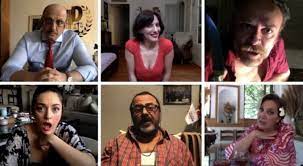
In the cast of Three Monkeys, one of Nuri Bilge Ceylan’s award-winning films; There are players such as Hatice Aslan, Yavuz Bingöl, Ahmet Rıfat Şungar. Three monkey; It is about a family’s struggle to stay together by ignoring the facts, as a result of small weaknesses turning into big lies. Covering everything up, it touches on the lives of family members who played the Three Monkeys.

If you like productions about family relationships, Three Monkeys is the movie for you!

Awards

61st Cannes Film Festival, Best Director Award

https://www.tvyayinakisi.com/odullu-turk-filmleri/