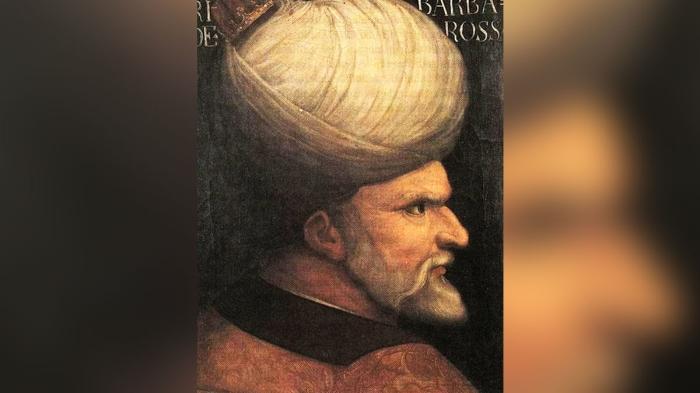
One of the most important activities of Barbaros Hayrettin Pasha was his struggle against the Spanish oppression. When Andalusia was destroyed, he moved the derelict Muslims and Jews to Algeria. He prevented the North African countries from being invaded by Spain. He prevented a second Andalusian genocide from happening in the region. There is the prayer sentence “Allahümme iftah lehû ebvâbe rahimike” (O Lord, open the doors of mercy to him) on the inscription on the inscription in the tomb of Gazi Captain Hayreddin Pasha, the Conqueror of Algeria and Tunisia.

The 1071 Manzikert Victory opened the gates of Anatolia to the Turks. Since the Anatolian geography is a peninsula, it did not take long for the Turks to sail to the seas.
Çaka Bey, who conquered İzmir in 1081, started a new era in Turkish maritime history. With Aydınoğlu Gazi Umur Bey, breakthroughs in the maritime field were successfully continued against naval powers such as Byzantium, Venice and Genoa. The conquest of Istanbul marked a new leap forward in the achievements of the Turks in the field of naval power. Conquering the capital, which the Bosphorus brought to its most beautiful position, Fatih turned towards the Adriatic and Mediterranean on the one hand and the Black Sea coast on the other. The era of Fatih is an important turning point in Turkish maritime history.
School in Turkish Maritime
When Kemal Reis entered the service of the Ottoman Empire in 1495, Turkish maritime started to benefit from piracy activities. Kemal Reis established a school in Turkish maritime and Barbaros Hayrettin Pasha, who came after him, became the leader of the activities that reached the summit in maritime.
Before Barbarossa entered the service of the Ottoman State, he had established a maritime state in Algeria with his older brother Oruç Reis. On the Mediterranean coasts of North Africa, he had won remarkable successes against powerful states such as Spain and Venice that continued maritime and piracy together. After the Spaniards destroyed the Andalusian civilization, they expanded their attack to North Africa and started to establish colonies on the Mediterranean coast. Barbarossa chose to enter the service of the Ottoman State, as he saw that he could not fight against the Spaniards on land and at sea alone. Barbarossa cared about being under the umbrella of the Ottoman Empire, which held the caliphate and was also the most powerful state of the Muslims. The successes they achieved in the Mediterranean together with Oruç Reis made them famous in the European continent.Barbarossa, who was included in the administrative organization of the Ottoman State as the Governor of Algeria in 1518 during the reign of Yavuz Selim, was born in Lesbos in 1478. His family had migrated from Vardar Yenicesi to Lesbos. His father was the cavalry Yakup Agha.
Khidr, Barbarossa, Hayrettin
When the captain of the sailors was born, his family named him Khidr. His European rivals called him “Barbaros” because of his reddish beard. Yavuz Sultan Selim added the name “Hayrettin” to him, which means “benevolent of religion”. Suleiman the Magnificent made him the Captain of the Derya. While Barbarossa instilled fear in the hearts of his enemies, the shelter of the oppressed was a supreme admiral. He traded in the blue waters of the Mediterranean. He ruled Algeria while he was a pirate against European sailors. He fought against the famous admirals and rulers of European maritime states. He won numerous victories. While his brothers Oruç Reis and İshak Reis were martyred, he received the title of “gazi”. While he was the ruler of Algeria, he preferred to be the Algerian Bey of the Ottoman Empire, which he saw as the “Supreme State”. Yavuz Selim’s AfricaHe moved the Ottoman borders, which he extended to the west, to the borders of Algeria in the west. Algeria, the country he ruled, laid solid foundations for an environment of stability and peace that would last for 300 years under the Ottoman flag, during his principality and Captain-Darya duties. He fought with French, Spanish, Genoese and Venetian sailors in blue waters. The blue homeland rapidly expanded its borders. Thanks to him, the Ottoman sanjak won victory even on the coast of France. History recorded him in golden letters as “Conqueror of Tunisia and Algeria Barbaros Hayrettin Pasha”.The blue homeland rapidly expanded its borders. Thanks to him, the Ottoman sanjak won victory even on the coast of France. History recorded him in golden letters as “Conqueror of Tunisia and Algeria Barbaros Hayrettin Pasha”.The blue homeland rapidly expanded its borders. Thanks to him, the Ottoman sanjak won victory even on the coast of France. History recorded him in golden letters as “Conqueror of Tunisia and Algeria Barbaros Hayrettin Pasha”.
Barbarossa, who started a struggle for power in the Mediterranean with his brothers Oruç and İshak after 1504, took Algeria under his control against the Spanish and Genoese in 1516-17. Barbarossa and his brothers, who took Tilimsen, on Algeria’s border with Morocco in 1517, under their protection, clashed with the Spaniards the following year. Thanks to the support of some local tribes, the Spaniards invaded Tilimsen and martyred Barbaros’ brothers Isaac and Oruç Reis. Thereupon, in October 1519, he sent a delegation to Istanbul under the chairmanship of Hacı Hüseyin, one of the Barbaros men, and conveyed his request to enter Ottoman service to Yavuz Sultan Selim. Thus, the Ottoman Empire acquired a second center in Africa after Egypt and at the same time opened to the Western Mediterranean. In 1534, during the time of Kanuni, his captain was Derya.The great sailor, who served for 12 years at the head of the Ottoman navy, achieved many successes.
The Algerian Hearth was given the privilege of recruiting volunteers from Anatolia. In addition, an elite unit of 2 thousand people, consisting of janissaries and artillery soldiers, was sent to Algeria. After entering Ottoman service, Barbarossa, who defeated the Spanish navy in 1519, carried out intense activities on the European shores of the Mediterranean until 1525. Meanwhile, Barbarossa, who obtained great booty, brought Algeria back to the Ottoman Empire in 1530. In 1531, he defeated the famous Genoese admiral Adrea Dorya, who attacked the port of Jijel near the city of Constantine in Algeria. In 1534, he included Tunisia within the borders of the Ottoman Empire and beat the coasts of Italy. In 1536, he attacked the Italian coasts with his strong navy and began to conquer the Venetian Islands in the Aegean Sea. 1537’The Ottoman flag began to wave on all Venetian islands in the Aegean.
The greatest of naval victories
September 27, 1538 Preveza Naval Victory was achieved against a large crusader fleet. When Barbarossa won great victories in the Mediterranean under the Ottoman banner, a large Crusader navy was formed, led by the Papacy. The ships of the Papacy, Spain, Portugal, Genoese, Venetian Malta and Rhodes knights, the main forces of the Crusader navy, encountered the Ottoman navy at Preveza in the Arta Gulf, facing the Ionian Sea of today’s Greece, under the captaincy of Andrea Doria. Tens of thousands of force and 60,000 soldiers on more than 600 ships in the Crusader navy thought they could easily defeat the 20,000 Turkish soldiers on the 122 ships of Barbaros. However, Barbaros, who defeated the navy 5 times larger than himself, was the Ottoman State.Declaring that Turkey is the dominant power not only of the land but also of the seas, he achieved a great victory. The galley-type ships developed by Barbaros in Preveza by applying its unique technology, won a victory against the galleon-type ships of the Crusaders. The Ottomans had adopted Barboros’ galley-type oars so much that they used such galleys for another century. Compared to the galleon, small fleets of small galleys allowed rapid maneuvering at sea. The Crusaders felt that their power in the Mediterranean was shaken by taking a big hit in Preveza. That’s why Charlemagne attacked Algeria under Barbarossa and lost again in 1541 to make up for his defeat in Preveza.The galley-type ships developed by the U.S. by applying its unique technology have won a victory against the galleon-type ships of the Crusaders. The Ottomans had adopted Barboros’ galley-type oars so much that they used such galleys for another century. Compared to the galleon, small fleets of small galleys allowed rapid maneuvering at sea. The Crusaders felt that their power in the Mediterranean was shaken by taking a big hit in Preveza. That’s why Charlemagne attacked Algeria under Barbarossa and lost again in 1541 to make up for his defeat in Preveza.The galley-type ships developed by the U.S. by applying its unique technology have won a victory against the galleon-type ships of the Crusaders. The Ottomans had adopted Barboros’ galley-type oars so much that they used such galleys for another century. Compared to the galleon, small fleets of small galleys allowed rapid maneuvering at sea. The Crusaders felt that their power in the Mediterranean was shaken by taking a big hit in Preveza. That’s why Charlemagne attacked Algeria under Barbarossa and lost again in 1541 to make up for his defeat in Preveza.Compared to the galleon, small fleets of small galleys allowed rapid maneuvering at sea. The Crusaders felt that their power in the Mediterranean was shaken by taking a big hit in Preveza. That’s why Charlemagne attacked Algeria under Barbarossa and lost again in 1541 to make up for his defeat in Preveza.Compared to the galleon, small fleets of small galleys allowed rapid maneuvering at sea. The Crusaders felt that their power in the Mediterranean was shaken by taking a big hit in Preveza. That’s why Charlemagne attacked Algeria under Barbarossa and lost again in 1541 to make up for his defeat in Preveza.
Ottoman flag in Nice
In 1543, when French King Francois asked for help from the Magnificent against Charles V, who threatened him, Barbarossa entered the French port in Toulon, then defeated the Holy Roman German alliance and took Nice. He died on July 2, 1546 at the age of 68 in Istanbul. Barbaros had Seyyid Murâdî dictated his important memories while he was alive. “According to the record in this work called Gazavat-ı Hayreddin Pasha, his death was 3 Cemaziyelevvel 953, that is, 2 July 1546.
Barbarossa also applied his own naval warfare tactics. Thanks to the achievements of Barbaros, who was at the peak in Turkish maritime history, the Muslim people in North Africa preserved their ethnic and religious identity against the Crusader attacks. Founded with Barbarossa, the Algerian Western Hearth has been one of the centers of Turkish domination in the Mediterranean region, which lasted for more than 300 years. The Ottoman Empire was recognized as the most important power in the Mediterranean during the reign of Suleiman the Magnificent, with the contributions of Barbaros Amaztin Pasha. In addition to the victories of the land army towards the interior of Europe, the successes achieved in the seas made the Ottoman Empire the superpower of the land and sea on three continents.
Turkish maritime reached its peak with Barbaros during the Ottoman Empire. Barbaros not only made his mark as a leader in the field of maritime history, but also made great strides in ship production and technology at the Shipyard. Barbarossa, who spoke Mediterranean languages such as Greek, Arabic, Spanish, Italian and French, trained many sailors. His school in Turkish maritime XVI. century has been very effective. Besides the Mediterranean, the Ottoman navy carried out significant activities in the Black Sea, the Red Sea, the Persian Gulf, the Indian Ocean and the Atlantic Ocean. In the words of our teacher İdris Bostan, Barbaros is a great naval admiral who establishes and maintains order. As well as being the master of sailors, he has as much acquis as a shipbuilding architect and engineer with his vast knowledge and experience. 1492’The Spaniards, who put an end to the Beni Ahmer State, also known as the Sultanate of Granada, carried out an ethnic cleansing and genocide against Muslims and Jews in the Iberian Peninsula. Hundreds of thousands of people, who wanted to escape from Andalusia and save their lives, sought refuge in North Africa. Barbarossa, who mobilized his ships to save these people, fought hard with the Spaniards. He carried 70 thousand of the Muslims fleeing from Andalusia to Algeria with his ships. Barbaros, who became famous as the conqueror of Algeria and Tunisia, did not allow the North African lands to become a second Andalusia. He defeated not only the Spaniards but also all the Christian naval forces gathered under the Crusader flag in the Mediterranean, proving to them that the Turks were the superior force in the seas. His tomb in Beşiktaş Square was built by Mimar Sinan while he was alive.The inscription at the entrance door of the tomb reads “Hâzâ Türbe-i Fatih-i Cezâyir and Tunisia, the late Gazi Kapudan Hayreddin Pasha Rahmetullahi Aleyh-year 948”. In other words, the Conqueror of Algeria and Tunisia, Gazi Captain Hayreddin Pasha (may Allah have mercy on him). The tomb, whose inscription says it was built in 948 (1541-42), is quite plain inside and out, but it is a magnificent structure in the direction of Beşiktaş Square overlooking the Sea of Marmara. On the belt above the inscription, there is the prayer sentence “Allahumma iftah lehu ebvabe mercy” (O Lord, open the doors of mercy to him). In the middle of the dome, the last part of the 89th verse of the chapter of A’raf, written in gold with basmala, is written: “Our Lord! Give your just judgment between our people and us. You are the best of those who judge.”Hazâ mausoleum of Fatih-i Cezâyir and Tunis, the late Gazi Kapudan Hayreddin Pasha Rahmetullahi Aleyh-year 948” is written. That is, the Conqueror of Algeria and Tunisia, Gazi Kaptan Hayreddin Pasha (May Allah have mercy on him). In his inscription in 948 (1541-42) The tomb, which says that it was built, is quite plain inside and out, but it is a magnificent structure in the direction of Beşiktaş Square overlooking the Sea of Marmara. On the arch above the inscription, there is the prayer sentence “Allahümme iftah lehu ebvâbe rahimike” (O Lord, open the doors of mercy to him). The last part of the 89th verse of the chapter of A’raf written in gilding is written: “Our Lord! Judge between us and our people justly. You are the best of judges.”Hazâ mausoleum of Fatih-i Cezâyir and Tunis, the late Gazi Kapudan Hayreddin Pasha Rahmetullahi Aleyh-year 948” is written. That is, the Conqueror of Algeria and Tunisia, Gazi Kaptan Hayreddin Pasha (May Allah’s mercy be upon him) in 948 (1541-42) The tomb, which says it was built, is quite plain inside and outside, but it is a magnificent structure in the direction of Beşiktaş Square facing the Sea of Marmara. On the arch above the inscription, there is the prayer sentence “Allahümme iftah lehu ebvâbe rahimike” (O Lord, open the doors of mercy to him). The last part of the 89th verse of the chapter of A’raf written in gilding is written: “Our Lord! Judge between us and our people justly. You are the best of judges.”may Allah’s mercy be upon him). The tomb, whose inscription says it was built in 948 (1541-42), is quite plain inside and out, but it is a magnificent structure in the direction of Beşiktaş Square overlooking the Sea of Marmara. On the belt above the inscription, there is the prayer sentence “Allahumma iftah lehu ebvabe mercy” (O Lord, open the doors of mercy to him). In the middle of the dome, the last part of the 89th verse of the chapter of A’raf, written in gold with basmala, is written: “Our Lord! Give your just judgment between our people and us. You are the best of those who judge.”may Allah’s mercy be upon him). The tomb, whose inscription says it was built in 948 (1541-42), is quite plain inside and out, but it is a magnificent structure in the direction of Beşiktaş Square overlooking the Sea of Marmara. On the belt above the inscription, there is the prayer sentence “Allahumma iftah lehu ebvabe mercy” (O Lord, open the doors of mercy to him). In the middle of the dome, the last part of the 89th verse of the chapter of A’raf, which is written in gold with basmala, is written: “Our Lord! Give your just judgment between our people and us. You are the best of those who judge.”open the doors of mercy to him) prayer sentence. In the middle of the dome, the last part of the 89th verse of the chapter of A’raf, which is written in gold with basmala, is written: “Our Lord! Give your just judgment between our people and us. You are the best of those who judge.”open the doors of mercy to him) prayer sentence. In the middle of the dome, the last part of the 89th verse of the chapter of A’raf, written in gold with basmala, is written: “Our Lord! Give your just judgment between our people and us. You are the best of those who judge.”
Looking at the meaning of this verse, it is seen that Barbarossa devoted himself to his nation. So much so that Allah will reward him for his services to his nation.
carried by their own ships
In 1517, when Yavuz Selim included Egypt within the borders of the Ottoman Empire, a step was taken to the African continent. Immediately afterwards, Hızır Reis, or Barbaros, who achieved great success in Algeria, entered the service of Yavuz Selim, and the borders of the Ottoman Empire were now opened towards the middle and western Mediterranean. Barbarossa defeated Andrea Doria at the Battle of Preveza in 1538, enabling the Ottomans to prove their superior power in the seas. And history has never forgotten Barbaros Hayrettin Pasha after that day. The great success he achieved by winning the Preveza naval victory carried him to the top in Turkish maritime history. After this victory, the Turks continued their expansion in three continents not only with their land armies but also with their naval forces.
Barbarossa is a great admiral who speaks Italian, French, Spanish, Greek and Arabic languages and waves the Ottoman flag with glory on the North African coasts of the Mediterranean. One of his most important activities was the struggle against Spanish oppression. When Andalusia was destroyed, he moved the derelict Muslims and Jews to Algeria. He prevented the North African countries from being invaded by Spain. In other words, it prevented a second Andalusian genocide from happening in the region. He was a great commander who took care of the Muslims who were in great sadness with the complete destruction of Andalusia and carried them from Spain to North Africa with his own ships.
https://www.star.com.tr/acik-gorus/barbaros-ikinci-endulus-soykirimina-mani-oldu-haber-1638656/
@suleymankzltprk
The Essential Travel Guide to Turkiye: Iconic Sights, Authentic Food and Smart Travel Tips From A Local (Istanbul, Cappadocia, Antalya and Beyond)
$17.99 (as of 12/08/2026 02:10 GMT +03:00 - More infoProduct prices and availability are accurate as of the date/time indicated and are subject to change. Any price and availability information displayed on [relevant Amazon Site(s), as applicable] at the time of purchase will apply to the purchase of this product.)
Topkapi Palace: A Perfect Coffee Table Picture Book - Travel and Tourism lovers Gift
$10.99 (as of 12/08/2026 02:10 GMT +03:00 - More infoProduct prices and availability are accurate as of the date/time indicated and are subject to change. Any price and availability information displayed on [relevant Amazon Site(s), as applicable] at the time of purchase will apply to the purchase of this product.)
TURQUIA GUIA DE VIAGEM 2026: Descobrindo a alma da Turquia, das maravilhas antigas às aventuras modernas
$20.00 (as of 12/08/2026 02:10 GMT +03:00 - More infoProduct prices and availability are accurate as of the date/time indicated and are subject to change. Any price and availability information displayed on [relevant Amazon Site(s), as applicable] at the time of purchase will apply to the purchase of this product.)
Istanbul, City map 1:10.000, City Pocket map + The Big Five
$17.43 (as of 12/08/2026 02:10 GMT +03:00 - More infoProduct prices and availability are accurate as of the date/time indicated and are subject to change. Any price and availability information displayed on [relevant Amazon Site(s), as applicable] at the time of purchase will apply to the purchase of this product.)
ISTANBUL TRAVEL GUIDE: Discover Istanbul’s Must-see Attractions, Hidden Gems, Outdoor Activities. Practical Tips and Local Insights
$17.99 (as of 12/08/2026 02:10 GMT +03:00 - More infoProduct prices and availability are accurate as of the date/time indicated and are subject to change. Any price and availability information displayed on [relevant Amazon Site(s), as applicable] at the time of purchase will apply to the purchase of this product.)
Topkapi Palace: A Stunning Coffee Table Photo Book for Travel and Tourism Enthusiasts
$11.99 (as of 12/08/2026 02:10 GMT +03:00 - More infoProduct prices and availability are accurate as of the date/time indicated and are subject to change. Any price and availability information displayed on [relevant Amazon Site(s), as applicable] at the time of purchase will apply to the purchase of this product.)
Lonely Planet Turkiye: Plan the Trip of a Lifetime | Detailed Itineraries & Maps | Insider Tips | Covers Istanbul, Troy, Izmir and more (Travel Guide)
$14.82 (as of 12/08/2026 02:10 GMT +03:00 - More infoProduct prices and availability are accurate as of the date/time indicated and are subject to change. Any price and availability information displayed on [relevant Amazon Site(s), as applicable] at the time of purchase will apply to the purchase of this product.)
Topkapi Palace: A Coffee Table Book Showcasing Istanbul's Imperial Legacy – Also see Harem, Imperial Gate, Courtyards, Sacred Relics, Bosphorus Views and much more (Travel Coffee Table Books)
$14.99 (as of 12/08/2026 02:10 GMT +03:00 - More infoProduct prices and availability are accurate as of the date/time indicated and are subject to change. Any price and availability information displayed on [relevant Amazon Site(s), as applicable] at the time of purchase will apply to the purchase of this product.)
Frommer's Istanbul Day By Day (Frommer's Day by Day - Pocket)
$3.97 (as of 12/08/2026 02:10 GMT +03:00 - More infoProduct prices and availability are accurate as of the date/time indicated and are subject to change. Any price and availability information displayed on [relevant Amazon Site(s), as applicable] at the time of purchase will apply to the purchase of this product.)
MY TRIP TO… ISTANBUL – Coloring Book for Kids Ages 3–5.: A Travel Activity Book for Preschoolers That Encourages Creativity and Learning
$6.76 (as of 12/08/2026 02:10 GMT +03:00 - More infoProduct prices and availability are accurate as of the date/time indicated and are subject to change. Any price and availability information displayed on [relevant Amazon Site(s), as applicable] at the time of purchase will apply to the purchase of this product.)
Rick Steves Istanbul: With Ephesus & Cappadocia
$8.97 (as of 12/08/2026 01:53 GMT +03:00 - More infoProduct prices and availability are accurate as of the date/time indicated and are subject to change. Any price and availability information displayed on [relevant Amazon Site(s), as applicable] at the time of purchase will apply to the purchase of this product.)
Lonely Planet The Mediterranean: Over 30 Mesmerising Cities & Islands | 15 Weekend Long Road Trip Itineraries | Tips on Where to Eat & What to See | Stunning Photography
$24.80 (as of 12/08/2026 01:53 GMT +03:00 - More infoProduct prices and availability are accurate as of the date/time indicated and are subject to change. Any price and availability information displayed on [relevant Amazon Site(s), as applicable] at the time of purchase will apply to the purchase of this product.)
Lonely Planet Pocket Istanbul: Discover Twice the City in Half the Time | Top Sights | Maps & Walking Tours | Covers Sultanahmet & Sirkeci, Bazaar ... & Western Districts and more (Pocket Guide)
$12.48 (as of 12/08/2026 01:53 GMT +03:00 - More infoProduct prices and availability are accurate as of the date/time indicated and are subject to change. Any price and availability information displayed on [relevant Amazon Site(s), as applicable] at the time of purchase will apply to the purchase of this product.)
Shadow of the Silk Road: A 7,000-Mile Journey Through Central Asia―Trade, Religions, and Ideas from China to Turkey (P.S.)
$1.85 (as of 12/08/2026 01:53 GMT +03:00 - More infoProduct prices and availability are accurate as of the date/time indicated and are subject to change. Any price and availability information displayed on [relevant Amazon Site(s), as applicable] at the time of purchase will apply to the purchase of this product.)
A Guide to Biblical Sites in Greece and Turkey
$11.08 (as of 12/08/2026 01:53 GMT +03:00 - More infoProduct prices and availability are accurate as of the date/time indicated and are subject to change. Any price and availability information displayed on [relevant Amazon Site(s), as applicable] at the time of purchase will apply to the purchase of this product.)
Turkish Short Stories for Beginners: 20 Captivating Short Stories to Learn Turkish & Grow Your Vocabulary the Fun Way! (Easy Turkish Stories)
$4.99 (as of 12/08/2026 01:53 GMT +03:00 - More infoProduct prices and availability are accurate as of the date/time indicated and are subject to change. Any price and availability information displayed on [relevant Amazon Site(s), as applicable] at the time of purchase will apply to the purchase of this product.)
DK Turkey: Must-See Sights. Culture & History. Detailed Maps & Tours. Covers Istanbul, Cappadocia, Antalya, Bod (Travel Guide)
$20.33 (as of 12/08/2026 01:53 GMT +03:00 - More infoProduct prices and availability are accurate as of the date/time indicated and are subject to change. Any price and availability information displayed on [relevant Amazon Site(s), as applicable] at the time of purchase will apply to the purchase of this product.)
Rick Steves Mediterranean Cruise Ports (Rick Steves Travel Guide)
$19.10 (as of 12/08/2026 01:53 GMT +03:00 - More infoProduct prices and availability are accurate as of the date/time indicated and are subject to change. Any price and availability information displayed on [relevant Amazon Site(s), as applicable] at the time of purchase will apply to the purchase of this product.)
Great Escapes Mediterranean. The Hotel Book
$59.71 (as of 12/08/2026 01:53 GMT +03:00 - More infoProduct prices and availability are accurate as of the date/time indicated and are subject to change. Any price and availability information displayed on [relevant Amazon Site(s), as applicable] at the time of purchase will apply to the purchase of this product.)