Home Blog Page 252

Turkish Symbols on Weavings from Yenice town, Çanakkale

Copyright Photographs and Text by Coşkun Yanar


Rug (Zili) Bag, Yenice town, Çanakkale, 42×36

Name of the Fabric Rug (Zili) Bag
Where It Touches  Yenice Region
quality 42×36
size 40×46
Material Used  Double layer wool warp, single layer wool weft
Weaving Technique  Plain Weave, bell
Composition It is decorated with the repetition of the velcro motif. In order to become a woven bag, it is folded and joined at the edges and the edges are knitted with colored pattern threads. In order to become a woven bag, it is folded and joined at the edges and the edges are knitted with colored pattern threads.
motifs  Pitrak
warp  double bristle
Scarf  double bristle
Colors Used  Red, white, green, dark blue, pink, brown, black


velcro motif

Pıtrak Motif: It is inspired by the Pıtrak plant. It was used as an amulet against the evil eye. It is a symbol of abundance, protecting from all kinds of evil eye and evil eye. It was frequently used in flour sacks, tandoori covers, and bread covers to make them fertile.

by Coşkun Yanar, 2013

Rug (Zili) Bag, Yenice town, Çanakkale. 42×144

Name of the Fabric Rug (Zili) Bag
Where It Touches  Yenice Region
quality 42×144
size 41×46
Material Used  Double layer wool warp, single layer wool weft
Weaving Technique  Plain Weave, bell
Composition At the beginning and at the end of the weaving, a band was formed from seven bala motifs, and the border was decorated with an eye motif. On the interior floor; The star motif in the middle and the velcro motif are placed inside, the inner eye motif is placed on the corners of the star motif, and the seven bala motifs are placed on the lower and upper parts. The back of the fabric is woven into bands with colored threads. In order to become a woven bag, it is folded and joined at the edges and the edges are knitted with colored pattern threads. It is tied to the edges by making tassels from pattern threads.
motifs  Star, eyeball, seven honeys, flutter
warp Double wool warp
Scarf Single layer wool scarf
Colors Used  Red, white, green, dark blue, pink, brown, black


star, intraocular, seven

honey, velcro motifs

seven honey motifs

Star: Like the moon and the sun, the stars also occupy a large place in folk beliefs. The reason for these beliefs coincides with the periods when celestial beings were blessed as gods or goddesses. The beliefs of the Anatolian peoples establish a fateful connection between the stars and people. This connection exists in pre-Islamic and post-Islamic Anatolian religions and in the beliefs of all neighboring nations.

Intraocular: Symbols of abundance.

Pıtrak Motif: It is inspired by the Pıtrak plant. It was used as an amulet against the evil eye. It is a symbol of abundance, protecting from all kinds of evil eye and evil eye. It was frequently used in flour sacks, tandoori covers, and bread covers to make them fertile.

Seven Balas:It is one of the names given to the motifs used in border arrangements in the Çanakkale region. It is a local name.

by Coşkun Yanar

Rug (Zili) Bag, Yenice town, Çanakkale, 44×36

Name of the Fabric Rug (Zili) Bag
Where It Touches Yenice Region
quality 44×36
size 40×44
Material Used  Double layer wool warp, single layer wool weft
Weaving Technique  Plain Weave, bell
Composition It is decorated with the repetition of the velcro motif. In order to become a woven bag, it is folded and joined at the edges and the edges are knitted with colored pattern threads.
motifs  intraocular
warp  double bristle
Scarf  double bristle
Colors Used  Red, white, green, dark blue, pink, brown, black


Pitrak Motif:

intraocular

Pıtrak Motif: It is inspired by the Pıtrak plant. It was used as an amulet against the evil eye. It is a symbol of abundance, protecting from all kinds of evil eye and evil eye. It was frequently used in flour sacks, tandoori covers, and bread covers to make them fertile.

by Coşkun Yanar, 2013

Rug (Zili) Bag, Yenice town, Çanakkale, 44 x 144


Name of the Fabric Rug (Zili) Bag
Where It Touches  Yenice Region
quality 44 x 144
size 44x44cm
Material Used  Double layer wool warp, single layer wool weft
Weaving Technique  Plain Weave, bell
Composition The Elibelinde motif is placed in bands with the transverse bell weaving technique. A band is formed at the beginning and end of the weaving, and the interior is decorated by taking a section from the motifs of the weaving. The back of the fabric is woven into bands with colored threads. In order to become a woven bag, it is folded and joined at the edges and the edges are knitted with colored pattern threads. It is tied to the mouth of the bag by knitting a tie from the pattern threads. It is tied to the edges by making tassels from pattern threads.
motifs man, hand on waist
warp Double wool warp
Scarf Single layer wool scarf
Colors Used  Red, white, green, blue, purple, pink, yellow, brown, black


Man, hand on waist motif : This motif is the symbol of femininity and fertility. It also symbolizes abundance, fertility, luck, fortune and happiness. It was widely used in weavings in Anatolia. Many mountains in Anatolia have been given the names of various mother goddesses. The mountain known as Mount Ida in mythology was named Mount Ida. Mount Ida in mythology is the place where the Sarıkız Legend, which tells about an innocent and pure love, takes place. Ida or Kaz Mountain is the mountain where Paris, the son of the Trojan King, was a shepherd, the Trojan Wars took place after the Spartan King kidnapped his wife Helena, and Paris was killed after the destruction of Troy.


by Coşkun Yanar

Rug (Zili) Bag, Yenice town, Çanakkale

Name of the Fabric Rug (Zili) Bag
Where It Touches  Yenice Region
quality 44×140
size 46 x 49 cm
Material Used  Double layer wool warp, single layer wool weft
Weaving Technique  Plain Weave, bell
Composition The Elibelinde motif is placed in bands with the transverse bell weaving technique. A band is formed at the beginning and end of the weaving, and the interior is decorated by taking a section from the motifs of the weaving. The back of the fabric is woven into bands with colored threads. In order to become a woven bag, it is folded and joined at the edges and the edges are knitted with colored pattern threads.
motifs  man, hand on waist
warp  double layer wool
Scarf  Single layer wool scarf
Colors Used  Red, white, green, blue, purple, pink, yellow, brown, black


Man, hand on waist motif : This motif is the symbol of femininity and fertility. It also symbolizes abundance, fertility, luck, fortune and happiness. It was widely used in weavings in Anatolia. Many mountains in Anatolia have been given the names of various mother goddesses. The mountain known as Mount Ida in mythology was named Mount Ida. Mount Ida in mythology is the place where the Sarıkız Legend, which tells about an innocent and pure love, takes place. Ida or Kaz Mountain is the mountain where Paris, the son of the Trojan King, was a shepherd, the Trojan Wars took place after the Spartan King kidnapped his wife Helena, and Paris was killed after the destruction of Troy.

by Coşkun Yanar, 2013

Carpet Bag, Weawing, Yenice Town, Çanakkale

Carpet Name Carpet Bag
Where It Touches Yenice region
quality 22×26
size 42x32cm
kilim Beginning 7 cm
Mouth 6 cm
Material Used Wool warp, wool weft, wool loop
Weaving Technique pile weaving
Composition Carpet is bag woven. The outer edge of the border is surrounded by a gooseneck motif, and the inner edge is surrounded by a rat-tooth motif, and the inside of the border is decorated with a five-stone and baklava motif. The interior floor is decorated with a ¼ symmetry arrangement of the pomegranate flower motif. The back of the bag is rug woven. The colored threads used in weaving are attached to the weaving by forming a bond. Tassels are attached to the edges from colored pattern threads.
motifs Rattooth, gooseneck, pentacle, baklava, pomegranate flower
warp Double wool warp
Scarf Single layer wool scarf
Knot Technique Turkish knot ( Gordes knot )
Colors Used Green, orange, pink, purple, brown, black, blue, white
Pile Height 5mm


Five stones, lozenge motif

flower motif

Gooseneck motif

Rattooth motif

Pomegranate Flower:   It is narrated that the pomegranate flower and its fruit are the fruit of Paradise and express holiness in Anatolia. It is seen that it symbolizes fertility and eternity, reproduction and reproduction in Turks.

Baklava:  They are motifs consisting of geometric shapes resembling baklava slices.

Border motifs:  Some motifs used on borders in Çanakkale region; five stone, rat tooth, goose neck, green water, seven honey, etc. The motifs used in the borders are named for their similarity to some objects in nature. Gooseneck, rattooth, waterway, etc. many motifs are used on borders in weaving.

Waterway, green water: Water is the symbol of life in Anatolia. It is the symbol of rebirth, continuity of life, fertility, nobility, wisdom, purity and virtue. It is the opposite of fire.

Five stones: The number five is thought to be good for the bad eye by establishing a connection with the fingers of the hand. It has been tried to give a certain meaning to these motifs by forming the motifs created with the shapes in nature with numbers such as three, five and seven.

Seven Bala: It is one of the names given to the motifs used in border arrangements in the Çanakkale region. It is a local name.

by Coşkun Yanar, 2013

Carpet Saddlebag, Yenice town, Çanakkale

Carpet Name Carpet Saddlebag
Where It Touches Yenice region
quality 22×26
size saddlebag size 135 cm one. 45x34cm
2nd. 45x34cm
kilim 4 cm
Material Used Wool warp, wool weft, wool loop
Weaving Technique pile weaving
Composition The carpet weaving part has two borders. These borders are surrounded by a gooseneck motif on the outside and a rat-tooth motif on the inside, the outer border is decorated with green water and the inner border is decorated with amulet motifs. The interior floor is decorated with a ¼ symmetry arrangement of the pomegranate flower motif. The back of the saddlebag is rug woven. The middle part is woven separately and decorated with the cicim weaving technique of the velcro motif. In the middle part kilim weaving, decoration was created with the buttonhole kilim technique. The back of the fabric is woven into bands with colored threads. Tassels are attached to the edges from colored pattern threads.
motifs Amulet, rattooth, gooseneck, sturgeon, green water, pomegranate flower
warp Double wool warp
Scarf Single layer wool scarf
Knot Technique Turkish knot ( Gordes knot )
Colors Used Green, brown, purple, orange, pink, yellow, black, white
Pile Height 5mm


Pomegranate flower

Green water

Gooseneck motif

Rat tooth

amulet motif

Pıtrak motif

Pıtrak Motif: It is inspired by the Pıtrak plant. It was used as an amulet against the evil eye. It is a symbol of abundance, protecting from all kinds of evil eye and evil eye. It was frequently used in flour sacks, tandoori covers, and bread covers to make them fertile.  

Pomegranate Flower:   It is narrated that the pomegranate flower and its fruit are the fruit of Paradise and express holiness in Anatolia. It is seen that it symbolizes fertility and eternity, reproduction and reproduction in Turks.

Waterway, green water: Water is the symbol of life in Anatolia. It is the symbol of rebirth, continuity of life, fertility, nobility, wisdom, purity and virtue. It is the opposite of fire.

by Coşkun Yanar, 2013

Carpet Saddlebag, Yenice town, ÇanakkaleRug (Zili) Bag, Yenice Town, Çanakkale, 42 warps x 152 wefts

Name of the Fabric Rug (Zili) Bag
Where It Touches  Yenice Region
quality 42 warps x 152 wefts
size 39×46
Material Used  Double layer wool warp, single layer wool weft
Weaving Technique  Plain Weave, bell
Composition The Elibelinde motif is placed in bands with the transverse bell weaving technique. A band is formed at the beginning and end of the weaving, and the interior is decorated by taking a section from the motifs of the weaving. The back of the fabric is woven into bands with colored threads. In order to become a woven bag, it is folded and joined at the edges and the edges are knitted with colored pattern threads. It is tied to the mouth of the bag by knitting a tie from the pattern threads.
motifs  man, hand on waist
warp  Wool.
Scarf   Wool
Colors Used  Red, white, green, blue, pink, purple, yellow, brown, black


Man, hand on waist motif : This motif is the symbol of femininity and fertility. It also symbolizes abundance, fertility, luck, fortune and happiness. It was widely used in weavings in Anatolia. Many mountains in Anatolia have been given the names of various mother goddesses. The mountain known as Mount Ida in mythology was named Mount Ida. Mount Ida in mythology is the place where the Sarıkız Legend, which tells about an innocent and pure love, takes place. Ida or Kaz Mountain is the mountain where Paris, the son of the Trojan King, was a shepherd, the Trojan Wars took place after the Spartan King kidnapped his wife Helena, and Paris was killed after the destruction of Troy.

Rug (Zili) Bag, Yenice town Çanakkale

Name of the Fabric Rug (Zili) Bag
Where It Touches  Yenice Region
Material Used  Double layer wool warp, single layer wool weft
Weaving Technique  Plain Weave, bell
Composition At the beginning and at the end of the weaving, a band was formed from seven bala motifs, and the border was decorated with an eye motif. On the interior floor; The star motif in the middle and the velcro motif are placed inside, it is decorated with an intraocular motif at the corners of the star motif, seven bala motifs on the lower and upper parts, and a columnar placement of the intraocular motif on the edges. The back of the fabric is woven into bands with colored threads. In order to become a woven bag, it is folded and joined at the edges and the edges are knitted with colored pattern threads. It is tied to the mouth of the bag by knitting a tie from the pattern threads.
motifs  Star, eyeball, seven honeys, flutter
warp Double wool warp
Scarf Single layer wool scarf
Colors Used  Red, white, green, dark blue, pink, brown, black


Star, eye, seven honeys,

hook and loop motifs

Star: Like the moon and the sun, the stars also occupy a large place in folk beliefs. The reason for these beliefs coincides with the periods when celestial beings were blessed as gods or goddesses. The beliefs of the Anatolian peoples establish a fateful connection between the stars and people. This connection exists in pre-Islamic and post-Islamic Anatolian religions and in the beliefs of all neighboring nations.

Intraocular: Symbols of abundance.

Seven Bala: It is one of the names given to the motifs used in border arrangements in the Çanakkale region. It is a local name.

Pıtrak Motif: It is inspired by the Pıtrak plant. It was used as an amulet against the evil eye. It is a symbol of abundance, protecting from all kinds of evil eye and evil eye. It was frequently used in flour sacks, tandoori covers, and bread covers to make them fertile.

Rug (Zili) Bag, Yenice town, Çanakkale

Name of the Fabric Rug (Zili) Bag
Where It Touches  Yenice Region
quality 38 x 156
size 38×41
Material Used  Double layer wool warp, single layer wool weft
Weaving Technique  Plain Weave, bell
Composition It is decorated with the repetition of the velcro motif. In order to become a woven bag, it is folded and joined at the edges and the edges are knitted with colored pattern threads. The back of the fabric is woven into bands with colored threads. It is tied to the mouth of the bag by knitting a tie from the pattern threads.
motifs  Pitrak
warp Double wool warp
Scarf Single layer wool scarf
Colors Used  Red, white, green, dark blue, pink, brown, black


velcro motif

Pıtrak Motif: It is inspired by the Pıtrak plant. It was used as an amulet against the evil eye. It is a symbol of abundance, protecting from all kinds of evil eye and evil eye. It was frequently used in flour sacks, tandoori covers, and bread covers to make them fertile.


Rug (Zili) Bag, Yenice town, Çanakkale, 48×34

Name of the Fabric Rug (Zili) Bag
Where It Touches  Yenice Region
quality 48×34
size 42×44
Material Used  Double layer wool warp, single layer wool weft
Weaving Technique  Plain Weave, bell
Composition It is decorated with the repetition of the velcro motif. In order to become a woven bag, it is folded and joined at the edges and the edges are knitted with colored pattern threads. It is tied to the mouth of the bag by knitting a tie from the pattern threads. It is tied to the mouth of the bag by knitting a tie from the pattern threads. In order to become a woven bag, it is folded and joined at the edges and the edges are knitted with colored pattern threads.
motifs  Pitrak
warp  double bristle
Scarf  double bristle
Colors Used  Red, white, green, dark blue, purple, pink, brown, black


Pıtrak Motif: It is inspired by the Pıtrak plant. It was used as an amulet against the evil eye. It is a symbol of abundance, protecting from all kinds of evil eye and evil eye. It was frequently used in flour sacks, tandoori covers, and bread covers to make them fertile.


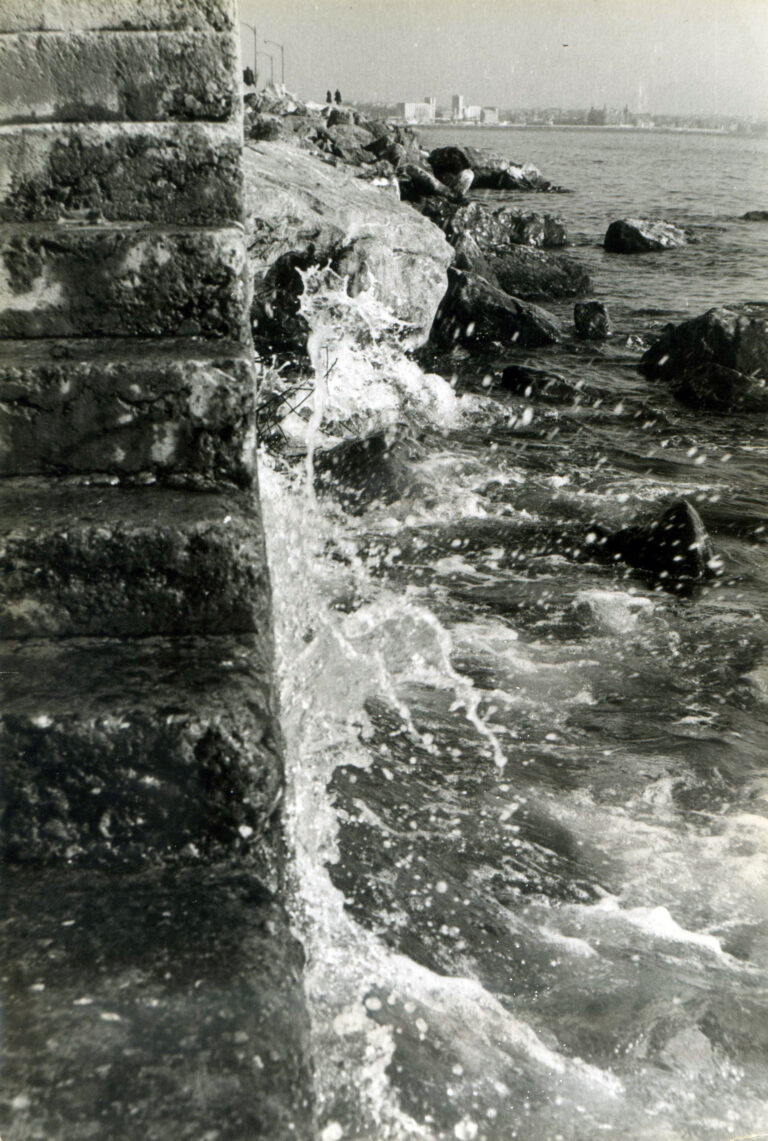
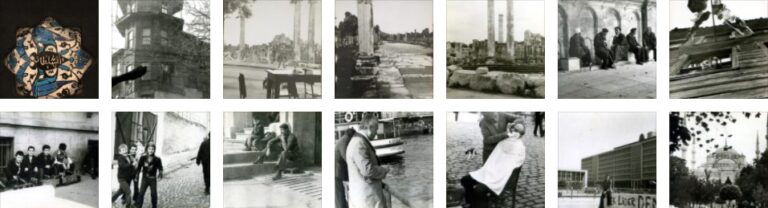
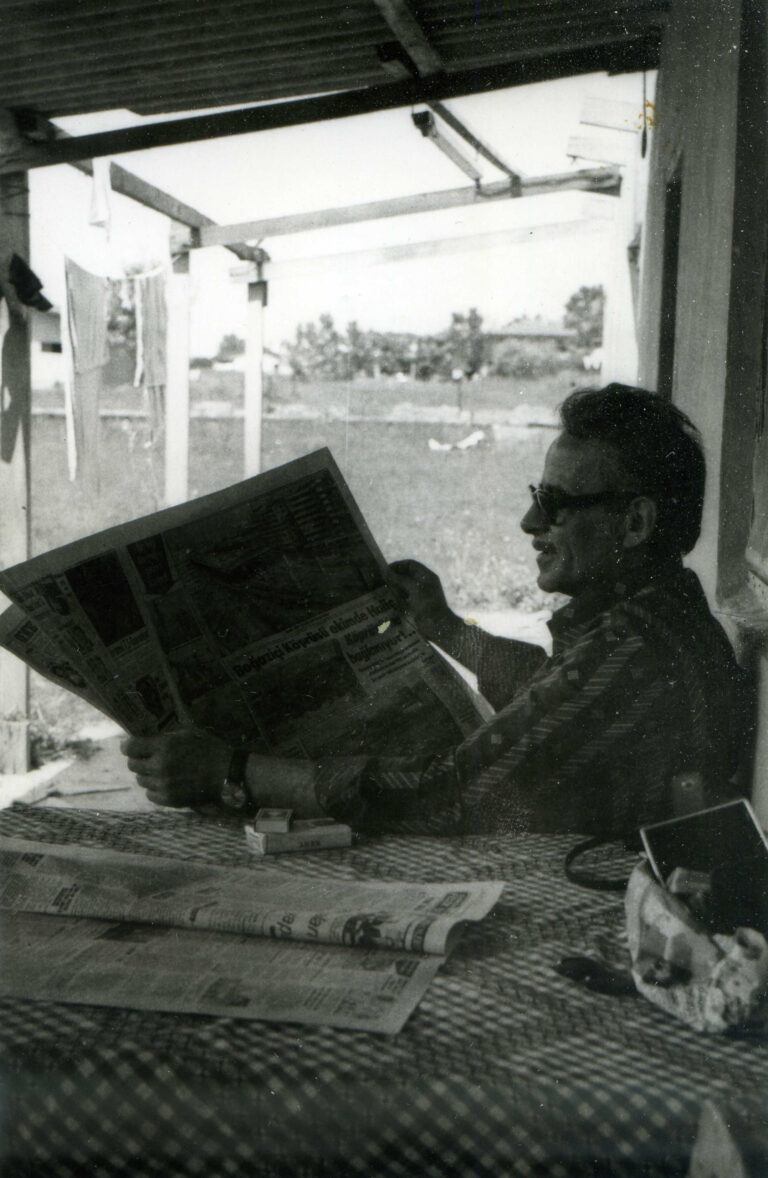
Turkey in 1975 with Black&White Photographes

1975 Photographies in Turkey

Black&White Turkey in 1975

1975 Photographes

https://booksonturkey.com/?s=1975

Levent Ağaoğlu, Author, Turkish Citizen

IMAGES OF TURKEY Photography

1974-75 years 118 black and white photographs
Turkish English photo captions

Within the scope of street photography, shedding light on daily life in Istanbul.

Culture, history, identity, society, people and humanity. Reality and future. Naturalness and true wealth. Our treasures that we can leave from today to tomorrow…

Turkey (Anatolia, Asia Minor) has produced cultures and civilizations for 12,000 years since the Neolithic. However, books published in English on Turkey are very limited. Foreigners cannot find books or publications about Turkey. There is no database even.

The Turkey of the 1970s can be viewed through the youth of the world’s 1968 generation movement. It is a more untouched period in the cold war and bipolar world order when archeology even was not fully active.

Let’s look at these places today from the perspective of 2022 and try to understand a global  transformation story by comparing old photographs and today.

The photographs I took half a century ago in Istanbul Fatih, on the historical peninsula and in ancient cities such as Troy, Bergama, Ephesus, Didim, in the Aegean, shed light on our day. The permanence of ancient cities, which have not changed for thousands of years, clad in silence and solitude, and the sharp and striking change in the time period of 50 years in the city of Istanbul, occur together before our eyes and extend to us from the beginning years of the 21st century. The ancient cities we visited on the Aegean coast were living their heyday when Istanbul was not yet in the middle.

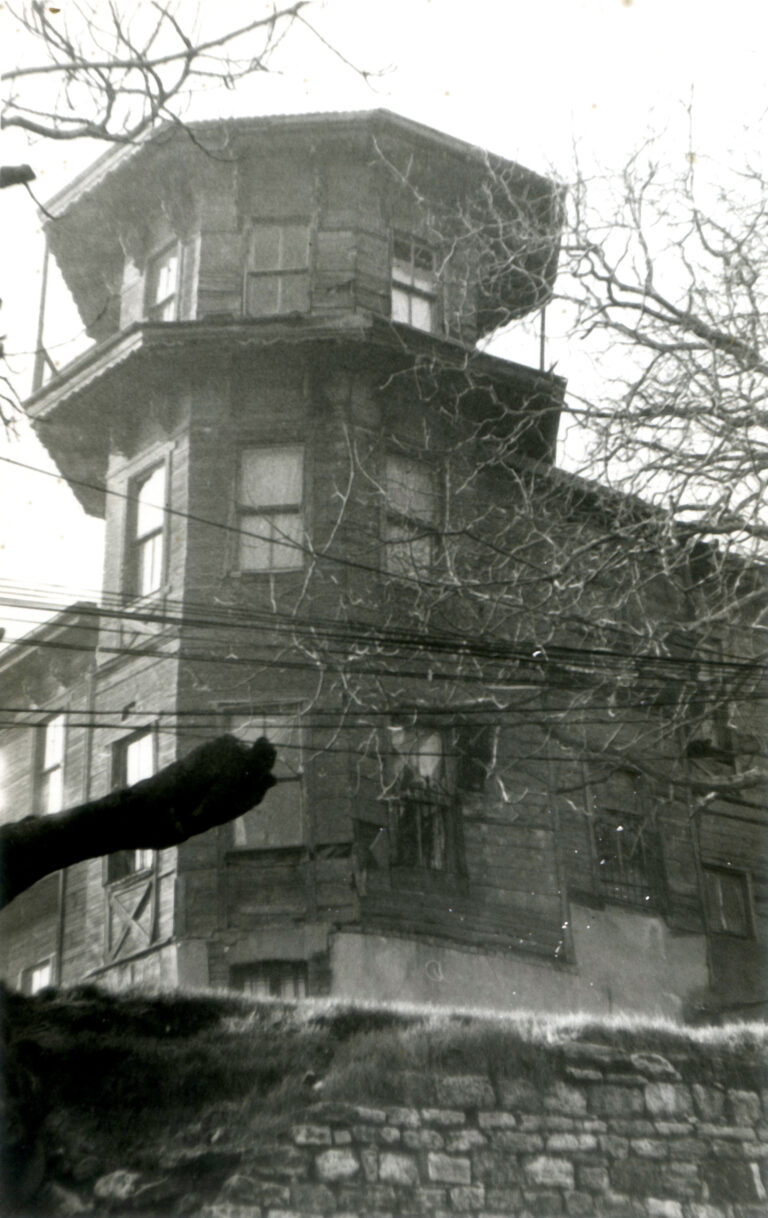
Despite the magnificence of Istanbul’s historical buildings, the poverty and deprivation observed in the 1975 photographs raise questions about whether human welfare or magnificent stone structures are permanent. The ruined historical wooden structures seen in the photographs were quickly destroyed and left their places to reinforced concrete structures. The apartment building fashion, which started in the mid-1950s, has rapidly changed the face of the city in 20 years.

I have been trying to convey the world reflected by the photographs and our impressions with subtitles.

I was born in Fatih district of Istanbul that is the core of İstanbul and Fatih is the historical peninsula surrounded by castles totally from the Golden Horn and Marmara Sea around. All the famous districts are scattered in Fatih. The feelings you have in the Fatih area is very unique and special and if you’re in the area you feel that it is the center of the world, not only with the center of the world because the empires Roman empire after Constantin set up in 395 and Turkish Ottoman Empire in 1453 was all controlled from Fatih district of Istanbul.

In 1974 I bought a Russian Zorki camera for black-and-white photographs and started first from Fatih and then proceeded to Western historical antique locations in the Aegean region, because of my involvement with the touristic guide course. I started from the roads and streets of Fatih, the old town, 45 years ago and got the photos of ordinary people, elderly, youngsters, children and the historical buildings and the wooden buildings in that part of the city.

These are straight black and white photographies and meaningful to show us the past of the historical Peninsula.

Maybe the individuals on the photographs, the elderly ones, may not be living now, so we can analyze the conditions of the time just after the war happened in Cyprus and Turkey started to be entering into street movements with guns which lead to the country to military coup in 12 September 1980. The photographs also reflect the property in the streets of İstanbul at the time though the buildings are very old and rich in history, the people are not that much. Here is the most conservative part of the İstanbul.

Following taking photographs of Fatih and downtown İstanbul, I moved to Western Turkey passing through Dardanel Straight snd visiting antique cities like Troy, Pergamon, Smyrna, Priene, Ephesus, Didyma, which are older than Istanbul clty, so taking the photos of these archaeological theaters and worship buildings.

Images of Aegean Antiquities of Turkey

Aegean Region: Troy, Ephesus, Bergama, Izmir, Didim


The ancient road to Ephesus Harbor. The splendor and time-resisting permanence of marble. Who knows, the hills we see in front of us used to be the sea. The tops of the columns were adorned with statues. We seem to have entered a time warp with this photo. On the contrary, the mossy marbles did not stop time and did not reach today. We are watching the road of one of the greatest ancient ports in history Who knows what goods and people were transported from this port, wines, amphorae, olives and olive oils. Audiences coming and going to the Ephesus Theatre.
Ephesus Road April 1975


Ashtrays and salt shakers on the plain restaurant table, and the Didim Apollon Temple, a world masterpiece, in front of it. Didim is 22 km away from Miletus, Capital of Philosophy of the World. The juxtaposition of philosophy and faith. Marble pillars rising to the sky by being cut into circles, twin marble pillars with grooves. Uncle tourist took care of himself by crossing his legs with the camera team. Didim Temple Apollon Cult Izmir Trip April 1975

Images of Historical Downtown of Istanbul

Istanbul: Fatih, Sultanahmet, Eminonu, Sarayburnu, Sahil Yolu, Topkapi Walls, Dolmabahce

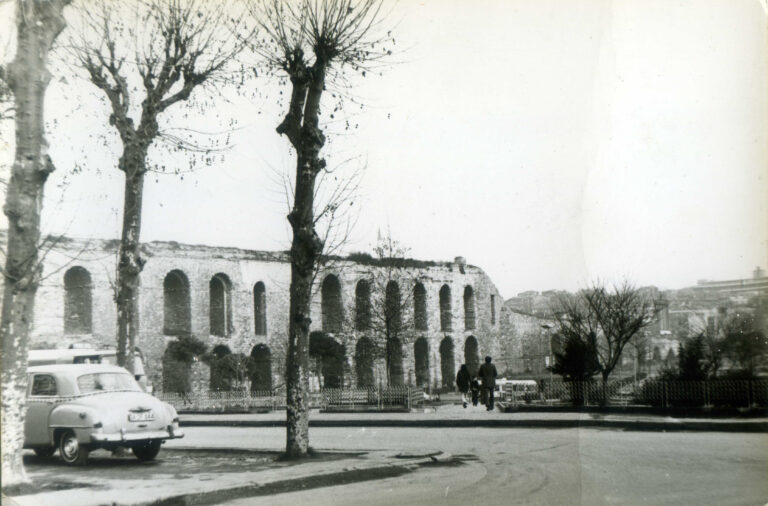
Valens Roman Aqueduct from 1650 years away, completed in 373 AD, in the heart of the historical peninsula. Walking citizens, Dodge minibus and city bus decorate the square. It’s a cold winter’s day and its branches are lonely, leafless gloomy trees. Bozdogan Arch 21 December 1974

Entrance stairs of the old New Mosque. The elder is feeding the cornfields and the pigeons. Blessings to your heart, strength to your eyes and stick. A typical Istanbul ritual. The young boy adorned the square with running steps. New Mosque August 1975

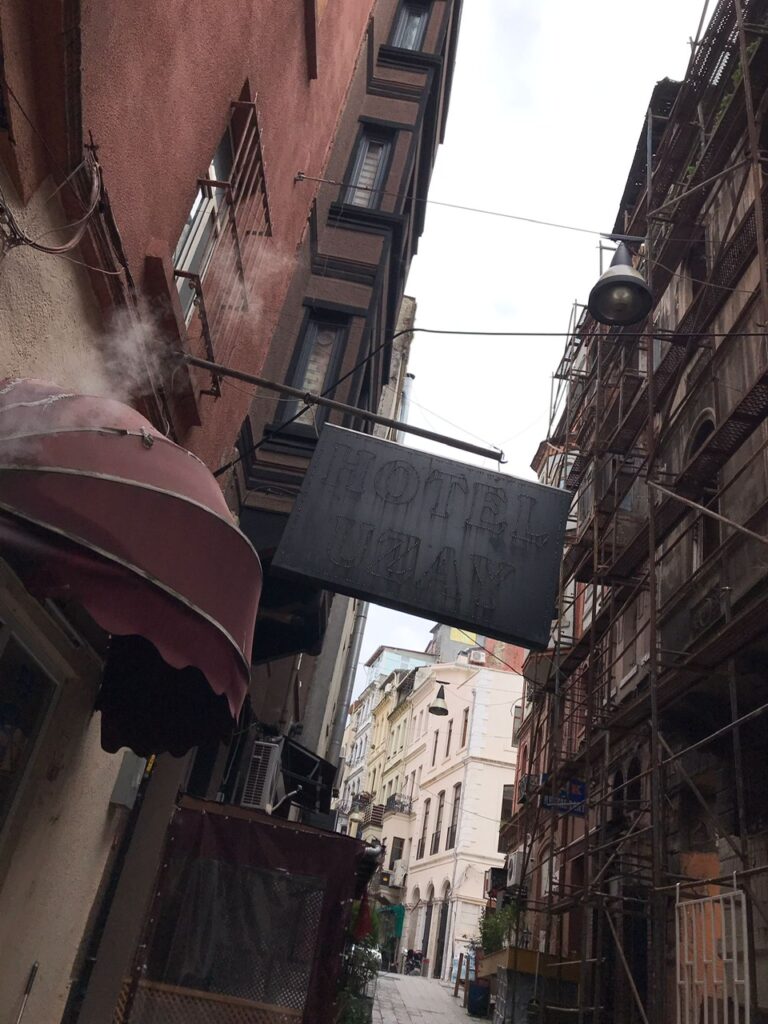
Auto spare parts shop, watch repair shop and artisan restaurant on the road to Fatih Mosque. Karakaş karabiyik peddlers dressed in clean white and rags. Cold toasts at the glass car stalls. Istanbul street delicacies. As the weather is so cold, fists are clenched.
Street From Fatih Park From Fire Brigade to Taş Mektep (Stone School9 December 21, 1974

Turkey Talks

TURKEY IN 3D

  • Turkey is Triangle
  • Turkey on Carpets, Rugs and Carved Stone Monuments
  • Turkey in Mind
  • Turkey in Horizontal
  • Turkey in Vertical

TURKEY AND HUMANITY

  • Turkey for Humanity
  • What is Turkey
  • Turkey is the Whole World https://booksonturkey.com/why-turkey-is-the-whole-world/
  • Keyword Humanity

BOOKSON TURKEY

TURKEY AND CIVILISATION

…………………………………………..

TURKEY IN 3D: Turkey is Triangle

What is Turkey?

Turkey in Vertical

Turkey in Horizontal

Turkey in Mind

Turkey on Carpets, Rugs and Carved Stone Monuments

TURKEY AND HUMANITY

Turkey for Humanity

TURKEY AND EMPIRES

Turkey and Roman Empire

BOOKSON TURKEY

Turkey on Carpets, Rugs and Carved Stone Monuments

Turkey in Mind


Weavings from Yenice Town Çanakkale, Turkey

Carpet Bag, Weawing, Yenice Town, Çanakkale

Carpet Saddlebag, Yenice town, Çanakkale

Rug (Zili) Bag, Yenice town, Çanakkale, 44×36

Rug (Zili) Bag, Yenice town, Çanakkale, 48×34

Rug (Zili) Bag, Yenice town, Çanakkale, Quality 42 x 36

Rug (Zili) Bag, Yenice town, Çanakkale 38 x 156

Rug (Zili) Bag, Yenice town Çanakkale

Rug (Zili) Bag, Yenice town, Çanakkale. 42×144

Rug (Zili) Bag, Yenice town, Çanakkale, 44 x 144

Rug (Zili) Bag, Yenice Town, Çanakkale, 42 warps x 152 wefts

Rug (Zili) Bag, Yenice town, Çanakkale

Rug (Zili) Bag, Yenice town, Çanakkale, 44 x 144


Name of the Fabric Rug (Zili) Bag
Where It Touches  Yenice Region
quality 44 x 144
size 44x44cm
Material Used  Double layer wool warp, single layer wool weft
Weaving Technique  Plain Weave, bell
Composition The Elibelinde motif is placed in bands with the transverse bell weaving technique. A band is formed at the beginning and end of the weaving, and the interior is decorated by taking a section from the motifs of the weaving. The back of the fabric is woven into bands with colored threads. In order to become a woven bag, it is folded and joined at the edges and the edges are knitted with colored pattern threads. It is tied to the mouth of the bag by knitting a tie from the pattern threads. It is tied to the edges by making tassels from pattern threads.
motifs man, hand on waist
warp Double wool warp
Scarf Single layer wool scarf
Colors Used  Red, white, green, blue, purple, pink, yellow, brown, black


Man, hand on waist motif : This motif is the symbol of femininity and fertility. It also symbolizes abundance, fertility, luck, fortune and happiness. It was widely used in weavings in Anatolia. Many mountains in Anatolia have been given the names of various mother goddesses. The mountain known as Mount Ida in mythology was named Mount Ida. Mount Ida in mythology is the place where the Sarıkız Legend, which tells about an innocent and pure love, takes place. Ida or Kaz Mountain is the mountain where Paris, the son of the Trojan King, was a shepherd, the Trojan Wars took place after the Spartan King kidnapped his wife Helena, and Paris was killed after the destruction of Troy.


by Coşkun Yanar


Turkey in Horizontal


Turkey in Vertical

Turkey for Humanity

hi my friends uh
it’s monday today it’s a cold
mid-january in
2022
in istanbul turkey and we will talk on
on turkey
it’s it’s
it’s too interesting
for the world that
the geography of turkey its peninsula
is a history of
up to
neolithic taste to today from
from neolithic taste to today is
with gobekli tepe and karantape it’s
over
12 000 years
so it’s
it’s in the
fertile crescent region
it’s in mesopotamia
so it’s a
heritage for the humanity
so turkey is an open museum
for the
livings
and cultures of the
all
humanitarian
species
in turkey so
turks
have a big advantage
to share
these 12 000
years accumulation
with with themselves they they leave
this heritage in their
actions
in their thinkings
uh
it’s a great advantage
so
finally there are the archaeological
excavations at uh
current in turkey
so it is clarified that
this is a great heritage so the turks
came to anatolia in
year year
2071
and then they were in
europe in 400s in in
africa in in 800 years
finally lately there they arrived at
anatolia from
from
a deeper asia they were in iran as well
with earlier dates
so
they also brought
their
their
previous
achievements cultural achievements to
to turkey
land
so
we see it’s a very peculiar
geography chunky geography can say that
it’s
it’s for the
key for the humanity turkey is key for
the humanity
so we can understand all the
movements of the people that who moved
from africa
at the uh origin uh so they moved
through turkey also
to asia and europe as well because
it’s
the chunky geography is a
continental
accumulation point of europe africa and
asia istanbul city
is
in two continents
europe and asia
so
we should concentrate on on
humanitarian
location of turkey in in the global
history
so it’s a good day all my friends have a
good day all
bye for now