Home Blog Page 253

Common Motifs in Turkish Weaving from Altaylar, Central Asia to Samsun, Turkey

FROM ALTAYLAR TO SAMSUN COMMON MOTIVES IN TURKISH WEAVINGS Elibelinde-Cot Horn-Card- Lighter / Hook (Shepherd’s Marrow, Flag) Lect. See. Coskun YANAR*

Turks made their weavings in aesthetic sensitivity by combining aesthetic expression with function. (Tural 1997). They reflected the aesthetic expression with the yanış (embroidery, motifs, decorations, etc.) in their weaving. The yanış, composition and aesthetic criteria that have been going on for centuries have been shaped in line with the beliefs of the society and have been the communication tool of aesthetic expression in the decorations in the Turkish ornament and weaving arts without much change. (Karamağaralı 1997) At the same time, the burns in Turkish weaving are important elements that reflect the culture of the society.
The burns in Turkish weavings contain symbolic expressions. Symbolic expression is not the transfer of the effects taken from any entity, the information about the entity as it is, but the transfer of it with symbols, signs and images that will remind it. Symbol is defined as the use of intermediaries to announce, think, or imagine an entity or its effect, reminding it by replacing the main item, expressing the main item by evoking it, communicating with signs and images. (Tural 1998; Ateş 1996).

The elements that make up the decoration in Anatolian weavings are given names such as yanış, yangış, yaneş embroidery, nanış, embroidery, example, decoration, model, motif (Deniz 1998; Görgünay 2002). In our study, we will try to use the wrong name from these nomenclature.

In Turkish arts, flames are brought together in different orders and techniques to form patterns and compositions. The lights in the compositions reflect a certain emotion, a thought. In this respect, we can search for the semantic content and depth of meaning of Turkish weaving arts in the weavings and the meanings of the illusions. For this, it is necessary to know the meanings, implicit expressions and origins of burns well. In this context, the origin, implicit expressions, meanings and messages of the lies constitute important building blocks in Turkish societies. Yanış (yangış, yaneş embroidery, nanış, embroidery, example, decoration, model, motif) in works that show the unity of society, unity togetherness, self-recognition. It sheds light on the fashion in history. It shows respect to history to those who want to learn.It shows how rich we are the heirs of a culture to those who can read…

Certain value concepts of nomadic and settled societies developed within the framework of “sacredness, fertility and abundance”. It is seen that these concepts have also developed in the form of “holiness, warlikeness and abundance” in Turks. Protecting human existence due to wars, preserving animal existence due to geographical conditions, reproduction of society, abundance of human and animal numbers and fertility have been the most basic goals of society. (Fire 1996). Some of the yanış in weaving are among the symbolic fictions developed in this context. Burns are symbolized by the continuation of the generation, the reproduction of animals and plants, birth and reproduction, abundance and fertility. These symbolic shapes appear as incantations (embroidery, motifs) from the past to the present.The common mistakes in the weaving of Turkish communities who lived in different places and times and the similarities in these yanış show the unity of culture and style in Turkish arts from the past to the present.

Elibelinde: It is a fire that symbolizes femininity, maternity, fertility, reproduction, good luck, fertility, fortune, happiness and joy. (Erbek 2002). They are symbols of women’s fertility, pregnancy, birth and postpartum phenomena in various forms. (Fire 1996). There are different forms and interpretations of this yanış for girls and for married women. In the meanings of elibelinde yanış, girl yanış, newly married girl, bride, married woman yanış (Durul 1987) in the weavings of different regions of Anatolia, elibelinde yanış was created with small details without changing the main form of the yanış. The meanings and interpretations of these created combustions have been named without changing their essence. (Photo 1,2,3,4,5,6,7, drawing 1,2,3,4,5).

Coach horn: It has been widely used in weaving arts as a symbol of fertility, productivity, heroism, power, strength, masculinity, happiness, health and happiness (Ateş 1996; Erbek 2002; Tanrısal 1997). It is known as coach horn yanış, coach horn embroidery, coach in the region. There are similarities between the yanış of ram horns in local weavings and the yanış of ram horns in other regions of Anatolia. (Photo 8.9, drawing 6).

Chest: It contains meanings such as expectation of marriage, marriage, dowry, dowry chest, child wish, birth, reproduction, continuity of generation. In some societies, it has also been used as a symbol of death in these meanings. (Ateş 1996; Erbek 2002) It is called “chest yanış/embroidery, comb yanış/embroidery” in the region. The chest burn seen in the weavings in the region is in the form of a square and forms an outward protrusion in the form of comb teeth on the lower and upper edges. This yanış was mostly used in plain weavings.

There are different compositions of chest yanış in the weavings of the region. In some weavings, as the main yanış of the weaving, it has created the decoration on the entire surface of the weaving. (Photo 10.11). In some weavings, it is used as intermediate yanış, in belts or interspersed in between. A rich composition is created by weaving the yanks in different colors on the weaving surface. (Drawing 7).

Hook/lighter/shepherd’s marrow/geydirme (keydirme): It was used in weaving and other handicrafts in almost all regions of Anatolia. It is also used as the stamp of Sarıkeçili Turkmens in Niğde Region. (Kırzioglu 2001). In addition to its meanings related to protection, it also symbolizes opposite and different concepts such as feminine masculine, male and female, wind and water. (Erbek 2002). This yanış is known as shepherd’s marrow yanış, shepherd’s marrow embroidery and lighter yanış, lighter embroidery in Vezirköprü region. It is generally used as intermediate yanış in weaving. Yanış known as geydirme and keydirme in the region was formed from hook/lighter/yanış. The same fire is known as the flag yanış (Kurt 2021) in the Yörükler village of Samsun Ondokuz Mayıs district.It was used as the main yanış in weavings known as Geydirme (keydirme). (Photo 12,13,14,15 drawing 8.9).

Lighter/hook/shepherd’s marrow yanış is very similar to the “S” yanış in the Pazirik horse cover (Tekçe 1993) (Drawing 10), and the animal figure in the 15th century Konya animal carpet (Aslanapa 1987) with the filling yanış in (Drawing 11). However, the similarities with the yanış of lighters in different weaving and handicrafts in different regions in Anatolia (Kırzıoğlu 2001) draw attention. (Photo 16) The yanış we compared and the lighter/hook/shepherd’s marrow yanış in the region are important in terms of showing their origins and used in Turkish art from past to present.

References

Aslanapa, O. 1987, Thousand Years of Turkish Carpet Art, Eren Publishing and Kitapçılık Ltd. Sti., Istanbul. Fire, M. 1996, Mythologies, Symbols and Carpets, Net Turistik Publications, Istanbul. Deniz, B. 1998, Ayvacık (Çanakkale) Region Plain Weaving Sheets (Kili-Cicim-Zili), Ankara. Görgünay, N. 2002, Oguz Stamps and Traces of Göktürk Letters in Our Handicrafts, Ministry of Culture Publications, Ankara. Erbek, M. 2002. Anatolian Motifs from Çatalhöyük to the Present, Ministry of Culture Publications, Ankara. Karamağaralı, B. 1997, “On the Interpretation of Motifs in Turkish Carpet Art”, Arış, 3, 28-39. Kırzıoğlu, NG 2001, Common Mistakes in the Turkish World from the Altays to the Danube, Ministry of Culture Publications, Ankara. Kurt, H. 2021, The Last Nomads of the Black Sea, Samsun Yoruks, Ayata Book, Ankara. Godly, M. 1997.“The Language of Turkish and Navaho Carpets”, Arış, 1, 94-107. Tekçe, EF 1993, The Story of a Carpet from Pazirik Altay, Ministry of Culture Publications, Ankara. Tural S. 1997, “Aesthetic Sensitivity in Weaving”, Arış, 1, 4-9. Tural, S. 1998, “A Special Indicator of Carpet’s Function”, Arış, 4, 8-21. Durul, Y. 1987, Turkish Rug Motifs, Turkish Culture Research Institute Publications, Ankara. *Lecturer, Ondokuz Mayıs University, Samsun Vocational School, Samsun/Turkey.Samsun Vocational School, Samsun/Turkey.Samsun Vocational School, Samsun/Turkey.

E-mail:[email protected]  ORCCID ID: 0000-0002-4989-1858 **

“This study was supported by Ondokuz Mayıs University with project number PYO.ILH.1904.20.002” A

Photograph 1: Scalloped/Boxed Palas. Bed duvet cover. (Annual cover). The decoration was created by using different burns in weaving. Özyörük/Vezirköprü/Samsun.
Photo 2: Detail of Yanış Elibelinde

Drawing 1: Elibelinde Yanış

Photograph 3: With Prayer/Prayer. In weaving, a floor decoration was created with the yanış of the elibelinde. A footrest was created with a different elibelinde burn. Özyörük/Vezirköprü/Samsun


Photo 4: Elibelinde Yanış Detail Drawing 2: Elibelinde Yanış

Drawing 2: Yanış Elibelinde

Photograph 5: Yanış Elibelde Detail Drawing 3: Yanış Elibelin Drawing 4: Yanış Elibelin


Drawing 3: Elibelinde Yanış

Photo 6: Detail of Yanış Elibelinde

Illustration 4: Yanış Elibelinde

Photograph.7: Detail of Yanış Elibelinde

Illustration 5: Elibelinde Yanış

Photo 8: prayer rug with ram horns, prayer/with prayer. Ground decoration was created with ram horn burns in weaving. A footrest was created with a different elibelinde burn. Özyörük/Vezirköprü/ Samsun.


Photograph. 9: Ram Horn Detail


Illustration 6: Ram’s Horn Yanış Detail

Photo 10: Palisade with chest burner. In weaving, floor decoration was created with chest / comb burns. Özyörük/Vezirköprü/Samsun.

Illustration 10: Horse cover on the Pazirik carpet, (Tekçe 1993, 142)

Photograph 11: Crate Yanış Detail Drawing 7: Crate/comb Yanış Drawing 6: Coach Horn Yanış Detail

Illustration 7: Crate/comb Yanış

Photo 12: Lighter/hook/shepherd’s marrow gait (keydirme)/palas weaving with flag flares. Özyörük / Vezirköprü / Samsun.


Photo 13: Lighter/ hook/shepherd’s marrow crossing (keyring)/flag yanış detail Illustration 8: Lighter/ hook/shepherd’s marrow crossing/flag yanış


Illustration 8: Lighter/ hook/shepherd’s marrow trim/flag burn


Photo 14: Bag with a lighter/ hook/shepherd’s marrow burner. C.Yanar private collection

Photo 15: Lighter/hook/shepherd’s buttonhole Detail


Photograph 16: Rooster figured carpet, 15th century. (Aslanapa 1987, 56). Drawing 11: Figure drawing from Konya animal carpet, 15th century. (Aslanapa 1987 46)


Drawing 11: Figure drawing from Konya animal carpet, 15th century. (Aslanapa 1987 46)

Why Fatih is the historical center of Istanbul?

© Copyright photo by Levent Ağaoğlu

I was born in Fatih district of Istanbul that is the core of İstanbul and Fatih is the historical peninsula surrounded by castles totally from the Golden Horn and Marmara Sea around. All the famous districts are scattered in Fatih. The feelings you have in the Fatih area is very unique and special and if you’re in the area you feel that it is the center of the world, not only with the center of the world because the empires Roman empire after Constantin set up in 395 and Turkish Ottoman Empire in 1453 was all controlled from Fatih district of Istanbul.

It may have been much better to have a faunus covered on the sky of İstanbul to protect all the historical buildings of Fatih area where I was born is just near to the Fatih Mosque. In Turkish language there’s a saying and thought that while Fatih is a symbol for the earlier historical traditions, Harbiye earlier represents modernity.

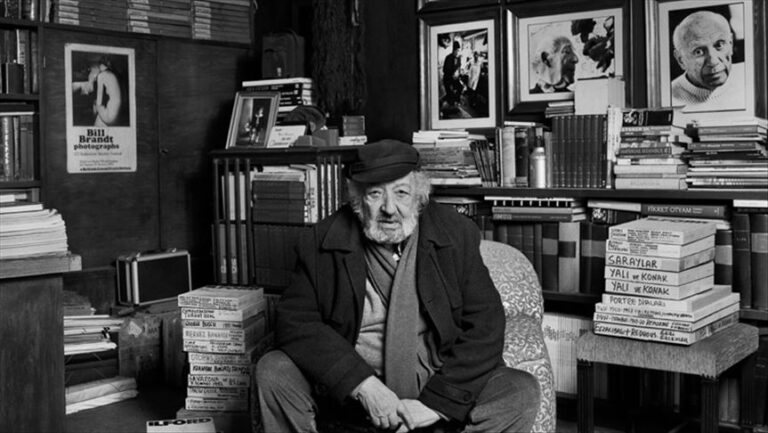
In 1974 I bought a Russian Zorki camera for black-and-white photographs and started first from Fatih and then proceeded to Western historical antique locations in the Aegean region, because of my involvement with the touristic guide course. I started from the roads and streets of Fatih, the old town, 45 years ago and got the photos of ordinary people, elderly, youngsters, children and the historical buildings and the wooden buildings in that part of the city.

We may call Fatih as a city in the real sense. The oldest company in Turkey is Çemberlitaş Hamami in 1584. Fatih prouds with biggest church in the world. Saint Sophia is in Fatih. I lived all my childhood in Fatih. Living in Fatih area, your mentality is shaped with Fatih with the conqueror, over there your mentality is always with the people looking for the justice for the people and always to lead with the people, you cannot be alone and with the understanding you have developed in Fatih area is breathed in the air. His spirit makes a difference with the leadership in that area.

Constantinople started the New Rome in that area and the conqueror Fatih also started the new era in 15th century in that area. So here is the center of the world with one of the very first univesities in the world as well. also in Fatih the University as well.

These are straight black and white photographies and meaningful to show us the past of the historical Peninsula.

Maybe the individuals on the photographs, the elderly ones, may not be living now, so we can analyze the conditions of the time just after the war happened in Cyprus and Turkey started to be entering into street movements with guns which lead to the country to military coup in 12 September 1980. The photographs also reflect the property in the streets of İstanbul at the time though the buildings are very old and rich in history, the people are not that much. Here is the most conservative part of the İstanbul.

Following taking photographs of Fatih and downtown İstanbul, I moved to Western Turkey passing through Dardanel Straight snd visiting antique cities like Troy, Pergamon, Smyrna, Priene, Ephesus, Didyma, which are older than Istanbul city, so taking the photos of these archaeological theaters and worship buildings.

Turkey is unique in the world with its richness of antiquity and cultures. Truva is the area where a great war happened between Greek invaders and Anatolians written in legend. Western Turkey is geography of first philosophers in the world before 500 BC where the famous philosophers have lived in this area, so we can say Turkey geography is the homeland of philosophers starting with the Miletos philosophers.

https://theculturetrip.com/europe/turkey/articles/10-things-to-do-in-fatih/

Roman and Ottoman Turkish armies started their military advancement journies all from Fatih District. Mesa Avenue of Roman Empire and Topkapi Palace of Ottoman Empire well all effective in these advancements.

Istanbul was symboled by royal signature of Fatih as with the mission of “Always”.

Street Vendors and chidren, teenagers are the common instances of Fatih streets.


Muzaffer Maden August 1975 Kumburgaz.

© Copyright photo by Levent Ağaoğlu

My aunt Nihal’s handsome son, my late Muzaffer brother. He died on August 31, 1977, in a traffic accident in Sancaktepe, Samandira, while he was in the military, 2 years after this photo was taken. “In this world, I burn for an object. It’s like the sky reaps the harvest for those who died while they were valiant.” Yunus Emre. Muzaffer Maden August 1975 Kumburgaz.
Nihal teyzemin yakışıklı oğlu rahmetli Muzaffer ağabeyim. Bu fotoğraf çekildikten 2 yıl sonra askerde iken Sancaktepe, Samandıra’da trafik kazasında 31 Ağustos 1977’de hayatını kaybetti. Ağustos 1975 Kumburgaz. “Bu dünyada bir nesneye yanar içim göynür özüm. Yiğit iken ölenlere gök ekini biçmiş gibi.” Yunus Emre. Muzaffer Maden Ağustos 1975

Where is the Historical Heartland of Istanbul?

© Copyright photo by Levent Ağaoğlu

The Fatih district of Istanbul is a collar embellished not only by the name but also by the spirit of its founder. The heartland of the Qur’an is Surah Fatiha, and the Fatih of Istanbul.

The most important feature of Fatih is that he was the first and last sultan to give such importance to the book and the library. He invited the people of science and opinion to Istanbul and thus placed the immortal power of the idea at the center of the administration. The names of these intellectuals are kept alive in the streets, avenues and neighborhoods of Fatih.

Fatih is the symbol of the immortal union of the idea and the soul. The Conqueror is the idea and the spirit.

Fatih district is a holy land that breathes the souls of the Fatihs who were martyred in 857 (Gregorian 1453) and buried where they were martyred.

The name of Dar’ül Funun should be started to be kept alive with Fatih Madrasa, which are the Science and Teology institutions that Fatih was the founder of.

The Süleymaniye Library, located in the Süleymaniye Mosque Complex of Kanuni, one of the grandchildren of Fatih, is the world’s largest library of manuscripts.

The capital of the world is the precious city of Istanbul, and the center of Istanbul is Fatih.

Scholars and intellectuals who grew up in Fatih have maintained the longest-lasting empire in the world on three continents with the power of their ideas.

The duty of the sons of Fatih the Conqueror is to be the seal of the conquests of ideas by reviving the same intellectual mission with a transcendent vision in the 21st century, and to spread it to the world by raising thousands of pioneering intellectuals; To keep Fatih the Conqueror alive.

Conqueror; Being assertive means keeping and living the spirit of Fatih. That spirit will live on forever in the lines of the National Anthem of Mehmet Akif from Akşemsettin neighborhood.

The Walled City of Istanbul is called Fatih. In fact, the district that developed around Fatih Mosque reflects the spirit of the Turks. Like Bilge Tonyukuk, Fatih’s life was spent on expeditions, either on the Adriatic coast or on the north and south of the Black Sea coast. The leadership dynamism revealed by these expeditions permeated the capillaries of the state and society.

This mood is most felt in Fatih district. How did 72 warships take a U-shaped route by land from the shores of the Bosphorus and land them on the shores of the estuary? This is the most concrete proof of how the impossible is turned into an opportunity.

Being a grandson from Rumelia, his mother from Macedonia Skopje, and his father from Bulgaria Plovdiv, having settled in Mutemet Street at the foot of Fatih Mosque, having spent his childhood there (I was on Mutemet Street until the age of seven, personality is formed in a child until the age of seven), this is me. It has been an important chance and opportunity that has shaped my whole life.

My childhood was spent in Mutemet Street between 1958 and 1965, until I was seven years old, then we moved to Vatan Apartment on Akşemsettin Street opposite the Ali Emiri Cultural Center (then it was a truck garden at the time). Fatih is my identity.

 . Conqueror is Leadership. Two anecdotes are very meaningful after the Conquest of Istanbul. First, Fatih is curious, trying to find the body of the Byzantine Emperor who died in the war. The emperor fights like a soldier by taking off his clothes, and shows heroism, whereupon Fatih says, “Find the body of the Byzantine emperor”, the emperor is identified from his socks.

Later, Fatih had the heirs of the empire brought the cadres to the administration, and today the Murat Pasha Mosque in Aksaray is a mosque built by the heir of the Byzantine Empire and a convert to Islam. Later, another heir, Messiah Pasha, also serves as the grand vizier.

In addition, he has the heroes who died during the capture of the city in 857 with the Hijri calendar and 1453 with the Gregorian calendar, have their bodies built in the place where their bodies are found and orders them to be buried where they are. The leadership that manifests itself in these anecdotes is a leadership adorned with self-confidence, and this leadership ensured that the empire was in the capital for a very long time, like 600 years.

The cities of the Turks are intertwined with cemeteries, they have dead ends, they are lived with animals. Fatih entered Istanbul with the dogs. Animals are not at home, but on the streets. These phenomena are absent in Western cities and Arab cities. People and animals live together on the streets in this country. In this country, people are not separated by color, colors are only descriptive for geography; It is the Mediterranean, the Red Sea, the Black Sea, the Blue Danube, the Gökçe Sea (Caspian sea).

“Turkish cities have lost the concept of “cities with animals” with Ibn Khaldunian sociology. Turks should return to the vision of a city based on the views of Al-Farabi.” Lütfi Bergen @BergenLutfi

“Turkey is a love-born country that accepts and values living things as they are, without discrimination. The term Anaç and Dolu fits perfectly. Tribes and religions are clumps of land and its inhabitants deserve much more than the imperial world.” Danyal Hergünsel

In my poem Bazar, I tried to reflect the spirit of Fatih, the spirit of Fatih district, by going over the Wednesday market, which is the largest public market in Turkey, which is an open and huge market.

Sarayburnu in the Sea of Marmara in 1975

© Copyright photo by Levent Ağaoğlu

Boats waiting in line to enter the Bosphorus off Sarayburnu in the Sea of Marmara and fishing boats around them. Different worlds. Some people’s worlds are iron-packed ships, some are wooden boats. Different aspirations and preoccupations of catching fish from the seabed and transporting the cargo over the sea. Medar-ı Maişet Motoru is the name of Sait Faik’s first novel. Sarayburnu, 24 January 1975 Friday, By the Sea
Marmara Denizinde Sarayburnu açıklarında Boğaza giriş için sıra bekleyen tekneler ve civarlarında balıkçı tekneleri. Farklı dünyalar. Kiminin dünyası demir yığını gemiler, kimininki ahşap sandallar. Deniz üstünden yükünü yerine ulaştırmak ile deniz dibinden balık yakalamanın farklı özlemleri, meşgaleleri. Sait Faik’in ilk romanının adıdır Medar-ı Maişet Motoru. Sarayburnu, 24 Ocak 1975 Cuma, Deniz kenarı

Sarayburnu January 24, 1975 by the Sea, Istanbul

© Copyright photo by Levent Ağaoğlu

Coastal road winding along the walls, fishing boats are on the way to sell the fish they caught in the sea, while the ships are waiting in line to enter the Bosphorus at anchor. One of the favorites of the time, the assembly industry Dodge pickup truck is parked on the beach sidewalk. Sarayburnu January 24, 1975 by the Sea
Sahilyolu surları dolanan yol, denizde de balıkçı teknesi yakaladığı balıkları satma yolunda, gemiler ise demirlemiş Boğaz’a girmek için sıra beklemekteler. Zamanın favorilerinden montaj sanayii Dodge kamyonet sahil kaldırımında park etmiş. Sarayburnu 24 Ocak 1975 deniz kenarı

Fatih, Istanbul and Aegean Turkey Black&White Photographs in 1974-1975

https://booksonturkey.com/?s=1975

The photographs I took half a century ago in Istanbul Fatih, on the historical peninsula and in ancient cities such as Troy, Bergama, Ephesus, Didim, in the Aegean, shed light on our day. The permanence of ancient cities, which have not changed for thousands of years, clad in silence and solitude, and the sharp and striking change in the time period of 50 years in the city of Istanbul, occur together before our eyes and extend to us from the beginning years of the 21st century. The ancient cities we visited on the Aegean coast were living their heyday when Istanbul was not yet in the middle.

Despite the magnificence of Istanbul’s historical buildings, the poverty and deprivation observed in the 1975 photographs raise questions about whether human welfare or magnificent stone structures are permanent. The ruined historical wooden structures seen in the photographs were quickly destroyed and left their places to reinforced concrete structures. The apartment building fashion, which started in the mid-1950s, has rapidly changed the face of the city in 20 years.

I have been trying to convey the world reflected by the photographs and our impressions with subtitles.

In terms of political history, 1975 is the interim period between the coup d’etat of March 12, 1971 and the coup of September 12, 1980. The country conditions of a period between military coups have been brought to light with photographs.

After the shooting of the photos, I took photos, shared videos and published them as videos under the title of Teavller’s Talks during my business trips to 32 countries in 32 years in the export sector, in which I was involved by chance in a time period approaching ten years. This time it was the outside world that was in question, and I plan to publish these photos as a book again. This is the result of the spirit of Fatih, regarding the world view, the unity of people, that I acquired in the Fatih district of Istanbul.


The charming elders in Fatih Mosque, 1975, Istanbul

The charming elders in the courtyard of Fatih Mosque, 1975, Istanbul.

© Copyright photo by Levent Ağaoğlu

In the courtyard of Fatih Mosque, the charming elders had a very cheerful conversation with the pride and confidence of the Fatih district and the mosque. Blessings to the lives of those left behind, and mercy to those we bid farewell to eternity. On October 12, 1975, Senate Renewal Elections would be held. Perhaps they were communicating their views to each other on this matter. Fatih Mosque, Saturday, October 11, 1975.
Fatih Camii avlusunda sevimli yaşlı amcalar Fatih semtinin ve camiinin yaşattığı gurur ve güven ile pek de neşeli bir sohbet tutturmuşlar. Geride kalanların ömürlerine bereket, sonsuzluğa uğurladıklarımıza rahmetler ile. Ertesi gün Senato Yenileme Seçimleri yapılacaktı. Belki de bu konudaki görüşlerini birbirlerine iletiyorlardı. Fatih Camii, Cumartesi, 11 Ekim 1975.

Sultan Ahmed Mosque in Istanbul in 1975

© Copyright photo by Levent Ağaoğlu

The symbol of grace and sophistication on the edge of the Bosphorus, the universal place of belief that accompanies the Hagia Sophia Temple after 1080 years, parallel to the Hippodrome Square, the center of the world since Emperor Constantine’s Nea Rome. Sultan Ahmed Mosque
İstanbul Boğazının kenarında yer alan zarafet ve incelik simgesi, İmparator Konstantin’in Nea Roma’sından beri dünyanın merkezi İstanbul’un nişanesi Hipodrom Meydanı’nın paralelinde Ayasofya Mabedine 1080 yılın ardından eşlik eden evrensel inanç mekanı. Sultan Ahmet Camii

Aunt and Nephew in Istanbul, 1975

© Copyright photo by Levent Ağaoğlu

A friendly, sweet aunt and niece whose eyes got the color from the Danube River. A helpful sister to her neighbors and siblings with the spirit of the headwoman of her neighborhood. A life line stretching from Ordu Street Laleli to Millet Street Fındıkzade. A fateful line that continues with the pain of losing her eldest son 2 years after the photo was taken. Aunt and Nephew
Güleryüzlü, Tuna nehrinden gözlerinin rengini almış dünya tatlısı bir teyze ve yeğeni. Mahallesinin muhtarı ruhu ile komşularına, kardeşlerine yardımsever bir abla. Ordu Caddesi Laleli’den Millet Caddesi Fındıkzade’ye uzanan bir hayat çizgisi. Fotoğraf çekildikten 2 yıl sonra büyük evladını kaybetmenin acısı ile süregiden bir kader çizgisi. Teyze ve yeğeni.