Questions
*****************************************************************
If we say why the Ottoman Empire existed in Africa, what would you mean?
So, what is the situation in the interior of Africa, by the way?
We have mentioned above the situation of the Islamic world against the Western Christian world. Depending on this situation; When we compare the existence of the Ottoman Empire in Africa with other civilizations that existed there before and after it, what similarities and differences can we see?
We feel the need to ask specifically to reveal an important difference. What are your thoughts on the Ottoman Empire’s presence in Africa and its presence in Europe?
If we say that the Ottoman policy in Africa is a kind of protection and the continuation of the Islamic presence; What kind of an effect did the Ottoman Empire have or did it have in the regions of Africa that are not actually included in its geography?
Is the African geography, which is not included in the Ottoman lands, places where the Ottomans could not go geographically?
So, did the Ottomans stop being interested in the region?
The geography we mentioned above is the entire Southern Mediterranean and African geography. We are talking about a management style that has been going on for more than 300 years in this geography. Based on this, the administrative, political, financial, etc., which the Ottoman Civilization added to Africa with the administration of Egypt from Istanbul. What are the structures?
There are also contradictory claims in Western-oriented sources, we see a lot of literature describing the Ottoman period as a dark period.
Then we can talk about a civilization and heritage. What do you think about the Ottoman civilization in Africa and its legacy today?
According to the leadership of this civilization and region, the literary, religious, political, etc. of Ottoman Africa. Who are the pioneers in the fields?
In this case, it may be necessary to mention the Ottoman reflex against the invasions. In the last period of the Ottoman Empire, Africa began to be occupied by Western states. What was the role of the Ottoman State in the resistance of Africa? Is there such a legacy in the independence of countries?
When we think of Africa and especially North Africa, current issues come to our minds. In this context, the trouble in North Africa, which the Westerners occupied and colonized with distorted concepts such as freedom, equality and freedom, still continues. What are the deficiencies that cause this?
We follow the situation every day from the press and the visual media, sir. I have a couple more questions… Was it pre-Ottoman Africa, Ottoman Africa, or Africa during the occupation and exploitation period more prosperous? Do we have any data on them?
One of the elements that come to mind in North Africa when we talk about the Ottoman centuries is the Sufi tradition. What are your thoughts on Sufi movements in Africa?
Is the oldest and most widespread Shazeliyya sect?
What is the situation in Istanbul and Anatolia?
Can you give an example or two of the famous people of such a widespread sect?
What can you say about the Senusism movement or sect?
I don’t know if we would be using a correct expression if we say from your statements that we understand the movement of struggle with a mystical aspect rather than the mystical structure. However, we see that these sects cooperate with Istanbul and Anatolia.
It seems that Senusism was an effective movement in the resistance to the colony.
What kind of movement or sect are the Tijanis?
The combative character of the Ticanites, like the Senusids, comes to the fore. In fact, this situation tells us that Sultan II. It reminds me of Abdulhamid. Say what?
*****************************************************************
Prof. Dr. Süleyman Kızıltoprak made important observations on Ottoman Africa. In Kızıltoprak’s words, the Ottomans in Africa:
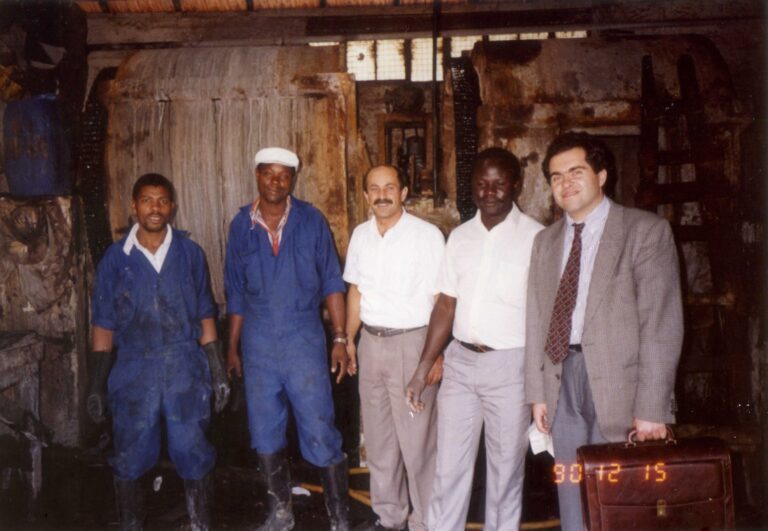
Prof. Dr. Süleyman Kızıltoprak who is famous on Africa ‘s Islamic Peoples and recognized for his works on Africa and especially the Egyptian Islamic Civilization talked about the Ottoman Empire in Africa.
If we say why the Ottoman Empire existed in Africa, what would you mean?
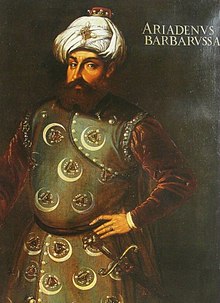
The relationship of the Ottoman Empire with the North African countries started during the destruction of Andalusia. The “Reconquisita”, which acts to make the region Christian again, is the Iberian Peninsula and North African leg of the Crusades. The Spanish capture of Mersâ el-Kebir, Vehrân (Oran) and Bicaye on the Algerian side was also threatening the interests of the Ottoman Empire in the Mediterranean. In the face of the possibility of the Spaniards to seize North Africa, the famous Turkish sailors Oruç Reis and Hızır Reis turned to the goal of establishing Turkish dominance in these regions. First, in 1516, they annexed the city of Algiers to the Ottoman lands. After the arrival of the Turks in the region, the Christian advance stopped. Thus, the Muslims in Africa found a protector for themselves. After the death of Oruç Reis (1518), Hızır Reis entered the service of the Ottomans.With the financial and moral support he provided, he successfully repelled the Crusaders from Europe. The relations between the Ottoman Empire and the Moroccan Sultanate started during the reign of Suleiman the Magnificent (1520-1566) and continued for a while, intensifying. Later on, these relations, which did not go beyond the exchange of goodwill ambassadors and gifts, developed in proportion to the power of the Ottoman Empire in Algeria.
So, what is the situation in the interior of Africa, by the way?
The distant and vast Inca and Mongol Empires soon fell into the hands of the Europeans. Despite such easy conquest of these empires, why did the many weak states of North Africa, which were closer to each other in many regions and directions than Europe, troubled the European colonial powers for so long? Because in the Middle Ages, the strength of North Africa was more than enough to repel attacks. During the Umayyads (661-750), Abbasids (750-1258), Almoravids (1049-1145) and Almohads (1146-1248), North Africa served as an umbrella against the Western Christian world. However, the weakness of these states emerged in a period more or less parallel to the peak of vandalism in Spain. During this period, the Ottoman EmpireHe took positions in North Africa and East Africa against the Portuguese and Spaniards; The civilization vandalism, human slaughter, cultural and religious defeat experienced in Andalusia in these regions did not allow them to be experienced in those regions.
We have mentioned above the situation of the Islamic world against the Western Christian world. Depending on this situation; When we compare the existence of the Ottoman Empire in Africa with other civilizations that existed there before and after it, what similarities and differences can we see?
I can give a concrete example of this question from the foundations: Thanks to the importance Islam gives to cooperation, solidarity and sharing, foundations have become one of the remarkable civil institutions in every region where Muslims live and rule. These institutions became more functional by operating in all areas of social life during the time of the Ottomans, who continued the ancient practices. Mamluk sultans made foundations work in every field in Egypt. They have achieved deep-rooted success by making use of the foundation institution in urban planning projects that will transform Cairo’s skyline. During the Mamluks period, especially since the reign of Sultan Baybars (1260-1277), the maintenance of holy cities such as Mecca, Medina, Jerusalem, al-Halil, religious, educational and municipal services, as well as some military institutions such as weapons factories,It was operated with funds from foundations. Ottoman foundation system; In the field of education, he took the practice of the Nizamiye madrasah in the Seljuks as an example, and also developed and kept the tradition of al-Azher founded by the Fatimids and Zeytuna Madrasahs established before him. In the development of foundations, especially in the establishment of family foundations, the Ottoman understanding of foundations based on the fatwas of Abu Yusuf was taken as a model to some extent in the whole Islamic world. For example, those who wanted to establish foundations in North African lands such as Algeria, Morocco and Tunisia, although they were Shafi’i or Maliki, established foundations based on Hanafi fiqh principles as developed by the Ottomans. The waqf system also influenced the West. It is even stated that during the Mamluk period, Christians in Egypt imitated the Islamic foundation method and established foundations for their churches.The fulfillment of educational services by foundations is an example of the way the Islamic state tradition provides services. State; public works, education, health, etc., other than justice and defense services. has left its public services to non-governmental organizations, namely foundations.
We feel the need to ask specifically to reveal an important difference. What are your thoughts on the Ottoman Empire’s presence in Africa and its presence in Europe?
The presence of the Ottoman Empire in Africa; In terms of Islamic civilization, Amr b. As, Ukbe b. Nafi and Tarik b. It started after an accumulation that started from Ziyad, contributed by states that sometimes showed their power, such as Almoravids, Almohads, Andalusian Umayyads, Fatimids, Ayyubids, Mamluk Sultanate. The Ottoman Empire took action to protect the Islamic peoples and civilization in Africa. In Europe, on the other hand, he established a civilization himself. He rebuilt cities and brought the justice and education system to Europe.
If we say that the Ottoman policy in Africa is a kind of protection and the continuation of the Islamic presence; What kind of an effect did the Ottoman Empire have or did it have in the regions of Africa that are not actually included in its geography?
Ottoman Empire, XVI. The African and Arabian Peninsula policy in the twentieth century was not based solely on securing its southern borders. More importantly, it was to ensure the safety of the Holy Cities, namely Mecca-i Mükerreme, Medina-i Münevvere and the Muslims living in the aforementioned geography. It was also to preserve the cultural, social and architectural values that enriched the Islamic civilization that flourished in Timbuktu, Kairouan and Cairo. Cultural interaction is another issue. It could not be expected that the Ottoman Empire, which had the most powerful state structure among the Muslim states, would allow the Portuguese and the Spanish to share the world among themselves and to colonize the Mediterranean and Red Sea coasts. The Ottoman Empire listened to the voices of those who said “help”. The Ottoman Empire, when it was strong,It did not strive to seize states and emirates that were self-governing and did not remain weak in the face of any threat. Moroccans were able to live without the help of the Ottoman State. Same with Zanzibar, Harar Emirate and Darfur Sultanate. These last two were attached to the Ottoman Empire when needed. But all of them are connected to the Ottoman Empire with the caliphate bond. Although the Ottoman Empire claimed the caliphate of the Moroccan Sultan, it also established relations with Morocco. He avoided getting into a “you-me” fight with Morocco in the face of European powers.They were attached to the Ottoman Empire when needed. But all of them are connected to the Ottoman Empire with the caliphate bond. Although the Ottoman Empire claimed the caliphate of the Moroccan Sultan, it also established relations with Morocco. He avoided getting into a “you-me” fight with Morocco in the face of European powers.They were attached to the Ottoman Empire when needed. But all of them are connected to the Ottoman Empire with the caliphate bond. Although the Ottoman Empire claimed the caliphate of the Moroccan Sultan, it also established relations with Morocco. He avoided getting into a “you-me” fight with Morocco in the face of European powers.
Is the African geography, which is not included in the Ottoman lands, places where the Ottomans could not go geographically?
They are places where he cannot go naturally and where he is not needed. Harar emirate, which dominates parts of present-day Somalia, Ethiopia and Kenya, can be given as an example. So is the Zenzibar Sultanate. Sultanate of Zenzibar, XVIII. strengthened since the turn of the century. It was an active state until the British colonists came to the region and started to operate. It spread from Dar es Salaam to Uganda until the 1880s. The Ottomans also went to Uganda and stopped there. Because it is not needed in that area. When he was needed at the end of the 19th century, he could not provide enough support, he could not afford it.
So, did the Ottomans stop being interested in the region?
Of course no. He especially supported commercial and mystical movements. Islam spread to the north, south and inner regions of Africa through mysticism, trade and marriage. For example, the sheikhs and merchants of the Shadhiliyya and Qadiriyya sects contributed to the spread of Islam among ethnic groups living in the common border regions of Tanzania, Malawi and Mozambique. Zenzibari traders moved inland, starting from Bagamoyo on the coast of present-day Tanzania. Between 1860-1895, they both traded and preached in a wide geography from Fizi in the west of Lake Tanganyika to Kasongo and Nyangve, from Uvira to Kirundu, Kisangani and Katanga. Today, the settlements named Türkî in the said region, Moralı, Bursalı,They have surnames like Istanbulites. A considerable number of people are aware that they are of Turkish origin. The traders were bringing with them clergymen who would preach to the locals and teach religious knowledge to the regions they went to. from time to time therewomanthey were getting married. Thus, they contributed to the local human resources. They enriched them socio-culturally and economically, both preaching religion and making commercial profits. In short, they thought that they were gaining material and spiritual gains in all respects. On the other hand, on the other hand, a common consciousness against colonial attacks was developing here. Therefore, many national liberation struggles in Africa contain religious and mystical characters. Another contribution of the Ottoman Empire to the human resources of North Africa was that they took Muslim boys from Anatolia to Tunisia, Algeria and Libya to serve as sailors. prof. Dr. İbrahim Güler has many valuable works on this subject. Young boys from the interior of Anatolia, but mostly from the Aegean, Black Sea and Mediterranean coasts,As sailors, they went to Algeria, Tunisia and Libya, which are called the Western Hearths, to get a job and to have a career, they married local Muslim women and continued their lives there. Thus, the lifestyle in the region was tried to be transformed by taking Istanbul as an example, and the defense power of the region was increased. A policy and effort to strengthen cultural and social ties, covering all of them, has been put forward. As a result, a generation consisting of military sons called Kuloğlu, whose numbers are expressed in millions, has emerged. Against the colonial powers, those of this generation showed serious reactions. Today, there are still settlements named Türkî in the region in question, and surnames such as Moralı, Bursalı, İstanbullu. A considerable number of people are aware that they are of Turkish origin.
The geography we mentioned above is the entire Southern Mediterranean and African geography. We are talking about a management style that has been going on for more than 300 years in this geography. Based on this, the administrative, political, financial, etc., which the Ottoman Civilization added to Africa with the administration of Egypt from Istanbul. What are the structures?
Ottomans reaching Africa, XVI. century, and the first step was to Egypt. With the conquest of Egypt in 1517, the Mamluk period there ended. Turkish sailors Oruç, Hızır (Barbaros) and İshak brothers took Algeria from the Spanish in 1516 and brought it under Ottoman rule. This is also VII. He ensured the continuation of Muslim rule, which had lasted for a century, but was threatened by Spanish attacks. With the acceptance of Barbarossa into Ottoman service, Algeria came under Ottoman rule in 1520, then Tunisia in 1534 and Tripoli in 1551. Thus began a new era in the history of North Africa. VIII. North Africa from the turn of the century to 1830 and in a sense to the present; Under Arab, Berber, and Turkish rule, it became part of Muslim life and thought, part of Asia and the eastern Mediterranean.The medieval universities of Fez and Samarkand were basically like the universities of Oxford and Paris, despite the distance of two thousand miles between them. The Ottoman Empire’s conquest of Egypt had important consequences for Western Asia and North Africa. This development led the Ottomans to control the sea routes in the Mediterranean and to conquer other North African countries. In addition, the inclusion of Mecca and Medina, the holy cities of Islam, gave the Ottoman Empire prestige in the Islamic world. The settlement of the Ottoman Empire in Iraq and Egypt undoubtedly led to its influence on the road to India. The Ottoman Empire, which took Iraq, gained a strategic advantage by owning the Basra Port. This situation; In the face of the Portuguese threat, the Ottomans, upon the calls from India,In order to ensure the safety of the Indian route, it has led to naval expeditions to the Red Sea. The Mamluk Sultanate, which had previously dominated Egypt, failed to respond to calls to help prevent the threat posed by the Portuguese, who were trying to circumnavigate the Cape of Good Hope and seize the way to India, in East Africa and the Red Sea. As a result, the Ottoman Empire, although unable to prevent Europeans from entering Asia, settled in East Africa (today’s Sudan and Ethiopian coasts, Somalia, Eritrea and Djibouti). Undoubtedly, the Ottoman Empire’s dominance in Egypt played a major role in this development. In the face of the threat posed by the Europeans’ arrival in India by sailing through the Cape of Good Hope; The Ottoman Empire began to struggle with these powers both in the Ocean and in the African continent.In this connection, during the reign of Suleiman the Magnificent, IV. During the Indian Expedition, Abyssinia was conquered and the State of Abyssinia was established. (1554-1560) Ottoman activities in the Red Sea began and developed when the navy prepared for the Indian expedition landed in Suakin from Suez and established an advanced naval base there. A new naval base was established in Zeyla, with full control over the Red Sea coast and Abyssinia. The issues that were plaguing the Ottoman Empire in Asia and Europe did not allow for new initiatives in these regions, which were far from the center. The Ottoman Empire undertook the protection of the Islamic world against the Christian states in the Eastern and Western Mediterranean. Thanks to the Turks, Algeria and North Africa were saved from a great disaster caused by Spain and Portugal. In the same period,The policy that Spain applied to the states it occupied in South America was a complete genocide. If Spain had succeeded in invading North Africa, starting with Algeria, there was a strong possibility that it would have done what it did in Andalusia and South America. In the three centuries under Ottoman rule, the future borders of the Algerian State were determined and the tradition of administration began in this period. The same is true for Tunisia and Libya.
There are also contradictory claims in Western-oriented sources, we see a lot of literature describing the Ottoman period as a dark period.
These claims are not true. Some accusations that the period of Turkish domination in North Africa caused the region to fall behind, that it was a tyrannical period, and that the Turks generally did not have the thought of developing the places they took under their rule; It shows that Ottoman archival sources have not been adequately examined or that the subject has been approached purposefully. Because, if the French system, which is based on racism and imposes its own culture, is compared with the Ottoman system, which helps the development of local cultures and gives administrative autonomy to the regions under its rule, more objective evaluations will be made about the Turkish era.
Then we can talk about a civilization and heritage. What do you think about the Ottoman civilization in Africa and its legacy today?
Unfortunately, today, neither living nor those who live in this region in Turkey, exactly this legacy newsthey narrow. However, there is much in common from music to literature, historical records and archival documents. There is a very limited number of academic works, but academic collaborations are very few. As I said before, the history of North Africa and Arab countries cannot be written without using Ottoman documents and resources. But it’s written. And the Ottoman centuries were either ignored by Western and local historians, or were blamed for lost centuries. Those who wrote in fairness remained on the sidelines. After that, academic research in Turkey should be quickly translated into Arabic and French through various support projects. Joint scientific meetings, exhibitions, cultural activities should be held. In Tunisia, a week of Russian culture was held recently. Russia has little interest in Tunisia. Despite this, rising Russia, in every field,trying to be visible everywhere. But why hasn’t the Turkish culture week been organized yet? Organized book fairs etc. marginal and ideological groups also participate in the activities.
According to the leadership of this civilization and region, the literary, religious, political, etc. of Ottoman Africa. Who are the pioneers in the fields?
To mention a few that immediately come to mind… Among the political actors who started a movement against the Spanish and French colonial powers in North Africa, Abdülkerîm al-Khattabî (d. 1963) in Rif, Morocco, Ahmed Sharif es-Senusî (d.1933) in Libya. We can talk about Emir Abdulkadir (d. 1883) in Algeria, Ahmed Bey, Emir of Constantine in Algeria, and Mahdi movements in Sudan and Somalia. These are movements that have both religious and mystical connections. They took the initiative politically against the occupations.
In this case, it may be necessary to mention the Ottoman reflex against the invasions. In the last period of the Ottoman Empire, Africa began to be occupied by Western states. What was the role of the Ottoman State in the resistance of Africa? Is there such a legacy in the independence of countries?
When the neo-colonial movement began in the 19th century, the Ottoman Empire showed several weaknesses in defending its European lands against the armies of Russia and Austria and faced dramatic defeats. In this respect, it was insufficient to prevent the aggressive and expansionist policies initiated by European states in North Africa. He could not respond as he wished to the Italian and British attacks, especially the French colonialism, targeting the lands under his rule in North Africa. In order for the local resistance movements to be successful, public support was provided in newspapers such as al-Cevâib. After the Italian occupation of Tripoli, officers were secretly sent to the region to organize the people and support the Senusî movement. Ottoman Empire until the Balkan Wars,He tried to maintain his interest in the region by using various channels. Ottoman officers tried to organize the local people against the Western imperial powers, as in the case of Libya.
When we think of Africa and especially North Africa, current issues come to our minds. In this context, the trouble in North Africa, which the Westerners occupied and colonized with distorted concepts such as freedom, equality and freedom, still continues. What are the deficiencies that cause this?
Western colonialism, in a very ruthless way, carried out practices contrary to human rights. The photo of a 5-year-old girl whose hands and feet were cut from crosses because she could not collect enough rubber in the region called Belgian Africa is still in the minds. In Egypt, there were people who were unjustly executed due to the Danşüvay Incident in 1907. Cromer, who was the British Consul in Egypt but acted as a de facto governor, boasted of abolishing the penalty of floundering and whipping after the invasion. But he applied these punishments unjustly to all the villagers. These two events dealt a great blow to Belgian and British colonialism. The colonial methods of the French are a history full of cruelty, where torture and massacres were already practiced in Algeria, Tunisia and West Africa. As for today, the atrocities continue to some extent. But the actors on stage are different.Unfortunately, the scenarios written by foreign powers are played and implemented by domestic actors. While Muslims in Nigeria persecute Muslims, Christian religious fanaticism in Central Africa continues to ethnically cleanse Muslims.
We follow the situation every day from the press and the visual media, sir. I have a couple more questions… Was it pre-Ottoman Africa, Ottoman Africa, or Africa during the occupation and exploitation period more prosperous? Do we have any data on them?
Undoubtedly, the Ottoman centuries, -XIX. Except for the depression period that disturbed the entire Ottoman body in the 19th century, they were happier and safer centuries.
One of the elements that come to mind in North Africa when we talk about the Ottoman centuries is the Sufi tradition. What are your thoughts on Sufi movements in Africa?
The answer to this question is not something that will end with a few lines. A large area with historical and current dimensions. Against the colonial and invading forces in Africa in the XIX. and XX. The Sufi movement leaders were influential in the 19th century. Among them, Şazeliyye was born in Tunisia, Senusiyye was born in Libya, and Ticaniyye was born in Algeria and was influential in Africa and the Islamic world.
Is the oldest and most widespread Shazeliyya sect?
Yes, XIII. In the first quarter of the 19th century, the sect founded by Abu’l-Hasan al-Shazeli when he was 34-35 years old on the slopes of Zagvan Mountain in Tunisia became active in a wide geography over time. During the Mamluk State, it affected large masses in Egypt, Alexandria and Cairo, and then spread rapidly in North Africa. Cairo was the caliphate center and the most powerful state of the Islamic world at that time. It is the place where an elite ulama community is located. It is clear that here, the most serious reactions to the sects were directed by the ulama and there was also a rivalry between them due to different interpretations. In this respect, it is noteworthy that the Shazeli sect was in demand in Egypt. Since the Shazeli sheikhs were also equipped with the science of fiqh, they gave moral support to the Muslims whose lands were occupied, their order was broken and their dignity was broken after the Mongol attacks,it almost gave them a new spirit. Their morale has improved thanks to the brotherhood of the sect, and although they are at a loss financially, they have become stronger spiritually. After Sultan Kutuz and Baybars won the Ayn-ı Calut War against the Mongols in 1260, Şazeliyye had the opportunity to spread in this region. After the Crusades and Mongol attacks were eliminated, the sect spread in Syria and the Arab world, reaching as far as India, Malaysia and Indonesia. XVI. Şâzeliyye, which started to be seen in Anatolia through the Meymûniyye branch in the 19th century, continued to spread towards the Balkans and Europe. Shazeliyye is a sect that cares about staying within the boundaries of Ahl as-Sunnah. Like the Ni’metullahiyya, it has only one branch with Shiite colors. No other similar has emerged.Now, the Shazeliyye is one of the most widespread sects in the Islamic world with over 100 sub-branches.
What is the situation in Istanbul and Anatolia?
ll. Ebü’l-Mekarim el-Bekrî came to Istanbul during the reign of Selim I. However, the first known Shazeli dervish lodge is Alibeyköy Şazeli Lodge, built by Silahdar Abdullah Ağa in 1200 A.H. (1786 AD). Two of the Şazeli dervish lodges in Istanbul have survived: the Ertuğrul Lodge in Beşiktaş and the Dergah in Unkapanı. The Shazeli Sheikh of the Ottoman Empire is Muhammed Zafir al-Medeni, known as Sheikh Zilfir. (d.1903) ll. Abdülhamid had the dervish lodge, known as Ertuğrul Lodge, built in Beşiktaş for al-Medeni. He gave rich foundation resources to this lodge. II, who occasionally visits this lodge right at the foot of Yıldız Palace. Abdulhamid also participated in the prayers and dhikrs here.
Can you give an example or two of the famous people of such a widespread sect?
Şazeliyye, which has followers almost all over the world, XX. It is one of the Sufi schools that attracted the most attention in the West, that is, in Europe and America in the 19th century. In fact, many Western intellectuals and thinkers who converted to Islam were members of Shazeliyye. Among them, we can count them at once: Rene Guenon (Abdülvahid Yahya), Michel Valsan, Frithjof Schuon (Isa Nureddin), Martin Lings (Ebubekir Siraceddin), Titus Burckhardt, Gai Eaton and Ian Dallas (Abdülkadir es-Sufi).
What can you say about the Senusism movement or sect?
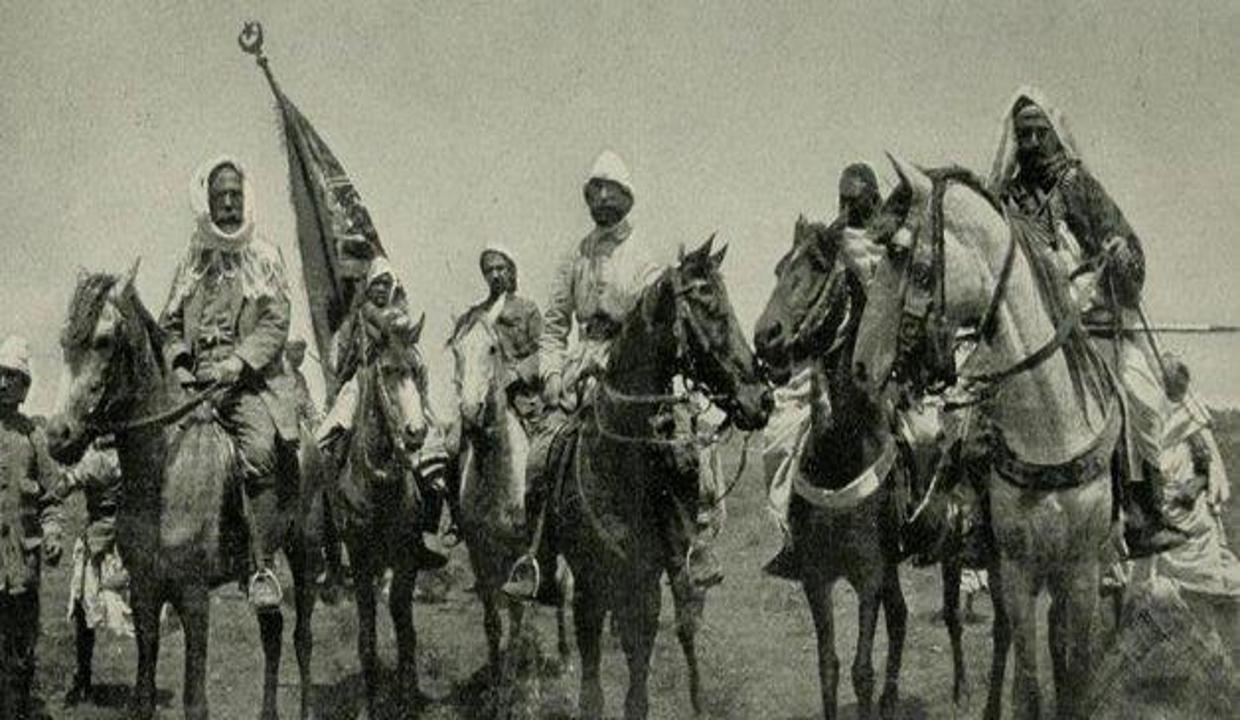
Senusism, XIX. century Muhammad b. It is a Sufi movement initiated by Ali es-Senusi (d.1859). The birth and development of the movement, which coincided with the years when British and French colonialism entered into competition in the African continent, is, in a way, the story of providing material and moral support to the national liberation movements. It has gained effectiveness in other parts of the continent, especially in North Africa, especially in Sudan and the Sahara. The Senusiyya movement organized the local resistance against European colonialism in Libya and the Sahara. The resistance was founded by Muhammad b. He took action under the leadership of Ali es-Senusi. The first leader of the sect, known as the “Great Senusi”, was Abdullah b. He joined the sect where İdris al-Fâsi was the sheikh. Upon the death of the sheikh, he became the leader of one of the emerging groups.He returned to North Africa in 1840 and started the Sanusi movement. In 1843, he founded the first zawiyah of the order in Beyda, between Derne and Benghazi. He went again in 1846 to Mecca, from which he had previously had to leave. He stayed here until 1853. When he returned to Libya, he reorganized his movement. He enlarged the zawiyas into more fortified ribats and transferred the center of the movement to Jaghbub near Egypt. Meanwhile, he received close attention and support from Sultan Abdülmecid. When the great Sanusi died, his son Muhammad al-Mahdi (d.1902) took his place. Sheikh’s other son, Muhammed al-Sharif (d. 1896), became the head of the madrasah in Cagbub. Although the Sanusi movement aimed to spread in cities, it was more popular among the Saharan tribes. Benghazi in 1870 and Tripoli in 1882 were established. XIX.In the last quarter of the century, Sanusi gained the sympathy of more than half of the Saharan tribes. XIX. At the end of the century, the Sanusi movement, with the effect of being more effective against the colonial powers, saw a new structuring as necessary. The administrative center was transferred from Jaghbub to Kufrah. The Senusi, who moved away from the North African coasts, on the one hand resisted the French advancing towards Lake Chad in Kufrah, on the other hand they tried to resist the colonial ambitions of the British in Sudan. In the years when the struggle against foreign powers was heating up, both leaders of the movement lost their lives. The movement, which had 150 lodges in the Sahara region in 1900, used these places as a cult place as well as for resistance purposes. A resting place for insurgents, zawiyas merchants,It was also considered as a communication and transportation point for the resistance forces. In 1902, Ahmet al-Sharif (1873-1933) became the third leader of the Sanusi movement. Between 1902 and 1912 he did everything he could to continue the resistance against the French in the Sahara more effectively. With the Italian occupation of Tripoli in 1911, Ahmet al-Sharif started to organize a larger resistance against the Italians while continuing his struggle against the French. After the Italians entered Libya (1911), the Senusid movement, which continued its struggle against colonialism by uniting with the Ottoman forces, continued to maintain its power in the Great Sahara until 1920.He did everything in his power to continue the resistance against the French in the Sahara more effectively. With the Italian occupation of Tripoli in 1911, Ahmet al-Sharif started to organize a larger resistance against the Italians while continuing his struggle against the French. After the Italians entered Libya (1911), the Senusid movement, which continued its struggle against colonialism by uniting with the Ottoman forces, continued to maintain its power in the Great Sahara until 1920.He did everything in his power to continue the resistance against the French in the Sahara more effectively. With the Italian occupation of Tripoli in 1911, Ahmet al-Sharif started to organize a larger resistance against the Italians while continuing his struggle against the French. After the Italians entered Libya (1911), the Senusid movement, which continued its struggle against colonialism by uniting with the Ottoman forces, continued to maintain its power in the Great Sahara until 1920.After the Italians entered Libya (1911), the Senusid movement, which continued its struggle against colonialism by uniting with the Ottoman forces, continued to maintain its power in the Great Sahara until 1920.After the Italians entered Libya (1911), the Senusid movement, which continued its struggle against colonialism by uniting with the Ottoman forces, continued to maintain its power in the Great Sahara until 1920.
I don’t know if we would be using a correct expression if we say from your statements that we understand the movement of struggle with a mystical aspect rather than the mystical structure. However, we see that these sects cooperate with Istanbul and Anatolia.
Of course, Ahmet Şerif es-Senusi was officially the Governor of Tripoli and Benghazi. At the same time, he had the title of “Emirü’l-Mu’minîn” and the title of “Nâibü’s-Sultan of Tripoli and Benghazi” in Africa. It was in the interest of the Italians that Ahmed Sharif es-Senusî, who fought loyally to Istanbul and became the sole target of his enemies, remained in Libya. Thus, the great leader of the resistance left Carabub to go to Istanbul of his own accord. He came to Ageyle in Sirt Bay and arrived in Istanbul via Pola in 1918 with a German submarine present there. Here he was highly respected by the state, especially by Enver Pasha. Since the war conditions did not allow him to return from Istanbul to Tripoli, he was sent to Bursa as the sultan’s guest of honor. After the War of Independence began, he gave full support to this struggle.Later, Atatürk invited him to Ankara. He was welcomed in Eskişehir with a large delegation. After that, he used all his influence to support the Turkish War of Independence. He also called on the people to support the National Struggle during his trips to the eastern and southeastern provinces.
It seems that Senusism was an effective movement in the resistance to the colony.
Yes, the Sanusiyya were influential in a wide geography from Morocco to Yemen, avoiding their own extremism and walking the middle path within the four Sunni sects and sects. They bravely stood up to the British, French, Italian, and Spanish colonizers, fighting epically to preserve their identity and preserve their economic resources. Among them, the most well-known hero is Ömer Muhtar. The first lodges of the Sanusi were built in places of strategic importance in terms of trade and agriculture. The zawiyas, which were frequently established in the Mediterranean coast and the regions south of the Great Sahara, were important in terms of caravan trade, pilgrimage and education, as well as helping the poor to hold on to life. This situation is also seen in other lodges and lodges,however, it was possible to obtain a land for agriculture next to every zawiyah that is not of this size. In fact, these agricultural activities and the possibility of settlement have transformed the places where the zawiyas are located, from being rural and remote places to towns with the increase of settlers over time. In this way, the zawiyas also contributed to the urbanization. As Ahmet Kavas has stated, the best examples of this are the Beyza zawiyas in Benghazi and the zawiyas in Jagbub and Kufrah.The best examples of this are the Beyza zawiyas in Benghazi and the zawiyas in Jagbub and Kufrah.The best examples of this are the Beyza zawiyas in Benghazi and the zawiyas in Jagbub and Kufrah.
What kind of movement or sect are the Tijanis?
We can say that the establishment of the ticanis is also in the recent period. The founder of Ticaniyye, Ebü’l-Abbas Ahmed b. Muhammed b. Muhtar b. Sâlim et-Ticânî (1737-1815) was born in Tilimsân (Tlemsen) in Algeria. The Ticanids took a stand against the authority of the Ottoman State from time to time. However, they resisted French colonial and invading attacks both in Algeria and in Africa. Al-Haj Omar al-Futi in Senegal , TijaniyyaHe is one of the most known leaders or sheikhs of his sect. While performing the pilgrimage in 1825, he joined the order by following Sheikh Mohammed al-Ghali, who was the caliph of Ahmad al-Ticânî’s Hejaz region in Mecca. After learning manners and training from his sheikh for a while, he returned to West Africa as the caliph. Omar al-Futi embarked on an effective guidance activity and formed an army of 30,000 soldiers from his followers. With this army, he started the Senegalese resistance against the French in 1852. Omar al-Futi both started a resistance and awakening movement against the French through his followers and led the spread of Islam among the local faiths in Senegal. This powerful sheikh-leader, who spread Ticâniyye from Senegal to Timbuktu and Sierra Leone, established a state called Tekrûr State.He was martyred while fighting against the colonialists in Mâsînâ in 1864. The state he founded was led by his sons after him. This state was able to resist the French until 1893-1894. Tijaniyya also spread in Mauritania and resisted the colonialists. In this region, the Mauritanian Mohammed al-Hafiz al-Muhtar started his guidance activity. After returning from Mecca to pilgrimage, Mohammed al-Hafiz (d.1830), who was assigned to provide guidance in his country by joining Ahmed et-Ticânî in Morocco, was successful in a short time. He even turned Ticaniyye into a national sect that included almost all the people in Mauritania with the support of the İdev Ali tribe. Later, Ticâniyye grew further in Western Sudan and Senegal, with the active work of the Idev Ali tribe. Mauritania, Niger, Nigeria, Gambia, Guinea Bissau, Ivory Coast,Ibrahim Niyâs, who has a large disciple in Ghana and Togo, is also an important Tijani sheikh from Senegal. Sheikh Hamallah, one of the Tijani sheikhs who was influential in West Africa, fought heroically against the French. He was detained in 1935 and taken to France. Although he was released 2 years later, he was subjected to successive arrests and exiles. He died in the hospital in 1943 while he was in prison in France.
The combative character of the Ticanites, like the Senusids, comes to the fore. In fact, this situation tells us that Sultan II. It reminds me of Abdulhamid. Say what?
Yes, Ticâniyye, II. It attracted the attention of Istanbul within the framework of Abdülhamid’s “Islamic Union” policy and “soft power” policy against the colonialists. Abdulhamid, who came to Istanbul in 1897 and met with Sîdî Muhammed el-Ubeydî, later met with the Ticânî sheikh Muhammed b. He also got together with Fâzıh and gave him the opportunity to carry out guiding activities in the entire Ottoman country. With this support, Mohammed Muhtar, the Sheikh of Tijaniyya in Sudan, visited Istanbul as the ambassador of Ali Dinar, Sultan of Darfur. As it can be seen, Ticâniyye showed a brave and honorable resistance against the French and British colonialists on the line stretching from North Africa and Sudan to Senegal.
Art and Architecture of Mimar Sinan: A Field Companion to Ottoman Istanbul (Masters of Architecture: The Essential Collection)
$29.95 (as of 12/08/2026 02:10 GMT +03:00 - More infoProduct prices and availability are accurate as of the date/time indicated and are subject to change. Any price and availability information displayed on [relevant Amazon Site(s), as applicable] at the time of purchase will apply to the purchase of this product.)
Lonely Planet Istanbul (Travel Guide)
$3.38 (as of 12/08/2026 02:10 GMT +03:00 - More infoProduct prices and availability are accurate as of the date/time indicated and are subject to change. Any price and availability information displayed on [relevant Amazon Site(s), as applicable] at the time of purchase will apply to the purchase of this product.)
MY TRIP TO… ISTANBUL – Coloring Book for Kids Ages 3–5.: A Travel Activity Book for Preschoolers That Encourages Creativity and Learning
$6.76 (as of 12/08/2026 02:10 GMT +03:00 - More infoProduct prices and availability are accurate as of the date/time indicated and are subject to change. Any price and availability information displayed on [relevant Amazon Site(s), as applicable] at the time of purchase will apply to the purchase of this product.)
Notes on a Foreign Country: An American Abroad in a Post-American World
$9.87 (as of 12/08/2026 02:10 GMT +03:00 - More infoProduct prices and availability are accurate as of the date/time indicated and are subject to change. Any price and availability information displayed on [relevant Amazon Site(s), as applicable] at the time of purchase will apply to the purchase of this product.)
Istanbul, City map 1:10.000, City Pocket map + The Big Five
$17.43 (as of 12/08/2026 02:10 GMT +03:00 - More infoProduct prices and availability are accurate as of the date/time indicated and are subject to change. Any price and availability information displayed on [relevant Amazon Site(s), as applicable] at the time of purchase will apply to the purchase of this product.)
Istanbul 50 Unsung Places
$6.50 (as of 12/08/2026 02:10 GMT +03:00 - More infoProduct prices and availability are accurate as of the date/time indicated and are subject to change. Any price and availability information displayed on [relevant Amazon Site(s), as applicable] at the time of purchase will apply to the purchase of this product.)
Rough Guides Turkiye: Travel Guide with eBook: 2026-2027 | Insider Tips | Must-See Sights | Maps & Itineraries | Covers: Istanbul, Cappadocia, the Turquoise Coast and more
$23.51 (as of 12/08/2026 02:10 GMT +03:00 - More infoProduct prices and availability are accurate as of the date/time indicated and are subject to change. Any price and availability information displayed on [relevant Amazon Site(s), as applicable] at the time of purchase will apply to the purchase of this product.)
The Essential Travel Guide to Turkiye: Iconic Sights, Authentic Food and Smart Travel Tips From A Local (Istanbul, Cappadocia, Antalya and Beyond)
$17.99 (as of 12/08/2026 02:10 GMT +03:00 - More infoProduct prices and availability are accurate as of the date/time indicated and are subject to change. Any price and availability information displayed on [relevant Amazon Site(s), as applicable] at the time of purchase will apply to the purchase of this product.)
Black Sea: Dispatches and Recipes – Through Darkness and Light
$14.98 (as of 12/08/2026 02:10 GMT +03:00 - More infoProduct prices and availability are accurate as of the date/time indicated and are subject to change. Any price and availability information displayed on [relevant Amazon Site(s), as applicable] at the time of purchase will apply to the purchase of this product.)
The Turkish Cookbook
$36.46 (as of 12/08/2026 02:10 GMT +03:00 - More infoProduct prices and availability are accurate as of the date/time indicated and are subject to change. Any price and availability information displayed on [relevant Amazon Site(s), as applicable] at the time of purchase will apply to the purchase of this product.)
The Idiot: A Novel
$3.05 (as of 12/08/2026 01:53 GMT +03:00 - More infoProduct prices and availability are accurate as of the date/time indicated and are subject to change. Any price and availability information displayed on [relevant Amazon Site(s), as applicable] at the time of purchase will apply to the purchase of this product.)
Shadow of the Silk Road: A 7,000-Mile Journey Through Central Asia―Trade, Religions, and Ideas from China to Turkey (P.S.)
$1.85 (as of 12/08/2026 01:53 GMT +03:00 - More infoProduct prices and availability are accurate as of the date/time indicated and are subject to change. Any price and availability information displayed on [relevant Amazon Site(s), as applicable] at the time of purchase will apply to the purchase of this product.)
Notes on a Foreign Country: An American Abroad in a Post-American World
$9.87 (as of 12/08/2026 01:53 GMT +03:00 - More infoProduct prices and availability are accurate as of the date/time indicated and are subject to change. Any price and availability information displayed on [relevant Amazon Site(s), as applicable] at the time of purchase will apply to the purchase of this product.)
Türkiye (Turkey) Map (National Geographic Adventure Map, 3018)
$7.22 (as of 12/08/2026 01:53 GMT +03:00 - More infoProduct prices and availability are accurate as of the date/time indicated and are subject to change. Any price and availability information displayed on [relevant Amazon Site(s), as applicable] at the time of purchase will apply to the purchase of this product.)
A Guide to Biblical Sites in Greece and Turkey
$11.08 (as of 12/08/2026 01:53 GMT +03:00 - More infoProduct prices and availability are accurate as of the date/time indicated and are subject to change. Any price and availability information displayed on [relevant Amazon Site(s), as applicable] at the time of purchase will apply to the purchase of this product.)
Lonely Planet Turkish Phrasebook & Dictionary
$7.67 (as of 12/08/2026 01:53 GMT +03:00 - More infoProduct prices and availability are accurate as of the date/time indicated and are subject to change. Any price and availability information displayed on [relevant Amazon Site(s), as applicable] at the time of purchase will apply to the purchase of this product.)
DK Istanbul: Must-See Sights. Culture & History. Detailed Maps & Tours. Covers Sultanahmet, Beyoglu, & more (Travel Guide)
$18.11 (as of 12/08/2026 01:53 GMT +03:00 - More infoProduct prices and availability are accurate as of the date/time indicated and are subject to change. Any price and availability information displayed on [relevant Amazon Site(s), as applicable] at the time of purchase will apply to the purchase of this product.)
Our World: Türkiye
$9.99 (as of 12/08/2026 01:53 GMT +03:00 - More infoProduct prices and availability are accurate as of the date/time indicated and are subject to change. Any price and availability information displayed on [relevant Amazon Site(s), as applicable] at the time of purchase will apply to the purchase of this product.)
Turkish Embassy Letters
$3.96 (as of 12/08/2026 01:53 GMT +03:00 - More infoProduct prices and availability are accurate as of the date/time indicated and are subject to change. Any price and availability information displayed on [relevant Amazon Site(s), as applicable] at the time of purchase will apply to the purchase of this product.)
_.jpg)








.png)