ABSTRACT
Undoubtedly, the main points that we should keep our eyes on and focus our attention on while creating cultural policies are the issues that we are helpless in the face of the challenges of the dominant modern culture and the future dangers that await humanity. However, besides these, another important issue is hidden in our heritage that we brought from our past. The fact that we have a long nomadic past and an oral culture seems to be a source of great problems in our relations with space and writing in modern times.
It is known that Turks have a nomadic and oral cultural heritage. Coming from a nomadic background and living in an oral culture circle, besides many positive features, there are also disadvantages that lead to weaknesses in the community’s survival and creation of its original civilization.
The most obvious drawback of nomadism in terms of modernization is undoubtedly the one in terms of urbanization and urban consciousness. When we look at the scientific information obtained from environmental psychology, we can come to the conclusion that the environments in which people from a nomadic historical heritage live must be different from the Western civilization, where urban citizens have lived in the same environment for centuries, have established cities, have acquired the consciousness of self-management. Indeed it is, and if we do not realize this, it is not possible for us to understand the problems we experience in our cities.
It is possible to talk about real Turkish cities only after Islamization. It is clear that there is a phenomenon called “Turkish-Islamic city” in history. The Turkish-Islamic city has completely lost its identity after encountering modernity, and examples that can be transferred to modern life have not been developed.
Although one of the most basic elements of modernity is defined as individuation, the modern urban individual is not a person who does not respect the rights of others and acts selfishly. On the contrary, modernity necessitates recognizing one’s own individuality as well as someone else’s, respecting its law, developing a behavior accordingly, and being able to self-regulate these behaviors with an internalized authority. All of our attitudes and behaviors that are not suitable for all the content discussed within the scope of “individualization” and “internalization of authority” in the humanities, that others and even each other call us “vulgar”, and that we try to condemn by saying that they do not fit into contemporary life, are in fact nothing but the incompatible legacies of our nomadic past. .We can also say that our nomadic past, which could not adapt to modernity, has a share in the traffic chaos in our country. We can talk about maintaining our interest in showing off and pomp in traffic, getting into the car like a horse, behaving as if you are on the road, not getting used to the products of modern civilization, and not obeying the rights of others with a nomadic remnant. Indeed, our attitudes in traffic resemble a game of javelin in the most succinct form. A person who uses his own modern vehicles like a horse and sees no harm in violating other people’s rights and traffic rules, almost in order to find a further place for his horse, has not yet internalized authority, is unaware of his own and others’ individuality, acts with “nomadic selfishness”, and has a nomadic mentality in the modern world. He is a person trying to live.
It should not be forgotten that the Turkish tribes’ rapid transformation or disappearance within the communities they migrated to, was not strong enough to write their own history and reconstruct their narratives. The only written sources that give information about the nomads are those written by outside observers; Nomads do not have a history written by themselves. This is because they live in the circle of oral culture. Turkish historians meet this ironic situation with astonishment by saying “You make the conquests, let others write your history”; For this reason, those who do research on nomadic Turks have to be content with oral cultural products, such as epics, legends, tales, folk tales, memories, laments, manias, folk songs, proverbs and legends about various events told by word of mouth.
Just as our ancestors had to bring the scribes of the Orkhon Monuments from China [1], for the same reasons, in the early days of the Republic, the scribes were never from the Turkish nobility. It is true that Turks adapted very quickly to many products of civilizations, but even this ability to adapt could not warm them to writing, and they still could not fully enter the circle of written culture. In the Seljuk, Ottoman and especially the Republican periods, the administrators always understood the need for written culture and followed educational policies in line with the understanding of their periods. As well as the settlement of the nomadic society, its education has always been seen as the problems that require solutions at the forefront.
If you do not have a deep-rooted and widespread written cultural tradition, you will not naturally have a desire to own your language, nor a high linguistic awareness. People of oral culture love to talk and chat, but they do not pay the same attention to what they speak and what is the source of what they say. Turkish attitude towards civilizations and religions, which we usually call “tolerance” and which we do not emphasize much, but which can actually be called “passive-receptive”, also manifests itself in the face of written cultures; The occupation and degeneration of their languages against foreign languages is watched with an interesting indifference, without worry.
“While the Turks were able to develop a culture that was able to develop a unique alphabet and a written literature in history [2], why did they delay in entering the circle of written culture, and even despite all these state-supported initiatives and breakthroughs, why did the Republic of Turkey still have a largely oral culture? Did they stay in his apartment?” This is a vital question that must be answered.
Undoubtedly, it is not possible to get rid of our thousands of years old heritage, which defines the framework of our relationship with space and word, and moreover, it is unnecessary. The important thing is to correctly identify the drawbacks of the features we bring from our historical heritage to today’s life, in our unique modernization, and to develop policies accordingly without rejecting our heritage completely.
It is known that Turks have a nomadic and oral cultural heritage. Coming from a nomadic background and living in an oral culture circle, besides many positive features, there are also disadvantages that lead to weaknesses in the community’s survival and creation of its original civilization.
The most obvious drawback of nomadism in terms of modernization is undoubtedly the one in terms of urbanization and urban consciousness. When we look at the scientific information obtained from environmental psychology, we can come to the conclusion that the environments in which people from a nomadic historical heritage live must be different from the Western civilization, where urban citizens have lived in the same environment for centuries, have established cities, have acquired the consciousness of self-management. Indeed it is, and if we do not realize this, it is not possible for us to understand the problems we experience in our cities.
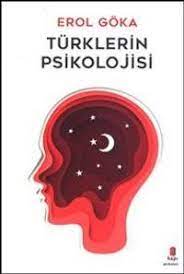
For more than ten years, we have been trying to analyze the relations of Turks with the world, with genders, with words and writing, with money and goods, with weapons, with their tribes and other civilizations, as well as with space [3] . In the last book we wrote on this subject, “The Nomadic Spirit of the Turk ” [4]As we have tried to show, due to the ongoing influence of our nomadic past, the most basic feature of our relations with space is the “spoiltness”. This is not a simple phenomenon. Our makeshift relations with space almost determine our whole psychology, creating a nomadic mood peculiar to us. This nomadic mood is at the root of many of our behaviors, from our exaggerated love for the homeland and the state, to our curiosity to follow the newest and strongest, to our inability to build beautiful cities to our taste buds.
There are various rumors about the urbanism of the Turks. It is said that we built cities in the pre-Islamic period, but archaeological studies have not yet been able to reveal important evidence of the pre-Islamic Turkish city. It is possible to talk about real Turkish cities only after Islamization. It is clear that there is a phenomenon called “Turkish-Islamic city” in history. The Turkish-Islamic city has completely lost its identity after encountering modernity, and examples that can be transferred to modern life have not been developed.
Turkish nomads, who settled in Anatolia, did not give up their old habits completely, and they continued to change places in summer and winter, giving great importance to seasonal migrations even though they lived in cities. There is another nearby settlement used as a summer residence by almost all Anatolian settlements, from the smallest town to the largest city. It is impossible not to see that the number of plateaus and plateau festivals that continue in many provinces today carry the remnants of nomadic times. It is due to our nomadic heritage that we constantly change our dwellings in our city life and that we do not persevere in a city plan. We keep moving from that neighborhood to this neighborhood, from that city to this city; Excavations never end on our roads and settlements.
Today, even in the most developed Turkish cities, we continue to move from place to place, to go to the highlands in the summer, and to breathe in our village during the holidays; our inability to accommodate the idea of a Western holiday, even though we seem to be living in a modern life in cities, we continue our domestic life in a room of the house as if we live in a tent, and we reserve the hall for our guests, which we have equipped with the most beautiful furniture, when we make a mattress to sleep at night and put them in the closets in the morning; even if most of us make it with the imposition of economic conditions, we bring our flour, bulgur, phyllo, tarhana, pastrami, and sausage from our village; It is possible to clearly see the traces of our old psychology in the formation of our taste. The points of similarity between tent life and our present life, taking off shoes outside,hanging carpets on the walls, our love of growing tomatoes and peppers in the garden, on the balcony, etc. It can include many more activities such as
While examining the effects of nomadism on our current behavior and psychology, another point we should look at is the differences in the areas of self-control and emotional control that are expected to emerge in the process of urbanization and civilization. Norbert Elias [5]In many areas, from table manners to speaking styles, from attitudes related to natural needs to male-female relations and transformations in the sense of aggression, he was able to show the emotion control models and standards for Western people under the so-called “civilized” attitudes. Today, Western-style modernization processes are taking place in our country, as in the rest of the world. For this reason, there are changes in the behavior of Turkish people depending on the stages taken in the Western-style modernization process. Well, our behaviors in the field of self-control and emotional control, for which Western-style modernization has not yet shown its full effect, can also be evaluated as manifestations of our “nomadic mood”.
Although one of the most basic elements of modernity is defined as individuation, the modern urban individual is not a person who does not respect the rights of others and acts selfishly. On the contrary, modernity necessitates recognizing one’s own individuality as well as someone else’s, respecting its law, developing a behavior accordingly, and being able to self-regulate these behaviors with an internalized authority. All of our attitudes and behaviors that are not suitable for all the content discussed within the scope of “individualization” and “internalization of authority” in the humanities, that others and even each other call us “vulgar”, and that we try to condemn by saying that they do not fit into contemporary life, are in fact nothing but the incompatible legacies of our nomadic past. .We can also say that our nomadic past, which could not adapt to modernity, has a share in the traffic chaos in our country. We can talk about maintaining our interest in showing off and pomp in traffic, getting into the car like a horse, behaving as if you are on the road, not getting used to the products of modern civilization, and not obeying the rights of others with a nomadic remnant. Indeed, our attitudes in traffic resemble a game of javelin in the most succinct form. A person who uses his own modern vehicles like a horse and sees no harm in violating other people’s rights and traffic rules, almost in order to find a further place for his horse, has not yet internalized authority, is unaware of his own and others’ individuality, acts with “nomadic selfishness”, and has a nomadic mentality in the modern world. He is a person trying to live.
We have discussed in detail the aspects and drawbacks of our nomadic-oral culture in terms of Turkish modernization, apart from establishing cities and raising urban awareness, in our book “The Nomadic Spirit of the Turk” . Now we would like to present it briefly here again. The difficulties experienced in the continuity and transmission of the Turkish lifestyle, which we encounter as “inability to protect one’s self” in conservative discourse, is one of the most important drawbacks of our nomadic-oral culture in terms of Turkish modernization. W. Eberhard’s [6] (1995: p.88) ” Chinese History” in book“Mao-tun established a feudal state, but it was more centralized than the Chinese feudal state and was nomadic rather than agricultural. He was recruiting officials for his court officials, and establishing offices corresponding to Chinese court officials. Many of these offices seem to have been occupied by the Chinese; because the polite Hsiung-nu would probably not have accepted these jobs that their original eunuchs saw. A tahrirat pen was set up at that time, but apparently, since the Hsiung-nu did not have writing yet, they wrote in Chinese. The clerks were also Chinese: the Chinese were also recruited into the military office, and they were used as advisers in battles against the Chinese. Because the wars with the Chinese were different, not like the wars with the nomads.You have to think a lot about your words. If we can grasp the meaning of these words, the words of another Western researcher [7] that “foreigners who conquered China soon forgot their origins and became rulers of China, they became more Chinese than the Chinese, ‘they became Chinese’” becomes obvious to us. We know that the tribes that melted away in the high Chinese culture mentioned here are some of our ancestors, and that the Tabgaç State, which was founded in China in 386 by tribes of Turkish origin, became Chinese over time and took the name of the Wei Dynasty.
Because of all these, the phrase “When the Turkish dog lands in the city, Persian breeds” has risen to the level of a proverb in the Seljuk period [8] . It should not be forgotten that the Turkish tribes’ rapid transformation or disappearance within the communities they migrated to, was not strong enough to write their own history and reconstruct their narratives. The only written sources that give information about the nomads are those written by outside observers; Nomads do not have a history written by themselves. This is because they live in the circle of oral culture. Turkish historians refer to this ironic situation as “You make the conquests and let others write your history” [9].greet with amazement; For this reason, those who do research on nomadic Turks have to be content with oral cultural products, such as epics, legends, tales, folk tales, memories, laments, manias, folk songs, proverbs and legends about various events told by word of mouth [10] .
Just as our ancestors had to bring the scribes of the Orkhon Monuments from China [11]For the same reasons, in the early days of the Republic, the scribes were never among the Turkish nobility. It is true that Turks adapted very quickly to many products of civilizations, but even this adaptability could not warm them to writing, and they still could not fully enter the circle of written culture. In the Seljuk, Ottoman and especially the Republican periods, the administrators always understood the need for written culture and followed educational policies in line with the understanding of their periods. As well as the resettlement of the nomadic society, its education has always been seen as a problem that requires solutions at the forefront. In the Republican era, educational mobilizations were organized in order to disseminate the writing to the society, and finally, the share allocated to education in the last budgets began to exceed even the amount allocated to the armed forces. Obligation to Persian in Seljuks,In the Ottoman Empire, it was partially broken by the incorporation of Turkish into a larger number of written languages. During the Republic period, Turkish was able to become a written language with Latin letters that were easier to read and write, so the distinction between the language used by the people and the written language was eliminated, which is said to have made it difficult to switch to written culture. Despite all this, even the researches revealing how many newspapers and books we read clearly show that we are still largely in the sphere of oral culture.Even the researches revealing how many newspapers and books we read clearly show that we are still largely in the sphere of oral culture.Even the researches revealing how many newspapers and books we read clearly show that we are still largely in the sphere of oral culture.
Bookability plays a very important role in fixing any form of belief and life to a certain time and place. Rituals and texts become canonical thanks to scripture, and people are asked to organize their lives and beliefs according to this canon. In this way, a backbone of belief, orthodoxy, is formed. When people swerve for various reasons in their beliefs and lives, they tidy up according to these canons. Oral cultures do not have this canonical resistance in literary cultures [12]. It is not a coincidence that in the history of religions, sects always emerged before the invention of the printing press. If we cannot talk about a Turkish urban culture today, or if we see more negative aspects in our urban life, not only the makeshift relationship we have established with the place due to nomadism and unplanned urbanization, but also our inability to have a written culture that will organize our behaviors into urban patterns plays a role.
If you do not have a deep-rooted and widespread written cultural tradition, you will not naturally have a desire to own your language, nor a high linguistic awareness. People of oral culture love to talk and chat, but they do not pay the same attention to what they speak and what is the source of what they say. Turkish attitude towards civilizations and religions, which we usually call “tolerance” and which we do not emphasize much, but which can actually be called “passive-receptive”, also manifests itself in the face of written cultures; The occupation and degeneration of their languages against foreign languages is watched with an interesting indifference, without worry.
“The culture of urban entertainment in Turkey of the 2000s is mostly occupied by terms of English/American English and a little bit of French origin. ‘Fitness center, aqua park, aerobics hall, cafe, western cafe, roof bar, funfair, game center, game land, fantasy land, cafe de Paris, le cigare, Chiness restaurant, bungee jumping, treaking, surf, safari, rafting’ The existence of these foreign terms, expressed in hundreds or even thousands, should be accepted as the clearest indicators of the change and transformation, or rather dissolution, in the Turkish socio-cultural structure. Another remarkable point is the use of the spelling of the language from which they were taken in the writing and reading of these terms and words .. However, based on the word examples given here, it should not be thought that we are talking about a cultural degeneration in the face of modernization in the last period. Even if we put aside foreign words such as park, picnic, and camp that have been in the Turkish language for a long time, the fact that the basic words of oral culture are “chat” in Arabic and “yaran” in Persian clearly reveals that Turks have language carelessness in every period. It is very thought-provoking that in many regions of Anatolia, entertainments in which food, fuel and beverage expenses are met jointly are called with names such as “örfene, ferfane, erfane, erfene”, a replacement from the Arabic “harifane” meaning “jointly” [14]. The fact that even the vocabulary of Alevi-Bektashi beliefs, which mentions the obvious influence of ancient Turkish beliefs, is significantly Arabic and Persian, should be evaluated within this framework, and it should be understood that our position in foreign languages is not just a phenomenon related to the attitude of the ruling classes, but is based on more deep-rooted foundations. The Seljuk historian Ibn-i Bibî, who himself wrote in Persian, has an event that shows that Persian, although it was the official language of speech and correspondence, became the center of attention of everyone from ordinary people, mostly Turkish, to sultans and viziers, and that people competed with each other for dominance of Persian during the Seljuk period. There are similar examples in Turkish history in every period and today.
Among the most important drawbacks of oral culture related to nomadism, those related to intellectual life and scientific thought should also be counted. Although Roux, who listed the common features of the Turks, [15]Although it emphasizes the patronage of science and art in our administrators, we think that it is related to the empire or state tradition rather than being specific to the Turks. Because we see that the life of thought and science are directly related to the settled-written city culture. For this reason, Turks, who established great states and mediated between civilizations, religions and languages, and who are known for their patronage of science and art, have the ability to make the expected breakthroughs in the field of state organization and law, although they always produce successful products in the fields of architecture, music and poetry, They did not advance in the fields of philosophy. Youth ages in ” History of Turkish contemplation of” ni [16] by country, in the writings penned the maturity period [17]He complained about the situation of the Turks in the field of contemplation, and stated that there was a complete closure and scholasticism in the fields of science and philosophy, and that only meticulous works could be produced in formal logic, and that he was content with annotating the works of Medieval Islamic philosophers, Mevlana and Muhyiddin Arabi. While saying these things, Ülken, of course, did not give up on his previous thoughts about Turkish contemplation. What Ülken realizes is that although we also have a contemplative life spanning history, it is quite different from others like it. Of course, the nomad also thinks, but naturally he cannot produce the philosophical thought he does not need. The reason for not being able to produce philosophical thought is not only not needing it, but also the way of thinking and mentality in the nomadic-oral culture, as we mentioned before;It hinders philosophical thought because it does not focus on reflection on the objective world and on oneself. It is necessary to stop for philosophical thought and to record in memory and writing what is determined by reflecting on the objective world and oneself as abstract categories. The nomad, whose body is constantly changing due to his temporary relationship with the place, tries to prevent the need to migrate to the inner depths, which is necessary for philosophical thought, as he tries to fix his mind by relying on words and fixing his mind with structures. The nomad is stuck in the now, in the moment, the most important question in his thinking is what to do now practically. He is competent in the field of practical reason rather than theory. Since politics is ultimately an element of practical reason, there must be strong ties between the Turks’ ability to establish and manage states and their nomadic thought.It is necessary to stop for philosophical thought, and to record in memory and writing what is determined by reflecting on the objective world and oneself as abstract categories. The nomad, whose body is constantly changing due to his temporary relationship with the place, tries to prevent the need to migrate to the inner depths, which is necessary for philosophical thought, as he tries to fix his mind by relying on words and fixing his mind with structures. The nomad is stuck in the now, in the moment, the most important question in his thinking is what to do now practically. He is competent in the field of practical reason rather than theory. Since politics is ultimately an element of practical reason, there must be strong ties between the Turks’ ability to establish and manage a state and nomadic thought.It is necessary to stop for philosophical thought and to record in memory and writing what is determined by reflecting on the objective world and oneself as abstract categories. The nomad, whose body is constantly changing due to his makeshift relationship with the place, tries to prevent the need to migrate to the inner depths, which is necessary for philosophical thought, as he tries to fix his mind by relying on words and fixing his mind with structures. The nomad is stuck in the now, in the moment, the most important question in his thinking is what to do now practically. He is competent in the field of practical reason rather than theory. Since politics is ultimately an element of practical reason, there must be strong ties between the Turks’ ability to establish and manage a state and nomadic thought.It is necessary to record in memory and writing in abstract categories what is determined by reflecting on the objective world and oneself. The nomad, whose body is constantly changing due to his makeshift relationship with the place, tries to prevent the need to migrate to the inner depths, which is necessary for philosophical thought, as he tries to fix his mind by relying on words and fixing his mind with structures. The nomad is stuck in the now, in the moment, the most important question in his thinking is what to do now practically. He is competent in the field of practical reason rather than theory. Since politics is ultimately an element of practical reason, there must be strong ties between the Turks’ ability to establish and manage states and their nomadic thought.It is necessary to record in memory and writing in abstract categories what is determined by reflecting on the objective world and oneself. The nomad, whose body is constantly changing due to his temporary relationship with the place, tries to prevent the need to migrate to the inner depths, which is necessary for philosophical thought, as he tries to fix his mind by relying on words and fixing his mind with structures. The nomad is stuck in the now, in the moment, the most important question in his thinking is what to do now practically. He is competent in the field of practical reason rather than theory. Since politics is ultimately an element of practical reason, there must be strong ties between the Turks’ ability to establish and manage a state and nomadic thought.Since he tries to fix his mind with stereotypes and leaning on words, he tries to prevent the need to migrate to the inner depths, which is necessary for philosophical thought, let alone dealing with it. The nomad is stuck in the now, in the moment, the most important question in his thinking is what to do now practically. He is competent in the field of practical reason rather than theory. Since politics is ultimately an element of practical reason, there must be strong ties between the Turks’ ability to establish and manage states and their nomadic thought.Since he tries to fix his mind with stereotypes and leaning on words, he tries to prevent the need to migrate to the inner depths, which is necessary for philosophical thought, let alone dealing with it. The nomad is stuck in the now, in the moment, the most important question in his thinking is what to do now practically. He is competent in the field of practical reason rather than theory. Since politics is ultimately an element of practical reason, there must be strong ties between the Turks’ ability to establish and manage a state and nomadic thought.Since politics is ultimately an element of practical reason, there must be strong ties between the Turks’ ability to establish and manage states and their nomadic thought.Since politics is ultimately an element of practical reason, there must be strong ties between the Turks’ ability to establish and manage states and their nomadic thought.
It can be objected to our view that the Turks, due to their nomadic-oral culture, could not advance in their intellectual life and scientific production, and that they became competent in the field of practical reason and politics, by citing important figures of Turkish ethnic origin such as Farabi and Avicenna. Personalities of Turkish origin such as Farabi and Avicenna, of course, have a very important place in the history of thought and science, but they are also not mentioned with their ethnic origins, they are evaluated in Islamic thought. Today, the presence of highly successful scientists and philosophers in their fields has to be considered as individual phenomena that can be explained by personal abilities. Unfortunately, we have to accept the views that Turks do not have a significant contribution to the history of thought, both at the level of original thought and school [18]. The same sad picture is also in question in the field of science. Although there is talk of an increase in the number of scientific publications in our country in the recent period, the developments are in the form of transferring, expanding and repeating what has been done in the West, not in creative and exploratory studies. “Watch the best, the strongest, the newest!” Turks, who apply to the formula, can accept technological developments with incredible speed, but cannot show the same aggressive attitude in pioneering scientific studies [19] .
In the meantime, we should point out that a knowledgeable type of people has emerged, including Turks but not in the West. In a verbal-only culture, the ability to memorize is always highly valued, for where there are no written words the human mind has to function like a walking library .. This kind of mental functioning has produced people we can call “allama”, loaded with incredible knowledge, almost like a “footed library”. Indeed, examples of “free-standing libraries” like ours are rarely found in the West. We are not talking about bibliophiles who obsessively collect books that come their way. The people we call “Allama” are the exceptional types of today’s world, who are among the people who are familiar with writing and books, but have to tell others what they know because they live in oral culture. These people, who have a wide audience, shine a light on their environment not only with their extensive knowledge but also with their in-depth understanding, but their biggest shortcoming is that they do not find time to write rather than read and tell [21] .
“While the Turks were able to come close enough to writing in history to develop a unique alphabet and to create a written literature, they were able to create a culture [22]Why were they so late in entering the sphere of written culture, and even despite all the state-sponsored initiatives and breakthroughs, why did the Republic of Turkey still remain largely within the sphere of oral culture?” This is a vital question that must be answered, and the great Turkish empires after Islamization; It is also closely related to questions such as why the Karakhanids, Seljuks, Timurids and Ottomans could not spread this to the masses despite the extraordinary synthesis of civilization products around the palace. Many other questions can be asked, and many different answers can be given to these questions from different perspectives. In our opinion, there will always be a missing part of the questions to be asked and the answers to be given without understanding the historical psychology and group behavior of the Turks. The Turks,As we have tried to reveal in the studies we have mentioned, besides having a nomadic-oral culture, they also have a warrior mentality, a segmental social formation based on potlaca. It is very, very difficult for a society that displays all these characteristics together to attach importance to books and literacy, and to highlight people who have read and are prone to philosophical thinking. For this reason, the pre-Islamic Alps will turn into veterans, shamans to parents, and the Turkish idea of world domination will turn into the cause of “ila-ı kalimatullah” in the Islamic period. The star of Turkish-Islamic culture will be “alperen”, symbolizing sword power and spiritual power together.It is very, very difficult for a society that displays all these characteristics together to attach importance to books and literacy, and to highlight people who have read and are prone to philosophical thinking. For this reason, the pre-Islamic Alps will turn into veterans, shamans to parents, and the Turkish idea of world domination will progress by turning into the cause of “ila-ı kalimatullah”. The star of Turkish-Islamic culture will be “alperen”, symbolizing sword power and spiritual power together.It is very, very difficult for a society that displays all these characteristics together to attach importance to books and literacy, and to highlight people who have read and are prone to philosophical thought. For this reason, the pre-Islamic Alps will turn into veterans, shamans to parents, and the Turkish idea of world domination will turn into the cause of “ila-ı kalimatullah” in the Islamic period. The star of Turkish-Islamic culture will be “alperen”, symbolizing sword power and spiritual power together.[23] . Written culture will only be limited to a certain environment, works such as Gazavatname , which emerged from here, will be able to make their way towards the people, the hero Hz. Ali will be the symbol of Turkish alperen, Hz. Ali Cenks will feed the heroic feelings of the Turks.
If we still have the characteristics of a largely nomadic-oral culture today, it is because of these roads we have passed. Our ancestors have brought us to today by following these paths in the past. First of all, we should take a good look at where we stand here, analyze this place correctly and decide what and how much we want to change. If, after this, a way out of the nomadic-oral culture is still sought, if a stand is taken in favor of the modernization of the Turks, even if it is unique to them, then it is time to talk in detail. But if it’s enough for us to boast about our “glorious past”, if we don’t feel the need to look back on what and how it happened in this feeling of pride, it is the best thing to do, just sitting there proudly without talking (!)
III. This speech made at the “Cultural Policies Commission”, of which we are a member, at the National Cultural Council (3-5 March 2017, Istanbul), also included the “Ural-Altai: From History to the Future” with International Participation, held in Ufa, the capital of the Autonomous Republic of Bashkortostan, on June 5-8, 2019. ” Presented at the 8th Russian Turcology Conference. Proceedings book pages 312-318.
[1] Peter Golden, “Introduction to the History of Turkish Peoples”, Karatay O. Translated by Karam Publications, Ankara, 2002, p.179.
[2] Nurettin Koç, “Turkish Language and Literature Before Islam”, İnkılap Publishing House, İstanbul, 2002.
[3] Erol Göka, “Turkish Group Behavior”, Aşina Kitaplar, Ankara, 2006. “The Psychology of Turks”, Timaş Publications, Istanbul, 2008. “Seven Heifers: Leadership and Fanaticism in Turks”, Timaş Publications, Istanbul, 2009.
[4] Erol Göka, “Turk’s Nomadic Spirit”, Timaş Publications, Istanbul, 2010.
[5] Norbert Elias, “The Civilization Process”- volume I, Ateşman E. Translated, İletişim Publications, Istanbul, 2000.
[6] Wolfram Eberhard, “Chinese History”, Turkish Historical Society Publications, Ankara, 3rd Edition, 1995, p.88.
[7] Jan Assmann, “Cultural Memory”, Tekin A. Translated by Ayrıntı Publications, Istanbul, 2001, p.150.
[8] Stefan Yerasimos, “Turks: East and West, Islam and Secularism”, Doruk Kitapçılık, Istanbul, 2006, p.68.
[9] Claude Cahen, “Turks in Anatolia Before the Ottomans”, Moran Y. Translated, E Publications, Istanbul, 1979, p.71.
[10] İlhan Şahin, “Konar-Nomads in the Ottoman Era”, Eren Publications, Istanbul, 2006, p.16.
[11] Peter Golden, “Introduction to the History of Turkish Peoples”, Karatay O. Translated by Karam Publications, Ankara, 2002, p.179.
[12] Mehmed Said Polat, “The World of Seljuk Nomads”, Bookstore, Istanbul, 2004, p.207.
[13] Nebi Özdemir, “Turkish Entertainment Culture in the Republican Era”, Akçağ Publications, Ankara, 2005, pp.84-85.
[14] Ibid. p.191.
[15] Jean-Paul Roux, “History of Turks”, Kazancıgil A., Arslan-Özcan L. Translated by Kabalcı Publications, Istanbul, 2007, p.27.
[16] Hilmi Ziya Ülken, “History of Turkish Contemplation”, Yapı Kredi Publications, Istanbul, 2004.
[17] Hilmi Ziya Ülken, “On Anatolian Culture and Turkish Identity”, Ülken Publications, Istanbul, 2006, p.35.
[18] Murat Beyazyüz, “Cemil Meriç’s Psychology”, Aşina Books, Ankara, 2007.
[19] Erol Göka, “Psychology of Turks”, Timaş Publications, Istanbul, 2008, p.134. Talat Halman, Halman T. “Flight/Migration: Literature and Cultural Studies”, 10 July 2006, www.kulturad.org.
[20] Firdevs Güneş, “Why Sound Based Sentence Method?” Reflections in Education: VIII. In the Symposium on Evaluation of New Primary Education Curriculum . 14-16 November 2005. Erciyes University, Sabancı Cultural Site, Kayseri, 2005, p.136.
[21] Erol Göka, supra, p.134.
[22] Nurettin Koç, “Turkish Language and Literature Before Islam”, İnkılap Publishing House, İstanbul, 2002.
[23] Mehmet Kaplan, “Research on Turkish Literature 3”, Dergah Publications, Istanbul, 1985, p.61.
REFERENCES
ASSMAN J, Cultural Memory . Tekin A. Translated by, Ayrıntı Publications, Istanbul, 2001, 150.
BEYAZYÜZ M, Cemil Meriç’s Psychology, Aşina Books, Ankara, 2007.
CAHEN C, Turks in Anatolia Before the Ottomans, Moran Y. Translated, E Publications, Istanbul, 1979, p.71.
CANSEVER T, City and Architecture in Islam, Timaş Publications, Istanbul, 2006.
EBERHARD W, History of China, Turkish Historical Society Publications, Ankara, 3rd Edition, 1995, p.88.
ELİAS N, Civilization Process-vol I, Ateşman E. Translator, Communication Publications, Istanbul, 2000.
GOLDEN PB, Introduction to the History of Turkic Peoples, Karatay O. Translated. Karam Publications, Ankara, 2002, p.179.
GOKA E, Turkish Group Behavior, Aşina Books, Ankara, 2006.
GOKA E, Psychology of Turks, Timaş Publications, Istanbul, 2008; Door Publications, 2017.
GOKA E, Against the Seven Heifers: Leadership and Fanaticism in Turks, Timaş Publications, Istanbul, 2009.
GOKA E, Turk’s Nomadic Spirit, Timaş Publications, 2010; Door Publications, 2018.
GUNEŞ F, “Why Sound Based Sentence Method?” Reflections in Education: VIII. In the Symposium on Evaluation of New Primary Education Curriculum . 14-16 November 2005. Erciyes University, Sabancı Cultural Site, Kayseri, p.136.
HALMAN T, “Flight/Migration: Literature and Cultural Studies”, 10 July 2006, www.kulturad.org.
KAPLAN M, Studies on Turkish Literature 3, Dergah Publications, Istanbul, 1985, p.61.
KOÇ N, Turkish Language and Literature Before Islam, İnkılap Bookstore, Istanbul, 2002.
ÖZDEMİR N, Turkish Entertainment Culture in the Republican Period, Akçağ Publications, Ankara, 2005, pp.84-85, 195.
POLAT M. S, The World of Seljuk Nomads, Bookstore, Istanbul, 2004, 207.
ROUX JP, History of Turks, Kazancıgil A., Arslan-Özcan L. Translated by Kabalcı Publications, Istanbul, 2007, p.27.
ŞAHİN İ, Konar-Göçerler in the Ottoman Period, Eren Publications, Istanbul, 2006, p.16.
ÜLKEN H. Z, History of Turkish Contemplation, Yapı Kredi Publications; Istanbul, 2004.
ÜLKEN H. Z, On Anatolian Culture and Turkish Identity, Ülken Publications, Istanbul, 2006, p.35.
YERASIMOS S, Turks: East and West, Islam and Secularism, Doruk Kitapçılık, Istanbul, 2006, p.68.