Home Blog Page 264

From Türk Ocakları to Halkevleri

by Erol Göka

Feb 28, 2019 |     

Great poets are remembered with the lines they have engraved in our minds. Some of us keep saying this line, some of us this line. Great thinkers, with the nicks they made in our minds and the contributions they made to our world of ideas. I read his books with the enthusiasm of learning from an intellectual who is connected to his nation, to understand deeply and to explain in an understandable way. He had an idea about the Turkish identity that I could never be indifferent to in terms of our interests, and it affected me with the intensity that I had to either accept or oppose. I would like to share with you this idea that impressed me the most.

Great erudition reveals itself mostly in the questions it tries to answer. The rest is easy, if there is a question, there is an answer… Karpat Hodja, who investigates the process of millions of Muslims taking refuge in today’s Turkey, in the migration waves that started with the Vienna Defeat and gained momentum in the last periods of the Ottoman Empire and continued until today, asks the following question. “What could be the force that drew these people, who were divided into so many different language groups and who were from regions so different from each other in terms of climate and geography as well as social structure, to the Ottoman state and today’s Republic of Turkey?” And he adds: “Beyond that, the more important question is: What makes these people so divided into different ethnic and linguistic groups live together?What was and is the power that provides agreement and solidarity (solidarity) between them? According to him, although the answer to this question seems indisputably Muslim at first glance, it is insufficient and misleading to try to explain this attraction only with the “religion” factor. If that were the case, Muslims living in many parts of Asia and Africa and who did not establish their state in the 19th century would have had to seek refuge in the Ottoman state. Apart from that, separatist tendencies were felt very strongly in places with actually quite large local autonomy, especially in some Arabic-speaking regions. “Despite the fact that Islam gives these people a common identity, the real force that enables them to live together isAs the subjects of the Ottoman state, they adopt the Ottoman political culture and share a common legal order and the common values ​​and attitudes created by this order. Common family law takes the first place in the emergence of this order… Having a common family structure and law facilitated the integration of immigrants and the people living in Anatolia. Indeed, a common understanding of family allowed a Bosnian to marry a Turk, a Circassian to a Kurd, a Cretan (many of whom are not Roma) to a Laz, and a Pomak to an Albanian. The children born have not forgotten their father’s origin; however, the first generation saw itself as a Muslim-Ottoman, the second as a Muslim-Turk, and finally the third as a Turk… Common religion and social institutions,The common Ottoman political culture and Ottoman authority and the concentration of this authority in a single center (Istanbul) and its isolation in the person of the sultan gave Muslims living in the Caucasus, Rumelia and Anatolia a unique ethnic identity. The name of this identity is Ottomanism and Turkishness… This culture, which emerged in six centuries, has survived to the present day even after the Ottoman state disappeared. It is this common attitude, behavior and psychological structure that binds people together in Turkey and distinguishes them from other societies, which we call Turkishness.”It is this common attitude, behavior and psychological structure that connects people in Turkey and separates them from other societies, which we call Turkishness.”It is this common attitude, behavior and psychological structure that binds people together in Turkey and distinguishes them from other societies, which we call Turkishness.”

Karpat Hodja adds to his analysis, which makes the transition between Islam, Ottomanism and Turkishness very easy, that the name “Turk” historically means “Muslim” in Rumelia and Europe, and that Turkish has been a “lingua franca” since the Ottoman period. “Turkish, as well as being a tool of modernization, has been the spokesperson of the reactions created by socio-political changes, that is, the external and internal identities of the changing society… The ‘Turk’ here is neither a Central Asian ‘Turk’ nor a peasant ‘Turk’ who was despised in the Ottoman period until the 1830s. Crimeans, Caucasians, Balkans, Kurds, Laz, etc., a new Turk born from the fusion of migrations, socio-economic and cultural changes, that is, today’s Turks. It is the person who emerged from the mixture of those who migrated from the village to the city.”

According to Karpat Hodja, the abolition of the Türk Ocakları, which defended “hars” as the basic culture, and the establishment of “Halk Evleri” in 1932, removed the understanding of nation from the axis of history-culture and disrupted the continuity of Turkish identity. According to him, this road should not have been taken in 1932. “Actually, the work to be done is to evaluate the impact of migrations correctly, II. Abdulhamid’s modernization and II. It is to evaluate the democratization processes opened by the Constitutional Monarchy in a broad socio-cultural and economic framework, and to explain that the national and borderline Turkey brought by the National Struggle is the result of the developments before it.”

You do not have to defend these views. I was against it from the beginning, I criticized Hodja for not seeing the effects of late-modernization. But when I saw and got to know Kosovo, I understood better what he meant. Rest in peace.

http://www.erolgoka.net/turk-ocaklarindan-halk-evlerine/

Talk about the Turks, but don’t draw the longbow!

by Professor Erol Göka

One of the current representatives of our standing library tradition is my brother Hazar, residing in Eskişehir. He mostly follows foreign books, magazines and newspapers, and conveys what he finds important to a circle of friends, including myself. One of the things he dislikes most is the attacks on our culture, which he believes to be the sea and the salvation of humanity, and the ignorant evaluations about it. For example, while the author of “Family, Patriarchy and Gender”, Unit 4 of Basic Concepts in Social Sciences, which is an Open Education Sociology 1st Grade 1st Term course, talks about how the names we give to girls and boys carry the expectations and values ​​of the society, girls are emotional-passive. He talked about the examples he gave that we are raising men as warriors.

Examples given by the author, Yaprak-Yılmaz; Emotion-War; Love-Hincal; Heart-Smart; Kader-Yaman; He returned – it was Hakan. Our brother Hazar, on the other hand, objected “No” and said, “There are many names in our culture (for example, Müşfik, Halim, Hilmi, Rıfkı, Rauf, Habib, Rahman-Abdurrahman, Rahmi, Sabri, Vedat, Şefik) who call men to compassion and calmness.” Hazar was right; The author of the unit he mentioned was also unaware that in our culture, “Tomboy” and “Driver Nebahat” are not negative symbols at all.

I got a new message from my brother Hazar the other day. A friend of @azyazarozyazarr, who is notorious and has many followers on Twitter, tweeted: “Turkish Type Motivation: If this product does it, I do it too. Turkish Type Empathy: Would it be better if they did the same thing to your mother and sister? Turkish Type Sociology: What does Elalem say? Turkish Type Philosophy: Don’t think too much, you will go crazy Turkish Type Love: Either you are mine or the Turkish Type Justice of the black earth: Find it from Allah…” This tweet, which was shared widely on the internet, also found our Caspian through a friend. Since he knows my sensitivity to titles that refer to “Turkish type”, he sent me both this tweet and the reply he wrote to his friend who sent it to him. In his answer, he said: “Turkish Type Motivation: I said God, I walked or the effort is from us, tawfik is from God. Turkish Type Empathy: Measure life to life. Turkish Type Sociology: Most of the people are in loss.Turkish Type Philosophy: There is a me inside me or My faithful half is black earth. Turkish Type of Love: Come and see what love made me do or I didn’t come for the cause, my job is for love, the house of friends is hearts, I came to make hearts. Turkish Type of Justice: The finger cut by the sharia does not hurt, or the fate of the one who is abad with cruelty will be miserable…”

While reading this message, I both smiled and remembered what I wrote in my book “Psychology of Turks”: “I first noticed the views of Turks that some behaviors of Turks did not change throughout history when I was reading the works of the Turkiologist Jean-Paul Roux. Roux says that after studying Turkish history for many years, he was very surprised when he came across Turkmen living around Burdur. What surprised him was that the behavior of the Turkmen ‘as if they had just arrived yesterday in Anatolia from long ago in Central Asia’… This finding was very interesting to me. As a Yörük child who grew up in a region very close to Burdur, I witnessed the behavioral patterns that he connected with the history of Central Asia in my childhood. The memories were very fresh in my memory. My midwife (grandmother) behaved just like Roux described. The people in our village were just like that.’So all this behavior stems from our deep roots in Central Asia?’ I couldn’t help but think. Those who convinced me that there are unchanging behavior patterns throughout history are Turkicists such as Roux and Bahaeddin Ögel, Emel Esin, Abdulkadir Inan, religious historians such as Fuad Köprülü, Ahmet Yaşar Ocak, Ünver Günay, Harun Güngör, folklorists such as Pertev Naili Boratav, Özkul Çobanoğlu, Ziya Gökalp. There have been studies of sociologists such as Orhan Türkdoğan and social anthropologists such as Yaşar Kalafat. Sabri Ülgener’s studies investigating mentality patterns are also related to our field in a way. They were explaining similar findings and their theoretical reasons and scope in relation to their field.Those who convinced me that there are unchanging behavior patterns throughout history are Turkicists such as Roux and Bahaeddin Ögel, Emel Esin, Abdulkadir Inan, religious historians such as Fuad Köprülü, Ahmet Yaşar Ocak, Ünver Günay, Harun Güngör, folklorists such as Pertev Naili Boratav, Özkul Çobanoğlu, Ziya Gökalp. There have been studies of sociologists such as Orhan Türkdoğan and social anthropologists such as Yaşar Kalafat. Sabri Ülgener’s studies investigating mentality patterns are also related to our field in a way. They explained similar findings and their theoretical reasons and scope in relation to their field.Those who convinced me that there are unchanging behavior patterns throughout history are Turkicists such as Roux and Bahaeddin Ögel, Emel Esin, Abdulkadir Inan, religious historians such as Fuad Köprülü, Ahmet Yaşar Ocak, Ünver Günay, Harun Güngör, folklorists such as Pertev Naili Boratav, Özkul Çobanoğlu, Ziya Gökalp. There have been studies of sociologists such as Orhan Türkdoğan and social anthropologists such as Yaşar Kalafat. Sabri Ülgener’s studies investigating mentality patterns are also related to our field in a way. They were explaining similar findings and their theoretical reasons and scope in relation to their field.Folklorists such as Özkul Çobanoğlu, sociologists such as Ziya Gökalp and Orhan Türkdoğan, and social anthropologists such as Yaşar Kalafat have worked. Sabri Ülgener’s studies investigating mentality patterns are also related to our field in a way. They were explaining similar findings and their theoretical reasons and scope in relation to their field.Folklorists such as Özkul Çobanoğlu, sociologists such as Ziya Gökalp and Orhan Türkdoğan, and social anthropologists such as Yaşar Kalafat have worked. Sabri Ülgener’s studies investigating mentality patterns are also related to our field in a way. They explained similar findings and their theoretical reasons and scope in relation to their field.

Again, I realized that the people of my Yörük village were not just bound by the behavior patterns they brought from Central Asia; these people were also very open to change and innovations… It was necessary to think about them a lot. I tried to think for myself. I tried to describe what I saw in my writings and books…”

In short, it is true; We have behavioral patterns related to collective psychology, which we can call “Turkish type”, which exceed our individual psychology, but we should be very cautious and attentive when talking about these issues, we should know that the field we are talking about is an immense field with contributions from many branches of science. Of course, there are jokes and ironies in life, but this situation does not give us the right to rant about “Turks” as we wish… Otherwise, a Molla Kasım will come and we will be sad!…

http://www.erolgoka.net/turklerle-ilgili-konus-ama-atip-tutma/

On “Turkish Group Behaviour” Book

PRESENTATION
Known for his intellectual interests in the public, Assoc. Dr. Erol Göka shows an intellectual sensitivity towards the problems of our country and culture. Although he has received medical education and continues his clinical work as a psychiatrist, he continues his research and evaluations in line with this interest. Finally, he published a book called ‘Turkish Group Behavior’ as a result of his questioning about our behavior patterns that we Turks have been maintaining since Central Asia, which he stated that he had been working on for a long time. Since the first day of its publication, the book has attracted the attention of the Turkish intellectual world and created some debates. I think the aim of an enlightened person is to draw attention to the problems he has noticed, to shed light on his own point of view and to contribute to producing solutions.Every step taken to reach accurate information on scientific issues is valuable and an important contribution to the scientific heritage of humanity. This is how thought and science developed. Subjects such as Turkish history, Turkish culture and Turkish behavior are both realities that we are involved in as a party, and are issues that need to be enlightened by the scientific community. Considering the difficulty of researching these issues, we should carefully follow every step taken in this regard as Turkish Nationalist intellectuals within the Turkish Hearths. Every step taken in scientific ethics and sensitivity is valuable to us. Although we have criticisms, it will be on a scientific discussion ground that we believe will contribute to the author as it is out of the concern of reaching the truth. Since Mr. Göka’s book was published in a very unfortunate period, it should be evaluated carefully.When it comes to Turkish, there have been so many publications trying to load whatever negativity there is in the street dialect that we didn’t even need to be in touch with it. We congratulate Mr. Göka for his courage and sensitivity in this matter. He put forward an interdisciplinary study with a method experiment, which cannot be done much in our scientific world, and investigated whether there are some patterns that we can call Turkish behavior that have existed throughout history. Now we present to you the meeting we had with Mr. Göka on this subject. We would like to share with you our wishes that this study will contribute to the concentration of interest on the subject, to increase the efforts to understand ourselves, and to open different horizons for our intellectuals.We congratulate Mr. Göka for his courage and sensitivity in this matter. He put forward an interdisciplinary study with a method experiment that cannot be done much in our scientific world and investigated whether there are some patterns that we can call Turkish behavior that have existed throughout history. Now we present to you the meeting we had with Mr. Göka on this subject. We would like to share with you our wishes that this study will contribute to the concentration of interest on the subject, to increase the efforts to understand ourselves, and to open different horizons for our intellectuals.We congratulate Mr. Göka for his courage and sensitivity in this matter. He put forward an interdisciplinary study with a method experiment that cannot be done much in our scientific world and investigated whether there are some patterns that we can call Turkish behavior that have existed throughout history. Now we present to you the meeting we had with Mr. Göka on this subject. We would like to share with you our wishes that this study will contribute to the concentration of interest on the subject, to increase the efforts to understand ourselves, and to open different horizons for our intellectuals.Now we present to you the meeting we had with Mr. Göka on this subject. We would like to share with you our wishes that this study will contribute to the concentration of interest on the subject, to increase the efforts to understand ourselves, and to open different horizons for our intellectuals.Now we present to you the meeting we had with Mr. Göka on this subject. We would like to share with you our wishes that this study will contribute to the concentration of interest on the subject, to increase the efforts to understand ourselves, and to open different horizons for our intellectuals.

TURKISH YURDU  Mr. Göka, you claim that psychological behavior patterns are very resistant to historical change and significantly determine people’s behavior (39). Do you think  there are patterns that have not changed and can be observed since ancient times in Turkish history  ? How can you test these patterns?

EROL GÖKA First of all, I would like to thank you for your detailed and meticulous effort regarding my work. We are facing a difficult issue. I am also aware that I am both working in a difficult field and standing in a place where the limit can be easily exceeded, like a knife-edge. I always try to make it clear that I notice these difficulties. When the things that I have observed and noticed in Turkish society as a person who has studied spirituality until now, as well as the Turkish studies that I have been interested in in recent years, came together in my mind after a psychological filter, I began to sense that there were some behavioral patterns unique to Turks throughout history. At first, I tried to express them as essays and to write them in different places.Later, I began to receive incentives from the journal “Turkish Culture and Studies” to turn these essays into a scientific format. In this journal, I presented some of my articles to the criticism of the scientific world. The suggestion of our esteemed brother and thinker Durmuş Hocaoğlu made a significant contribution to this issue. Over time, my thoughts became more organized and I decided to collect the accumulated works of these works, which seemed to take a long time, in book form in order to present them to the wider reader’s attention. It was necessary to write the method problems first. What is the situation in the Academy regarding the study of the behavior of large groups? Is there an appropriate method of studying group behavior that has persisted throughout history? First, I began by turning my attention to the problems of method.In this journal, I presented some of my articles to the criticism of the scientific world. The suggestion of our esteemed brother and thinker Durmuş Hocaoğlu made a significant contribution to this issue. Over time, my thoughts became more organized and I decided to collect the accumulated works of these works, which seemed to take a long time, in book form in order to present them to the wider reader’s attention. It was necessary to write the method problems first. What is the situation in the Academy regarding the study of the behavior of large groups? Is there an appropriate method of studying group behavior that has persisted throughout history? I began my work by first turning my attention to the problems of method.In this journal, I presented some of my articles to the criticism of the scientific world. The suggestion of our esteemed brother and thinker Durmuş Hocaoğlu made a significant contribution to this issue. Over time, my thoughts became more organized and I decided to collect the accumulated works of these works, which seemed to take a long time, in book form in order to present them to the wider reader’s attention. It was necessary to write the method problems first. What is the situation in the Academy regarding the study of the behavior of large groups? Is there an appropriate method of studying group behavior that has persisted throughout history? First, I began by turning my attention to the problems of method.Over time, my thoughts became more organized and I decided to collect the accumulated works of these works, which seemed to take a long time, in book form in order to present them to the wider reader’s attention. It was necessary to write the method problems first. What is the situation in the Academy regarding the study of the behavior of large groups? Is there an appropriate method of studying group behavior that has persisted throughout history? I began my work by first turning my attention to the problems of method.Over time, my thoughts became more organized and I decided to collect the accumulated works of these works, which seemed to take longer, in book form in order to present them to the wider reader’s attention. It was necessary to write the method problems first. What is the situation in the Academy regarding the study of the behavior of large groups? Is there an appropriate method of studying group behavior that has persisted throughout history? First, I began by turning my attention to the problems of method.What is the situation in the Academy regarding the study of the behavior of large groups? Is there an appropriate method of studying group behavior that has persisted throughout history? First, I began by turning my attention to the problems of method.What is the situation in the Academy regarding the study of the behavior of large groups? Is there an appropriate method of studying group behavior that has persisted throughout history? First, I began by turning my attention to the problems of method.

Yes, after working for six years, I am saying today that I have come to the conclusion that there are unchanging patterns of behavior throughout Turkish history. I try to express this. Before my study, there were some initiatives in the same field in academia. In sociology, there are studies that try to understand the structures that we can call “repetitive sociological patterns” related to social behavior and social group behavior. But they do not contain a psychological dynamism. In other words, there are serious sociological theories about how the behaviors exhibited by communities should be handled, but as I said, we cannot see the dynamism coming from psychology in them. For example, as Norbert Elias did, how civilization developed in Europe,There are researches that ponder on subjects such as what kind of a transition from the well-known behaviors of the Middle Ages to the behaviors that modern civilization expected from people. The work of Jean Baudrillard, the famous name of French post-modern sociology, is yet another example. Baudrillard also develops a mentality theory based on the work of anthropologist Marcell Mauss for primitive societies, and examines behavioral changes in Europe accordingly. He argues that, in fact, remnants of pre-capitalist culture are still alive in Europe. The knowledge about the slowness of psychological time in academia prior to my study also has something to do with my work. The phenomenon we call “time” can be handled in many different ways. “Time” is political, economic, sociological,psychological, and the slowest of them all is psychological time. For example, we live in Turkey now, and if I were to say to you, “the government will change until Sunday and Friday,” you wouldn’t be surprised. You may hesitate a little about time, you can say “next week for me” but you wouldn’t say impossible. This shows that the political time is very fast here in Turkey. If I say, “The dollar will be 5 million in a month,” you wouldn’t be surprised. You look for ways to develop measures without disbelief, you look for a grain of truth in this. So the economic time is also very fast here. But sociological, social time is slower. For example, we are still trying to modernize, we have a modernization effort that has been going on for 250 years for 200 years, and it cannot be said that we have come a long way.We come back to the same place over and over and have trouble moving forward. Beyond this political, economic and social time, there is also a psychological time, which flows much more slowly. As a sociologist, you can feel the slowness of sociological time. You are aware of the slowness, how is society resisting modernization, why are there reactions? Our sociologists see this and do important studies on the problems of Turkish modernization. My work feeds on these efforts in sociology, but finds them incomplete; He argues that beneath the sociological layer, the main thing that hinders deeper change is a psychological construct. Indeed, when we look at the history of societies with the awareness that psychological time runs very slowly and from a psychological point of view, we see that many things have not changed.I first noticed the first observations that the behavior of the Turks did not change throughout history, in the works of the Turkicist Jean-Paul Roux. Maybe others have said it before him, but I first saw it in his work. Roux says, “I came and started working on Turkmens around Burdur.” He had previously worked on the ancient Turks. “Turkmen are behaving in such a way that it is as if they had just arrived yesterday in Anatolia from the very old times of Central Asia”… This finding was very interesting for me. As a Turkmen child who grew up in a region very close to Burdur, I witnessed the behavioral patterns that he connected with the history of Central Asia in my childhood. The memories were very fresh in my memory. My midwife would act just like Roux described. The people in our village were just like that.“So all this behavior stems from our deep roots in Central Asia?” I couldn’t help but ask, I couldn’t. Those who convinced me that there are unchanging behavior patterns throughout history, Roux and especially Turkicists such as Bahaeddin Ögel, Emel Esin, Abdulkadir Inan, and religious historians such as Fuad Köprülü, Ahmet Yaşar Ocak, Ünver Günay, Harun Güngör, folklorists such as Pertev Naili Boratav, Özkul Çobanoğlu, Ziya Gökalp Sociologists like Orhan Türkdoğan and social anthropologists like Yaşar Kalafat. They did due diligence, but limited its theoretical reasons and scope to their field. Again, I realized that the people of my Turkmen village were not just bound by the behavior patterns they brought from Central Asia; these people were also very open to change and innovation.For example, when someone from the village goes to Germany and brings a tape recorder, all the village people can develop a new behavior around a new device. It’s such a civilization receptive and open to change community. They don’t have any resistors. However, some patterns do not change. It took a lot of thought on them. I thought.

TURKISH YORDU  Are you deducing the existence of stereotyped behaviors there both from the observations of scientists and from your own observations?

EROL GÖKA Of course, of course… these came together. In the same way, we witnessed how our unique modernization went through difficulties in our lifetimes in our country. While some of our behaviors changed rapidly during the modernization process, some of them did not move at all. Where is the changing and unchanging place, he had the chance to see and observe it, as a member of this society. Our own historical knowledge and historical method studies – which during the 1990s I studied “hermeneutics” in the history of the individual and society, focused on problems of meaning and interpretation – followed by community behavior and mentality studies. I had published these in the form of articles and books at that time. I was already seeing what modernity did to us, how it changed our behavior,Historical information (academy) presented that a similar situation existed during the encounter and Islamization of the Turks with Islam, that is, while Islam changed some of our behaviors, it could not change others. What did Islamization change, what did modernization change. No matter what we answer these questions, we will eventually realize that some of our behavior patterns have remained unchanged despite Islam and modernity. Academic readings and observations indicated that many things have not changed here throughout history.Despite Islam and modernity, some of our behavior patterns have remained unchanged. Academic readings and observations indicated that many things have not changed here throughout history.Despite Islam and modernity, some of our behavior patterns have remained unchanged. Academic readings and observations indicated that many things have not changed here throughout history.

TURKISH YORDU  Are you claiming that there was a transformation during these periods and that some unchanging behavioral patterns were preserved during this transformation? Or are you testing the existence of such behavior?

EROL GÖKA Yes… I’m trying to say it. There are many studies on these periods. As a Turkish intellectual, we had the chance to read and observe them. For example, in studies on Alevism, I noticed this: -many intellectuals and scientists have no doubt noticed this- The characteristics that were reserved for Alevis and described as the continuation of old Turkish beliefs were actually valid for Sunni Turkish communities, albeit in different forms. These determinations were made by many researchers from many disciplines, but they remained only as findings, they could not be developed yet. Someone had to ponder over the behavioral patterns and causes seen in these Alevi and Sunni Turkish communities, which are not found in Arabs and other Islamic societies. For example, my midwife -died at the age of 113- had an afterlife.However, the concept of ‘ahretlik’ is known as one of the basic concepts of Alevi culture. Likewise, the “best man” held by boys in Sunni communities during their puberty is very similar to the “companionship” in Alawites. You know, Alevi Turks condemn Sunnis for their Arab-like behavior in the name of Islam. Companionship is one of them. The behavior of “maintenance of the best man” and “having comrades”, which has been seen throughout history as a sign of stepping into masculinity and femininity in Turkish communities, seems to be dressed in an Islamic and Arabic guise under the name of “companionism” in Alevism. Until now, we have always looked at the Alawite and Sunni communities in terms of the differences they show, and if we look at the similarities they show.Who knows what else we will see. What we see is probably the behavior patterns of Turks that have remained unchanged throughout their history.

TURKISH  YORDU I think you have entered a very difficult point. Wasn’t it difficult to identify behavioral patterns in the historical process? In other words, there are some points that I observed in the book in terms of method. At this stage, I don’t want to go into the method too much, but how did you solve or try to solve the method issue? 13.13

EROL GÖKA I just tried to pay attention to these gaps or realizations in academia. There is something in the academy that compels me to enter this field, almost saying study here. It remained to establish a framework and I used my psychology education and psychiatry knowledge here. There are certain behavioral patterns that do not change in humans. There are unchanging aspects of our lives that make us say that a person is what he is at seven, he is at seventy. This is what Freud really discovered, found. Sex isn’t that important. What is important in psychoanalysis is the determination that human development is completed in the first years and then repeated. The real discovery that psychoanalysis has made is this iteration in our lives; In our childhood, the construction of our psychology is completed, in our adult life we ​​repeat the patterns of childhood.But a person cannot consciously perceive that the behaviors he exhibits now are actually settled in his childhood and that they are repeated throughout our lives; We can never realize ourselves that the patterns that make up our psychology in childhood repeat throughout adulthood. In other words, as a profession, I have a natural inclination to do the archeology of repetitive behaviors that are deep in history. While I am practicing my profession, I try to see the seventy-year-old grandfather as he was at seven. While researching Turkish group behavior, trying to look at the main patterns of Turkish behavior in history does not seem strange to me, on the contrary, a professional habit makes my job easier. When I look carefully at a seventy-year-old grandfather, I can guess how he was brought up, what kind of family he came from; what kind of man was his father,I can tell you more or less what kind of woman his mother was. This is not my qualification, all my colleagues who have received a good psychodynamic development training and who do their job well can make such predictions. Of course, the first ones are speculative, but we can turn the facts we find into more scientific data by transferring them to the person in front of you, getting them approved, and working with them. Thus, we can pave the way for him to change his behavior by tracing his current behaviors back to childhood and showing them to the person who came to us to get to know himself, by making the origins of his current problems aware. There is this method in my training that other scholars in the humanities are not very familiar with. Therefore, how we can see the seven-year-old state of a seventy-year-old grandfather thanks to the psychodynamic method,Just as we can divide a human lifespan into seven slices and look at the first slice of the ten-fold slice in the life of a seventy-year-old, when we take the communities as a basis, we can see the cores of the current state of the communities in their ancestors ten or twenty generations ago. This psychodynamic view may seem strange to you, but it already exists in our education and scientific methods. We can use the psychodynamic method in Turkish studies. In Turkic studies, we see that the so-called Turks can be studied indisputably since the Gokturks, about 550 AD. Turkish history, which is known and on which the academy has indisputably agreed, is almost as old as the history of Islam. (Here we should underline the injustice done to the Turks by the current scientific world.In fact, who can deny that the Huns are Turks, but unfortunately, they treat Turks badly in the scientific world. They do this in the name of pseudo-scientific rigor, but they do not do the same to the Pharisees. For example, they can say that the Scythians are Persians, but if the findings about an ancient community indicate that they are Turks, they do their best not to call this community Turkish.) We nevertheless continue our work based on the material data and proven knowledge of Turkiyat, based on the knowledge and even if we did it from the documents, 1500 years have passed since 550. So, I mean, with Turkish group behavior research, I’m investigating how our current behaviors appeared in our ancestors 15 to 20 generations ago. It’s actually not a huge amount of time. When we look at it like this, it is easier to understand what I have done,I guess that’s what I want to do, right?

TURKISH YORDU  Maybe because it is the first, maybe because of the difficulty of detecting human behaviors in history, you have such a problem. You also say that you used a “negative dialectic” about the method you followed. Is it possible for us to open this negative dialectic? What do you mean by that?

EROL GÖKA First of all, I mean the negative dialectic as a method directly. And as an intellectual position, to emphasize my bias. I am on my side in this research, my side is on the side of the Turks. Just as some people in science exclude Turks, I try to look for places that will cause Turks to develop and make a move. In order to get to know the Turks better and to guide them in the face of modernity, I am looking for their behavior patterns throughout their history; I claim that we can trace the current behavior of the Turks in history. If someone else shows that these issues need to be handled differently, or that the behavior patterns I’m addressing aren’t quite real, I’ll back out. The scientific method also requires it. My intuitions so far, my observations,My sociology and Turkic studies, group therapy studies show that some behavior patterns can be traced back to history. I think my work has a scientific orientation, but I can admit that the scientific quality of my statements is not high enough yet. But I keep working. I think that some researchers will soon participate in Turkish group behavior studies not only with their criticisms but also with the facts they have discovered, and our research will be enriched. Moreover, both the criticism and the new facts that I have seen during my own work will cause me to reconsider my views, I can change my views immediately when I am convinced. For example, at the beginning I thought that “hospitality” was among the elements of Turkish group behavior, partly due to prejudices.But I realized that hospitality is not a pattern unique to Turks, it is widely seen, it is a temporary situation that arises depending on the conditions of ancient societies, and I did not include it in Turkish behavior patterns. He hasn’t verified my readings yet, but I do have catalogs on hospitality, I’ll look again if appropriate. This is what I mean by negative dialectic, my method and bias. I mean this: I look at the behavior of the Turks, which date back to history, in order to bring them into a modern transformation, and therefore I work more on the negative features. Never “Turks, who are satisfied with the behavior in my work,I am not saying that it is a community that never goes beyond and beyond”. If it is understood like this, I will be very sorry, both because I was misunderstood and because I did not show the skill to explain my problem.

TURKISH YORDU  I observed him very clearly in the book. I’ll even admit that I’m uncomfortable at times. Of course, I interpreted this as sticking the needle into ourselves. But at times I was disturbed.

EROL GÖKA Exactly. I was also disturbed. I felt uncomfortable while typing. Because the book was also published in such a period that the Turks were turned into a clown. There are some nonsense books written by some mascaras. These mascaras are trying to make fun of the so-called Turks, Turkishness. However, what they are making fun of is the behavior of our people, which we can completely explain in terms of socio-economic or historical conditions. Our people have been destroyed. You migrated to big cities in a very short time like twenty years, people living in the patterns of tradition in Anatolia. The urbanites lost their old traditional behavior patterns before they could gain new behavior patterns. It was unfortunate that this work of mine came out at the time when books that made fun of people trying to hold on to life came out. However, in terms of addressing the negativities of group behavior of Turks,I had no other choice, as a Turkish intellectual. Because it was not very useful for us to emphasize the positive characteristics of the Turks. It gave the work a very right-wing and heroic image. However, I – that’s why I say I am biased – I am in favor of the modernization of the Turks, and I do not think that modernity will “make us out of ourselves”. Just as we have Islamized ourselves, we will modernize ourselves. This will happen whether we want it or not. I am in favor of the modernization of the Turks because modernity now determines the basic orientation of humanity. Societies will modernize. I want the Turks to make their own modernization rapidly. I want the Turks to be able to establish their own civilization thanks to modernity. (From here, of course, we come to a thesis of the book,Let’s not go into the relations of the Turks with civilization, but now.) This is an attitude in favor of the Turks. We want to modernize, but there are ties in our feet that prevent us and the message that we should get rid of them as soon as possible is what I want to convey. It is also a call for intense reflection on seeing what our negative sides are and how they can change and transform.

TURKISH LAND  Before I go into the subject of civilization, I have one more question at this point. Do you act as a method of getting better, based on negative examples and negative behaviors – you don’t mean we are Turkish, we are like that too?

EROL GÖKA Yeah yeah. In addition, the positive behavior patterns of the Turks may come to the fore in future studies without being hostile. Recently, we were together with our great scientist Oktay Sinanoğlu in a TV show. Oktay also sensed something. I have been following Oktay’s work for 20 years. What Oktay has sensed is this: The Turkish language gives people their identity – and our Turkists are not racist either. His mother tongue is Turkish. This gives the Turks an incredible advantage. Because Turkish language structure is superior to other languages, it is mathematical and computer prone. Therefore, he says that he sees a special situation in Turkish due to the predisposition to this symbolism. Everyone who works in Turkey realizes this. So there is something in Turkish. This is what defines the Turk, and that is what defines the mentality, namely language. This is what I see.I could only write a book about the possibilities provided by the Turkish language and say that we are different and even superior for this reason, but this would not help much in seeing the reasons for our current behavior and making them more modern. I emphasize the importance of language. If you want to stay Turkish, you will keep Turkish. I say there is no other way. I refer to the importance of language as the determinant of our behavior and mentality, and that’s enough for my purposes for now.I refer to it as the determinant of our mentalities, and for my purposes this is enough for now.I refer to it as the determinant of our mentalities, and for my purposes this is enough for now.

TURKISH YORDU  Can we say this: Is the basis of Turkish group behavior Turkish? There is no such claim as the ancestry factor, racial factor or genetic factor as the primary determinant? However, even in psychology, behaviors originating from genes are analyzed. Social life is similar to this, nations are associated with each other racially.

EROL GÖKA Yes, there is. There are scientific approaches, such as socio-biology and behavioral genetics, that look for the causes of social behavior in our biological structure, in genes. Research is being done that examines large groups of people from these points as well. But these are not yet well-justified scientific proposals, and even our study of Turkish group behavior is methodologically more robust. So a genetic basis for the behavior of large groups can undoubtedly be found, if searched. But my work is not like that. I respect that work. I’m trying to move forward from a different point. This is an effort to consume a reality from different domains. One does not eliminate the reality of the other… I see language and Turkish as the basis of our behavior.If our behaviors have become some unchanging patterns throughout history, and if these patterns seem difficult to change after that, and we Turks show similar psychological characteristics in every period, it is because of our language and child-rearing practices. It is the language that transfers our behaviors to generations and enables them to be carried through history. I can show many examples about the importance of Turkish and language. The famous linguist and philosopher Wittgenstein says that while the mother teaches the child language, she does not just teach him to speak. It also invites him to a lifestyle… In other words, your lifestyle, behavior patterns are registered in his mentality, and it is registered in the capacity of his language, possibilities and limitations. I have a feeling that by looking at the dictionary of a language, we can get an idea about the behavior patterns of that society. Because every vocabulary is a behavior,indicates a mentality. This is an area that needs much more detailed and much more work. In addition, there should be a limit by which we can methodically identify the “Turkish” sample. “Who is the Turk?” When we say it, it should be a general feature that everyone can agree on. This feature is nothing but speaking and thinking in Turkish.

TURKISH DORMITORY  You accept that language carries a society’s way of life and a world of mentality. While reading your book – this may also be due to the difference in literature – I saw mentality studies on social behavior in history in my previous works. In particular, Ülgener’s analyzes on the Ottoman Moral World during the Dissolution Period caught my attention. Can you make a connection between your “group behavior” and the concept of mindset?

EROL GÖKA Of course I’m setting up. Studies that we can call the sociology of mentality shed a lot of light on my analysis. The mentality analysis and even the efforts that you can call the sociology of culture contributed a lot to the formation of my point of view. I live here, I’ve seen this, I’ve identified this, not just this… Of course, there can be many other reading styles. Many people are trying to do this. I’m just saying that it is easier and more scientific to define mentality from psychology. Culture is a very controversial concept. Culture has many definitions. The concept of culture does not give you much opportunity for behavioral research. Race, as it is, is never a concept suitable for scientific study. I recently read a book that claimed that almost all of the Jews were of the Hazara remnant Turkish race. If we dive in here, we can’t get out.Speculation chases speculation. If we are to study the Turk, he must have a concrete, empirical sign. For now, we do not have a solid framework other than language. The concepts of culture and race are criticized a lot, they are not accepted rightly, but the concept of “group behavior” has a stronger place in the scientific world. Studies with small groups have a serious literature both theoretically and empirically. Can we extend the knowledge gained from studies conducted with small groups for over a century to large groups such as Turkishness and Turkish speakers? I’m saying it’s possible. Whichever way we look at it, group behavior is a more appropriate concept for scientific study.It is not accepted rightly, but the concept of “group behavior” has a stronger place in the scientific world. Studies with small groups have a serious literature both theoretically and empirically. Can we extend the knowledge gained from studies conducted with small groups for over a century to large groups such as Turkishness and Turkish speakers? I’m saying it’s possible. Whichever way we look at it, group behavior is a more appropriate concept for scientific study.It is not accepted rightly, but the concept of “group behavior” has a stronger place in the scientific world. Studies with small groups have a serious literature both theoretically and empirically. Can we extend the knowledge gained from studies conducted with small groups for over a century to large groups such as Turkishness or Turkish speakers? I’m saying it’s possible. Whichever way we look at it, group behavior is a more appropriate concept for scientific study.Whichever way we look at it, group behavior is a more appropriate concept for scientific study.Whichever way we look at it, group behavior is a more appropriate concept for scientific study.

TURKISH  YURDU Did your professional attitude play a role in this election?

EROL GÖKA I studied group psychotherapy. I studied how a group would follow the path of small groups, group processes, group dynamics. So I saw that the concepts of group psychotherapy can be extended to large groups as well. The concept of group behavior already belongs to Wilfred Bion, a British group psychotherapist and theorist. He uses this concept for small groups, treatment groups, but I think he was also making a discovery by saying that man is an entity that exhibits group behavior apart from his individual behavior. In other words, when we form a group, we also exhibit group behavior apart from our individuality. You Fahri, I as Erol, my friend is there as himself, but we also do something as a group. So when we say Turkish group behavior and I am Turkish,If I speak Turkish, regardless of my individual identity, I am in a structure in which my behavior is fermented and I act accordingly. I call this behavior that I have shown independently of my own will and which is out of my control, stemming from my being Turkish, “Turkish group behavior”.

TURKISH YURDU  I know from your previous articles that you are also interested in philosophy. It reminded me of your speech. Of course he did when I read it. Can we compare group behavior to the category concept used in philosophy? Is there anything similar to the Kantian concept of a priori that determines and directs our behavior in groups?

EROL GÖKA I think there is. We see this similarity more clearly in Neo-Kantian people like Ernst Cassirer, from whom I learned a lot. We are born into a language, we are born into a culture, we are born into a group. No matter what we do, we can’t get out of there. They ask İsmet Özel: -You know, he said that after a communist past he converted to Islam and became a Muslim- “When did you switch?” they say, “I was a Muslim before, that is, when I was a communist,” he gives a strange answer. That’s exactly what I said. İsmet Bey also noticed the group behavior he was born into, he was trying to express it. Regardless of our name, whether we are communist, right-wing or left-wing, if we are a ship, there is a body of water in the ocean on which we all swim, and that is group behavior.Whatever behavior you show as an individual, it is something related to your individuality. But there are also behaviors that come from being included in that big group. That’s why İsmet Özel says that he was a Muslim even when he was a communist. Moreover, it is not contrary to Islamic terminology, to say it like that. The “fitrah” in Islamic terminology may be describing the elements outside our will that determine what we are trying to describe, the human we were born into. We humans are born as Islams, and at the moment of guidance, we suddenly remember it. In reality, it does not change, we recourse to our origin. Group behavior has some references here as well. In other words, we carry the characteristics of the group we were born in. We gain these features while learning the language of that group. I associate group behavior more with speaking the same language.I don’t want to use the word culture too much. Turks who migrated from the north of the Caspian to the west in our history lost their Turkishness. The only reason for this is that they lost their language. Those who preserve their language, such as the Gagauz, still display the behavioral characteristics that we can call Turkish group behavior. I can explain why I care about Turkish, not race, right?

TURKISH HORLD If  I think that the main element that carries the behaviors, the language shows itself there. Now you care about modernity. Again, I remember from your articles, I remember from the literature you used. I know that you are also very interested in post-modernity. On the one hand, I would like to come to the subject that we said let’s talk a little later. You want and expect the modernization of the Turks and you claim that some behavior patterns from the past are an obstacle in front of you. I didn’t misunderstand, did I? I want to convey what I understand. Isn’t there a contradiction here? On the one hand, there is an opinion that the West has surpassed modernism, and post-modernism has provided more positive developments. For a time there was an interest that post-modernity was better. What do you think about it.

EROL GÖKA As a defender of modernity, of course, I am more critical of post-modernity. But we must admit that post-modern theorists in the sense of knowledge theory can help us a lot in breaking the Enlightenment fanaticism of modernity. Modernity has brought many gains in terms of putting the human mind and freedom into action. But especially positivism and scientism remove people’s spiritual and historical depth. It makes man a very mechanical being. Like these, modernity also has many problems and dilemmas. There are many aspects of modernity to be criticized in this sense, and I think that these problems and dilemmas stem from the Western origin of modernity. What needs to be done is not to oppose modernity altogether, but to try to overcome its dilemmas arising from its Western origin.Modern human criticisms expressed in post-modern theory and especially epistemological theories, modern human criticisms provide an opportunity that we can enter because of our religion, because of our beliefs. But post-modernism also has serious weaknesses. First of all, it is a theory that serves liberals who plunder the world under the name of globalization. With globalization, post-modernism leaves no truth, no value, no ideal of humanity in the name of rejecting grand narratives. In this sense, post-modernity becomes negative modernity. We can call post-modernity the regression of modernity. This is how I look. What we need to take from modernity are aspects that are more rational, based on the individual, and set the individual free.When we look at the civilizational adventures of the Turks, I can clearly say that they have not been able to create a civilization of their own until now. All civilization historians say this. As a Turk, this is a claim that I don’t like at all, but like this… There are formations in our history that can be the core of a very serious civilization, especially in architecture, poetry, music… For example, the Turkish tent, the Turkish urbanism approach has really carried over to recent times and contributed to the Islamic civilization. The Turkish people’s aptitude for poetry and musical instruments are very unique. They may indeed be the core of a great civilization. They are other things. But there are also periods in our history when we had our civilizational moves. When we look at Turkish history, with the Uighurs’ acceptance of Manichaeism and during our first encounter with Islam in Transoxiana, we have to fight our warrior traits.When we can put aside a little bit, both with the Chinese and with nature, you will see what we can do for civilization in a very short time. An interesting community of history is the Turks and they always have to fight. According to Bilge Tonyukuk, there are 100 times more Chinese than Turks. You are trying to survive against an enemy who is 100 times more than you, in very difficult natural conditions. How are you going to make a civilization move in a constant war?How are you going to make a civilization move in a constant war?How are you going to make a civilization move in a constant war?

TURKISH HORLD  Do you attribute a special meaning to civilization, or do you use it as a borrowed concept?

EROL GÖKA Civilization historians, such as Braudel, look at the concept of civilization as I do. Culture or civilization debates constitute a serious corpus. For example, our Freud does not see any difference between the two. However, I think there is. For example, our Ziya Gökalp makes this distinction and has made important contributions. It is an issue that we must address and discuss. What I mean by civilization is this: every community can create a culture, create an ethnic feature, create folkloric features. As humans, we have to give meaning to birth, puberty, death, marriage and create their rituals. There is no community life otherwise. Now every community has such ethnic, folkloric features. These are the subjects that ethnology deals with, anthropology and folklore. But in civilization, these features become more humanized, refined and aesthetic.There is an increase in the organizational ability and spiritual depth of the society.

TURKISH YURDU  It is possible to exemplify this in the works in Turkish history, what do you think?

EROL GÖKA  Of course it is possible. But I say we are not the source. Turks have established incredibly beautiful civilizations. It is not original. Turks are very prone to civilization. They are literally ambassadors of civilization. But he is not the owner of the creation of civilization. For example, our Seljuk and Ottoman ancestors created an excellent situation with the interaction of Islam, Sassanid and Byzantine. Of course my ancestors were civilized. This is something else. What I want to say is that we transfer civilizations to each other, we synthesize them, but we are not the source.

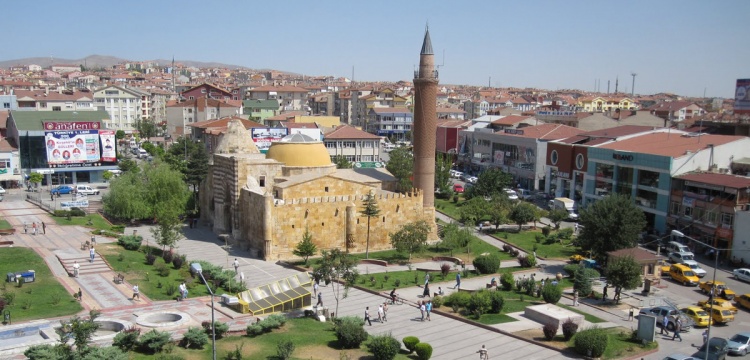
TURKISH YORDU  Can I ask one more thing? You also emphasize between the lines that we are a society that is very open to interaction. I think it’s true. For example, one of the aspects that we can criticize Huntington is, when Huntington says clash of civilizations, he assumes that there are definite lines between cultures that are closed to interaction. He develops a thesis that there is no transition to each other. However, as you pointed out, we can see the intercultural interaction especially in terms of our nation. Just as a concrete example, when we go to Edirne, Bursa or Istanbul, we see that an architectural work bears the Ottoman stamp. When we go to Kayseri, Sivas or Konya, one of the works we come across says, I am a Seljuk. Isn’t this a civilization?

EROL GÖKA Civilization, of course. The Seljuks and the Ottomans were civilizations, but they are synthesis civilizations as Braudel calls them. It brings two different things together to create something else. For example, Emel Esin, one of our important Turkicists, sees the line coming from Central Asia, the old Turkish line in these works, namely the minaret and the dome, until the construction of the Topkapı Palace. He says it contributed. I also say that the Turks were capable of being the core of a civilization in architecture, urbanism, poetry and music. They brought them with them from Asia, along with what they learned from China and India, Persia. The reason why Islamic works are so beautiful is the Turks. They put all Asian civilizations at the service of Islam. They almost swept the east. They became Islamized and became the head of Islam and established a new synthesis civilization.They also interacted with the West, and by their nature they were very open to this. Therefore, the role of the Turks in the beautification of Islam and its becoming a civilization is indisputable. I still say that we cannot see these civilizations as civilizations of their own. Civilization historians say so. Civilization must be original and present its messages to all humanity. Every great community must go to the people for the purpose of civilization. When the order of the Turks is realized, all humanity will benefit and be happy. A civilization should be able to offer its own values ​​to humanity. Civilization is a good news, a message that a society will convey to other societies. This is why you exist as a community; is to show your fellow human beings the way of the good life and salvation. Therefore, civilization“What can we do for humanity?” originates from his answer to the question. If we want to be civilized, we must constantly ask ourselves this question. We stopped fighting for a while during the time of the Uighurs, what did we do? The more we know about the Uyghurs, the better we see this. When Islam was encountered in Transoxiana – the Turks were incredibly influenced by Islam – great thinkers emerged among us who steered Islam. Actually, we feel sorry for ourselves for limiting our history to Seljuk and Ottoman. While we were in Central Asia, we did amazing things. Some people refer to our Republic as “Turkish enlightenment” and of course it is, but we had an enlightenment before in Transoxiana. That enlightenment really did great works. For example, one of the most basic of these products is Maturidiism, which is one of the main creeds.The Turks brought the tolerant view and way of thinking to Islam in Central Asia. I see the Karakhanids, Seljuks and Ottomans as the continuation of Transoxiana-unnehir Islamic enlightenment. In the last period of the Ottoman Empire, we encountered another civilization. It was more of a challenge than a confrontation. The challenge we faced was modernity, Western modernity. Modernity was the most positive thing the West has ever done in human history. Modernity was both a Western thing and a human condition at the same time. If not in the West, it would have appeared elsewhere. But it emerged in the West due to historical conditions, and the representative of Islamic civilization, which was in decline at that time, stood against the Ottomans.I see the Ottomans as the continuation of Transoxiana-ünnehir Islamic enlightenment. In the last period of the Ottoman Empire, we encountered another civilization. It was more of a challenge than a confrontation. The challenge we faced was modernity, Western modernity. Modernity was the most positive thing the West has ever done in human history. Modernity was both a Western thing and a human condition at the same time. If not in the West, it would have appeared elsewhere. But it emerged in the West due to historical conditions, and the representative of Islamic civilization, which was in decline at that time, stood against the Ottomans.I see the Ottomans as the continuation of Transoxiana-ünnehir Islamic enlightenment. In the last period of the Ottoman Empire, we encountered another civilization. It was more of a challenge than a confrontation. The challenge we faced was modernity, Western modernity. Modernity was the most positive thing the West has ever done in human history. Modernity was both a Western thing and a human condition at the same time. If not in the West, it would have appeared elsewhere. But it emerged in the West due to historical circumstances, and the representative of Islamic civilization, which was in decline at that time, stood against the Ottomans.Modernity was the most positive thing in human history. Modernity was both a Western thing and a human condition at the same time. If not in the West, it would have appeared elsewhere. But it emerged in the West due to historical circumstances, and the representative of Islamic civilization, which was in decline at that time, stood against the Ottomans.Modernity was the most positive thing in human history. Modernity was both a Western thing and a human condition at the same time. If not in the West, it would have appeared elsewhere. But it emerged in the West due to historical circumstances, and the representative of Islamic civilization, which was in decline at that time, stood against the Ottomans.

TURKISH HORLD In  a sense, can we interpret Western modernism as an infiltration from the common heritage of humanity? We see many examples of Western culture being influenced by the Islamic world as well.

EROL GÖKA Of course… The mind and the individual already existed in both the East and the West. But it formed the basic component of a civilization in the West, together with modernity. With the West succeeding in producing modernity, we were defeated in this encounter. As a representative of Islamic civilization, we were defeated. This does not mean that Islam has been defeated. We are talking about the meeting of two different historical situations. From now on, it seems that the course of humanity will be on the axis of the individual and the mind. The Turks realized this too and were already prone to it. They were fond of reason and the individual, and even democracy. So our leaders pointed in the direction of development. They said that from now on, our direction will be modernity, we will be modern by preserving our own historical and spiritual characteristics. This is how Atatürk determined the level of modern civilization as a target. Here, too, we are experiencing an enlightenment.I am also in favor of this enlightenment.

TURKISH YORDU  When we look at the determinations you made in your book, it does not seem possible for the current Turkish society to succeed. You see many factors preventing it from achieving modernization. If there are behavioral patterns that have not changed since the depths of Turkish history and their negative ones prevent modernization, how can this be overcome? Then, based on your findings, it is not possible for us to modernize, can it not be concluded?

EROL GÖKA No, it doesn’t, so why should we bother? Right here we come to the theories of modernity. It is recognized that modernity is not uniform. I am talking about Turkish type modernization. I am talking about the peculiar modernization of the Turks. We take what we take from modernity. We have already seen their basic aspect: the mind and the individual. But we do not give up on our own history or our beliefs. We must bring a Turkish flavor to modernity. Modernity allows this by virtue of its nature, which is also the human condition. Today, whoever can overcome the dilemmas and troubles of modernity will again give the good news of a new civilization to humanity. The West will not be able to overcome the difficulties of modernity. Western modernity brings cruelty to humanity instead of gospel. It was blocked in ideas, it was blocked in spirituality, it was blocked in politics. Turks, with their historical potential,they can unlock this with their role as civilization synthesizer. If we started the conversation from here, I would be very Turkish. This is what I call the distinctive modernization of the Turks. Our modernization depends on the success of both recognizing our own shackles and eliminating them and getting rid of them. We as Turks can and should do this. I believe that Turkish modernization can bring new initiatives where the West is blocked. Let’s take democracy, for example. Let’s take the male-female relationship. For example, freedom from the slogans of modernity has become so terrible now! Western modernization has made freedom borderless, made this great value the scourge of humanity, and created a great chaos. Western modernity has begun to dig its own grave in this sense. We can redefine freedom.There are potentials and forces in our history that we can redefine. There are messages we can add to humanity. For example, it is a well-known fact that the administrators of Turks about democracy always do business in consultation and form assemblies. If we think about them well, what we see as a hindrance to our modernization can become our strength. For example, even our obedience culture can provide significant advantages in this regard. If we can demonstrate and defeat the slavish form of obedience to another, perhaps we can lay the foundations for a new merit-based system of respect. For example, structures that worked well in our history, such as the council of elders and the advisory board, can be an alternative to the deceptions of the current democracy, to worshiping the leader. We can establish a “democratic meritocracy” of our own.The group of deserving people that the society will agree on may be the group of the wise. Leaders can make decisions by getting their approval.

TURKISH YURDU  Mr. Göka, I see that there are many topics to talk about. In this limited conversation, my questions are not over, I guess you have not finished what you have to say either. It was an exciting and useful meeting. Finally, is there anything you would like to add?

EROL GÖKA As you mentioned, Turkish group behavior is a fun but very difficult field to study. I am aware of these difficulties. For example, my dear teacher Oğuz Adanır says, “The behavior patterns that you attribute to these Turks exist in all pre-capitalist (pre-capitalist) societies.” This of course can happen. But to examine what is unique to Turks, to examine the ties between Turkish and Turkish behavior, is a good thing despite some methodological problems. Even if I make a mistake, we will receive a reward from this study. I think it is important to do such a study with the title of “Turkish”. In the future, there will be new researchers who will explain it better than I can, explain it better and investigate it. The title “Turkish Group Behavior” is quite provocative and it’s good to be provoked in the scientific world.So while I respect the criticism that this book is premature, I would like to say that it’s not really harmful to rush it. The reactions after the book was published reinforced my belief. Good thing I rushed. Thanks to my concerns about being scientific, I can now present the topics of “Turkish group behavior or the psychology of Turks”, which you could never talk about before, at scientific congresses. Now I have the opportunity to present my ideas in an organized way with the book. If we have a mistake and we have a life, we will fix it, the doomsday will not come, as long as our intentions are pure.Thanks to my concerns about being scientific, I can now present the topics of “Turkish group behavior or the psychology of Turks”, which you could never talk about before, at scientific congresses. Now I have the opportunity to present my ideas in an organized way with the book. If we have a mistake and we have a life, we will fix it, the doomsday will not come, as long as our intentions are pure.Thanks to my concerns about being scientific, I can now present the topics of “Turkish group behavior or the psychology of Turks”, which you could never talk about before, at scientific congresses. Now I have the opportunity to present my ideas in an organized way with the book. If we have a mistake and we have a life, we will fix it, the doomsday will not come, as long as our intentions are pure.

TURKISH HORLD  I think that your work will play a stimulating role in the Turkish intellectual public opinion. I hope readers and writers of Türk Yurdu will show interest. Perhaps you will receive criticism on this speech. The subject will continue to be discussed. I guess you see it as a win. On behalf of Türk Yurdu magazine, we thank you for your time.

INTERVIEW DATE: 4 June 2006

Interview:  Dr. Fahri ATASOY

Journal of Turkish Homeland, Volume 26, Issue 228, August 2006, Pages 39 – 48

http://www.erolgoka.net/turk-grup-davranisi-kitabi-uzerine/

Disadvantages of Nomadic-Oral Culture for Turkish Modernization

by Professor Erol Göka
Disadvantages of Nomadic-Oral Culture for Turkish Modernization

ABSTRACT
Undoubtedly, the main points that we should keep our eyes on and focus our attention on while creating cultural policies are the issues that we are helpless in the face of the challenges of the dominant modern culture and the future dangers that await humanity. However, besides these, another important issue is hidden in our heritage that we brought from our past. The fact that we have a long nomadic past and an oral culture seems to be a source of great problems in our relations with space and writing in modern times.

It is known that Turks have a nomadic and oral cultural heritage. Coming from a nomadic background and living in an oral culture circle, besides many positive features, there are also disadvantages that lead to weaknesses in the community’s survival and creation of its original civilization.

The most obvious drawback of nomadism in terms of modernization is undoubtedly the one in terms of urbanization and urban consciousness. When we look at the scientific information obtained from environmental psychology, we can come to the conclusion that the environments in which people from a nomadic historical heritage live must be different from the Western civilization, where urban citizens have lived in the same environment for centuries, have established cities, have acquired the consciousness of self-management. Indeed it is, and if we do not realize this, it is not possible for us to understand the problems we experience in our cities.

It is possible to talk about real Turkish cities only after Islamization. It is clear that there is a phenomenon called “Turkish-Islamic city” in history. The Turkish-Islamic city has completely lost its identity after encountering modernity, and examples that can be transferred to modern life have not been developed.

Although one of the most basic elements of modernity is defined as individuation, the modern urban individual is not a person who does not respect the rights of others and acts selfishly. On the contrary, modernity necessitates recognizing one’s own individuality as well as someone else’s, respecting its law, developing a behavior accordingly, and being able to self-regulate these behaviors with an internalized authority. All of our attitudes and behaviors that are not suitable for all the content discussed within the scope of “individualization” and “internalization of authority” in the humanities, that others and even each other call us “vulgar”, and that we try to condemn by saying that they do not fit into contemporary life, are in fact nothing but the incompatible legacies of our nomadic past. .We can also say that our nomadic past, which could not adapt to modernity, has a share in the traffic chaos in our country. We can talk about maintaining our interest in showing off and pomp in traffic, getting into the car like a horse, behaving as if you are on the road, not getting used to the products of modern civilization, and not obeying the rights of others with a nomadic remnant. Indeed, our attitudes in traffic resemble a game of javelin in the most succinct form. A person who uses his own modern vehicles like a horse and sees no harm in violating other people’s rights and traffic rules, almost in order to find a further place for his horse, has not yet internalized authority, is unaware of his own and others’ individuality, acts with “nomadic selfishness”, and has a nomadic mentality in the modern world. He is a person trying to live.

 It should not be forgotten that the Turkish tribes’ rapid transformation or disappearance within the communities they migrated to, was not strong enough to write their own history and reconstruct their narratives. The only written sources that give information about the nomads are those written by outside observers; Nomads do not have a history written by themselves. This is because they live in the circle of oral culture. Turkish historians meet this ironic situation with astonishment by saying “You make the conquests, let others write your history”; For this reason, those who do research on nomadic Turks have to be content with oral cultural products, such as epics, legends, tales, folk tales, memories, laments, manias, folk songs, proverbs and legends about various events told by word of mouth.

Just as our ancestors had to bring the scribes of the Orkhon Monuments from China [1], for the same reasons, in the early days of the Republic, the scribes were never from the Turkish nobility. It is true that Turks adapted very quickly to many products of civilizations, but even this ability to adapt could not warm them to writing, and they still could not fully enter the circle of written culture. In the Seljuk, Ottoman and especially the Republican periods, the administrators always understood the need for written culture and followed educational policies in line with the understanding of their periods. As well as the settlement of the nomadic society, its education has always been seen as the problems that require solutions at the forefront.

If you do not have a deep-rooted and widespread written cultural tradition, you will not naturally have a desire to own your language, nor a high linguistic awareness. People of oral culture love to talk and chat, but they do not pay the same attention to what they speak and what is the source of what they say. Turkish attitude towards civilizations and religions, which we usually call “tolerance” and which we do not emphasize much, but which can actually be called “passive-receptive”, also manifests itself in the face of written cultures; The occupation and degeneration of their languages ​​against foreign languages ​​is watched with an interesting indifference, without worry.

“While the Turks were able to develop a culture that was able to develop a unique alphabet and a written literature in history [2], why did they delay in entering the circle of written culture, and even despite all these state-supported initiatives and breakthroughs, why did the Republic of Turkey still have a largely oral culture? Did they stay in his apartment?” This is a vital question that must be answered.

Undoubtedly, it is not possible to get rid of our thousands of years old heritage, which defines the framework of our relationship with space and word, and moreover, it is unnecessary. The important thing is to correctly identify the drawbacks of the features we bring from our historical heritage to today’s life, in our unique modernization, and to develop policies accordingly without rejecting our heritage completely.

It is known that Turks have a nomadic and oral cultural heritage. Coming from a nomadic background and living in an oral culture circle, besides many positive features, there are also disadvantages that lead to weaknesses in the community’s survival and creation of its original civilization.

The most obvious drawback of nomadism in terms of modernization is undoubtedly the one in terms of urbanization and urban consciousness. When we look at the scientific information obtained from environmental psychology, we can come to the conclusion that the environments in which people from a nomadic historical heritage live must be different from the Western civilization, where urban citizens have lived in the same environment for centuries, have established cities, have acquired the consciousness of self-management. Indeed it is, and if we do not realize this, it is not possible for us to understand the problems we experience in our cities.

For more than ten years, we have been trying to analyze the relations of Turks with the world, with genders, with words and writing, with money and goods, with weapons, with their tribes and other civilizations, as well as with space [3] . In the last book we wrote on this subject, “The Nomadic Spirit of the Turk ” [4]As we have tried to show, due to the ongoing influence of our nomadic past, the most basic feature of our relations with space is the “spoiltness”. This is not a simple phenomenon. Our makeshift relations with space almost determine our whole psychology, creating a nomadic mood peculiar to us. This nomadic mood is at the root of many of our behaviors, from our exaggerated love for the homeland and the state, to our curiosity to follow the newest and strongest, to our inability to build beautiful cities to our taste buds.

There are various rumors about the urbanism of the Turks. It is said that we built cities in the pre-Islamic period, but archaeological studies have not yet been able to reveal important evidence of the pre-Islamic Turkish city. It is possible to talk about real Turkish cities only after Islamization. It is clear that there is a phenomenon called “Turkish-Islamic city” in history. The Turkish-Islamic city has completely lost its identity after encountering modernity, and examples that can be transferred to modern life have not been developed.

Turkish nomads, who settled in Anatolia, did not give up their old habits completely, and they continued to change places in summer and winter, giving great importance to seasonal migrations even though they lived in cities. There is another nearby settlement used as a summer residence by almost all Anatolian settlements, from the smallest town to the largest city. It is impossible not to see that the number of plateaus and plateau festivals that continue in many provinces today carry the remnants of nomadic times. It is due to our nomadic heritage that we constantly change our dwellings in our city life and that we do not persevere in a city plan. We keep moving from that neighborhood to this neighborhood, from that city to this city; Excavations never end on our roads and settlements.

Today, even in the most developed Turkish cities, we continue to move from place to place, to go to the highlands in the summer, and to breathe in our village during the holidays; our inability to accommodate the idea of ​​a Western holiday, even though we seem to be living in a modern life in cities, we continue our domestic life in a room of the house as if we live in a tent, and we reserve the hall for our guests, which we have equipped with the most beautiful furniture, when we make a mattress to sleep at night and put them in the closets in the morning; even if most of us make it with the imposition of economic conditions, we bring our flour, bulgur, phyllo, tarhana, pastrami, and sausage from our village; It is possible to clearly see the traces of our old psychology in the formation of our taste. The points of similarity between tent life and our present life, taking off shoes outside,hanging carpets on the walls, our love of growing tomatoes and peppers in the garden, on the balcony, etc. It can include many more activities such as

While examining the effects of nomadism on our current behavior and psychology, another point we should look at is the differences in the areas of self-control and emotional control that are expected to emerge in the process of urbanization and civilization. Norbert Elias [5]In many areas, from table manners to speaking styles, from attitudes related to natural needs to male-female relations and transformations in the sense of aggression, he was able to show the emotion control models and standards for Western people under the so-called “civilized” attitudes. Today, Western-style modernization processes are taking place in our country, as in the rest of the world. For this reason, there are changes in the behavior of Turkish people depending on the stages taken in the Western-style modernization process. Well, our behaviors in the field of self-control and emotional control, for which Western-style modernization has not yet shown its full effect, can also be evaluated as manifestations of our “nomadic mood”.

Although one of the most basic elements of modernity is defined as individuation, the modern urban individual is not a person who does not respect the rights of others and acts selfishly. On the contrary, modernity necessitates recognizing one’s own individuality as well as someone else’s, respecting its law, developing a behavior accordingly, and being able to self-regulate these behaviors with an internalized authority. All of our attitudes and behaviors that are not suitable for all the content discussed within the scope of “individualization” and “internalization of authority” in the humanities, that others and even each other call us “vulgar”, and that we try to condemn by saying that they do not fit into contemporary life, are in fact nothing but the incompatible legacies of our nomadic past. .We can also say that our nomadic past, which could not adapt to modernity, has a share in the traffic chaos in our country. We can talk about maintaining our interest in showing off and pomp in traffic, getting into the car like a horse, behaving as if you are on the road, not getting used to the products of modern civilization, and not obeying the rights of others with a nomadic remnant. Indeed, our attitudes in traffic resemble a game of javelin in the most succinct form. A person who uses his own modern vehicles like a horse and sees no harm in violating other people’s rights and traffic rules, almost in order to find a further place for his horse, has not yet internalized authority, is unaware of his own and others’ individuality, acts with “nomadic selfishness”, and has a nomadic mentality in the modern world. He is a person trying to live.

We have discussed in detail the aspects and drawbacks of our nomadic-oral culture in terms of Turkish modernization, apart from establishing cities and raising urban awareness, in our book “The Nomadic Spirit of the Turk” . Now we would like to present it briefly here again. The difficulties experienced in the continuity and transmission of the Turkish lifestyle, which we encounter as “inability to protect one’s self” in conservative discourse, is one of the most important drawbacks of our nomadic-oral culture in terms of Turkish modernization. W. Eberhard’s [6] (1995: p.88) ” Chinese History” in book“Mao-tun established a feudal state, but it was more centralized than the Chinese feudal state and was nomadic rather than agricultural. He was recruiting officials for his court officials, and establishing offices corresponding to Chinese court officials. Many of these offices seem to have been occupied by the Chinese; because the polite Hsiung-nu would probably not have accepted these jobs that their original eunuchs saw. A tahrirat pen was set up at that time, but apparently, since the Hsiung-nu did not have writing yet, they wrote in Chinese. The clerks were also Chinese: the Chinese were also recruited into the military office, and they were used as advisers in battles against the Chinese. Because the wars with the Chinese were different, not like the wars with the nomads.You have to think a lot about your words. If we can grasp the meaning of these words, the words of another Western researcher [7] that “foreigners who conquered China soon forgot their origins and became rulers of China, they became more Chinese than the Chinese, ‘they became Chinese’” becomes obvious to us. We know that the tribes that melted away in the high Chinese culture mentioned here are some of our ancestors, and that the Tabgaç State, which was founded in China in 386 by tribes of Turkish origin, became Chinese over time and took the name of the Wei Dynasty.

Because of all these, the phrase “When the Turkish dog lands in the city, Persian breeds” has risen to the level of a proverb in the Seljuk period [8] . It should not be forgotten that the Turkish tribes’ rapid transformation or disappearance within the communities they migrated to, was not strong enough to write their own history and reconstruct their narratives. The only written sources that give information about the nomads are those written by outside observers; Nomads do not have a history written by themselves. This is because they live in the circle of oral culture. Turkish historians refer to this ironic situation as “You make the conquests and let others write your history” [9].greet with amazement; For this reason, those who do research on nomadic Turks have to be content with oral cultural products, such as epics, legends, tales, folk tales, memories, laments, manias, folk songs, proverbs and legends about various events told by word of mouth [10] .

Just as our ancestors had to bring the scribes of the Orkhon Monuments from China [11]For the same reasons, in the early days of the Republic, the scribes were never among the Turkish nobility. It is true that Turks adapted very quickly to many products of civilizations, but even this adaptability could not warm them to writing, and they still could not fully enter the circle of written culture. In the Seljuk, Ottoman and especially the Republican periods, the administrators always understood the need for written culture and followed educational policies in line with the understanding of their periods. As well as the resettlement of the nomadic society, its education has always been seen as a problem that requires solutions at the forefront. In the Republican era, educational mobilizations were organized in order to disseminate the writing to the society, and finally, the share allocated to education in the last budgets began to exceed even the amount allocated to the armed forces. Obligation to Persian in Seljuks,In the Ottoman Empire, it was partially broken by the incorporation of Turkish into a larger number of written languages. During the Republic period, Turkish was able to become a written language with Latin letters that were easier to read and write, so the distinction between the language used by the people and the written language was eliminated, which is said to have made it difficult to switch to written culture. Despite all this, even the researches revealing how many newspapers and books we read clearly show that we are still largely in the sphere of oral culture.Even the researches revealing how many newspapers and books we read clearly show that we are still largely in the sphere of oral culture.Even the researches revealing how many newspapers and books we read clearly show that we are still largely in the sphere of oral culture.

Bookability plays a very important role in fixing any form of belief and life to a certain time and place. Rituals and texts become canonical thanks to scripture, and people are asked to organize their lives and beliefs according to this canon. In this way, a backbone of belief, orthodoxy, is formed. When people swerve for various reasons in their beliefs and lives, they tidy up according to these canons. Oral cultures do not have this canonical resistance in literary cultures [12]. It is not a coincidence that in the history of religions, sects always emerged before the invention of the printing press. If we cannot talk about a Turkish urban culture today, or if we see more negative aspects in our urban life, not only the makeshift relationship we have established with the place due to nomadism and unplanned urbanization, but also our inability to have a written culture that will organize our behaviors into urban patterns plays a role.

If you do not have a deep-rooted and widespread written cultural tradition, you will not naturally have a desire to own your language, nor a high linguistic awareness. People of oral culture love to talk and chat, but they do not pay the same attention to what they speak and what is the source of what they say. Turkish attitude towards civilizations and religions, which we usually call “tolerance” and which we do not emphasize much, but which can actually be called “passive-receptive”, also manifests itself in the face of written cultures; The occupation and degeneration of their languages ​​against foreign languages ​​is watched with an interesting indifference, without worry.

“The culture of urban entertainment in Turkey of the 2000s is mostly occupied by terms of English/American English and a little bit of French origin. ‘Fitness center, aqua park, aerobics hall, cafe, western cafe, roof bar, funfair, game center, game land, fantasy land, cafe de Paris, le cigare, Chiness restaurant, bungee jumping, treaking, surf, safari, rafting’ The existence of these foreign terms, expressed in hundreds or even thousands, should be accepted as the clearest indicators of the change and transformation, or rather dissolution, in the Turkish socio-cultural structure. Another remarkable point is the use of the spelling of the language from which they were taken in the writing and reading of these terms and words .. However, based on the word examples given here, it should not be thought that we are talking about a cultural degeneration in the face of modernization in the last period. Even if we put aside foreign words such as park, picnic, and camp that have been in the Turkish language for a long time, the fact that the basic words of oral culture are “chat” in Arabic and “yaran” in Persian clearly reveals that Turks have language carelessness in every period. It is very thought-provoking that in many regions of Anatolia, entertainments in which food, fuel and beverage expenses are met jointly are called with names such as “örfene, ferfane, erfane, erfene”, a replacement from the Arabic “harifane” meaning “jointly” [14]. The fact that even the vocabulary of Alevi-Bektashi beliefs, which mentions the obvious influence of ancient Turkish beliefs, is significantly Arabic and Persian, should be evaluated within this framework, and it should be understood that our position in foreign languages ​​is not just a phenomenon related to the attitude of the ruling classes, but is based on more deep-rooted foundations. The Seljuk historian Ibn-i Bibî, who himself wrote in Persian, has an event that shows that Persian, although it was the official language of speech and correspondence, became the center of attention of everyone from ordinary people, mostly Turkish, to sultans and viziers, and that people competed with each other for dominance of Persian during the Seljuk period. There are similar examples in Turkish history in every period and today.

Among the most important drawbacks of oral culture related to nomadism, those related to intellectual life and scientific thought should also be counted. Although Roux, who listed the common features of the Turks, [15]Although it emphasizes the patronage of science and art in our administrators, we think that it is related to the empire or state tradition rather than being specific to the Turks. Because we see that the life of thought and science are directly related to the settled-written city culture. For this reason, Turks, who established great states and mediated between civilizations, religions and languages, and who are known for their patronage of science and art, have the ability to make the expected breakthroughs in the field of state organization and law, although they always produce successful products in the fields of architecture, music and poetry, They did not advance in the fields of philosophy. Youth ages in ” History of Turkish contemplation of” ni [16] by country, in the writings penned the maturity period [17]He complained about the situation of the Turks in the field of contemplation, and stated that there was a complete closure and scholasticism in the fields of science and philosophy, and that only meticulous works could be produced in formal logic, and that he was content with annotating the works of Medieval Islamic philosophers, Mevlana and Muhyiddin Arabi. While saying these things, Ülken, of course, did not give up on his previous thoughts about Turkish contemplation. What Ülken realizes is that although we also have a contemplative life spanning history, it is quite different from others like it. Of course, the nomad also thinks, but naturally he cannot produce the philosophical thought he does not need. The reason for not being able to produce philosophical thought is not only not needing it, but also the way of thinking and mentality in the nomadic-oral culture, as we mentioned before;It hinders philosophical thought because it does not focus on reflection on the objective world and on oneself. It is necessary to stop for philosophical thought and to record in memory and writing what is determined by reflecting on the objective world and oneself as abstract categories. The nomad, whose body is constantly changing due to his temporary relationship with the place, tries to prevent the need to migrate to the inner depths, which is necessary for philosophical thought, as he tries to fix his mind by relying on words and fixing his mind with structures. The nomad is stuck in the now, in the moment, the most important question in his thinking is what to do now practically. He is competent in the field of practical reason rather than theory. Since politics is ultimately an element of practical reason, there must be strong ties between the Turks’ ability to establish and manage states and their nomadic thought.It is necessary to stop for philosophical thought, and to record in memory and writing what is determined by reflecting on the objective world and oneself as abstract categories. The nomad, whose body is constantly changing due to his temporary relationship with the place, tries to prevent the need to migrate to the inner depths, which is necessary for philosophical thought, as he tries to fix his mind by relying on words and fixing his mind with structures. The nomad is stuck in the now, in the moment, the most important question in his thinking is what to do now practically. He is competent in the field of practical reason rather than theory. Since politics is ultimately an element of practical reason, there must be strong ties between the Turks’ ability to establish and manage a state and nomadic thought.It is necessary to stop for philosophical thought and to record in memory and writing what is determined by reflecting on the objective world and oneself as abstract categories. The nomad, whose body is constantly changing due to his makeshift relationship with the place, tries to prevent the need to migrate to the inner depths, which is necessary for philosophical thought, as he tries to fix his mind by relying on words and fixing his mind with structures. The nomad is stuck in the now, in the moment, the most important question in his thinking is what to do now practically. He is competent in the field of practical reason rather than theory. Since politics is ultimately an element of practical reason, there must be strong ties between the Turks’ ability to establish and manage a state and nomadic thought.It is necessary to record in memory and writing in abstract categories what is determined by reflecting on the objective world and oneself. The nomad, whose body is constantly changing due to his makeshift relationship with the place, tries to prevent the need to migrate to the inner depths, which is necessary for philosophical thought, as he tries to fix his mind by relying on words and fixing his mind with structures. The nomad is stuck in the now, in the moment, the most important question in his thinking is what to do now practically. He is competent in the field of practical reason rather than theory. Since politics is ultimately an element of practical reason, there must be strong ties between the Turks’ ability to establish and manage states and their nomadic thought.It is necessary to record in memory and writing in abstract categories what is determined by reflecting on the objective world and oneself. The nomad, whose body is constantly changing due to his temporary relationship with the place, tries to prevent the need to migrate to the inner depths, which is necessary for philosophical thought, as he tries to fix his mind by relying on words and fixing his mind with structures. The nomad is stuck in the now, in the moment, the most important question in his thinking is what to do now practically. He is competent in the field of practical reason rather than theory. Since politics is ultimately an element of practical reason, there must be strong ties between the Turks’ ability to establish and manage a state and nomadic thought.Since he tries to fix his mind with stereotypes and leaning on words, he tries to prevent the need to migrate to the inner depths, which is necessary for philosophical thought, let alone dealing with it. The nomad is stuck in the now, in the moment, the most important question in his thinking is what to do now practically. He is competent in the field of practical reason rather than theory. Since politics is ultimately an element of practical reason, there must be strong ties between the Turks’ ability to establish and manage states and their nomadic thought.Since he tries to fix his mind with stereotypes and leaning on words, he tries to prevent the need to migrate to the inner depths, which is necessary for philosophical thought, let alone dealing with it. The nomad is stuck in the now, in the moment, the most important question in his thinking is what to do now practically. He is competent in the field of practical reason rather than theory. Since politics is ultimately an element of practical reason, there must be strong ties between the Turks’ ability to establish and manage a state and nomadic thought.Since politics is ultimately an element of practical reason, there must be strong ties between the Turks’ ability to establish and manage states and their nomadic thought.Since politics is ultimately an element of practical reason, there must be strong ties between the Turks’ ability to establish and manage states and their nomadic thought.

It can be objected to our view that the Turks, due to their nomadic-oral culture, could not advance in their intellectual life and scientific production, and that they became competent in the field of practical reason and politics, by citing important figures of Turkish ethnic origin such as Farabi and Avicenna. Personalities of Turkish origin such as Farabi and Avicenna, of course, have a very important place in the history of thought and science, but they are also not mentioned with their ethnic origins, they are evaluated in Islamic thought. Today, the presence of highly successful scientists and philosophers in their fields has to be considered as individual phenomena that can be explained by personal abilities. Unfortunately, we have to accept the views that Turks do not have a significant contribution to the history of thought, both at the level of original thought and school [18]. The same sad picture is also in question in the field of science. Although there is talk of an increase in the number of scientific publications in our country in the recent period, the developments are in the form of transferring, expanding and repeating what has been done in the West, not in creative and exploratory studies. “Watch the best, the strongest, the newest!” Turks, who apply to the formula, can accept technological developments with incredible speed, but cannot show the same aggressive attitude in pioneering scientific studies [19] .

In the meantime, we should point out that a knowledgeable type of people has emerged, including Turks but not in the West. In a verbal-only culture, the ability to memorize is always highly valued, for where there are no written words the human mind has to function like a walking library .. This kind of mental functioning has produced people we can call “allama”, loaded with incredible knowledge, almost like a “footed library”. Indeed, examples of “free-standing libraries” like ours are rarely found in the West. We are not talking about bibliophiles who obsessively collect books that come their way. The people we call “Allama” are the exceptional types of today’s world, who are among the people who are familiar with writing and books, but have to tell others what they know because they live in oral culture. These people, who have a wide audience, shine a light on their environment not only with their extensive knowledge but also with their in-depth understanding, but their biggest shortcoming is that they do not find time to write rather than read and tell [21] .

“While the Turks were able to come close enough to writing in history to develop a unique alphabet and to create a written literature, they were able to create a culture [22]Why were they so late in entering the sphere of written culture, and even despite all the state-sponsored initiatives and breakthroughs, why did the Republic of Turkey still remain largely within the sphere of oral culture?” This is a vital question that must be answered, and the great Turkish empires after Islamization; It is also closely related to questions such as why the Karakhanids, Seljuks, Timurids and Ottomans could not spread this to the masses despite the extraordinary synthesis of civilization products around the palace. Many other questions can be asked, and many different answers can be given to these questions from different perspectives. In our opinion, there will always be a missing part of the questions to be asked and the answers to be given without understanding the historical psychology and group behavior of the Turks. The Turks,As we have tried to reveal in the studies we have mentioned, besides having a nomadic-oral culture, they also have a warrior mentality, a segmental social formation based on potlaca. It is very, very difficult for a society that displays all these characteristics together to attach importance to books and literacy, and to highlight people who have read and are prone to philosophical thinking. For this reason, the pre-Islamic Alps will turn into veterans, shamans to parents, and the Turkish idea of ​​world domination will turn into the cause of “ila-ı kalimatullah” in the Islamic period. The star of Turkish-Islamic culture will be “alperen”, symbolizing sword power and spiritual power together.It is very, very difficult for a society that displays all these characteristics together to attach importance to books and literacy, and to highlight people who have read and are prone to philosophical thinking. For this reason, the pre-Islamic Alps will turn into veterans, shamans to parents, and the Turkish idea of ​​world domination will progress by turning into the cause of “ila-ı kalimatullah”. The star of Turkish-Islamic culture will be “alperen”, symbolizing sword power and spiritual power together.It is very, very difficult for a society that displays all these characteristics together to attach importance to books and literacy, and to highlight people who have read and are prone to philosophical thought. For this reason, the pre-Islamic Alps will turn into veterans, shamans to parents, and the Turkish idea of ​​world domination will turn into the cause of “ila-ı kalimatullah” in the Islamic period. The star of Turkish-Islamic culture will be “alperen”, symbolizing sword power and spiritual power together.[23] . Written culture will only be limited to a certain environment, works such as Gazavatname , which emerged from here, will be able to make their way towards the people, the hero Hz. Ali will be the symbol of Turkish alperen, Hz. Ali Cenks will feed the heroic feelings of the Turks.

If we still have the characteristics of a largely nomadic-oral culture today, it is because of these roads we have passed. Our ancestors have brought us to today by following these paths in the past. First of all, we should take a good look at where we stand here, analyze this place correctly and decide what and how much we want to change. If, after this, a way out of the nomadic-oral culture is still sought, if a stand is taken in favor of the modernization of the Turks, even if it is unique to them, then it is time to talk in detail. But if it’s enough for us to boast about our “glorious past”, if we don’t feel the need to look back on what and how it happened in this feeling of pride, it is the best thing to do, just sitting there proudly without talking (!)

III. This speech made at the “Cultural Policies Commission”, of which we are a member, at the National Cultural Council (3-5 March 2017, Istanbul), also included the “Ural-Altai: From History to the Future” with International Participation, held in Ufa, the capital of the Autonomous Republic of Bashkortostan, on June 5-8, 2019. ” Presented at the 8th Russian Turcology Conference. Proceedings book pages 312-318.

[1] Peter Golden, “Introduction to the History of Turkish Peoples”, Karatay O. Translated by Karam Publications, Ankara, 2002, p.179.

[2] Nurettin Koç, “Turkish Language and Literature Before Islam”, İnkılap Publishing House, İstanbul, 2002.

[3] Erol Göka, “Turkish Group Behavior”, Aşina Kitaplar, Ankara, 2006. “The Psychology of Turks”, Timaş Publications, Istanbul, 2008. “Seven Heifers: Leadership and Fanaticism in Turks”, Timaş Publications, Istanbul, 2009.

[4] Erol Göka, “Turk’s Nomadic Spirit”, Timaş Publications, Istanbul, 2010.

[5]   Norbert Elias, “The Civilization Process”- volume I, Ateşman E. Translated, İletişim Publications, Istanbul, 2000.

[6] Wolfram Eberhard, “Chinese History”, Turkish Historical Society Publications, Ankara, 3rd Edition, 1995, p.88.

[7] Jan Assmann, “Cultural Memory”, Tekin A. Translated by Ayrıntı Publications, Istanbul, 2001, p.150.

[8] Stefan Yerasimos, “Turks: East and West, Islam and Secularism”, Doruk Kitapçılık, Istanbul, 2006, p.68.

[9] Claude Cahen, “Turks in Anatolia Before the Ottomans”, Moran Y. Translated, E Publications, Istanbul, 1979, p.71.

[10] İlhan Şahin, “Konar-Nomads in the Ottoman Era”, Eren Publications, Istanbul, 2006, p.16.

[11] Peter Golden, “Introduction to the History of Turkish Peoples”, Karatay O. Translated by Karam Publications, Ankara, 2002, p.179.

[12] Mehmed Said Polat, “The World of Seljuk Nomads”, Bookstore, Istanbul, 2004, p.207.

[13] Nebi Özdemir, “Turkish Entertainment Culture in the Republican Era”, Akçağ Publications, Ankara, 2005, pp.84-85.

[14] Ibid. p.191.

[15] Jean-Paul Roux, “History of Turks”, Kazancıgil A., Arslan-Özcan L. Translated by Kabalcı Publications, Istanbul, 2007, p.27.

[16] Hilmi Ziya Ülken, “History of Turkish Contemplation”, Yapı Kredi Publications, Istanbul, 2004.

[17] Hilmi Ziya Ülken, “On Anatolian Culture and Turkish Identity”, Ülken Publications, Istanbul, 2006, p.35.

[18] Murat Beyazyüz, “Cemil Meriç’s Psychology”, Aşina Books, Ankara, 2007.

[19] Erol Göka, “Psychology of Turks”, Timaş Publications, Istanbul, 2008, p.134. Talat Halman, Halman T. “Flight/Migration: Literature and Cultural Studies”, 10 July 2006, www.kulturad.org.

[20] Firdevs Güneş, “Why Sound Based Sentence Method?” Reflections in Education: VIII. In the Symposium on Evaluation of New Primary Education Curriculum . 14-16 November 2005. Erciyes University, Sabancı Cultural Site, Kayseri, 2005, p.136.

[21] Erol Göka, supra, p.134.

[22] Nurettin Koç, “Turkish Language and Literature Before Islam”, İnkılap Publishing House, İstanbul, 2002.

[23] Mehmet Kaplan, “Research on Turkish Literature 3”, Dergah Publications, Istanbul, 1985, p.61.

REFERENCES

ASSMAN J, Cultural Memory . Tekin A. Translated by, Ayrıntı Publications, Istanbul, 2001, 150.

BEYAZYÜZ M, Cemil Meriç’s Psychology,   Aşina Books, Ankara, 2007.

CAHEN C, Turks in Anatolia Before the Ottomans, Moran Y. Translated, E Publications, Istanbul, 1979, p.71.

CANSEVER T, City and Architecture in Islam, Timaş Publications, Istanbul, 2006.

EBERHARD W, History of China, Turkish Historical Society Publications, Ankara, 3rd Edition, 1995, p.88.

ELİAS N, Civilization Process-vol I, Ateşman E. Translator, Communication Publications, Istanbul, 2000.

GOLDEN PB, Introduction to the History of Turkic Peoples, Karatay O. Translated. Karam Publications, Ankara, 2002, p.179.

GOKA E, Turkish Group Behavior, Aşina Books, Ankara, 2006.

GOKA E, Psychology of Turks, Timaş Publications, Istanbul, 2008; Door Publications, 2017.

GOKA E, Against the Seven Heifers: Leadership and Fanaticism in Turks, Timaş Publications, Istanbul, 2009.

GOKA E, Turk’s Nomadic Spirit, Timaş Publications, 2010; Door Publications, 2018.

GUNEŞ F, “Why Sound Based Sentence Method?” Reflections in Education: VIII. In the Symposium on Evaluation of New Primary Education Curriculum . 14-16 November 2005. Erciyes University, Sabancı Cultural Site, Kayseri, p.136.

HALMAN T, “Flight/Migration: Literature and Cultural Studies”, 10 July 2006,  www.kulturad.org.

KAPLAN M, Studies on Turkish Literature 3, Dergah Publications, Istanbul, 1985, p.61.

KOÇ N, Turkish Language and Literature Before Islam, İnkılap Bookstore, Istanbul, 2002.

ÖZDEMİR N, Turkish Entertainment Culture in the Republican Period,  Akçağ Publications, Ankara, 2005, pp.84-85, 195.

POLAT M. S, The World of Seljuk Nomads, Bookstore, Istanbul, 2004, 207.

ROUX JP, History of Turks, Kazancıgil A., Arslan-Özcan L. Translated by Kabalcı Publications, Istanbul, 2007, p.27.

ŞAHİN İ, Konar-Göçerler in the Ottoman Period, Eren Publications, Istanbul, 2006, p.16.

ÜLKEN H. Z, History of Turkish Contemplation, Yapı Kredi Publications; Istanbul, 2004.

ÜLKEN H. Z, On Anatolian Culture and Turkish Identity, Ülken Publications, Istanbul, 2006, p.35.

YERASIMOS S, Turks: East and West, Islam and Secularism, Doruk Kitapçılık, Istanbul, 2006, p.68.

Is Nomadism the Cause of Turkish Behaviours?

http://www.erolgoka.net/turk-davranislarinin-nedeni-gocebelik-mi

by Professor Erol Göka

Mar 8, 2008 |    

Psychology of Turks A historical psychological study. But when we look at the resulting picture, it is understood that the Turks are a warlike, nomadic nation that carries civilization rather than creating civilization, is obedient, fond of ostentatious and pompous. Aren’t these some negative traits?

So that’s what it looks like from where you look? Also, there have been so many publications against the Turks in the last period that, in my work, when faced with statements that do not glorify the Turks, “I wonder if this is it?” the reader may say. My books on the Turks came out at a time when the Turks were trying to be stabbed and the article 301 was being discussed. Some men, who thought they were funny, tried to make fun of the so-called Turks, Turkishness, in the articles they wrote. The behavior of our people that they make fun of, which we can completely explain with socio-economic or historical conditions. Our people have been destroyed. You migrated to big cities in a very short time like twenty years, people living in the patterns of tradition in Anatolia. Urbanites lost their old traditional behavior patterns before they could gain new behavior patterns.It was unfortunate that my works, which were the product of years of effort, came out when the books that made fun of people trying to hold on to life came out. But now the reader knows us, knows the scientific orientation of our work and the sincerity of our intentions.

Also, aren’t you tired of this arrogance anymore? I’m so bored, I want the skullcap now. My job as a scientist is to put on a skullcap. Besides, I am a Turkish intellectual. I am in favor of the modernization of the Turks, and I do not think that modernity will “make us not who we are”. Just as we have been Islamized for ourselves, we will modernize for ourselves. This is how it will be, whether we want it or not. I am in favor of the modernization of the Turks because modernity now determines the basic orientation of humanity. Societies will modernize. I want the Turks to make their own modernization rapidly. This is an attitude in favor of the Turks. To show the fetters that hinder our modernization efforts as Turks, to say let’s get rid of them as soon as possible,A call to intense reflection on seeing what our negative sides are and how they can change and transform… That’s what I’m trying to do.

The reason we swing between the extremes

You say that the carelessness shown by the Turks to their language is “a self-inflicted expression of their tolerance”. If you have to interpret it as a psychiatrist, do we have a lack of “self-esteem”? Some kind of inferiority complex? If so, what is its historical background? Why do we oscillate between extremes of self-esteem and underestimation?

No, it is not so, this is not the conclusion to be drawn from what I have said about our carelessness about our language: I am trying to make observations and draw conclusions from all Turkish history. Interestingly, the Turks have strived for “world domination” in every historical period, and they thought that they would find comfort when they conquered the whole world. Don’t look at the wretchedness of our situation, our unconscious wants it now. A community with such great desire can get into strange moods when it begins to perceive the reality of the current situation a little. I guess it’s these kinds of moods that you call oscillating between extremes.

How would you describe the Turkish identity? Is geography the common denominator here? religion? language? Who is Turkish?

First of all, we cannot talk about a generally accepted identity as “Turkish identity”. First of all, we must reveal which Turkish identity it is. There are currently two Turkish identities. One includes everyone living within the borders of the Republic of Turkey, our legal system calls all citizens, whom it says to be free and equal, “Turks”. There is also an “ethnic Turkish identity”. The identity of people who feel ethnically and historically Turkish. These are the people I have studied in my books, namely ethnic Turks. If you are asking what determines the ethnic Turkish identity, my answer is very clearly the mother tongue, Turkish. Old Turkish beliefs and ethnic identity are also very important, but it is the mother tongue that determines it and transfers it to generations. In this case, the people we call ethnically Turkish are those whose mother tongue is Turkish, in the shortest definition.By the way, thanks to you, we have also said that being Turkish does not mean being from one race. It’s very important here. Even academics in Turkey are talking about a race when they talk about ethnicity. However, ethnicity does not mean race, it is an identity situation formed by the mother tongue and the basic beliefs stemming from the common life culture throughout a long history.

There are two kinds of ‘others’ for the Turk.

Who is the “other” for a Turk? Kurdish? Armenian? Arab? American? Or is it European?

“Turk” has two kinds of “other”. One is the neighboring Turkish tribes, that is, Turks who are not of his own tribe; the other is because of the Turks’ desire to dominate the world and rule the world, he was the greatest power person in the world at that time. We can call this latter the “absolute other” of the Turk. The “absolute other” of the “Turk” is the one who prevents his world domination, that is, the one who is dominant in the world at that moment. This choice of “absolute other” probably stems from the old beliefs of the Turks, which placed themselves in the center of the world and the rulers of the world, the representatives of the Gök-God, the difficult natural conditions they lived in, and the mood created by being surrounded by crowded Chinese. Our ancestors probably thought that the Chinese made up the rest of the world,They thought that they had no choice but to dominate the whole world in order to survive in this difficult world and to have the products of their civilization. Material conditions determined both their desire to rule and their warrior spirit. This mood has been passed on to generations, and has survived to the present day by transforming into Turkish group behavior. We always wanted to dominate the world, but for some reason we always started from our brother right next to us.

The fact that our “other” is another Turk makes our history the history of sibling rivalries. The fact that our “absolute other” was dominant in the world at that time causes problems in our foreign policy. Now do you understand why “Europe, Europe hear our voice in the matches. “These are the footsteps of the incoming Turks”? Why do most Turks dislike the USA at all? Why do science fictions about the war between the Turks and the Americas attract the attention of our people and sell well?

You say that one of the most important features of the psychology of Turks is that Turks never become fond of their identities and languages? Isn’t the emphasis on the “Turkish identity” underlying many of the contradictions we experience in our own geography today?

As a requirement of their role in the history of civilization, Turks are tolerant towards other civilizations, religions and languages. Tolerance can sometimes reach the level of indifference or indifference. The basis on which I base our not being as fond of our identity and language as other ethnic communities stems from our role in the history of this civilization. Yes, contrary to popular belief, Turks are not ethnic and religious fanatics. But they are also human after all, they have an ethnic identity to protect in the final analysis. The reason why Turks appear as ethnic and religious fanatics in today’s panorama is another feature of them, although in reality it is the opposite. Because of their segmented social structure, they cannot get rid of sociopathy. Our society is constantly producing mafioso formations, sociopathic gangs. The actions of these gangs,They are trying to be attributed to the Turks. When we compare what is going on in our country with other parts of the world experiencing ethnic turmoil and bloodshed, it can be better understood what I mean.

What is the importance of nomadism in Turkish psychology? You say we were nomads until 200 centuries ago. That’s why you say our cities are like construction sites. Can’t we get rid of the feeling of nomadism?

No, we were not saved. Worse still, there is no glimmer of hope that we will be saved any time soon. The mood and mentality of the nomad is completely different from that of the settled person. It seems as if it will take centuries for us to learn about settled, urban life. In fact, settled cultures were able to learn the necessities of settled life after centuries.

It is necessary to stop for philosophical thought!

Is nomadism the reason why the first question we asked each other was “Where are you from”?

Yes, without any doubt, it is from nomadism that we keep asking those who come before us, saying “it is not a shame to ask”.

Do you show nomadism as the reason why Turks cannot produce philosophy? Is established order necessary to produce philosophy? Or isn’t the time period when we settled down enough to start producing philosophy?

The nomad thinks but does not produce philosophical thought, because he does not need it. It is necessary to stop for contemplation, for philosophical thought, to concentrate and record thoughts on a certain point. In the verbal mind of the nomad, whose body is constantly changing, there is no need for a mental migration in the volatile verbal mind of the nomad, it is sufficient to try to understand the place and time he is in. Also, the nomad is not good with writing; he is a person of oral culture and love. The brain of the oral culture person is very different from the one living in the written culture. It is because of all these that we do not have a thinker who can reflect what is unique to us in the history of thought and philosophy, or who can make a name for himself as a Turk. Of course, there were thinkers of Turkish origin such as Farabi and Ibn Sina in the history of Islam, but they werethey are not rightly referred to by their ethnic origin, they are considered within the Islamic thought.

Doesn’t the feeling of nomadism also bring a constant feeling of anxiety? To have nowhere. No sense of belonging anywhere?

Of course, nomadism means living in a constant state of anxiety. Some romantic writers bless nomadism for living in the bosom of nature, but out of ignorance. If they had tried to live with the nomads, they would not have lasted a day.

According to your interpretation, the feeling of “Let them say this for me” is important for Turks. Is it caused by some kind of feeling of worthlessness, or is our sense of worth something visual rather than internal?

We cannot call it a feeling of worthlessness. This is so because of a cultural code. We Turks are people of the pre-capitalist potlatch culture. Even the most bourgeois of us lacks the rationality of the market. Whether we are rich or poor, we do what we do to show others, to show off, to brag.

Obedience, glory and showing off are paramount.

What is potlaç culture? What is its importance in Turkish psychology?

Potlatch culture is a concept used to describe the relationship systems in the pre-capitalist world. In full Turkish, it can be called “han-ı loot”. In this culture, obedience, glory, honour, ostentation and pomp are more important than anything else, rather than market rationality. On the face of it, there are positive aspects such as brotherhood and solidarity. Westerners have been struggling for hundreds of years to transition from potlatch culture to capitalism. We, on the other hand, have not yet realized that we are immersed in the potlatch culture up to our necks.

Are you saying that Turks received only 2000 patents in 130 years and none of them contributed to world science and technology? What do you think is the reason for this?

Our oral culture and our nomadism… Although we have trained important scientists for the world of science, we still cannot be creative. Civilization “watch the best, the strongest, the newest!” We’re trying to catch up with the formula. There is no real scientific initiative, the transmission mentality continues. Regardless of whether we can digest all the products of civilization, we are scrambling, but we do not develop it ourselves. This is why we flock to the technology fairs opened by Western countries in our country, and when there is a cheapness campaign for the devices that come out with the latest technology, we crush each other. We love the technology itself, but we don’t contribute to it. Despite our long and undoubtedly glorious history, we are perhaps the only great nation that, as Talat Halman said, has not made a single scientific invention, not a single geographical discovery.

You say, “Oral culture is the biggest obstacle to modernization and it develops not the personal conscience but the social and external conscience”. So our conscience is also ours for others?

There is a connection between writing and the internalization of conscience. Writing causes a brain development that enables us to look at ourselves and others as separate entities and to make relatively objective evaluations. In oral culture, on the other hand, what the inner conscience does can provide custom or command. This is what we call external conscience. Therefore, Turks, who can establish the most regular armies in the world, are unable to advance in traffic by showing respect to each other.

Another interesting finding of yours is that Turks are more easily graded than other nationalities, and are fond of show and pomp.

Easy skipping is also a feature of potlatch culture. The absence of a deep-rooted bourgeois class in Turkey, the constant change of our top taxpayers, the formation of our wealthy people are obvious examples of easy class advancement. The passion for ostentation and pomp is running through us everywhere, from birth to weddings, from our curiosity about buying a house and furnishing it badly, to our competition to send our children to luxury schools, and even to the mawlid ceremonies that are taught after death.

One of the important determinations is on the effect of meeting with Islam. You say, “Meeting with Islam added vitality to the structure of the Turks, who were doomed to disintegrate”. How did Islam achieve this?

We have always been lost among other civilizations due to our feature of not claiming our language and identity. Until he entered the circle of Islam. For example, we see in our earliest inscriptions that some of our Ancestors dissolved into Chinese culture. We all know that those of us who went to the west from the north of the Caspian became Christians and evaporated. We would have ended up like them, but the fact that almost the entire Turkish world became Muslim, thanks to his easy reconciliation with both our previous beliefs and our warrior mentality, prevented our extinction process. The fact that we became the head of Islam very soon after converting to Islam and that we started to strive for Islamic civilization provided opportunities for the solution of many of our fundamental problems.

But you also say that the sibling rivalry, which is thought to be reduced by entering under the roof of religion, has survived to the present day by taking the name of Alevi-Sunni fight under an Islamic guise. Is not there a contradiction here?

No, there is no contradiction. When the Turks converted to Islam, a brand new situation arose in their history. For the first time, white-bud and black-bud were united in the same belief system. However, because the Turks became Muslims, segmentary society structures did not change suddenly. While the dominant tribes preferred Sunni Islam in Muslim Turkish states such as Karahanlı, Gazneli, Harezmli, Seljuk and Ottoman, other tribes both embraced their old beliefs and embraced Hz. They moved to the pro-Ali opposition wing. The efforts of the dominant tribes to settle and settle the nomadic Turks also increased this conflict. We are still experiencing the troubles and pains of the same process.

Interview:  Handan Akdemir

Negative Turkish Perception in Europe and…

http://www.erolgoka.net/avrupadaki-olumsuz-turk-algisi-ve/

by Professor Erol Göka

Sep 25, 2016 |  ,  |     

Studies show that in Europe in general, there is always a skeptical, timid, hesitant and unfriendly view towards “Turkish”. (We also published a detailed article on the sociopsychology of the European view of the Turks in our book “Human Part by Part”.) This point of view is clearly felt both in social and political spheres throughout Europe today. This view towards the Turks was actually a part of the general xenophobia in Europe and was formed in a historical process that embodied the concept of “threatening foreigner”. Although there are racial, religious, economic and social dimensions of Turkish hostility in Europe, it is imperative to consider the elements of community psychology, which form the infrastructure of all of them and have a very old foundation.

With the beginning of the tribes migration in 375, the Huns captured a significant part of Northern Europe. That’s when the European started to use the word “barbarian”, which is a phonetic equivalent of the “dark, aggressive human figure whose language he doesn’t understand” that comes to life in his imagination when the word “foreigner” is mentioned. For nearly a hundred years, the Huns, “who just intimidated people by their mere sight, rode horses well, wielded weapons, were extremely brutal and aggressive” (H. Dollinger), caused an indelible fear and hostility to take root in the minds of Europeans for centuries.

“Foreigners from afar”, that is, “Turks”, took their place as the “other” of European identity. Later, the victories of the Muslim Arabs against Europe also contributed to the formation of the “other” in the European identity. Along with the Arab victories, the image of “Muslim” was added to the image of “bad Turk” that started with the Huns. The fact that the Turks began to push the doors of Europe again, this time as the leader and standard-bearer of Islam, made Turkish and Muslim identical for the European. European identity solidified its “other” during the Crusades and Ottoman expansion.

After the conquest of Istanbul (Constantinople), the Europeans would compare the Turks, whom they thought they were Trojans, with the Romans, and the belief that these warlike, contented people who supported their subjects would establish a universal monarchy would settle in the unconscious of the people. With the decline of the Ottoman Empire, the flaws of the Turks would be examined rather than their virtues, and the Turkish type, which was admired as much as feared, would pass into the type of Turk who was hated as much as it was despised.

The Turkish image, which constitutes the “other” of its identity, served as a psychological reservoir for the European to complete its existence, reflect, convey and send all kinds of unsettling features in itself. Let alone ordinary Europeans, even European anthropology, Turks, deprived of all kinds of pleasures, indifferent to art, lazy, insensitive, incapable of doing anything, indulging in the most disgusting pleasures, the primitive people regarded Turkish as a primitive language.

The summary of the situation is the following determinations of S. Yerasimos, who is the owner of these views, in the preface of the book “Ne Mutlu Türküm Diyene”:

“For Europe, the Turks have been seen as ‘the barbarians among us’ for centuries. Germans, Normans, and Hungarians also came to Europe as invaders, but eventually integrated. The Arabs also resisted until they were expelled from Europe. The Russians were in a marginal position between assimilation and exclusion. Turks, on the other hand, took place only in their own part of Europe. They neither tried to impose their beliefs nor adopted Christianity. They were admired when they were strong, and hated when they were weak. Pushed from Europe for three hundred years, they could only hold on to its extreme and decided to ‘Westernize’. It is difficult to find another people who have had such a contradictory and confused relationship with Europe for so long. Emotions arising from prejudices such as envy and resentment, fascination and fear make it difficult to solve the problem.”

We Turks are nothing but the growing danger of the “foreign inside” in the eyes of the European. Let’s see this fact now. Let’s act according to strategies developed with this awareness, both during our contacts with Europe and during the fight against Islamophobia and racism in Europe. We cannot change Europe’s identity or prejudices in a short time. But we can fix their obsession with “We don’t want you, you want to join us by force, break our unity”.

The first condition for this is, to act with self-confidence as “Turks are not people in your prejudices. Yes, we are different from you, it is true that we do not want to be completely like you. But throughout our history, we have implemented the principle that differences can coexist, which you have been talking about for a while, if you wish, we can do it together. If you don’t want to act we are happy with our lives”

Turks and Europe

by Professor Erol Göka

Sep 22, 2016 |  ,  |   

We need to reflect on the issue of Europe and Turks, whether within the framework of EU membership negotiations or not. The rising Islamophobia and racism in Europe obliges us to think about why this is happening and how we can live together from now on. My brother İbrahim Kalın’s magnificent work “Me, the Other and Beyond” can be instrumental in this.

When you finish the book, the following statement about what needs to be done in the last paragraph will ring in your ears:

“Humanity has many possibilities for a more just and peaceful world order. For this, we need to learn to live with people who are different from us, within the framework of certain moral principles. Being at peace with the ‘other’ depends on being at peace with ourselves. When Islamic and Western societies act with this historical sense of responsibility, they will have the opportunity to make a great contribution to world peace.”

In the same book, what is written about historical reality also whispers how difficult this task is. Because you can clearly see that the West’s hostility towards Islam and Muslims is deep-rooted, and racism was not discovered by westerners in Europe out of nowhere:

“It is not possible to separate Islamophobia from ethnic and racial hatred against Arabs, Asians and blacks.”

Europe’s multiculturalism, coexistence, tolerance etc. In order to maintain its claim to be European under slogans such as these, it has to confront its colonial, historical and Eurocentric, racist past very, very seriously, and never let go. Europeans are full of so many prejudices about Muslims and especially Turks, passed down through generations and stuck to their identities.

“Muslims, which were expressed with the words ‘Sarasen’ in the Middle Ages and ‘Moor’ in Andalusia, are increasingly identified with the ‘Turk’ type since the 16th century. Europe never forgave the Turks after the conquest of Istanbul,” says İbrahim Kalın and quotes the following words of Pope II. Pius:

“In the past, we have been injured in Asia and Africa, that is, in foreign countries. But this time we are being attacked in our own land, in our own home, in Europe. True, the Turks crossed into Greece from Anatolia a long time ago; The Mongols came to Europe and the Arabs captured certain parts of Spain via the Strait of Jebel-i Tarık. But we have not lost any city or position that can be compared to Constantinople.”

The terrifying Turkish perception based on fear that emerged after the conquest of Istanbul causes Europeans to hope for help even from Tamerlane and Mongols. Tamerlane turns into a hero who takes revenge on the Turks in the name of Europe and Christianity. Renaissance humanism does nothing to soften the barbarian perception of the Turks, on the contrary, it increases it.

İbrahim Kalın gives examples of the negative Ottoman-Turkish image that “appears in almost every area of ​​Europe, whether in politics, religion or theatre. After the decline of the Ottoman Empire, this perception began to be fed by “orientalism” based on contempt  contempt. The European world of thought also gets its share from this perspective.

“The habit of basing everything that is seen as good and beautiful in Islam somehow on pre-Islamic and non-Islamic sources begins”.

Leibniz, Herder, Hegel,even Kant and even Marx do not hesitate to use condescending statements about Islam and Turks that are not based on research and sound knowledge. As the Ottoman Empire weakens, this negative sentiment culminates.

The following words of Andre Gide, winner of the 1947 Nobel Prize in Literature, after visiting Istanbul and Konya in 1914, are too clear to leave room for discussion:

“Constantinople (Istanbul) confirms all my prejudices and is included in my personal hell along with Venice. When you start to appreciate an architectural work, the façade of a mosque, you learn (just as you suspect) that it is Albanian or Iranian. Turkish clothes are the ugliest clothes you can think of; To tell you the truth, the Turkish race deserves it too… Now I see that our Western (I was about to say French) civilization is not only beautiful, but I believe it is also the only civilization—that Greek civilization that only we inherited.”

This prejudiced attitude that envelops even Gide is almost the same today. As required by the context of his book, İbrahim Kalın deals with the problem only within the framework of Islam-Western relations. The rapid development against Christianity during the emergence and spread of Islam is undoubtedly very influential in the origin and violence of Islamophobia. 

But I’m afraid Europe’s prejudices against Turks are not just limited to being against Islam, they are much older and have become an integral part of their identity. Let’s continue hopefully…

http://www.erolgoka.net/avrupa-karsisinda-turkler/

Turkey for the Goodness of Humanity

by Professor Erol Göka

Jun 29, 2020 | Interview

Before moving on to the “new normal”, which will be shaped by the measures to be taken and regulated according to minimizing the risk of contamination, I would like to say a few words about Turkey’s role in such a new world. If it does not fall into a trap and does not deviate from its path with provocations, Turkey has a great opportunity. “The world is bigger than five!” Turkey, known for its objections, may bring the search for a just order determined by the feelings of cooperation, solidarity and compassion stemming from its traditions to the agenda both in the world and within the country, and may try to revive the concepts of human rights, democracy and justice that have been worn out all over the world in this process.

In other words, it can try to implement the mototo “Turkey for the good of humanity”, which Alev Alatlı put forward a few years ago. He/she can criticize the world states that tend towards technodespotism with a human-centered approach. It can combine the advantage of the health system’s ability to resist the epidemic with the pursuit of a just order.

All these can highlight Turkey as a “model country” and increase its reputation in the eyes of the peoples of the world.

http://www.erolgoka.net/insanligin-iyiligi-icin-turkiye/

Anatolia, Turkey: “Multiplicity in Unity” within 12,000 years

© Copyright text by ex MP Faik Tunay @FaikTUNAY

© Copyright photo by Levent Ağaoğlu

With its simplest geographical definition, Anatolia, or Asia Minor, is a mountainous peninsula that covers an area of ​​approximately 755,000 km² between the Black Sea, Mediterranean and Aegean Seas in the westernmost part of the Asian continent. How many of us know Anatolia, which means the place where the sun rises in Greek, with its real values?

According to the truth accepted by the world of science and people today, there was a big bang about 14 billion years ago and the universe came into being. Pay attention, I say 14 billion years ago, if you accept an average human lifespan of 75 years, you will better understand what is going on. Well, this system was formed 14 billion years ago, and when did the first human appear, which was about 300,000 years ago (it was pulled back even further with the latest excavations in Africa) But we would like to emphasize that these shared figures are the information shared with the whole world public opinion as a result of the studies carried out by the scientific world, the emergence of the first human being related to our religious belief is beyond the scope of this article.

According to the acceptance of the scientific world, there have been human beings on Earth for 300,000 years, they have gone everywhere, they have made every place their home, and according to the reality accepted by everyone in the world today, 150 major civilizations were formed on Earth during these 300,000 years (beware, not every state is a civilization! Civilization criteria is very different, otherwise if we accepted every established states and statelets as civilizations, then there would be thousands of civilizations)

More than 30 of these 150 established civilizations were established in ANATOLIA.

Look at the wealth of this tiny peninsula, what kind of abundance is this? 

How is this a collection?

As a society, we always start everything with 1071 because we came to Anatolia at that time. So, who was in these lands before 1071? What did they do? Do we ever talk? Never! What was there in Anatolia before 1071?

For example, how many of us know Şanlıurfa Göbekli Tepe today, know the civilization that was established there about 12,000 years ago?

Come on, how many of us have heard or know about Konya Çatalhöyük, which is considered the oldest settlement in the world before Göbekli Tepe (ie before Göbekli Tepe was found)?

Come on, how many of us know that the first revolution in the world legal system was made by the Hittites, who ruled in Çorum? Until then, the criterion was the Code of Hammurabi, that is, if a person cut the other’s hand, then the other has the same right to cut his hand, so we call it retaliation. So, what are the  Hittites doing? They pass to the law of compensation, that is, fines appear, other types of payment are there, and there is even public service, you know. In Europe and in our country, we sometimes hear that criminals clean the streets in return for their punishment, look after the elderly in nursing homes. This is what the Hittites living in these lands did about 3500 years ago.

Let’s move on to face the facts.

How many of us know that money was found in Anatolia for the first time in the world?

Or do we know that the check was first used in Anatolia?  

How many of us know that the foundations of Christianity were laid in Anatolia today?

The most important person for Christians after Jesus Christ  is St. Paul, and how many of us know that he was actually born in Tarsus, Mersin?

Let’s keep pushing the minds today, in the Bible, the holy book of Christians, seven churches are mentioned and these churches are of vital importance for Christians. Now hold on tight, all of these seven churches are in Anatolia. 3 of them are in İzmir, 3 of them are in Manisa and the last one is in Denizli.

Why don’t we expose them?

Why don’t we open them to tourism?

Why don’t we use them and earn billions of dollars and contribute to our economy?

Is it very difficult to do them or are we afraid?

Is someone somehow asking us not to trust ourselves?

Tourism is not just about sunbathing by the sea and swimming in the sea, why don’t we use alternative tourism types when we have so many opportunities?

Alhamdulillah, these lands have been Muslims for thousands of years.

Using places that belong to Christians and that are sacred to them for tourism purposes will not harm us, it will not lead us astray, it cannot turn us away, but tourism revenues increase, job opportunities open to people, and contribute to the promotion of the country. A scared person cannot be successful, a scared person cannot be a visionary, a scared person cannot make a breakthrough, if we simply find the above-mentioned places and come out. If we are open to tourism just for a visit, make sure that hundreds of millions of dollars of money enter the country’s coffers every year.

How many of us know that Santa Claus, one of the most important persons for Christians today, is actually a priest from Antalya Demre? Today, while the Finns, Russians, Danes or others are tearing up with false documents to prove that Santa Claus is one of them, we come out and say that this is Anatolia, every religion has existed here, there is tolerance here. Why do you think we can’t use them? Anatolia is so important to the West that throughout history, while we were sleeping, they always searched this place, not only did they search it, they almost plundered the historical monuments.

In the 1870s, an association called Dilattanti was established in England, the aim of this association was to examine Anatolia and smuggle historical artifacts out of Anatolia! We are busy sleeping! How many of us know that Pergamon Zeus Sumac, one of the rarest works of Anatolia, was abducted and taken to Berlin? How far do you think a nation that does not own its history and historical artifacts can progress?

The Pergamon Altar of Zeus  is a monumental religious building made of marble, built in the 2nd century BC in the ancient city of Pergamon, north of Izmir, in North West Anatolia, by the Attalos dynasty, which ruled the Pergamon Kingdom. It is 35.64 m wide and 33.4 m deep. The stairs at the front of the building are 20 meters wide. Now, I’m sure you’re saying how can such a gigantic artifact be smuggled out of Turkey and tolerated. Every year 1,000,000 people come to see this work in the museum in Berlin.

Anatolia’s most beautiful expression throughout history has been “multiplicity in unity”, as it is said today, we are Turkey all together, including Sunnis, Alevis, Turks, Kurds, Laz, Bosnians, Circassians. We are Anatolia together, this is how it has been throughout history, in other words, the culture of living together in brotherhood is in the genes of Anatolia.

Dozens of different nations have always lived together in Anatolia, which is why TOLERANCE, LOVE and DIALOGUE are concepts unique to Anatolia. Who has come and passed through these lands for thousands of years? Life in Anatolia does not start with 1071, yes, another door was opened in Anatolia with 1071, but before that, Phrygians, Urartians, Cappadocians, Lydians, Ionians, Carians have always existed in this geography and have made countless innovations. Why aren’t they taught in our textbooks?

While Anatolia was a treasure before 1071, is the situation much different after 1071?

Let’s take a look at the aftermath of 1071. There are institutions of great importance for Anatolia to become an Islamic homeland after 1071. Ahilik, Seymenlik, Yarenlik, Zeybeklik are some of them. All of these institutions are almost schools, they are a way of life. How many of our children and young people who study in schools today know these? All of these are real public organizations, they all have opinion leaders. While Ahilik is a trade-based organization, Yârenlik is more concerned with how people should live, that is, it is more about social life. Ahilik, Yarenlik, Seymenlik and Zeybeklik, they all have the understanding of LOVE, BROTHERHOOD, TOLERANCE.

These are the characteristics unique to Anatolia that have existed in Anatolia for thousands of years, even before Islam.

The girl learns how to cook from the mother, the boy learns from the father, chatting and talking, how deep is the meaning of the saying,  which is unique to Anatolia, is hidden in this word, that is why today there is still coffee culture all over Anatolia. Even the rebellions of Anatolia are different. Even the rebellions of Anatolia are different, the common feature of all the rebellions in Anatolia for thousands of years throughout history is the thought of “do not interfere with my life”. No rebellion has the goal of overthrowing the current government.

We don’t read, we don’t know, and unfortunately, we only act with prowess. Many of us envy the Ottoman Empire, but we know nothing but the mehter march.

How many of us really know what Fatih Sultan Mehmet Khan did, who conquered Istanbul, which is the subject of the hadith of our Prophet (SAV)?

How many people know his vision, his difference?

Unfortunately, our knowledge of the Conqueror consists only of entering the walls on horseback and praying in Hagia Sophia.

  • I wonder how many people know that the first known environmental edict, the law, was enacted by Mehmet the Conqueror?
  • How many of us know that after the conquest of Istanbul, the Chief Rabbinate, which is the most powerful institution of the Jews even today, and the patriarchate, which is the center of the Orthodox Christians, were founded, protected and watched over by Fatih himself?
  • How many of us know that Fatih Sultan Mehmet was the first person to find and use the bombing technique in the world?
  • How many of us know that he speaks Latin, Arabic, Serbian, Italian and is even proficient in foreign languages ​​to translate books?
  • How many of us know that, after conquering Bosnia, he issued an edict protecting the Franciscan Christians who persecuted the Bosnians, who were members of the BOGOMIL CHURCH, before they became Muslims, and allowed them to live side by side with Muslims in Bosnia, and that he had a deep tolerance?
  • How many of us know that at that time when painting was considered a sin, he brought the painter Bellini from Italy (Venice) and had his portrait painted?

Fatih Sultan Mehmet is not easy to come by, it is necessary to read, to be knowledgeable, to be visionary, most importantly, to have a wide tolerance, and to accept that differences are truly the greatest wealth.

Like every leader who grew up in these lands, Gazi Mustafa Kemal Atatürk started the War of Independence with this understanding and spirit and received the full support of Anatolia and made up the history. Do you think it’s a coincidence that he took the first step from Samsun in the heart of Anatolia and planned everything in Amasya, Sivas and Erzurum? Alevi, Sunni, Turkish, Kurdish, Laz, Circassian, Bosnian, in short, everyone has won the war shoulder to shoulder. In fact, Atatürk grasped the spirit of solidarity and brotherhood that Anatolia has had for thousands of years, made all his plans based on them, and succeeded with his nation. Is there any other nation in history that won a war against seven heifers with scarce means?

This nation is ANATOLIA.

The examples and information shared above are just a few of the thousands of examples unique to Anatolia. If we pay attention, the common feature of states and people with different beliefs and views, which are thousands of years apart from each other, is TOLERANCE, LOVE AND DIALOGUE.

These three features are only found in Anatolia in the world. Throughout history, Turks have established and destroyed states, but they have always survived. Destroying 15 states and having the 16th state today is actually a great success.

While the Turks were establishing these states, Sunni, Alevi, non-Muslim, Kurdish, Laz, Circassian, Bosnian, they established together shoulder to shoulder, none of them has the right to establish superiority over the other, nor should they.

Just as Allah Almighty has stated in our holy book, the Holy Book of the Qur’an, in Surah Hucurat, no race has any superiority over the other, the most beautiful geography where this verse is lived is ANATOLIA.

Do not forget the essence of Anatolia:  It is plurality in unity, just like the pomegranate fruit. The pomegranate fruit is a single piece on the outside, but consists of hundreds of dissimilar seeds inside, just like this in Anatolia.

Why the West Wants Africa to Remain Poor

Howard Nicholas an economist explains how and why the western countries ensure Africa stays poor for the sake of survival of the developed world.

https://bit.ly/2UCjj5Q

https://goo.gl/jYw6so

Algeria, Angola, Benin, Botswana, Burkina Faso, Burundi, Cape Verde, Cabo Verde, Cameroon, Central African Republic (CAR), Chad, Comoros, Democratic Republic of the Congo, Republic of the Congo, Cote d’Ivoire, Djibouti, Egypt, Equatorial Guinea, Eritrea, Eswatini (formerly Swaziland), Ethiopia, Gabon, Gambia, Ghana, Guinea, Guinea-Bissau, Kenya, Lesotho, Liberia, Libya, Madagascar, Malawi, Mali, Mauritania, Mauritius, Morocco, Mozambique, Namibia, Niger, Nigeria, Rwanda, Sao Tome and Principe, Senegal, Seychelles, Sierra Leon, Somalia, South Africa, South Sudan, Sudan, Tanzania, Togo, Tunisia, Uganda,  Zambia, Zimbabwe