Home Blog Page 246

TURKISH LANDS: Time Traveler – In Search of Turks by Ahmet Yeşiltepe of NTV

Subscribe For More → https://bit.ly/2yKl4Tl

Time Traveler – In Search of Turks/Northern Iraqi Turks and Turkmeneli

In this part of “Time Traveller – Discoveries” prepared and presented by Ahmet Yeşiltepe; The subject is the Turkmens, a people who have lived in Iraq for 1000 years… A people who named their homeland and built their own civilizations on it… The Iraqi Turkmens… Their 1000 years, where they came from, what they achieved, their history… “Time Traveller” describes Iraqi Turkmen and He tells about Turkmeneli. A real history that is little known, forgotten, or on the verge of being forgotten, comes to life.

Time Traveller – In the Footsteps of Turks/Home of Oghuz Turks Azerbaijan

In this part of “Time Traveler – Discoveries” prepared and presented by Ahmet Yeşiltepe; Odlar Yurdu, that is, the “Land of Fire”, also known as Azerbaijan, historical regions from different periods are brought to the screen. “Gobustan” with more than 6 thousand rock paintings, the 3,000-year-old Zoroastrian temple “Ateshgah”, the “Inner City” in Baku, the “Shirvanshahs Palace” and the “Maiden’s Tower” and the cities of Sheki and Neftalan are discussed in this section. This geography, which has deeply affected Turkish history but has little-known pages, also promises an extraordinary route of discovery for the “Time Traveler”. Ahmet Uçar and Hüseyin Eroğlu are the cinematographers of the documentary, and Cihan Çekiç is the producer.

Time Traveler – In the Footsteps of Turks/Turkey’s Milestone; Battle of Dandanakan

In Merv in Turkmenistan, the lost tomb of Sultan Alp Arslan and the restored eternity residence of Sultan Sancar are presented in detail. The third season of the “Time Traveler” documentary series is presented with the subtitle “Discoveries” within the framework of new cultural and archaeological discoveries in Turkish geography. The cinematographer of the documentary is Ahmet Uçar and Hüseyin Eroğlu, and the producer is Cihan Çekiç.

Time Traveler – In Search of Turks/Golden Horde State

The steppe empire, which changed the course of history, was established in the steppes of today’s Kazakhstan. The Golden Horde State, which rewrote the story of the peoples of Eastern Europe and Russia, was built in the Kipchak steppes called Desht-i Kipchak. In this episode, “Time Traveler” travels to the birthplace of the “Golden Horde”, founded and ruled by Turks and Mongols. It is witnessing extraordinary discoveries in the interior of Kazakhstan, “Ulutau” (Uludağ). Ahmet Uçar is the cinematographer and Cihan Çekiç is the producer of the documentary prepared and presented by Ahmet Yeşiltepe. “Time Traveler – Discoveries” is witnessing a very different discovery with its new episode.

Time Traveller – In the Footsteps of the Turks/Bashkortostan

Starting from the west coast of the Ural Mountains, he makes extraordinary discoveries in the capital city of Ufa, the center of the mufti of the Muslims in Russia. It sails from the oil-rich plains to the deep valleys opened by Belaya. He listens to folk songs played with the traditional instrument of the Bashkirs, Kuray and Mouth Kopuzu, and dances with them.

Time Traveller – In the Footsteps of Turks/From Oghuz to Kipchaks… From Oghuz homeland to Bashkortostan

The Bashkir people, who speak one of the best preserved Kipchak dialects of Turkish from the Ural-Altaic axis, are also one of the first peoples to establish a republic among Turkish communities. “Time Traveler”, who goes to Ahmet Zeki Velidi Togan’s village and visits his museum, also narrates the lesser-known stories of Bashkortostan’s emergence on the historical stage.

Aphrodite on Homer’s Epics of Troy

BIRTH. We have two separate sources on the birth of Aphrodite, the goddess of love and beauty: One is Hesiod, the other Homer. In Thegonia, Hesiod tells that this goddess was born from the foamy waves of the sea (Greek. Aphros means foam): As Uranos puts her children born from Gaia into the bosom of the earth as soon as they are born, Mother Earth swells and suffers from terrible pains, so she gives a scythe to her last son Kronos. Kronos also cuts off his father’s balls with that scythe and throws them into the sea (Theog. 160-206):

As soon as we throw them into the choppy sea
They went right to the engine for a long time.
White bubbles were coming out of the divine limb:
A girl sprang up from this white foam.
First she stopped by the holy Kythera,
From there she went to Cyprus, surrounded by the sea.
There she landed, the beautiful goddess,
Green grass sprouted as he walked
From where your delicate feet tread.
Gods and men called her Aphrodite,
Because it was born from a foam.

According to Homer, Aphrodite was born of Zeus and Dione, daughter of Oceanus. In the Iliad, Aphrodite, who was injured in a collision with the valiant Diomedes, takes Aphrodite, her mother, in her arms, loves and caresses her, and by wiping the sap flowing from her wrist, she heals her wound and relieves her pain (Il. V, 370 et al.). Zeus consoles his troubled daughter as follows:

That’s what he said, people smiled, Father of the gods, he summoned the golden Aphrodite to him,
said:

“War affairs are not your tax, baby,
you devote yourself to the heartwarming affairs of marriage,
nimble Ares and Athena will deal with the war”.

PERSONALITY. Gold Aphrodite Homer calls this goddess, gold is about to be a measure of value. Poets describe her with other adjectives: This beautiful goddess is always “smiling”, flamboyant, coquettish and heart-warming. Homer sees the secret of this in a magical breast that the goddess carries in her white foam body. Desiring to seduce Zeus, Hera asks for this breastplate one day from Aphrodite, and calls out to her (Il. XIV, 197 ff.):

You have that love, that purchase,
that you defeated the immortals, the mortals,
Here, give them to me for today.

Aphrodite also gives the breastplate:

… untied her embroidered breastplate from her chest,
it was a mottled ribbon,
all that was charming was in it,
love was in him, desire was in him,
don’t flirt, don’t joke in it,
The love that seduces the wisest man is in him.

Symbolizing love and making love, this goddess performs this magic not by herself, but through other divine beings surrounding her. Eros is his son according to some legends, but in Theogonia Eros is a universal power born long before Aphrodite, later joining Aphrodite’s regiment (Theog. 201 ff):

When he was born and walked towards the gods
Eros and Rimeros (desire) immediately followed him.
This has been his godly share from day one
Among humans, also among the immortals;
She fell on him with their teasing, their laughing, their flirting,
The magic of love, the taste of making love.

Symbolizing beauty, grace and fertility, the Kharits, Horas, and Hymenaios, who led the wedding processions, are also the gods around Aphrodite. However, the personality of the goddess of love is portrayed as contradictory and ambiguous in the legend. From the union with the war god Ares (which is also meaningful), Phobos (defeat) and Deimos (fear), and Harmonia are born. Next to Harmonia, which means harmony, harmony, they symbolize the positive and negative sides and contradictions in the personality of fear and defeat Aphrodite. Plato expresses this duality with the most precise definition in his dialogue called “Feast”. Pausanias, one of the attendees of this feast, in which Socrates was also present, says (in Plat. Sc. 180):

“Everyone knows that love (Eros) is inseparable from Aphrodite. If Aphrodite were one, love would also be one, but since there are two Aphrodites, Love must be two. Besides, how can the duality of this god be denied? One, that is, the oldest, Aphrodite, which we call celestial, is not born from the mother’s womb, she is the daughter of the sky. There is another person who came later, the daughter of Zeus and Dione, we call her Aphrodite with the commons. we will say”.

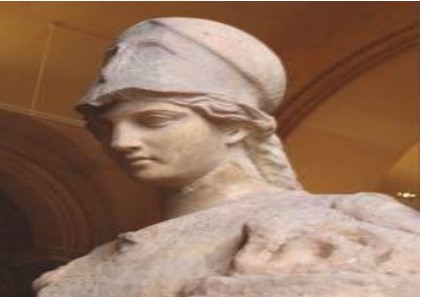
Athena on Homer’s Epics of Troy

BIRTH. After Zeus established the sovereignty of the Olympian gods, first Metis, the daughter of Oceanus, united with the goddess. Metis means reason, reason, thinking power in Greek. It is meaningful that the god of the gods chose Metis as his first wife, but after impregnating him with his offspring, he took her into his own body with a deeper meaning: the power of reason and world domination, which can only be achieved through his means, cannot be separated from the chief god, and its products can only come out of his head. Hesiod expresses this concept and thought as follows (Theog. 886 et al.):

Zeus, king of the gods, as first wife
He chose Metis, the wise goddess.
Metis knows the most
among all gods and mortals.
But this goddess is just about to give birth
the brown-eyed Athena,
Zeus obeying the counsels of Heaven and Earth
deceiving his wife with loving words
swallowed it, took it inside his body.

As the second process, the emergence of Athena from Zeus’ head is described as follows (Theog. 924 ff.):

And one day, Zeus brought out of his head the stern-eyed Athena, the goddess who smashed the world together, the goddess who tirelessly led the armies, who enjoyed the battles and the cries of war, and who was considered supreme.

NAME AND ADDITIONAL NAMES. Athena, the daughter of Zeus and one of the twelve Olympian gods, is often referred to by two names, namely Pallas Athena. The origin of the name Athena is unknown, and the origin of Pallas is a matter of debate. There is a Titan named Pallas, whose name is thought to derive from the Greek “pallo”, meaning to shake a spear, to throw; there is also a legend that the goddess Athena killed an Attic giant named Pallas; Is the additional name of Athena related to these giants and swinging the pike? As it is known, according to a legend, the goddess Athena emerged from the head of her father Zeus, armed with a spear in her hand. Or is the additional name Pallas derived from an adjective meaning girl and boy, and when Pallas Athena is mentioned, is the virgin goddess Athena understood? It is difficult to pinpoint this with certainty today. In the Iliad, Zeus calls his beloved daughter “Tritogeneia”. This name, which can mean being born from Triton, is also not clear, the sea god Triton and Athena apparently have no relation. It may be an analogy, but Athena’s only relationship with the sea is when her mother, Metis, is an Oceanus daughter. Is the name Tritogeneia a connotation to this?

Their adjectives are more specific: “aigiokhos” (Aigis) carrying the shield of Aigis, the epithet “glaukopis” with sky-eyed, light-eyed eyes was associated with the goddess’s favorite bird, “glauks”, the owl; Finally, the title of “obrimopatre”, whose father is powerful, is directly because she is the daughter of the chief god Zeus.

QUALITY AND LEGENDS. In the Iliad, Athena appears as a goddess of war, but takes sides, is on the side of the Achaeans, protects Achilles, Diomedes, Odysseus and Menelaos at every opportunity, and does not hesitate to set up dirty schemes against the Trojan warriors. In fact, she plays an ugly role in the Iliad, this goddess of virtue never appears to be on the side of righteousness, her actions are always driven by greed and passions: It is told how Athena wanted to chain her father Zeus with Hera and Poseidon (I, 400), disliked, His attitude towards Aphrodite and Ares, whom he sees as rivals, is ruthless, he helps them to be defeated and injured, then looks down on them, he also rants in front of his father Zeus, does not hesitate to criticize him: In the war between Achilles and Hector, he affects Zeus, who will draw the death lot. XXII, 117 ff.):

What do you say, dark cloudy father,
white lightning! A mortal man whose fate is already determined
this is the man, do you want to miss him
from the dying death?
Do it but we gods
We do not approve of what you did.

The father of the gods softly responds to his daughter’s harsh outbursts, he laughs and caresses her. And here, Athena, disguised as Deiphobos, deceives Hector and drags him to death.

Athena’s role in Odyssey is different and meaningful: We hear from Zeus himself that Odysseus is “the supreme of mortals, in favor of reason”, that Athena, the goddess of reason and virtue, holds this wise man, and it seems natural to hold him. The role of the ruler played by Zeus in the Iliad, Athena plays in the Odysseia: the fate of Odysseus and his entire family is in his hands, whatever events, actions and speeches happen, all happen by the command and guidance of Athena, to the goddess Odysseus. He puts on a thousand disguises to inspire Telemachus, Penelope, and Nausikaa with what he will do and the behavior he will adopt. The goddess also has a consistent feeling in her behavior towards Odysseus: she takes pity on the man who has suffered a lot, does not want all that wisdom and wisdom to go to waste, on the contrary, she wants the right to prevail. That’s why throughout the epic, Athena’s actions, behaviors and speeches in the role of guide are insatiable, the goddess entered other epics and poems with this lovely role, it can be said that she created and immortalized the Athena type as she created the Odysseus type in Homer’s Odyssey.

The legends of Pallas Athena are not that many, the fact that she is a girl and boy and she is afraid of losing this quality, has led to the birth of some strange tales (Erikhtonios, Aglauros). He retains the Argonauts as well as Odysseus and helps build the Argo ship (Argonauts). She plays a role in the Arachne myth (Arakb-ne) as the goddess who protects handicrafts and handicrafts. The role played by the goddess as the founder and protector of Athens is also interesting; It is said that she won the right to be the goddess of the province of Attica and the city of Athens as follows: Poseidon and Pallas Athena competed to win this authority, and they took the gods of Olympus as judges: Poseidon created a salty lake on the Acropolis of Athens, and Athena an olive tree. The gods found the olive tree more beneficial than the salt lake and gave the authority to Athena, thus Athena obtained the administration of the region and the city.

Other cities also adopted Athena as the protector goddess, the first of these being Troy. The biggest, oldest and most sacred temple of Troy was the temple of Athena, the ruins of which can still be seen today, as well as the wooden statue of the goddess called Palladion, which was considered the symbol of the city’s existence. Because of this, many legends were born about Palladion’s escape (Palladion).

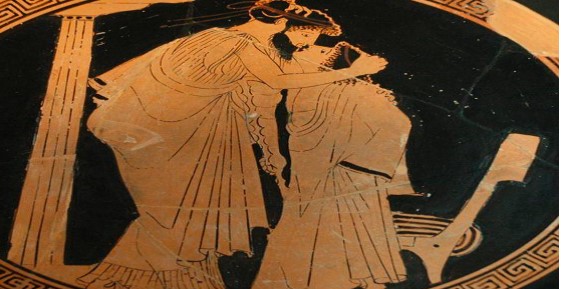
Briseis on Homer’s Epics of Troy

The most valuable captive brought by Achilles from his raiding expeditions to the Aegean region is Briseis. Briseis, whose real name is Hippodameia, is the daughter of Brises, the priest of Apollo in Lyrnessos. Brises and Khryses, the priest of Apollo of Khryse, are brothers. Briseis was a married woman who was captured by Achilles after killing her husband. Briseis also bears her pain, because while she was crying for her destroyed home, her burning city, Achilles’ pure-hearted friend Patroclus comforted her with sweet words and promised Achilles that she would be his wife. He lives quietly in Achilles’ hut, when one day the fight between Achilles and Agamemnon turns his life upside down. When Apollo was willing to return Chryseis to his father to prevent the god’s anger and plague, Agamemnon spoke as follows (II. I, 183 ff):

If Pboibos wanted Apollo, he would take Chryseis.
not necessarily,
with my ship, with my comrades
I will send it.
But I’ll take myself from the shed
come and
your honour, beautiful cheeks
his Briseis.
then what i am stronger than you
understand see.
Let him be afraid of competing, let him take a lesson
who wants to see me equal
self.

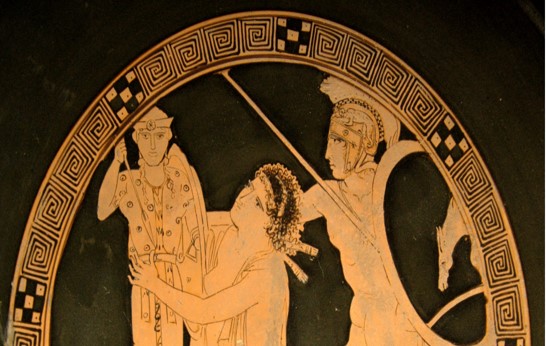
Achilles is very angry at these words, he is about to unsheath his sword and walk on Agamemnon when the goddess Athena takes his hand. Achilles, after cursing the king of kings, takes an oath not to join the war no matter what happens, and retreats to his tent. Meanwhile, Agamemnon puts Chryseis on a ship and sends him to his father, and sacrifices a hundred cattle to calm the anger of the god Apollo. But not only that, he sends his two messengers to Achilles’ tent and takes the woman away.

Upon Achilles’ wish, his mother Thetis goes and begs Zeus not to give victory to the Achaeans unless Achilles joins the battle. Zeus keeps his word, so much so that even Agamemnon regrets what he has done and sends emissaries to make peace with Achilles. He makes him say that he will give Briseis back with many gifts, that he has never touched that woman anyway. Achilles still does not soften (Il. IX, 336 ff.).

On the day Patroclus died, Briseis returned to Achilles. We see two lovers crying over the dead. Then Briseis doesn’t have much to say in the Iliad. Only in the last chapter, when Achilles complies with his human feelings and gives Hector’s body to his father Priam, when he lays on his bed at night, his wife Briseis, for whom he suffered a lot, comes and sleeps next to him.

In the stories after Homer, Briseis is described as a tall, dark woman with thick eyebrows and bright eyes. After Achilles died, Briseis gave him the last duties.

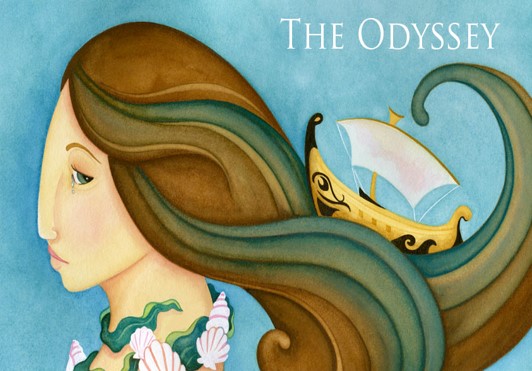
Penelope on Homer’s Epics of Troy

Penelope, daughter of Ikarios, whose name is called Penelopeia in Homeric epics, and wife of Odysseus, is one of the most famous figures of Greek mythos. During the twenty or thirty years she was separated from her husband, her resistance to avoid reaching another husband and her loyalty to Odysseus made her a symbol of loyalty and love in marriage. The cloth, which he weaved during the day and ripped at night for years, was as legendary as his name.

While Odysseus was going to suit Tyndareos’ daughter Helene, he gave up on her and married his relative Penelope (Odysseus). This happy couple has a child named Telemachus, but when Telemachus was a baby in swaddling, his father had to go to the Trojan War. That’s when Penelopeia’s ordeal begins. We hear this from the mouth of her mother-in-law Antikleia (Od. XI, ISI et al.):

Your wife is waiting for you with great patience
at home,
it consumes itself crying during the day
spend a night so that the enemy does not press..

When the Odyssey epic begins, we see that the Import palace is full of suitors for Penelope, the notables of the island and neighboring countries always want to take the beautiful woman who is left without a husband, or rather, their aim is to seize the kingdom of Odysseus, which is full of possessions and rich with herds. Moreover, because the palace was left unclaimed, Laertes grew old and Telemachus was a child, they could not resist, so the suitors settled in the palace, exploiting and consuming everything Odysseus has. There has been a discussion between them and Telemachus, the suitors want Penelopeia to choose a husband after all these years, for this to happen, to be given back to her father with her dowry, and for her father to choose a husband whom his father will approve, for his daughter. Telemachus protects his mother, he does not want to leave his house. Just as she distracts the suitors, Penelopeia often appears before the suitors, deceiving them with sweet hopes. Penelope explains this matter to Odysseus, who came to the Ithaca palace in the guise of a beggar (Od. XIX, 137 ff.): ‘

God I thought of the code to weave a cloth
first,
I built a huge bench
in my room,
I was weaving a rag of cloth,
I was talking to the suitors like this
once in a while:
“Boys, if you’re divine
Odysseus died,
I will reach one of you helplessly,
but please wait one more piece,
Let this weaving end, don’t let it go to waste
so many threads,
I’m weaving a shroud for the valiant Laertes,
If the day comes when death knocks him down
long,
What would the Achaean women say to me then?
That’s what I used to say, these words would bleed
overflowing hearts.
Whereas I, which I weave during the day
husband diaper
I used to remove it in front of a lamp at night.
I tricked them like this for three years,
but when the fourth year started
first summer,
a servant, a disrespectful dog,
announces it to them,
They came and caught me, they shouted
they called.

Penelope is as cunning and deceitful as Odysseus. As a last resort, he thinks of putting the suitors in a competition: He informs Odysseus of his decision to have Odysseus’s big bow brought and reach whoever manages to draw him back and shoot an arrow. Thus she thinks of the remedy that leads to the final scene of the Odyssey, the murder of the suitors.

Odysseus has a hard time introducing himself to Penelope after getting revenge on the suitors. She doesn’t believe that this man is her husband, Odysseus, and tries to test him all the time. So much so that even Telemachus resents his mother’s attitude with the following words (Od. XXIII, 97 ff.):

Mother, bad mother, mother with a heart of stone!
Why do you stay away like that?
from my father,
why doesn’t he sit next to you and talk,
don’t you ask questions?
Who can stand but you, which
woman’s heart
from her husband who returned to her father’s land
to stay away like this,
Returning to the beggar after twenty years
from her husband?
I’ve been, I know it’s possible stone solid
your heart is yours.

However, these words are very pleasing to Odysseus, and he realizes how skeptical and clever his wife is. Their meeting will be just as sweet (Od. XXIII, 209 ff.).

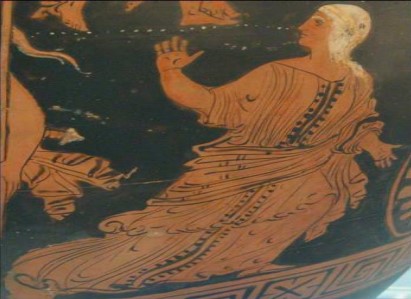
Hekabe on Homer’s Epics of Troy

Hekabe is the wife of the Trojan king Priam, the mother of Hector, Paris, Cassandra and many other children. When Priam goes to Achilles’ hut to retrieve Hector’s dead body, he introduces the queen as the mother of nineteen children (Il. XXVI, 492 ff.):

Yet how black is my fortune,
I have raised valiant sons
in Troy,
but I don’t have any of them left.
The day he came, the sons of Akha came here
I had sons, I had fifty,
nineteen from one womb
was born,
Others were given to me by courtiers.

Hekabe portrays the fertile and unfortunate main type in ancient literature. This character, which appears in the Homeric epics, was exaggerated by the tragedies later on, and after Hekabe lost her children one by one and witnessed their terrible destruction and torture, she became the symbol of the motherly being, who was mad and attacked like a dog. In some legends, it is claimed that he could not bear the pain of his child and turned into a howling female dog day and night. When we first appear in the Iliad, Hekabe is shown as a soft-spoken, generous and religious mother (Il. VI, 253 ff.). Returning to the city from the war, he asks Hector to rest a little, drink wine and cool off, but when his son refuses, he grants his wish: He goes to the temple of Athena to offer an offering. Then, throughout the episodes, Hekabe is not mentioned until he comes over the West gates to watch Hector and Achilles battle. Then, he calls out to let his son, who was outside the walls and stood alone against the enemy, inside (Prov. XXII, 83 ff.):

“Hector, my child, show respect
Bring this breast the days when I put it in your mouth
to your mind,
You forgot all your troubles in my bosom
look at being eaten inside our walls
boar,
come in, dear boy, outside
stand in front of you.
If this man kills you, hey solid
hearted,
We will not be able to put your dead on a mattress,
What will I cry in front of you,
What a generous wife who bore you will weep, my eye
his baby,
will eat you nimble dogs, far from us, by your ships”.

When Hector did not listen to his parents’ pleas and died in the war with Achilles, a cry broke out in Troy, the king, queen and all the people began to lament and cry, Priam buried his head in dust as a sign of mourning (Prov. XXII, 406 ff.):

… His mother was also pulling out her hair,
she threw away her shiny headscarf, beating, looking at her son
she was screaming…
Began Hekabah among the women
in a long web:
“Look at your mother, my child, your unfortunate mother,
Let me see your pain, you die
Let me see, how shall I live from now on,
how?
You were the light of my heart day and night
in this city,
The power of women and men of Troy
support,
he saluted like a god, baby
they you, you were their great glory while alive
But baby, your death by fate
you have it now”.

A few thousand years have passed, but Anatolian women lament their dead mother’s lambs with these words.
Hekabe tries to detain King Priam, who tries to go to the enemy and beg, in the name of reason and common sense, and when he fails, he goes to the way of praying to the gods and offering offerings, he endures and waits. When the corpse of his beloved, valiant son Hector is laid before him, he neither shouts nor barks like a dog, but brings him to life with an Anatolian woman’s solemnity and imagination (Il. XXIV, 575 et al.):

Now you, as if you heard my word,
You are sleeping in your house fresh,
you are like Apollo’s sweet, arrow
to the people he hit.

This is how the poet Homer from Izmir portrays Hekabe, and the Athenian tragic writer Euripides made him the protagonist of his tragedies “Women of Troy” and “Hekabe” and elaborated his drama in depth. In these games, we see Hekabe crawling here and there as a slave after Troy was destroyed. The queen maintains her splendor and virtue, but when she sees that her daughter Polyxene is sacrificed to the spirit of Achilles before her eyes, and that her son Polydoros, who was entrusted to the Thracian king Polymestor, is also viciously killed and thrown into the sea, she commits a terrible act of revenge and kills Polymestor. blind and kill their children. However, Euripides also shows Hekabes as a great person who does not leave the way of reason and truth.

In these tragedies, Hekabe is not alone, she is a great presence reflecting resistance in the community of Trojan women, a symbol of natural maternal power. It is not in vain that the Athenian poet calls him “Phrygian” throughout the tragedy, Hekabe carries and expresses all the qualities of the Phrygian Mother Goddess Cybele.

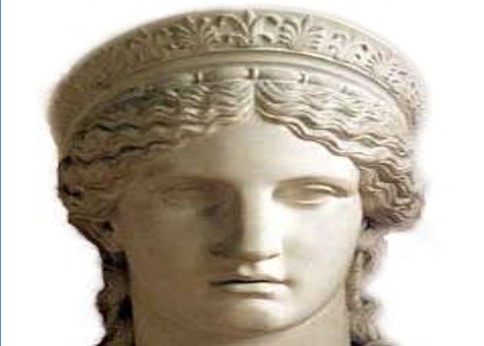
Hera on Homer’s Epics of Troy

Hera (or Here), who is described as “cow-eyed”, “white-armed” or “golden throne” in the Homeric epics, is a typical Greek goddess, that is, the symbol of the Greek peninsula’s race, lineage, religion and world views, interests, and a more advanced culture.

She is an unpleasant goddess who defends against the Aegean and Anatolia, so her personality and legends always reflect an atmosphere of quarrel, grudge, resentment and discord. Hera portrays woman with all her flaws: She is nagging, jealous, vicious, stubborn, schemes, but has nothing to do with it, runs water under straw, does what she does in secret, her love and hate are based on no logic, she does not hesitate to abuse her weapons and powers, by analogy, it symbolizes the wealthy and selfish bourgeois woman, whose examples are always and especially in our time. It is Homer who put this stamp on the great Hera, the wife of Zeus, the queen of the gods, but strangely enough, the portrait of Hera drawn by the great Ionian poet has taken hold and appears with the same type in the myths created in Greece. Let’s listen to Hera from the mouth of her husband Zeus (Il. VIII. 407):

Not much, my anger, my hatred for Here,
It’s his habit to interfere with everything I do.

After seducing Zeus and putting him to sleep in order to turn the Trojan war to the side of the Achaeans, the god suddenly woke up and scolds his wife (Il. XV, 14 ff.):

But you set up a scheme, it won’t work
here,
You dismissed the divine Hector, you defeated the army.
You bear the fruit of this evil
before you collect
Let me beat you up and see.
Did you forget that I hung you in the air
day,
I tied an anvil to both feet,
I struck an unbreakable gold chain
to your hands,
hanging, you were in the air, clouds
between.

Zeus gave this punishment to Hera because of the evil he had done to Heracles. The god of gods sees in his son Ares the same flaws as his mother. Other gods think more or less like Zeus; Even Hephaestus, trying to protect his mother against his father Zeus, cannot forget what he suffered from Hera.

BIRTH, LIFE STORY. Hera is the daughter of Kronos and Rheia and the sister of Zeus and other Olympian gods. Her father Kronos swallows her as soon as she is born, and then vomits. After Zeus shares world domination, he takes Hera as his wife. According to Hesiod, Zeus was the last of the goddesses to marry Hera.

Hera herself tells in the Iliad that she spent her childhood with the gods Oceanus and Tethys at the ends of the world (Il. XIV. 200 ff.). Her mother Rheia entrusted her to Oceanus and Tethys during the war of the Titans, and they raised Hera, so much so that during the Trojan war, the cow-eyed goddess wanted to go to the west coast to calm down a fight between Oceanos and Tethys.

Zeus and Hera made love even before they were married, but then their wedding was celebrated with a ceremony. The sacred wedding (hieros gamos) between the greatest god couple is a frequent motif in both myths and cults. According to a legend, this wedding took place in the garden of the Western Girls (Hesperides), and Gaia gave the golden apples from that garden to Hera as a wedding gift. While Hera was on the shores of Oceanus, she planted the apples in the garden of the Western Girls with her own hands, and the reunion scene on the Gargaros hill of Mount Ida in the Iliad is such a holy wedding. It is worth summarizing this unique part of the epic (11. XIV, 152-353): Hera sees that her husband Zeus was leading the Trojan war from Mount Ida and the success was with the Trojans. To prevent this, she had to go and make love to him at the top of the mountain, she goes to her room first. adorns herself beautifully, then asks Aphrodite for her magical breastplate that ignites love, and after she puts it on her breast, Sleep seduces the god and with him reaches the climax of Gargaros:

Zeus gathering the clouds saw him,
as soon as i see love embraced thoughtful
his head,
such a love the day they first met
had heard, the day they came out in secret from their parents.
To bed…

Zeus asks his wife where she is going, and she pretends to be innocent and says that she went to reconcile the couple of sea gods on the shore of Oceanos and first came here to inform her husband and get permission from him. Zeus can’t stand it, he forgets about war and so on and reveals his feelings:

Then you go there, what happens Hera?
let’s go to bed, let’s hug
in bed, to the fullest,
neither a goddess nor a
against woman
The love that flows into my heart is so upset
didn’t make me…

Then he counts, one by one, the mortal and immortal women he has slept with. Hera does not make a sound, but it is obvious that honey is dripping into it. He is quite coy and shy:

Terrible son of Kronos, what kind of word
out of your mouth?
How do you want us to lie in bed and make love?
On top of Mount Ida, in plain sight?
What if an ever-present god sees us,
If he goes away while we sleep, the other
to the gods?
I can’t set foot in your house again
How do I get out of this bed?

Like Zeus, let us be astonished at Hera’s reluctance to sleep with her own husband like an ordinary woman and fear of gossip. Anyway, Zeus finds a cure for this too:

Gods, don’t be afraid that people will see,
I cover us all around us with a mist like gold,
not even the sun can see us past it, who sees everything with its sharp light
even the sun.
He said so, took his wife to his bosom, hugged him.
the divine earth released a soft grass.
Fresh lotos laid a carpet between them and the earth,
a sweet carpet of saffron, hyacinths,
they both lay down on the carpet,
A beautiful golden cloud enveloped them,
Dewdrops flowed brightly from the cloud.

Go to the top of Kazdag today, and you will see huge, flat stones laid out like a tray with herbs sprouting between them, and you think that the gods are making love on these green carpets.

LEGENDS. Hera does not have a direct legend, but she plays a role in the love of Zeus, interferes with them, especially
He does not let go of the children born out of these loves, he watches them with hatred and anger throughout their lives. His first and greatest victim was Heracles, whom Alcmene gave birth to from Zeus. It is Hera who forces the mighty valiant to perform heroic acts one after the other, and plays a role in blinding Teiresias in the legends of Io, Epaphos, Ino and Athamas, Dionysus and Tityos. Not being able to win the first place in the Three Beauties competition is a reason for the endless grudge against Paris and Troy. On the other hand; Jealous of Achilles’ mother Thetis, she keeps her son Achilles for raising her. A legend tells that he made Menelaus immortal.

He participated in the war against the giants. Meanwhile, Porphyrion had a crush on him and grabbed the end of his robe and wanted to pull him to himself, at that time Zeus knocked the giant to the ground with a lightning bolt. Iksion also wanted to unite with Hera, but Zeus deceived her by making a cloud image of Hera.

Hera assisted the Argo sailors in the Argonauts expedition, enabling them to cross dangerous passages.

The peacock is the favorite bird of the goddess Hera, who watches over the births with her daughter Eileithyia. The eye-eye feathers symbolized the facial eyes of Argos, whom the goddess placed as a guard for Io. He loved the pomegranate as a fruit and the lily as a flower.

In Rome, Hera was equated with the goddess Juno.

Khryseis on Homer’s Epics of Troy

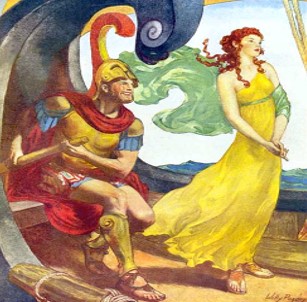
The Trojan war broke out because of a woman. Women play an important role in this war. Above all, they occupy a larger place than Helene in the Iliad, which portrays events long after Helene’s abduction: These are Khryseis and Briseis.

The epic opens with a horror scene: Akha army is breaking through the epidemic. Why? After the Achaeans besieged Troy, they wait for years in front of the walls of the mighty city: Troy does not fall either.

Meanwhile, aggressive Achaeans, especially Achilles, try to plunder rich Anatolian cities by embarking on raiding campaigns. Not only do they buy gold, bronze, iron and valuable weapons, they also kidnap elite girls and women from the cities they plunder. Heaps of goods, many captives are laid out and divided among the Achaeans. The biggest share always goes to the king of kings, Agamemnon.

In a landing in the Troas region, Achilles took Khryseis, the daughter of Kryses, the priest of Apollo, as a prisoner of the city of Khryse.

He uses her as his wife in his hut, loves her more and more, preferring her to his married wife, Clytemnestra. However, one day, Chryses comes to get his daughter back with rich liberties, begs and begs, the Achaean leaders want to give the girl back, only Agamemnon resists this request and dismisses Chryses with harsh words. Thereupon, the priest Apollo prayed to the god and avenged the god Chryses (Il. I, 43 ff.)

Andromache on Homer’s Epics of Troy

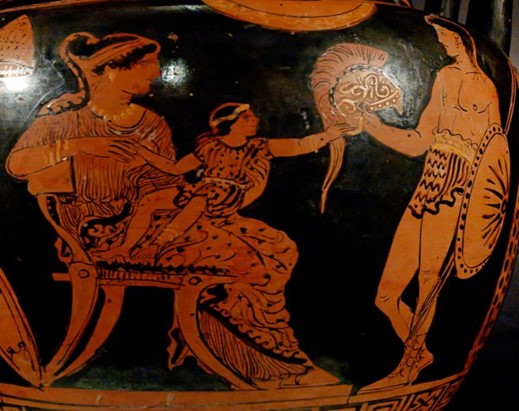
Andromache is the daughter of Eetion, king of Thebes in the Mysia region. Eetion is bound by ties of friendship to King Priam. He gave his only daughter Adromakhe, whom he brought up with seven sons in his palace, to Hector, the most precious son of Priam. How was the wedding association? How did Andromache enter one of the houses with porticoes built for the sons and brides of Priam? Poets don’t tell us that. We do not know the happy days of this beautiful husband and wife. Hector and Andromache only appear on the scene of Troy in the ninth year of the war described in the Iliad, when destruction comes. In the meantime, they had a child: Astyanax. The Trojans gave this name to Hector’s son, which means “lord of the city”, in the hope that he will become king of Troy one day when the child grows up. But a few days before Hector’s death, Astyanax is a baby carried around in his nanny’s arms.

Andromache did not smile from mother, father, brother. When the sinister war came to the Anatolian shores, he did not feel comfortable in the Troy region. The Achaean army had been dozing in front of the gates of Troy for nine years, they could not bring down the sacred fortress of Anatolia. Especially the young and dashing Achilles, who couldn’t fit in, was very impatient. He could not express his bloodlust, even by chasing and killing the few Trojans who left the city to graze their cattle on the mountain slopes and ride their horses to the fountain at every opportunity. Achilles, who had gone on marauding expeditions in the region, had arrived in Mysia. He did not do what he did in King Eetion’s palace, he killed the old-headed king and mercilessly took the lives of his seven sons. Nor did he spare Andromache’s mother. “My mother was a queen at the foot of the forested mountain Plakos,” says Andromache to the side; Achilles had also taken the queen into the herd of captives, brought her to Troy, and then released her in exchange for a great redemption, but the poor woman died as soon as she saw her “free day,” as Homer said.

Andromache spends her time in the women’s quarters in the Troy palace, embroidering and shuttlecocking among her maids. She is a torment day by day, because fear grips her heart, she fears that Hector, however valiant, will one day die under the spear of the enemy. While the braves are struggling on the plain of Troy, they cannot stand comfortably between four walls. He gives his child to the nanny and goes up to the tower above the west gate to watch the war. One day, Hector takes a break from the war and comes to the city, looking for his wife at home, he runs to the western gates, smiling when he sees Andromache and her baby from afar. Andromache sheds tears and hugs her hands (Il. 407 et al.):

Oh my husband, this greed will eat you,
You have no pity for your child, your unfortunate wife,
not to be a widow, I know, few days are left,
The Achaeans will attack you and kill you.
Rather than being without you, it would be better for the earth to swallow me.
I have no other support than you,
when death takes you away
Only pain will remain for me.
I have neither my father, nor my great mother…
You are a father to me, Hector,
You are my great mother, you are my brother,
You’re a friend of my warm bed.
Stay here in the castle, have pity on me,
orphan coma our baby, your wife widow coma.

This torture will last nine days: Every morning, Achilles ties the dead body to his car and drags it. In the evening of the tenth day, King Priam goes to Achilles’ hut, softens his heart and takes the dead. At Hector’s funeral we see Andromache now. The lamentation begins among the poets, saying (Il. XXIV, 725 ff.):

Hector takes pity on his wife, but what can he do, he will not withdraw from the war like a coward? The support of the Trojan army is its base.

Days pass, a one-on-one battle begins between Hector and Achilles. The battle for life and death is the most dramatic scene of the Iliad. The gods decided Hector’s death. He dies by fighting bravely. A cry breaks from the walls of Troy, Andromache hears this vaveyla while he is spinning in his room, he jumps out like crazy; When he sees the dead body of Hector, which Achilles tied to his car and dragged in dust, he falls and faints.

My man, you passed away at a young age,
You left, you left me a widow in our house,
Our child is also tiny, young,
one of us, the two of us who are unfortunate,
I don’t know, will it reach my youth?
This city will be destroyed from top to bottom,
you are dead, its protector, keeper,
you, my noble mothers, their children standing
holding…
You left unspeakable pain, Hector,
to your parents, but to me, the greatest pain remained.
You didn’t stretch your hands on your deathbed
to me,
You didn’t say such a nice word,
shedding tears day and night
I am her mother.

Indeed, Andromakhe’s suffering is endless.

In Euripides’s tragedy “Andromache”, we see him in the palace of Achilles’ son Neoptolemus. He married Hermione, the daughter of Neoptolemus Menelaos, but he had no children, whereas Andromache, whom he brought to his mansion as a prisoner, gave him three sons and a daughter. Hermione is very jealous of this Trojan woman, taking advantage of Neoptolemus’s departure to Delphi, Andromache and her son; They want to kill him, although they took shelter in the temple of Themis, they will slaughter them so that they are saved at the last minute.

The poet XVII, who created a much more beautiful and humane type of Andromache than Euripides. century French poet Racine. A valiant and conscious woman, who cannot forget Hector, who does not return the love of Neoptolemus (her name is Pyrrhus in French tragedy) and who overturns Hermione’s jealousy, is a compassionate main type.

In Jean Anouilh’s play “La Guerre de Troie n’aura pas lieu” (There will be no Trojan war), Andromakhe comes to life as an interesting and attractive type.

Kassandra on Homer Epics and Troy

Daughter of Priam, king of Troy, and his wife, Hekabes. Kassandra is the most interesting son of the king couple of Troy, after Hector and Paris. This young girl has a heartbreaking destiny, a tragic personality. Kassandra symbolizes the drama of the seer who tries to prevent the destructions with his power of seeing the future, but is affected and upset by the troubles that befall him because he cannot speak his mind.

Legends describe this power of Kassandra with various interpretations. According to one, when Cassandra and her twin brother Helenos were babies, Priam and Hekabe organized a feast in honor of Apollo from Thymbra in the god’s temple located outside the city, and at the end of the ceremony they forgot their children in the temple. The next morning, when they came to pick it up, they were met with a terrible sight: Kassandra and Helenos were sleeping in their cradles, but two snakes surrounded them, licking their eyes and ears. With this action, the senses of the children were purified and opened to the perception of the realities that people could not see or hear. Both had become priests.

Another legend explains Kassandra’s oracle as follows: God Apollo falls in love with Priam’s beautiful daughter, says that if he gives himself, he will gift her with the ability to see, Kassandra accepts, but does not want to give herself after receiving the gift from God. God, too, becomes enraged, spitting into the girl’s mouth, thereby rendering his gift ineffective: Kassandra will be able to see the future, screaming what she sees, but she will not be able to convince anyone of the truth of what she has said. Thus, Kassandra becomes a spokesperson who includes the god, like Pythia or Sibylla, and prophesies by being filled with the power of god, while Helenos is an interpreter who foretells the future by looking at the flight of birds and external signs. both were unfortunate

Kassandra foresaw and told all the events in the history of Troy: When Paris returned from Mount Ida, where she was left as a child, she wanted this young man to be killed immediately, then when she brought Helena on her return from Greece, she said that this woman would cause the destruction of Troy and should be sent back. When Priam came out of Achilles’ shack with Hector’s body, he announced that he had arrived in Troy without anyone noticing, and when the wooden horse stood in front of the walls, close to the destruction of the city, he tried to prevent the horse from being taken inside, with the help of Laokoon. There is also a legend that tells that Kassandra took refuge in the temple of Athena while Troy was being plundered, where she was attacked by little Aias. Aias pulls Kassandra away from the goddess statue she hugs, but she hardly saves herself from being stoned by the Achaeans because she sinned. Kassandra is given to Agamemnon as a slave in the end, but with this the real ordeal of the wise girl begins. Agamemnon fell in love with Priam’s daughter and took her to his palace in Mycenae. Until then, Kassandra remained a girl and a girl, and although she had many suitors, she did not marry. While her father was going to give her to an Anatolian valiant named Othryoneus, Kassandra was left unmarried after this man died in the war.

The legend of Kassandra’s arrival in Greece as a prisoner of Agamemnon became the subject of tragedy and inspired Aeschylus to one of his most powerful plays, “Agamemnon”. With this drama, Kassandra finds the opportunity to express herself completely: she clearly sees what will happen to Agamemnon and herself in the Mykene palace, that they will be killed by the hands of Clytemnestra, she cries, screams, laments, but as she cannot prevent anything, this destruction, death. cannot prevent it. When she realizes this, she curses the divination skill that Apollon donated.