Just as we use Greece incorrectly (which should be Elen, Hellas), in the movie Troy, “our country; There were words like “greece”. At that time there was no country called Greece, there were colonies and city-states.
But here’s the Greek convention you mentioned, they have to serve it. Then came the Romans and the Ottomans. Where is the Hellenic country? Just as Israel was placed in the Middle East today, a country was created with the lands torn from Ottoman Macedonia.
Just as the Ottomans claimed the Greek (Roman Empire) concept, we must continue the same mission.
Even the Chinese Empire called the Ottoman Empire Greek. The heir of the Greek (Roman Empire) is not the Greeks, but the Ottoman Empire, the Republic of Turkey.
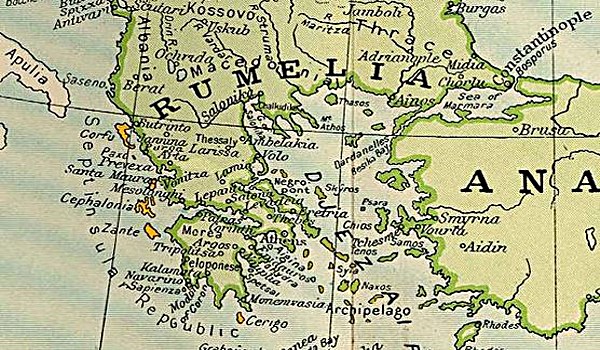
The discussion about the word Rumelia has now come to the point of asking the right questions with your contribution.
I added the Balkans/concepts section and Bizim Rumeli section on the Balkanpazar site ( www.balkanpazar.net ) in order to avoid conceptual confusion.
Question: If they made a convention for the word “Greek” in international platforms by combining all different concepts such as Greek, Greek, Greek, Hellenic, Cypriot, what concepts should our convention consist of? How should we form a convention?
What a series of mistakes; We define the Greek with two wrong concepts such as Greek (Ionian) and Greek (Roman Empire subject). As if the lands and islands we gave were not enough. Unbelievable. It’s not enough, we say let’s bury the concept of Rumelia too! Sorry indeed.
1) (Central Asia) Turkish Nationalism? Turkish Humanism?
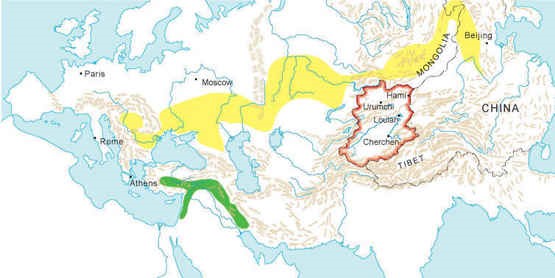
The Turks practiced a great humanism in the Balkans and mixed with the people of that place. The person who says “How happy is the one who says I am a Turk” is a Balkan. There is a great humanism in that saying. The point that Turkishness has reached in the Balkans is humanity, it is the essence of man. Let’s not look for humanism elsewhere in the philosophers of the west. It is a way of life that our ancestors personally lived in the Balkan geography. Turkish humanism is the name of the insatiable consistency of a soup “from the Great Wall of China to Rumelia”, which the Hun Turks started to mix in the Balkans from the 5th and 6th centuries and then the Ottoman Turks from the 14th century. Rumelia is the greatest humanism in history. Man is nobility.
I know personally that I have many Balkan ancestry in my blood.(My mother’s side immigrated from Fan river valley south of Shkodër to Jakova, Kosovo and then to Skopje, finally to Turkey in 1936. My father’s side is from Plovdiv, Pazarcık. Again, they immigrated to Turkey in 1938) This is the Turkishness we cannot explain. The problem in Turkey stems from the fact that the Turk is not defined correctly. Who is Turkish? question remained unanswered. In fact, if the Turk in the phrase “How Happy is the One Who Says I am a Turk” is defined correctly, no one emphasizes that the Turk is a mixture.
Actually, it’s a deliberate mix. We got rich by mixing. The more you mix, the more Turkish you are; you are human. Turks are one of the rare tribes that live this adventure of humanity as deeply as possible. “Turks: Journey of a Thousand Years: 600 – 1600” held in London in 2005Again, they migrated to Turkey in 1938) This is the Turkishness we cannot explain. The problem in Turkey stems from the fact that the Turk is not defined correctly. Who is Turkish? question remained unanswered. In fact, if the Turk in the phrase “How Happy is the One Who Says I am a Turk” is defined correctly, no one emphasizes that the Turk is a mixture.
Actually, it’s a deliberate mix. We got rich by mixing. The more you mix, the more Turkish you are; you are human. Turks are one of the rare tribes that live this adventure of humanity as deeply as possible. “Turks: Journey of a Thousand Years: 600 – 1600” held in London in 2005Again, they migrated to Turkey in 1938) This is the Turkishness we cannot explain. The problem in Turkey stems from the fact that the Turk is not defined correctly. Who is Turkish? question remained unanswered. In fact, if the Turk in the phrase “How Happy is the One Who Says I am a Turk” is defined correctly, no one emphasizes that the Turk is a mixture. Actually, it’s a deliberate mix. We got rich by mixing. The more you mix, the more Turkish you are; you are human. Turks are one of the rare tribes that live this adventure of humanity as deeply as possible. “Turks: Journey of a Thousand Years: 600 – 1600” held in London in 2005Nobody emphasizes that Turkish is a mixture. Actually, it’s a deliberate mix. We got rich by mixing.
The more you mix, the more Turkish you are; you are human. Turks are one of the rare tribes that live this adventure of humanity as deeply as possible. “Turks: Journey of a Thousand Years: 600 – 1600” held in London in 2005Nobody emphasizes that Turkish is a mixture. Actually, it’s a deliberate mix. We got rich by mixing. The more you mix, the more Turkish you are; you are human. Turks are one of the rare tribes that live this adventure of humanity as deeply as possible. “Turks: Journey of a Thousand Years: 600 – 1600” held in London in 2005The exhibition www.turks.org.uk/ shows that the West has new approaches to this issue. We should work on the theme of “Anatolia, the Mother of Europe”. Since the basis of the EU is truly Rome, we must emphasize the Romans, Celts, Hittites, Phrygians. While the Byzantine emphasis is in the interest of the Greeks, it still continues to emphasize it, we identify Istanbul with Byzantium, and we do not mention Rome at all.
2) Ottoman Empire
Relations with the neighbors began to be developed after the removal of Apon from Syria.
Relations with neighbors in the Balkans, the Caucasus and the Middle East and North Africa have come a long way in the last 7 years. The Ottomans come into effect.
We had a wonderful convention that was systematized by the Ottomans and inherited from Rome. At the end of the 19th century, the West started to destroy the conventions both in China and in the Ottoman lands at the same time. The West took thirty states out of the thirty-two provinces of the Ottoman Empire . But China ‘s thirty-two states continues as still state … in short, China ‘ I could not have been destroyed … In fact, China ‘s state are located in the wall (Inner Mongolia, eastern Turkey istan, Tibetan) ethnic Chinese also not acylated …
If the Ottomans had lived today, they would have made the West kneel like China with a population of 450 million.. Alas .. Britain, who did not give us Mosul and started a civil revolt not to give it to us, handed Hong Kong over to China with your own hands. No sir Hong Kong’ They rented it from the Chinese, and they delivered it because the lease agreement was over… It was only a part of Hong Kong, which was the subject of the lease agreement, close to the Chinese border… It was not the whole of Hong Kong..
While acts of destruction of conventions are already underway in the Balkans and the former Ottoman lands in the Middle East, the days are not far off when China’s turn will come.
In the last two decades of the twentieth century, we see two old and fragrant worlds re-emerging: the Turkish World and the Chinese World . Both members of the old continent and the old world, which were once neighbors with each other, started to open up in almost the same years (1980 and 1978) by making revolutionary changes in their economies.
Among civilizations in pre-modern eras, the Chinese and Ottomans felt superior to the world outside them. The most striking aspect of Chinese civilization must be the early development in technology. Huge libraries were set up starting from a long time ago. Chinese cities were much larger than cities in medieval Europe. The Ottomans , on the other hand, established an official unity of belief, culture and language on a wider area than the Roman Empire and on the vast masses of people who became their nationals. Ottoman their cities were large, well-lit, and had sewers; some had universities, libraries, and stunningly beautiful mosques. The greatest threat to Europe at the beginning of the modern era, of course, came from the Ottoman Turks , or more precisely, from the formidable armies of the Ottomans and the most advanced siege forces and vehicles of their era.
We should rebuild our convention, which was destroyed in both Anatolian and Balkan bridge peninsulas, by taking peaceful initiative in our relations with the Armenian/Greek/Jewish communities, which are the fringes of the Ottoman Empire.
3) Our cultural and genetic ties with the West.
Europe is increasingly finding its roots in Anatolia. The first seven churches, the spread of Christianity starting from Anatolia, Troy are the first examples that come to mind.
The bridge is not only the Greek Anatolia, but also the Rumelian Balkans; peoples are mixed. The BTC pipeline connects Central Asia (Kazakhstan) and the Caucasus (Azerbaijan, Georgia) to Turkey. Yes, Turkey is much more of a union than Europe, it is united by mixing. Our genetic ties with the West are also present in Central Asia. Considering your site about the Celts, I am forwarding a current source on this subject: Elizabeth Barber The Mummies of Urumchi; http://departments.oxy.edu/languages/urumchi.htm#4celtic http://departments.oxy.edu/languages/barber.htm
Anatolia was never Hellenized; but very quickly Turkified.
Concerning our genetic ties to the West, these ties are also abundant, particularly in Eastern Europe (Hungarians) and Southeast Europe. We became related and interbred with Slavs (Serbs, Bosnians, Bulgarians, Croats, Slovenes), Romanians and Albanians.
4) New Conventions: East and China
Another main source that we will feed on about the convention is the Far East. The Chinese are our oldest neighbors. I am attaching the study titled “Cultural exchange between Turkey and China”.
The share of the East in the determination of conventions will also begin to increase. Convention perceptions of China, which will rise to the position of superpower twenty years later, will also change the status quo of existing conventions. We have cultural and genetic exchanges with our former neighbors, the Chinese. In addition, the East Turkestan problem restricts relations.
The Battle of Talas in 751; the Chinese and the Turks parted ways; There had been a war in which the Chinese advance to the West was stopped and the Turks’ journey to the West became more certain. This war was an important turning point in history. The situation of both nations against each other shows that we are again approaching a turning point in the coming decades. There are also inputs to Turkish culture in the first emergence of China in ancient times. Also, China’s official name is Zhongguo, that is, the central country. A country that says it is at the center of the world will have its own convention. The concepts of “Emerging Asia and the East” will come to the fore more for the Convention. What kind of convention do you think the East will force?
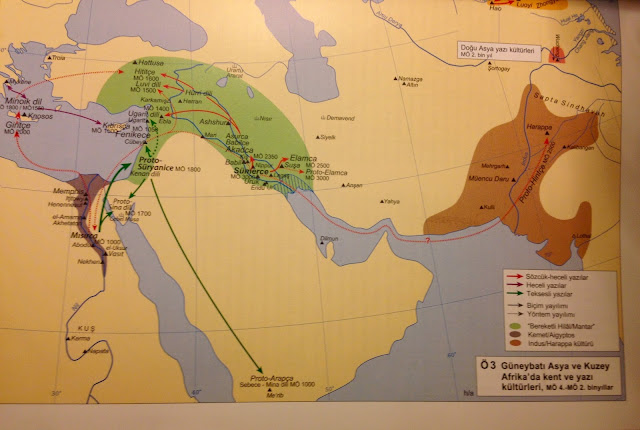
ANATOLIAN CIVILIZATIONS
- aiolis
- Assyria
- Bithynia
- Çatalhöyük (neolithic)
- Çaydibi (neolithic)
- eastern Roman
- Phrygia
- Galatia
- Hittite
- Ionia
- Cappadocia
- Caria
- Kayaönü (neolithic)
- Cilicia
- Commagene
- Lydia
- Lycia
- Lycaonia
- Mysia
- Ottoman
- Paphlagonia
- Pamphylia
- Pisidia
- Pontos
- Rome
- Seljuk
- Thrace
- Troy
- Turkey
- Urartian
BALKAN CIVILIZATIONS
- Albania
- Bulgaria
- ancient greece
- Crete
- Alexander’s Empire
- Hungary
- Mycenaean
- Romania
- Slavic Civilization
CONVENTIONS: GREEK AND RUMELI , Dr.Tamer Yılmaz
What is the point? Isn’t it consolidation that Rumelia belongs to Turkey? There are multiple ways to do this.
Let’s make Rumelia Turkeli and then insist that we use it so that everyone, local and foreign, can use this new word, just because we want it. However, it is
much more difficult for them to accept something that we have made up, than to accept and change a use they have made incorrectly .
I think it would be more appropriate to put the word Rum on a historically and scientifically correct platform instead of burying it.
Rum means Roman. There is no such state as eastern Rome in history. There is only Rome. Even the Byzantine city-state bore the name of the Roman Empire, minted coins under this name, and bills, deeds, legal writings were always expressed with these words. The Eastern Roman and Byzantine empires have been used by western historians since the 17th century. The reason for this is that when they accepted the Roman Empire as their base of civilization, they created a Rome rival to Istanbul under the Holy-Roman-Germanic empire. The Holy Roman Germanic Empire was founded by francs, Germans, Goths, etc., who had nothing to do with Rome. Istanbul has strongly objected to this development, and I think they have rightly defended that no organization other than themselves can use this name as a state.Later, Fatih Sultan Mehmet was crowned as the Roman Emperor. Even the Vatican would accept this, but he wanted Fatih to recognize the Vatican in Italy as the only representative of Christianity. As it is known, there was a Roman Catholic Church in the Vatican and a Roman Orthodox Church in Anatolia at that time. He gave support to the Orthodox Church in order to provide the support of Fatih’s subjects.
The current name of the Roman Orthodox Church in Turkish is the Greek Orthodox Church. But for some reason, since the 20th century, this name has been translated into English as the “Greek Orthodox Church”, which is the name that needs to be corrected, as well as corrected in the united nations and international platforms.As it is known, there was a Roman Catholic Church in the Vatican and a Roman Orthodox Church in Anatolia at that time. He gave support to the Orthodox Church in order to provide the support of Fatih’s subjects. The current name of the Roman Orthodox Church in Turkish is the Greek Orthodox Church.
But for some reason, since the 20th century, this name has been translated into English as the “Greek Orthodox Church”, which is the name that needs to be corrected, as well as corrected in the united nations and international platforms.As it is known, there was a Roman Catholic Church in the Vatican and a Roman Orthodox Church in Anatolia at that time. He gave support to the Orthodox Church in order to provide the support of Fatih’s subjects. The current name of the Roman Orthodox Church in Turkish is the Greek Orthodox Church.
But for some reason, since the 20th century, this name has been translated into English as the “Greek Orthodox Church”, which is the name that needs to be corrected, as well as corrected in the united nations and international platforms.Since the century, this name has been translated into English as the “Greek Orthodox Church”, which is the name that needs to be corrected, as well as corrected in the united nations and international platforms.Since the century, this name has been translated into English as the “Greek Orthodox Church”, which is the name that needs to be corrected, as well as corrected in the united nations and international platforms.
The name Greek cannot be reduced to a simple one like “Anatolian Greek”, and the term “Anatolian Greek” is already wrong. This reduction was made especially by the West and especially by the Greeks. Because they have made a convention for the word “Greek” in international platforms by combining all different concepts such as Greek, Greek, Greek, Hellen, and Cypriot. It is derived from the form of real Greek = Yonan = Ionan = Ionian. So even Greece, which we use alone, is wrong, and this is the word that should be buried.
In Anatolia, Galatians, Phrygians, Capadoccians, and Turks who emigrated at an early time have always been given Roman citizenship, and they have gladly done this as a reaction against the belittling of Anatolians by the Hellenes in the coastal towns. In other words, the Greeks were born as a reaction to the Greeks in the real sense. The real name of the Anatolian Seljuk State was “Anatolian Greek Sultanate”, the name it used in bills, title deeds and official correspondence. These subjects are taught incorrectly in school books, and as a result, young people who grow up with this information unfortunately harbor a dislike for the word “Greek”.
Instead of changing Rumelia with a made-up name like Turkeli just for ideological reasons, I think it would be more effective if the basis and meaning of the Greek name were explained to everyone and a justifiable struggle was given against its use as an equivalent with the word “Greek”. Otherwise, we have become bride and groom ourselves, who cares. The word Rum is a key word that stands against the biased comments and reviews of the West. If this word goes away, it will be difficult to disprove the information that the west feeds us.
The international convention is the word “Helen”. This is especially the ingenuity of England. The Greeks’ clinging to this convention literally fell into my filthy pear mouth. What should we do, God gives oil to some and makes others eat kelp.
Even the Greeks applied to the UN following the 2nd World War and petitioned for their name to be “Helenya”. However, Western states rejected this under the idea that “World civilization belongs to the whole world”. Even today, the postage stamps of Greece write “Ellas”, which is not officially recognized by anyone. However, writing Helen = Greek has become an unofficial convention by Onasis and immigrant Greeks from the US and western writers in love with Greek. Thus, almost everything in Anatolia was put under the Hellenic umbrella. Although the Greek, Greek, Hellenic and Greek usages are very strong, they must first be converted into a historical and realistic convention in Turkish.
What about our own convention? The existing convention is the Central Asian nationalism that the West has put into our hands for us. This is a convention that we cannot easily give up because of the new geopolitical developments and the inertia of the old one, even though it hasn’t worked so far and even created a dissipation in Turkey and the Ottoman Empire. If you notice, we have good and bad developing relations with the Turkic republics. And we collect the fruits. And hopefully we will see greater benefits in the future. We have two more conventions, hitherto untouched: our cultural and genetic ties with the Ottoman Empire and the West.
The increase in our ties with our Ottoman Empire neighbors can be a source for the development of our relations. For example, let’s assume that a cultural event similar to “Commonwealth” has started. At certain intervals, the Ottoman Empire is commemorated, ceremonies are held, and former “sanjak lords” are invited to these ceremonies. And he is honored as a representative of the Ottoman Empire for their contributions. If we treat our neighbors with dignity, the Ottoman Empire becomes a cultural event, an excuse to get together, rather than being seen as an element of oppression of the past.
The approach with the West requires a separate convention: let me divide this convention into two sub-conventions: Roman and Celts. Rome is a civilization that the west has worshiped since ancient times. Ketller and Celtic nostalgia is a phenomenon that has been worshiped for the last 30 years. We are related to the West through the Galatians, which has been proven in the researches thanks to the P5 gene (?). If you say Rome, we have a long relationship as a people, almost 1500-2000 years.
After all, we must have a convention that fits whichever side we are approaching. There is nothing to be ashamed of in that. This is this very mixture that we are in and that is “no longer divisible,” that is, reality itself. Of course, this is a situation that we have not been able to get used to ideologically until now. However, from any realistic point of view, historically, geologically, politically, economically, Turkey is a bridge. Although we have somehow accepted that Turkey is a geographical bridge, we have not yet accepted that it is a genetic, cultural, linguistic, religious, historical and intellectual bridge.
The reason for this is the theories of “purity” and “racism”. However, we can still argue that taking refuge in Darwin’s theory and getting involved is actually a beautiful and beneficial thing. On the contrary, it is clear that being closed to oneself and “internal reproduction” will bring stigma and corruption to societies in every respect.In other words, our weakest part, our “unconventionality”, may actually be our strongest point.
We are almost as much Turkish as we are Western, Middle Eastern, Roman, Celtic, etc. If “guma” means 2nd lady (see Sopranos series) in Sicilian bays, if cheese is “kesh” from the heart of Anatolia to Ireland, then there is no point in denying our kinship with the west. Maybe we can gather all of these in one convention and say “My greatest (or richest) wife”. Turkey: The Great Divide or the Great Union”
Actually, I don’t even need to say all this. Because the general trend in Turkey is in that direction. Things that should happen, albeit gropingly, are slowly happening. (This can even be seen from your Balkanpazar.net.) www.galloturca.com is also my page.
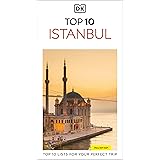
DK Top 10 Istanbul: Top 10 lists for your perfect trip, plus an all-weather folded map (Pocket Travel Guide)
$7.31 (as of 09/08/2026 02:09 GMT +03:00 - More infoProduct prices and availability are accurate as of the date/time indicated and are subject to change. Any price and availability information displayed on [relevant Amazon Site(s), as applicable] at the time of purchase will apply to the purchase of this product.)
Black Sea: Dispatches and Recipes – Through Darkness and Light
$14.98 (as of 09/08/2026 02:09 GMT +03:00 - More infoProduct prices and availability are accurate as of the date/time indicated and are subject to change. Any price and availability information displayed on [relevant Amazon Site(s), as applicable] at the time of purchase will apply to the purchase of this product.)
Amazing Turkey Facts for Kids: A Fun Learning Book with Color Photos About Istanbul, Ephesus, Ancient Temples, Underground Cities, Wildlife, Culture, Food, and Famous Landmarks
$16.99 (as of 09/08/2026 02:09 GMT +03:00 - More infoProduct prices and availability are accurate as of the date/time indicated and are subject to change. Any price and availability information displayed on [relevant Amazon Site(s), as applicable] at the time of purchase will apply to the purchase of this product.)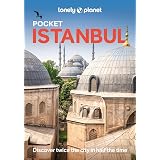
Lonely Planet Pocket Istanbul: Discover Twice the City in Half the Time | Top Sights | Maps & Walking Tours | Covers Sultanahmet & Sirkeci, Bazaar ... & Western Districts and more (Pocket Guide)
$11.01 (as of 09/08/2026 02:09 GMT +03:00 - More infoProduct prices and availability are accurate as of the date/time indicated and are subject to change. Any price and availability information displayed on [relevant Amazon Site(s), as applicable] at the time of purchase will apply to the purchase of this product.)
Fantastic Turkiye: A Wonderful Experience of a Fantastic Country: 40 Great Destinations Described (Turkey Attractions)
$39.99 (as of 09/08/2026 02:09 GMT +03:00 - More infoProduct prices and availability are accurate as of the date/time indicated and are subject to change. Any price and availability information displayed on [relevant Amazon Site(s), as applicable] at the time of purchase will apply to the purchase of this product.)
The Mini Rough Guide to Istanbul and the Aegean Coast: Travel Guide with eBook
$6.47 (as of 09/08/2026 02:09 GMT +03:00 - More infoProduct prices and availability are accurate as of the date/time indicated and are subject to change. Any price and availability information displayed on [relevant Amazon Site(s), as applicable] at the time of purchase will apply to the purchase of this product.)
Istanbul: 72 Hours in Istanbul -A Smart Swift Guide to Delicious Food, Great Rooms & What to Do in Istanbul, Turkey. (Trip Planner Guides Book 1)
$2.99 (as of 09/08/2026 02:09 GMT +03:00 - More infoProduct prices and availability are accurate as of the date/time indicated and are subject to change. Any price and availability information displayed on [relevant Amazon Site(s), as applicable] at the time of purchase will apply to the purchase of this product.)
Istanbul: Memories and the City (The Illustrated Edition)
$22.04 (as of 09/08/2026 02:09 GMT +03:00 - More infoProduct prices and availability are accurate as of the date/time indicated and are subject to change. Any price and availability information displayed on [relevant Amazon Site(s), as applicable] at the time of purchase will apply to the purchase of this product.)
Istanbul Travel Guide 2025: Discover Istanbul’s Top Attractions, Hidden Gems, Cultural Highlights, Timely Itineraries, and Budget-Friendly Hacks for Every Traveler
$0.99 (as of 09/08/2026 02:09 GMT +03:00 - More infoProduct prices and availability are accurate as of the date/time indicated and are subject to change. Any price and availability information displayed on [relevant Amazon Site(s), as applicable] at the time of purchase will apply to the purchase of this product.)
DK Turkey: Must-See Sights. Culture & History. Detailed Maps & Tours. Covers Istanbul, Cappadocia, Antalya, Bod (Travel Guide)
$20.33 (as of 09/08/2026 02:09 GMT +03:00 - More infoProduct prices and availability are accurate as of the date/time indicated and are subject to change. Any price and availability information displayed on [relevant Amazon Site(s), as applicable] at the time of purchase will apply to the purchase of this product.)
DK Turkey: Must-See Sights. Culture & History. Detailed Maps & Tours. Covers Istanbul, Cappadocia, Antalya, Bod (Travel Guide)
$20.33 (as of 09/08/2026 01:52 GMT +03:00 - More infoProduct prices and availability are accurate as of the date/time indicated and are subject to change. Any price and availability information displayed on [relevant Amazon Site(s), as applicable] at the time of purchase will apply to the purchase of this product.)
Lonely Planet Turkiye: Plan the Trip of a Lifetime | Detailed Itineraries & Maps | Insider Tips | Covers Istanbul, Troy, Izmir and more (Travel Guide)
$14.00 (as of 09/08/2026 01:52 GMT +03:00 - More infoProduct prices and availability are accurate as of the date/time indicated and are subject to change. Any price and availability information displayed on [relevant Amazon Site(s), as applicable] at the time of purchase will apply to the purchase of this product.)
The Essential Travel Guide to Turkiye: Iconic Sights, Authentic Food and Smart Travel Tips From A Local (Istanbul, Cappadocia, Antalya and Beyond)
$17.99 (as of 09/08/2026 01:52 GMT +03:00 - More infoProduct prices and availability are accurate as of the date/time indicated and are subject to change. Any price and availability information displayed on [relevant Amazon Site(s), as applicable] at the time of purchase will apply to the purchase of this product.)
Türkiye (Turkey) Map (National Geographic Adventure Map, 3018)
$7.22 (as of 09/08/2026 01:52 GMT +03:00 - More infoProduct prices and availability are accurate as of the date/time indicated and are subject to change. Any price and availability information displayed on [relevant Amazon Site(s), as applicable] at the time of purchase will apply to the purchase of this product.)
Neither Here, Nor There: Travels in Europe (Bryson Book 11)
$11.60 (as of 09/08/2026 01:52 GMT +03:00 - More infoProduct prices and availability are accurate as of the date/time indicated and are subject to change. Any price and availability information displayed on [relevant Amazon Site(s), as applicable] at the time of purchase will apply to the purchase of this product.)
Great Escapes Mediterranean. The Hotel Book
$59.71 (as of 09/08/2026 01:52 GMT +03:00 - More infoProduct prices and availability are accurate as of the date/time indicated and are subject to change. Any price and availability information displayed on [relevant Amazon Site(s), as applicable] at the time of purchase will apply to the purchase of this product.)
God's Battalions: A Study of the Crusades, Christian Warfare, and the Fight for the Holy Land
$5.99 (as of 09/08/2026 01:52 GMT +03:00 - More infoProduct prices and availability are accurate as of the date/time indicated and are subject to change. Any price and availability information displayed on [relevant Amazon Site(s), as applicable] at the time of purchase will apply to the purchase of this product.)
The Turkish Cookbook
$36.46 (as of 09/08/2026 01:52 GMT +03:00 - More infoProduct prices and availability are accurate as of the date/time indicated and are subject to change. Any price and availability information displayed on [relevant Amazon Site(s), as applicable] at the time of purchase will apply to the purchase of this product.)
The Idiot: A Novel
$3.05 (as of 09/08/2026 01:52 GMT +03:00 - More infoProduct prices and availability are accurate as of the date/time indicated and are subject to change. Any price and availability information displayed on [relevant Amazon Site(s), as applicable] at the time of purchase will apply to the purchase of this product.)