Home Blog Page 239

10 of the best books set in Turkey

10 of the best books set in Turkey that will take you there by The Guardian

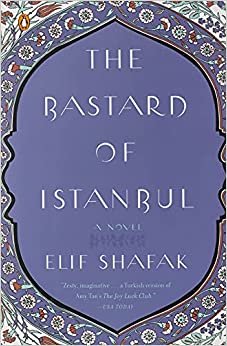
The Bastard of Istanbul by Elif Shafak

Memed, My Hawk by Yashar Kemal

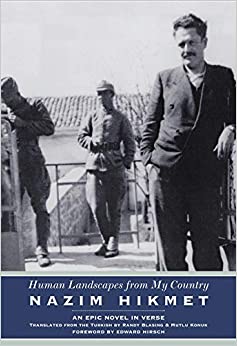
Human Landscapes from my Country by Nazim Hikmet

The Towers of Trebizond by Rose Macaulay

Snow by Orhan Pamuk

Birds Without Wings by Louis de Bernieres

The Time Regulation Institute by Ahmed Hamdi Tanpinar

The Iliad by Homer

The Janissary Tree by Jason Goodwin

The Time of Mute Swans by Ece Temelkuran

© 2022 Guardian News & Media Limited or its affiliated companies. All rights reserved. (modern)

https://www.theguardian.com/travel/2020/jul/21/10-best-books-set-in-turkey-that-will-take-you-there

Best Turkish Novels You Probably Should Have Read Already

https://www.capetocasa.com/best-turkish-novels-in-english/

These are my favorite Turkish books and novels of all time. I included a brief introduction of the amazing Turkish authors that brought these stories to life for us.


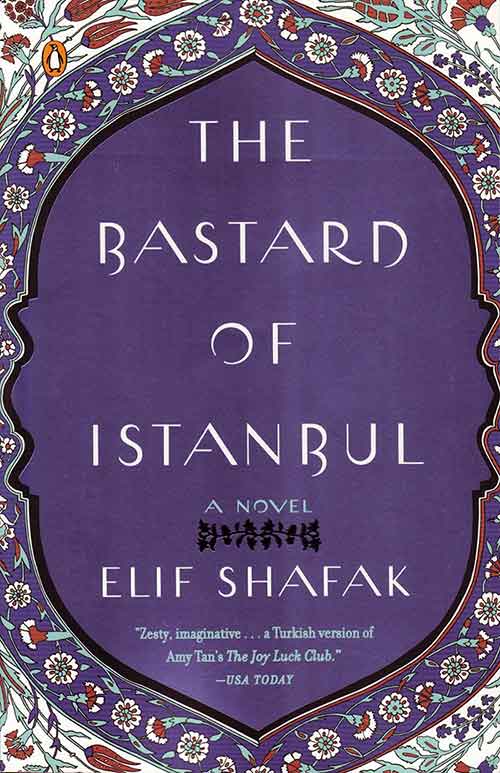
1. The Bastard of Istanbul by Elif Shafak


The bastard of Istanbul by the famous Turkish author Elif Shafak

The Bastard of Istanbul is a 2006 novel by the Turkish bestselling author Elif Shafak. The book was written originally in English and translated to the author’s native language Turkish under the title Baba ve Piç.

The Bastard of Istanbul tells the story of a nineteen-year-old Armenian American girl living in San Francisco named Armanoush. Armanoush feels that a part of her identity is missing and that she must make a journey back to the past, to Turkey, in order to start living her life.

When she secretly flew to Istanbul, she met the Kazanci sisters and became friends with Asya. The bastard of Istanbul then uncovers a secret connection between the two families and ties them to a violent event in the history of their homeland. This dramatic book about Turkey is filled with humor, understanding, desire to examine the past.

About the author Elif Shafak

Elif Shafak is one of Turkey’s most acclaimed and outspoken novelists. She was born in 1971 and is the author of six novels, most recently The Saint of Incipient Insanities, The Gaze and The Flea Palace, and one work of non-fiction. She teaches at the University of Arizona and divides her time between the US and Istanbul.


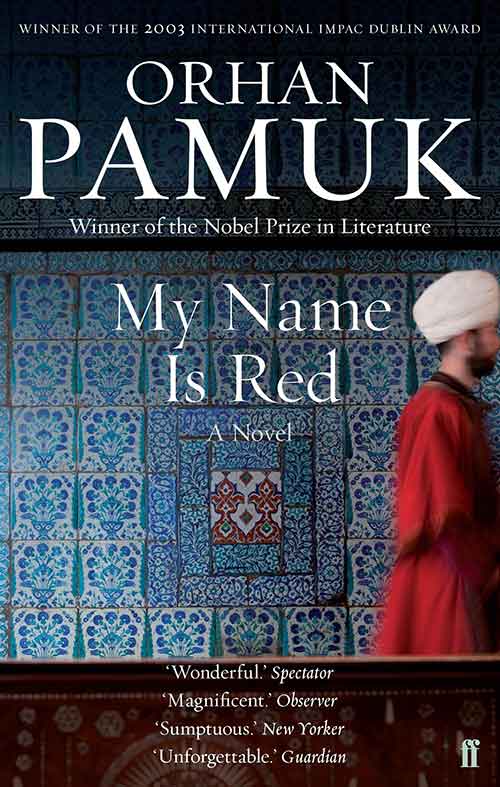
2. My Name Is Red by Orhan Pamuk


Generally, when a book starts out with a chapter entitled “I Am A Corpse,” you know it’s going to be pretty good. My Name Is Red (Benim Adım Kırmızı) in Turkish is a 1998 Turkish novel by the famous Turkish writer Orhan Pamuk and translated into English in 2001.

The novel has been translated into more than 60 languages since its publication. My name is Red is truly a remarkable piece of literature where the Turkish writer chose to narrate the story in an extraordinary way—through multiple narrators, of whom many are dead, inanimate, or abstract. The novel revolves around miniaturists, the painters who create Turkish book arts, using elements of Chinese art, illumination, calligraphy, and forms of detailed colors and contouring.

It has also elements of romance, mystery, and murder, Turkish political conflict, and a close inspection of art and its influence on those who create it, as well as those who admire it. Also, it allows room for various philosophical discussions concerning the purpose of art and, perhaps more importantly, the distinctions between Islamic states and Western Europe.


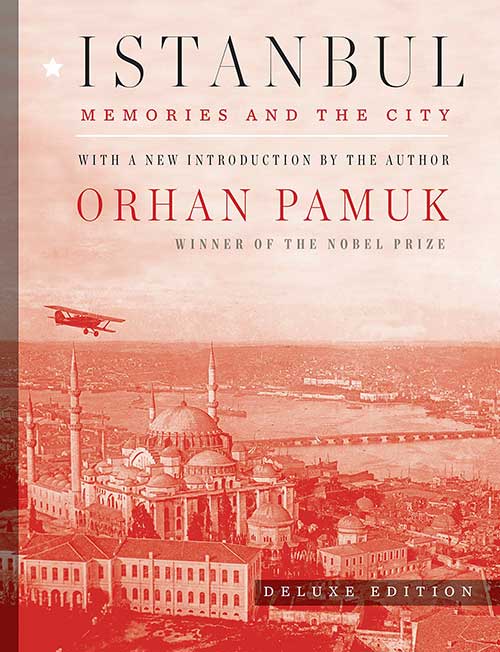
3. Istanbul: Memories and the City by Orhan Pamuk


Istanbul memories and the city by Orhan pamuk

Orhan Pamuk’s bestselling Istanbul: Memories of a City is a triumphant encounter of place and sensibility, beautifully written, and immensely moving. A shimmering evocation, by turns intimate and panoramic, of one of the world’s great cities, by its foremost writer. Orhan’s portrait of his city is thus a self-portrait, refracted by memory and the melancholy–or hüzün– that all Istanbullus share: the sadness that comes of living amid the ruins of a lost empire.

With cinematic fluidity, Pamuk moves from his glamorous, unhappy parents to the gorgeous, decrepit mansions overlooking the Bosphorus; from the dawning of his self-consciousness to the writers and painters–both Turkish and foreign–who would shape his consciousness of his city. Like Joyce’s Dublin and Borges’ Buenos Aires, Pamuk’s Istanbul is a triumphant encounter of place and sensibility, beautifully written, and immensely moving.

About the Turkish author Orhan Pamuk

Ferit Orhan Pamuk is one of Turkey’s most prominent novelists. His work has sold over thirteen million books in sixty-three languages, making him the country’s best-selling writer. He received the 2006 Nobel Prize in Literature for the book Istanbul: Memories and the city (2003). Pamuk is the author of novels including Silent HouseThe White CastleThe Black BookThe New LifeMy Name Is RedSnowThe Museum of InnocenceA Strangeness in My Mind, and The Red-Haired Woman.


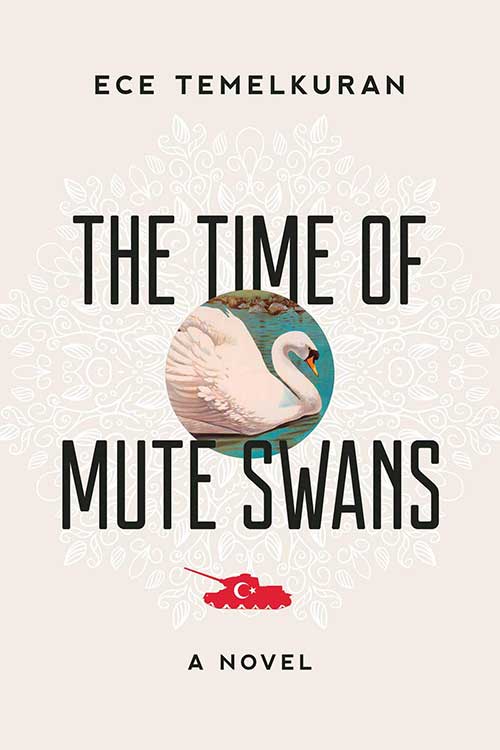
4. The Time of Mute Swans by Ece Temelkuran


Turkish novel the time of mute swans by Ece TemelKuran

This timely, bestselling novel about a military coup in Turkey, told through the eyes of two children, resonates deeply with events there today. Set in Ankara in the tense summer leading up to the Turkish coup of 1980, this novel centers on two children, Ali and Ayşe, who contend with the strife of the adult world. Their families, though divided by class, share leftist sympathies, and are consequently vulnerable.

Intimate conflicts arise from public ones: a relationship with obtuse but seemingly harmless neighbors deteriorates, with grave consequences. The author, a well-known journalist critical of the current Turkish government, moves skillfully between history and fiction. The innocence of the children can be cloying—they plot to release butterflies inside the parliament building—but the end of that innocence is vividly evoked.

About the Turkish author Ece Temelkuran

Ece Temelkuran is a Turkish journalist and author. She was a columnist for Milliyet and Habertürk, and a presenter on Habertürk TV. She was fired then from Habertürk after writing articles critical of the government, especially its handling of the December 2011 Uludere massacre. She was twice named Turkey’s “most read political columnist”. Her columns have also been published in international media such as The Guardian and Le Monde Diplomatique.


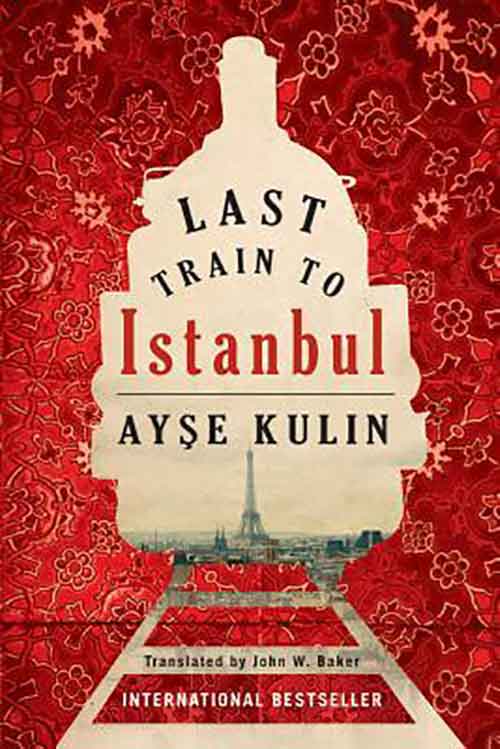
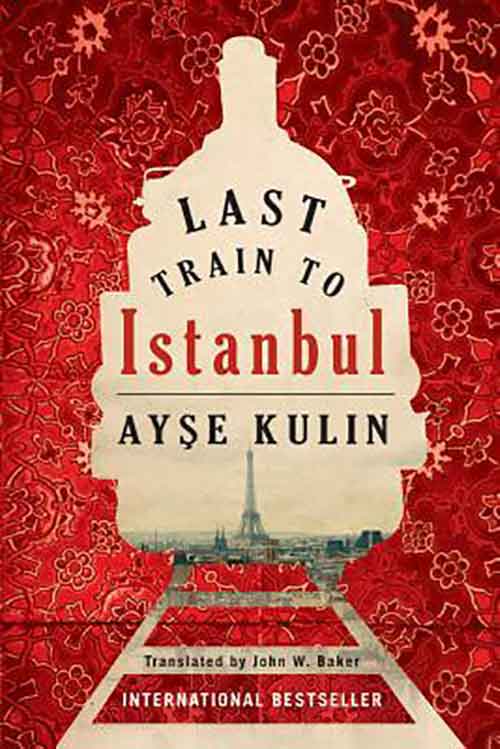
5. Last Train to Istanbul by Ayse Kulin


An international bestseller by one of Turkey’s most beloved authors. As the daughter of one of Turkey’s last Ottoman pashas, Selva could win the heart of any man in Ankara. Yet the spirited young beauty only has eyes for Rafael Alfandari, the handsome Jewish son of an esteemed court physician. In defiance of their families, they marry, fleeing to Paris to build a new life.

When the Nazis invade France and begin rounding up Jews, the exiled lovers will learn that nothing—not war, not politics, not even religion—can break the bonds of family. For after they learn that Selva is but one of their fellow citizens trapped in France, a handful of brave Turkish diplomats hatch a plan to spirit the Alfandaris and hundreds of innocents, many of whom are Jewish, to safety.

Together, they must traverse a war-torn continent, crossing enemy lines and risking everything in a desperate bid for freedom. From Ankara to Paris, Cairo, and Berlin, Last Train to Istanbul is an uplifting tale of love and adventure from Turkey’s beloved bestselling novelist Ayşe Kulin.

About the Turkish author Ayse Kulin

Ayşe Kulin is a Turkish female short story writer, screenwriter, and novelist. Kulin graduated from the American College for Girls in Arnavutköy, Istanbul. She released a collection of short stories titled Güneşe Dön Yüzünü in 1984. A short story from this called Gülizar was made into a film titled Kırık Bebek in 1986, for which she won a screenplay award from the Ministry of Culture and Tourism. Kulin worked as a screenwriter, cinematographer, and producer for many films, television series, and advertisements.

10 Must Read Books by Turkish Authors

If you also want to quench your thirst for Turkish literature, here are the 10 best books by Turkish authors you must not miss out on.

#1 The Bastard of Istanbul (2006) by Elif Shafak

Elif Shafak is already well-known among the readers, especially by the popularity of one of her bestsellers, Forty Rules of love. ‘The Bastard of Istanbul’ is Elif Shafak’s another literary contribution based on a teenage girl, Asya (with the title of the bastard), and her Armenian American cousin, Armanoush.

The story continues as a bold tale of the country’s disturbing past uncovering the Armenian deportations of 1915. The three interconnected families of mixed-up heritage depict the complexity of Turkish society. The Bastard of Istanbul effortlessly makes its way into the best books by Turkish authors, with many twists and turns that lead to a shocking finale, definitely a treat for literary lovers.

Visit the link below to purchase “The Bastard of Istanbul”

#2 The Time Regulation Institute (1954) by Ahmet Hamdi Tanpinar

It was not until 2014 that the comic masterpiece, The Time Regulation Institute, got translated into English for international readers. The best part is that it has been occupying its spot among the best books by Turkish authors since then. The novel takes a satirical approach towards the westernization of the country.

One thing you need to know about the author is that his colleague, Orhan Pamuk hails him as the ‘greatest Turkish novelist of the 20th century.’

Visit link to purchase “The Time Regulation Institute” By Ahmet Hamdi Tanpinar

#3 My Name is Red (1998) by Orhan Pamuk

Benim Adım Kırmızı which translates into ‘My Name is Red’ is a gem of a book by the famous Turkish novelist, Orhan Pamuk. The book got translated into English in 2001 and is one of the best books by Turkish authors.

Since its publication in 1998, ‘My Name is Red’ has been translated and read in over 60 languages. The book is a remarkable blend of romance, mystery, murder, Turkish political conflict, and art that leaves its readers awestruck.


Visit link to purchase “My Name is Red”

#4 Forbidden Love (1986) by Halit Ziya Uşaklıgil

Aşk-ı Memnu (Turkish) or Forbidden Love is a novel you can finish in one sitting. Why am I so certain? Well, it is because of the drama and action of one of Turkish literary history’s most popular love stories.

An interesting fact about the novel is that it has made its way to television series twice (1975 and 2008). The 2008 version broke the rating records in Turkey and garnered much praise in other countries. One of the countries is Pakistan, where the TV series got dubbed in Urdu (country’s national language) with the title, Ishq-e-mamnu.

If you are into drama, action, and romance, Forbidden Love is one of the best books by Turkish authors whose brilliance still remains unbeaten by these TV series.

Visit link to purchase Aşk-ı Memnu (Turkish)

#5 Istanbul Boy: The Autobiography of Aziz Nesin (1991)

The life of Aziz Nesin, a prolific writer, holds immense importance in the eyes of Turks. This is one of the reasons why his autobiography has been admired by people in Turkey and across the globe.

If you are not yet familiar with Aziz Nesin, here is a little insight into his life. He has written over 100 books, spent years in jail because of his political views, and yet made his way into a decent living through his work. If this is something you are interested in, you must consider Istanbul boy as one of the best books by Turkish authors.

Istanbul Boy: The Autobiography of Aziz Nesin, Part Iii, Yokusun Basi (Modern Middle East Literature in Translation Series)
by Aziz Nesin | Jan 1, 1991

Istanbul Boy: The Path: The Autobiography of Aziz Nesin (Middle East Monograph: No. 7)
by Aziz Nesin and Joseph S. Jacobson | Dec 1, 1979

Istanbul Boy Middle School Years : The Autobiography of Aziz Nesin, Part IV, Translated by Joseph S. Jacobson
by Aziz Nesin | Sep 20, 2000

Istanbul Boy: Boyle Gelmis Boyle Gitmez (That’s How It Was But Not How It’s Going to Be) the Aut (Middle East Monographs: No. 3)
by Aziz Nesin and Joseph S. Jacobson | Jan 1, 1977

#6 Memed, My Hawk (1955) by Yasar Kemal

Let’s consider the work of a Nobel Prize nominee, Yasar Kemal, among the best books by Turkish authors. ‘Memed, My Hawk’ revolves around the story of a young village boy, Memed, and his love, Hatche.

Following the events of cruelty by landowners and the plot of revenge, the book is a lyric-epic of rural Turkey and one of the top-notch books by Turkish authors.

Visit link to see more !

#7 Three Daughters of Eve (2016) by Elif Shafak

Here comes a personal favorite, Three Daughters of Eve by Elif Shafak. The author never fails to amaze her readers with her powerful grip over penning down her thoughts.

Three Daughters of Eve is connected with three topics that remain close to the author; female friendship (gender), Muslim identity (identity), and the state of Turkey (nationality).

About the novel, you will get to visit the 1980’s era of Turkey and the Oxford University in the early 2000s. In a word, the novel is one of the books by Turkish authors that has been loved by millions across the borders.

Visit link to purchase “Three Daughters of Eve” by Elif Safak

#8 The Time of Mute Swans (2017) by Ece Temelkuran

This is a relatively recent publication by Temelkuran told through the eyes of two children, Ali and Ayşe. The book resonates between history and fiction with a leftist approach. If you share similar ideas, then this book is something you would thoroughly enjoy reading.

The author is a famous Turkish journalist who is critical of the Turkish government (which is still in power as I write).

Find “The Time of the Mute swans” here

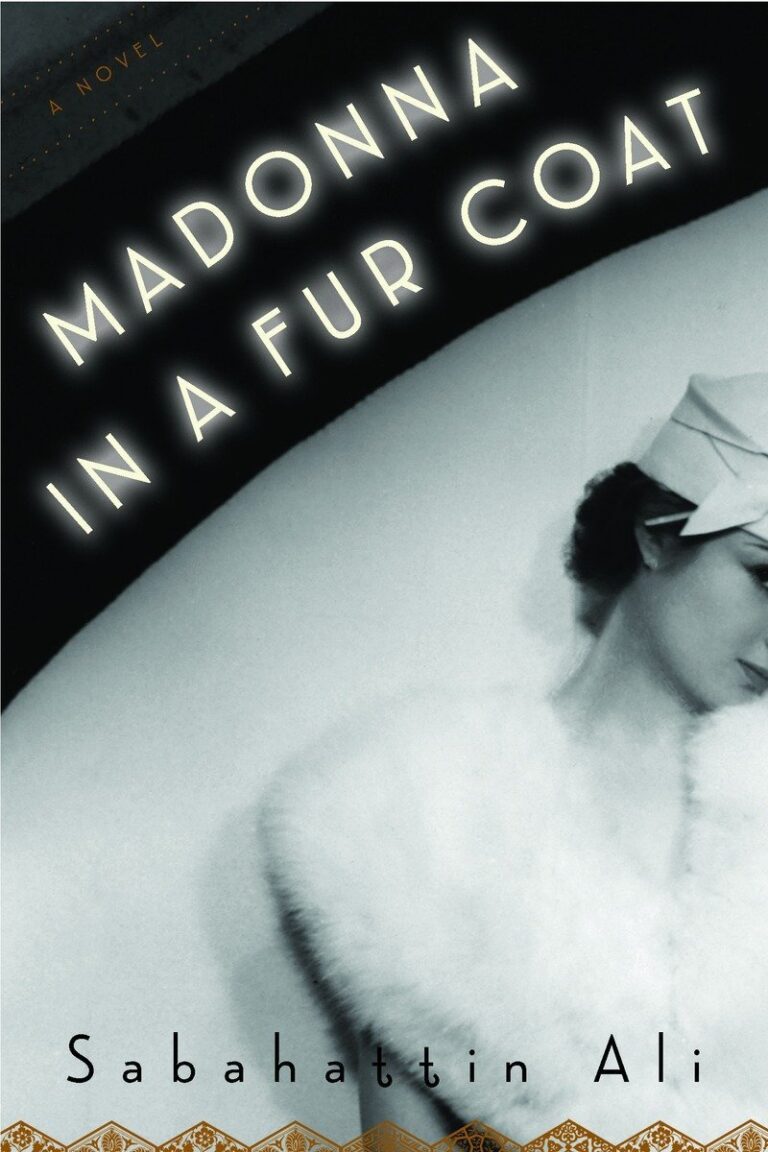
#9 Madonna in a Fur Coat (1943) by Sabahattin Ali

Since its publication in 1943, Kürk Mantolu Madonna or Madonna in a Fur Coat has consistently occupied the slot of one of the best books by Turkish authors.

If you are into tragedy and a darker side of modern Turkish fiction, this novel is the one for you.

Click link below to purchase “Madonna in a fur coat”

#10 Night (1985) by Bilge Karasu

Just so you know, the book under discussion is the winner of the Pegasus Prize for Literature. The prestigious recognition is enough to raise your expectations, and rightfully so.The story is about a writer who has been marked for assassination. In short, it is a political parable you would absolutely fall in love with.

Source: https://turkmemes.com/top-10-must-read-books-by-turkish-authors/

The 10 Best Books by Turkish Authors

  1. ‘Madonna in a Fur Coat’ (1943) by Sabahattin Ali.
  2. ‘The Time Regulation Institute’ (1954) by Ahmet Hamdi Tanpınar.
  3. ‘Memed, My Hawk’ (1955) by Yaşar Kemal.
  4. ‘Poems of Nâzım Hikmet’ (1986)
  5. ‘Istanbul Boy: The Autobiography of Aziz Nesin’ (1991)
  6. ‘The Museum of Innocence’ (2008) by Orhan Pamuk.
  7. ‘Istanbul Istanbul’ (2015) by Burhan Sönmez
  8. ‘Three Daughters of Eve’ (2016) by Elif Shafak
  9. ‘New Selected Poems’ (2016) by İlhan Berk
  10. The poems of Orhan Veli Kanik, Oktay Rıfat and Melih Cevdet Anday

Grace Beard
6 January 2020

Turkish literature has long faced restrictions and politicisation, blighted by state censorship in its own country and lacking English translations outside of Turkey. Here, discover a selection of the best works from this complex body of literature, including Orhan Pamuk, Elif Shafak and some other names that may be less familiar.

‘Madonna in a Fur Coat’ (1943) by Sabahattin Ali

Sabahattin Ali is an important figure in Turkish literature, as much for the tragic circumstances of his death – the author was allegedly beaten to death at the hands of the government – as for his work. Originally published in 1943, this short novel has since become one of Turkey’s most widely read books, with its translation reaching many bestseller lists abroad. The plot revolves around a shy young man from rural Turkey who moves to Berlin in the 1920s, where he meets a woman who will haunt him for the rest of his life. Ali himself spent 18 months in the German capital as a young man, returning to Turkey to teach and write. Over the course of his life, he was imprisoned several times.

Sabahattin Ali is an important figure in Turkish literature | © Penguin Classic

‘The Time Regulation Institute’ (1954) by Ahmet Hamdi Tanpınar

Translated to English in 2014, over 50 years after its publication in Turkey, The Time Regulation Institute is a comic masterpiece from the master of Turkish Modernism. Couched in satire, Tanpınar’s novel is a critique of Turkey’s haphazard adaptation to Western modernisation; in it, we follow an offbeat set of characters as they attempt to ensure all the clocks in the country are set to Western time. While Tanpınar is also known for his essays and poetry, it is for his novels that he is most celebrated; the Istanbul-born author has been hailed by colleague Orhan Pamuk as the greatest Turkish novelist of the 20th century.

‘Memed, My Hawk’ (1955) by Yaşar Kemal

Yaşar Kemal was one of Turkey’s leading novelists, and his debut novel landed him a nomination for the Nobel Prize in Literature. The book follows the story of a young village boy named Memed who endures great cruelty at the hands of the local landowner. When his love, Hatche, is imprisoned while they both try to escape, Memed joins a band of brigands to plot out his revenge. The author’s defining work, Memed, My Hawk is a lyrical epic of rural Turkey and its labourers.

‘Poems of Nâzım Hikmet’ (1986)

Nâzım Hikmet is one of Turkey’s most well-known poets, and his work has been translated into more than 50 languages. He spent much of his adult life in prison or exile due to his political beliefs, and it was here that he wrote much of his poetry. A leader of the Turkish avant garde, his poems tackle themes of love, national identity, Marxism and more.

Nâzım Hikmet is one of Turkey’s most well-known poets | © Persea

‘Istanbul Boy: The Autobiography of Aziz Nesin’ (1991)

Born on Heybeliada in 1915, Aziz Nesin was one of Turkey’s most important and prolific writers, penning over 100 books. Though jailed several times due to his political views, he still managed to make a living through his work, which includes several short-story collections alongside memoirs and novels. His autobiography, published in four volumes, expresses not only the life of a great writer, but that of a whole country and its many difficulties.

‘The Museum of Innocence’ (2008) by Orhan Pamuk

Orhan Pamuk, the most read, translated and bestselling Turkish author today, delivers a tale of love-turned-obsession in The Museum of Innocence, the first novel to follow his Nobel Prize win. The book’s protagonist is wealthy Istanbulite Kemal, who obsessively catalogues every object, emotion and memory from his affair with 18-year-old Füsun. Kemal’s narration is akin to that of a museum tour guide, each chapter leading the reader from one sentimental display to the next (chapter titles include ‘The Streets That Reminded Me of Her’ and ‘4,213 Cigarette Butts’). Memorialised, too, is the upper-class Istanbul of the 1970s and ’80s, a time when the city was teetering between old-world Turkey and Western modernisation.

Orhan Pamuk is Turkey’s bestselling author | © Vintage

‘Istanbul Istanbul’ (2015) by Burhan Sönmez

In the third book from Burhan Sönmez, four people incarcerated in a cell beneath Istanbul reminisce about the city above them. Their interwoven stories evoke a beautiful and multilayered Istanbul in a defiant reclamation of their city from the authoritarian rule that has landed them in captivity. Though narrated by political prisoners, the book is “not about politics”, Sönmez told Culture Trip in 2016. “It’s about love, laughter, pain, hope, dreams… you know, everything.”

‘Three Daughters of Eve’ (2016) by Elif Shafak

An upmarket dinner party takes place in an Istanbul ravaged by terror attacks in this gripping novel from Turkey’s most widely read female author. Central to the novel is the unfolding dinner table conversation, while a series of extensive flashbacks transport us to 1980s Turkey and Oxford University in the early 2000s. In keeping with Shafak’s preoccupation with gender, nationality and identity, Three Daughters of Eve offers a rich, timely exploration of female friendship, Muslim identity and the state of the author’s native Turkey.

Elif Shafak is Turkey’s most widely read female author | © Viking

‘New Selected Poems’ (2016) by İlhan Berk

İlhan Berk is an influential poet and one of the dominant figures of the Postmodern movement in Turkish poetry. New Selected Poems is an updated version of his first collected works published in English, allowing readers outside of Turkey a glimpse into the mind of a writer renowned for his disregard for the rules. Berk was also known for his translation of great poets into Turkish, such as Ezra Pound and Arthur Rimbaud.

The poems of Orhan Veli Kanik, Oktay Rıfat and Melih Cevdet Anday

Orhan Veli Kanik, Oktay Rıfat and Melih Cevdet (who had been friends since high school) wrote Garip: A Turkish Poetry Manifesto in 1941, marking the beginning of a new, radical movement in the country’s poetry, which deviated from the Turkish–Ottoman tradition of prosody. Their individual works offer an essential glimpse into Turkish poetry that dared to include colloquialisms, completely changing the form for a new generation of writers.

This article is an updated version of a story created by Feride Yalav-Heckeroth.

Orhan Veli Kanık

Oktay Rıfat

Melih Cevdet Anday


Source:  https://www.goodreads.com/list/show/4989.Best_of_Turkish_Literature

John Freely books on Turkey

Istanbul: The Imperial City Feb 26, 1998
by John Freely

Istanbul’s history is a catalogue of change, not least of name, yet it has managed to retain its own unique identity. John Freely captures the flavour of daily life as well as court ceremonial and intrigue. The book also includes a comprehensive gazetteer of all major monuments and museums. An in-depth study of this legendary city through its many different ages from its earliest foundation to the present day – the perfect traveller’s companion and guide.

Blue Guide Istanbul (e-Edition) Nov 26, 2012
by John Freely

Long-awaited new edition of the Blue Guide to this fascinating city, which straddles Europe and the Orient and whose history goes back to the days of ancient Greece. Superb coverage of all the major monuments, Classical, Christian and Islamic, with details on how to get around a busy city, what to eat and where to stay.

John Freely was born in the United States. He is a long-term resident of Istanbul and has written a number of books on Greece and Turkey.

Light from the East: How the Science of Medieval Islam helped to shape the Western World Dec 18, 2010

Long before the European Renaissance, while the western world was languishing in what was once called the ‘Dark Ages’, the Arab world was ablaze with the knowledge, invention and creativity of its Golden Age. This is the story of how Islamic science, which began with the translation of Greek manuscripts into Arabic in eighth-century Baghdad, preserved and enhanced the knowledge acquired from Greece, Mesopotamia, India and China. Through the astrologers, physicians, philosophers, mathematicians and alchemists of the Muslim world, this knowledge was carried from Samarkand and Baghdad to Cordoba and beyond, influencing western thinkers from Thomas Aquinas and Copernicus and helping to inspire the cultural phenomenon of the Renaissance. John Freely tells this spellbinding story against a background of the melting pot of cultures involved and concludes with the decline of Islam’s Golden Age, which led the West to forget the debt it owed to the Muslim world and the influence of medieval Islamic civilisation in forging the beginnings of modern science.

The Grand Turk: Sultan Mehmet II-Conqueror of Constantinople and Master of an Empire Oct 1, 2009
by John Freely

Sultan Mehmet II, known to his countrymen as ‘the Conqueror’ and to much of Europe as ‘the Terror of the World,’ was once Europe’s most feared and powerful ruler. Now, Turkey?s most beloved American scholar, John Freely, brings to life this charismatic hero of one of the richest histories in the world. Mehmet was barely twenty-one when he conquered Byzantine Constantinople, which became Istanbul and the capital of his mighty empire. Mehmet reigned for thirty years, during which time his armies extended the borders of his empire halfway across Asia Minor and as far into Europe as Hungary and Italy. Three popes called for crusades against him as Christian Europe came face to face with a new Muslim empire. Revered by the Turks and seen as a brutal tyrant by the West, Mehmet was a brilliant military leader as well as a renaissance prince. His court housed Persian and Turkish poets, Arab and Greek astronomers, and Italian scholars and artists. In the first biography of Mehmet in thirty years, John Freely vividly illuminates the man behind the myths.

Stamboul Sketches: Encounters in Old Istanbul Feb 3, 2015
by John Freely

Throughout the 1960s, John Freely explored the alleys, hidden corners and monuments of Istanbul, in between teaching, to create a legendary guidebook with Hilary Sumner-Boyd. But all the passages that were too personal, too capricious, too idiosyncratic, too indulgent of eccentric personalities, too wrapped up in the love of mid-afternoon banter, too indulgent of musicians, dancers, gypsies, dervishes, drunks, beggars, fishermen, poets, fortune-tellers, folk-healers, mimics and prostitutes, were cut from their scholarly guide. Stamboul Sketches is fashioned from these off-cuts, a chronicle of chance encounters inspired by Evliya Çelebi, the Pepys of seventeenth-century Istanbul. It is a beautiful, quirky portrait of a city, which, Freely says, ‘grabs you by the heart and never lets you go’.

Aladdin’s Lamp Feb 17, 2009
by John Freely

Aladdin’s Lamp is the fascinating story of how ancient Greek philosophy and science began in the sixth century B.C. and, during the next millennium, spread across the Greco-Roman world, producing the remarkable discoveries and theories of Thales, Pythagoras, Hippocrates, Plato, Aristotle, Euclid, Archimedes, Galen, Ptolemy, and many others. John Freely explains how, as the Dark Ages shrouded Europe, scholars in medieval Baghdad translated the works of these Greek thinkers into Arabic, spreading their ideas throughout the Islamic world from Central Asia to Spain, with many Muslim scientists, most notably Avicenna, Alhazen, and Averroës, adding their own interpretations to the philosophy and science they had inherited. Freely goes on to show how, beginning in the twelfth century, these texts by Islamic scholars were then translated from Arabic into Latin, sparking the emergence of modern science at the dawn of the Renaissance, which climaxed in the Scientific Revolution of the seventeenth century.

La llama de Mileto: El nacimiento de la ciencia en la Antigua Grecia (Alianza Ensayo nº 813) (Spanish Edition) Apr 29, 2021
by John Freely, Magalí Martínez Solimán

En el siglo VI a. C. la ciudad griega de Mileto, situada en la costa occidental de Anatolia, fue el epicentro desde el que se desencadenó la revolución intelectual que sentaría las bases para el desarrollo de nuestro conocimiento moderno del mundo. Trazando
un hilo que recorre cerca de dos mil años de historia desde Tales de Mileto hasta Newton, John Freely narra el apasionante relato de la ciencia griega desde su nacimiento en la costa egea de Asia Menor, pasando por su consolidación en la Atenas clásica y el mundo helenístico y la preservación de su legado en el mundo islámico medieval y Bizancio, hasta su recuperación definitiva como fundamento de las nuevas formas de saber que, condensadas en torno a nuestra moderna concepción de la ciencia, verían la luz en la Europa del siglo XVII.

Children of Achilles: The Greeks in Asia Minor since the Days of Troy Nov 12, 2009
by John Freely

Since the days of Troy historic lands of Asia Minor have been home to Greeks. They are steeped in a rich fusion of Greek and Turkish culture and the histories of both are irrevocably entwined, fatefully connected. “Children of Achilles” tells the epic and ultimately tragic story of the Greek presence in Anatolia, beginning with the Trojan War and culminating in 1923 with the devastating population exchange that followed the Turkish War of Independence. The once magnificent, now ruined, cities that cluster along the Aegean and Mediterranean coasts of Turkey are reminders of a civilization that produced the first Hellenic enlightenment, giving birth to Homer, Herodotus and the first philosophers of nature. For more three millennia the Anatolian Greeks preserved their identity and culture as the tides of history washed over them, enduring conflicts that historians since Herodotus have seen as an unending clash of civilizations between East and West.
Today, the memory of the Greek diaspora from Asia Minor lives on in the music of rebetika, the threnodies known as amanadas, and the poetry of Seferis, and even now the descendants of those exiles speak with nostalgia of ‘i kath’imas Anatoli’ – our own Anatolia, their lost homeland. This, told for the first time, is their story, from glorious beginnings to a bitter end, a story that continues to echo through the ages and across continents.

The House of Memory: Reflections on Youth and War Mar 7, 2017
by John Freely

In this funny and tender memoir, John Freely reflects on a remarkable life. Splitting his early childhood between the U.S. and Ireland inspired in Freely a lifelong desire to see the world and its inhabitants. At age six he settled in Brooklyn, where he spent a sometimes tumultuous boyhood amidst a large extended family: moving from house to house, the family’s belongings packed in an uncle’s hearse. Growing up poor, in his teens, Freely took whatever jobs he could when times got tough, always shaking off his losses and moving on, hungry for new experiences and adventures. He joined the U.S. Navy at seventeen to “see the world” and did just that. As a member of an elite commando unit, he was sent to one of the most remote places in Asia where he served alongside Chiang Kai-shek’s Chinese forces during the last weeks of World War II. A vivid recollection on a world that now exists only in memory, The House of Memory is a lasting tribute to a life well lived, and to all of the immigrant families who have struggled, endured, and enriched our country.

Strolling Through Istanbul (Kegan Paul Travellers Series) May 6, 2016
by Sumner-Boyd

A Travel Guide to Homer: On the Trail of Odysseus Through Turkey and the Mediterranean Apr 21, 2014
by John Freely

In October 1945 at the age of 19, John Freely passed the southernmost tip of Crete on his way home from the war in China, just as Odysseus did on his homeward voyage from the battle of Troy. He has been bewitched by Homer and the lands of Homer’s epics ever since. As the culmination of a life spent exploring both these lands and the stories by, and connected to, Homer, Freely has created a captivating traveller’s guide to Homer’s lost world and to his epics, the Iliad and the Odyssey, investigating where such places as the Land of the Lotus Eaters are and what it was about the landscapes of Greece and Turkey that so inspired Homer – the greatest classical epic poet. With unparalleled knowledge and passion, John Freely guides the traveller through all of those places linked to Homer that can be identified and brings Homer and his world vividly to life, revealing how the Homeric epics continue to echo through the ages in literature, art, legend and folklore.

15 Great Turkish Authors on Wikipedia

20 Best Turkish Books You Need to Read

It took me a long time to create this list of Turkish books because I wanted to make sure there is a book for everyone’s taste. You’ll find beautifully written experimental books as well as hilarious mysteries. There are contemporary Turkish books as well as the much-beloved classics and modern classics.

A couple of the Turkish books on this list are my all-time favourites. I still remember how they make me feel, and I still reread them whenever I miss them. I hope you can find new favourites among this list of Turkish books and enjoy them thoroughly.

Madonna in a Fur Coat – Sabahattin Ali

One of the best Turkish books out there. The bestselling Turkish classic of love and longing in a changing world, available in English for the first time.

‘It is, perhaps, easier to dismiss a man whose face gives no indication of an inner life. And what a pity that is: a dash of curiosity is all it takes to stumble upon treasures we never expected.’

A shy young man leaves his home in rural Turkey to learn a trade in 1920s Berlin. The city’s crowded streets, thriving arts scene, passionate politics and seedy cabarets provide the backdrop for a chance meeting with a woman, which will haunt him for the rest of his life. Emotionally powerful, intensely atmospheric and touchingly profound, Madonna in a Fur Coat is an unforgettable novel about new beginnings and the unfathomable nature of the human soul. If you’re going to read Turkish books, make sure to read this one first.

‘Passionate but clear . . . Ali’s success [is in ] his ability to describe the emergence of a feeling, seemingly straightforward from the outside but swinging back and forth between opposite extremes at its core, revealing the tensions that accompanies such rise and fall.’ Atilla Özkirimli, writer and literary historian

The Time Regulation Institute – Ahmet Hamdi Tanpinar

Old Istanbul aristocrats, Turkish teashops, imperial diamonds, and great and humble mosques are juxtaposed with the almost non-descriptive portrayals of neighbourhood friendships, family relations, and local public figures who could be found in any city in Turkey or, perhaps, any Eastern setting where the old way of life adopts new and Western counterparts. Ahmet H. Tanpinar’s portrayal of modern, post-Ottoman Turkey weaves a theatre of the absurd, suggestively representative of the early days of the young Republic. This translation is introduced by an essay by the late Berna Moran, a leading Turkish literary critic. A highly interesting one among Turkish books.

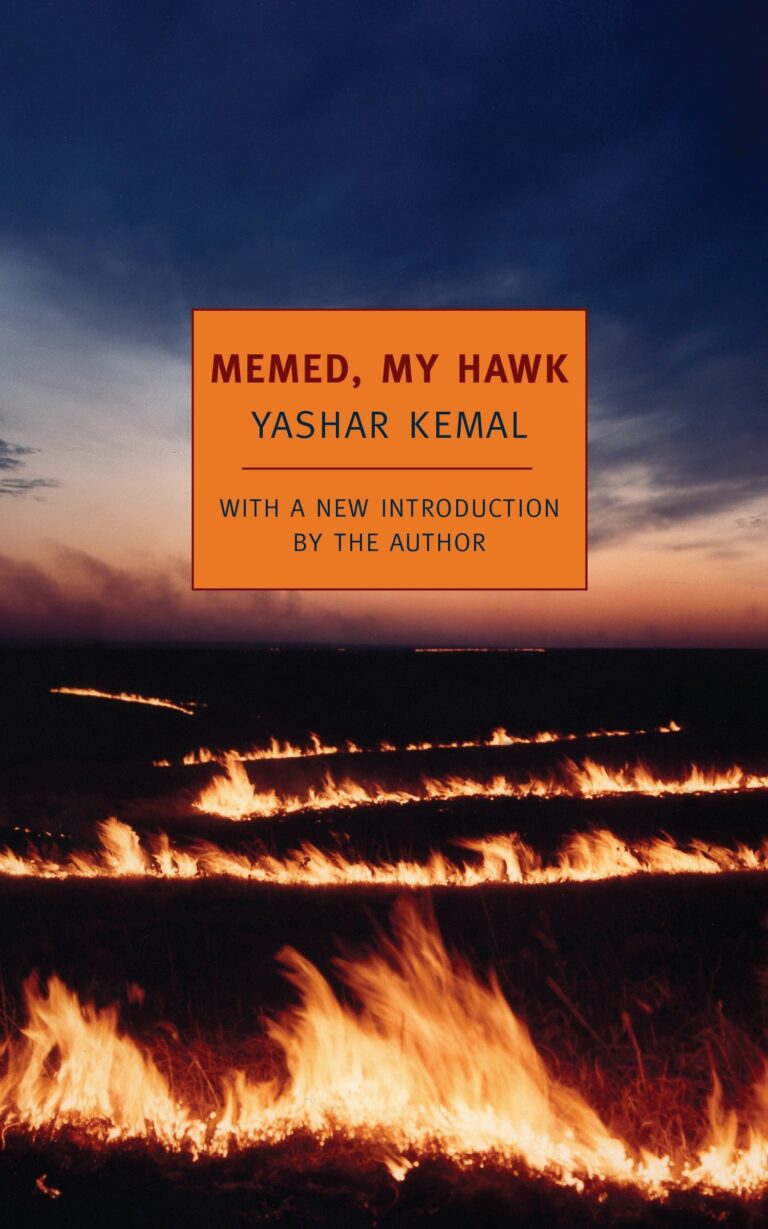
Memed, My Hawk – Yashar Kemal

A tale of high adventure and lyrical celebration, tenderness and violence, generosity and ruthlessness, Memed, My Hawk is the defining achievement of one of the greatest and most beloved of living writers, Yashar Kemal. It is reissued here with a new introduction by the author on the fiftieth anniversary of its first publication. An important one among Turkish books.

Memed, a high-spirited, kindhearted boy, grows up in a desperately poor mountain village whose inhabitants are kept in virtual slavery by the local landlord. Determined to escape from the life of toil and humiliation to which he has been born, he flees but is caught, tortured, and nearly killed. When at last he does get away, it is to set up as a roving brigand, celebrated in song, who could be a liberator to his people—unless, like the thistles that cover the mountain slopes of his native region, his character has taken an irremediably harsh and unforgiving form. One of the most popular Turkish books out here.

Stepmother Earth – Yakup Kadri Karaosmanoglu

One of the Turkish books for lovers of history and literary fiction. Ahmet Celal, an officer in the Ottoman army, loses his right arm as the result of a bullet wound while fighting in the Battle of Gallipoli during World War I. After the war, he returns to Istanbul, which is now occupied by Allied forces comprised of British, French, and Italian troops. He moves into a mansion in Istanbul which he inherited from his father. Although he is well-educated and at home in the culturally rich city, he feels alienated and lonely, as he’s cruelly taunted and teased in Istanbul society because of his disability, and he dreams of moving to the countryside.

When one of his lieutenants offers to let him live with him and his family in a village in central Anatolia, he jumps at the chance. However, once he takes up residence in the village, which turns out to be far more impoverished and primitive than even he’d imagined, he’s once again treated like an outcast—not because of his missing arm, but because he’s a “stranger.” When the Greek army invades Anatolia, he’s horrified to find that the villagers are completely indifferent to the idea of resisting and establishing a Turkish state. In the meantime, he falls in love with a village girl who also spurns him because he’s an outsider. An exceptional one among Turkish books.

Motherland Hotel – Yusuf Atilgan

Love interesting characters? You need to read this among Turkish books. Zeberjet, the last surviving member of a once prosperous Ottoman family, is the owner of the Motherland Hotel, a run-down establishment a rundown establishment near the railroad station. A lonely, middle-aged introvert, his simple life is structured by daily administrative tasks and regular, routine sex with the hotel’s maid.

One day, a beautiful woman from the capital comes to spend the night, promising to return “next week,” and suddenly Zeberjet’s insular, mechanical existence is dramatically and irrevocably changed. The mysterious woman’s presence has tantalized him, and he begins to live his days in fevered anticipation of her return. But the week passes, and then another, and as his fantasies become more and more obsessive, Zeberjet gradually loses his grip on reality.

Motherland Hotel was hailed as the novel of the year when it was published in 1973, astonishing critics with its experimental style, its intense psychological depth and its audacious description of sexual obsession. A must-read among Turkish books.

Human Landscapes from My Country – Nazim Hikmet

Written during the Second World War while Hikmet was serving a thirteen-year sentence as a political prisoner, his verse-novel uses cinematic techniques to tell the story of the emergence of secular, modern Turkey by focusing on the always-entertaining stories of sundry characters from all walks of life. A unique one among Turkish books.

As his vignettes flash before our eyes at movie-like speed, it becomes clear he is also telling the turbulent story of the twentieth century itself and the ongoing struggle between tradition, which trusts in God, and modernity, which entrusts the world to human hands. One of the Turkish books that everyone should read.

Portrait of a Turkish Family – Irfan Orga

Describes in chilling, yet affectionate, detail the disintegration of a wealthy Ottoman family, both financially and emotionally. It is rich with the scent of fin de siecle Istanbul in the last days of the Ottoman Empire. His mother was a beauty, married at thirteen, as befitted a Turkish woman of her class. His grandmother was an eccentric autocrat, determined at all costs to maintain her traditional habits. But the war changed everything.

Death and financial disaster reigned, the Sultan was overthrown, and Turkey became a republic. The red fez was ousted by the cloth cap, and the family was forced to adapt to an unimaginably impoverished life. Filled with brilliant vignettes of old Turkish life, such as the ritual weekly visit to the hamam, as it tells the “other side” of the Gallipoli story, and its impact on one family and the transformation of a nation. One of the best Turkish books out there.

“It is just as though someone had opened a door marked `Private’ and showed you what was inside…. A most interesting and affectionate book.”-Sir John Betjeman.

“A wholly delightful book.”-Harold Nicolson


Dear Shameless Death – Latife Tekin

A nihilistic wit reminiscent of Samuel Beckett.?-Independent on Sunday

This is the strange, magical story of a young girl growing up in modern Turkey, from her birth in a small rural village haunted by fairies and demons to her traumatic move to the big city. Based on her own childhood experiences, Latife Tekin’s literary debut marked a turning point in Turkish fiction. A unique one among Turkish books.

Concentrating on a daughter’s struggle against her overbearing mother set against the pressures of a rapidly changing society, Dear Shameless Death is a fantastic, hallucinatory novel, with strong feminist insights about what it means to be a woman growing up in Turkey today.

Labyrinth – Burhan Sonmez

From a prize-winning Turkish novelist, a heady, political tale of one man’s search for identity and meaning in Istanbul after the loss of his memory. One of the most interesting Turkish books out there.

A blues singer, Boratin, attempts suicide by jumping off the Bosphorus Bridge, but opens his eyes in the hospital. He has lost his memory, and can’t recall why he wished to end his life. He remembers only things that are unrelated to himself, but confuses their timing. He knows that the Ottoman Empire fell, and that the last sultan died, but has no idea when. His mind falters when remembering civilizations, while life, like a labyrinth, leads him down different paths.

From the confusion of his social and individual memory, he is faced with two questions. Does physical recognition provide a sense of identity? Which is more liberating for a man, or a society: knowing the past, or forgetting it?

Embroidered with Borgesian micro-stories, Labyrinth flows smoothly on the surface while traversing sharp bends beneath the current. For the ones looking for contemporary fiction among Turkish books.

The Sultan of Byzantium – Selcuk Altun

Fighting the Ottoman invaders in Constantinople, Emperor Constantine XI was killed—his body never found.

Legend has it that he escaped in a Genoese ship, cheating certain death at the hands of the Turks and earning himself the title of Immortal Emperor.

Five centuries after his disappearance, three mysterious men contact a young professor living in Istanbul. Members of a secret sect, they have guarded the Immortal Emperor’s will for generations. They tell him that he is the next emperor in line and that in order to take possession of his fortune he must carry out his ancestor’s last wishes.

What follows is his journey to the heart of a mystery of epic historical significance. One of the Turkish books for lovers of historical fiction.

Life is a Caravanserai – Emine Sevgi Ozdamar

Life is a Caravanserai follows a lively, but rather unfortunate family from Istanbul to Bursa, then to Ankara and back to Istanbul. This is a women’s world: the mother, Fatma, nurtures her three children, with the grandmother Ayse and the “aunties” of the neighbourhood, while Mustafa, the often unemployed father, recites Orhan Veli and drinks copious rakı, dreaming of building a larger family home.

Here is the Turkey of the 1950s and early 1960s, with its political struggles, growing urbanisation, the Korean War, American comic books and the departure of the first wave of workers to Germany. The Anatolian grandparents carry with them their sagas of the war and the nascent Turkish Republic, enriched by wisdom, humour and village folklore.

The author’s wonderful use of local narrative, storytelling, proverbs and prayers, and a prose that moves from the lyrical to gritty humour, re-creates this microcosm of neighbourhoods from a young girl’s intimate perspective. We follow her as she sits in school, visits relatives, dreams, listens to stories and experiments with early passions. Reality merges into mythological visions as, naïve, witty and explorative, she absorbs the colourful world around her. One of the best Turkish books.

Summer’s End – Adalet Agaoglu

Narrated by an author on vacation among the classical ruils of the ancient city of Side on the Mediterranean coast in Turkey, SUMMER’S END provides an intricate picture of a large cross-section of modern Turkish society. The novel offers a complex multi-dimensional and multi-leveled view of cultural values, politics, sexuality, and personal dilemmas.

SUMMER’S END is one of the most celebrated works by Adalet Angaoglu, widely considered to be one of the principal novelists of our time. SUMMER’S END, says critic Sibel Erol in her introduction, “is an elegaic novel of attempted reconciliation and consolation set in a lush and delectable setting that intensifies the heartbreaking contrast between life and death and society’s fragmentation and nature’s organic unity.” One of the best Turkish books set in the Mediterranean.

A Memento for Istanbul – Ahmet Ümit

A thrilling take which moves back and forth through time, from the early days of Byzantium to the thriving metropolis of Istanbul… A corpse is discovered at the base of the statue of Ataturk in old Istanbul, an antique coin left in its hand… But it’s not to be the last corpse and the bodies soon begin to pile up… And so the hunt for the killers begins… Seven murders, seven sovereigns, seven coins and seven ancient monuments, with one thread binding them all: the history of one of the world’s most mysterious and most dazzling cities. For the thriller lovers among Turkish books.

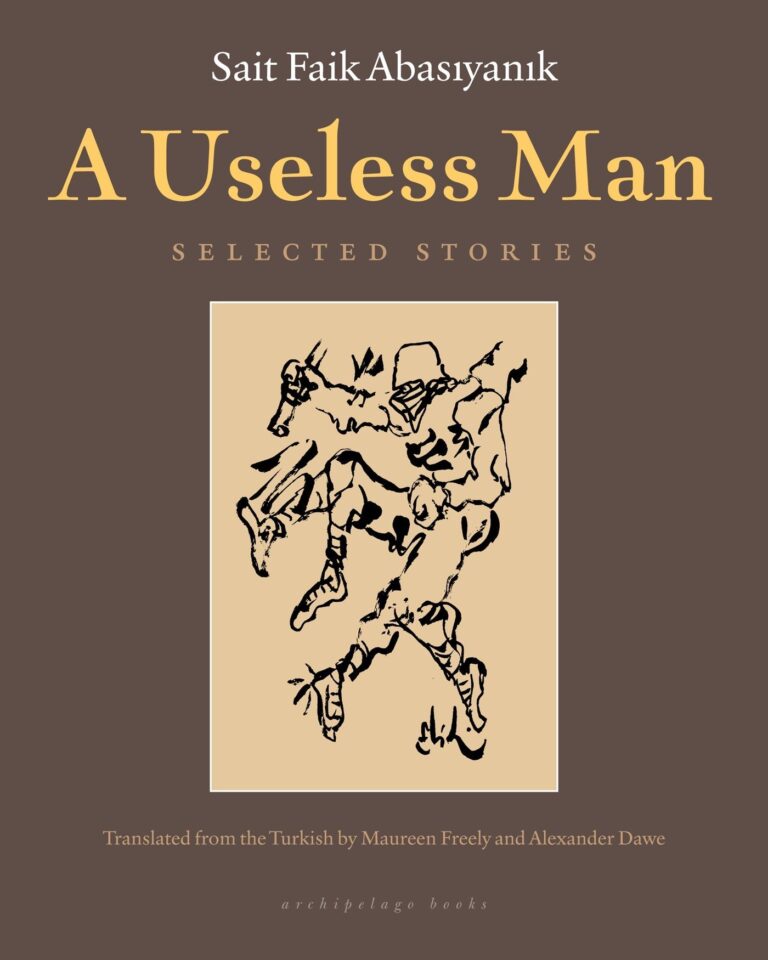
A Useless Man: Selected Stories – Sait Faik Abasiyanik

Sait Faik Abasiyanik was born in Adapazari in 1906 and died of cirrhosis in Istanbul in 1954. He wrote twelve books of short stories, two novels, and a book of poetry. His stories celebrate the natural world and trace the plight of iconic characters in society: ancient coffeehouse proprietors and priests, dream-addled fishermen and poets of the Princes’ Isles, lovers and wandering minstrels of another time.

Many stories are loosely autobiographical and deal with Sait Faik’s frustration with social convention, the relentless pace of westernization, and the slow but steady ethnic cleansing of his city. His fluid, limpid surfaces might seem to be in keeping with the restrictions that the architects of the new Republic placed on language and culture, but the truth lies in their dark, subversive undercurrents. One for the story lovers among Turkish books.

The Girl in the Tree – Şebnem İşigüzel

A celebrated contemporary one among Turkish books. A young woman climbs the tallest tree in Istanbul’s centuries-old Gülhane Park, determined to live out the rest of her days there. Perched in an abandoned stork’s nest in a sanctuary of branches and leaves, she tries to make sense of the rising tide of violence in the world below. Torn between the desire to forget all that has happened and the need to remember, her story, and the stories of those around her, begins to unfold.

Then, unexpectedly, comes a soul mate with a shared destiny. A lonely boy working at a nearby hotel looks up and falls in love. The two share stories of the fates of their families, of a changing city, and of their political awakenings in the Gezi Park protests. Together, they navigate their histories of love and loss, set against a backdrop of societal tension leading up to the tragic bombing that marked a turn in Turkey’s democracy—and sent a young girl fleeing into the trees.

Narrated by one of the most unforgettable characters in contemporary fiction—as full of audacious humor and irony as she is of rage and grief—this unsparing and poetic novel of political madness, precarious dreams, and the will to survive brilliantly captures a girl’s road to defiance in a world turned upside down, in which it is only from the treetops that she can find a grip on reality—and the promise of hope. A coming of age story among Turkish books.

Snapping Point – Asli Biçen

One of the Turkish books set in Aegean. ‘But for that slender connection with the mainland, Andalıç would have been a regular island,’ says Aslı Biçen in the opening chapter of this deliciously multi-layered novel. And it would have been an ordinary story about love and loss, if it weren’t for the earthquake that unexpectedly sets the landmass afloat on the Aegean, kindling a series of increasingly oppressive measures by the authorities; ostensibly to keep public order.

As Andalıç drifts between Greece and Turkey, things get from bad to worse, until eventually our heroes, Cemal and Jülide, join the growing resistance, and even nature lends a helping hand, offering a secret underground system that plays its part in ousting the tyranny.

What starts as the realistic tale of a charming provincial town develops into a richly detailed political novel in a fantastic setting. Biçen’s dreamy language weaves a flowing style that transports the reader into every nook and cranny of Andalıç and the crystal-clear waters of the Aegean; her metaphors are imaginative, her observations insightful, and her descriptions melodious. For the ones looking for political fiction among Turkish books.

A Long Day’s Evening – Bilge Karasu

“One of Turkey’s most interesting modern writers.”—Booklist

When the Emperor of Byzantium orders the destruction of all religious paintings and icons, Constantinople is thrown into crisis. Fear grips the monastery where Andronikos, a young monk, is thrown into a spiritual crisis. Amidst stirrings of resistance, he decides to escape, leaving behind his beloved Ioakim, who must confront his own crisis of faith and decide where to place his allegiance.

The dualities of dogma and faith, individual and society, East and West, are embodied in a story of prohibited love and devotion to the unseen. An exciting one among Turkish books.

Two Green Otters – Buket Uzuner

When her mother abandons her family, Nilsu loses faith in the world and everyone in it. Then she meets Teo, a passionate environmentalist and one of the founders of the Turkish Green Party. Teo’s close relationship with his own mother has always held him back, and when she commits suicide, his life slips off the rails.

In this story of a young woman’s struggle to find love and acceptance, Buket Uzuner explores the complexities of human relationships while offering up an original reinterpretation of the role of both environmentalism and love in the world today. An environmentalist fiction among Turkish books.

The Kiss Murder – Mehmet Murat Somer

Late one night, our glamour-puss nightclub manager receives a visit from Buse. For many years, Buse has kept letters and photos of a compromising nature, from a former relationship with a powerful lover. But her apartment has been ransacked and Buse worries about the consequences.

Being an obliging sort, our detective agrees to help out, but what initially appears to be a personal favour turns out to have repercussions that run much deeper. When the web of intrigue reveals that an arch-conservative politician and maybe even the Mafia are involved, it’s time for our private eye to send out an urgent SOS via the underground Istanbul grapevine. For the ones looking for a hilarious mystery among Turkish books.

The Highly Unreliable Account of the History of a Madhouse – Ayfer Tunç

The Highly Unreliable Account of the History of a Madhouse is an ever-expanding novel that moves at a dizzying pace. A literary panorama of Turkey that defies boundaries spatial or temporal: one end in the 19th century, and the other in the 21st. A book of human landscapes that startles anew with a completely unexpected turn of events, immediately after deceiving the reader into thinking the end of a plotline might be in sight.

The novel starts in a small-town mental asylum with its back to the Black Sea, and weaves its way through a highly entertaining chain of interlinked lives, each link a complex and bewildering personality. The Highly Unreliable Account follows the trails of political and social milestones left on individual lives across a span of nearly a century. An interesting and beautiful one among Turkish books.

Source: https://elifthereader.com/prettythings/20-best-turkish-books-you-need-to-read/

Novels by Turkish Author Yashar Kemal

Memed, My Hawk
by Yashar Kemal and Edouard Roditi | Jun 30, 2005

Iron Earth, Copper Sky
by Yashar Kemal and Thilda Kemal | Jul 1, 1997

Anatolian Tales
by Yashar Kemal | Jan 1, 1968

Guarda l’Eufrate rosso di sangue
Italian Edition | by Yashar. Kemal | Jan 1, 2012

Salman the Solitary
by Yasar Kemal, Yashar Kemal, et al. | Mar 1, 1998

They Burn the Thistles (Memed)
by Yashar Kemal, Margaret E. Platon, et al. | Nov 21, 2006

The legend of the thousand bulls
by Yashar Kemal | Jan 1, 1976

They Burn Thistles
by Yashar Kemal | Feb 28, 2017

The Legend of Ararat
by Yashar Kemal | Jan 1, 1975

The Sea-Crossed Fisherman
by Yashar Kemal and Thilda Kemal | Aug 1, 1985

The Birds Have Also Gone
Turkish Edition | by Yashar Kemal | Oct 5, 1989

The Lords of Akchasaz: Part One Murder in The Market
by Yashar Kemal | Jan 1, 1979

The Sea-crossed Fisherman
Turkish Edition | by Yashar Kemal | Mar 8, 1990

Summary & Study Guide Memed, My Hawk by Yashar Kemal
by BookRags | Mar 24, 2011

Undying Grass

by Yashar Kemal

Seagull
by Yashar KEMAL | Jan 1, 1981

They Burn the Thistles aka Ince Memed
French Edition | by Yashar Kemal | Jan 1, 1982

Memed, My Hawk
German Edition | by Yashar Kemal and Edouard Roditi | Jan 1, 1962

Boe-e-Gul (Urdu Edition)
Urdu Edition | by Yashar Kemal | Dec 12, 2012

Korean Edition of Memed, My Hawk Vol.2 of 2
by Yashar Kemal | Jan 1, 2014

Korean Edition of Memed, My Hawk Vol.1 of 2
by Yashar Kemal | Jan 1, 2014

El Retorno Del Halcon (Spanish Edition)
Spanish Edition | by Yashar Kemal | Jun 30, 2004

El Halcon (Spanish Edition)
Spanish Edition | by Yashar Kemal | Nov 1, 2000

Sombra del Halcon (Spanish Edition)
Spanish Edition | by Yashar Kemal | Jun 1, 2000

Pilier (Folio) (French Edition)
French Edition | by Yashar Kemal and Yachar Kemal | Dec 1, 1977

To Crush the Serpent
by Yashar Kemal

The Sorcerer’s Apprentices: Canada’s Super-Bureaucrats and the Energy Mess (Totem Book)
by Yashar Kemal | Jan 1, 1993

The Wind from the Plain (Wind from the Plain Trilogy)
by Yashar Kemal and Thilda Kemal | Jul 1, 1997

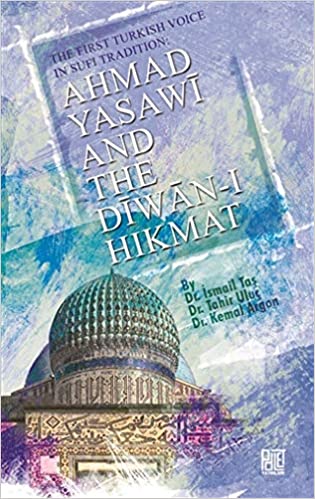
Turkish Sufism by Ahmad Yasawi

Ahmad Yasawi And The Diwan-ı Hikmat Paperback – January 1, 2016
by Kemal Argon Ismail Tas, Tahir Uluç (Author)

Yunus Emre: Great Turkish Sufi Poet

‘We are God’s and God is Ours’ GHAZALS of YUNUS EMRE
by Yunus Emre and Paul Smith | Jun 20, 2018

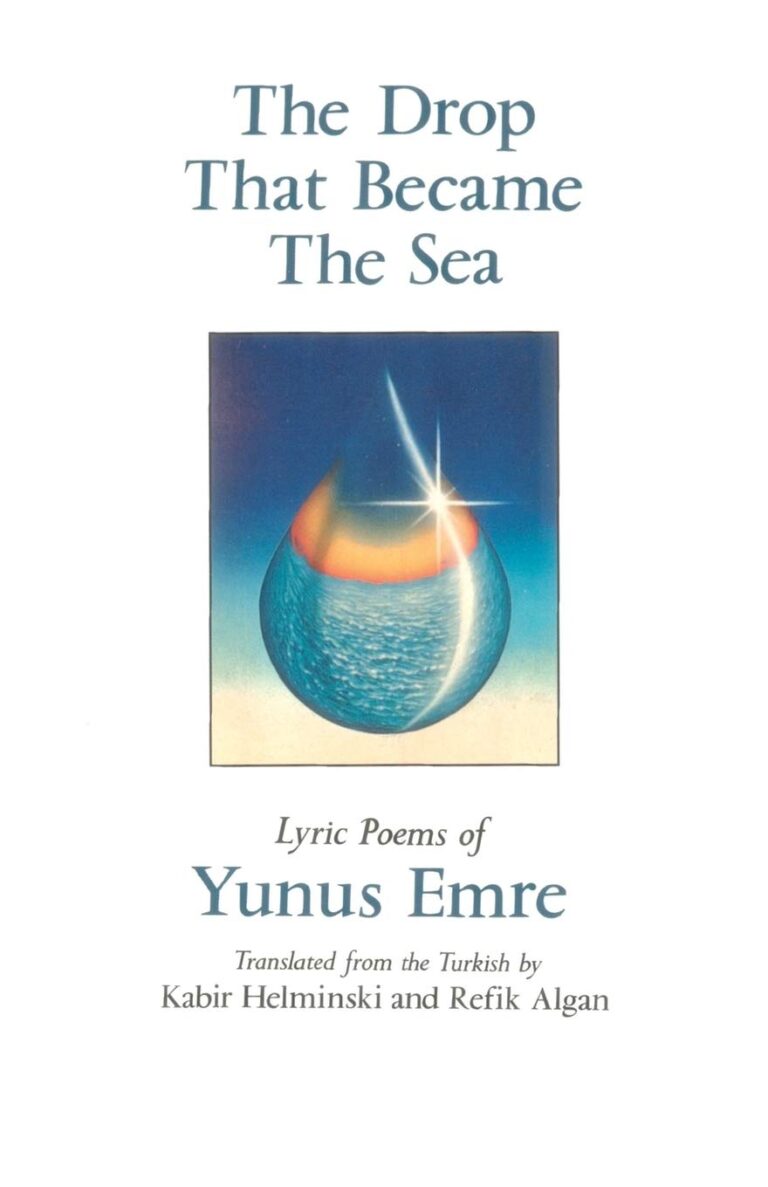
The Drop That Became the Sea: Lyric Poems
by Yunus Emre , Kabir Helminski, et al. | Sep 12, 1999

Sufi Poets of the Thirteenth Century: Selected Poems (Centuries of Sufi Poets Series) (Volume 4)
by Rumi, ‘Iraqi, et al. | Jun 16, 2017

Divan of Yunus Emre
by Yunus Emre and Paul Smith | Mar 15, 2018

SIX TURKISH SUFI MASTER POETS… SELECTED POEMS Ahmed Yesevi, Yunus Emre, Nesimi, Alisher Navoi, Fuzuli & Niyazi Misri: TRANSLATION & INTRODUCTION PAUL SMITH
by New Humanity Books, Yunus Emre, et al. | May 3, 2020

The Book of Yunus Emre
by Yunus Emre and Paul Smith | Jan 27, 2015

Yunus Emre & Nesimi: The Two Great Turkish Sufi Poets
by Yunus Emre, Nesimi, et al. | Oct 4, 2014

The City of the Heart: Yunus Emre’s Verses of Wisdom and Love
by Yunus Emre and Suha Faiz | Sep 22, 2020

AHMED YESEVI, YUNUS EMRE & NESIMI: THE THREE GREAT EARLY TURKISH SUFI MASTER POETS Selected Poems
by Ahmed Yesevi, Yunus Emre, et al. | Oct 20, 2018

FIVE TURKISH SUFI MASTER POETS: Ahmed Yesevi, Yunus Emre, Nesimi, Alisher Navoi, Niyazi Misri SELECTED POEMS: TRANSLATION & INTRODUCTION PAUL SMITH New Humanity Books
by Ahmed Yesevi and Others, Yunus Emre, et al. | May 2, 2020

Yunus Emre: Selected poems (Youth and public books series)
by Yunus Emre | Jan 1, 1990

AHMED YESEVI & YUNUS EMRE – THE FIRST TWO GREAT TURKISH SUFI MASTER POETS – Selected Poems
by Ahmed Yesevi, Yunus Emre, et al. | Nov 13, 2018

The Genesis of The Left of Center in Turkey: 1965-1967: Left Of Center ? The Construction of Social Democracy in Turkey or Nationalism in Social Democratic Clothes?
by YUNUS EMRE | Jul 26, 2010

YUNUS EMRE – Ghazals: ?I came from the eternal, clothed myself in flesh, took the name Yunus.?
by Yunus Emre and Paul Smith | Jun 20, 2018

YUNUS EMRE: THE TURKISH DERVISH ~SELECTED POEMS~
by Yunus Emre and Paul Smith | Jun 6, 2012

THE KINDLE DIVAN OF YUNUS EMRE: Translation & Introduction Paul Smith
by YUNUS EMRE | Mar 6, 2020

The Emergence of Social Democracy in Turkey: The Left and the Transformation of the Republican People’s Party (Library of Modern Turkey)
Part of: Library of Modern Turkey (20 Books) | by Yunus Emre | Feb 12, 2014

YUNUS EMRE SELECTED POEMS: (Large Print & Large Format Edition)
by Yunus Emre and Paul Smith | May 18, 2019

Four More Great Classic Sufi Master Poets: Selected Poems
by Sadi, ‘Iraqi, et al. | Nov 18, 2013

Yunus Emre: The Turkish Dervish: Selected Poems
by Yunus Emre and Paul Smith | Aug 22, 2017

The Poetry of Yunus Emre, a Turkish Sufi Poet
by Grace Martin Emre, Yunus; Smith | Jan 1, 1993

Yunus Emre: A Turkish poet and sufi mystic
by Yunus Emre | Dec 23, 2014

The Wandering Fool, Sufi Poems of a Thirteenth-Century Turkish Dervish
by Yunus Emre and Guzine Dino | Jun 1, 1987