https://uralpress.ru/news/intervyu/okay-depre-ukraina-iz-raya-v-ad
https://vk.com/video/@uralpress?z=video-30041770_456239498%2Fclub30041770%2Fpl_-30041770_-2
We have previously talked about the journalist, publicist, public figure and just a good person Okai Deprem.
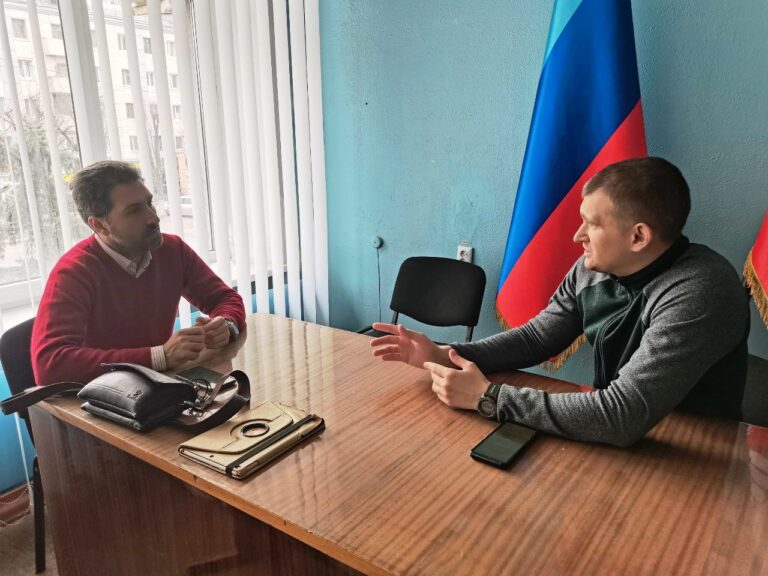
Having met him in Lugansk, the correspondent of the Ural-press-inform agency did not miss the opportunity to talk to him and interview him about the events taking place in Ukraine.
When we met, we instantly found a common language.
Okay is a Turkish citizen, from the age of 18 he has been engaged in journalism, at the age of 15 he began to be interested in Russian culture (there was a large library of Russian books and films at home), published in a youth magazine, studied sociology at the university at the same time, after graduation he continued his studies at the Institute of Social and Human Sciences political science of international relations in Istanbul. There he studied languages - English and French. I will tell you that Okay speaks Russian very well.
While studying at the university, he went on a program to Germany to continue his higher education, studied in Bavaria at the Department of Political Science at the European Institute. He wrote a lot of articles, even began to write a news column in a magazine.
After studying again under the student exchange program, he ended up at the Odessa National Institute. I. I. Mechnikov (practice and courses Work and shop).

– Yes, I started working in the field of cultural tourism, organizing elite cultural trips along the Black Sea coast.
I went to Kyiv to watch a rally in support of the 60th anniversary of the end of the Great Patriotic War, after which I had the idea of creating a documentary film “Ukraine’s Diary”. The film turned out, but more like an amateur.
In the early 2000s, he visited Rostov, Sochi and the North Caucasus. There was a time when I once traveled by car from Turkey to the Donbass through Georgia and the Caucasus.
In 2014, I went to the Donbass – this was my first experience of military journalism, it should be noted that before the war I was there, but not often, more as a tourist, I wrote articles in the magazine “Life” (Turkish edition) about the sights of the regions of Ukraine . And at the height of hostilities he visited Shakhtersk, Ilovaisk, Khartsisk, Snezhnoye, Makeevka, Yasinovataya.
Then he began to come to Donetsk more and more often, since 2015 he covered the events as an accredited journalist.
He visited Lugansk together with the journalists of the Junge Welt newspaper in Alchevsk, Lugansk, Sverdlovsk, Krasnodon. In the fall of 2016, I was invited to work as an observer at the primaries in Luhansk. Until 2019, I lived mainly in Donetsk.
– Understanding the mentality of people, knowing Ukraine well, have you changed your attitude towards it after the war in Donbass, the formation of the LPR and DPR and the special military operation in Ukraine?

– Naturally, it could not be otherwise. Before the events of 2014, Ukraine was a very peaceful country, especially Donbass, although the mentality of the people here is very different compared to Odessa. Then there was much more crime, lawlessness, fear and mistrust among Ukrainians not only in the Donbass, but also in Ukraine
– I believe that just in 2014, nationalism and fascism flourish in Ukraine. Of course, these sentiments were here before, but not on such a scale.
-My friends, due to the situation in Ukraine, left it for other countries …..

– Naturally, no. An example of this is Yugoslavia and war crimes there, and double standards are clearly visible, what was done in Yugoslavia, for some reason, is not applied to Ukraine. Vladimir Putin spoke about this at a meeting with German Chancellor Scholz.
I’ll tell you more: on May 2, the killers of people (those people who were burned alive in the House of Trade Unions – ed.) were not found in Odessa, although there were all the possibilities for this. This was followed by the arrests of journalists, the disappearance of people in Ukraine and complete silence regarding these crimes in the West.
– Okay, please tell us how Turkey’s cooperation with NATO and the EU is developing: common points of contact, disagreements. What is Istanbul’s position on foreign policy issues?
– Firstly, it is already clear to everyone that Turkey’s relations with the EU are no longer what they used to be, there is no prospect, the vast majority of the Turkish people do not believe in joining the European Union for a long time, and they do not need it.
Secondly, about relations between NATO and Turkey. Everyone knows that the Turkish army is the second most powerful among the North Atlantic alliance, but at the same time it buys S-400 systems in Russia and, understanding the consequences, does it anyway, facing to its own detriment the cancellation of the sale of fifth-generation fighter jets from the United States to it.
I remember what my friend, who worked in the early 2000s at the Turkish consulate in Moscow, told me. Consultants from the USA came to them and laughed at the Blue Stream project, calling it a “blue dream” for Russia. But our countries did everything for their people and economy to be independent.
– The foreign policy of Russia and Turkey is aimed at meeting the needs of their peoples, and not at toadies and flirting with other countries. Aggravation of the situation in Nagorno-Karabakh. Supply of military equipment and weapons to the Azerbaijani side? Can Erdogan overcome his belligerent stance on this issue?
– I think yes. Putin and Erdogan = they are independent and know how to negotiate, especially when mutually beneficial relations develop between countries. This conflict has been going on for a very long time, at the very height of the conflagration in this region, Russia is trying to find a consensus between Armenia and Azerbaijan, which it is doing quite well, considering how long the conflict has been going on.
Blue Mosque: Where Heaven Meets the Sky – A Cinematic Photographic Journey Through Istanbul's Sultan Ahmed Masterpiece
$10.99 (as of 13/11/2026 03:20 GMT +03:00 - More infoProduct prices and availability are accurate as of the date/time indicated and are subject to change. Any price and availability information displayed on [relevant Amazon Site(s), as applicable] at the time of purchase will apply to the purchase of this product.)
Istanbul: The Monocle Travel Guide Series
(as of 13/11/2026 03:20 GMT +03:00 - More infoProduct prices and availability are accurate as of the date/time indicated and are subject to change. Any price and availability information displayed on [relevant Amazon Site(s), as applicable] at the time of purchase will apply to the purchase of this product.)
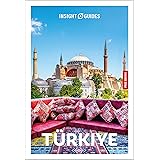
Rough Guides Turkiye: Travel Guide with eBook: 2026-2027 | Insider Tips | Must-See Sights | Maps & Itineraries | Covers: Istanbul, Cappadocia, the Turquoise Coast and more
(as of 13/11/2026 03:20 GMT +03:00 - More infoProduct prices and availability are accurate as of the date/time indicated and are subject to change. Any price and availability information displayed on [relevant Amazon Site(s), as applicable] at the time of purchase will apply to the purchase of this product.)
Lonely Planet Pocket Istanbul (Pocket Guide)
$13.27 (as of 13/11/2026 03:20 GMT +03:00 - More infoProduct prices and availability are accurate as of the date/time indicated and are subject to change. Any price and availability information displayed on [relevant Amazon Site(s), as applicable] at the time of purchase will apply to the purchase of this product.)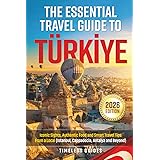
The Essential Travel Guide to Turkiye: Iconic Sights, Authentic Food and Smart Travel Tips From A Local (Istanbul, Cappadocia, Antalya and Beyond)
$17.99 (as of 13/11/2026 03:20 GMT +03:00 - More infoProduct prices and availability are accurate as of the date/time indicated and are subject to change. Any price and availability information displayed on [relevant Amazon Site(s), as applicable] at the time of purchase will apply to the purchase of this product.)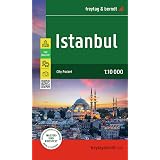
Istanbul, City map 1:10.000, City Pocket map + The Big Five
(as of 13/11/2026 03:20 GMT +03:00 - More infoProduct prices and availability are accurate as of the date/time indicated and are subject to change. Any price and availability information displayed on [relevant Amazon Site(s), as applicable] at the time of purchase will apply to the purchase of this product.)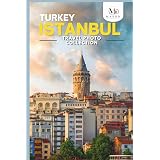
Istanbul, Turkey Travel Photo Collection: A Coffee Table Photo Book of the Most Beautiful Attractions and Places to Explore (Full-Color)
$24.99 (as of 13/11/2026 03:20 GMT +03:00 - More infoProduct prices and availability are accurate as of the date/time indicated and are subject to change. Any price and availability information displayed on [relevant Amazon Site(s), as applicable] at the time of purchase will apply to the purchase of this product.)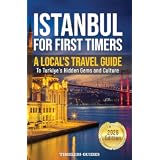
Istanbul For First Timers: A Local's Travel Guide To Turkiye's Hidden Gems and Culture
$4.99 (as of 13/11/2026 03:20 GMT +03:00 - More infoProduct prices and availability are accurate as of the date/time indicated and are subject to change. Any price and availability information displayed on [relevant Amazon Site(s), as applicable] at the time of purchase will apply to the purchase of this product.)
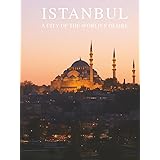
Istanbul In Pictures: A Stunning Travel Photography Book Featuring the Most Beautiful Attractions, Iconic Landmarks, and Top Places to Explore (Full Color)
$24.99 (as of 13/11/2026 03:20 GMT +03:00 - More infoProduct prices and availability are accurate as of the date/time indicated and are subject to change. Any price and availability information displayed on [relevant Amazon Site(s), as applicable] at the time of purchase will apply to the purchase of this product.)
Crescent & Star: Turkey Between Two Worlds
$3.99 (as of 13/11/2026 03:20 GMT +03:00 - More infoProduct prices and availability are accurate as of the date/time indicated and are subject to change. Any price and availability information displayed on [relevant Amazon Site(s), as applicable] at the time of purchase will apply to the purchase of this product.)
Crescent & Star: Turkey Between Two Worlds
$3.99 (as of 13/11/2026 03:19 GMT +03:00 - More infoProduct prices and availability are accurate as of the date/time indicated and are subject to change. Any price and availability information displayed on [relevant Amazon Site(s), as applicable] at the time of purchase will apply to the purchase of this product.)
Lonely Planet Pocket Istanbul (Pocket Guide)
$13.27 (as of 13/11/2026 03:19 GMT +03:00 - More infoProduct prices and availability are accurate as of the date/time indicated and are subject to change. Any price and availability information displayed on [relevant Amazon Site(s), as applicable] at the time of purchase will apply to the purchase of this product.)
The Christian Traveler's Guide to the Holy Land
$18.63 (as of 13/11/2026 03:19 GMT +03:00 - More infoProduct prices and availability are accurate as of the date/time indicated and are subject to change. Any price and availability information displayed on [relevant Amazon Site(s), as applicable] at the time of purchase will apply to the purchase of this product.)
Lonely Planet Turkiye: Plan the Trip of a Lifetime | Detailed Itineraries & Maps | Insider Tips | Covers Istanbul,Thrace, Marmara, Izmir, Bodrum, Antalya, Cappadocia and more (Travel Guide)
(as of 13/11/2026 03:19 GMT +03:00 - More infoProduct prices and availability are accurate as of the date/time indicated and are subject to change. Any price and availability information displayed on [relevant Amazon Site(s), as applicable] at the time of purchase will apply to the purchase of this product.)
The Idiot: A Novel
(as of 13/11/2026 03:19 GMT +03:00 - More infoProduct prices and availability are accurate as of the date/time indicated and are subject to change. Any price and availability information displayed on [relevant Amazon Site(s), as applicable] at the time of purchase will apply to the purchase of this product.)
DK Turkey: Must-See Sights. Culture & History. Detailed Maps & Tours. Covers Istanbul, Cappadocia, Antalya, Bodrum, & more (Travel Guide)
(as of 13/11/2026 03:19 GMT +03:00 - More infoProduct prices and availability are accurate as of the date/time indicated and are subject to change. Any price and availability information displayed on [relevant Amazon Site(s), as applicable] at the time of purchase will apply to the purchase of this product.)
The House of the Virgin Mary in Ephesus: Exploring the History, Faith, Archaeology, and Mysteries of Mary's Final Home Near Ancient Ephesus in Turkey (Ancient History Collection)
$12.99 (as of 13/11/2026 03:19 GMT +03:00 - More infoProduct prices and availability are accurate as of the date/time indicated and are subject to change. Any price and availability information displayed on [relevant Amazon Site(s), as applicable] at the time of purchase will apply to the purchase of this product.)
Türkiye (Turkey) Map (National Geographic Adventure Map, 3018)
(as of 13/11/2026 03:19 GMT +03:00 - More infoProduct prices and availability are accurate as of the date/time indicated and are subject to change. Any price and availability information displayed on [relevant Amazon Site(s), as applicable] at the time of purchase will apply to the purchase of this product.)
The Amazing Mrs. Pollifax (Mrs. Pollifax Series Book 2)
$5.99 (as of 13/11/2026 03:19 GMT +03:00 - More infoProduct prices and availability are accurate as of the date/time indicated and are subject to change. Any price and availability information displayed on [relevant Amazon Site(s), as applicable] at the time of purchase will apply to the purchase of this product.)