Home Blog Page 243

Khryseis on Homer’s Epics of Troy

The Trojan war broke out because of a woman. Women play an important role in this war. Above all, they occupy a larger place than Helene in the Iliad, which portrays events long after Helene’s abduction: These are Khryseis and Briseis.

The epic opens with a horror scene: Akha army is breaking through the epidemic. Why? After the Achaeans besieged Troy, they wait for years in front of the walls of the mighty city: Troy does not fall either.

Meanwhile, aggressive Achaeans, especially Achilles, try to plunder rich Anatolian cities by embarking on raiding campaigns. Not only do they buy gold, bronze, iron and valuable weapons, they also kidnap elite girls and women from the cities they plunder. Heaps of goods, many captives are laid out and divided among the Achaeans. The biggest share always goes to the king of kings, Agamemnon.

In a landing in the Troas region, Achilles took Khryseis, the daughter of Kryses, the priest of Apollo, as a prisoner of the city of Khryse.

He uses her as his wife in his hut, loves her more and more, preferring her to his married wife, Clytemnestra. However, one day, Chryses comes to get his daughter back with rich liberties, begs and begs, the Achaean leaders want to give the girl back, only Agamemnon resists this request and dismisses Chryses with harsh words. Thereupon, the priest Apollo prayed to the god and avenged the god Chryses (Il. I, 43 ff.)

Andromache on Homer’s Epics of Troy

Andromache is the daughter of Eetion, king of Thebes in the Mysia region. Eetion is bound by ties of friendship to King Priam. He gave his only daughter Adromakhe, whom he brought up with seven sons in his palace, to Hector, the most precious son of Priam. How was the wedding association? How did Andromache enter one of the houses with porticoes built for the sons and brides of Priam? Poets don’t tell us that. We do not know the happy days of this beautiful husband and wife. Hector and Andromache only appear on the scene of Troy in the ninth year of the war described in the Iliad, when destruction comes. In the meantime, they had a child: Astyanax. The Trojans gave this name to Hector’s son, which means “lord of the city”, in the hope that he will become king of Troy one day when the child grows up. But a few days before Hector’s death, Astyanax is a baby carried around in his nanny’s arms.

Andromache did not smile from mother, father, brother. When the sinister war came to the Anatolian shores, he did not feel comfortable in the Troy region. The Achaean army had been dozing in front of the gates of Troy for nine years, they could not bring down the sacred fortress of Anatolia. Especially the young and dashing Achilles, who couldn’t fit in, was very impatient. He could not express his bloodlust, even by chasing and killing the few Trojans who left the city to graze their cattle on the mountain slopes and ride their horses to the fountain at every opportunity. Achilles, who had gone on marauding expeditions in the region, had arrived in Mysia. He did not do what he did in King Eetion’s palace, he killed the old-headed king and mercilessly took the lives of his seven sons. Nor did he spare Andromache’s mother. “My mother was a queen at the foot of the forested mountain Plakos,” says Andromache to the side; Achilles had also taken the queen into the herd of captives, brought her to Troy, and then released her in exchange for a great redemption, but the poor woman died as soon as she saw her “free day,” as Homer said.

Andromache spends her time in the women’s quarters in the Troy palace, embroidering and shuttlecocking among her maids. She is a torment day by day, because fear grips her heart, she fears that Hector, however valiant, will one day die under the spear of the enemy. While the braves are struggling on the plain of Troy, they cannot stand comfortably between four walls. He gives his child to the nanny and goes up to the tower above the west gate to watch the war. One day, Hector takes a break from the war and comes to the city, looking for his wife at home, he runs to the western gates, smiling when he sees Andromache and her baby from afar. Andromache sheds tears and hugs her hands (Il. 407 et al.):

Oh my husband, this greed will eat you,
You have no pity for your child, your unfortunate wife,
not to be a widow, I know, few days are left,
The Achaeans will attack you and kill you.
Rather than being without you, it would be better for the earth to swallow me.
I have no other support than you,
when death takes you away
Only pain will remain for me.
I have neither my father, nor my great mother…
You are a father to me, Hector,
You are my great mother, you are my brother,
You’re a friend of my warm bed.
Stay here in the castle, have pity on me,
orphan coma our baby, your wife widow coma.

This torture will last nine days: Every morning, Achilles ties the dead body to his car and drags it. In the evening of the tenth day, King Priam goes to Achilles’ hut, softens his heart and takes the dead. At Hector’s funeral we see Andromache now. The lamentation begins among the poets, saying (Il. XXIV, 725 ff.):

Hector takes pity on his wife, but what can he do, he will not withdraw from the war like a coward? The support of the Trojan army is its base.

Days pass, a one-on-one battle begins between Hector and Achilles. The battle for life and death is the most dramatic scene of the Iliad. The gods decided Hector’s death. He dies by fighting bravely. A cry breaks from the walls of Troy, Andromache hears this vaveyla while he is spinning in his room, he jumps out like crazy; When he sees the dead body of Hector, which Achilles tied to his car and dragged in dust, he falls and faints.

My man, you passed away at a young age,
You left, you left me a widow in our house,
Our child is also tiny, young,
one of us, the two of us who are unfortunate,
I don’t know, will it reach my youth?
This city will be destroyed from top to bottom,
you are dead, its protector, keeper,
you, my noble mothers, their children standing
holding…
You left unspeakable pain, Hector,
to your parents, but to me, the greatest pain remained.
You didn’t stretch your hands on your deathbed
to me,
You didn’t say such a nice word,
shedding tears day and night
I am her mother.

Indeed, Andromakhe’s suffering is endless.

In Euripides’s tragedy “Andromache”, we see him in the palace of Achilles’ son Neoptolemus. He married Hermione, the daughter of Neoptolemus Menelaos, but he had no children, whereas Andromache, whom he brought to his mansion as a prisoner, gave him three sons and a daughter. Hermione is very jealous of this Trojan woman, taking advantage of Neoptolemus’s departure to Delphi, Andromache and her son; They want to kill him, although they took shelter in the temple of Themis, they will slaughter them so that they are saved at the last minute.

The poet XVII, who created a much more beautiful and humane type of Andromache than Euripides. century French poet Racine. A valiant and conscious woman, who cannot forget Hector, who does not return the love of Neoptolemus (her name is Pyrrhus in French tragedy) and who overturns Hermione’s jealousy, is a compassionate main type.

In Jean Anouilh’s play “La Guerre de Troie n’aura pas lieu” (There will be no Trojan war), Andromakhe comes to life as an interesting and attractive type.

Kassandra on Homer Epics and Troy

Daughter of Priam, king of Troy, and his wife, Hekabes. Kassandra is the most interesting son of the king couple of Troy, after Hector and Paris. This young girl has a heartbreaking destiny, a tragic personality. Kassandra symbolizes the drama of the seer who tries to prevent the destructions with his power of seeing the future, but is affected and upset by the troubles that befall him because he cannot speak his mind.

Legends describe this power of Kassandra with various interpretations. According to one, when Cassandra and her twin brother Helenos were babies, Priam and Hekabe organized a feast in honor of Apollo from Thymbra in the god’s temple located outside the city, and at the end of the ceremony they forgot their children in the temple. The next morning, when they came to pick it up, they were met with a terrible sight: Kassandra and Helenos were sleeping in their cradles, but two snakes surrounded them, licking their eyes and ears. With this action, the senses of the children were purified and opened to the perception of the realities that people could not see or hear. Both had become priests.

Another legend explains Kassandra’s oracle as follows: God Apollo falls in love with Priam’s beautiful daughter, says that if he gives himself, he will gift her with the ability to see, Kassandra accepts, but does not want to give herself after receiving the gift from God. God, too, becomes enraged, spitting into the girl’s mouth, thereby rendering his gift ineffective: Kassandra will be able to see the future, screaming what she sees, but she will not be able to convince anyone of the truth of what she has said. Thus, Kassandra becomes a spokesperson who includes the god, like Pythia or Sibylla, and prophesies by being filled with the power of god, while Helenos is an interpreter who foretells the future by looking at the flight of birds and external signs. both were unfortunate

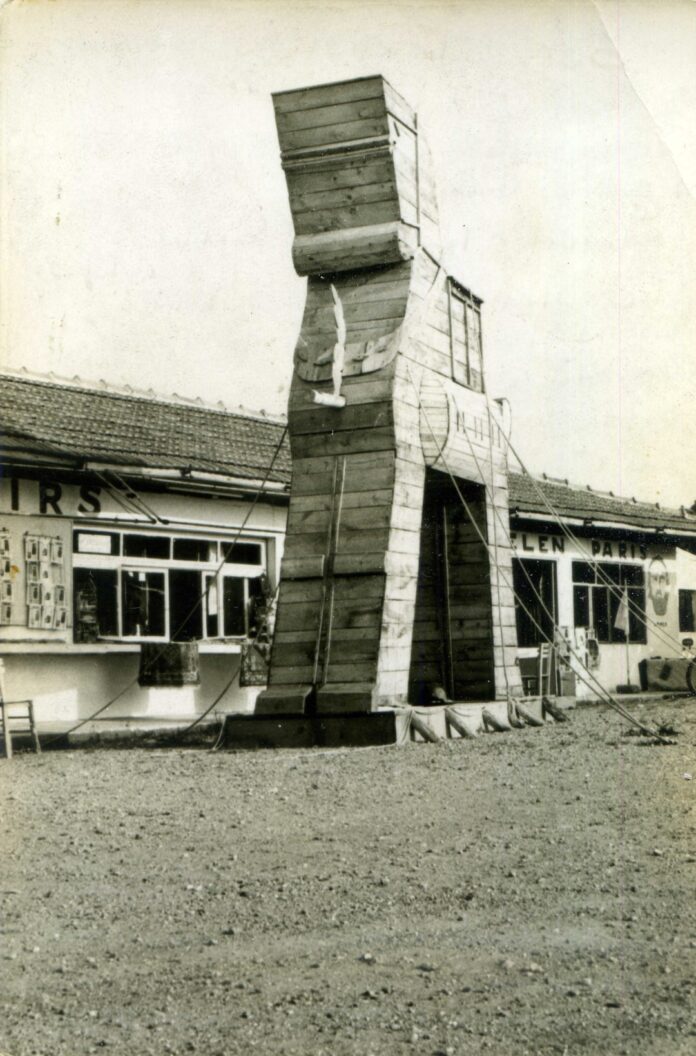
Kassandra foresaw and told all the events in the history of Troy: When Paris returned from Mount Ida, where she was left as a child, she wanted this young man to be killed immediately, then when she brought Helena on her return from Greece, she said that this woman would cause the destruction of Troy and should be sent back. When Priam came out of Achilles’ shack with Hector’s body, he announced that he had arrived in Troy without anyone noticing, and when the wooden horse stood in front of the walls, close to the destruction of the city, he tried to prevent the horse from being taken inside, with the help of Laokoon. There is also a legend that tells that Kassandra took refuge in the temple of Athena while Troy was being plundered, where she was attacked by little Aias. Aias pulls Kassandra away from the goddess statue she hugs, but she hardly saves herself from being stoned by the Achaeans because she sinned. Kassandra is given to Agamemnon as a slave in the end, but with this the real ordeal of the wise girl begins. Agamemnon fell in love with Priam’s daughter and took her to his palace in Mycenae. Until then, Kassandra remained a girl and a girl, and although she had many suitors, she did not marry. While her father was going to give her to an Anatolian valiant named Othryoneus, Kassandra was left unmarried after this man died in the war.

The legend of Kassandra’s arrival in Greece as a prisoner of Agamemnon became the subject of tragedy and inspired Aeschylus to one of his most powerful plays, “Agamemnon”. With this drama, Kassandra finds the opportunity to express herself completely: she clearly sees what will happen to Agamemnon and herself in the Mykene palace, that they will be killed by the hands of Clytemnestra, she cries, screams, laments, but as she cannot prevent anything, this destruction, death. cannot prevent it. When she realizes this, she curses the divination skill that Apollon donated.

Iphigeneia on Homer’s Epics

Helen of Troy on Homer’s Iliad and Oddysey

The most famous of the Greek mythical figures, the most beautiful Helena (or Helene as Homer puts it), not only has been the heroine of thousands of tales and stories, her personality has also been interpreted from various views and aspects, causing endless debates. In Helena’s personality, the love of the ancient Greek world for beauty is expressed, as well as the contrast between the beautiful and the good, that is, aesthetic values ​​and ethical and moral values.

As a matter of fact, poets and writers after Homer (including Plato) considered it immoral that a woman could be a factor in all these wars and such a conflict between the East and the West, and they preferred to explain the abduction of Helena in a different way. It is Homer who created Helena, this type is most clearly, most vividly and vividly portrayed in Homer’s epics, so that even the later interpretations are always based on the narrative foundations laid in the Iliad and Odyssey. That’s why, without going into the stories and legends of Helena, how can this beauty be in Homer’s epics?
Let’s see it come up.

The battle on the plain of Troy is an angry moment: Menelaus and Paris go to war one-on-one, and the winner will take Helena away, so this endless war will come to an end by itself. The elders, led by Priam, the king of Troy, are watching the battle in the tower above the western gate. Suddenly Helene appears (Il. III, 154 ff.)

To the tower that Helene went out to see
They softly said these winged words:
“The Trojans and the Achaeans had such a
It is not shameful for women to suffer for years.
She compares her to the immortal goddesses staring at her face.
But still, I wish he could get on the ship,
Even if he goes, he will trouble us, our children.
not sting”.

Priam also speaks sweetly to Helene, and calls out:

Come here, girl, sit down,
look here, your ex-husband, kin
your relatives, your friends.
I don’t think you’re to blame, the gods are the real ones,
they piled up the war that made me cry blood.

A more civilized, more humane view and behavior cannot come to mind, and it is surprising to find such a thing in a text about three thousand years ago. However, this civilization, this humanity belongs only to the Trojans, while the Achaeans are harsh, rude, arrogant, barbaric in the Greek words. Helene has become a bride from Troy, she is a woman who weaves fabrics in her room, while making beautiful embroideries, thinking of her homeland, ex-husband and daughter and longing. Own
blames himself. He responds to Priam’s words (Il. III, 172 ff.):

I’m both afraid of you and counting
you, my dear father-in-law,
I wish I hadn’t come here with your son
my house, my shelter, that coy girl I raised
If I hadn’t left my relatives and dear comrades.
I wish I had agreed to the black death.
This did not happen, what should we do?
Look, I’m melting away and shedding tears.

“Dog-eyed,” he calls himself. He has great love and respect for Hector as well as Priam. He complains to him with the same regret (Il VI, 342 ff.).

Helene is a fully conscious person. she criticizes paris she. She does not want to comply with the call of the goddess Aphrodite, who kidnapped Paris from a one-on-one battle with Menelaos, she is disgusted to return to Paris’ bed and is brave and brave enough to oppose the goddess, challenging her (Il. III, 399 ff.):

Is it you again, goddess,
why do you always want to seduce
me?
Tell me, what is your intention,
take me farther, to Phrygia,
to a well-kept province of quaint Meionia.
to drive?
over there, a man of mortals?
is there?..
Go and settle down next to Paris yourself.
Get out of the way of the gods,
never set foot in Olympos again,
look at him, worry about him,
Let him make you his wife or his slave in the end.

Such an insult to God has never been seen in any other text. However, it can be understood with the deep psychological view of Homer, no different from the novelist.

In the Odyssey, Helene is seen as a respected queen, a good housewife, and a loving mother. When Telemachus goes looking for his father and arrives at Menelaus’ palace, he receives the warmest and most cordial hospitality from Helene. The clever woman hugs him as if she were her own child, loves and caresses him, counts many memories about his father Odysseus, criticizes the events and himself (Od. IV, 261 vd.).

He has a superior attitude, a humane behavior that understands Telemachus and shares his pain, gives him a medicine that will make him forget all his pains, gives him a life that he has made with his own hand, and finally the young man is enchanted by Telemachus, telling him that he will worship Helene like a goddess from now on (Od. . XV, 104 ff.).

Homer had said all there was to say about Helena, and no one could add anything to Homer’s portrait of Helena. The objective opinion, the popular vote and the criticism of Helena by others are made through the mouth of Eumaios, the shepherd of Ithaca (Od. XIV, 68.)

Ida on Homer’s Iliad and Oddysey Epics

Daughter of Melisseus, king of Crete. When Rheia abducted her newly born Zeus from Kronos and took her to Crete as a baby in swaddling, Ida took her with her sister Adrasteia grows, nourishes (Zeus, Amaltheia) on the mountain that bears her  name.
 The daughter of Korybas marries Lykastos, king of Crete, and they have a son named Minos.

Mount Ida in Iliad Epic by Homer

Portraits from Aegean Ida Mountains region

Mount Ida, Kazdağları in Aegean Turkey

Küçükkuyu town once upon a time